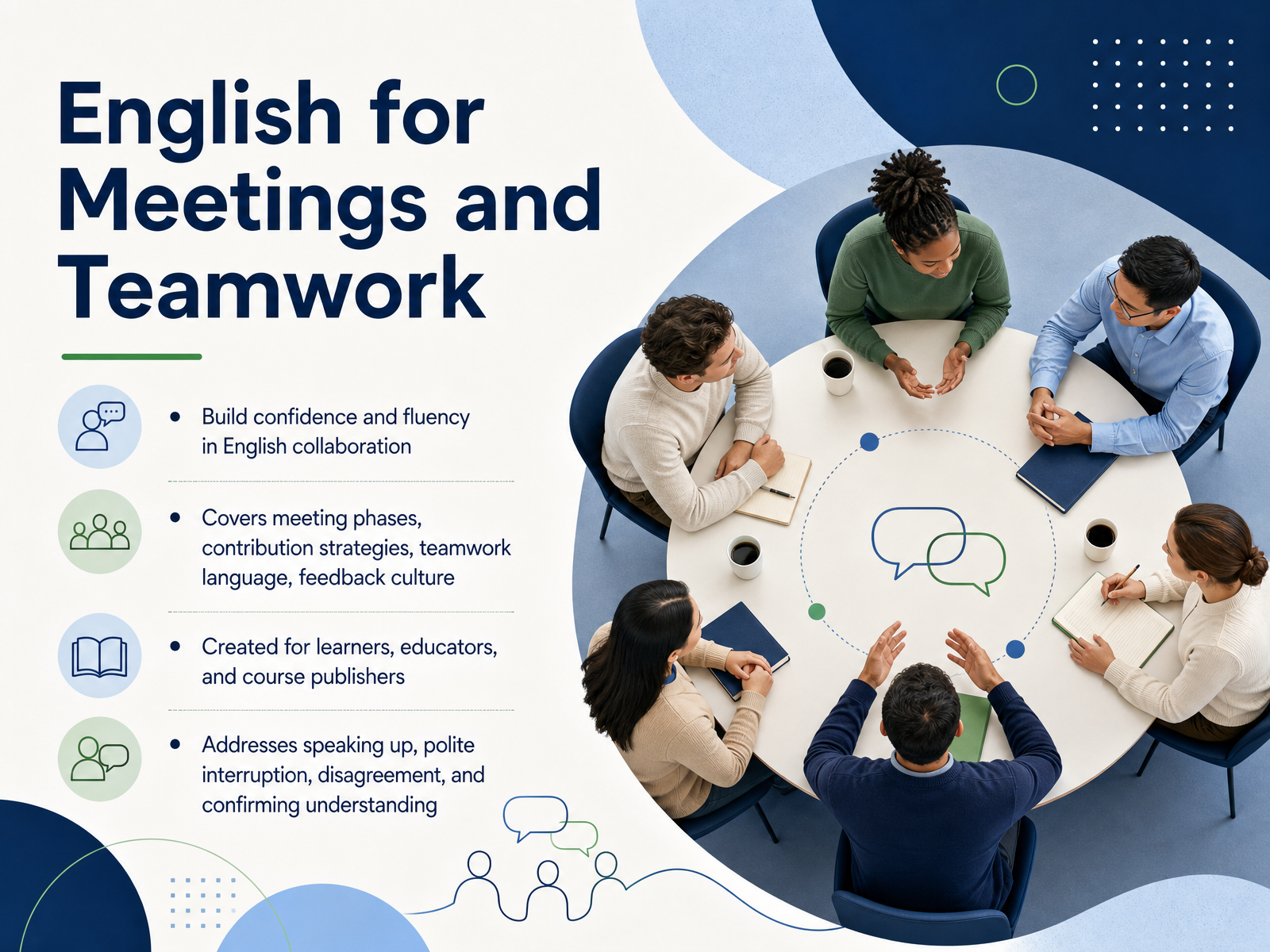
English for Meetings and Teamwork
Begin
15 pages · ~30 min
English for Meetings and Teamwork
Business English course focused on effective communication in meetings and teamwork. Designed for professionals to build confidence participating in discussions, sharing ideas, and collaborating with international teams.
What you’ll learn
- 01English for Meetings and TeamworkWelcome. I'm glad you're here. Today we're focusing on English for meetings and teamwork. This course is designed to help you build confidence and fluency in real workplace collaboration. We'll cover the key phases of a meeting, strategies for contributing effectively, language for teamwork, and how to build a healthy feedback culture. Whether you're a learner preparing for global work, an educator developing your curriculum, or a publisher creating language materials, this course is for you. Together, we'll tackle common challenges: speaking up, interrupting politely, disagreeing respectfully, and double-checking understanding. You'll hear practical phrases in realistic examples, so you can use them immediately. Let's get started and make your English work for you. Next, we'll look at core meeting roles and responsibilities.lumsx.lums.edu.pkstudylib.netlum.it+21 min
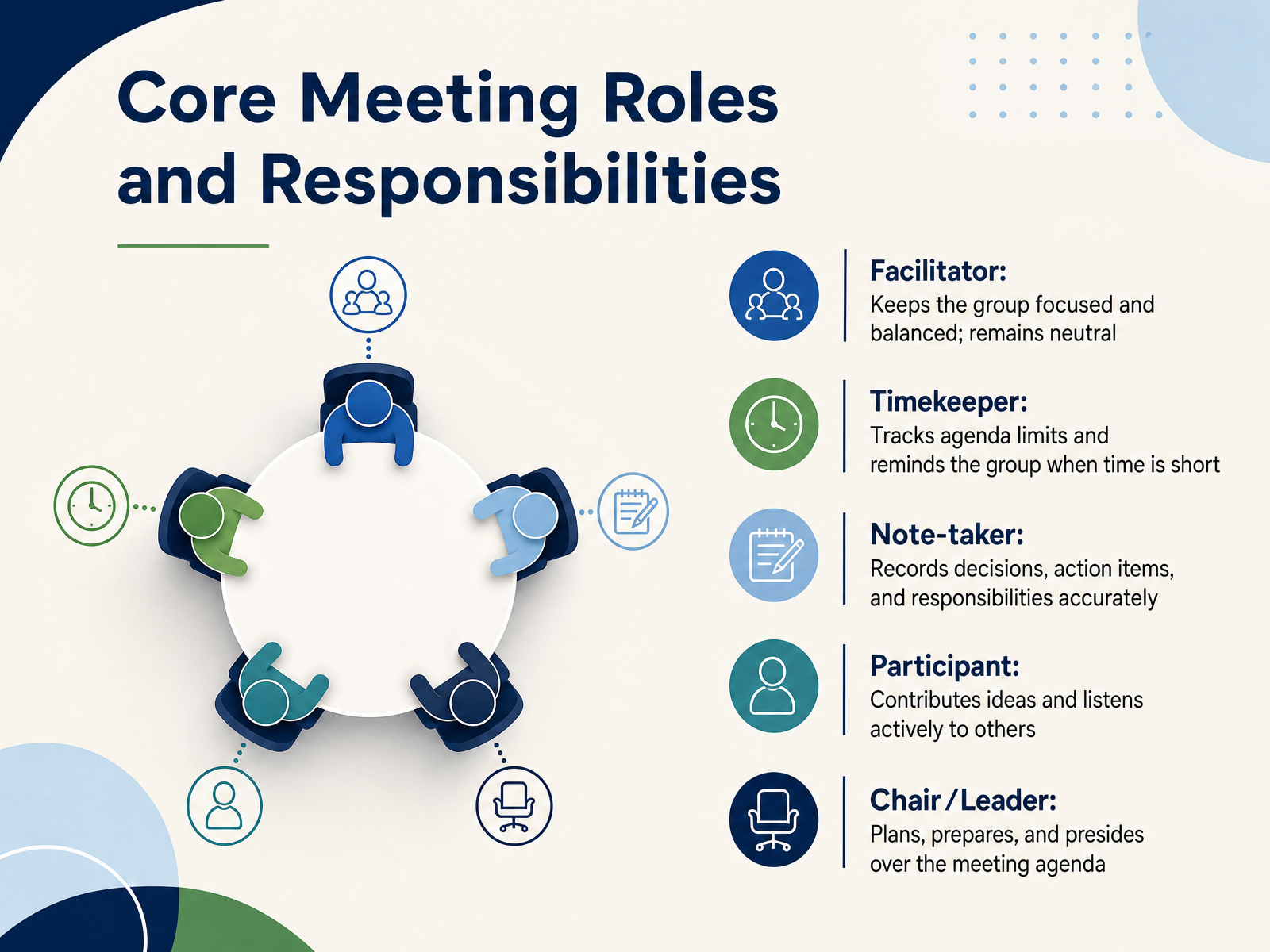
- 02Core Meeting Roles and ResponsibilitiesNow let's look at the core roles that make a meeting run smoothly. Think of a meeting like a small team, where every person has a clear job. First is the facilitator. The facilitator keeps the group focused and makes sure everyone gets a chance to speak. They stay neutral, so they don't take sides in the discussion. Then we have the timekeeper. The timekeeper tracks the agenda and politely reminds the group when time is running short. For example, they might say, 'We have two minutes left on this item.' Next is the note-taker. The note-taker records decisions and action items accurately. They make sure everyone knows who is responsible for what by the end of the meeting. Then there's you, the participant. As a participant, you contribute ideas and listen actively to others. Finally, the chair or leader plans, prepares, and presides over the meeting agenda. Often, the chair and facilitator are the same person, but splitting the roles can help balance the workload. Understanding these roles is your first step to feeling confident in any meeting. Coming up, we'll talk about how to start and structure a meeting effectively.
 learnenglish.decfe.unc.eduweb.sas.upenn.edu+22 min
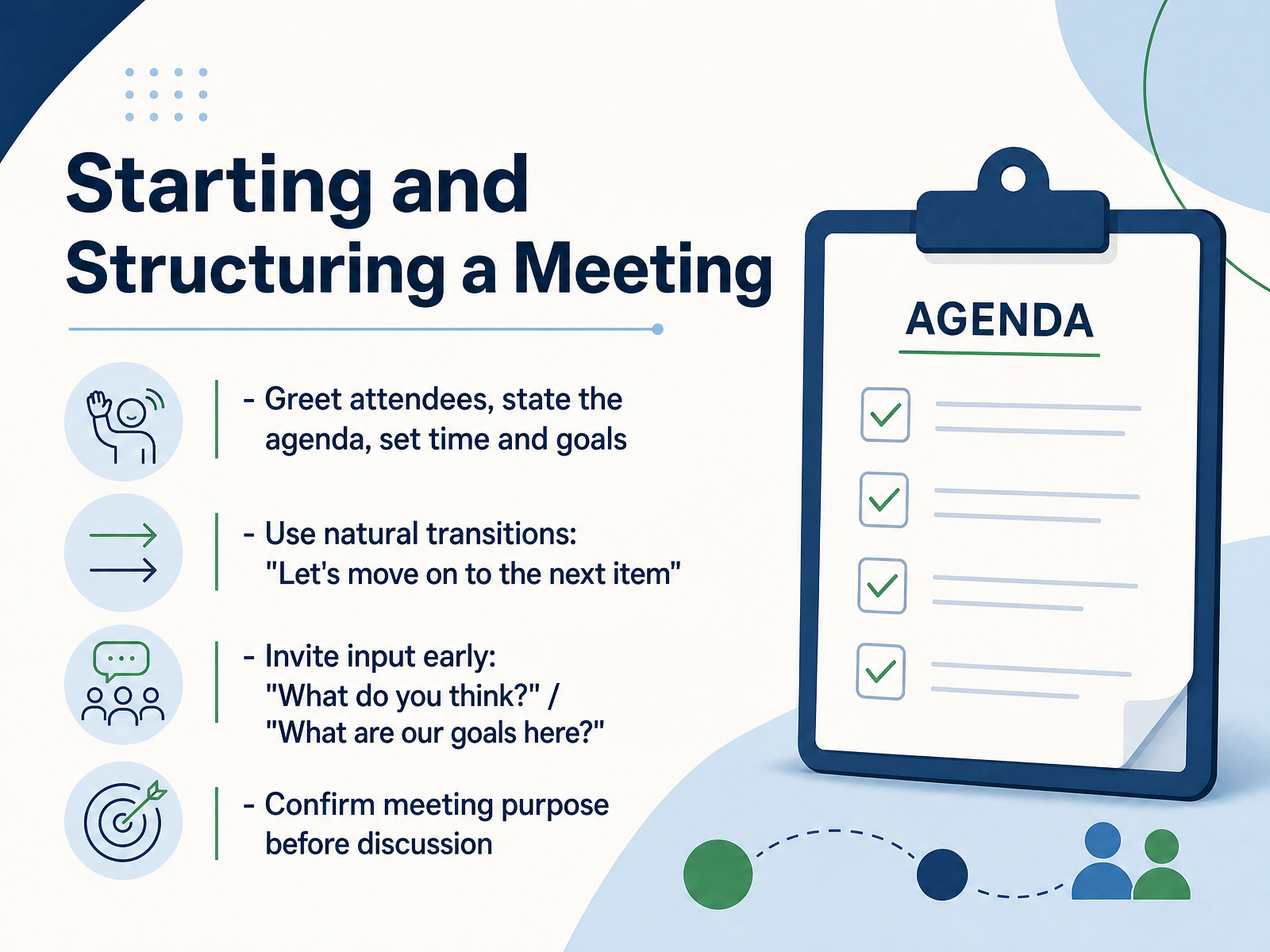
 - 03Starting and Structuring a MeetingNow, let's look at how to start and structure a meeting effectively. A strong opening sets the tone. Greet your attendees warmly, state the agenda clearly, and agree on the time and goals. This gives everyone a shared map. Use natural transitions to guide the flow, like, 'Let's move on to the next item.' This keeps the meeting organized and respectful of everyone's time. Early on, invite input with simple questions like, 'What do you think?' or 'What are our goals here?' These phrases encourage participation and build a sense of shared ownership. And before diving into deep discussion, confirm the meeting's purpose to ensure everyone is aligned. Coming up, we'll cover how to contribute your ideas and handle interruptions gracefully.
 nationaltraining.edu.aulollydaskal.comwomentech.net+22 min
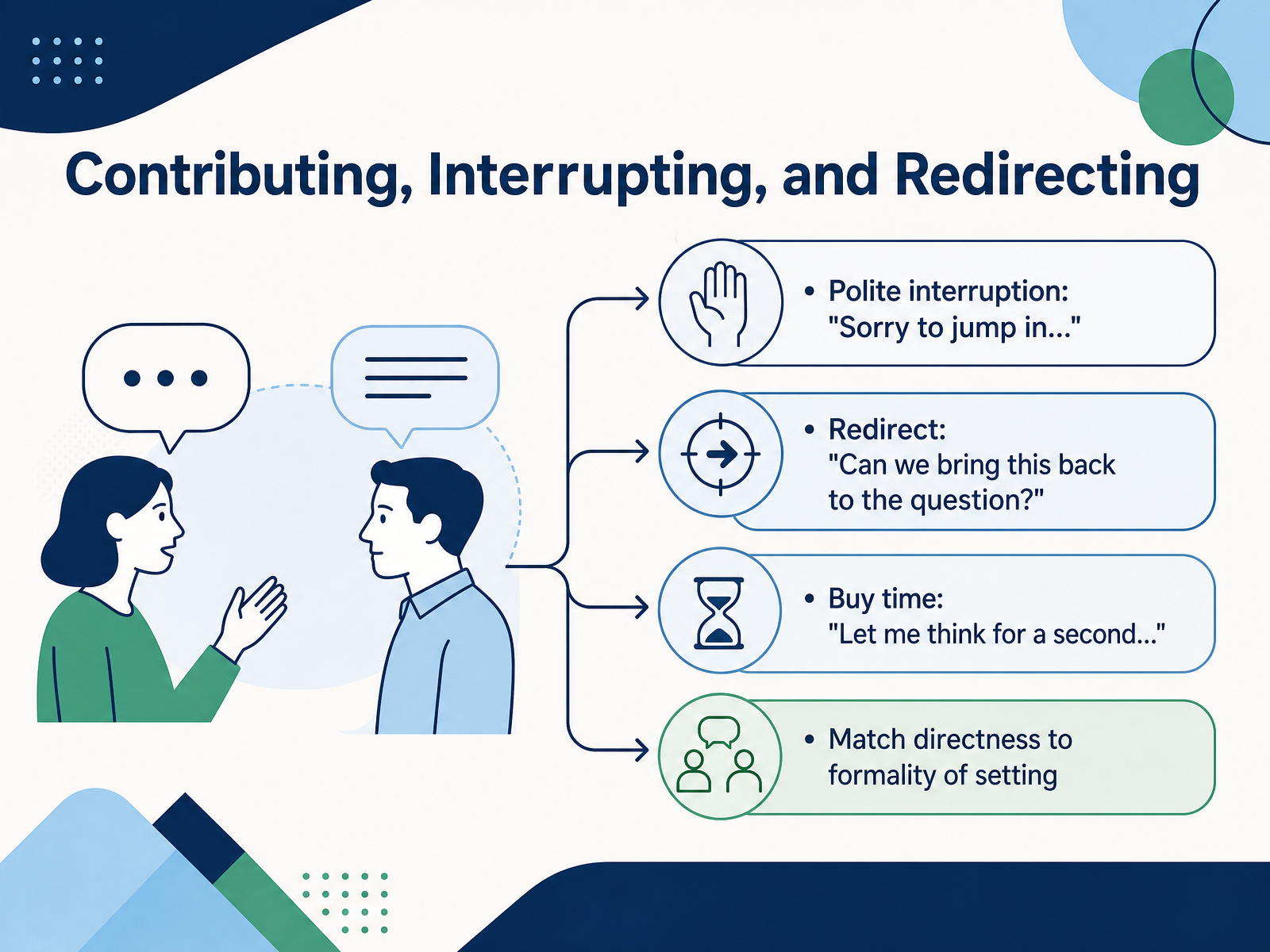
 - 04Contributing, Interrupting, and RedirectingLet’s talk about the moments when meetings get tricky. You want to contribute, but someone is speaking. Or the discussion drifts off track. Here’s the key: you can interrupt politely, and you can redirect with confidence. Start with a soft phrase like: Sorry to jump in, but I’d like to add something. That shows respect, and it signals you have a point. If the conversation goes off course, try: Can we bring this back to the question we’re discussing? This is direct but neutral. It helps the group refocus without blaming anyone. Sometimes you need a moment to respond. Just say: Let me think for a second. That’s perfectly acceptable, and it shows you’re taking the discussion seriously. One important tip: match your directness to the formality of the setting. In a formal client meeting, soften your language. In a casual team huddle, you can be more straightforward. So remember: interrupt politely, redirect clearly, and pause when you need time. Next, we’ll look at agreeing and disagreeing politely, so you can express your views with professionalism.
 1 min
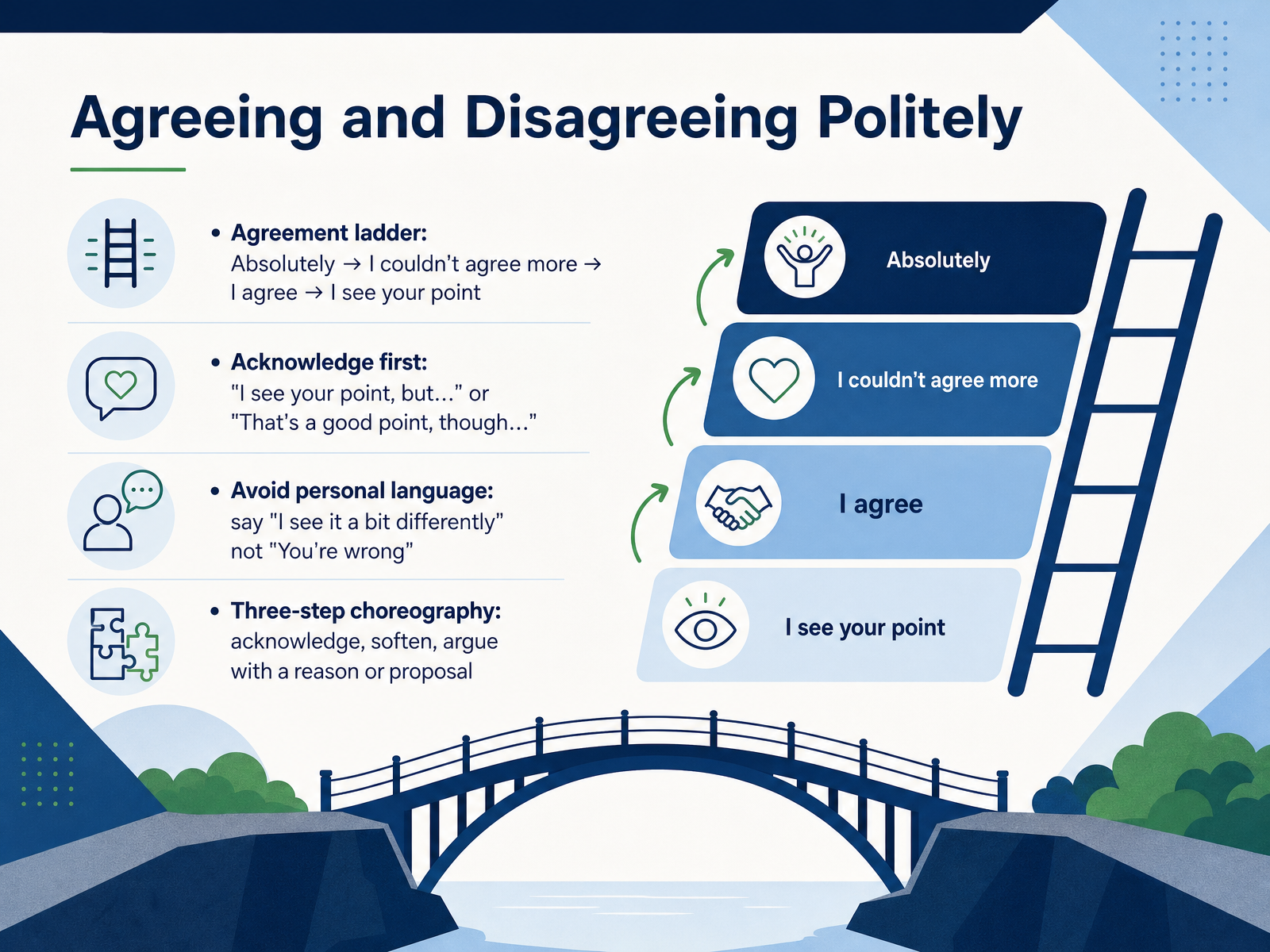
1 min - 05Agreeing and Disagreeing PolitelyLet's move on to agreeing and disagreeing politely. In meetings, harmony matters, but honesty matters too. The goal is to share your view without breaking the relationship. Let's start with agreement. Think of it as a ladder. At the top, you have short and strong phrases like "Absolutely." Slightly lower, you might say, "I couldn't agree more." The neutral middle is simply "I agree." And the bottom rung is "I see your point." Now, that last one is tricky. It sounds like agreement, but it usually means a "but" is coming next. And that's okay. It's actually the perfect way to disagree. For example, "I see your point about the deadline, but I'm concerned about the testing phase." Notice what we did there. We acknowledged their idea first, then we softened our pushback. We avoided personal language. Instead of saying "You're wrong," we say, "I see it a bit differently." So, remember the three-step choreography. Acknowledge the other person's point. Soften your disagreement. Then, argue with a reason or a proposal. This keeps you collaborative and clear. Next, we'll look at how to clarify and confirm understanding when things get unclear.
 everywhereenglish.eutonelang.appenglisch-lehrer.com+22 min
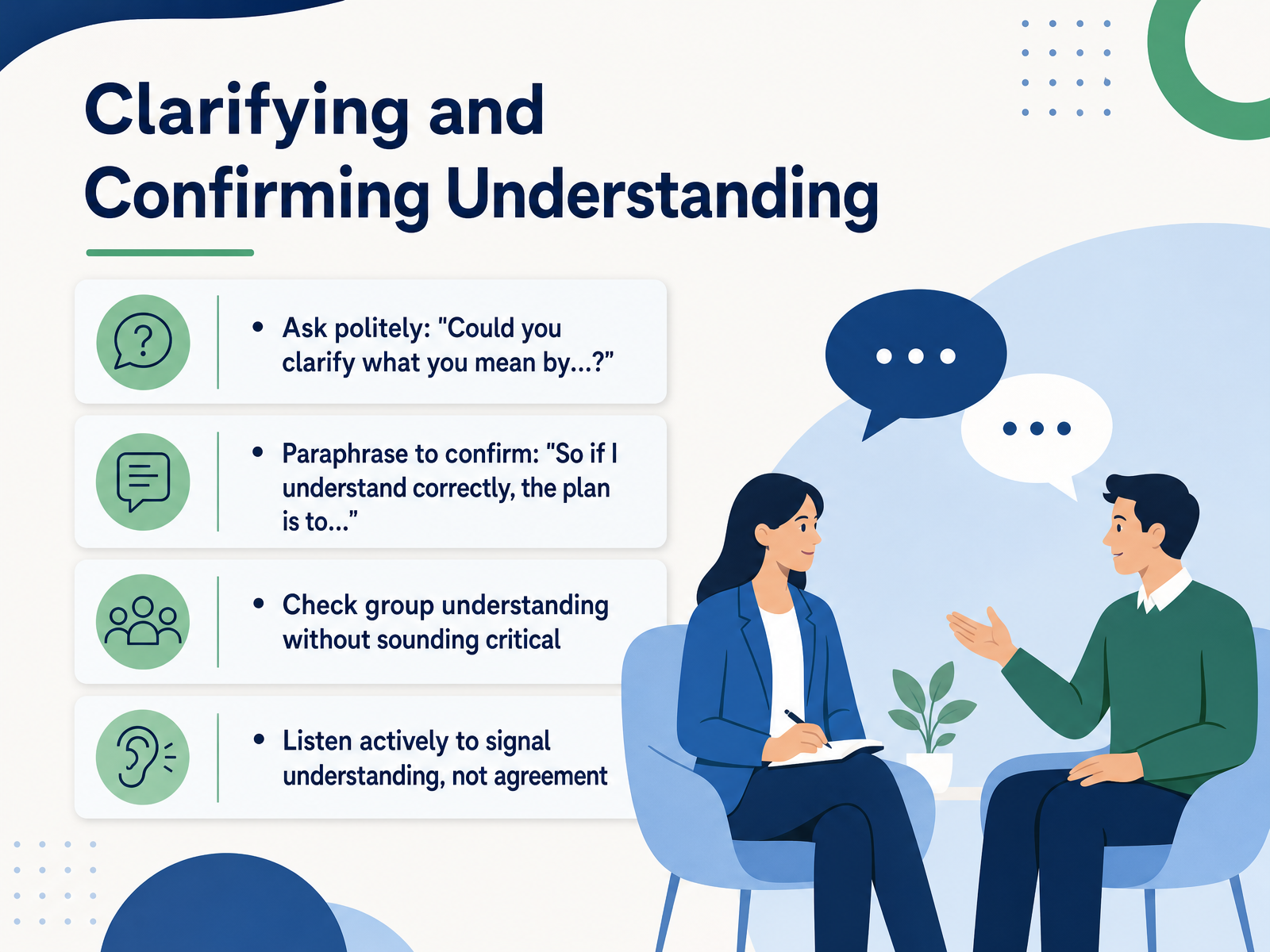
 - 06Clarifying and Confirming UnderstandingNow let's talk about clarifying and confirming understanding. This is where many meetings slow down, but it doesn't have to. When you're not sure what someone means, ask politely. For example, "Could you clarify what you mean by the revised timeline?" That keeps the conversation open and respectful. Then, paraphrase to confirm. Say something like, "So if I understand correctly, the plan is to launch next month." This shows you've been listening and gives the other person a chance to correct you. You can also check that the whole group is on the same page without sounding critical. A simple, "Does that match everyone's understanding?" works well. Remember, active listening means signaling that you understand, not necessarily that you agree. You might say, "I see where you're coming from" rather than "I agree with you." That small difference can prevent misunderstandings. So, the takeaway is: clarify, paraphrase, and check in with the group. These steps keep everyone aligned. Next, we'll look at giving updates and progress reports.
 1 min
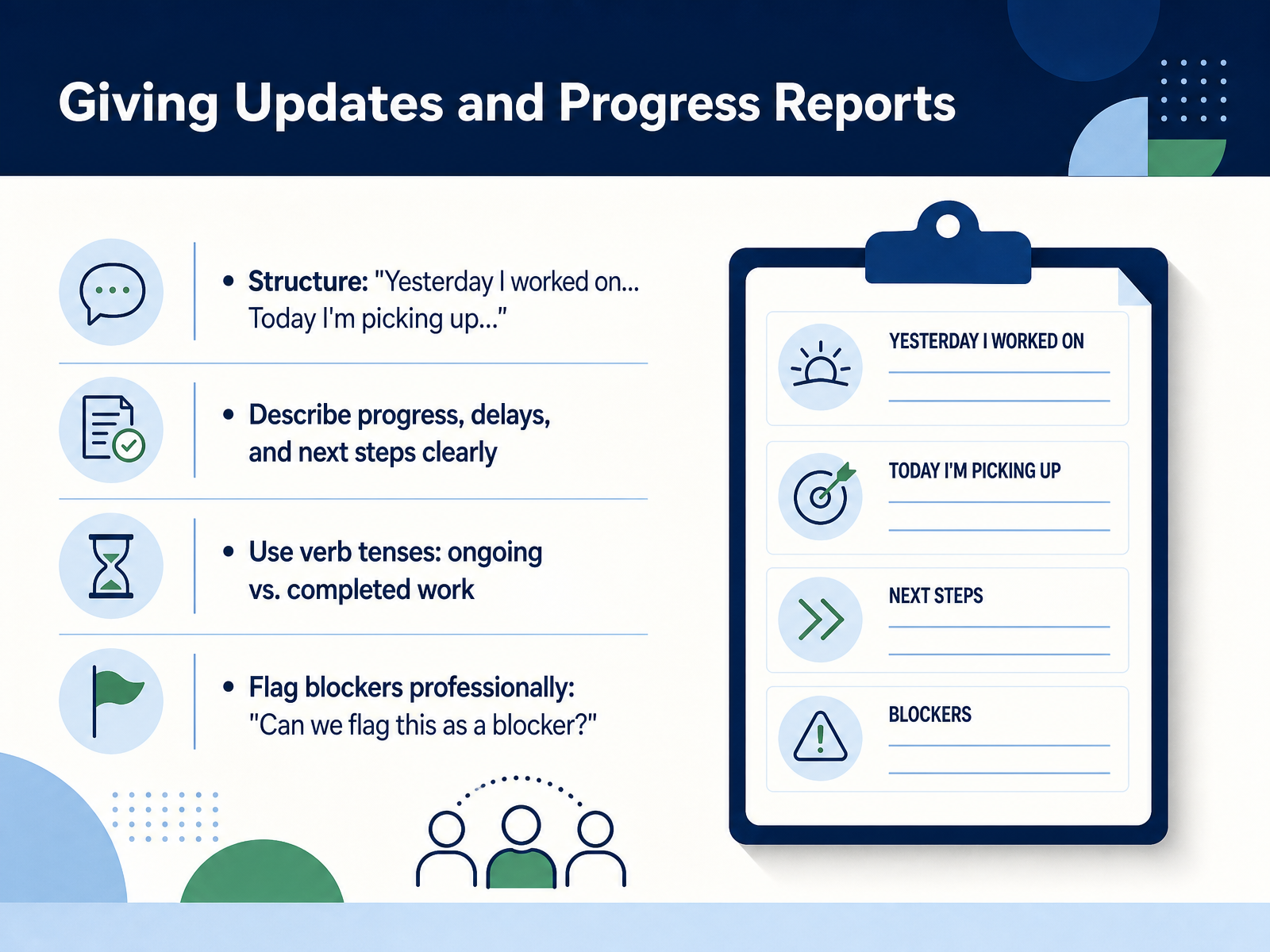
1 min - 07Giving Updates and Progress ReportsNow let's talk about giving updates and progress reports. When you share what you've done, keep it clear and simple. Use a structure like: Yesterday I worked on the budget. Today I'm picking up the client presentation. This helps everyone follow your timeline. Notice the verb tenses. Past tense is for completed work, like, I finished the report. Present continuous is for ongoing work, like, I'm currently revising the proposal. Be honest about delays, but stay professional. Say, we're behind schedule, but we're working on a solution. And if something is truly blocked, don't hesitate to name it clearly. Use language like, can we flag this as a blocker? That way, the team knows exactly where you need support. So, when you update your team, remember three things: state what's done, what's in progress, and what's next. Always flag blockers early. Next, we'll look at teamwork language and shared responsibility.
 1 min
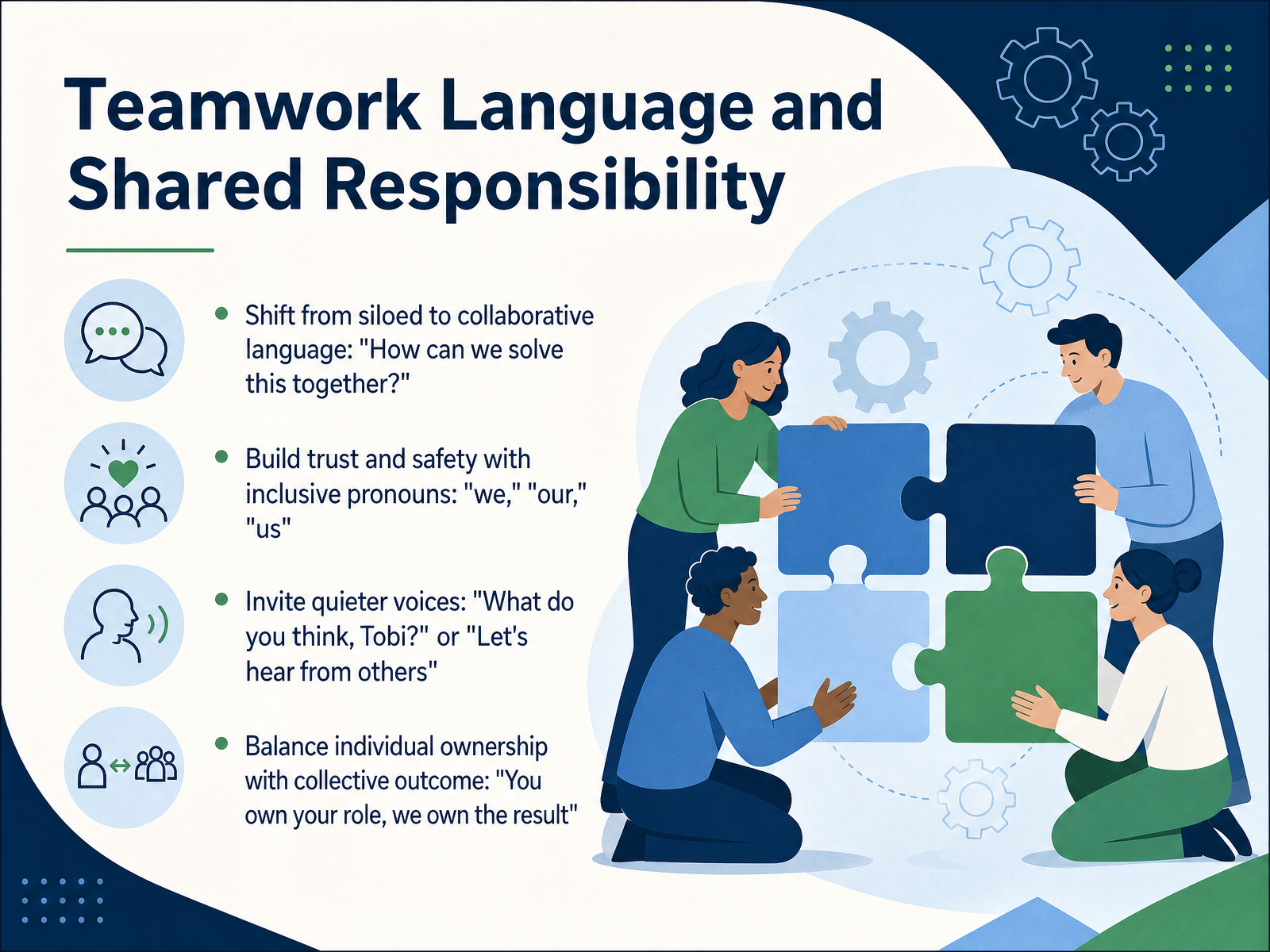
1 min - 08Teamwork Language and Shared ResponsibilityNow let's look at how we can use language to strengthen teamwork and shared responsibility. A simple shift from siloed thinking to collaborative language can transform a team. Instead of saying, "That's not my job," try asking, "How can we solve this together?" This small change builds trust and psychological safety. Use inclusive pronouns like "we," "our," and "us" to create a sense of unity. For example, say "We need a plan" instead of "You need a plan." It reduces defensiveness and encourages people to contribute. Also, make space for quieter voices. You might say, "What do you think, Tobi?" or "Let's hear from others." This sends a clear message that every perspective is valued. Finally, balance individual ownership with collective outcome. Remember the phrase: "You own your role, we own the result." This means each person is responsible for their tasks, but the team shares the success or setback together. So next time you're in a meeting, try using "we" language and inviting input from everyone. Next, we'll look at how to make decisions and reach consensus as a team.
 nationaltraining.edu.aulollydaskal.comwomentech.net+21 min
 - 09Making Decisions and Reaching ConsensusNow let's focus on how we make decisions as a team. The goal isn't to win an argument—it's to reach a decision everyone can support. Start by proposing options inclusively. Instead of pushing your own idea, try saying, 'Let's build on each other's ideas.' This keeps the conversation open and invites others to contribute. Next, work toward agreement step by step. Don't force a quick vote. Check in with the group and ask, 'Does that work for everyone?' This gives people a chance to voice concerns before you move forward. Once you have agreement, make it concrete. Assign clear owners and follow-up actions. Say something like, 'So, Sarah will update the timeline, and we'll check back on Thursday.' This way, everyone knows what happens next and who is responsible. Remember, shared responsibility means you own your role, but we own the outcome. Now, let's think about what happens when discussions get tense—that's our next topic: Handling Difficult Moments.
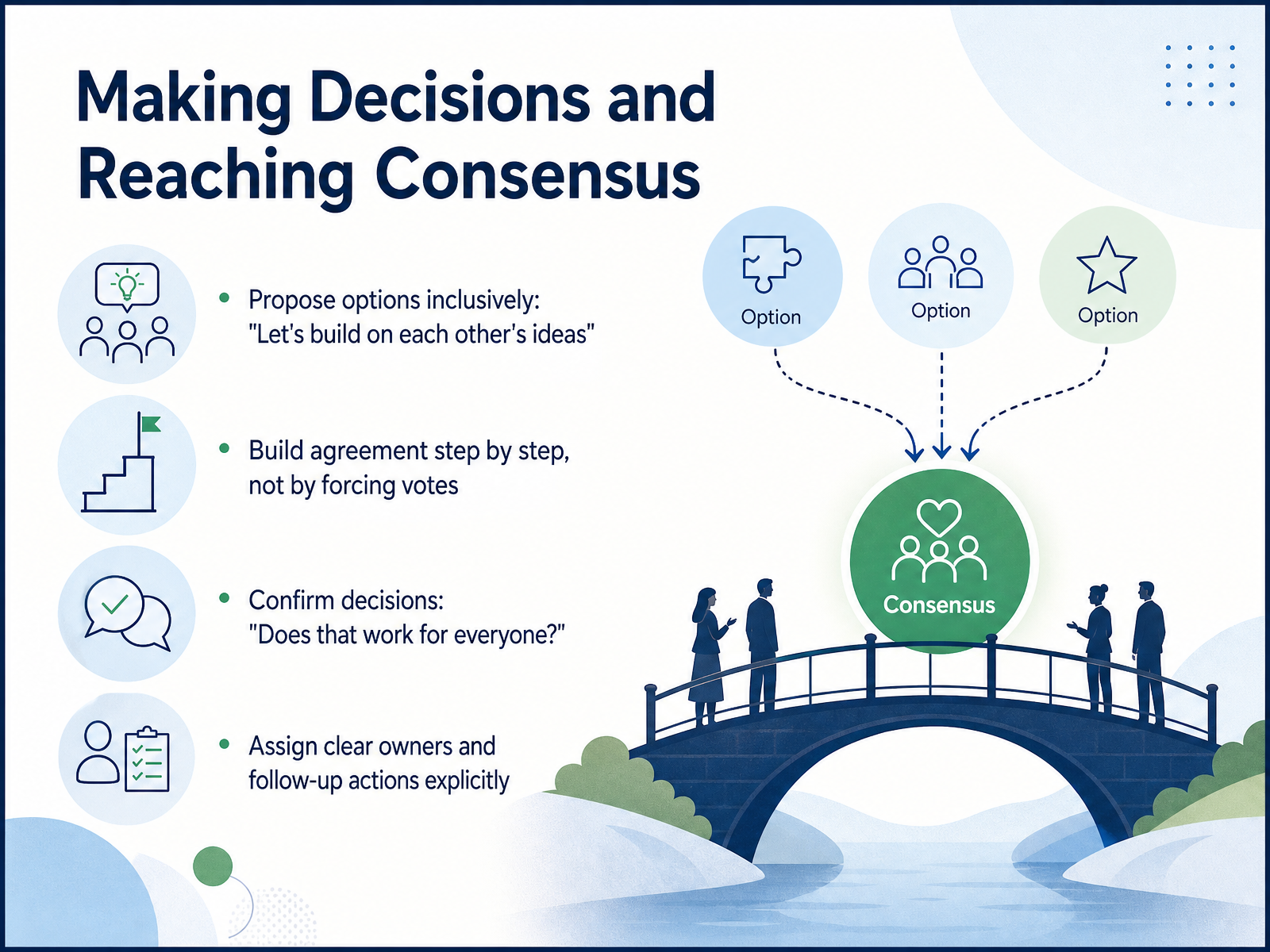 nationaltraining.edu.aulollydaskal.comwomentech.net+21 min
 - 10Handling Difficult MomentsNow let's talk about handling difficult moments in a meeting. When tensions rise, your first job is to slow the pace. Try saying, "Let's take this one point at a time." This gives everyone a moment to breathe and refocus. Next, stay neutral. Avoid words like "always" or "never." Keep your voice steady and use non-blaming language. For example, "I can see this is important to both of you." Then, redirect to the shared problem. A simple question like, "What outcome are we trying to reach?" can pull the conversation back on track. Acknowledge feelings, but don't take sides. You might say, "I hear that you're both frustrated, and that's understandable." Finally, intervene early. Don't wait for things to spiral. A light touch at the first sign of tension is much easier than a full intervention later. Remember, your calm signals to the room that the situation is manageable. Coming up next, we'll look at more ways to de-escalate tension in meetings.
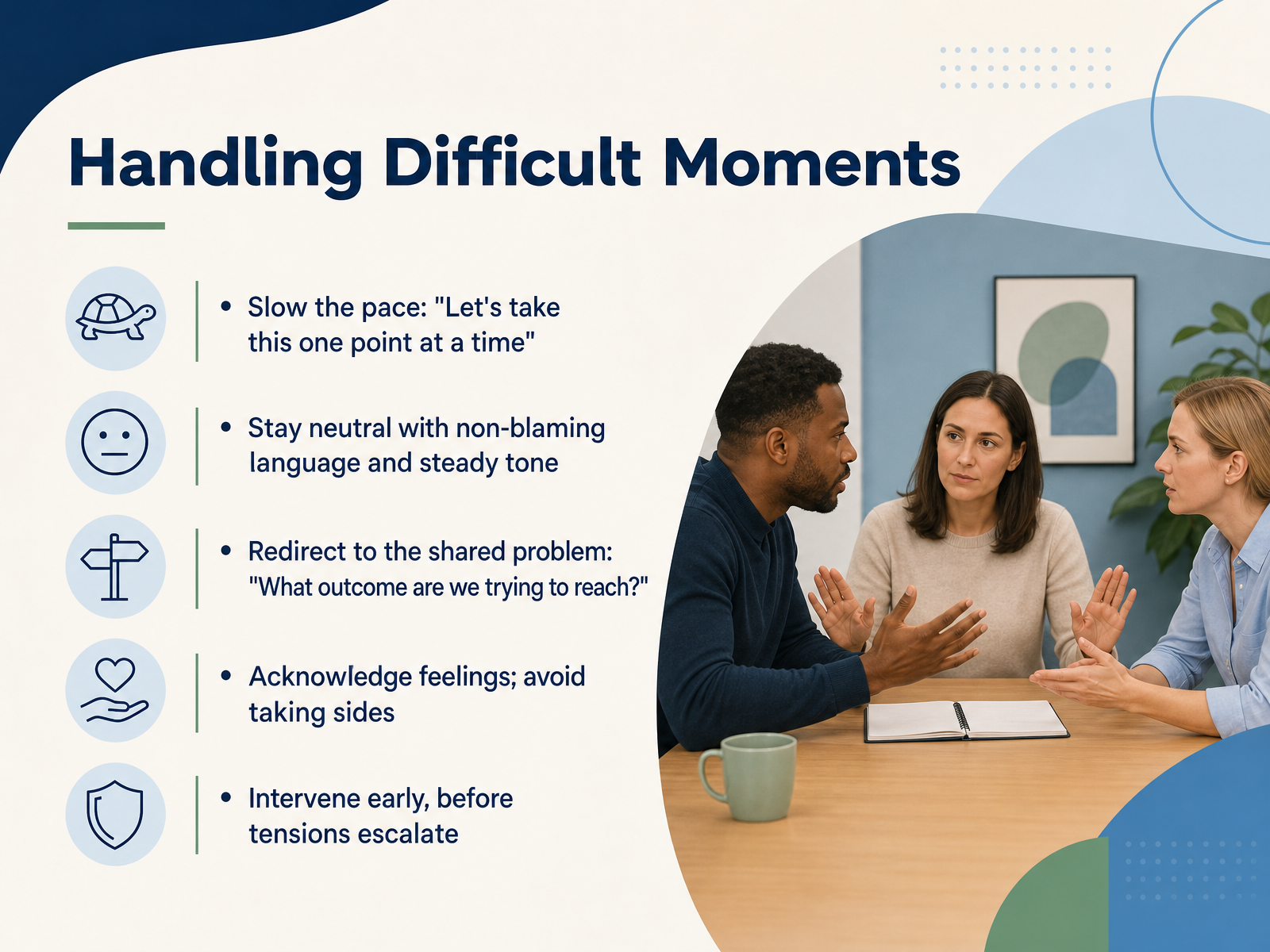 1 min
1 min - 11De-escalating Tension in MeetingsNow let’s talk about a skill that can truly save a meeting: de-escalating tension. When emotions start to rise, your goal is not to decide who is right. Your goal is to bring back enough calm so the group can think clearly. So, intervene early. At the first sign of a raised voice or a personal comment, step in with a simple phrase like: “Hold on, let’s slow this down.” It is easier to manage a small spark than a full fire. Stay neutral. Acknowledge the feelings in the room without judging. You might say: “There is clearly a lot of energy around this. Let’s take it one piece at a time.” Next, separate the people from the problem. The argument is rarely about what it seems. Look for shared ground. Try saying: “It sounds like you both want this delivered on time. The question is how. Let’s start there.” Once both sides feel heard, ask a question that moves the group forward, like: “What is the specific outcome we need to reach?” You are not resolving the conflict on the spot. You are creating the conditions for a real conversation to continue. Coming up, we’ll look at how to close the meeting, summarize decisions, and confirm follow-ups effectively.
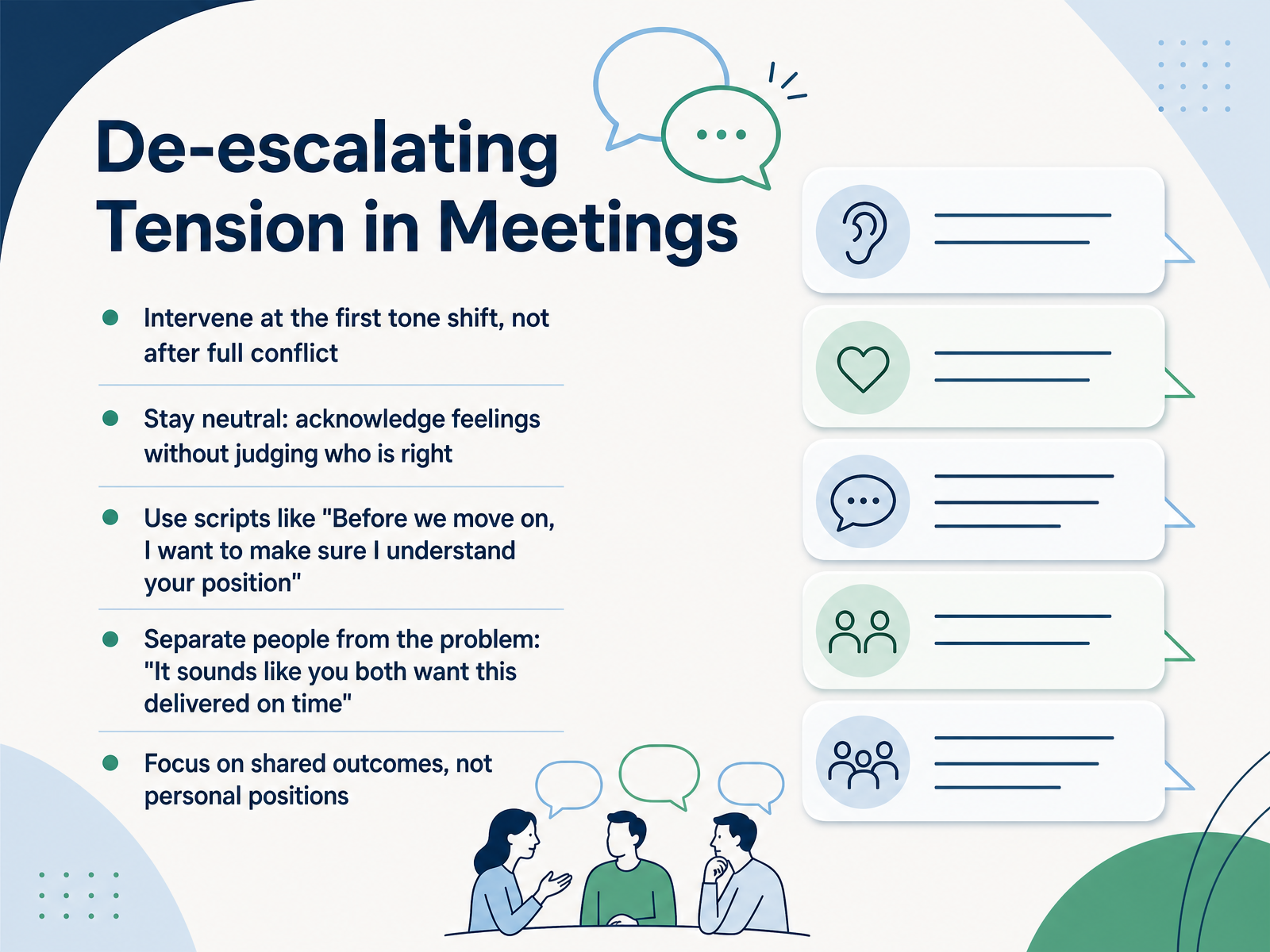 2 min
2 min - 12Closing, Summarizing, and Follow-UpNow let's look at how we close a meeting and keep the momentum going. A strong ending is just as important as a strong opening. Start by summarizing what was agreed, so everyone leaves with the same picture. You can say, "Let me run through what we've agreed." This simple line confirms alignment and prevents misunderstandings. Next, confirm deadlines and owners. Ask directly, "Who's taking ownership of this?" or "Can we agree on a completion date?" This turns good intentions into clear accountability. Then, close professionally with something like, "I think that covers everything. Thanks, everyone." A warm, clear closing leaves a positive impression. Finally, plan your next steps and follow-up email. Use an action item template: what, who, and when. For example, "Action item: Maria will send the revised budget by Friday." This keeps everyone on track after the meeting. So, remember: summarize, confirm, close, and follow up. These four habits make your meetings more effective and your teamwork stronger. Next, we'll explore inclusive language for teamwork.
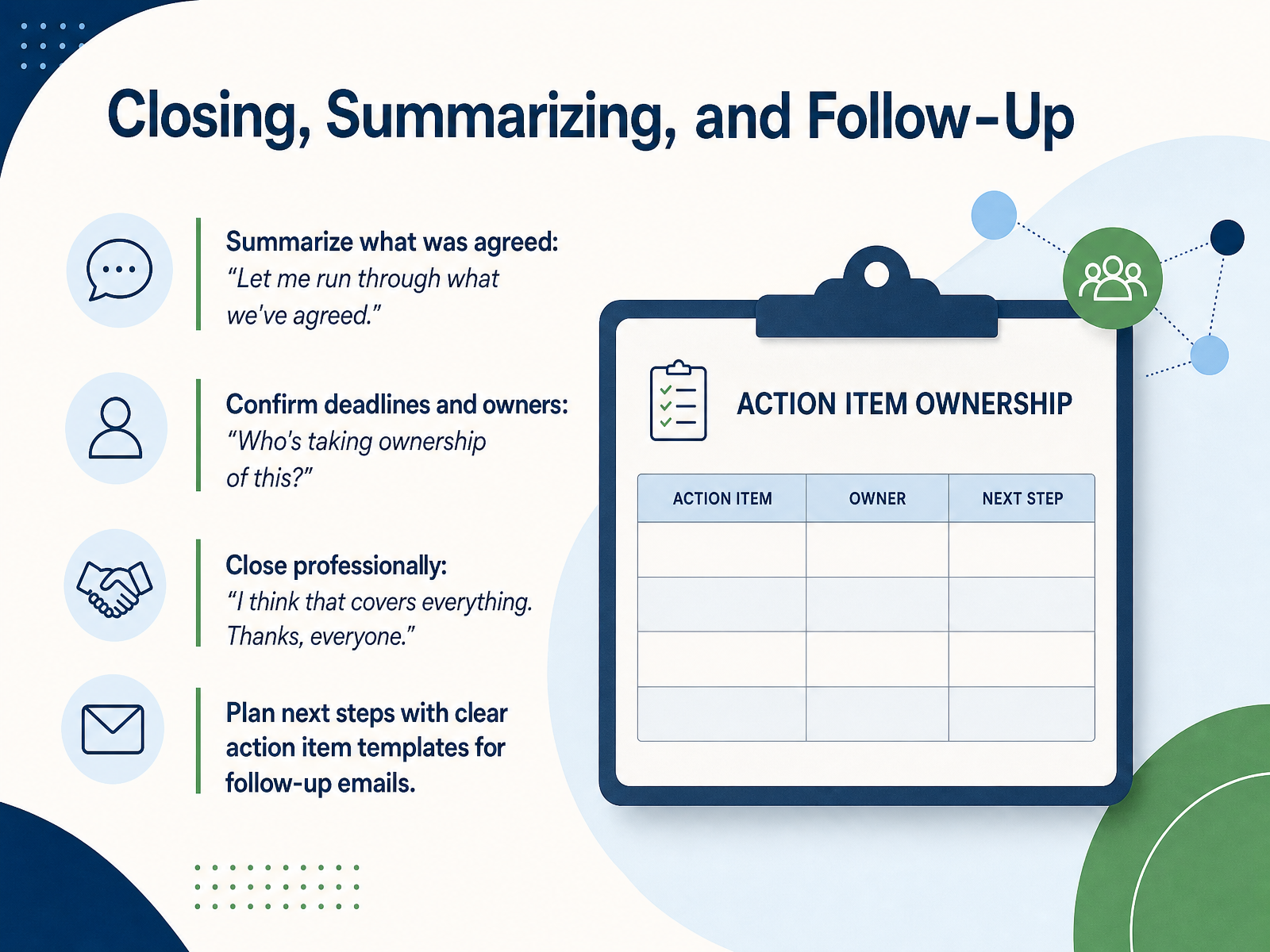 2 min
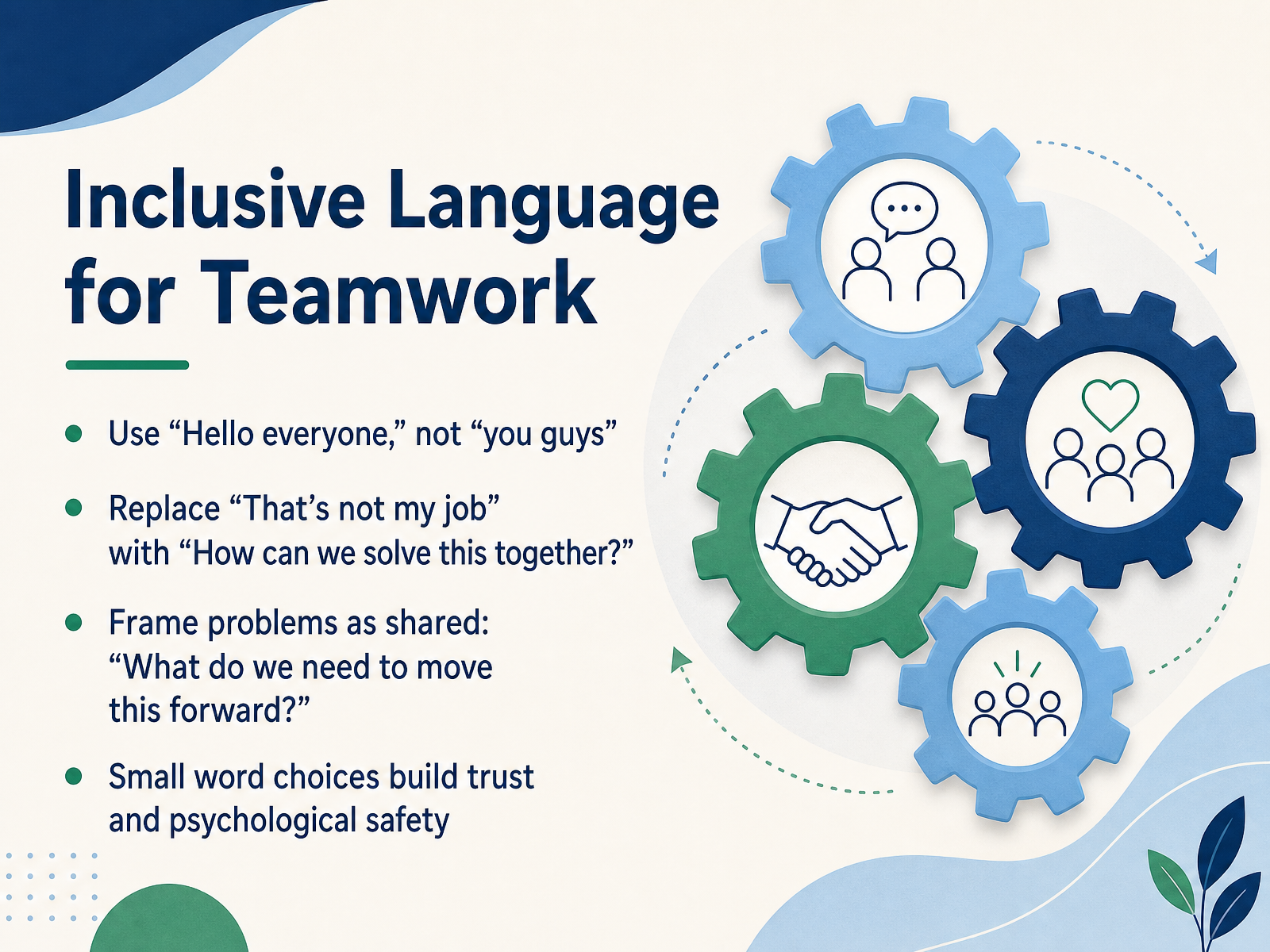
2 min - 13Inclusive Language for TeamworkNow let's talk about inclusive language in teamwork. The words we choose can either build bridges or create walls. Small shifts make a big difference. For example, instead of saying 'you guys,' try 'hello everyone.' It's simple, but it makes everyone feel included. Also, replace 'that's not my job' with 'how can we solve this together?' This reframes the problem as a shared challenge. Instead of saying 'they didn't deliver,' ask 'what do we need to move this forward?' This keeps the focus on solutions, not blame. These small word choices build trust and psychological safety, which are essential for effective teamwork. When people feel safe and included, they contribute more openly and collaborate better. So next time you speak, notice your words—choose inclusive ones. And remember, a small change in language can create a big change in team culture. Next, we'll look at how to build a strong feedback culture in your team.
 nationaltraining.edu.aulollydaskal.comwomentech.net+21 min
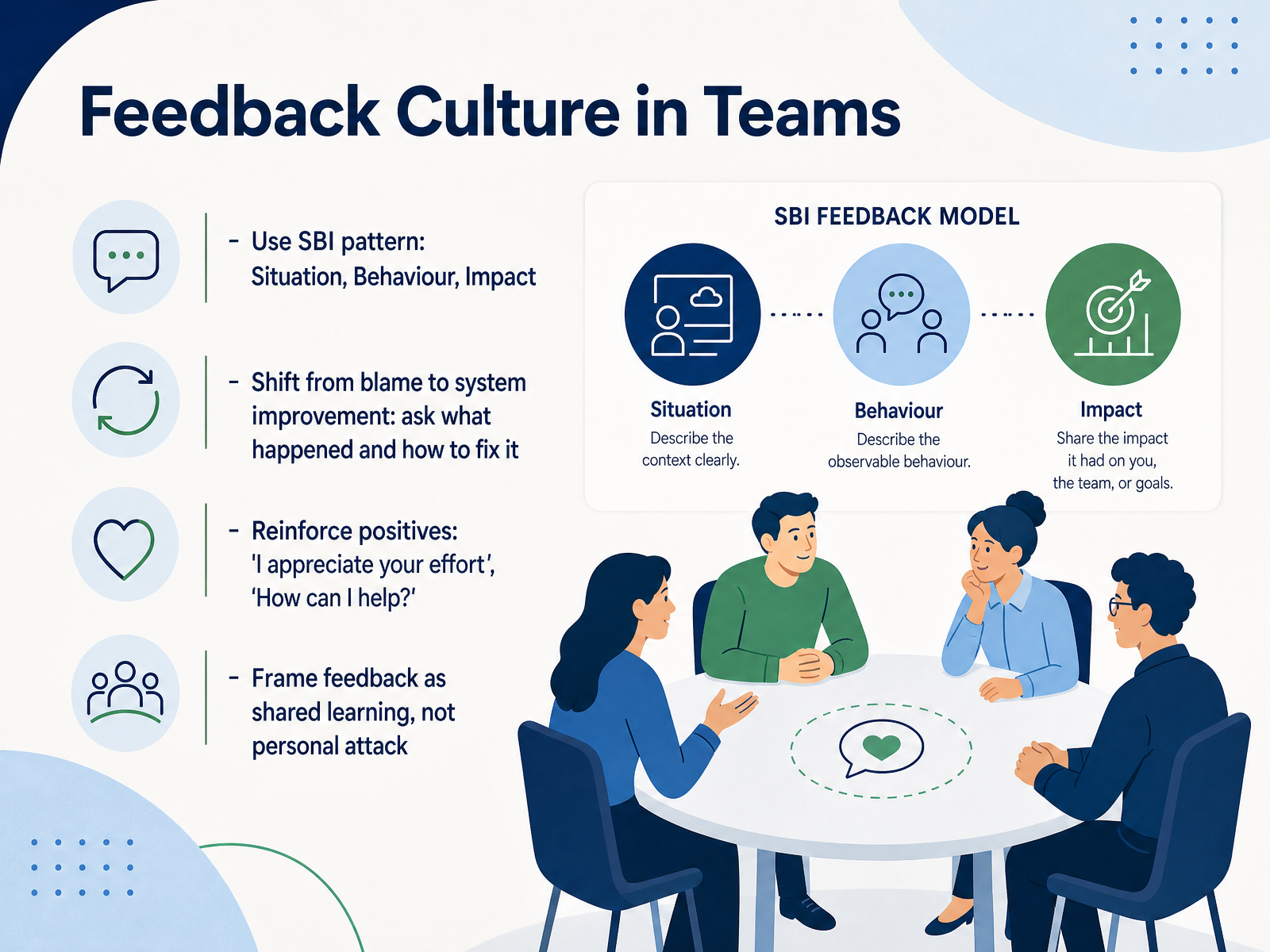
 - 14Feedback Culture in TeamsNow let's talk about building a feedback culture in your team. The goal is to make feedback feel like a shared learning experience, not a personal attack. One simple tool is the SBI pattern: Situation, Behaviour, Impact. For example, instead of saying 'You were late again,' try 'In yesterday's meeting, when you arrived ten minutes late, it delayed our start and we lost valuable time.' This keeps the focus on the event, not the person. Also, shift from blame to system improvement. Ask, 'What happened, and how can we fix it?' rather than 'Who dropped the ball?' This encourages honesty and problem solving. And remember to reinforce positives. Saying 'I appreciate your effort' or 'How can I help?' builds trust and openness. Frame every piece of feedback as a way for both of you to grow. Next, we'll practice these and other strategies in real scenarios.
 nationaltraining.edu.aulollydaskal.comwomentech.net+22 min
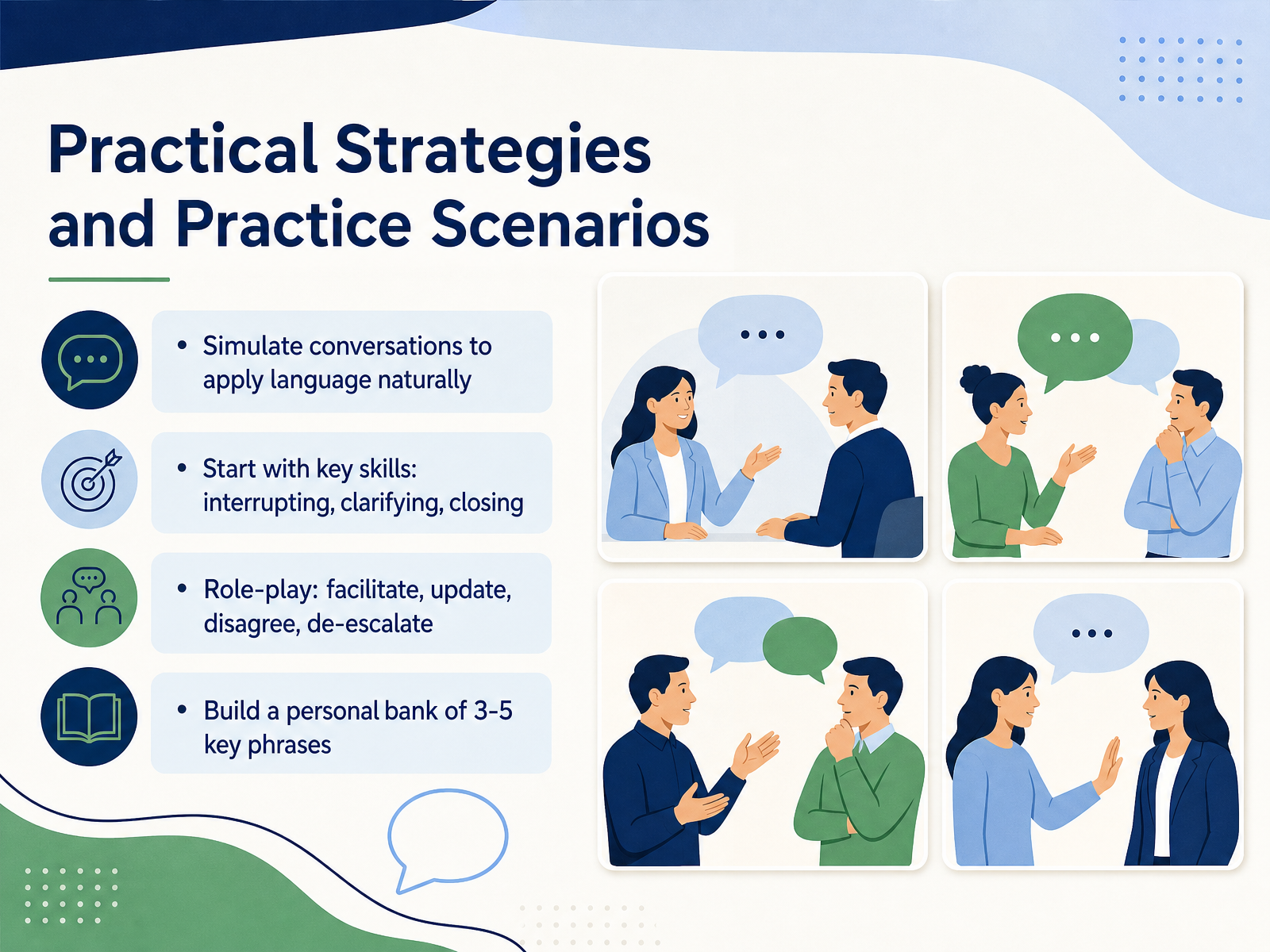
 - 15Practical Strategies and Practice ScenariosWe are at the final stretch in this course. Let us bring everything together with practical strategies you can use right away. Do not just memorize the phrases. Practice them out loud. Simulate real conversations so the language feels natural on your tongue. Start with three key skills: interrupting politely, clarifying what you heard, and closing a discussion. Then try a role play where you facilitate a short meeting, share an update, disagree with a colleague, and even handle some tension. It may feel awkward at first. That is normal. Each time you practice, it becomes easier. Here is one small tip. Build a personal bank of three to five key phrases that you know you can deliver with confidence. For example: Could we pause for one moment? And: Just to clarify, do you mean...? And: Let us summarize the next steps. Pick phrases that sound like you, and reuse them until they become second nature. You have learned a great deal in this course. Now it is time to step into your next meeting and use it. Thank you for your effort and attention. You are ready. Go and make your voice heard.
 2 min
2 min
Take the deck with you
Download this course as a file — free, no sign-up needed.
- PDF handoutEvery slide page, ready to print or share.16 pages · 3.5 MBDownload
- Narrated PowerPointThe deck that presents itself — every slide carries the digital human's narration video.16 pages · 13.2 MBDownload
- PowerPoint slidesThe full deck as a .pptx — open it in PowerPoint, Keynote, or Google Slides.16 pages · 3.4 MBDownload
Free to use in your own training — please keep the PersonWise credit page at the end.
Have your own deck? Turn it into a course
Sources consulted
Web sources consulted while building this course.
- English for Work outline — lumsx.lums.edu.pk
- BUS 305 Business Communication Syllabus Fall 2026 — studylib.net
- LM 77 Business English - 1° sem - 25-26 — lum.it
- Business English: Meetings — coursera.org
- BUS 2610 02: Collab, Write & Present in Bus — catalog.ysu.edu
- Meeting Roles - Learn Business English — learnenglish.de
- Facilitator, Recorder, and Timekeeper Roles - Center for Faculty Excellence — cfe.unc.edu
- Roles in Meetings | SASC Project Management Team — web.sas.upenn.edu
- 5 Meeting Roles You Need to Assign for More Productive Meetings — pumble.com
- Meeting Roles, Responsibilities and Process | ASCCC — asccc.org
- Breaking Silos Through Collaborative Language — nationaltraining.edu.au
- 4 Important Phrases That Build a Culture of Collaboration - Lolly Daskal — lollydaskal.com
- Use Collaborative Language | Women in Tech Network — womentech.net
- Collaboration phrases that elevate teamwork and leadership impact — leadership-development.net
- You Own Your Role, We Own The Outcome — pointc.co
- Business Meeting Phrases: How to Agree and Disagree Diplomatically at Work - Everywhere English — everywhereenglish.eu
- How to Politely Disagree in English: 10 Professional Phrases - ToneLang Blog — tonelang.app
- Agreeing & Disagreeing Politely in English | Simmonds — englisch-lehrer.com
- How To Disagree In English Politely • Fluency Secrets — englishlessonviaskype.com
- How to Politely Disagree in Business English — chatterfox.com