Leadership Styles in Management
Begin
14 pages · ~28 min
Leadership Styles in Management
Explore various leadership styles in management, their characteristics, and applications, helping aspiring and current managers identify and adapt their approach to lead teams effectively.
What you’ll learn
- 01Types of Leadership Styles in ManagementWelcome. If you are leading a team, or getting ready to lead one, this session is for you. Here is the reality: the way you lead directly shapes how your people perform, how engaged they feel, and whether they stay. We are going to walk through eight core leadership styles, from the very directive to the deeply collaborative. And we will bust a common myth along the way: there is no single best style. What matters is flexibility, knowing which approach fits the moment. By the end, you will have a simple self-assessment framework you can use right away, starting in your next one-on-one. Let's begin by getting clear on what we actually mean when we talk about a leadership style.nature.comjournals.sagepub.comjippublication.com+21 min
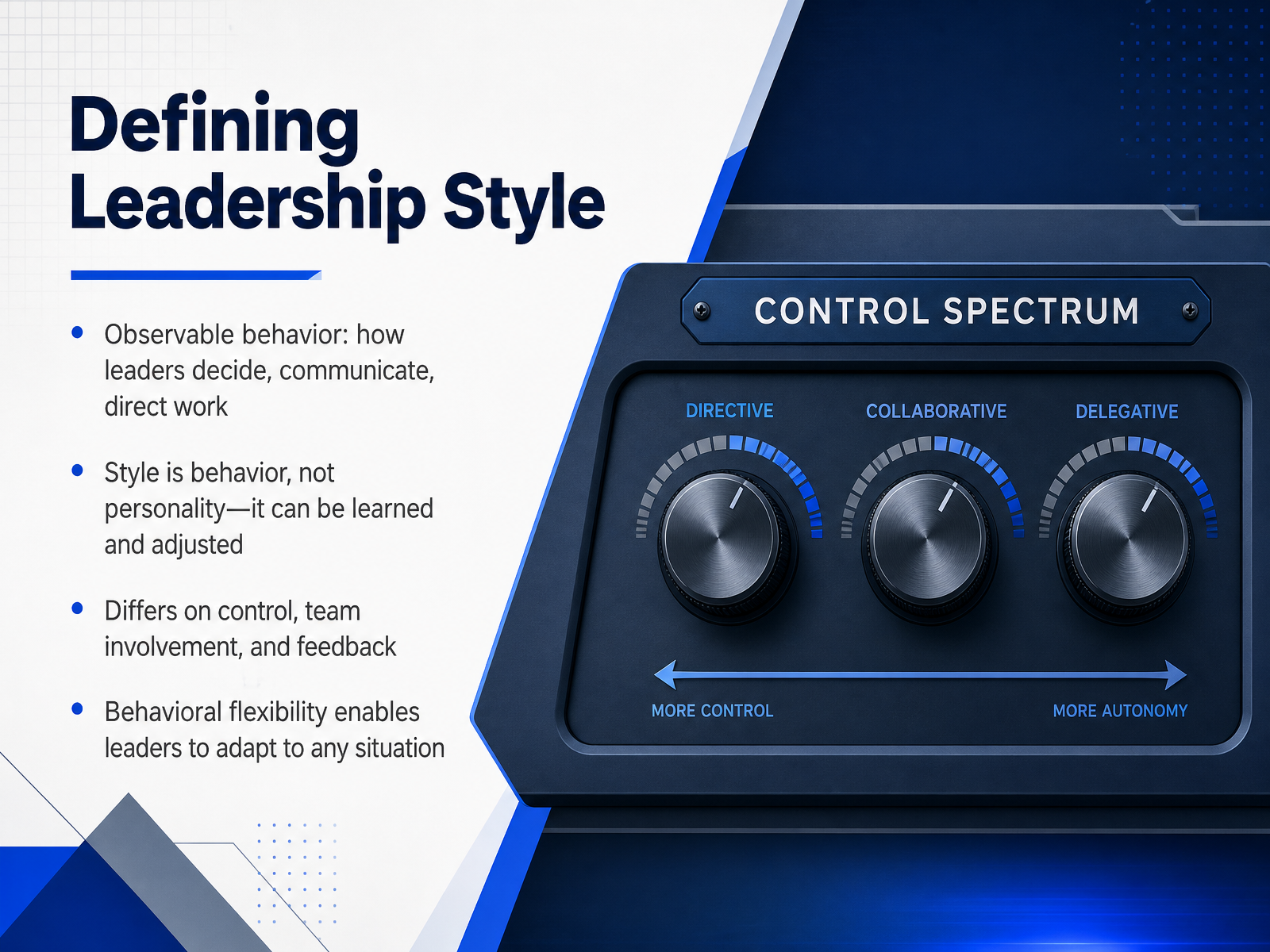
- 02Defining Leadership StyleLet's start with a clear definition. A leadership style is simply the pattern of behavior you show when you guide a team. It's how you make decisions, how you communicate, and how you direct the work itself. Here's the key point: a style is not your personality. It's behavior, and behavior can be learned, practiced, and adjusted. So if you don't like your current style, you can change it. Leadership styles also differ in a few core areas: how much control you keep, how involved the team is, and how you handle feedback. Think of it like this. You might make an executive decision on a tight deadline on Monday, but on Tuesday, you might invite the team to shape a new project plan. That flexibility is a skill. The most effective leaders can read the situation and adapt their approach, moving between styles as needed instead of relying on one default mode. So as we explore different styles, remember this. It's not about labeling yourself. It's about building a toolkit you can choose from. Next, we'll look at why your leadership style matters so much.
 verywellmind.comfranklincovey.com.auimd.org+21 min
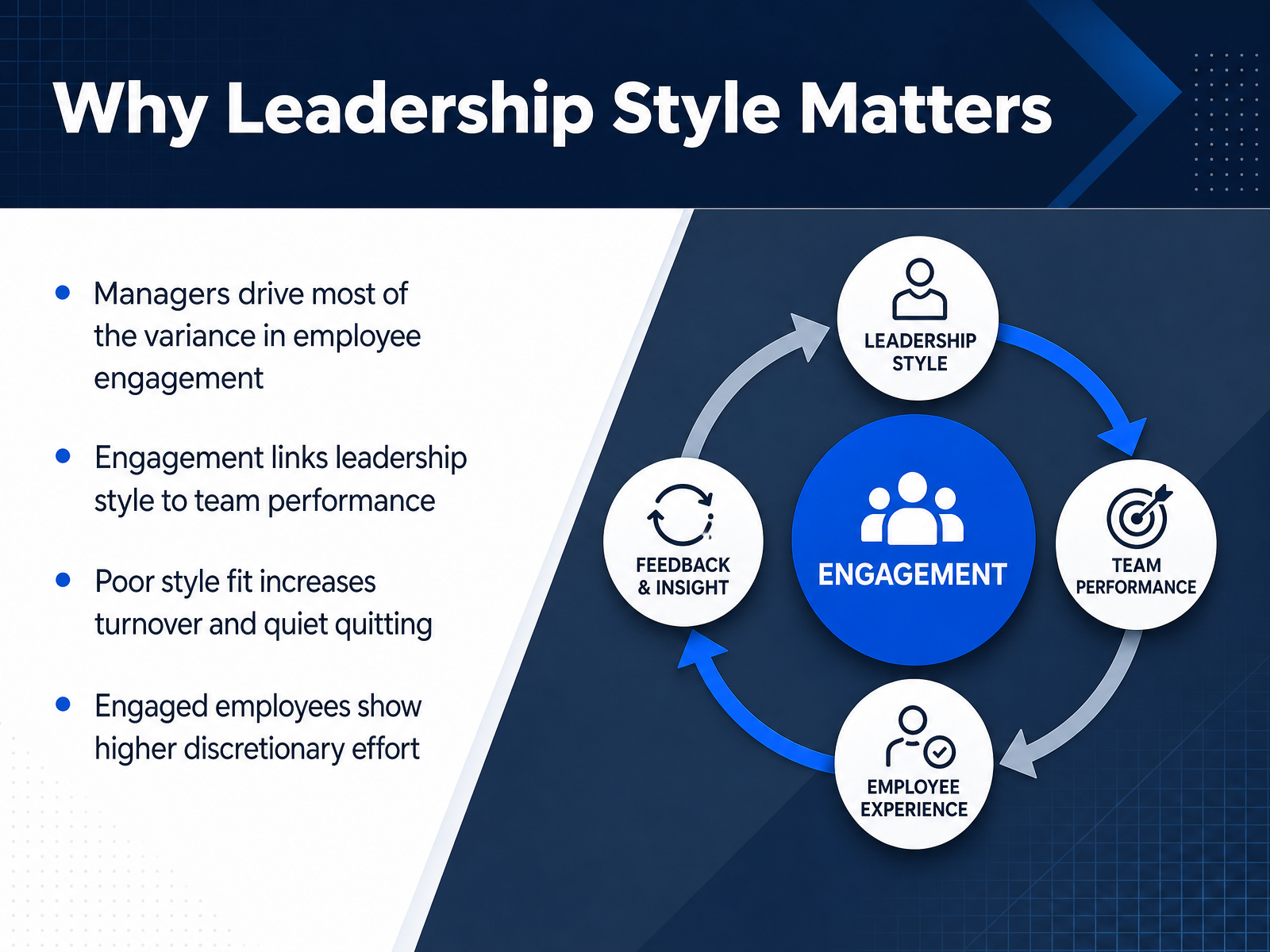
 - 03Why Leadership Style MattersSo why does all this matter to you as a manager? Here's a number that should stick with you: Gallup research has consistently found that managers account for at least seventy percent of the variance in employee engagement. That means your leadership style — how you communicate, how you make decisions, how you support your team — is the single biggest factor in whether your people feel energized or just show up to collect a paycheck. And here's the chain reaction: engagement is the direct link between your style and your team's performance. When people are engaged, they put in discretionary effort. That's the extra creativity, the willingness to stay late when it matters, the proactive problem-solving you can't fake or command. Conversely, a style that doesn't fit your team produces some expensive outcomes. Turnover goes up. And quiet quitting — people staying physically present but mentally checked out — becomes a real risk. So your style isn't a personality trait; it's a tool. Understanding its impact is the first step to using it deliberately. Let's look at how leadership theory evolved to bring us to this point.
 nature.comjournals.sagepub.comjippublication.com+21 min
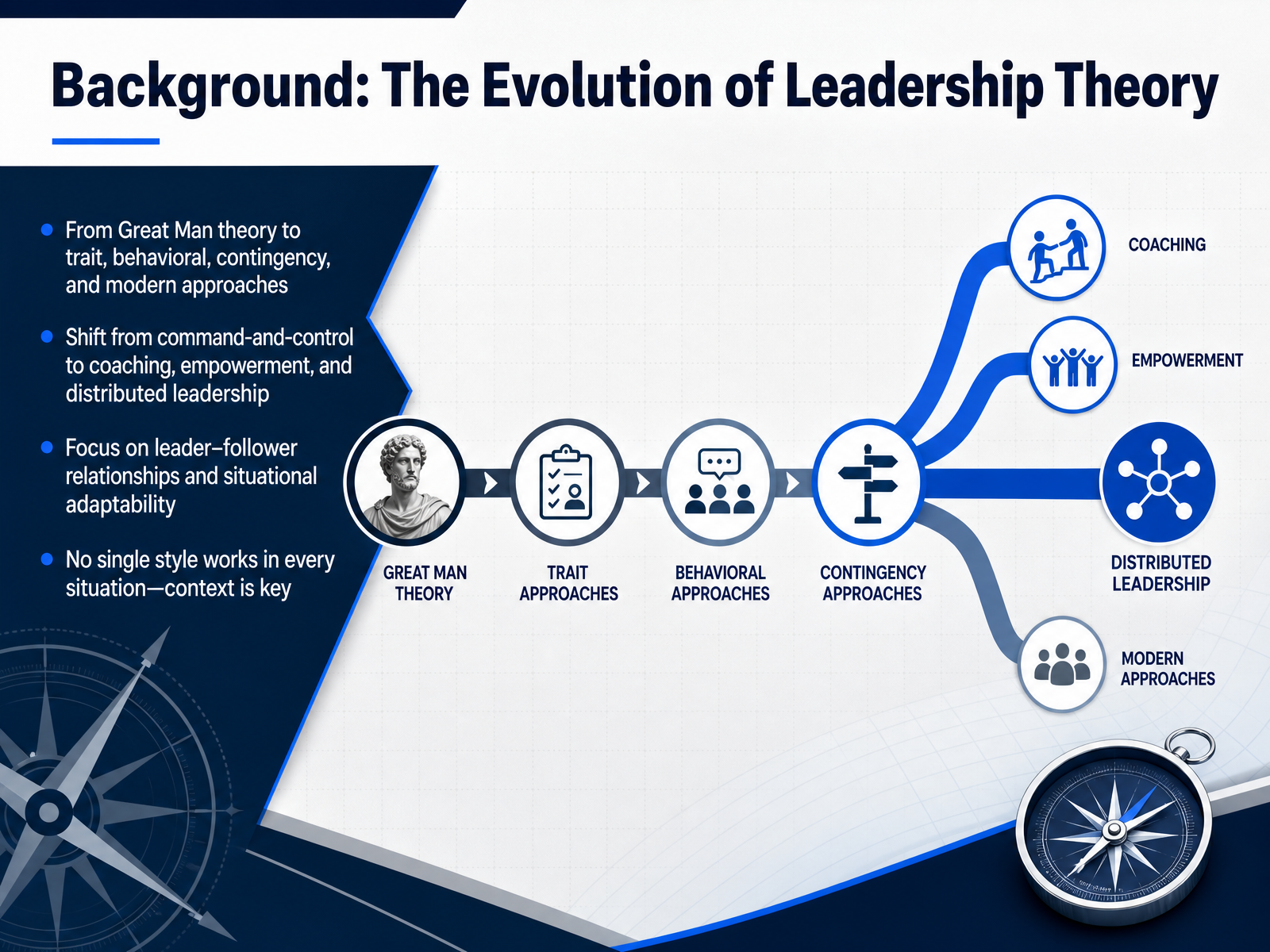
 - 04Background: The Evolution of Leadership TheoryLet's step back for a moment and look at where these ideas came from. Leadership theory has come a long way. In the beginning, we had the Great Man theory, which basically said leaders are born, not made. Think of historical figures like Napoleon. Then we moved to trait theory, looking for specific characteristics like confidence or intelligence. After that came behavioral theory, which shifted focus to what leaders actually do. In the 1960s, we saw contingency models. The key insight there? Context matters. No single style works everywhere. That thinking paved the way for modern approaches like coaching, empowerment, and distributed leadership. Instead of command and control, we now focus on relationships and adaptability. So keep this in mind as we go forward. The best leaders aren't locked into one style. They assess the situation, read their team, and adapt. Now, let's take a closer look at the core leadership styles you need to know.
 sciencedirect.combmjleader.bmj.comdoi.org+21 min
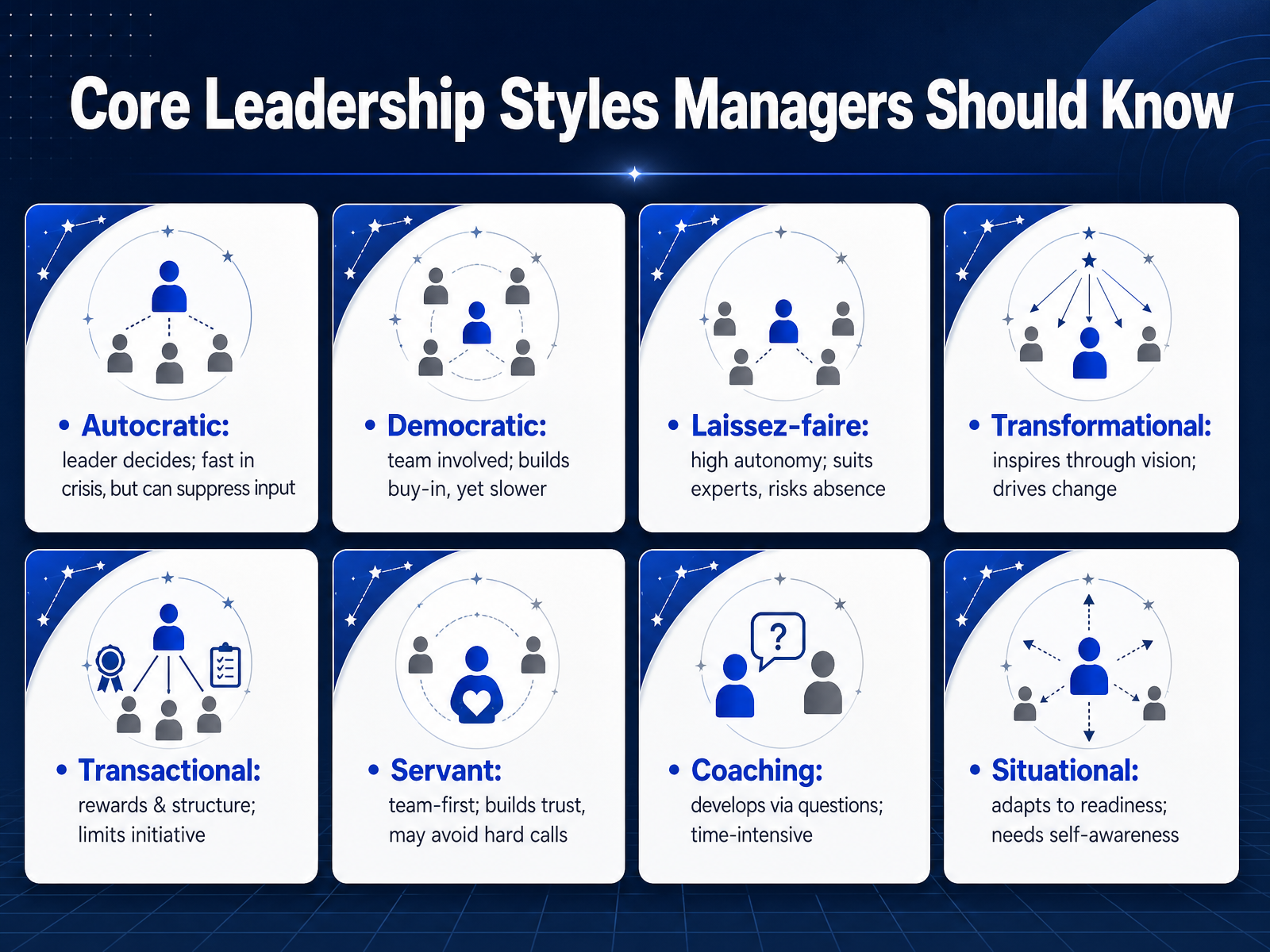
 - 05Core Leadership Styles Managers Should KnowLet’s walk through the core leadership styles you’ll actually see in the workplace. Autocratic leadership means you make the call, fast. Great in a crisis, but overused, it silences your team. Democratic leadership brings the team into the decision. It builds buy-in and ownership, but it’s slower. Laissez-faire gives your team full autonomy. Perfect for experts, but without guardrails, it can feel like absence. Transformational leadership inspires through a shared vision. It drives real change, but needs practical follow-through. Transactional leadership runs on rewards and structure. It creates consistency, yet it can limit initiative. Servant leadership puts your team first. It builds deep trust, but you may avoid the hard calls. Coaching leadership develops people through questions. It builds long-term strength, but it takes real time. And situational leadership is the meta-skill: adapt your style to your team’s readiness. That one demands self-awareness. Here’s your takeaway: no single style is best. The strongest leaders shift between them based on the moment. Next, we’ll zoom in on the original three: autocratic, democratic, and laissez-faire.
 verywellmind.comfranklincovey.com.auimd.org+22 min
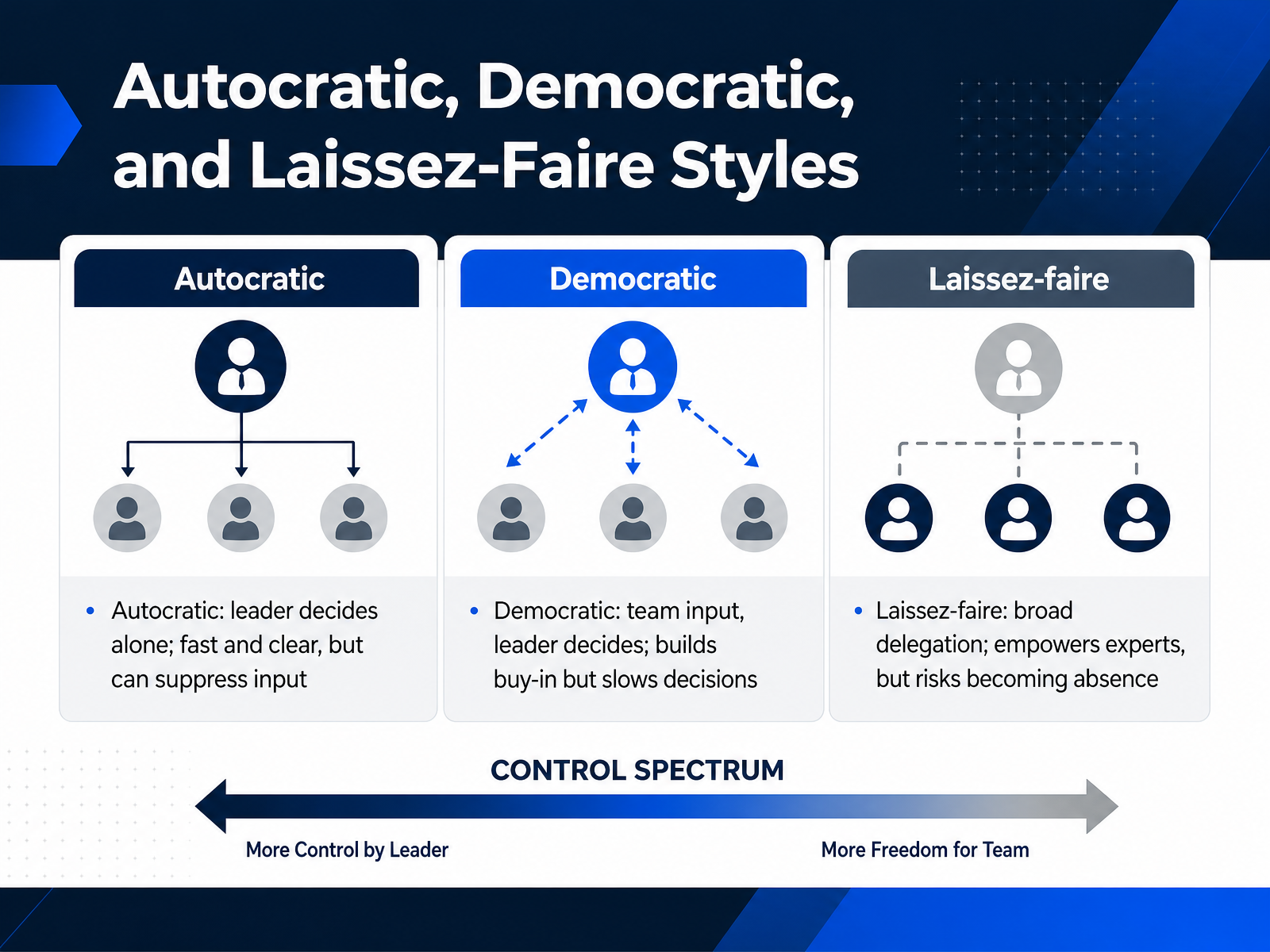
 - 06Autocratic, Democratic, and Laissez-Faire StylesLet's look at three classic styles that shape how decisions happen on your team. First, autocratic leadership. You make the call, you set the direction, and the team executes. It's fast, it's clear, and it's essential in a crisis or when you need compliance, like a safety issue on the floor. But if you use it every day, people stop sharing ideas and motivation drops. Then there's democratic leadership. You ask for input, you weigh options together, and you keep the final say. It builds ownership and often leads to better decisions, but it takes time. If you have a team of experienced people and a complex problem, it's worth the slower pace. Finally, laissez-faire, which means 'let them do'. You step back and give your experts room to run. This empowers skilled, self-driven teams. But without clear boundaries, it can feel like you've checked out. Use it with people who truly don't need you hovering. No style is best forever. The skill is knowing when to switch. Up next, we'll explore the other three major styles: transformational, transactional, and servant leadership.
 verywellmind.comfranklincovey.com.auimd.org+22 min
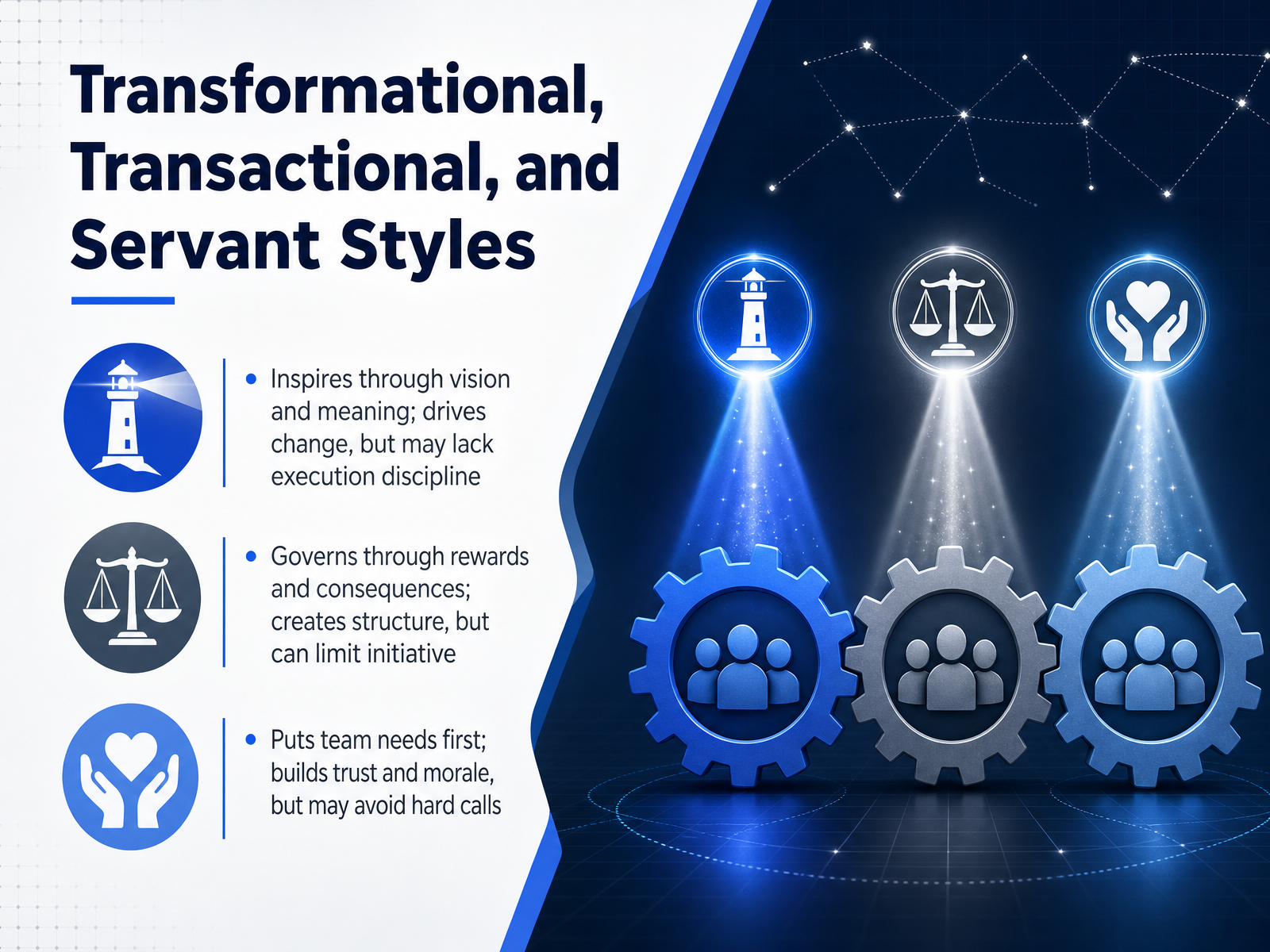
 - 07Transformational, Transactional, and Servant StylesNow let's compare three styles you'll likely recognize in your own workplace. First, transformational leadership. This is about inspiring your team with a vision. You appeal to meaning and purpose, which is powerful when driving change. The risk? You get so caught up in the vision that the execution details slip. The big idea stays a speech, and the plan never quite lands. Next, transactional leadership. This is the classic rewards and consequences model. You set clear expectations, and people know what they get for hitting them or missing them. It creates structure and consistency, which feels safe in routine work. But lean on it too long, and you'll see initiative shrink. People do exactly what's rewarded, and nothing more. And then there's servant leadership. Here, you put the team's needs ahead of your own. This builds trust, boosts morale, and creates fierce loyalty. Done well, people give their best because you cleared the road for them. The hazard is when serving turns into avoiding. You hesitate on the hard calls because you don't want to upset anyone. The takeaway? No single style is right. Each has a bright spot and a blind spot. Next, let's look at coaching and situational leadership, which focus on adapting to the person and the moment.
 verywellmind.comfranklincovey.com.auimd.org+22 min
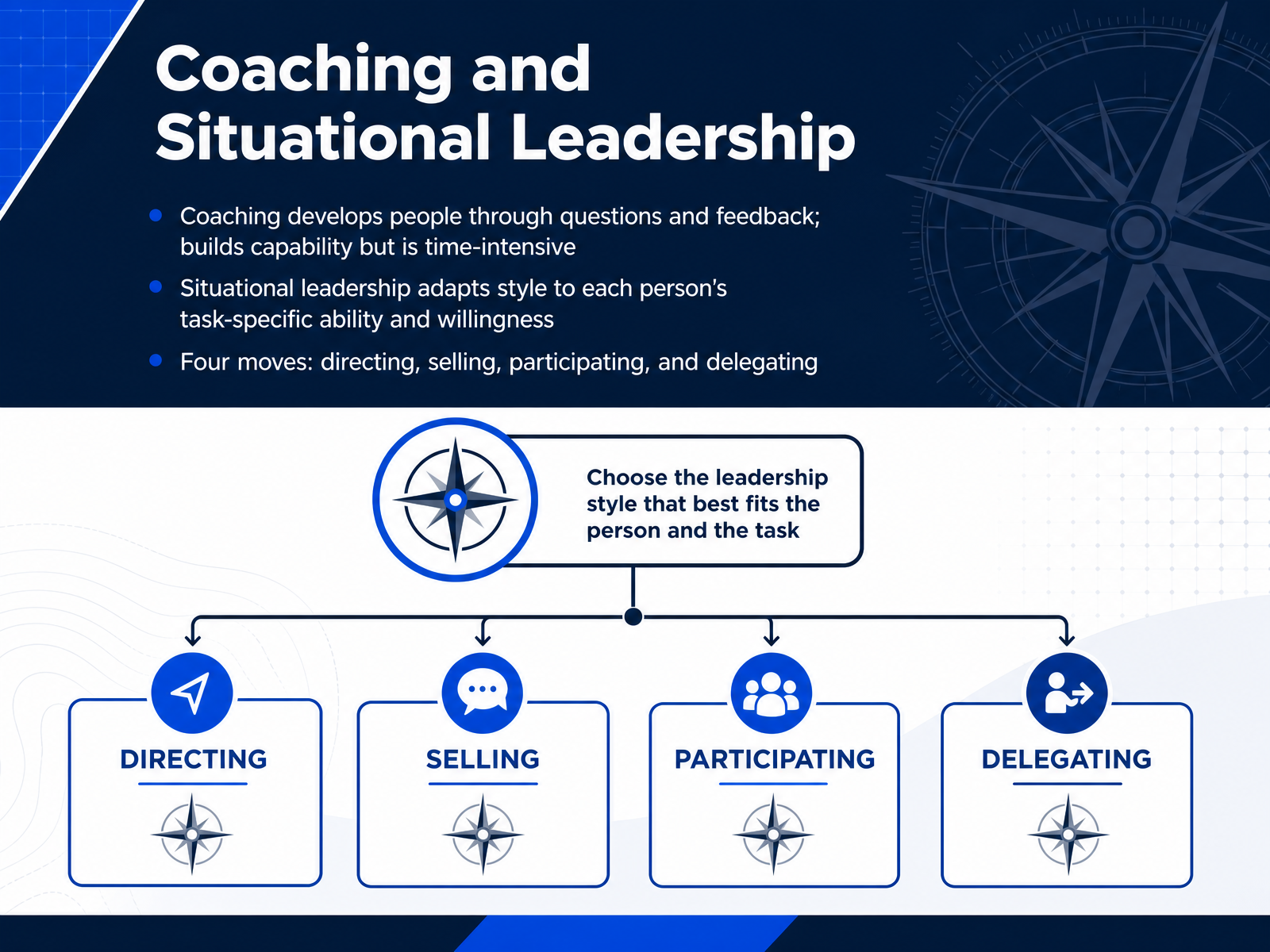
 - 08Coaching and Situational LeadershipLet’s look at two styles that are often paired together: coaching and situational leadership. Coaching is about developing people through questions and feedback. Instead of giving orders, you help your team members find the answers themselves. Over time, this builds real capability and confidence. But it’s time-intensive. You need to invest in regular one-on-ones. That’s not always easy when deadlines are tight. Now, situational leadership takes a different angle. It says there’s no single best style. Instead, you adapt your approach based on each person’s ability and willingness for a specific task. Think about the four moves. Directing: for someone new who needs clear instructions. Selling: when they have some skill but need convincing and support. Participating: when they’re capable but need more confidence, so you collaborate. And delegating: when they’re expert and motivated, you hand over the reins. For example, a new hire needs direction, but a senior analyst on a familiar project needs autonomy. The key takeaway? Match your approach to the person and the task, not the other way around. Next, we’ll compare the strengths and limitations of each style we’ve covered.
 verywellmind.comfranklincovey.com.auimd.org+22 min
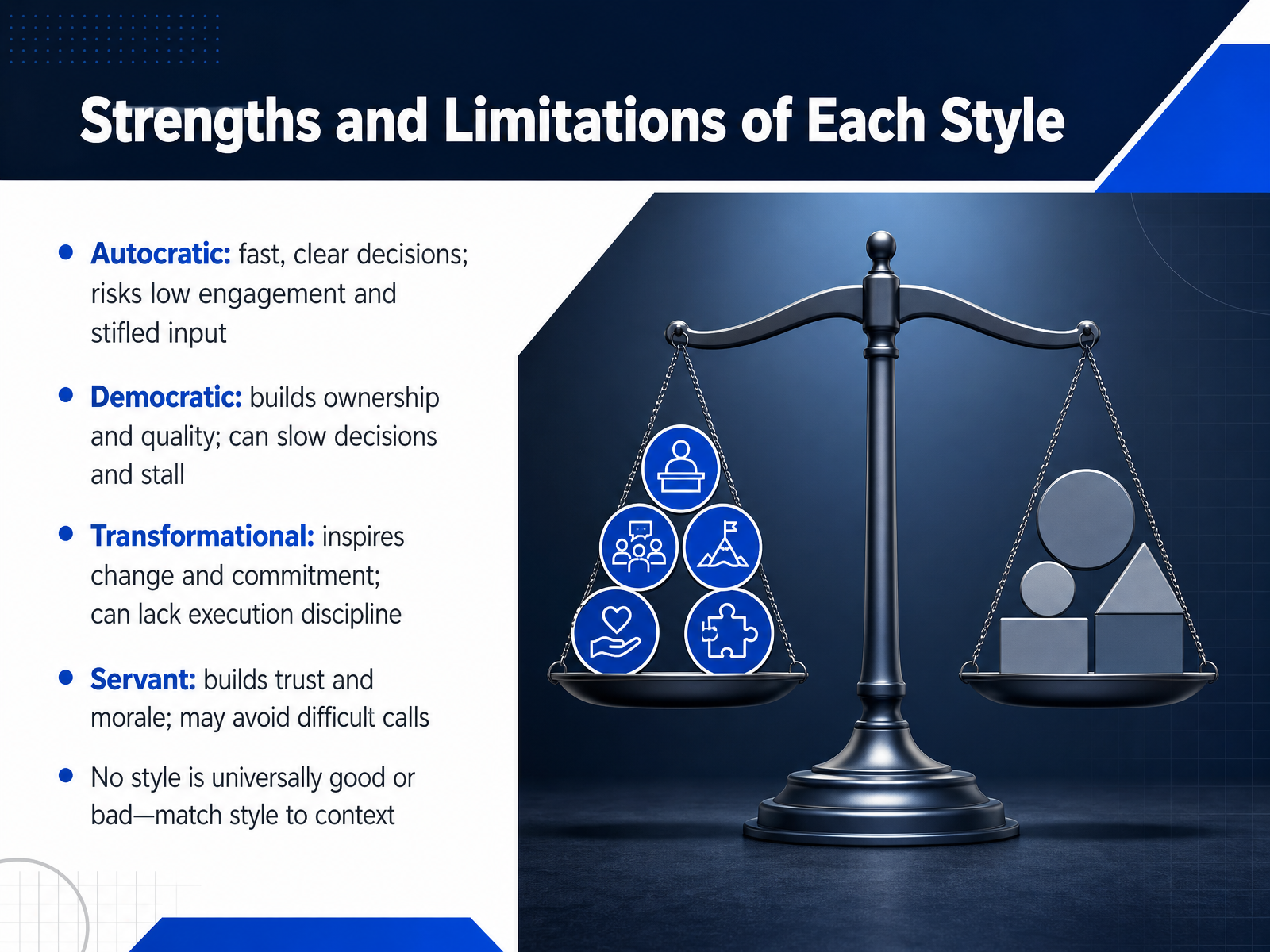
 - 09Strengths and Limitations of Each StyleNow let’s be honest about each style. It’s not about good or bad, it’s about trade-offs. Autocratic leadership gets you fast, clear decisions. But if you overuse it, people disengage and stop sharing ideas. Democratic leadership creates ownership and better quality, but it can slow things down to a crawl. Transformational leadership inspires change and commitment, yet without execution discipline, it’s just a speech. And servant leadership builds trust and morale, but it can make hard calls feel impossible. Here’s the key takeaway: no style is universally right. It depends on the context, the team, and the moment. If you can match your style to the situation, you’ll lead more effectively. Next, let’s talk about how to match the style to the context.
 verywellmind.comfranklincovey.com.auimd.org+21 min
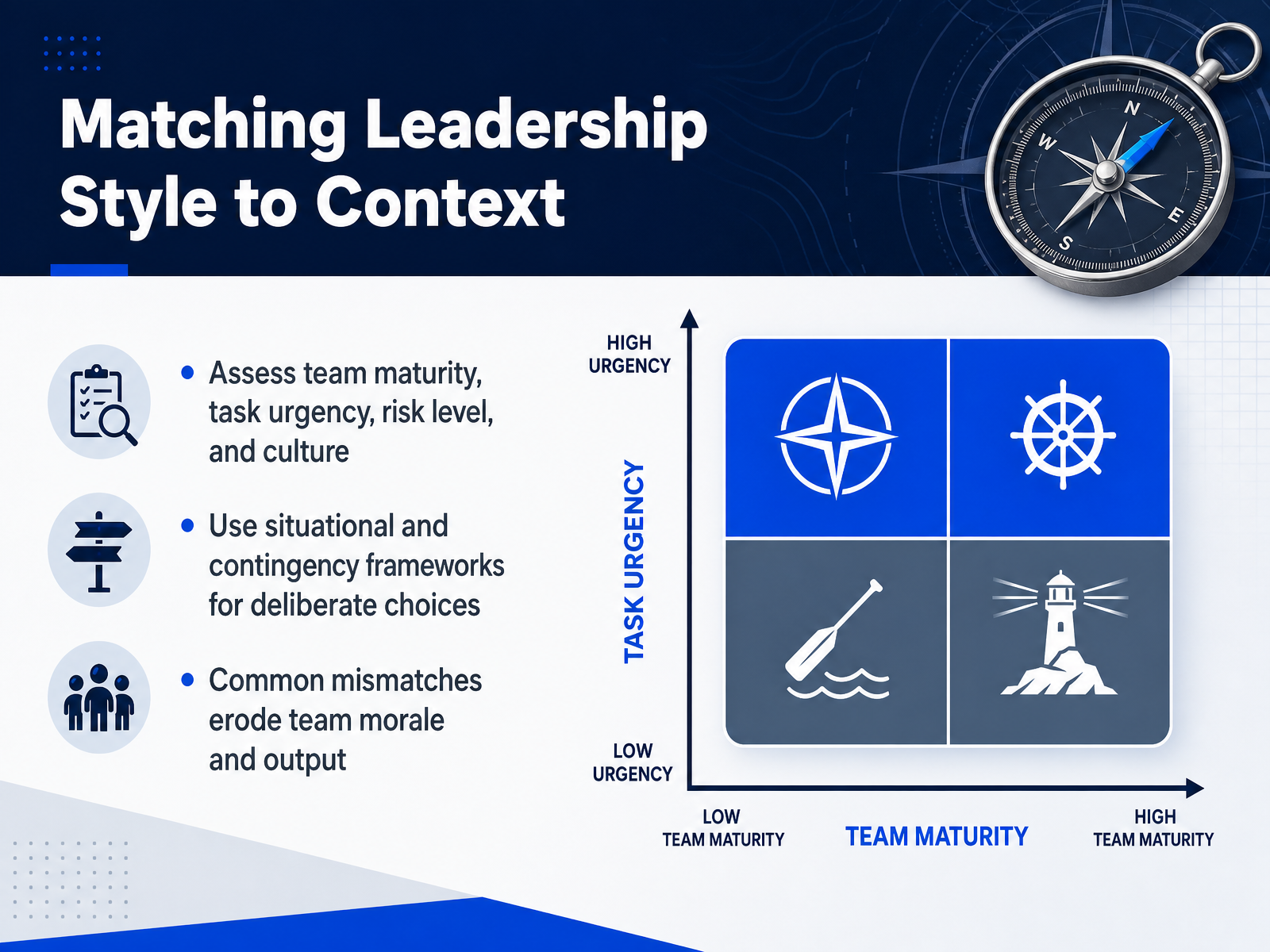
 - 10Matching Leadership Style to ContextNow let’s talk about matching your leadership style to the context you're actually in. This is where the theory becomes practical. There's no single best style—what works in one situation may fall flat in another. So, how do you choose? Start by assessing four things. First, your team's maturity. Are they new to the task and needing clear direction? Or are they experienced and self-reliant? Second is task urgency. Is this a real crisis, or do you have time to build consensus? Third, consider the risk level. Is a wrong decision costly or easily fixed? Finally, look at your culture. Does your organization reward speed, collaboration, or strict compliance? Use frameworks like situational leadership to make these choices deliberately. It's a simple diagnosis. Match your style to the team's readiness, and you'll avoid the common mismatches that slowly erode morale and output. Keep it grounded. Before we move on, take a moment to reflect on your own default style and how it fits these situations.
 sciencedirect.combmjleader.bmj.comdoi.org+21 min
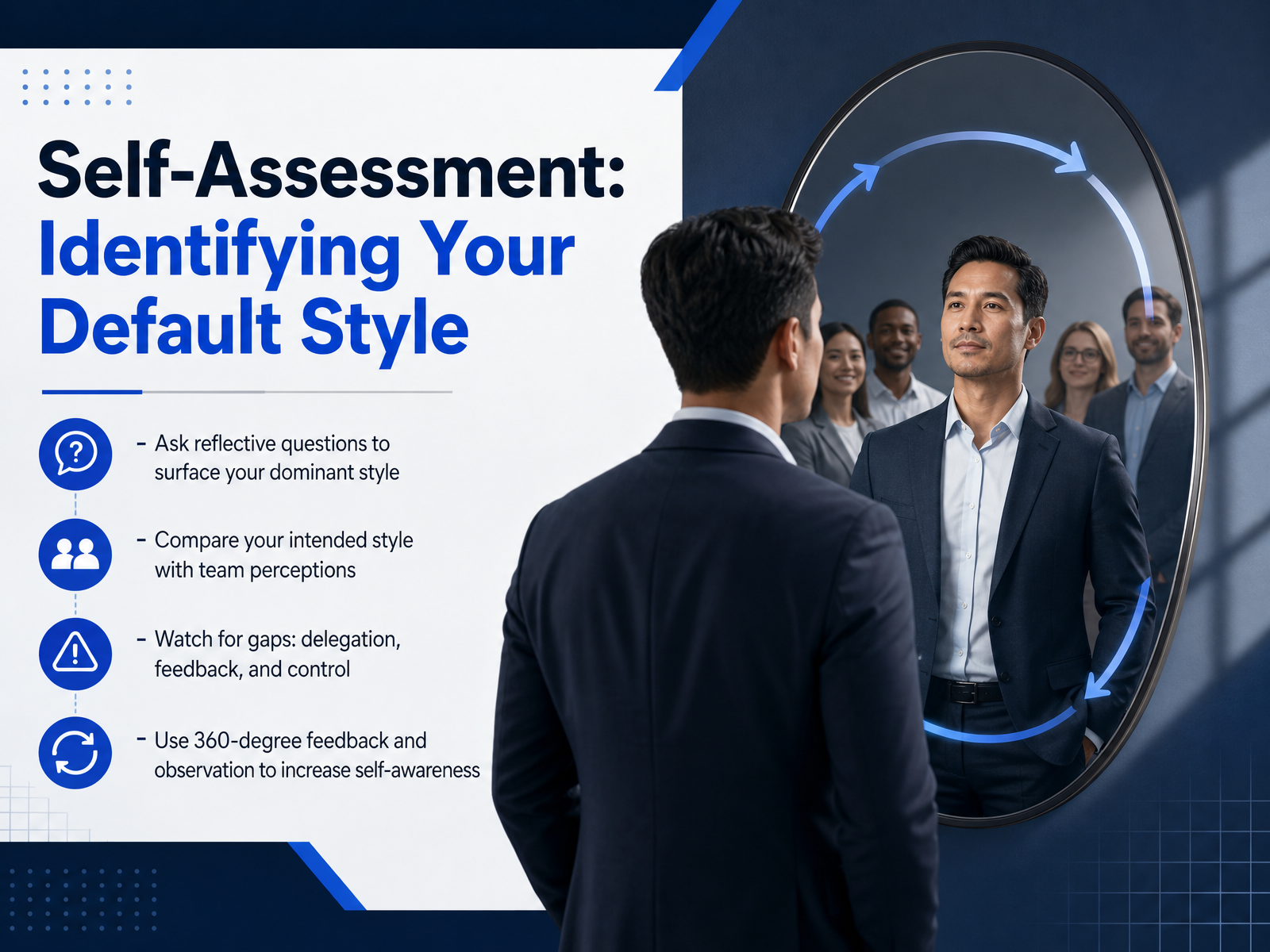
 - 11Self-Assessment: Identifying Your Default StyleNow let's turn the lens inward. How do you actually identify your default leadership style? Start with honest reflection. Ask yourself: when a deadline slips, do you tighten control or ask questions first? When a project succeeds, do you take credit or share it? Your instinctive answers reveal your baseline. But here's the catch — your view of yourself is only half the picture. Compare how you intend to lead with how your team actually experiences you. There's often a gap. You might think you're delegating freely, while your team feels you're hovering. You might believe you give plenty of feedback, but your people can't recall the last time you praised their work. Watch for those gaps in delegation, feedback, and control. The most reliable way to close them is through 360-degree feedback. Ask your peers, your direct reports, and your own manager to rate you. Then sit with the results. It takes humility to hear that your style lands differently than you intended. But that awareness is exactly where real leadership growth begins. Next, let's look at how to adapt your approach in real work situations.
 mindtools.cominc.comadammendler.com+21 min
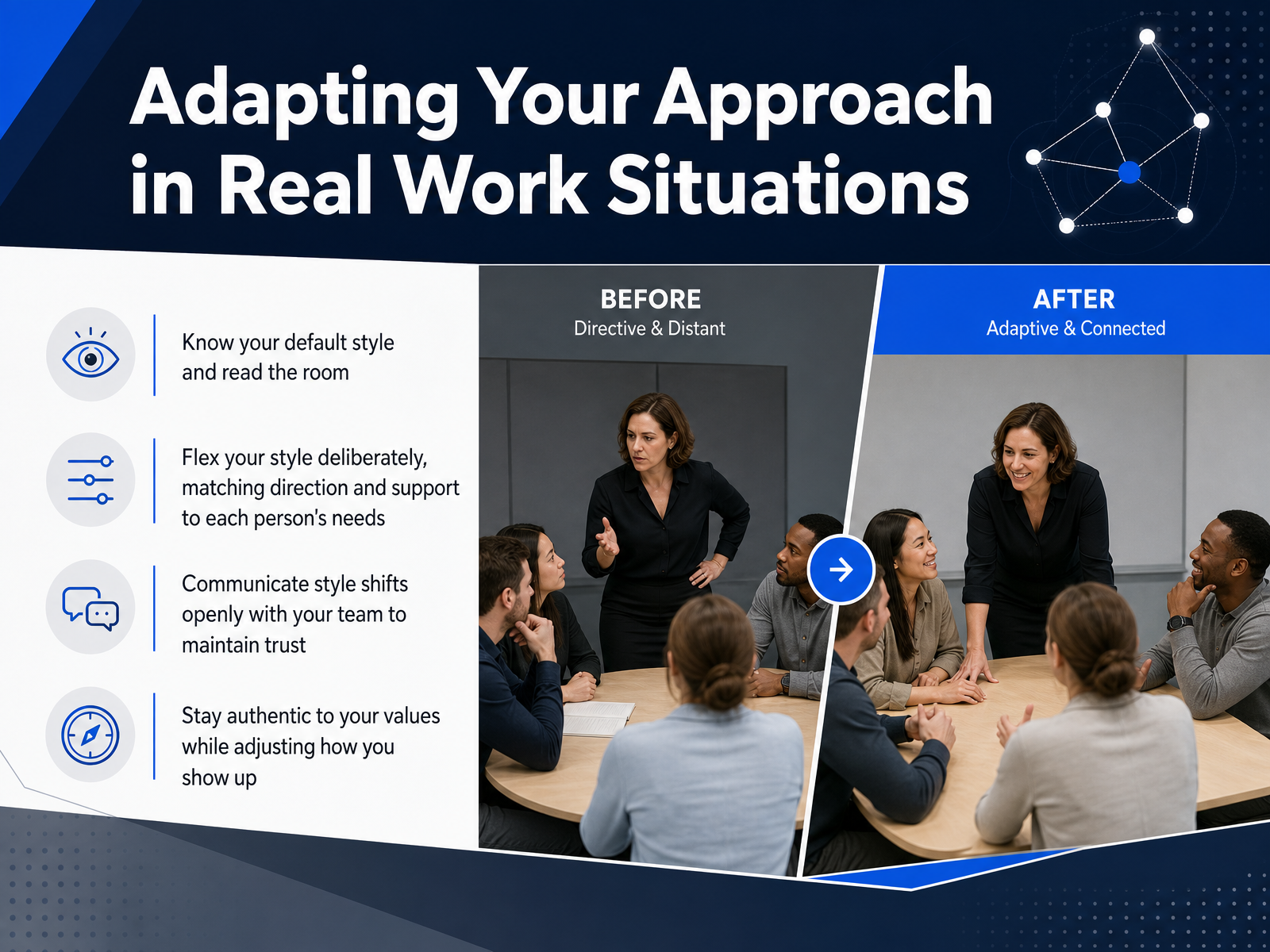
 - 12Adapting Your Approach in Real Work SituationsHere's where the styles get practical. First, know your default style. Under pressure, which approach do you naturally reach for? That's your starting point, not your destiny. Second, read the room. Notice the energy, the needs, and the confidence level of each person. A new team member might need clear direction, while an expert might only need you to stay out of the way. Flex your style deliberately, matching the amount of direction and support to each person's needs in that moment. Third, communicate your approach openly. If you shift from hands-off to more structured, say why. Name it briefly so the change doesn't feel confusing or personal. And fourth, stay authentic to your values. Adjusting your style isn't abandoning who you are. It's keeping your core principles steady while changing how you express them. Same values, different tone. That's how trust holds together. Next, let's talk about the common challenges and pitfalls that can trip up even experienced leaders.
 leadersadapt.com2 min
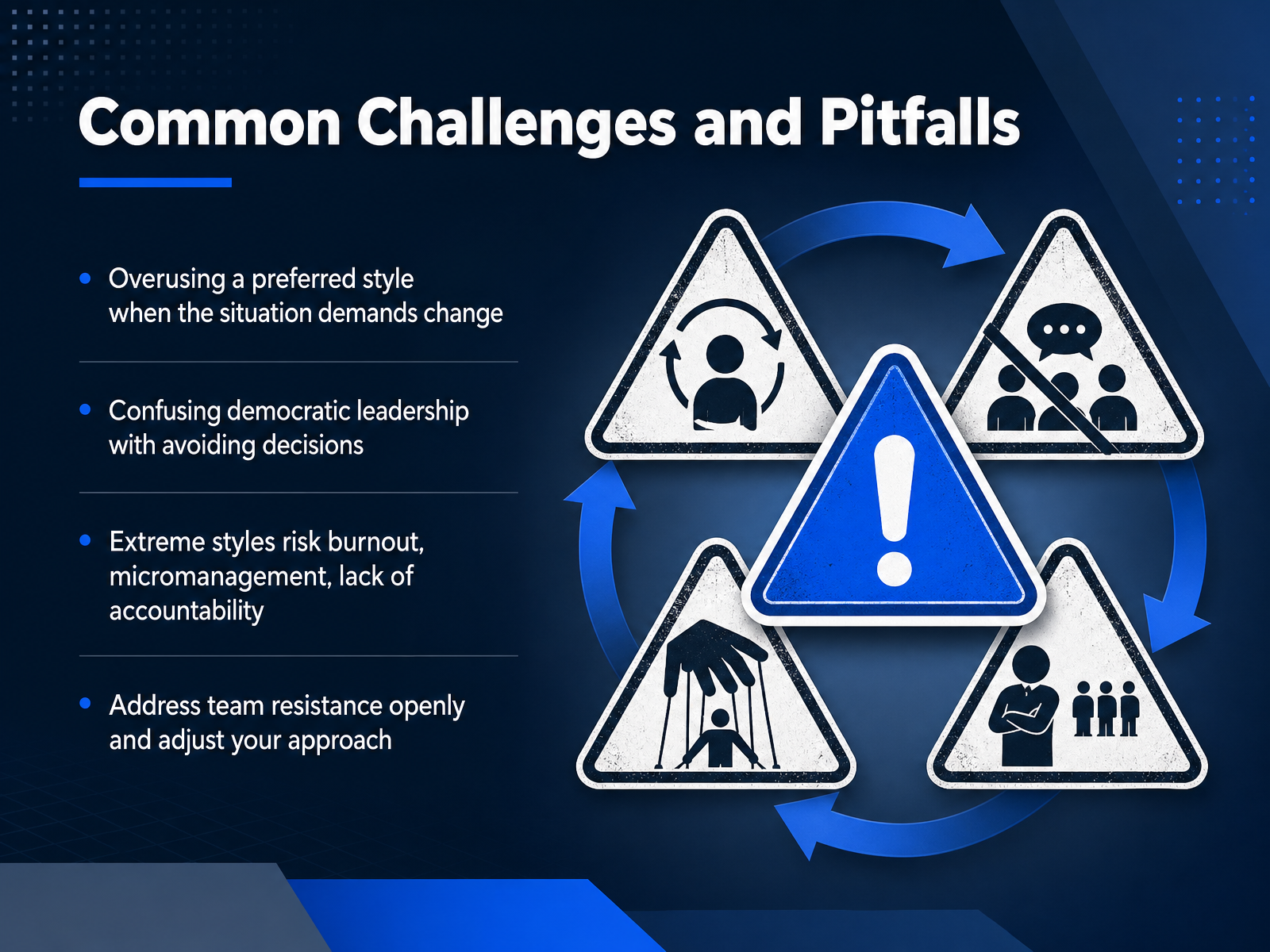
 - 13Common Challenges and PitfallsHere’s where many managers get tripped up. Not because they don’t know the styles, but because they lean too hard on a favorite one. Autocratic in a crisis is great. Autocratic on a creative project? It can shut people down fast. The fix is simple: pause and ask what the moment actually needs. Another common mistake is mistaking democratic leadership for dodging decisions. Gathering input is good — but if you never make the call, you’re not being democratic, you’re being indecisive. Your team will start to feel that. And watch out for extremes. Too much control becomes micromanagement. Too hands-off becomes a lack of accountability. Either way, you’re inviting burnout and frustration. The key is balance. If your team pushes back on how you’re leading, that’s data, not defiance. Open it up, adjust, and keep moving. Don’t treat the style you are most comfortable with as the only answer. Your leadership is living, not fixed. Now, we will look at some real-world scenarios and how to put these into action.
 mindtools.cominc.comadammendler.com+22 min
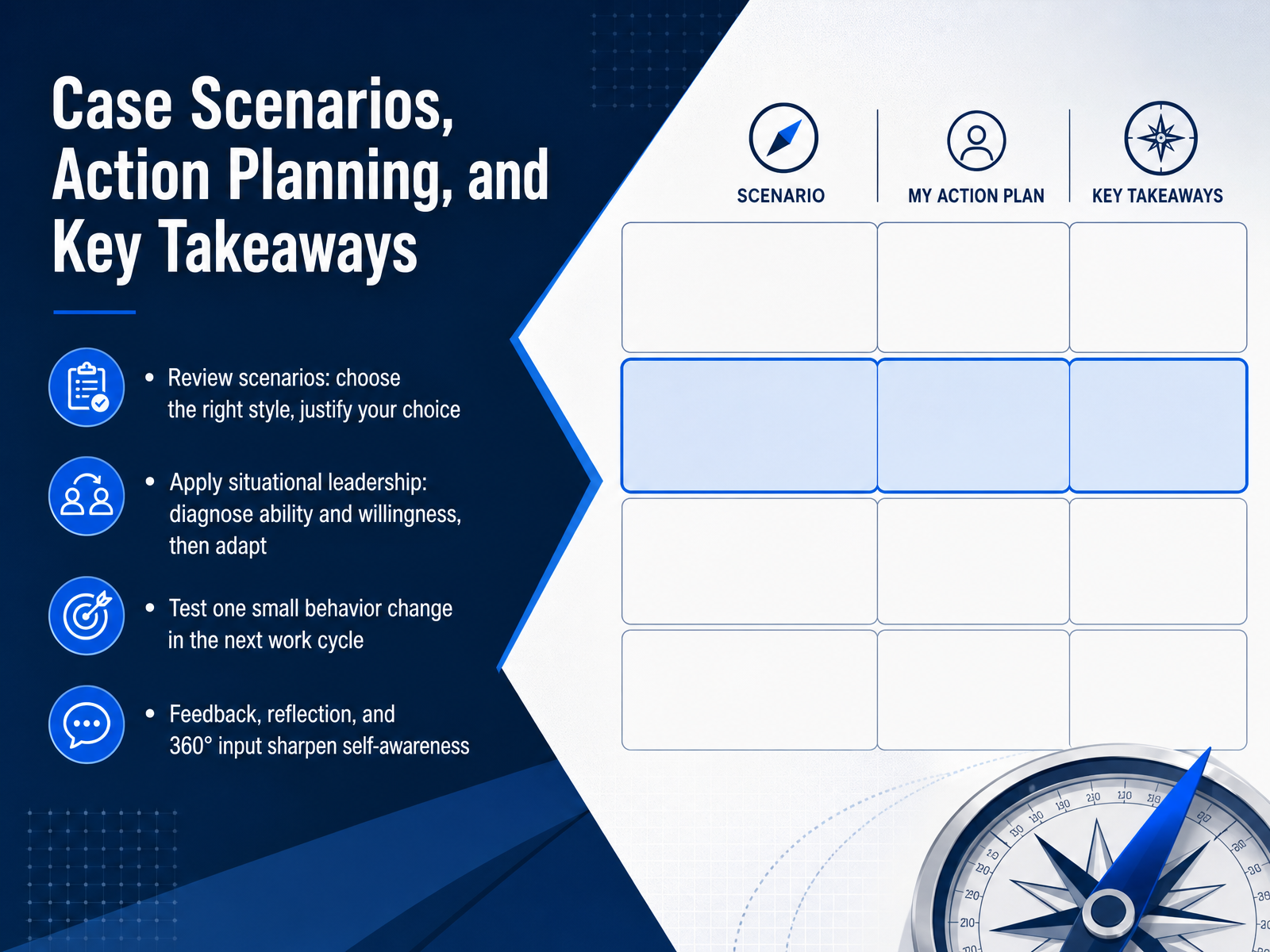
 - 14Case Scenarios, Action Planning, and Key TakeawaysLet's wrap this up with action. Review the scenarios we just covered. When you spot a similar situation, ask yourself: which style fits, and why? That justification is where the learning sticks. In practice, apply situational leadership. Diagnose each person's ability and willingness for the specific task, then adapt your approach. Don't rely on one default style. Here's your challenge: pick one small behavior change and test it in your next work cycle. Maybe you delegate more, or you give clearer direction upfront. Just one change. Then build in feedback. Ask your team how it landed. Seek 360-degree input. Reflection sharpens your self-awareness, and that awareness is what turns knowledge into real leadership skill. You now have a full toolkit of styles. No single one is best. The best leaders shift deliberately, based on the situation and the person. Thanks for your time and attention. Now go lead with intention, starting this week. You've got this.
 leadersadapt.commindtools.cominc.com+22 min
Take the deck with you
Download this course as a file — free, no sign-up needed.
- PDF handoutEvery slide page, ready to print or share.15 pages · 3.4 MBDownload
- Narrated PowerPointThe deck that presents itself — every slide carries the digital human's narration video.15 pages · 15.5 MBDownload
- PowerPoint slidesThe full deck as a .pptx — open it in PowerPoint, Keynote, or Google Slides.15 pages · 3.3 MBDownload
Free to use in your own training — please keep the PersonWise credit page at the end.
Have your own deck? Turn it into a course
Sources consulted
Web sources consulted while building this course.
- How do leadership styles influence employee engagement ... — nature.com
- Understanding the Motivational Contingencies of Team Leadership — journals.sagepub.com
- A Contemporary Evidence Synthesis of Leadership Styles and Their Impact on Organizational Performance: A Systematic Review — jippublication.com
- Leadership Styles and Their Impact on Employee Performance: A Comprehensive Review — doi.org
- Leadership Style and Organizational Effectiveness: Motivation and Engagement as Mediators | Jurnal Manajemen Bisnis dan Kewirausahaan — ejournal.umm.ac.id
- How to Lead: 6 Leadership Styles and Frameworks - Verywell Mind — verywellmind.com
- 7 Most Common Leadership Styles | FranklinCovey AU — franklincovey.com.au
- The 6 Most Common Leadership Styles & How to Find Yours — imd.org
- Top 10 Types of Leadership Styles With Examples - Leavey School of Business - SCU — scu.edu
- Types of Leadership Styles: The 10 Main Types — leadersadapt.com
- The evolution of leadership: Past insights, present trends ... — sciencedirect.com
- Evolution of leadership theory — bmjleader.bmj.com
- Leadership: Between Tradition and New Challenges — doi.org
- Leadership in Applied Psychology: Three Waves of Theory and Research — goal-lab.psych.umn.edu
- Analyzing and Mapping the Leadership Literature and Its Organizational Implications: An Integrative Analysis — mdpi.com
- 10 Common Leadership and Management Mistakes - MindTools — mindtools.com
- What Causes Poor Leadership? Research Points to Four Leadership Failures — inc.com
- Leadership Mistakes Managers Make and How to Avoid Them — adammendler.com
- Leadership Style Not Working? Here’s How to Fix It — launch-360.com
- 7 bad leadership patterns that drive good employees away, and how to fix them — fastcompany.com