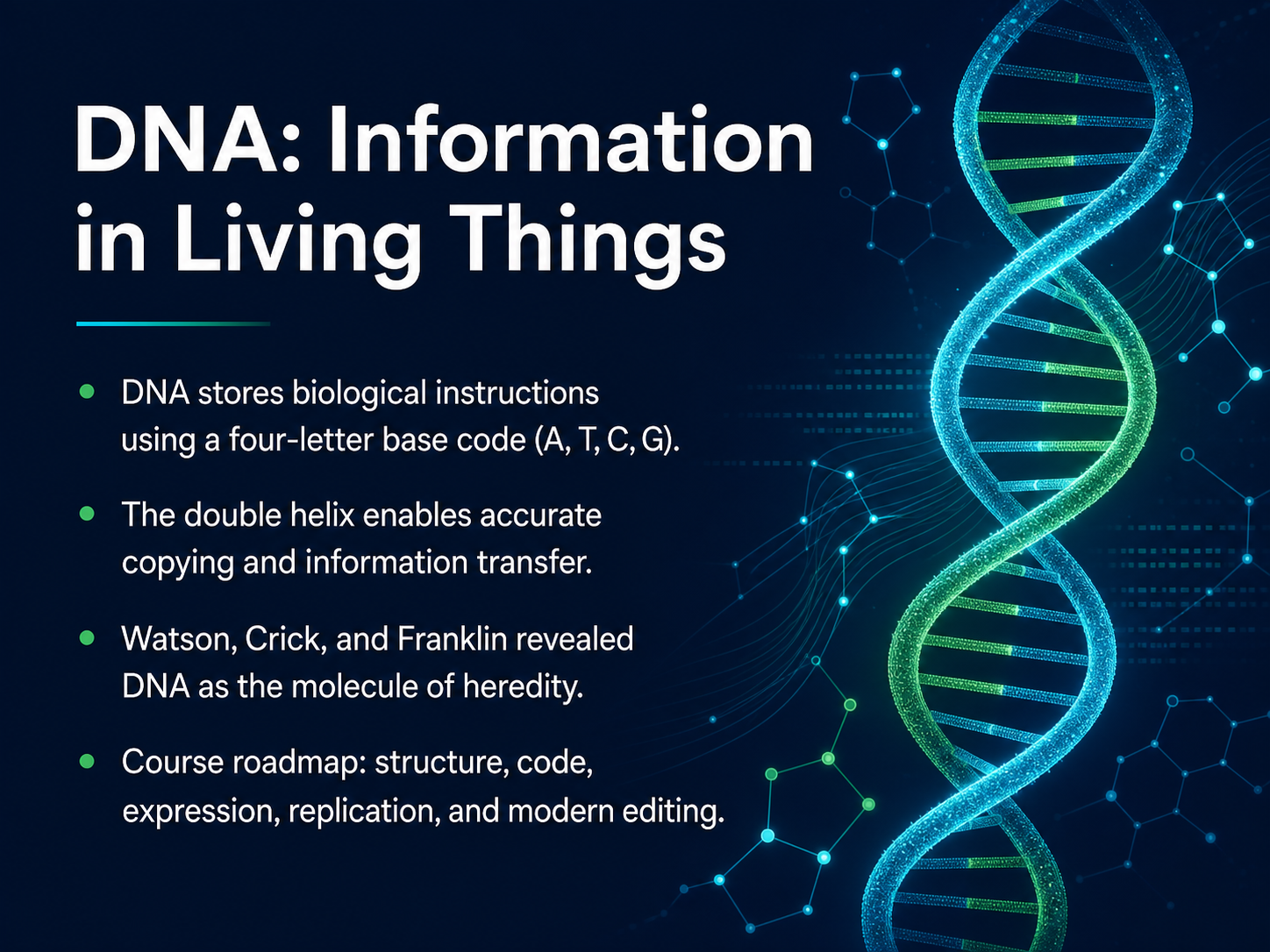
DNA: Information in Living Things
Begin
14 pages · ~28 min
DNA: Information in Living Things
This training introduces learners to the role of DNA as the carrier of genetic information in living organisms, explaining its structure and function in a clear, accessible way.
What you’ll learn
- 01DNA: Information in Living ThingsWelcome. In this course, we are going to explore a fundamental idea: DNA is information for living things. Just like a book uses letters to form words and sentences, DNA uses a chemical alphabet to store instructions. These instructions guide everything from the color of your eyes to how your cells produce energy. In this lesson, I will introduce you to the structure of DNA and show you how this remarkable molecule preserves and passes on information. We will see how its simple, four-letter code—A, T, C, and G—works as a set of biological directions. We will also explore the elegant shape of DNA, known as a double helix, and understand why this structure is so perfect for copying information accurately. We will acknowledge the scientists who first pieced together this puzzle, revealing DNA as the molecule of heredity. Our journey together will build a clear roadmap, moving from the architecture and code of DNA to how that code is read, duplicated, and even edited today. Ready to begin? Let's start by looking at the foundations in the next section: What Is DNA? Structural Foundations.genome.govgenome.govnature.com+22 min
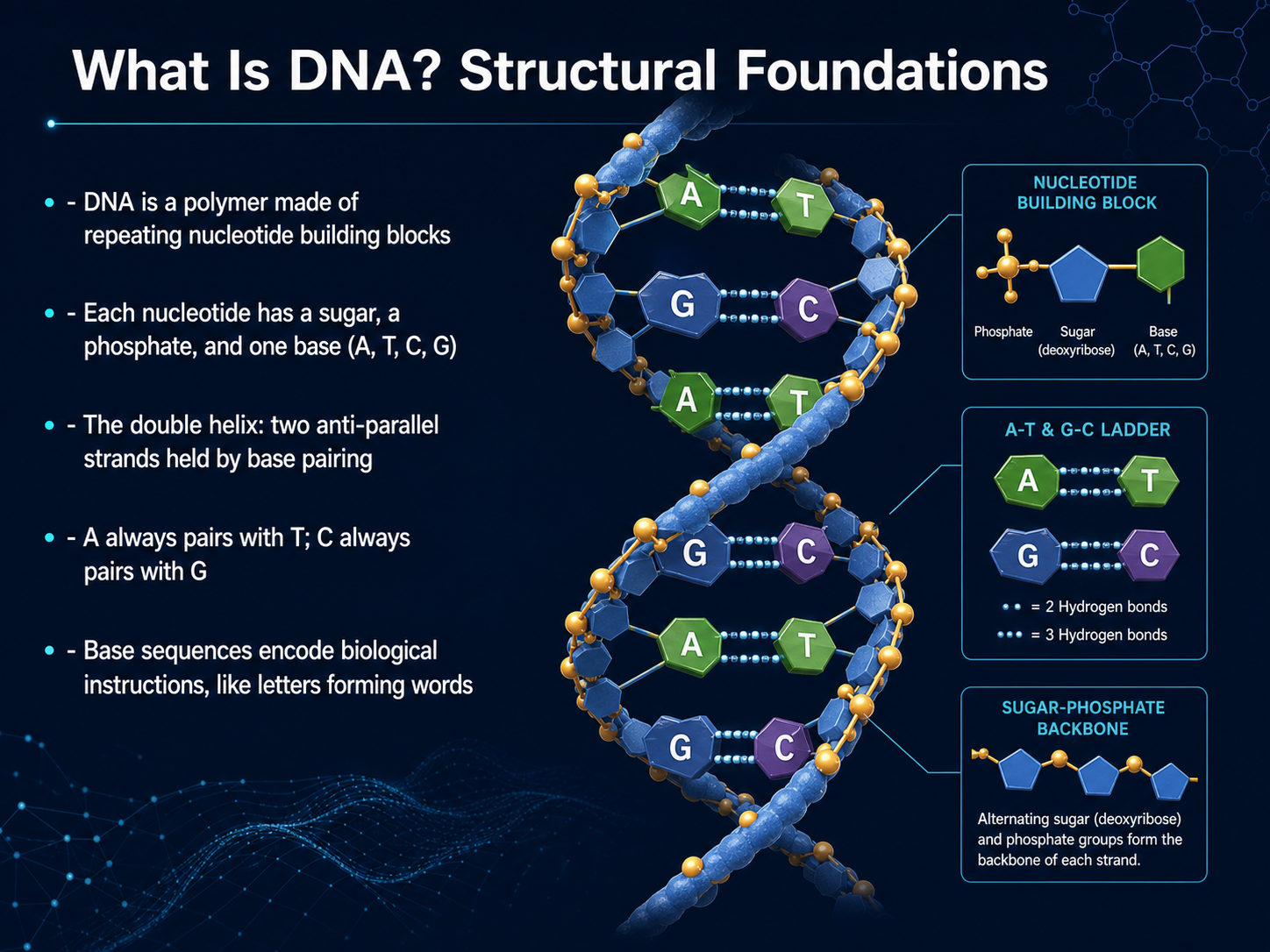
- 02What Is DNA? Structural FoundationsNow, let's explore the structural foundations of DNA. Think of DNA as a long, chain-like molecule, a polymer. This chain is built from repeating units called nucleotides. Each nucleotide itself has three simple parts: a sugar, a phosphate group, and one nitrogen base. The base is the key variable. We represent these bases with four letters: A, T, C, and G. These nucleotides link together to form a strand. A complete DNA molecule is a famous double helix, which looks like a twisted ladder. It has two of these strands running in opposite directions, held together by specific pairing rules between the bases. The rule is simple. A always pairs with T, and C always pairs with G. These base pairs form the rungs of the ladder. The real magic is in the sequence of these letters along the strand. Just as the letters T, O, and P can form the word 'top', the sequence of A, T, C, and G encodes biological instructions. This is the fundamental language that guides living things. Next, we'll build on this idea by looking at DNA as a digital code.
 genome.govgenome.govnature.com+22 min
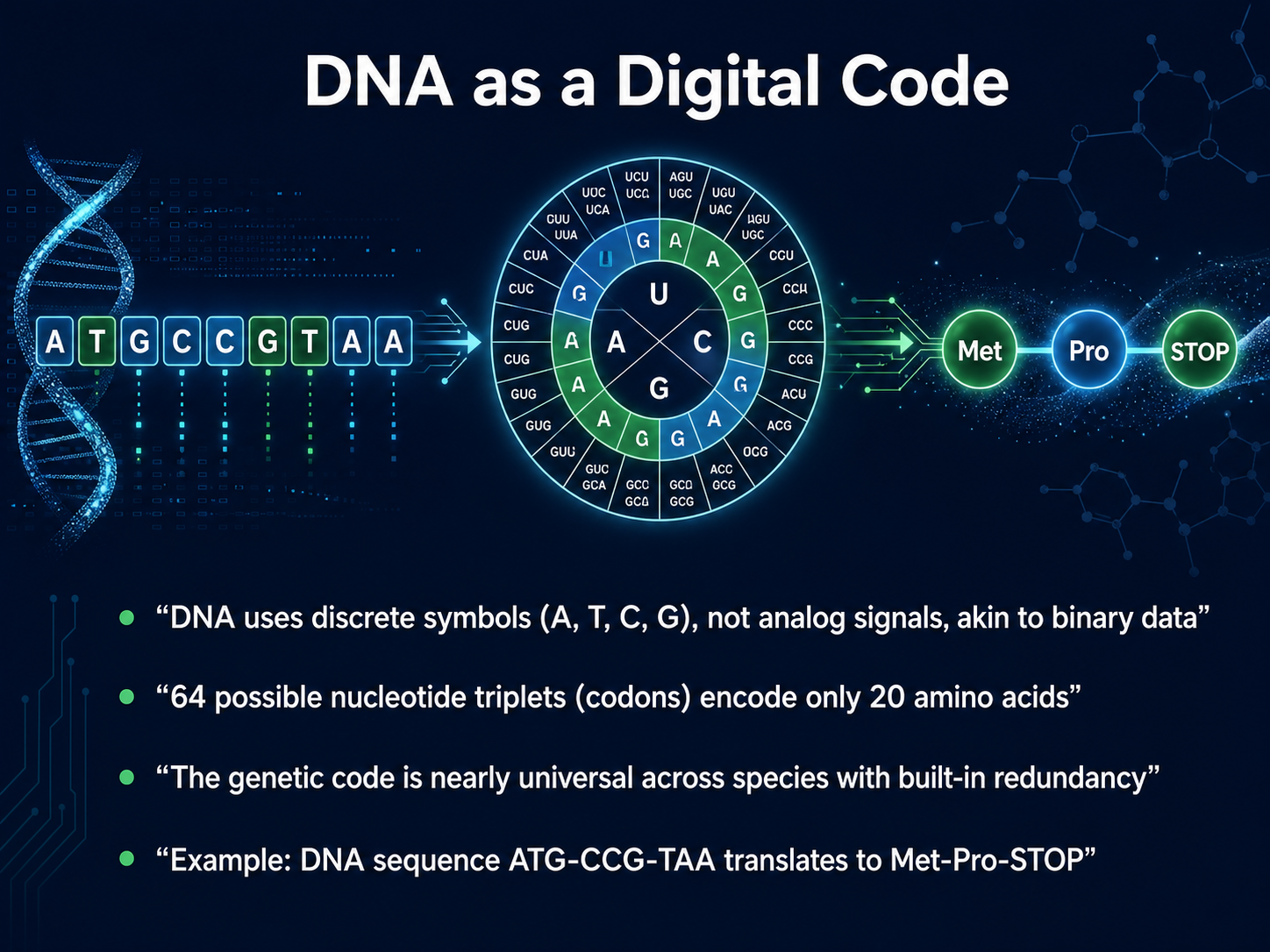
 - 03DNA as a Digital CodeLet's take this idea of information a step further. You can think of DNA as a kind of digital code. It doesn't use wavy, continuous signals. Instead, it relies on four simple, discrete symbols. We call them A, T, C, and G. In this way, DNA is similar to the binary code in a computer, using basic units to store complex instructions. The cell reads these letters in groups of three, called codons. With four letters taken three at a time, there are 64 possible combinations. These 64 codons act as the words in DNA's language. They encode the instructions for just 20 amino acids, which are the building blocks of proteins. This means the genetic code has built-in redundancy. Several different codons can mean the same thing, like having a few ways to say 'stop' or specify the same protein part. For example, the DNA sequence ATG, CCG, TAA translates to the amino acids Methionine, Proline, and then a STOP signal. Remarkably, this code is nearly universal. A stop signal in a rose means the same thing in a human, which shows a deep, shared language for all of life. Next, we'll see how this stored information gets put into action in a process called the central dogma.
 2 min
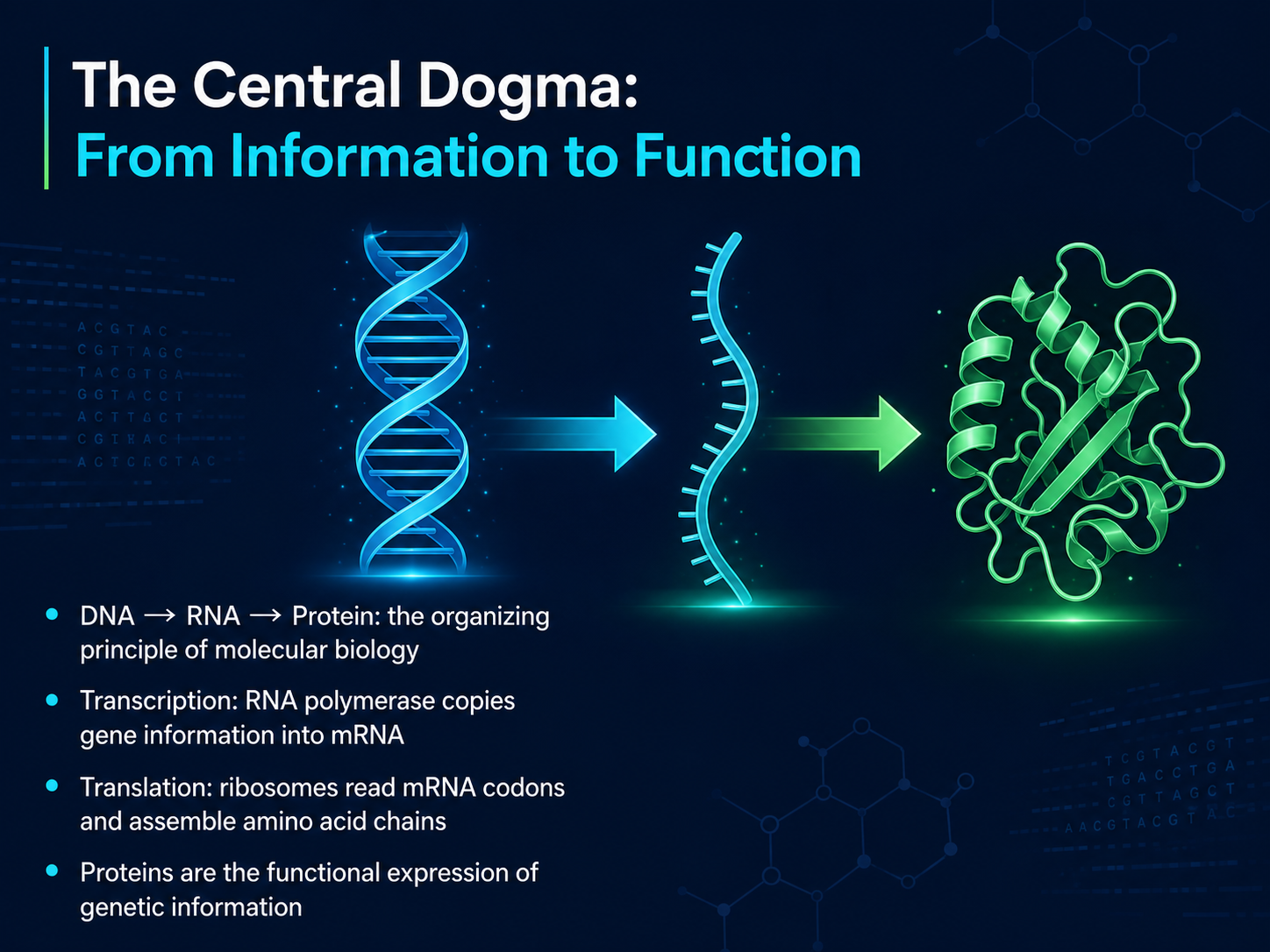
2 min - 04The Central Dogma: From Information to FunctionNow, let's take the idea of DNA as information one step further. How does that stored information actually get used? This brings us to a key organizing principle in biology, often called the Central Dogma. It describes a flow of information in the cell: DNA makes RNA, and RNA makes protein. Think of it this way. DNA is the master blueprint, kept safe in the cell's nucleus. But to actually build something, you need a working copy of the instructions. The first step is called transcription. An enzyme named RNA polymerase copies a specific gene's information from the DNA into a mobile messenger molecule called mRNA. Next comes translation. The mRNA travels to a ribosome, which is like a tiny assembly machine. The ribosome reads the mRNA code in three-letter groups called codons. Each codon specifies a particular amino acid, and the ribosome links these amino acids together into a long chain. This chain folds into a unique shape to form a protein. And proteins are the real workers. They are the functional expression of your genetic information, carrying out almost every task in your body. So, from information storage to mobile message to functional machine, this is how DNA gets things done. Up next, we'll zoom in on the specific details of these two critical steps, when we explore gene expression and take a closer look at transcription and translation.
 2 min
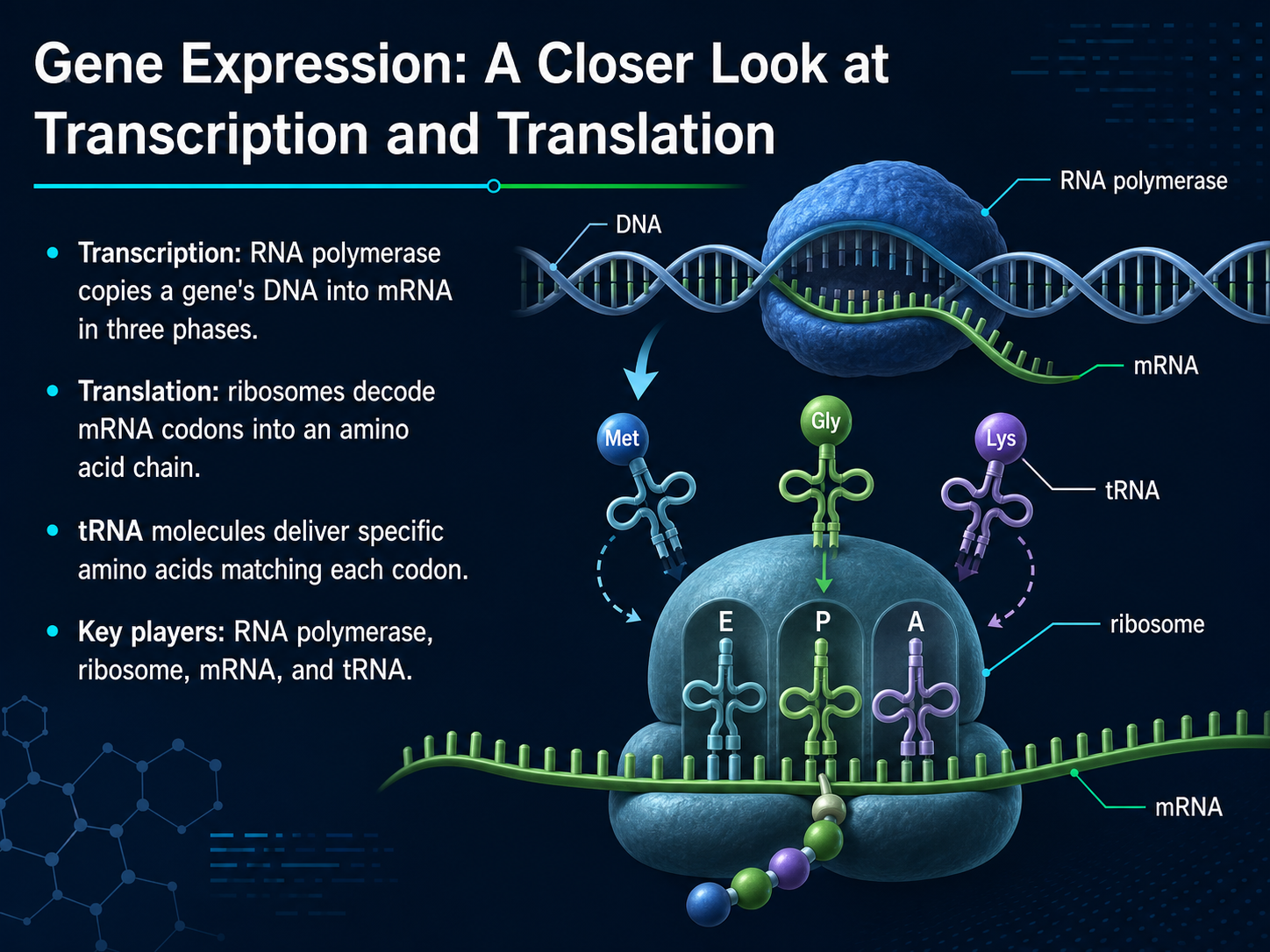
2 min - 05Gene Expression: A Closer Look at Transcription and TranslationNow, let's look more closely at how the cell uses the information in DNA. This process is called gene expression, and it happens in two main steps: transcription and translation. First, during transcription, a large enzyme called RNA polymerase attaches to a gene and copies its DNA sequence into a messenger molecule known as mRNA. Think of this as making a portable, single-stranded copy of the instruction. Next, this mRNA message travels to a ribosome, where translation takes place. The ribosome reads the mRNA code in three-letter groups called codons. Transfer molecules, or tRNA, act like interpreters. Each carries a specific amino acid, and it matches its amino acid to the correct codon on the mRNA. Step by step, the ribosome links these amino acids together into a chain that folds into a working protein. So the key players to remember are RNA polymerase, which copies the message, mRNA, the message itself, ribosomes that read it, and tRNA that brings the right building blocks. Next, we will explore how the cell copies the entire set of instructions, a process called DNA replication.
 2 min
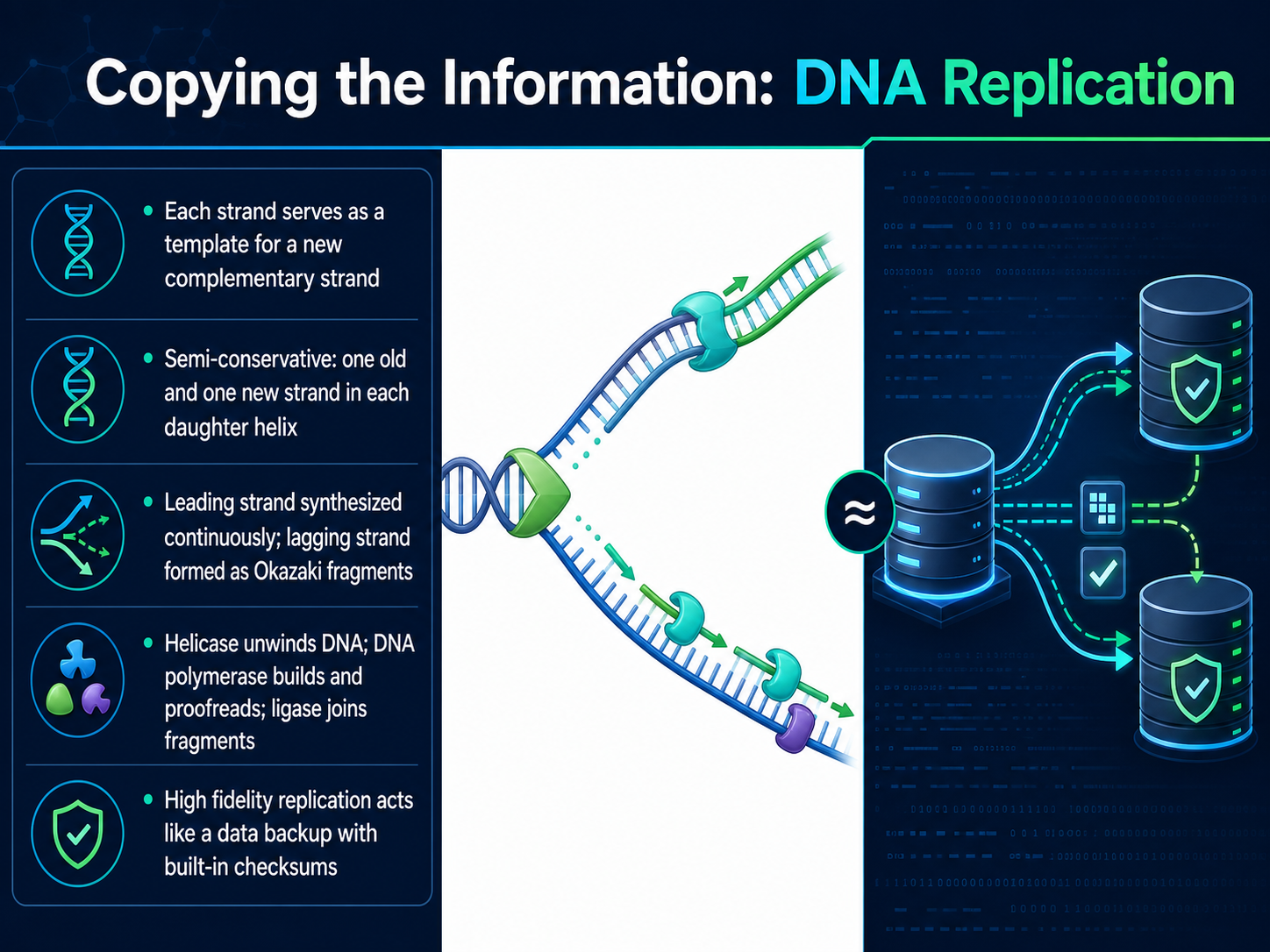
2 min - 06Copying the Information: DNA ReplicationNow let's look at how this information actually gets copied. This process is called DNA replication. Think of the DNA double helix as a zipper. An enzyme called helicase unzips it. This separates the double helix into two individual strands. Each original strand now acts as a template. Loose nucleotides inside the cell pair up with their complementary partners on the template. This is called semi-conservative replication. It means every new double helix ends up with one old strand and one completely new strand. The copying happens a bit differently on the two sides. The leading strand is built in one smooth, continuous piece. The other side, the lagging strand, is built in short, disconnected segments called Okazaki fragments. An enzyme named DNA polymerase is the builder. It adds new nucleotides and proofreads its work, like a spellchecker removing typos. Another enzyme, ligase, seals the fragments on the lagging strand. The result is a high-fidelity backup of the original information. This error-checking acts just like a data backup with built-in checksums. Next, we will explore how this vast library of information is organized inside the cell, moving on to chromosomes and genomes.
 bio.libretexts.orgkhanacademy.orgncbi.nlm.nih.gov+22 min
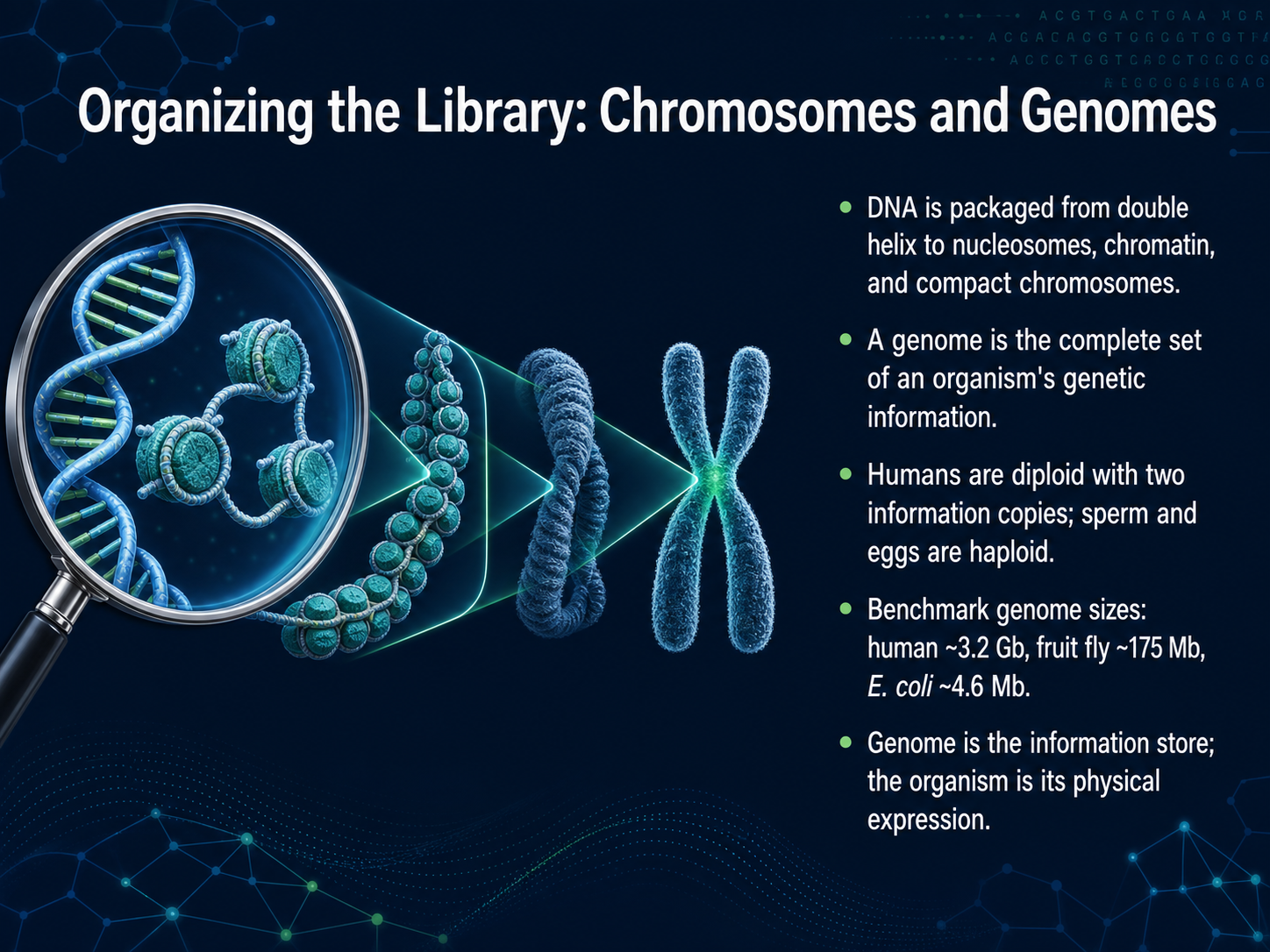
 - 07Organizing the Library: Chromosomes and GenomesNow let's look at how all of this information is organized. Think of your DNA as a vast library of instructions. To fit inside a tiny cell, that long, thin double helix needs to be packed very carefully. It wraps around proteins like thread around a spool, forming structures called nucleosomes. These coil further into chromatin fibers, and then, when a cell is about to divide, they condense even more into the compact, X-shaped structures we know as chromosomes. The complete set of an organism's genetic information, its entire library, is called its genome. Most of your cells are diploid, meaning they hold two copies of your genome, one from each parent. Your sperm or egg cells, however, are haploid, carrying just a single copy. Genomes come in different sizes. Your human genome holds about three point two billion base pairs of information. A fruit fly's genome is much smaller, around one hundred seventy-five million base pairs, and a simple bacterium like E. coli has a genome of just over four point six million base pairs. So, you can think of the genome as the stored information, and the entire organism, you, a fly, a bacterium, is the physical expression of that information. Next, we'll explore the central rule for how this information is passed on, a process called heredity.
 2 min
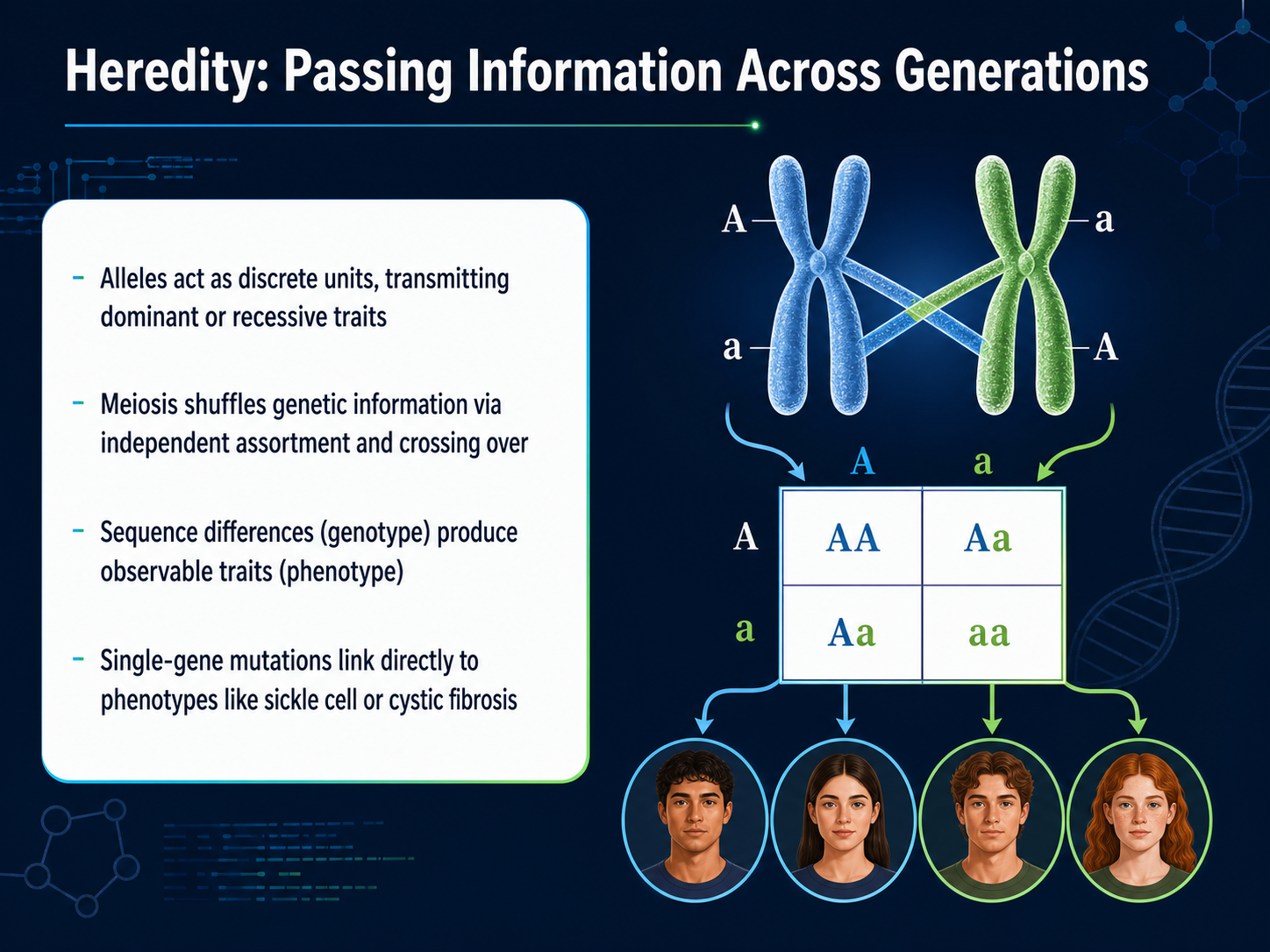
2 min - 08Heredity: Passing Information Across GenerationsNow let's look at how this information gets passed from one generation to the next, a process called heredity. Think of genes as specific units of information. These units come in different versions called alleles. You inherit one allele from each parent, and these can be dominant or recessive, which determines if a trait appears. When organisms reproduce, a special cell division called meiosis shuffles the genetic information. It does this through independent assortment and crossing over, mixing up the alleles so each offspring gets a unique combination. The specific sequence of information in your DNA is your genotype. How that information is physically expressed, like eye color or hair texture, is your phenotype. This direct link becomes very clear with single-gene mutations. For example, a change in the information of just one gene directly causes a specific phenotype, such as sickle cell disease or cystic fibrosis. So, heredity is really about the faithful copying, shuffling, and passing of biological information. Next, we will explore what happens when that information itself changes, looking at mutation and variation.
 2 min
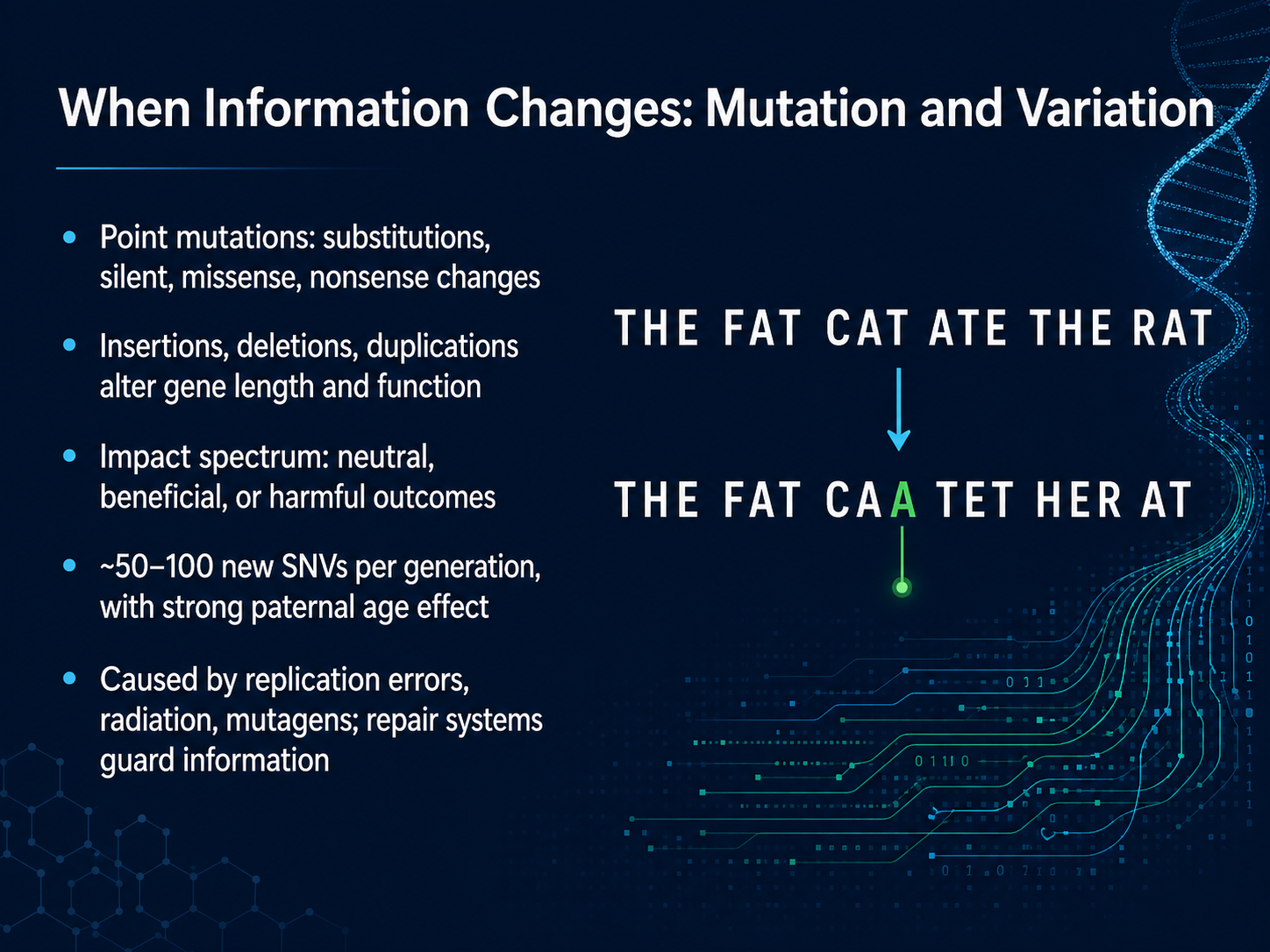
2 min - 09When Information Changes: Mutation and VariationSo far we have treated DNA information as a stable, faithful copy. But the copying process is not perfect. Occasionally, a change slips in. We call these changes mutations. Mutations are simply alterations in the DNA sequence, and they are the ultimate source of all genetic variation. Let’s start with the simplest type, called a point mutation. This is where a single letter in the code is swapped for another. The outcome depends on where it happens. A silent change does not alter the protein. A missense change swaps one amino acid for another, which may or may not affect the protein’s function. A nonsense change introduces an early stop signal, often breaking the protein entirely. Other mutations can add or remove letters, shifting the reading frame and completely altering the gene’s meaning. A human genome typically gains between fifty and one hundred new single-letter mutations each generation, and this number rises with the father’s age. These changes come from simple copying mistakes during cell division, or from environmental damage like radiation. Fortunately, our cells have dedicated repair systems that constantly proofread and fix most errors, guarding that precious information. The impact of a mutation can be neutral, beneficial, or harmful, depending entirely on where it falls and what it changes. Now that we see how information can change, the next step is understanding how scientists actually read and interpret these DNA sequences in a slide called Reading the Code: DNA Sequencing.
 nature.compmc.ncbi.nlm.nih.govnewsroom.uw.edu+22 min
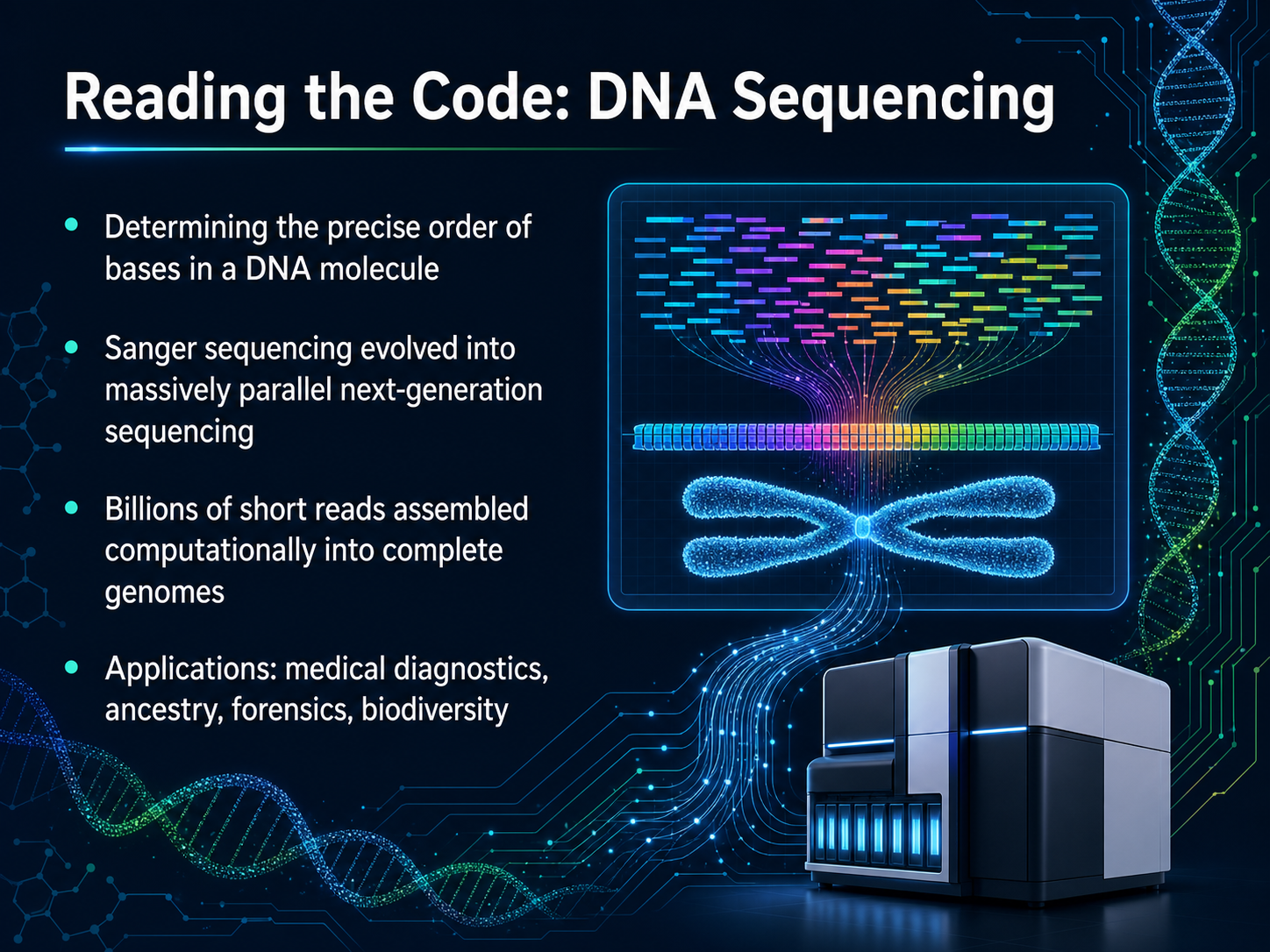
 - 10Reading the Code: DNA SequencingSo far, we have talked about how DNA stores information. Now we need a way to actually read that information, letter by letter. That is what we call DNA sequencing. Think of it as figuring out the precise order of the A, T, C, and G bases along a strand of DNA. The original method for doing this was developed by Frederick Sanger, and it was brilliant but slow. Over time, this technique evolved. It became what we now call next-generation sequencing. Instead of reading one small fragment at a time, these modern machines break the entire genome into millions of tiny pieces, read them all at once in parallel, and generate billions of very short reads. Then, powerful computers act like a giant puzzle solver, comparing the overlapping ends of these short reads to assemble them back into a complete genome sequence. This ability to read the code quickly has transformed many fields. In medicine, it helps diagnose rare genetic diseases. In ancestry tests, it traces family history. In forensics, it identifies individuals from very small samples. And in ecology, it helps scientists catalog biodiversity in a single drop of ocean water. Now that we know how to read the code, we will explore the next frontier: how scientists are beginning to edit it. Let's move on to editing the code with CRISPR and modern genome tools.
 2 min
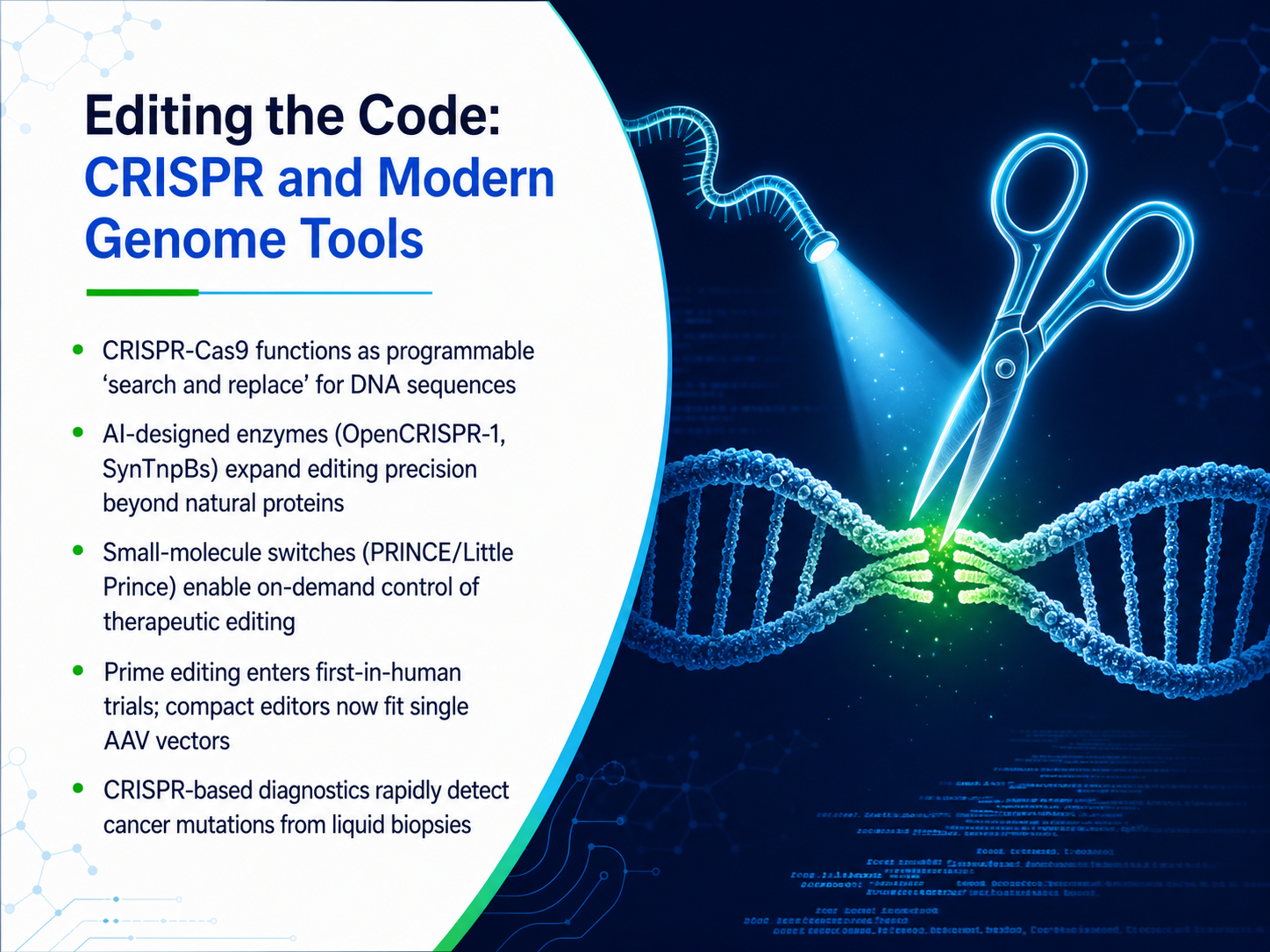
2 min - 11Editing the Code: CRISPR and Modern Genome ToolsNow let's move from reading the code to editing it. Think of CRISPR-Cas9 as a programmable search-and-replace tool for DNA. Scientists can design a guide that finds a specific spelling mistake in the genetic code, and the Cas9 protein makes a precise cut so the cell can correct it. But nature's tools have limits. That is why researchers are now using artificial intelligence to design brand-new editing enzymes, like OpenCRISPR-1 and SynTnpBs, which can be smaller and more precise than anything found in the wild. For therapy, we also need an on-off switch. Systems nicknamed PRINCE and Little Prince use small-molecule drugs to control editing, so the tool only works when and where we want it to. One of the most exciting updates is prime editing, which has just entered its first human trials. And with compact editors that can fit inside a single delivery vehicle, the path to the clinic is becoming much clearer. On the diagnostic side, the same search function can detect cancer mutations straight from a simple blood sample. In short, we are moving from naturally inspired editors to fully programmable, AI-designed tools, bringing us closer to safe, on-demand genetic medicine. Next, we will explore a fascinating idea: using DNA itself as a digital storage medium.
 nature.comnature.compreview-nature.com+22 min
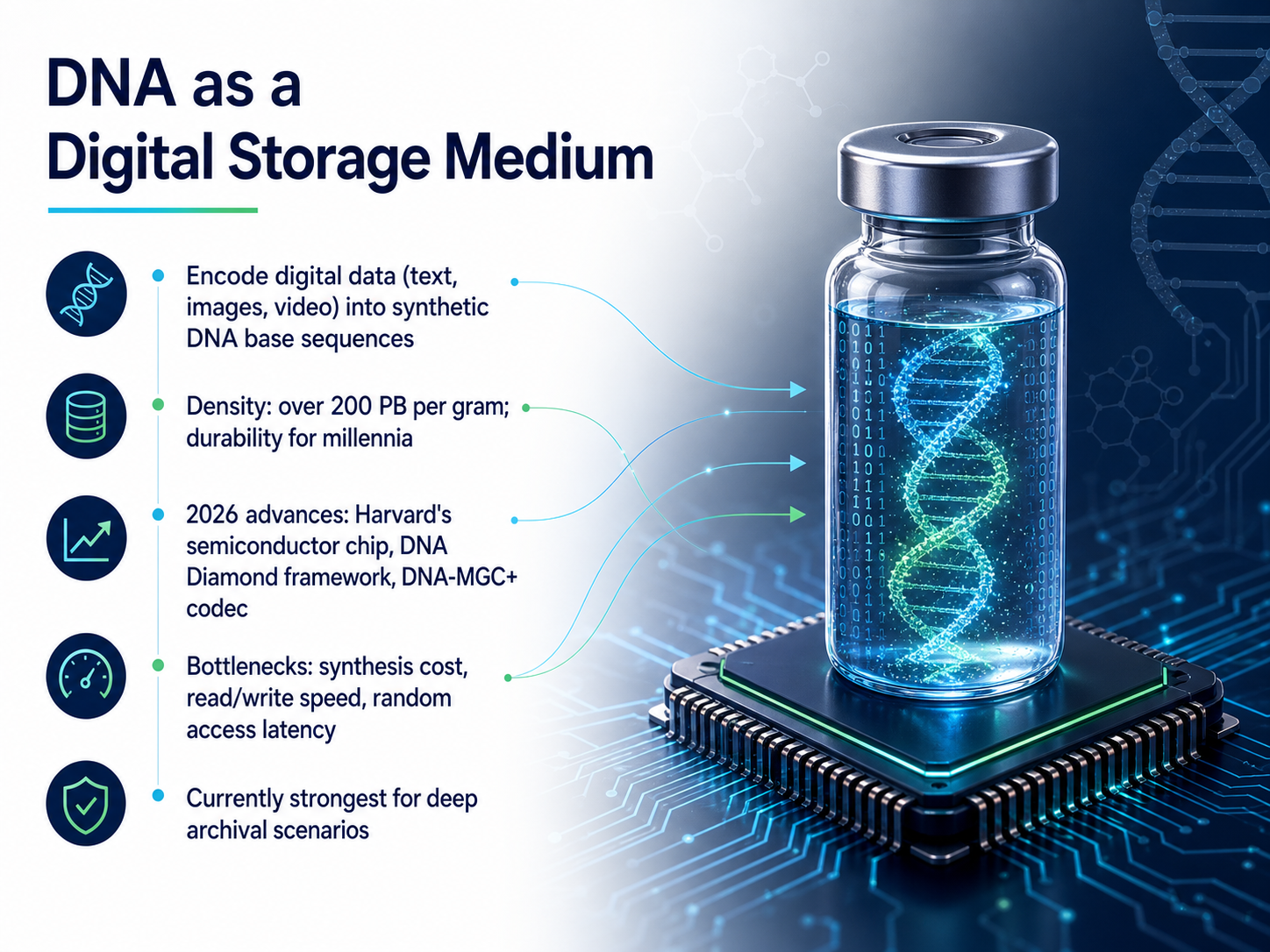
 - 12DNA as a Digital Storage MediumNow let's think about DNA as a digital storage medium. Instead of just storing genetic instructions for life, scientists can now encode any digital data into synthetic DNA sequences. That includes text, images, and even video. The appeal is dramatic: DNA can hold over two hundred petabytes per gram, and under the right conditions, it can remain readable for thousands of years. In twenty twenty-six, several advances pushed this idea further. A team at Harvard demonstrated a semiconductor chip that writes DNA using electricity and water instead of harsh chemicals. Another group developed the DNA Diamond framework, which uses a clever constellation model to pack more information into each synthesis step. Researchers also introduced a new codec called DNA-MGC-plus to make data retrieval more reliable and efficient. But we face real bottlenecks. DNA synthesis is still expensive. Reading and writing speeds are slow, and accessing a random piece of data isn't as instant as with a hard drive. For now, DNA storage looks strongest for deep archival scenarios, the kind of data you rarely access but want to keep safe for generations. Up next, we'll turn from technology to responsibility and explore ethics, society, and information ownership.
 2 min
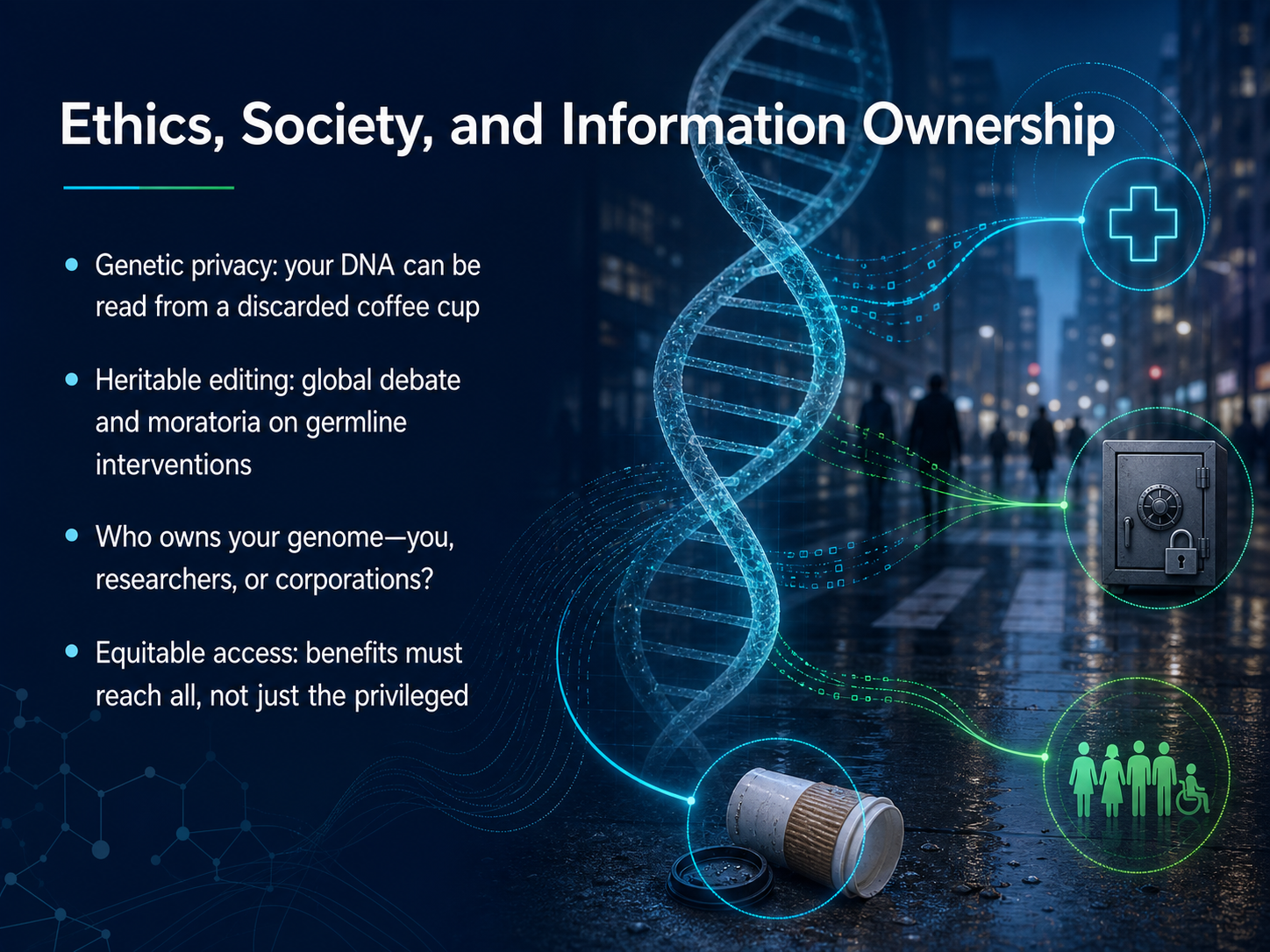
2 min - 13Ethics, Society, and Information OwnershipNow, let's turn to a very important side of the story. We have been talking about DNA as information. But whenever you have information, you also get big questions about privacy, ownership, and fairness. Think about this. Your DNA is not just inside your body. You leave it behind on a coffee cup, a toothbrush, or a stray hair. From that tiny sample, a lot of your personal genetic information can be read, often without you even knowing. This raises a serious question. Who really owns your genome? Is it you, a research lab, or a corporation? Then, consider the idea of heritable editing, making changes to DNA that can be passed down to future generations. This is not routine medicine. It is a global debate, and there are currently moratoria, or agreed pauses, on these interventions because the consequences are so profound. Finally, we must ask about equitable access. If powerful new genetic tools exist, who gets to benefit? The goal is to make sure these benefits reach all of humanity, not just a privileged few. These social and ethical dimensions are part of the full picture of DNA information. Up next, we will pull everything together in our final framework, 'DNA Information in Context'.
 2 min
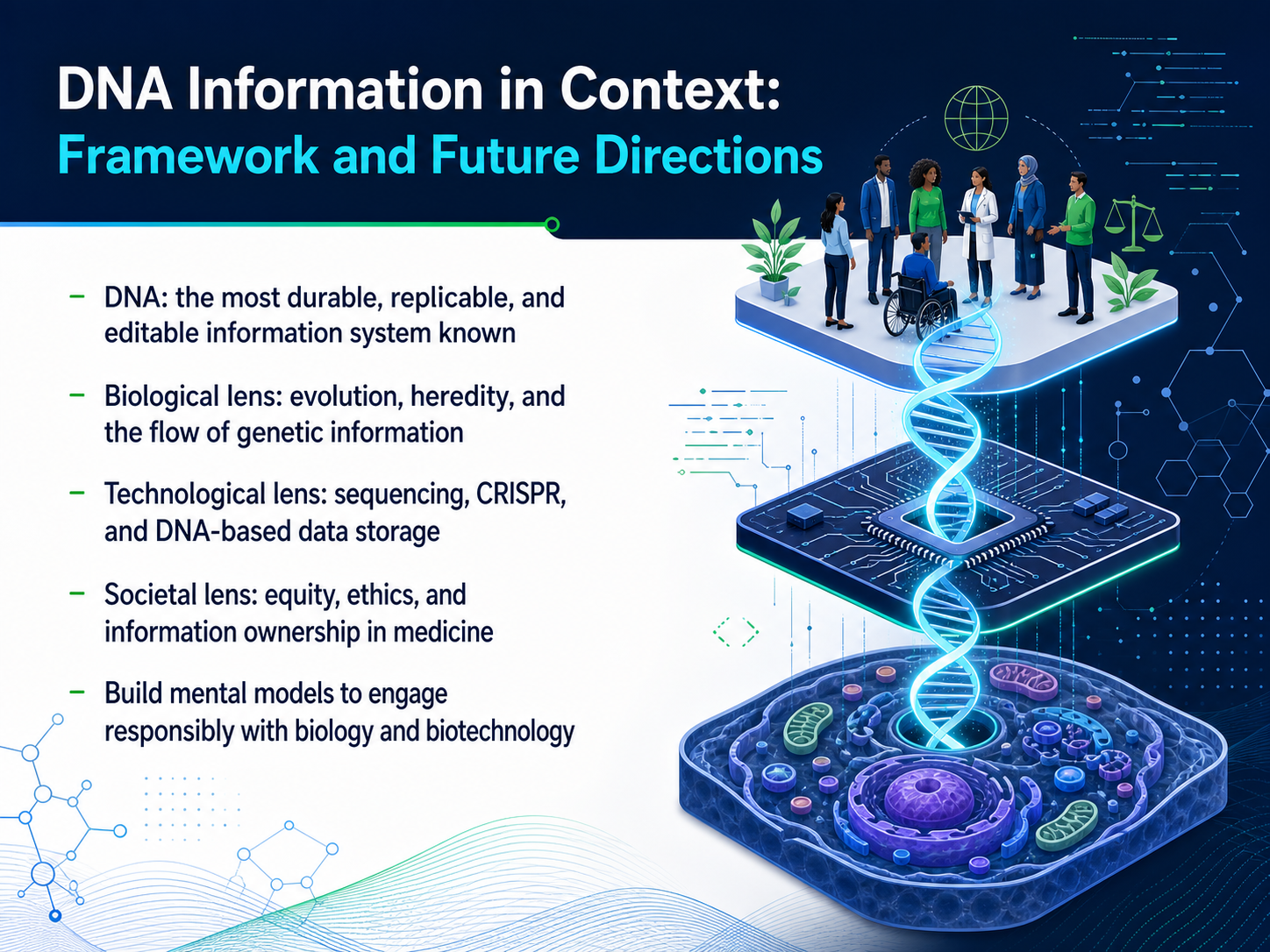
2 min - 14DNA Information in Context: Framework and Future DirectionsAs we close, let's step back and see the bigger picture. DNA is an information system. It is the most durable, replicable, and editable one we know of. Through biology, we explored how this information flows, how evolution shapes it, and how heredity passes it down. Through technology, we are learning to read it with sequencing, edit it with tools like CRISPR, and even explore DNA as a future data storage device. These powers also bring deep questions for society. Who has access to this information? Who owns it? How do we ensure it is used ethically and equitably in medicine? By building strong mental models today, you are preparing to engage with biology and biotechnology in a responsible and thoughtful way. Thank you for learning with me. Stay curious, and carry this framework with you into the future.
 2 min
2 min
Take the deck with you
Download this course as a file — free, no sign-up needed.
- PDF handoutEvery slide page, ready to print or share.15 pages · 3.9 MBDownload
- Narrated PowerPointThe deck that presents itself — every slide carries the digital human's narration video.15 pages · 16.8 MBDownload
- PowerPoint slidesThe full deck as a .pptx — open it in PowerPoint, Keynote, or Google Slides.15 pages · 3.9 MBDownload
Free to use in your own training — please keep the PersonWise credit page at the end.
Have your own deck? Turn it into a course
Sources consulted
Web sources consulted while building this course.
- Deoxyribonucleic Acid (DNA) Fact Sheet — genome.gov
- Deoxyribonucleic Acid (DNA) — genome.gov
- DNA Is a Structure That Encodes Biological Information | Learn Science at Scitable — nature.com
- Deoxyribonucleic acid (DNA) — britannica.com
- The Structure and Function of DNA - Molecular Biology of the Cell - NCBI — ncbi.nlm.nih.gov
- 7.2: Semi-Conservative DNA Replication — bio.libretexts.org
- Semi-conservative replication (video) — khanacademy.org
- DNA Replication Mechanisms - Molecular Biology of the Cell - NCBI — ncbi.nlm.nih.gov
- DNA REPLICATION - Learn the SEMI-CONSERVATIVE ... — youtube.com
- Semiconservative DNA Replication in Prokaryotes and Eukaryotes — microbenotes.com
- Human de novo mutation rates from a four-generation pedigree reference — nature.com
- Rates and Fitness Consequences of New Mutations in Humans - PMC — pmc.ncbi.nlm.nih.gov
- 4 generations help science explore genome mutation rate - UW Medicine — newsroom.uw.edu
- Mutation Rate - an overview — sciencedirect.com
- Mutation rate — en.wikipedia.org
- Engineered ADARs enable precision A-to-G base editing of DNA | Nature Biotechnology — nature.com
- CRISPR in clinical oncology: translational advances from molecular diagnostics to therapeutics | Nature Reviews Clinical Oncology — nature.com
- Design of highly functional genome editors by modelling CRISPR–Cas sequences | Nature — preview-nature.com
- A primer on prime: a prime editing update from advances to first-in-human trial - SAHMRI — research.sahmri.org.au
- Incorporating AI-optimized zinc finger proteins enhances the efficiencies and targeting ranges of miniature base editors | Nature Communications — nature.com