Campaign Planning Fundamentals
Begin
13 pages · ~26 min
Campaign Planning Fundamentals
Learn the fundamentals of campaign planning, including goal setting, audience targeting, and strategy development for marketing professionals.
What you’ll learn
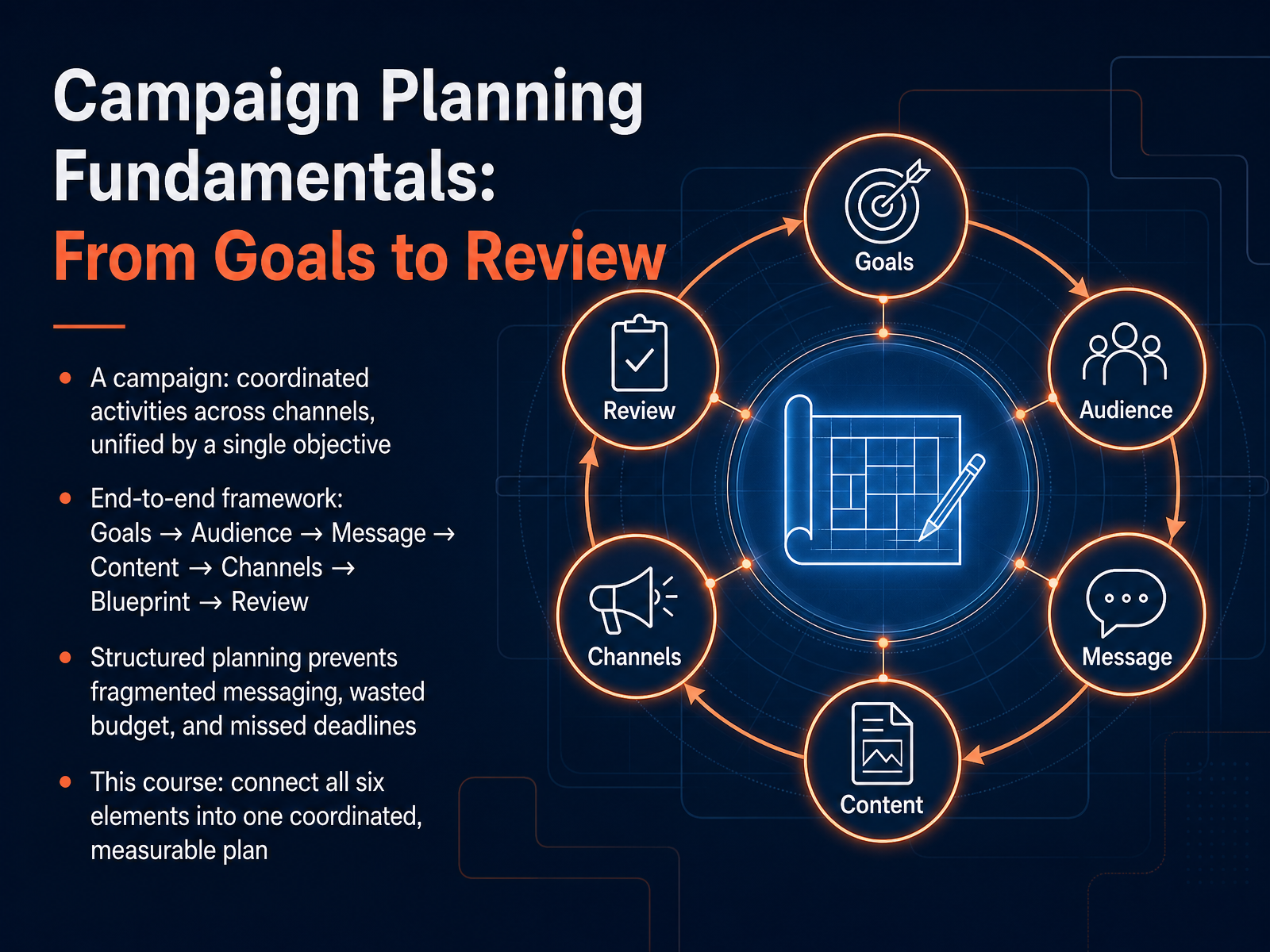
- 01Campaign Planning Fundamentals: From Goals to ReviewWelcome. This course is about building marketing campaigns that hold together from the first goal to the final review. Think of a true campaign not as a collection of separate posts and emails, but as a set of coordinated activities across channels, all unified by a single objective. That is the standard we will work toward. We will walk through a complete framework: Goals, Audience, Message, Content, Channels, Blueprint, and Review. Structured planning like this prevents the three things that quietly drain campaign performance: fragmented messaging, wasted budget, and missed deadlines. By the end of this course, you will know how to connect all six elements into one coordinated and measurable plan. Let's begin by answering a question that sounds simple but trips up plenty of experienced teams. Our next slide asks: Is this a campaign or just confetti?reachlabs.aiprooflytics.ioreyo.ai+21 min
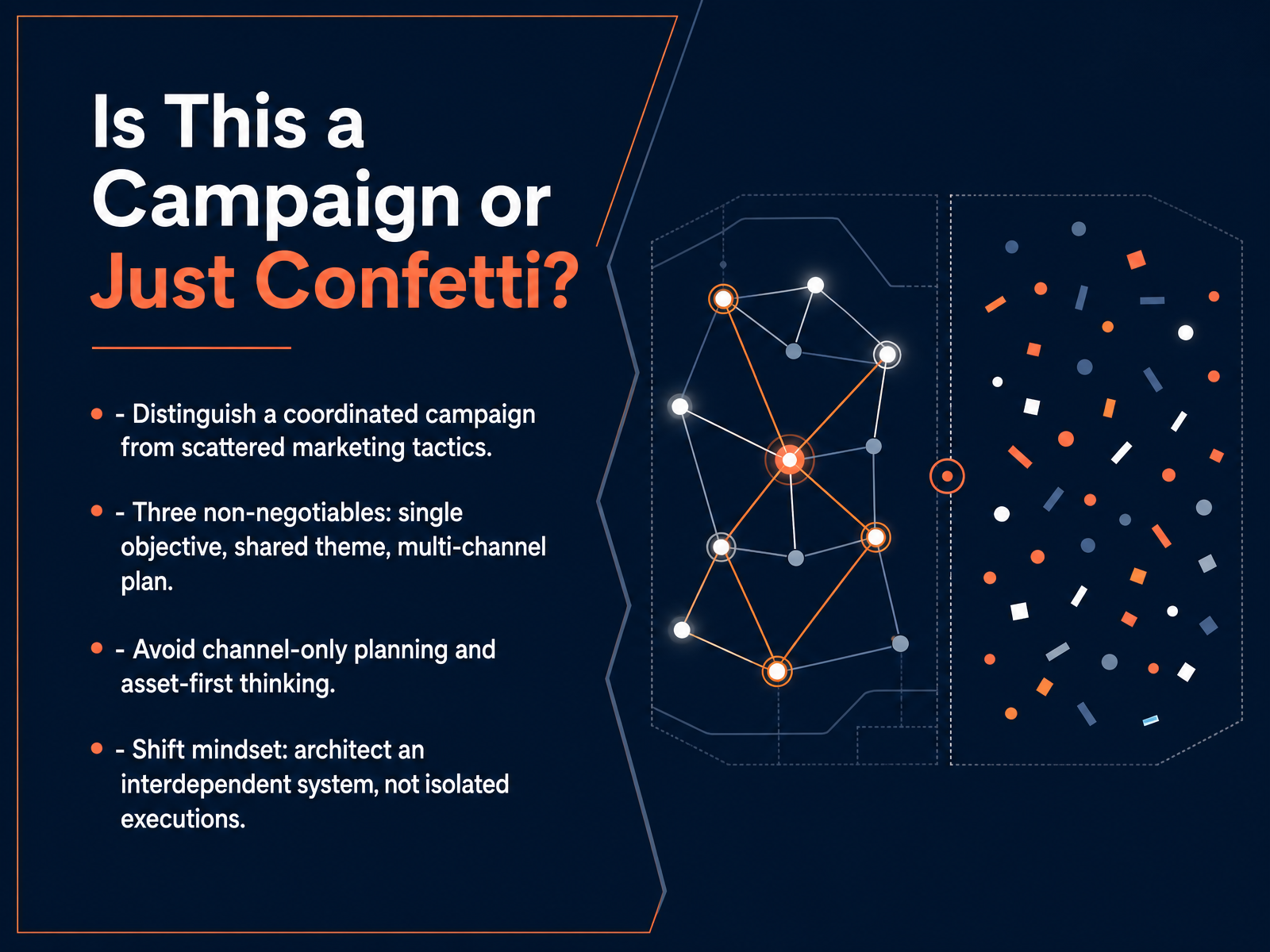
- 02Is This a Campaign or Just Confetti?A real campaign is a connected system, not a collection of random activities. Many teams mistake scattered tactics for a plan, but without integration, you are just throwing confetti. Let's anchor this with three non-negotiables. First, a single objective, one clear business outcome that defines success. Second, a shared creative theme, a unifying idea that ties every asset together. Third, a multi-channel plan where each channel plays a specific role. The biggest traps are channel-only planning, where you start with a platform instead of a purpose, and asset-first thinking, where you make content before defining the goal. Shift your mindset. Stop building isolated executions and start architecting an interdependent system where every piece connects. Next, we will get practical with setting goals that make every dollar accountable.
 reachlabs.aiprooflytics.ioreyo.ai+22 min
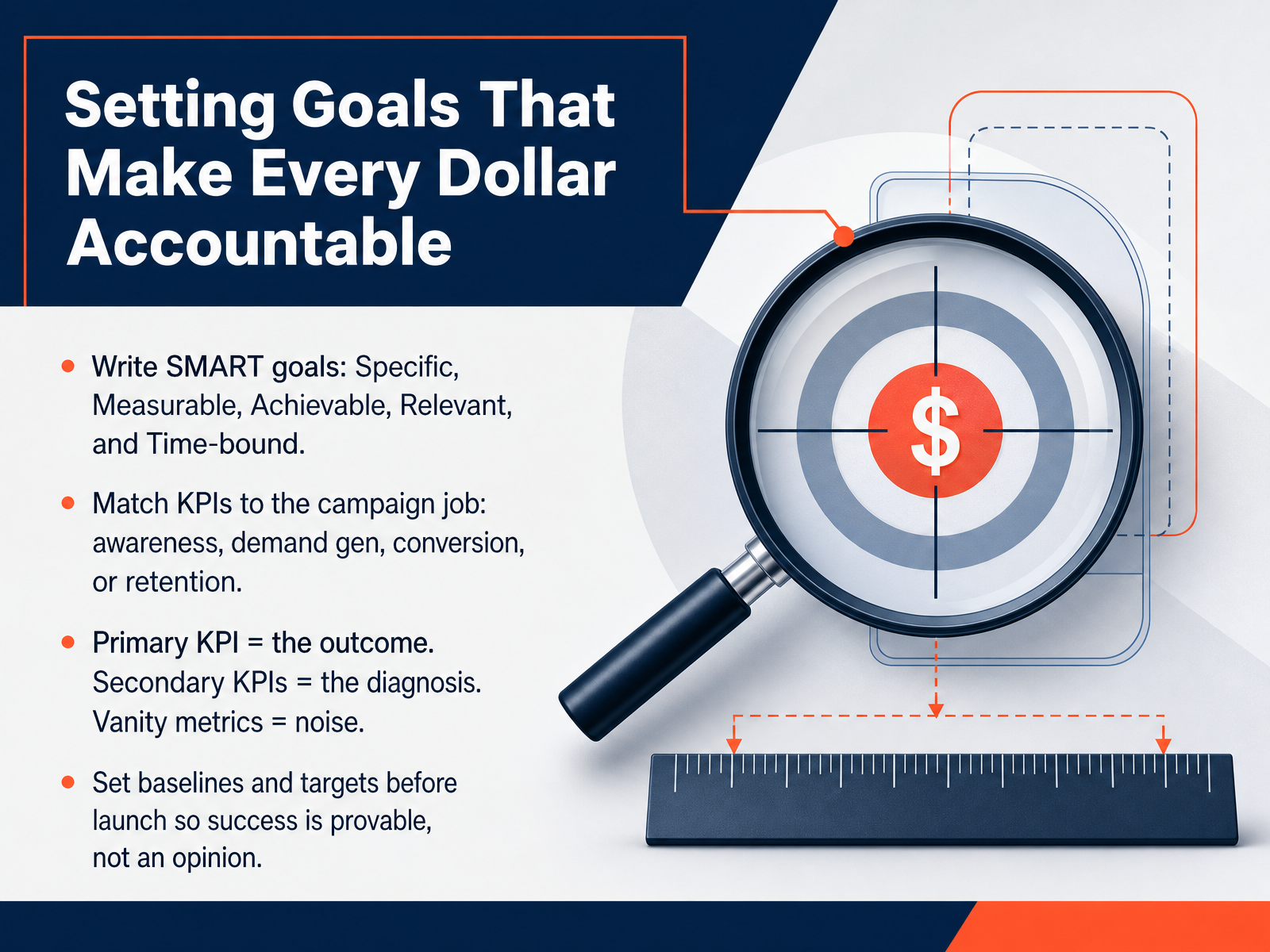
 - 03Setting Goals That Make Every Dollar AccountableNow let's turn that big-picture thinking into real accountability. The core principle here is setting goals where every single dollar has a job. We do that with SMART goals. Make them Specific, Measurable, Achievable, Relevant, and Time-bound. For example, instead of a vague goal like 'increase awareness,' aim for something like 'generate 500 marketing qualified leads from a paid social campaign by the end of the quarter.' That clarity is non-negotiable. Next, match your key performance indicators to the campaign's actual job. Is the goal awareness, generating demand, driving conversions, or retention? Your primary KPI is the outcome itself, like revenue or qualified pipeline. Secondary KPIs diagnose the why, helping you understand the mechanism behind the result. And then there's the noise. We call these vanity metrics, like raw impressions. If a number can't change a budget decision, it doesn't belong in your review. Finally, set baselines and targets before launch. If you don't know your current cost per lead or conversion rate, there is no way to prove the campaign actually caused an improvement. Success becomes an opinion, not a fact. Let's apply this disciplined thinking to who you're reaching in the next slide: Audience Definition: Targeting Actions, Not Just Adjectives.
 cloud-io.co.ukatomicsocial.comaderonkebamidele.com+22 min
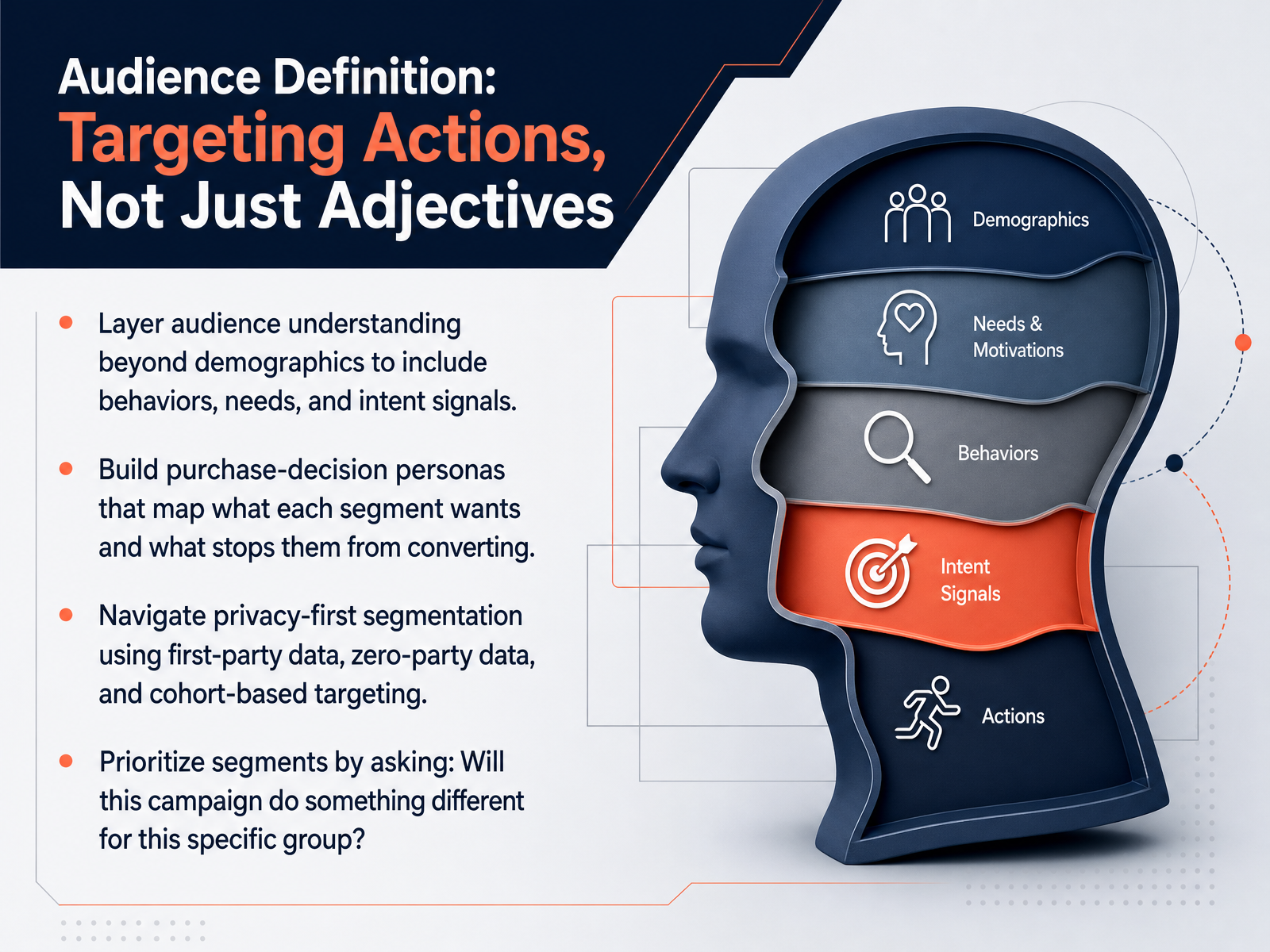
 - 04Audience Definition: Targeting Actions, Not Just AdjectivesNow let's get specific about audience definition. In campaign planning, we target actions, not just adjectives. Demographics tell you who someone is on paper. But intent, behavior, and needs tell you who is ready to move. You must layer your understanding beyond age or title to include signals like purchase history, content engagement, and active research. This allows you to build purchase-decision personas that map exactly what each segment wants and, crucially, what stops them from converting. Because modern planning happens in a privacy-first world, you also need to navigate segmentation using first-party data you own, zero-party data customers willingly share, and aggregated cohort-based models instead of invasive third-party cookies. To prioritize effectively, ask one simple question: will this campaign do something genuinely different for this specific group? If the answer is no, the segment isn't sharp enough yet. Let's take this clarity forward by crafting a core message that doesn't get lost in translation.
 kolect.aihouseofmartech.comethicore.substack.com+21 min
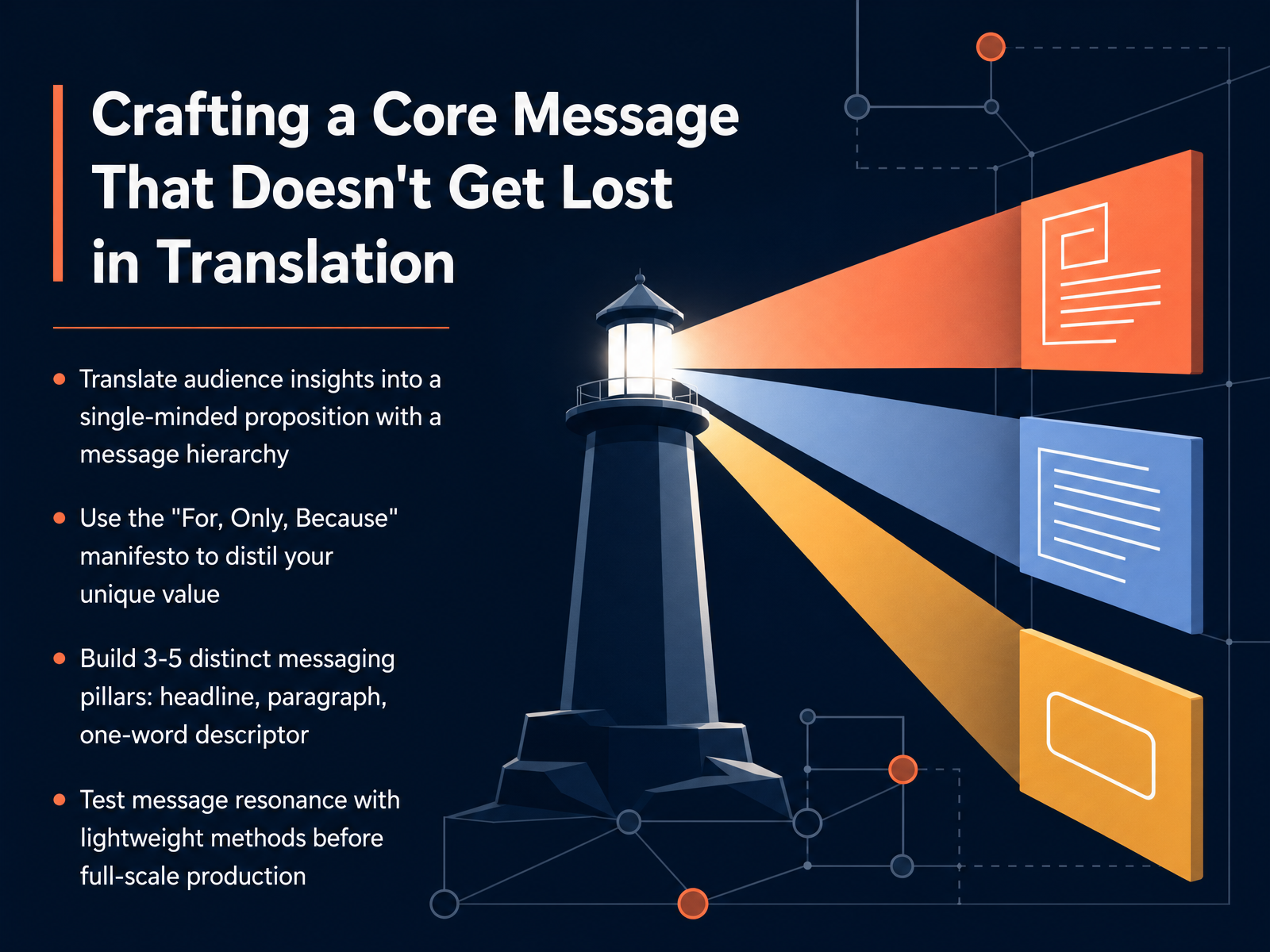
 - 05Crafting a Core Message That Doesn't Get Lost in TranslationNow let's turn audience insight into a clear, singular message—one that doesn't get lost as it travels across your channels. We'll start by building a message hierarchy. Think of it as a simple pyramid: your core value proposition sits at the top, supported by three to five proof-backed pillars, all resting on a base of concrete evidence. To sharpen that top-level proposition, use what's called the 'For, Only, Because' manifesto. It's a three-part statement that names exactly who the product is for, what only it can do, and the proof that makes it credible. This gives your entire campaign one rallying point. From that manifesto, we'll build your messaging pillars. Each pillar has three parts: a concise headline, a short descriptive paragraph for your copywriters, and a single one-word descriptor that gives designers a clear direction. This keeps every piece of content—from a tweet to a sales deck—tracing back to the same essential themes. Before you go into full production, test your message using lightweight methods. Share the draft pillars with a handful of target customers, run a quick comparison against a competitor's language, or ask a colleague to restate your core idea back to you. These small checks confirm your message resonates and save you from costly rewrites later. A clear, tested message hierarchy is your campaign's strategic backbone. Next, we'll look at turning that big idea into a real multi-format content system.
 mightyandtrue.com3sibusiness.comcrestviewstrategy.com+22 min
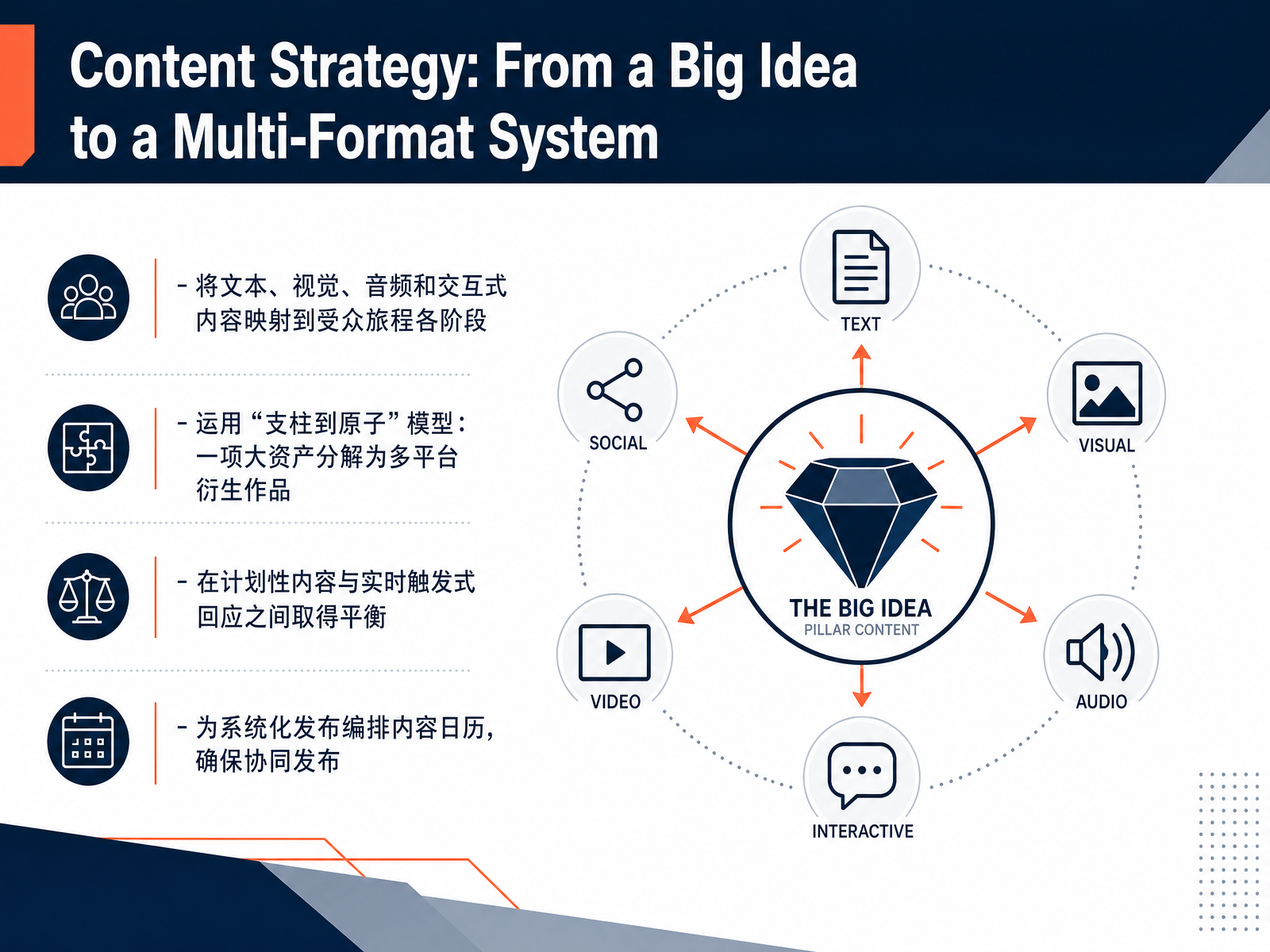
 - 06Content Strategy: From a Big Idea to a Multi-Format SystemNow let's build the content engine that will carry your campaign. This is where we turn a big idea into a multi-format system. Your content needs to work hard across text, visuals, audio, and interactive formats, mapped directly to where your audience is in their journey. An awareness-stage reader might need a short video, while someone ready to decide might need a detailed case study. To scale this efficiently, we use a 'pillar to atom' model. You start with one large, high-value asset, like a comprehensive report or a key webinar. Then, you systematically break it down into many smaller, platform-specific pieces, such as social carousels, short clips, and infographics. This is not about just churning out scheduled posts. You must also balance your planned content with reactive, real-time moments. Leave room in your workflow for triggered responses to questions, comments, or industry news. Finally, bring order to this entire system with a central content calendar. This calendar coordinates your pillar launches and all the atomic pieces so your message lands in sync, not as noise. With this system in place, your next step is positioning that content where it counts, so let's shift to channel orchestration and why less can deliver a more cohesive experience.
 2 min
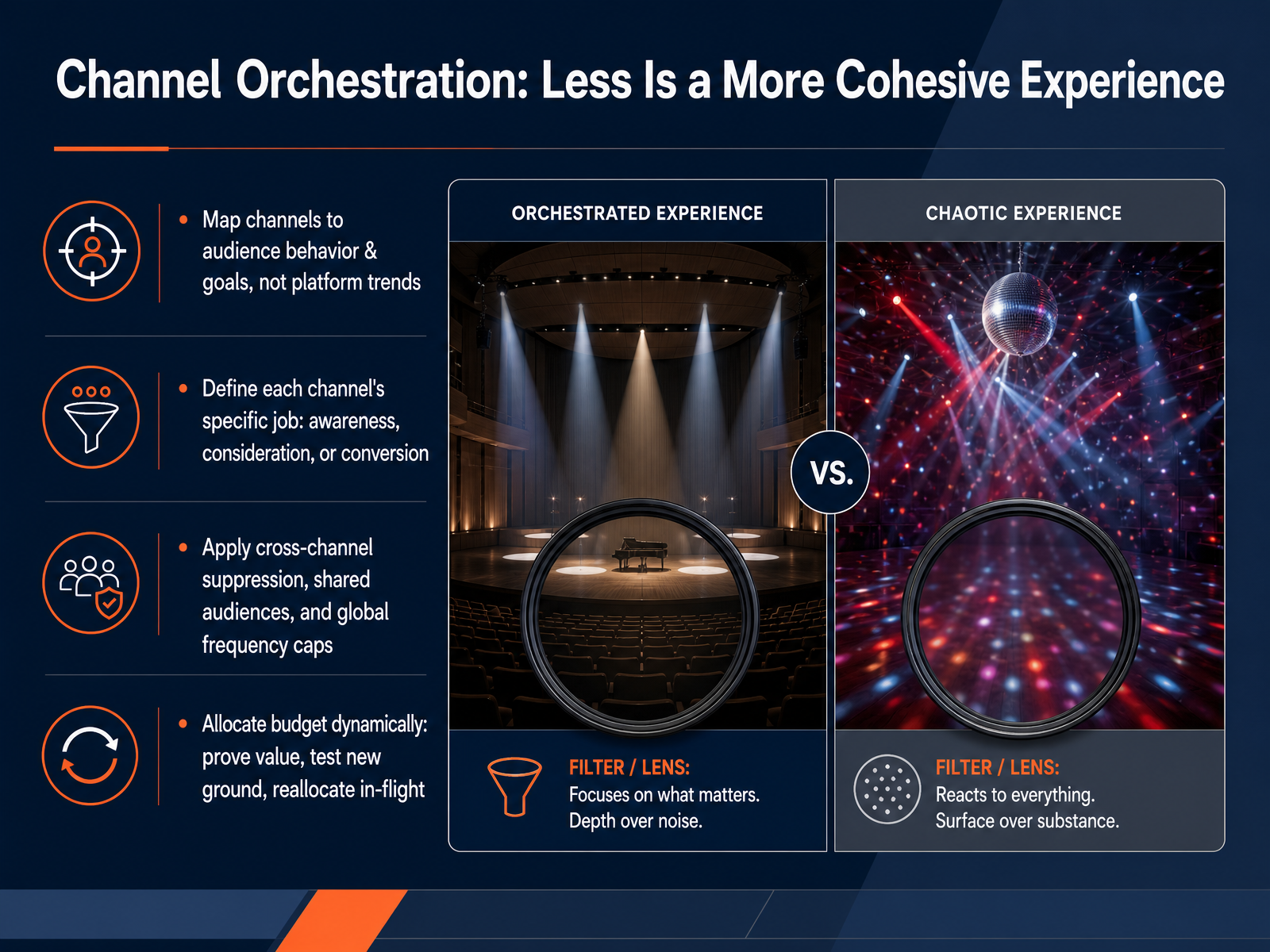
2 min - 07Channel Orchestration: Less Is a More Cohesive ExperienceLet's talk about channel orchestration and why using fewer channels often creates a stronger, more cohesive customer experience. The key rule is to map your channels to audience behavior and your campaign goals, not to whatever platform is trending. Start by defining a specific job for each channel: is it building awareness, driving consideration, or capturing a conversion? Then, to protect the experience, apply three coordination tactics. Use cross-channel suppression to stop targeting customers who have already converted. Implement shared audiences so the same person isn't seeing conflicting messages. And set global frequency caps to limit how many times someone sees your ads across the entire campaign, not just within a single platform. Finally, manage your budget dynamically. Prove value on a channel first, set aside a small portion to test new ground, and reallocate funds while the campaign is still running based on what the data tells you. This turns a scattered media plan into a single, coordinated system. Up next, we'll assemble everything you've learned by connecting the dots and building the campaign blueprint.
 reachlabs.aiprooflytics.ioreyo.ai+22 min
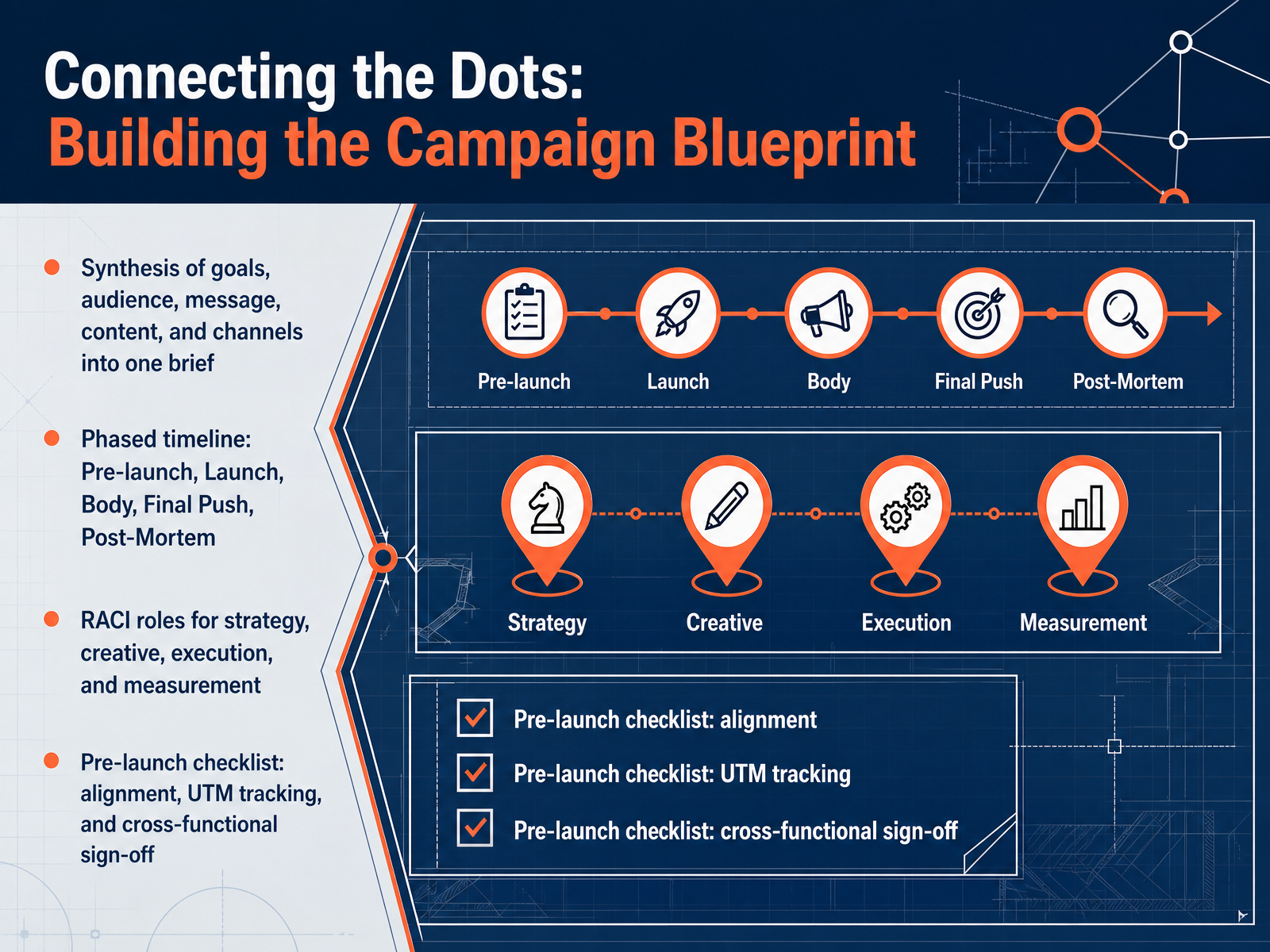
 - 08Connecting the Dots: Building the Campaign BlueprintLet's pull everything together into one operational blueprint. Think of your campaign brief not as a form to fill out, but as the single source of truth that connects your goal, audience, message, and channels. If a piece of the plan doesn't trace back to your primary objective, it doesn't belong in the brief. Next, map out a phased timeline. Start with pre-launch preparation, then soft launch to test, followed by the main body of the campaign. Build in a final push for urgency, and always schedule a post-mortem to capture learnings while they're fresh. To prevent confusion, assign clear R A C I roles. Decide who is Responsible and Accountable for strategy, creative, execution, and measurement. Also identify who needs to be Consulted and Informed. Finally, lock in your pre-launch checklist. Verify message alignment across teams, confirm your U T M tracking is live so you can trace every click, and collect cross-functional sign-off from legal, sales, and product before you go live. This blueprint turns a scattered idea into a structured campaign. Next, we'll move into measurement architecture, designing for insight, not just data.
 reachlabs.aiprooflytics.ioreyo.ai+22 min
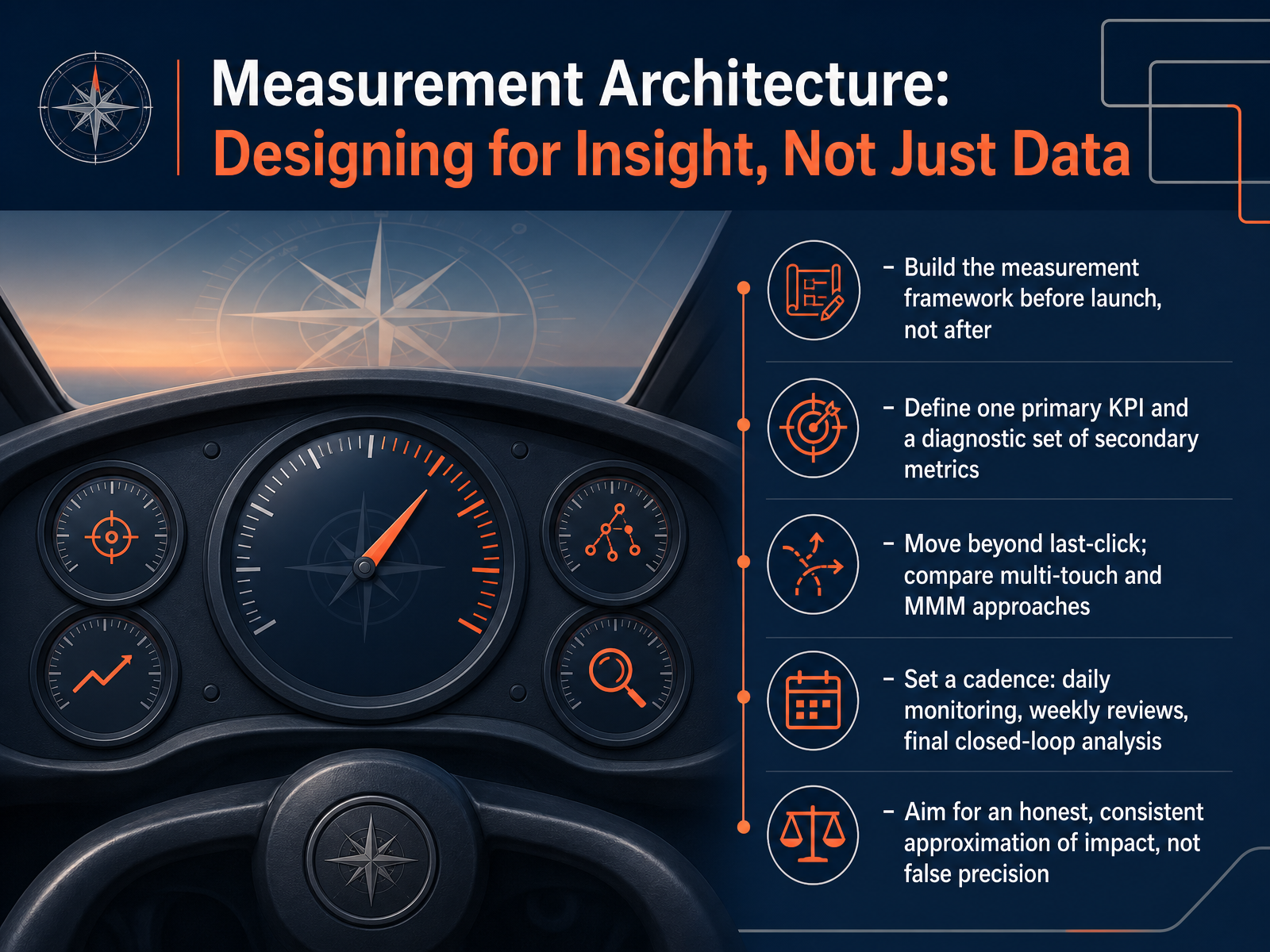
 - 09Measurement Architecture: Designing for Insight, Not Just DataNow let's talk about building your measurement framework. And here's the rule that changes everything: design it before your campaign launches, not after. The most common mistake is collecting a lot of data and then calling it measurement. But a real framework forces you to decide in advance what success looks like. Start with one primary KPI. Just one number that decides whether the campaign worked. Then add a small set of secondary metrics as diagnostic tools to explain why that number moved. For attribution, move beyond simple last-click models. Compare multi-touch and media mix modeling approaches, and be honest about what each one can and can't tell you. Then set your review cadence. Daily monitoring lets you catch problems while the campaign is still running. Weekly reviews track trends. And a final closed-loop analysis feeds what you learned directly into the next campaign brief. The goal is an honest, consistent approximation of impact, not a false sense of precision. Next, we'll apply this thinking directly to the metrics that connect reach to real revenue impact.
 2 min
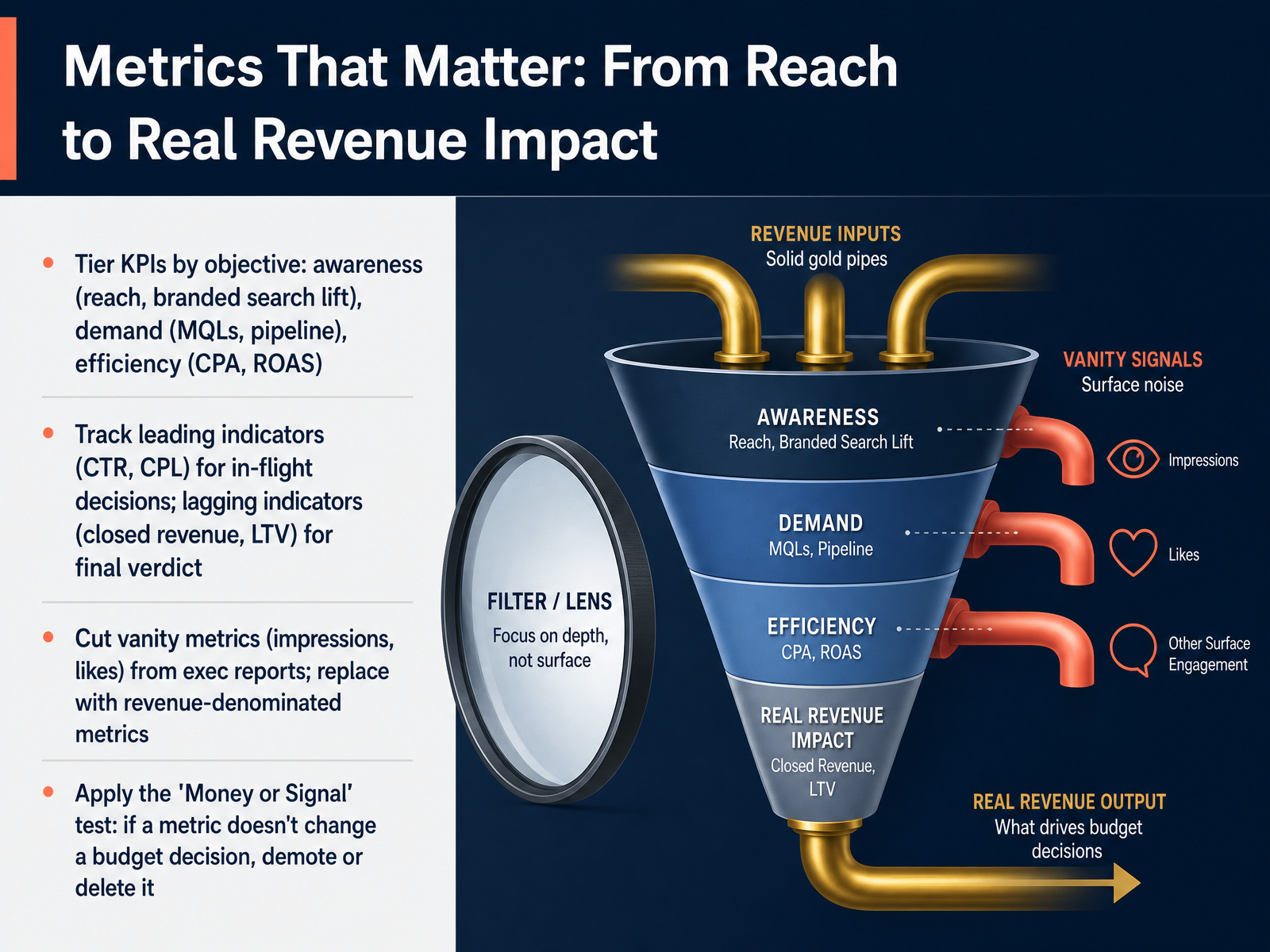
2 min - 10Metrics That Matter: From Reach to Real Revenue ImpactNow, let's turn our attention to metrics. The goal here is to move from tracking simple reach to measuring real revenue impact. The first step is to tier your KPIs directly by your objective. For an awareness campaign, track reach and branded search lift. For demand generation, focus on MQLs and pipeline. For efficiency, watch CPA and ROAS. You must also separate leading from lagging indicators. Use leading indicators like click-through rate and cost per lead to make decisions while the campaign is still running. Save lagging indicators like closed revenue and lifetime value for the final verdict. Next, cut the vanity metrics. Impressions and likes have no place in an executive report. Replace them with numbers denominated in money. Apply the 'Money or Signal' test. If a metric doesn't change a budget decision, demote it or delete it entirely. This discipline ensures your report card drives action, not just activity. Next, we'll apply this thinking to the post-campaign review, which is a decision factory, not a slideshow.
 cloud-io.co.ukatomicsocial.comaderonkebamidele.com+22 min
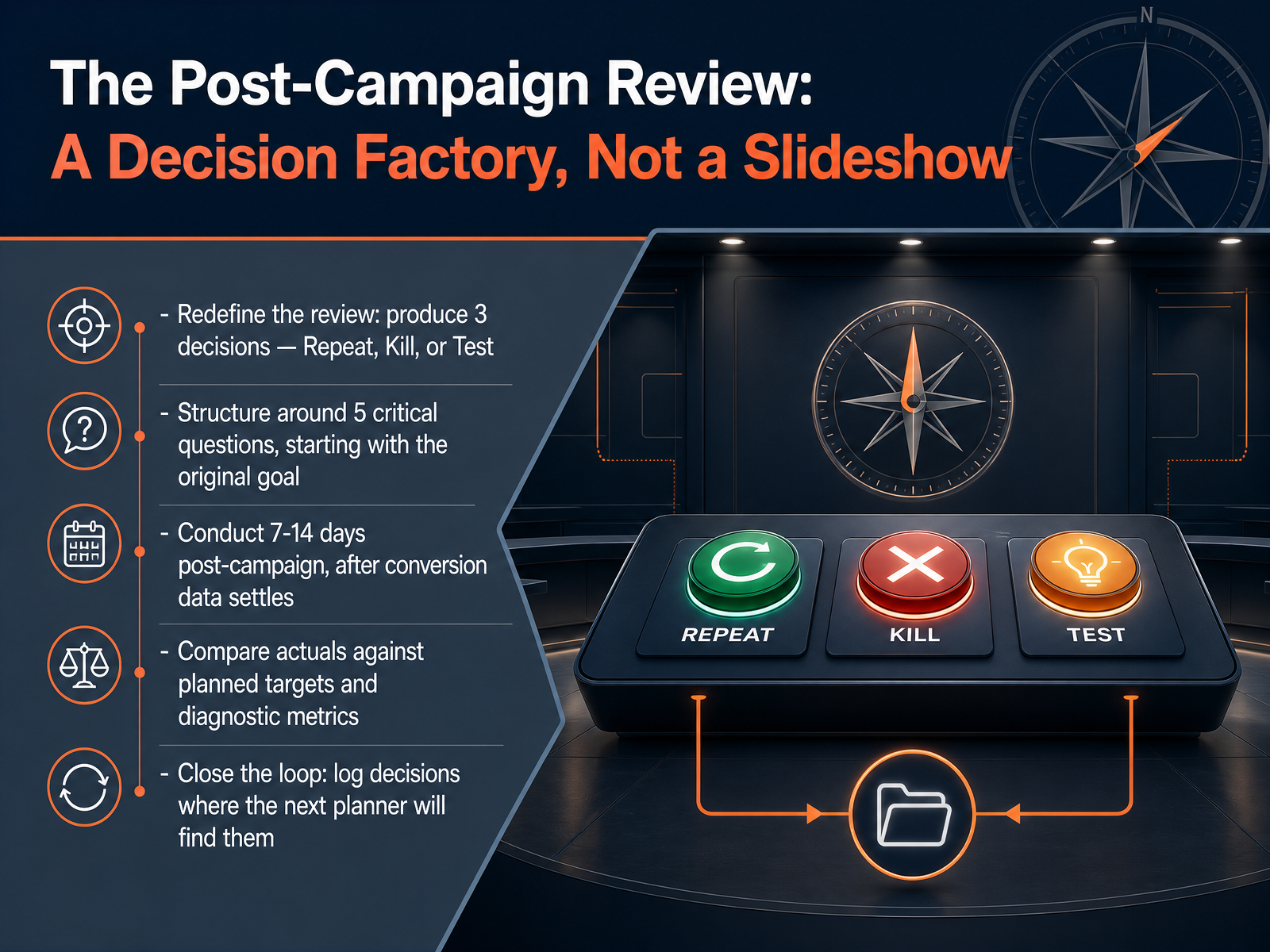
 - 11The Post-Campaign Review: A Decision Factory, Not a SlideshowNow let's redefine the post-campaign review. This is not a slideshow to justify your budget. It's a decision factory with one clear output: deciding what to repeat, what to kill, and what to test next. If the meeting doesn't produce those three written decisions, it hasn't done its job. Structure the review around five critical questions, starting with the original goal from the brief. Did the campaign hit that specific number? If you never set a goal, this question has no answer. Time the review seven to fourteen days after the campaign ends, when conversion data has settled. Any sooner and the numbers lie; any later and the next campaign launches without the learning. Compare actuals against planned targets and diagnostic metrics. Dig into where the result came from and name the weak assumptions in the plan. Finally, close the loop. Log the decisions where the next planner will find them, preferably right inside the next brief. This single habit separates teams that improve from teams that repeat the same mistakes. Next, we'll apply this in a concrete walkthrough: Word to Action: A Walkthrough of a Coordinated Plan.
 reachlabs.aiprooflytics.ioreyo.ai+22 min
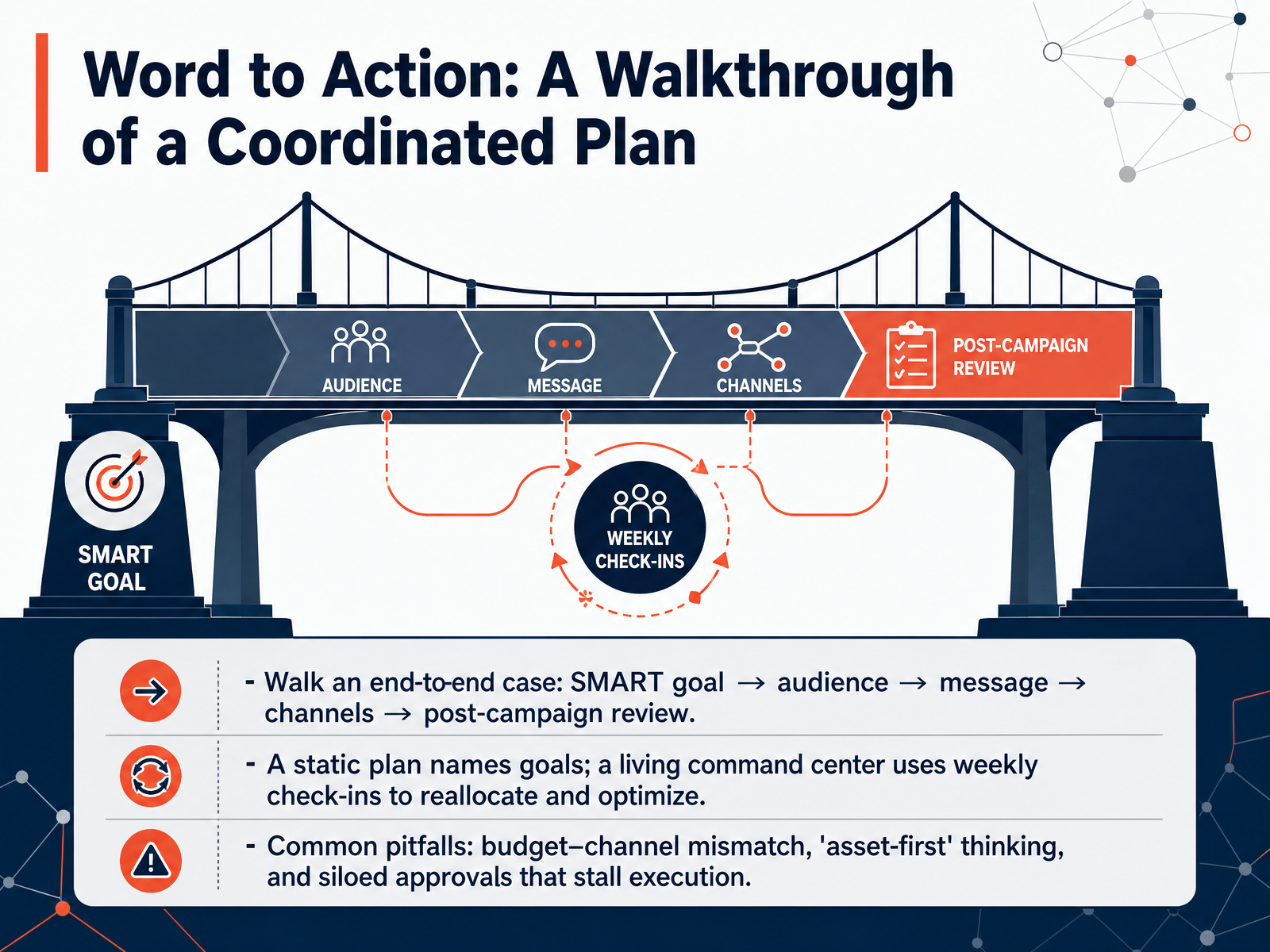
 - 12Word to Action: A Walkthrough of a Coordinated PlanSo far, we've built the plan component by component. Now, let's see how the whole machine runs together. We'll walk a real case from a SMART goal, through audience definition, to messaging, channel selection, and finally, the post-campaign review. A static plan simply names those goals. A living command center, however, uses weekly check-ins to reallocate budget and optimize while the campaign is still live. This discipline helps you avoid three common pitfalls. First, a budget–channel mismatch, where you spend money where your audience isn't. Second, asset-first thinking, where you build creative before you define the objective. And third, siloed approvals that stall execution and kill momentum. The fix is to run your plan as a connected system, not a stack of disconnected documents, and to make every decision traceable back to your primary KPI.
 reachlabs.aiprooflytics.ioreyo.ai+21 min
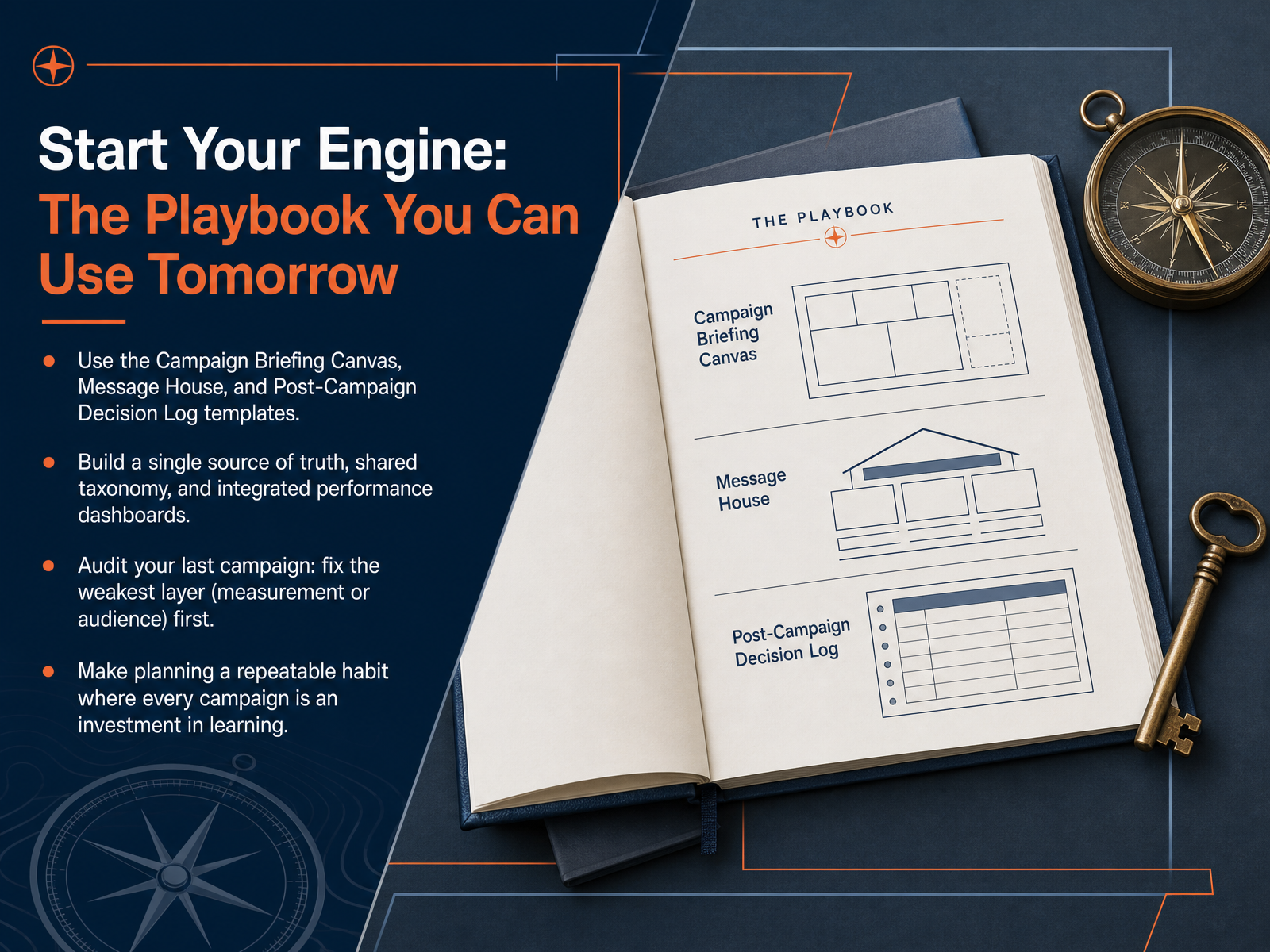
 - 13Start Your Engine: The Playbook You Can Use TomorrowYou now have the playbook to turn planning into a repeatable habit. First, adopt the core templates: the Campaign Briefing Canvas, the Message House, and the Post-Campaign Decision Log. These give you one single source of truth. Next, build a shared taxonomy and an integrated performance dashboard, so your data talks to itself and not in silos. If you want to start immediately, audit your last campaign and fix the weakest layer first. Usually, that bottleneck is either measurement or audience targeting. Finally, treat every campaign as an investment in learning, not just a launch date. Make planning a structured rhythm where strategy sets the pace, creative executes a solid brief, and measurement feeds directly into your next move. Thank you for taking this course. Now, go build the habit, open your template, and make your next campaign the most coordinated one you have ever run.
 reachlabs.aiprooflytics.ioreyo.ai+22 min
Take the deck with you
Download this course as a file — free, no sign-up needed.
- PDF handoutEvery slide page, ready to print or share.14 pages · 3.5 MBDownload
- Narrated PowerPointThe deck that presents itself — every slide carries the digital human's narration video.14 pages · 13.3 MBDownload
- PowerPoint slidesThe full deck as a .pptx — open it in PowerPoint, Keynote, or Google Slides.14 pages · 3.4 MBDownload
Free to use in your own training — please keep the PersonWise credit page at the end.
Have your own deck? Turn it into a course
Sources consulted
Web sources consulted while building this course.
- Marketing Campaign Planning: A Step-by-Step Guide for 2026 — reachlabs.ai
- Marketing Campaign Brief Template 2026: 10 Sections | Prooflytics — prooflytics.io
- Campaign Planning: The Complete Guide for Marketing Teams - REYO Blog — reyo.ai
- How to Plan a Marketing Campaign (2026) — ventureharbour.com
- Marketing Campaign Planning Guide 2026 — adbid.me
- Crafting SMART Objectives for Marketing Campaign Planning — cloud-io.co.uk
- SMART Goals for Your Marketing Campaigns with Real Example — atomicsocial.com
- How to Set SMART Goals for Your Digital Marketing Campaigns - Aderonke Bamidele's Blog — aderonkebamidele.com
- SMART Marketing Goals: Framework & Examples | Brandwatch — brandwatch.com
- How to define SMART marketing objectives (with example RACE KPIs) — smartinsights.com
- Beyond the Cookie Crumble: AI-Powered Predictive Audiences for a Privacy-First Advertising Landscape | Kolect.AI Blog — kolect.ai
- Audience Segmentation Maturity Model | House of MarTech — houseofmartech.com
- Why a CMO Cares About Privacy-First AI Segmentation — ethicore.substack.com
- API Playbook: Privacy-Preserving Preference APIs — preferences.live
- Privacy-First Personalization: Lessons from Netflix — preferences.live
- Campaign Messaging Framework + Free Template | Mighty & True | Inference — Mighty & True — mightyandtrue.com
- Marketing Campaign Structures That Improve Message Clarity - 3Si Business — 3sibusiness.com
- The 1-Hour Message House | Crestview Strategy — crestviewstrategy.com
- Messaging Hierarchy for Scalable GTM Strategy | fusepoint — fusepointinsights.com
- Comms Strategy Blueprint: Hierarchy, planning, messaging | Big Black Door — bigblackdoor.com