Customer Service Workshop Facilitation
Begin
14 pages · ~28 min
Customer Service Workshop Facilitation
This training equips facilitators with the skills to deliver an engaging customer service workshop, covering key techniques for managing sessions and driving participant learning.
What you’ll learn
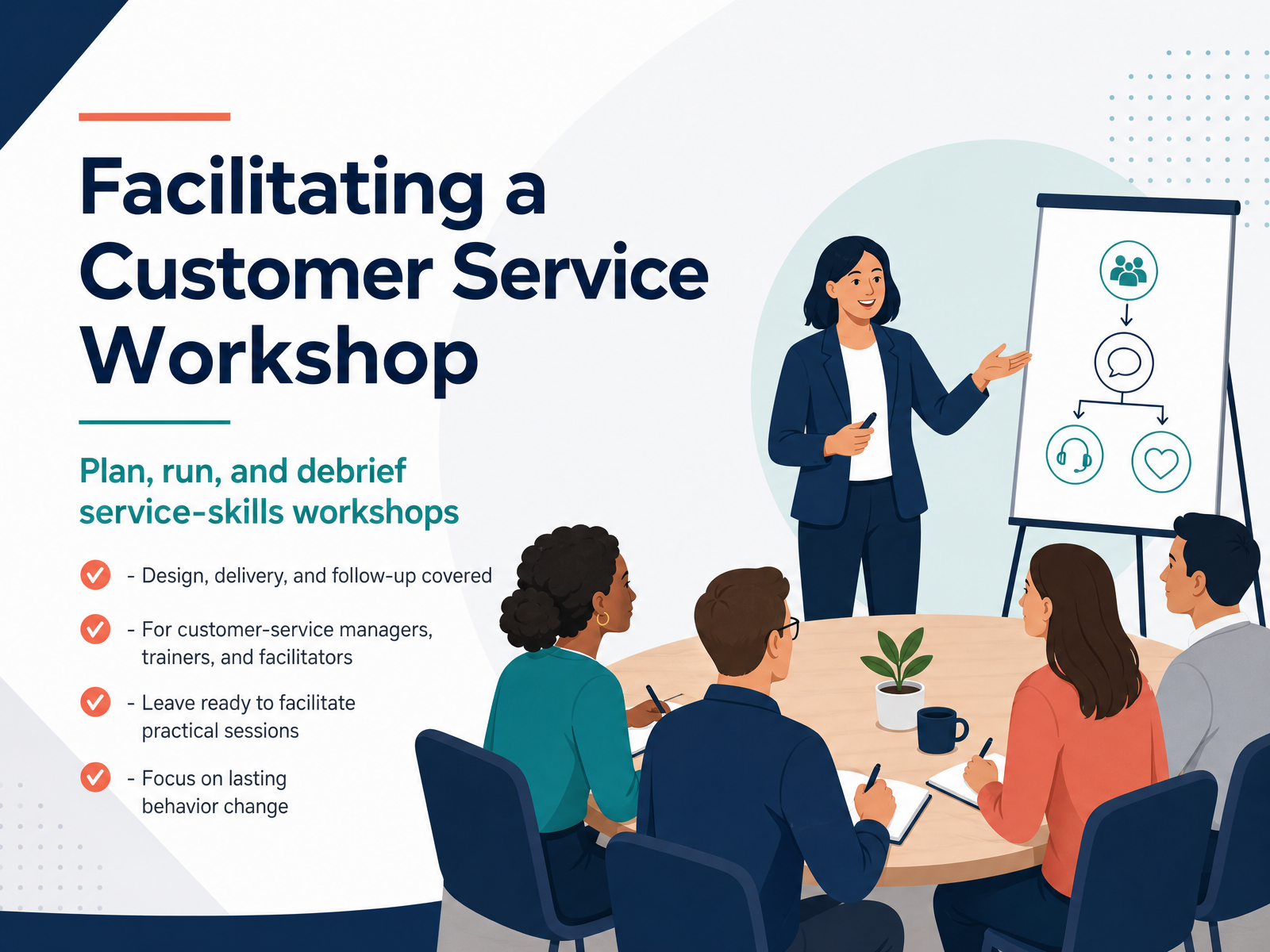
- 01Facilitating a Customer Service WorkshopWelcome, everyone. If you're facilitating customer service training, you know the real challenge isn't filling the room with slides—it's changing how your team talks to customers after they walk out. That's what this workshop is about. Over the next sessions, we'll cover the full arc: designing practical sessions, delivering them with confidence, and debriefing so the learning sticks. You're not here for basics. You've run service teams, designed experiences, and coached people through tough interactions. So we'll focus on refinements that make your workshops measurable, not just engaging. You'll leave with concrete tools for role-plays, real-time feedback, and follow-up practices that reinforce behavior long after the training day. We'll aim for lasting change, not a good vibe. When you facilitate, every exercise should map to a skill your team uses on the floor. When you debrief, you'll ask questions that surface real gaps. Let's get into the first shift in mindset: why facilitating beats lecturing, especially when you're building service skills that have to survive contact with a live customer.2 min
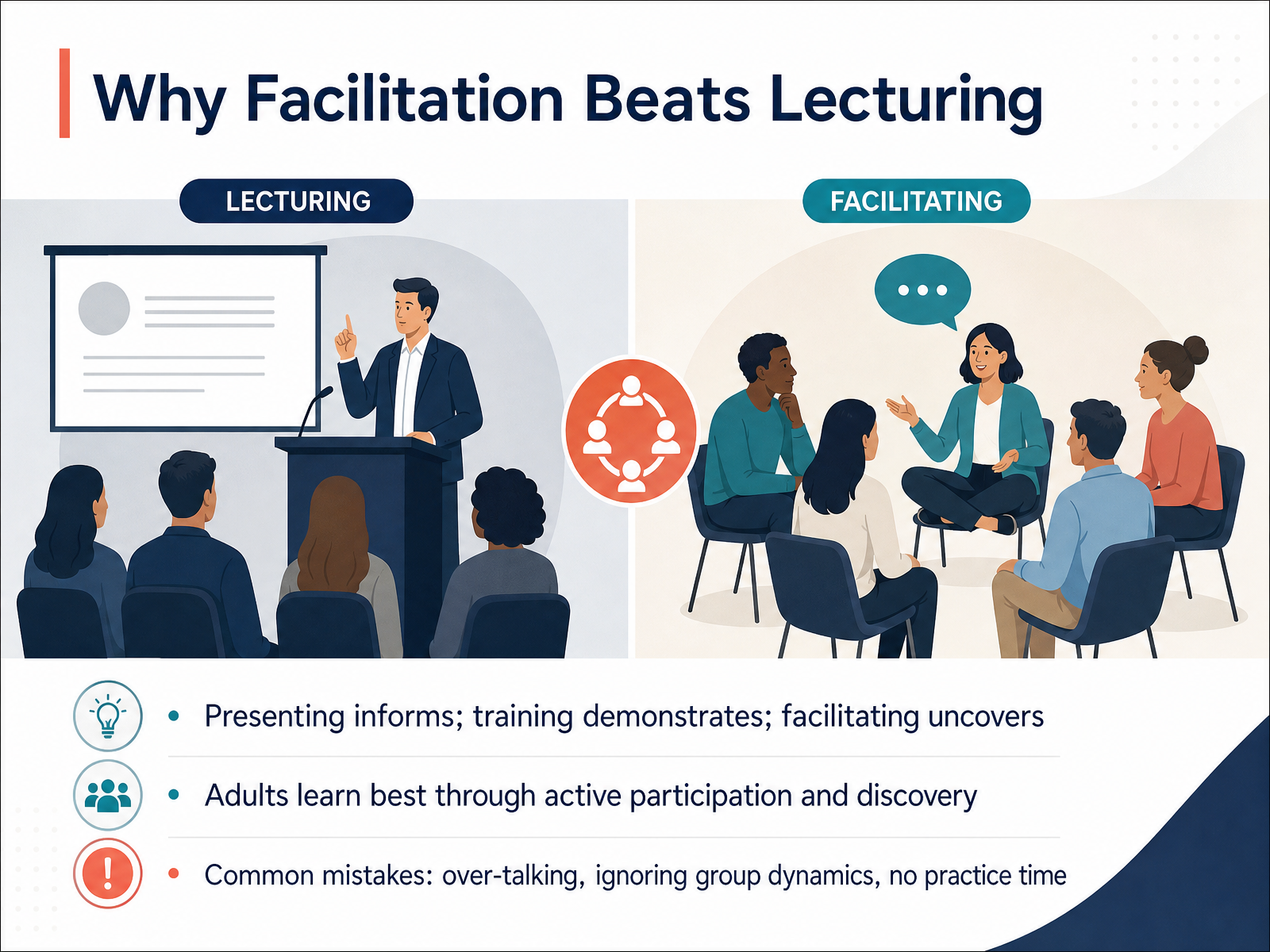
- 02Why Facilitation Beats LecturingLet’s be honest: you’ve sat through enough lectures to know they rarely change behavior. Presenting informs, training demonstrates, but facilitating uncovers. That’s the shift we’re after. When you facilitate, you guide your team to surface their own insights, which stick far longer than anything you could say. Adults learn best through active participation and discovery, not passive listening. So, avoid the common traps: over-talking, ignoring group dynamics, and skipping practice time. Instead, pose a question, let the silence breathe, and watch your team connect the dots. That’s where real learning happens. Keep that in mind as we move into the next piece: the facilitator’s core mindset.
 1 min
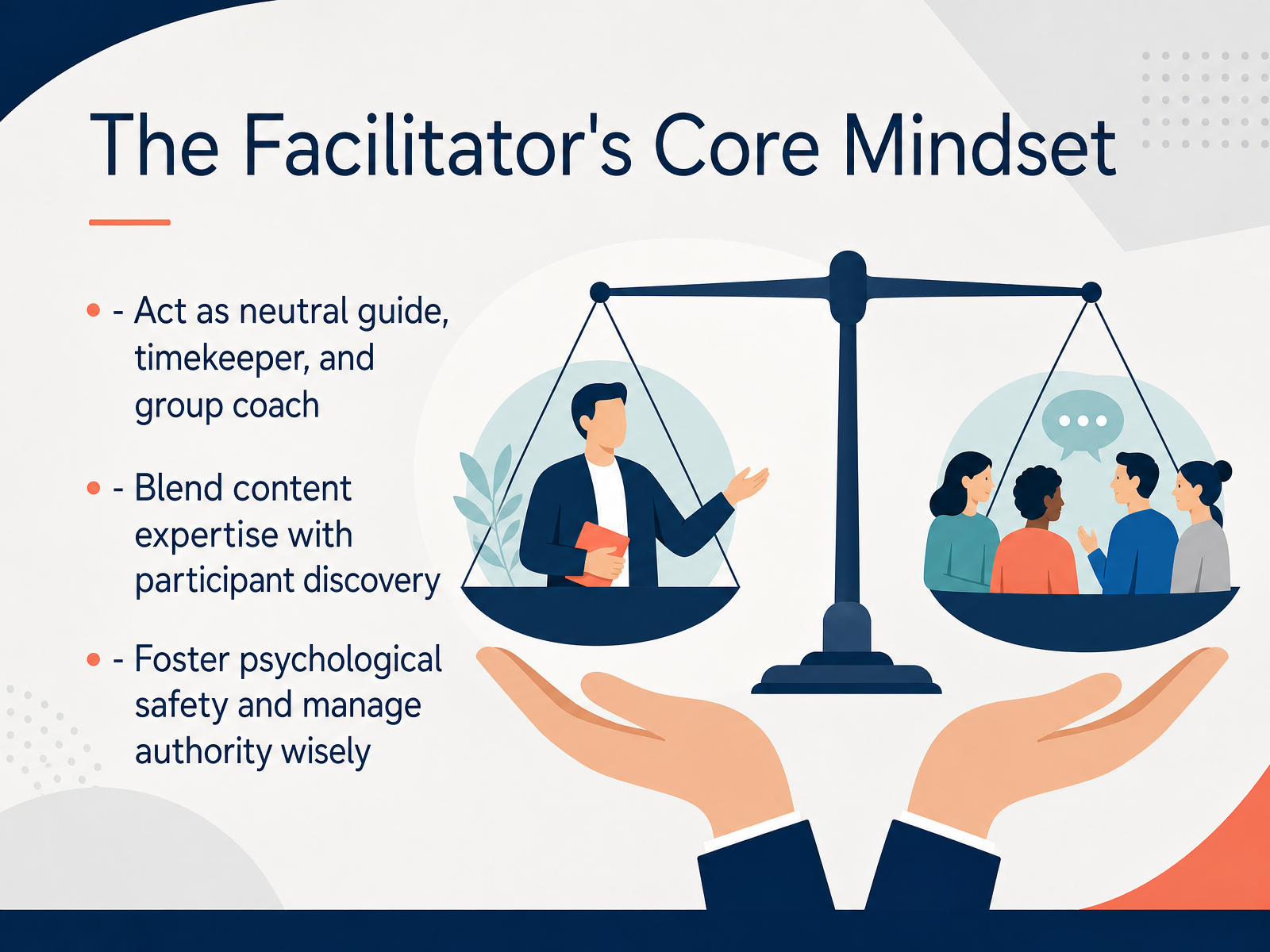
1 min - 03The Facilitator's Core MindsetLet’s focus on your role in the room. You’re not the expert with all the answers, and you’re not a passive observer either. You’re the neutral guide, the timekeeper, and the group’s coach. That means you hold the process while your participants hold the content. Blend what you know about service design with what your team discovers in real time. When someone offers a solution that’s close but not quite there, resist the urge to correct it. Instead, ask a question that lets the group refine it themselves. Psychological safety is your foundation. When your team feels safe to share half-formed ideas, you get honest feedback. So manage your authority wisely. Use it to protect the conversation, not to steer the outcome. If you notice one voice dominating, invite others in with a simple prompt like, let’s hear from someone who hasn’t spoken yet. Your job is to make sure the best idea wins, not the loudest one. Keep that balance, and your workshop stays productive and collaborative. Next, let’s look at how to read the customer-service environment before you even begin.
 2 min
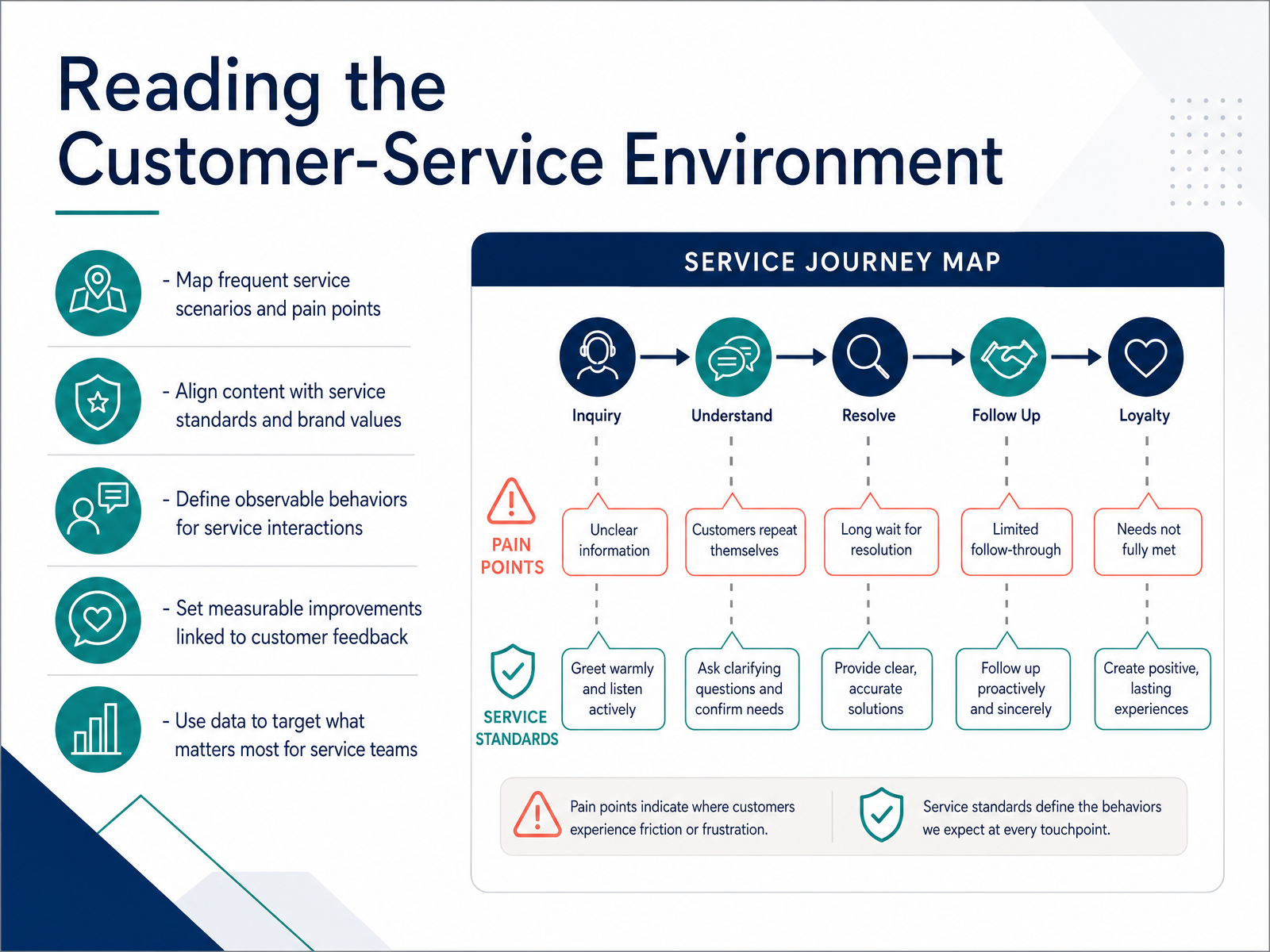
2 min - 04Reading the Customer-Service EnvironmentNow, let's shift from the room itself to what you're actually training against. Reading the customer-service environment starts with mapping the frequent scenarios and pain points your team encounters daily. Pull those from ticket logs, call recordings, or even front-line debriefs. Align every exercise with your service standards and brand values, so practice doesn't drift from policy. Here is the key refinement: define observable behaviors, not vague attitudes. Instead of a goal like be more empathetic, specify a behavior like, restate the customer's issue before offering a solution. Pair that with measurable improvements tied to customer feedback, such as raising satisfaction scores on first-contact resolution. Use that data to target what matters most for your service teams, rather than spreading your training across everything at once. When you facilitate around the real environment, the practice becomes immediately relevant. Next, we'll move into setting clear objectives and success criteria for the sessions themselves.
 1 min
1 min - 05Setting Objectives and Success CriteriaLet’s talk about setting objectives and success criteria. For short sessions, write learning objectives that are clear and measurable. Instead of a broad goal like “improve service,” aim for something like “by the end of this session, participants will be able to apply the three-step recovery script to a customer complaint.” That gives your team a target they can actually hit. Next, define success criteria tied to real service outcomes. Ask yourself: what should change on the floor, in the call queue, or in customer feedback? Tie those criteria to your service standards and brand values, so the workshop reinforces the behaviors you care about most. Then decide on delivery format: in-person, virtual, or hybrid. Each has its own energy, and the right choice depends on your team’s location and the depth of practice they need. Finally, ensure every objective is observable and achievable. If you can’t see it happening, you can’t coach it or measure it. In short, set sharp objectives, connect them to service reality, and choose the format that makes practice possible. That sets you up for a flow that keeps participants engaged from start to finish. Next, we’ll look at sequencing a workshop that flows.
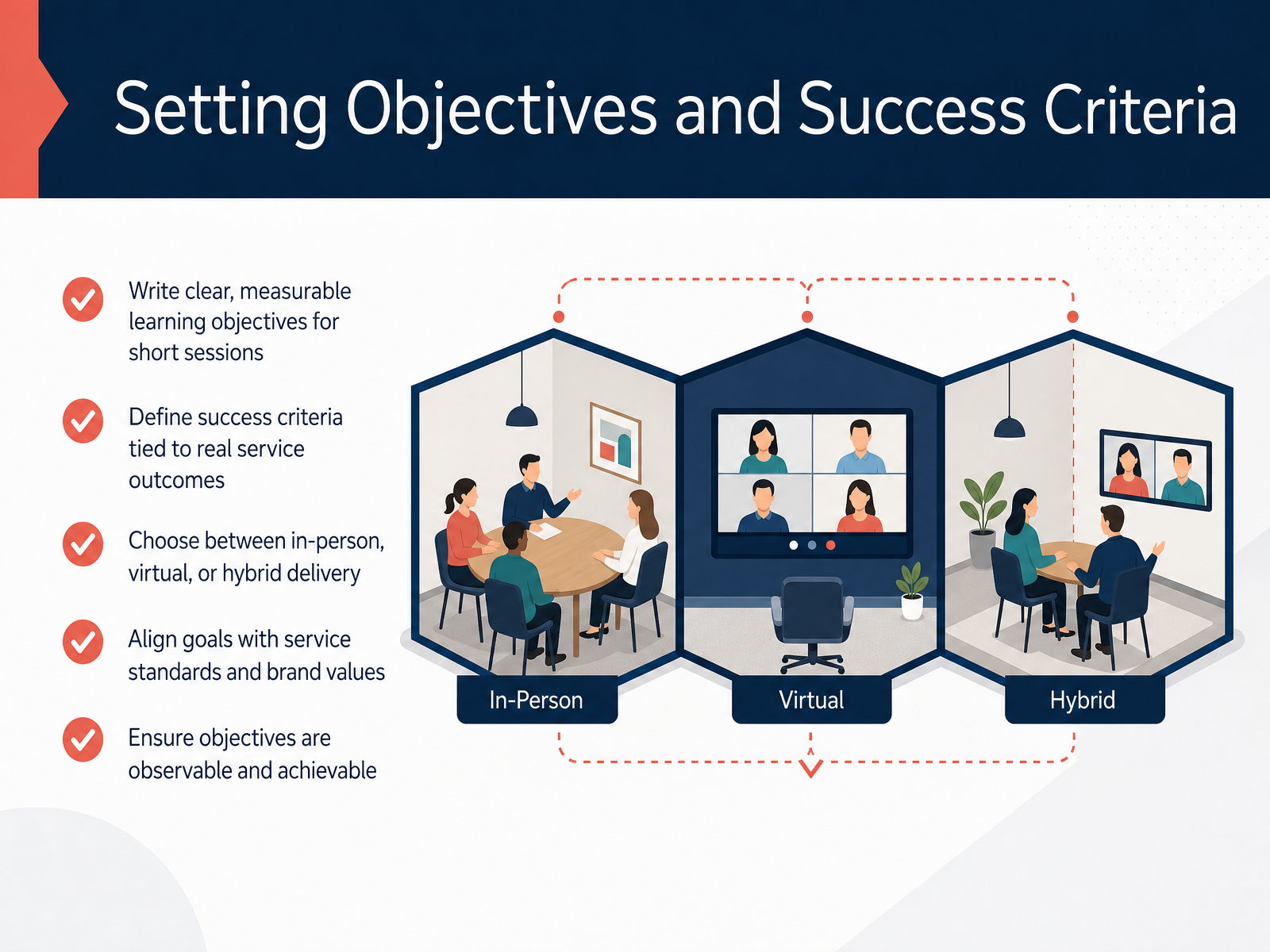 2 min
2 min - 06Sequencing a Workshop That FlowsNow let's talk about sequencing. A strong workshop moves through five beats: warm-up, concept input, practice, feedback, and action planning. That flow builds skill step by step, so your team isn't overwhelmed early. You don't have to follow it rigidly, though. Watch the energy in the room. If attention dips after lunch, shift a hands-on activity earlier or break the input into shorter chunks. If time runs short, trim the concept input, not the practice — that's where learning sticks. And when engagement feels low, insert a quick pulse check or pair discussion to re-energize. The goal is to keep momentum without sacrificing the debrief. As you plan each segment, ask: what will participants do, and how will that prepare them for the next step? When you reorder with intent, your workshop stays responsive and purposeful. Next, we'll look at core dialogue and engagement techniques to use throughout those segments.
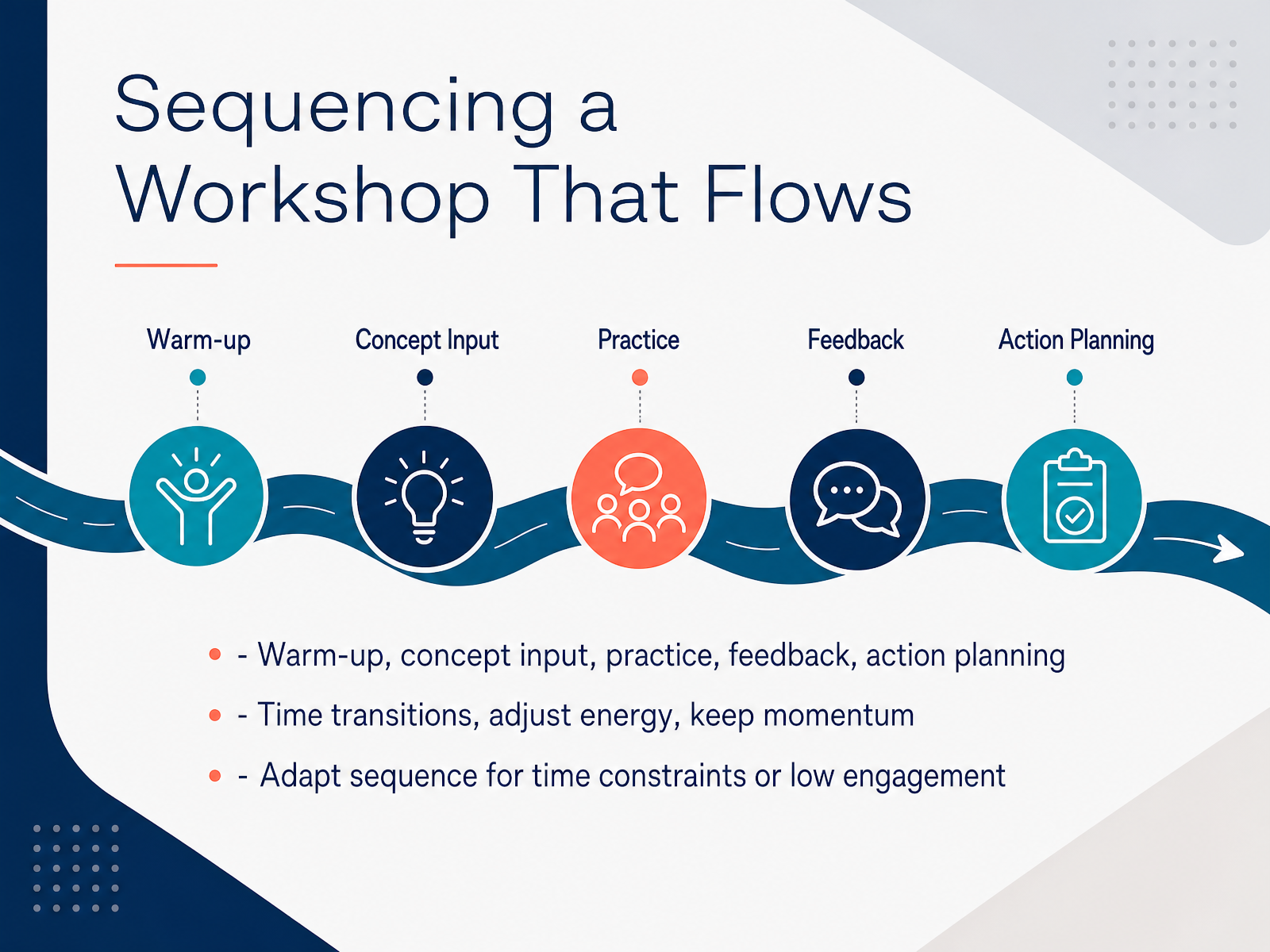 1 min
1 min - 07Core Dialogue and Engagement TechniquesLet’s focus on the core techniques that keep dialogue productive and inclusive. Start with open questions, active listening, and paraphrasing. Open questions invite reflection; active listening shows you value the input; paraphrasing confirms you understood it correctly. Then, balance talk time. Some participants need encouragement to share, so invite them directly: “What’s your perspective?” Others may dominate. Manage that by setting a respectful structure, like a round-robin or a time box per speaker. This keeps contributions useful and prevents one voice from steering the room. Finally, manage energy. Use transitions between topics and timed pauses after key points. A few seconds of silence lets ideas settle and gives quieter participants a chance to jump in. When you facilitate with these techniques, your sessions stay focused, respectful, and generative. Now, let’s put these into practice with some realistic service scenarios.
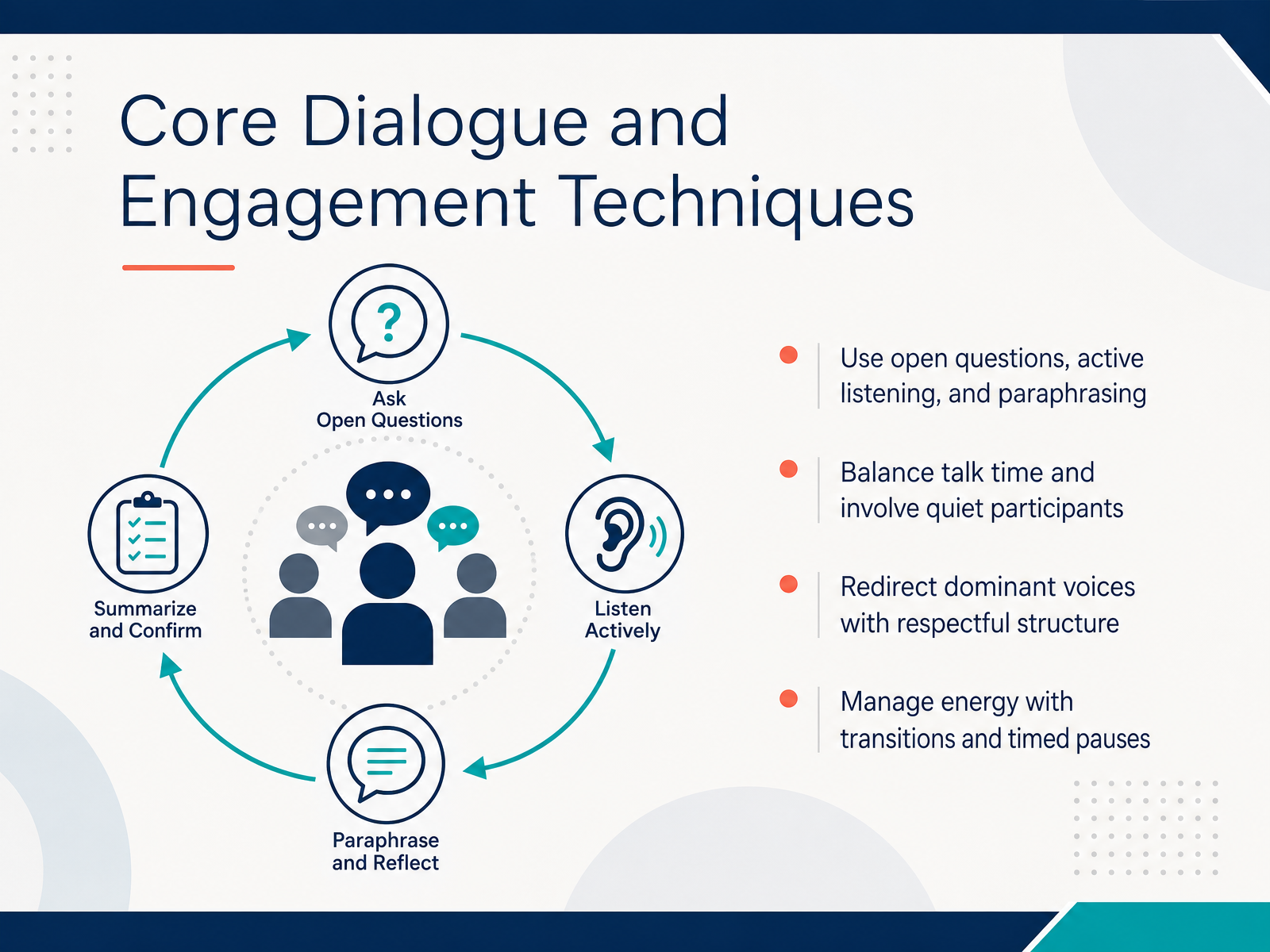 1 min
1 min - 08Running Customer-Service ScenariosNow let’s talk about making customer-service scenarios truly useful. When you run role-plays, case studies, or even real transcripts, give your team clear context and goals. For example, instead of saying ’handle an upset customer,’ specify ’the customer received the wrong order and is calling about a delivery delay. Your goal is to acknowledge the issue and offer two solutions.’ That clarity builds confidence. Then, deliver feedback that is specific, timely, and behavior-focused. Say ’you paused to let them vent before proposing a refund’ rather than ’good job.’ This turns practice into measurable improvement. And when mistakes happen, treat them as learning moments, not blame. Ask ’what would you try differently next time?’ rather than ’what went wrong?’ Finally, debrief with the whole group. Invite insights and capture key takeaways, so everyone benefits from shared learning. A simple prompt like ’what was the toughest moment and how did you handle it?’ sparks that discussion. Use these tactics, and your team will leave with sharper skills and real confidence. Next, let’s look at handling resistance and disengagement.
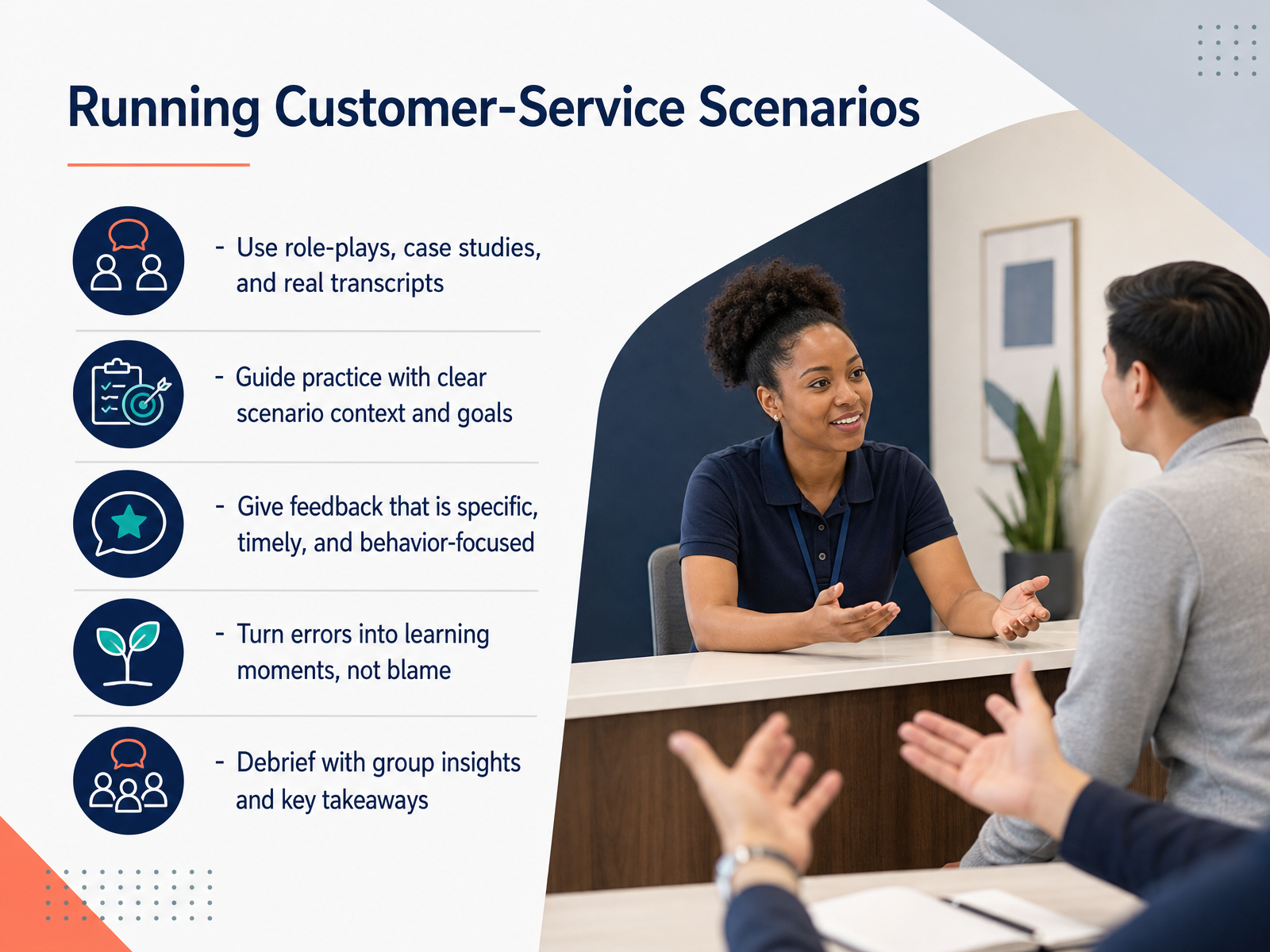 1 min
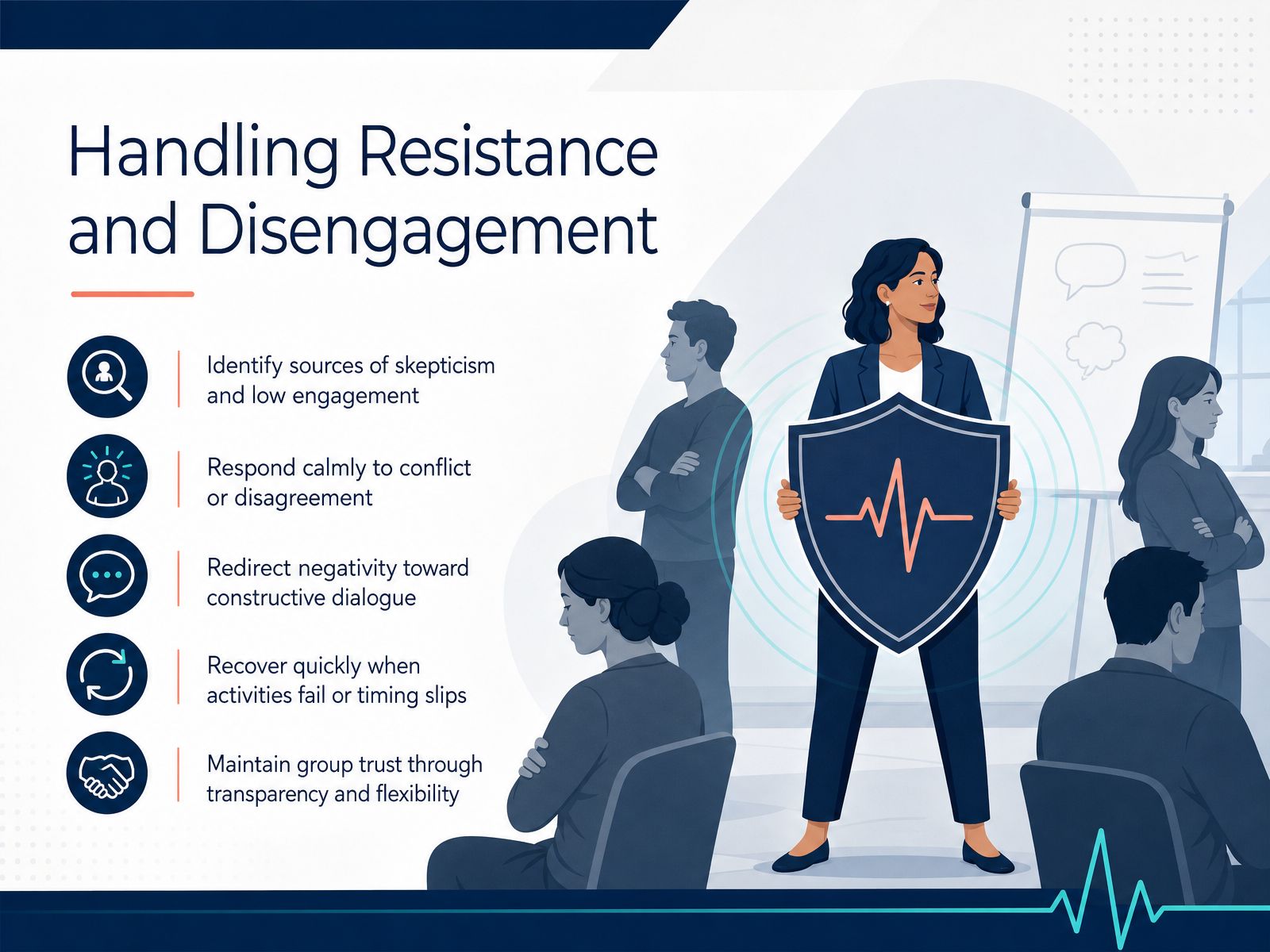
1 min - 09Handling Resistance and DisengagementNow let's talk about handling resistance and disengagement. When you facilitate, you will encounter skepticism. It often comes from past failed initiatives or genuine time pressure. Name it openly. Say, "This seems like a lot to tackle—what's your biggest concern?" That simple acknowledgment lowers defenses. If conflict surfaces, resist the urge to win the argument. Stay calm, slow your pace, and ask for the reasoning behind the pushback. Redirect negativity by finding the shared problem underneath. Instead of debating the solution, ask, "What would need to change for this to feel workable?" But sometimes activities flop or timing slips—that's inevitable. Recover quickly: admit it plainly, adjust on the fly, and move on. Your group will respect transparency more than perfection. If you need to cut an exercise short or extend a break, say so and explain why. Flexibility keeps trust intact. Remember, your role is to keep the group moving toward outcomes, not to avoid every bump. One practical takeaway: when you sense disengagement, pause and ask, "What do we need right now?" That simple question often reconnects the room. And that mindset will carry us into measuring workshop impact.
 1 min
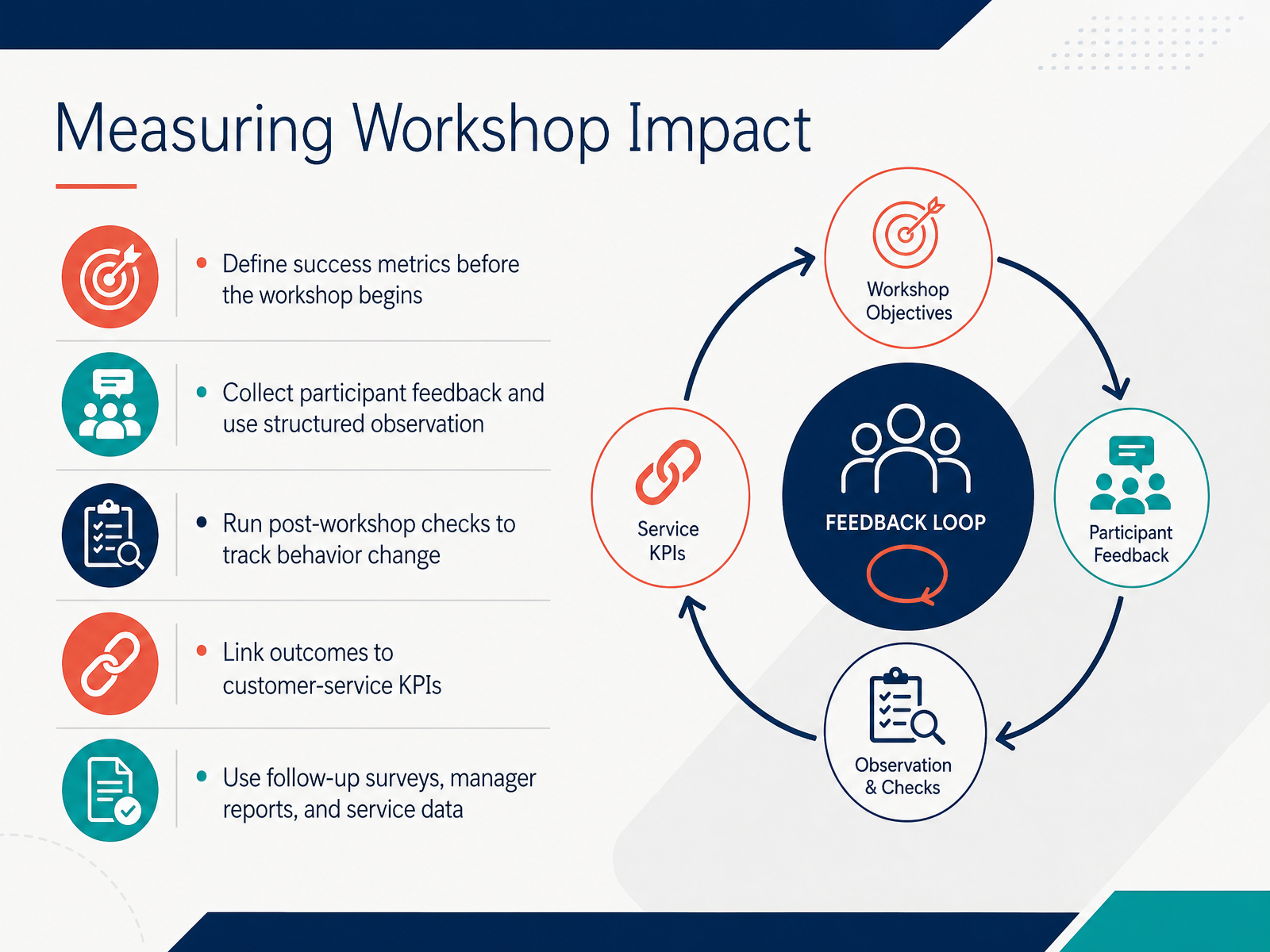
1 min - 10Measuring Workshop ImpactSo how do you know the workshop actually worked? Define your success metrics before the session begins. What does better service look like in measurable terms? Then, during the workshop, collect participant feedback and pair it with structured observation. Watch for moments where attendees apply the techniques in role-plays. But the real test comes later. Run post-workshop checks at thirty and sixty days to track behavior change. Are your team members greeting customers differently? Are they using the new de-escalation language? Link those observations to your existing customer service KPIs, like first-contact resolution or customer effort score. And triangulate your data. Combine follow-up surveys, manager reports, and actual service data for a complete picture. For example, if satisfaction scores rise but call handling time drops, that tells you the new workflow is working. If complaints shift from process issues to softer skill gaps, that points to your next training focus. Remember, measurement is not about judging the workshop. It is about proving value and refining your approach. Now, let us talk about moving from the training room into daily practice, in our next segment, From Workshop to Workplace.
 2 min
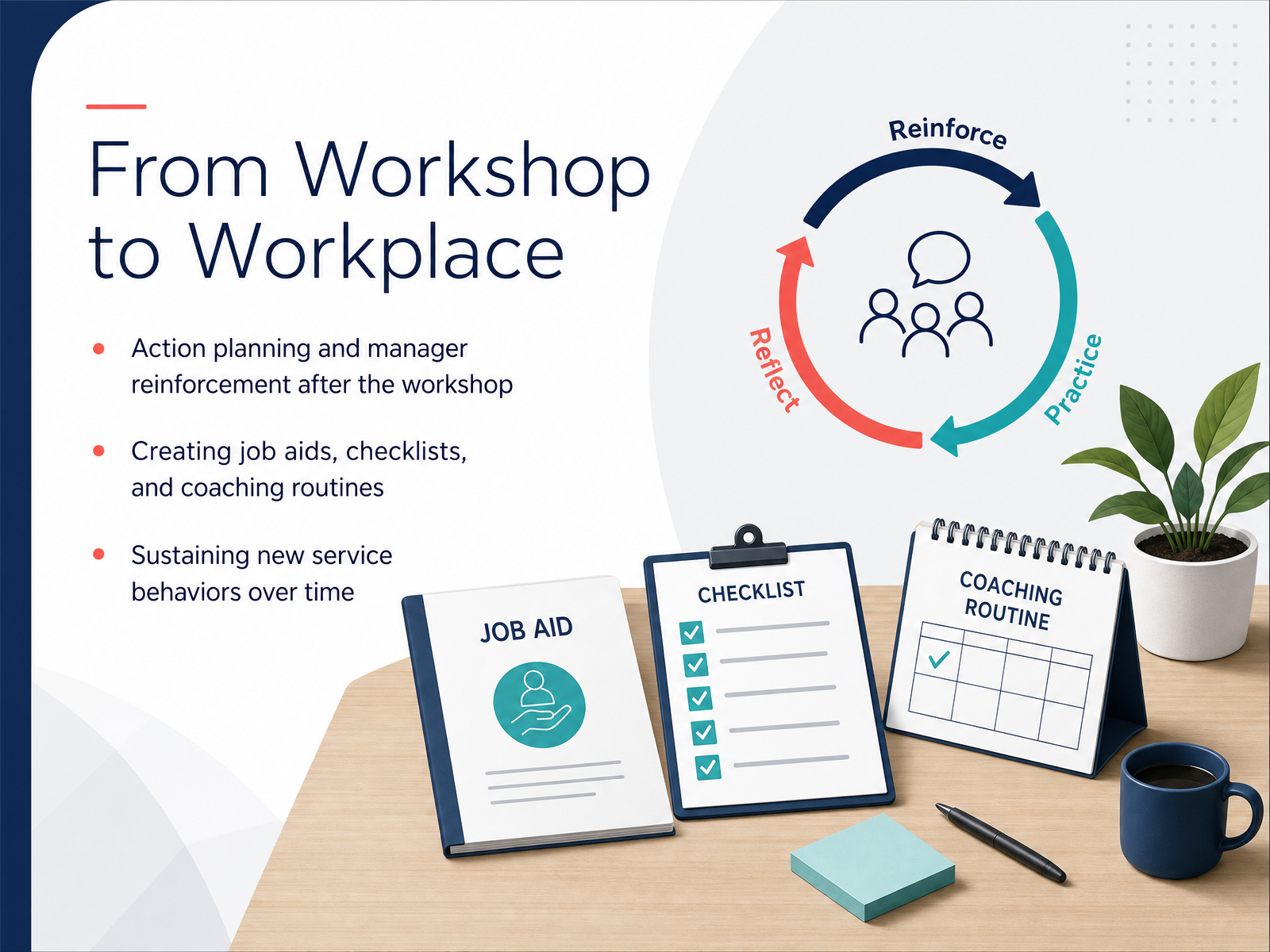
2 min - 11From Workshop to WorkplaceSo the workshop ends, but the real work begins when everyone returns to their desks. Action planning is your bridge from inspiration to habit. Have each participant commit to one specific behavior they will apply in the next week, and name the obstacle they expect. That turns a good intention into a testable experiment. Then, manager reinforcement becomes the daily pulse. When you facilitate, remind leaders that a single coaching conversation after a real customer interaction carries more weight than any slide. Pair this with practical job aids—a quick-reference checklist for handling irate callers, or a decision tree for escalations. These aren't bureaucratic extras; they're cognitive relief for your team. Finally, build a coaching routine that cycles weekly: observe, give focused feedback, and adjust. Over time, those small repetitions create the muscle memory your service culture runs on. Your takeaway? The workshop's value compounds only if you design the follow-through before you close the room. Now, let's step into our facilitation practice lab, where you can rehearse these techniques in real time.
 1 min
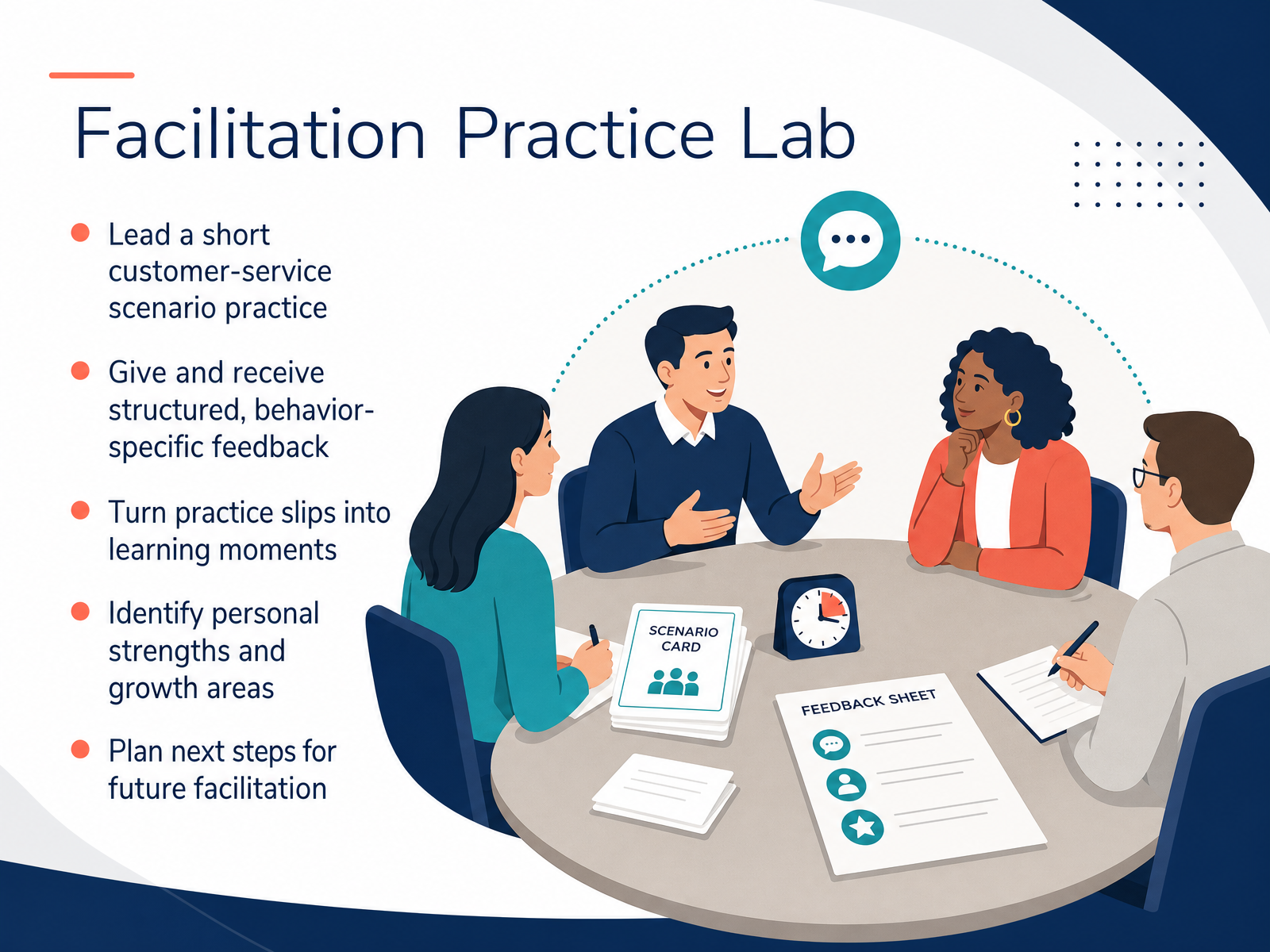
1 min - 12Facilitation Practice LabNow let’s put this into practice. Lead a short customer-service scenario with your team—keep it realistic, maybe a delayed order or an upset caller. As you facilitate, give feedback that’s specific and behavior-based, not personal. Say, ‘when you paused before responding, that de-escalated the tone,’ rather than ‘you did well.’ And when someone slips, turn it into a learning moment. Ask, ‘What would you do differently next time?’ Then help each person name one strength and one growth area. Finally, have them jot down one next step for their own facilitation. This lab is where the skills stick. Up next, we’ll look at common pitfalls and how to recover fast.
 2 min
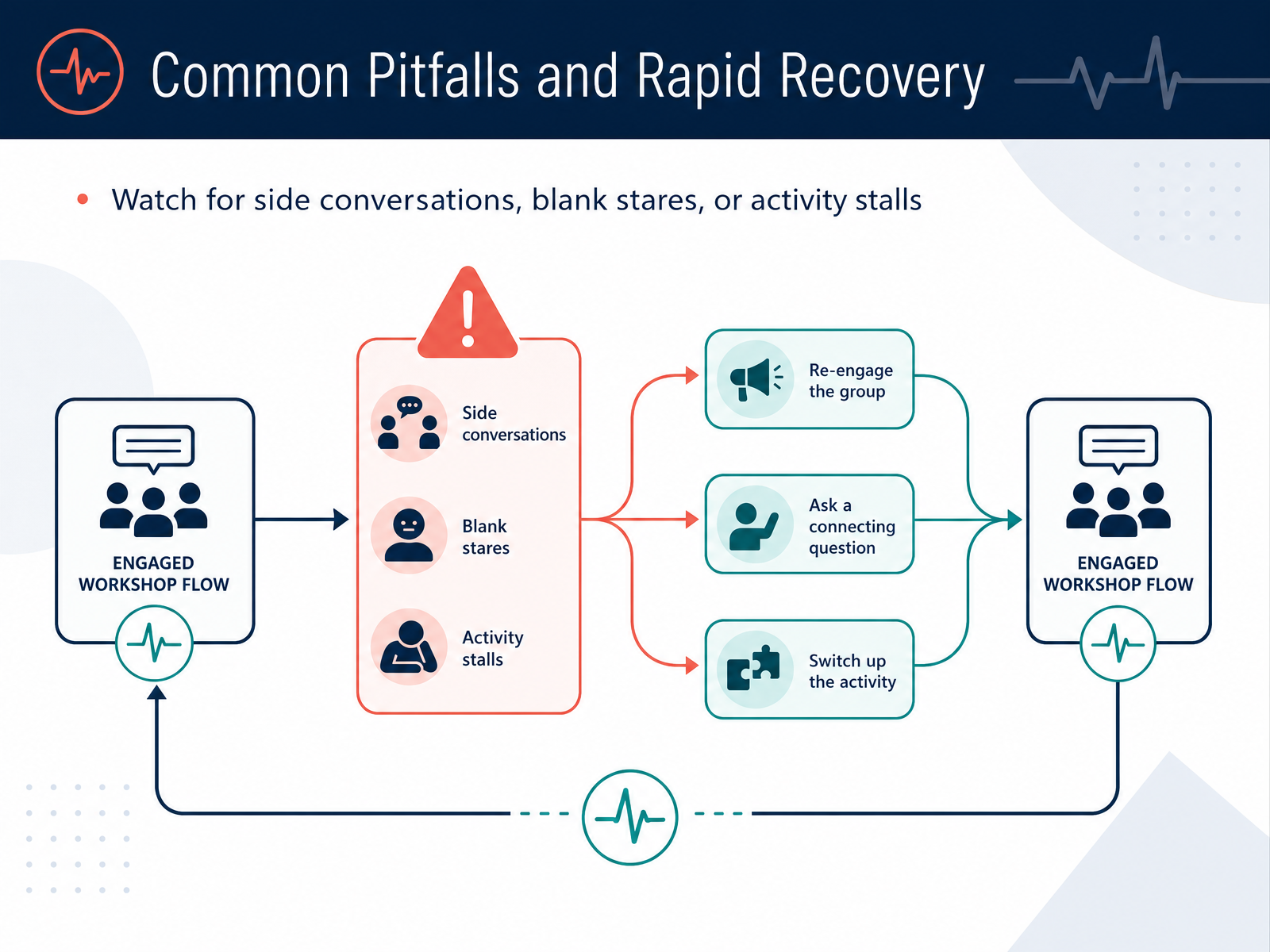
2 min - 13Common Pitfalls and Rapid RecoveryLet’s talk about the moments when a workshop starts to wobble. You’ll see side conversations, blank stares, or an activity that simply stalls. Your first move is to pause, not power through. A brief silence often resets the room. For side conversations, try the proximity technique: walk toward the talkers while keeping your voice steady. If that fails, invite them into the discussion with a direct question. Blank stares usually mean the task feels abstract. Anchor it to a concrete example from their own service desk or a recent customer journey. When an activity stalls, cut it short with a sentence like, “Let’s regroup and share one finding so far.” That preserves momentum and gives you a bridge to the debrief. The recovery principle is simple: name what you observe without blame, adjust the format, and re-engage the group. Your team will mirror your calm, so treat each pitfall as a design problem to solve in the moment, not a failure of your facilitation. Now, let’s turn these tactics into a practical action plan for your next workshop.
 2 min
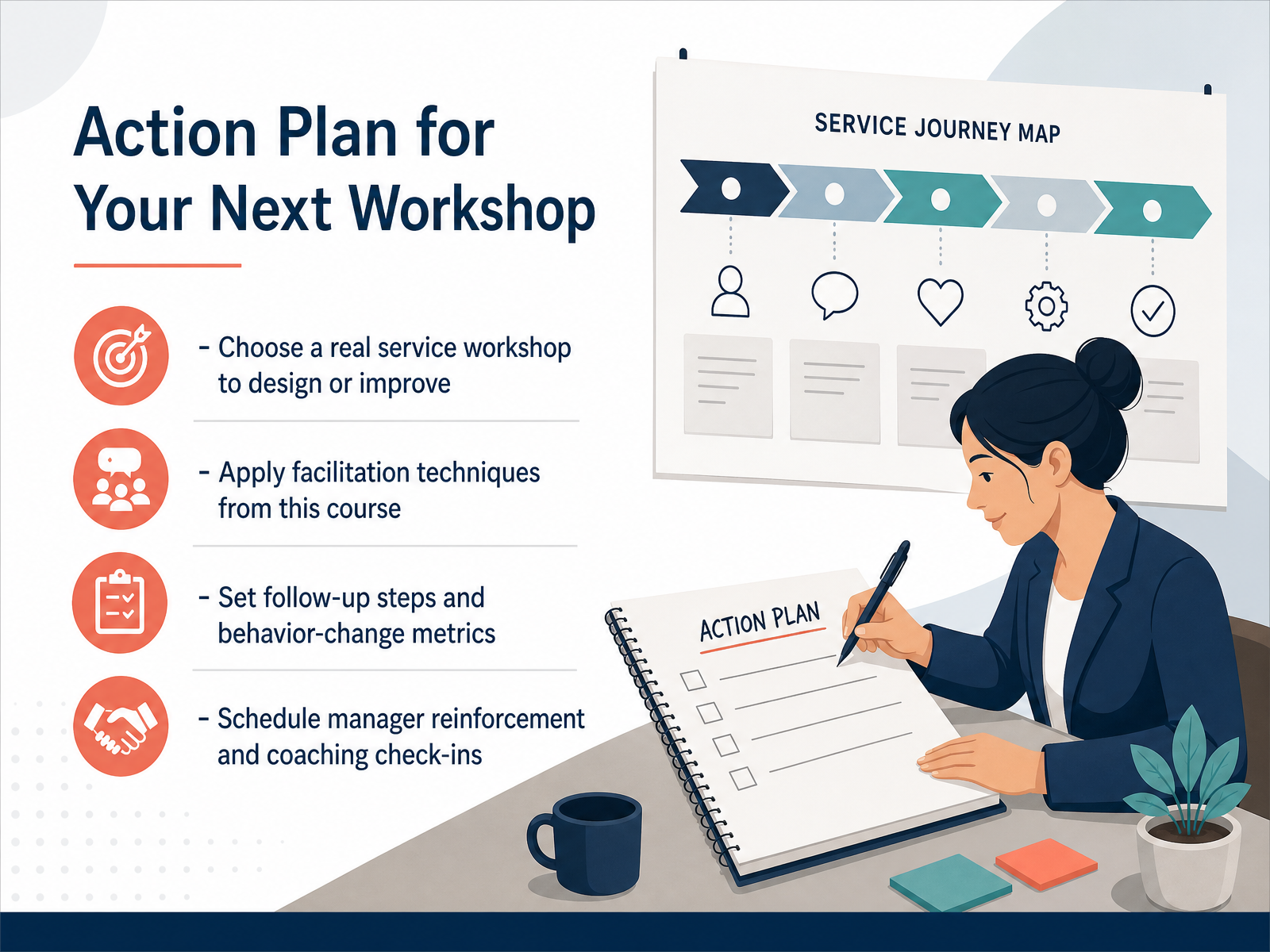
2 min - 14Action Plan for Your Next WorkshopSo here’s your action plan for the next workshop. Start by choosing a real service scenario your team needs to design or improve. Work with an actual challenge—not a hypothetical—so the practice feels relevant and the outcomes are usable. Next, apply the facilitation techniques we covered today. Use role-play setups that mirror your real customer interactions, and when you debrief, ask open-ended questions that push the group beyond description into analysis. After the session, set concrete follow-up steps with behavior-change metrics. For example, measure how often frontline staff use a new questioning script during live calls. Finally, schedule manager reinforcement and coaching check-ins within two weeks. That’s where learning sticks—when leaders observe, give targeted feedback, and celebrate adjustments. You have the tools, your team has the motivation, and now you have a path. Go facilitate a workshop that turns insight into action. Thank you for your time and your commitment to better service.
 2 min
2 min
Take the deck with you
Download this course as a file — free, no sign-up needed.
- PDF handoutEvery slide page, ready to print or share.15 pages · 3.1 MBDownload
- Narrated PowerPointThe deck that presents itself — every slide carries the digital human's narration video.15 pages · 13.3 MBDownload
- PowerPoint slidesThe full deck as a .pptx — open it in PowerPoint, Keynote, or Google Slides.15 pages · 3.0 MBDownload
Free to use in your own training — please keep the PersonWise credit page at the end.
Have your own deck? Turn it into a course