Brand Strategy Framework Essentials
Begin
14 pages · ~28 min
Brand Strategy Framework Essentials
Learn the core components of a brand strategy framework and how to apply them to build cohesive, market-ready brands.
What you’ll learn
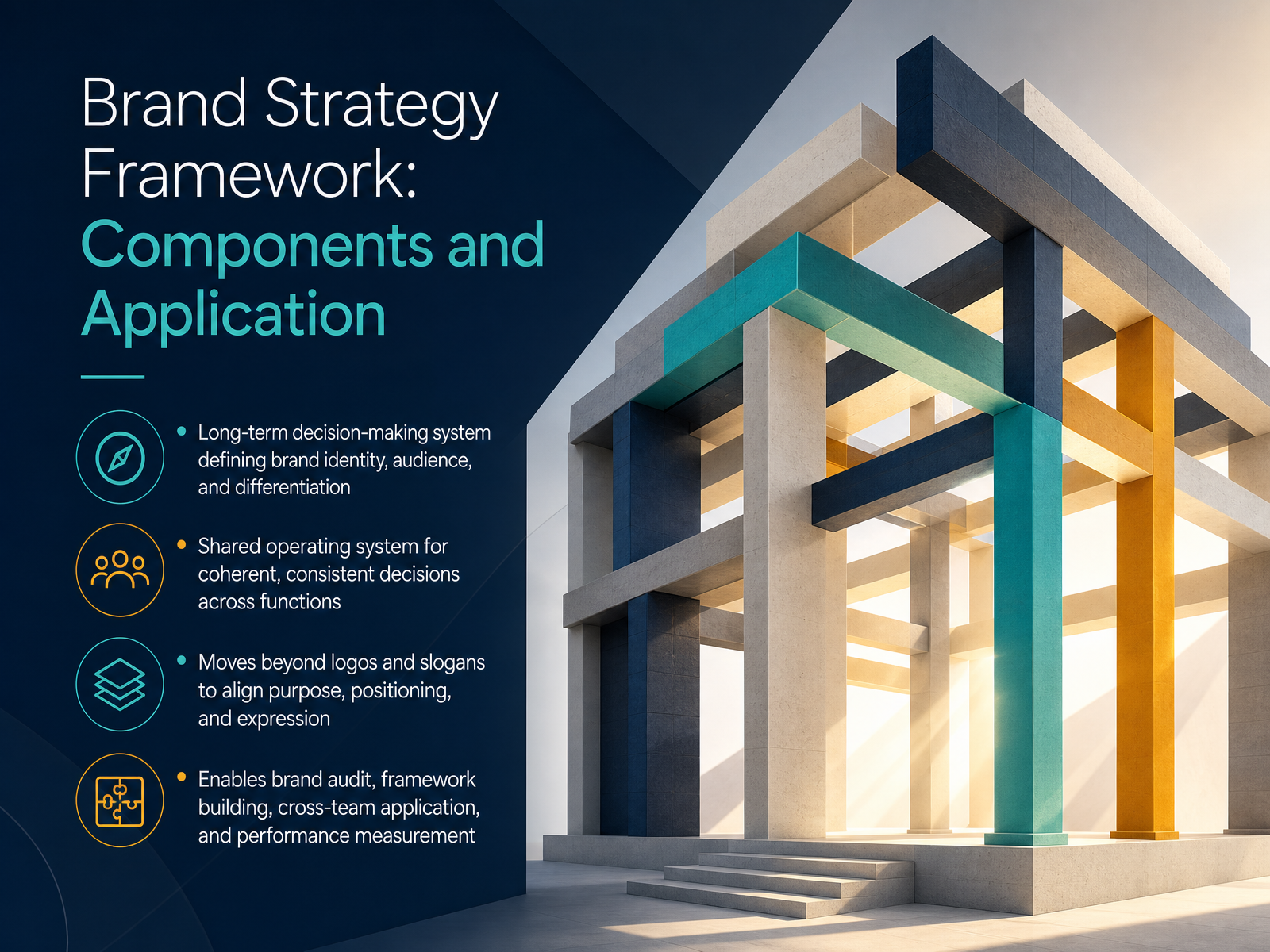
- 01Brand Strategy Framework: Components and ApplicationWelcome. Let's get aligned on what a brand strategy framework actually does, because it's far more than a set of visual rules. Define it as the long-term decision-making system that locks in your brand identity, your audience, and your differentiation. It's the shared operating system that lets product, marketing, and sales make coherent choices without a meeting for every call. This framework moves you beyond logos and slogans. It aligns your purpose, your positioning, and how you express both. And that alignment is what makes brand audits, cross-team application, and performance measurement possible. Here's the takeaway: when the framework is clear, every function knows what to protect and what to push. Let's start with the layers that must stay separate before they can work together.vivaldigroup.comdigitalpolo.commarclefton.com+21 min
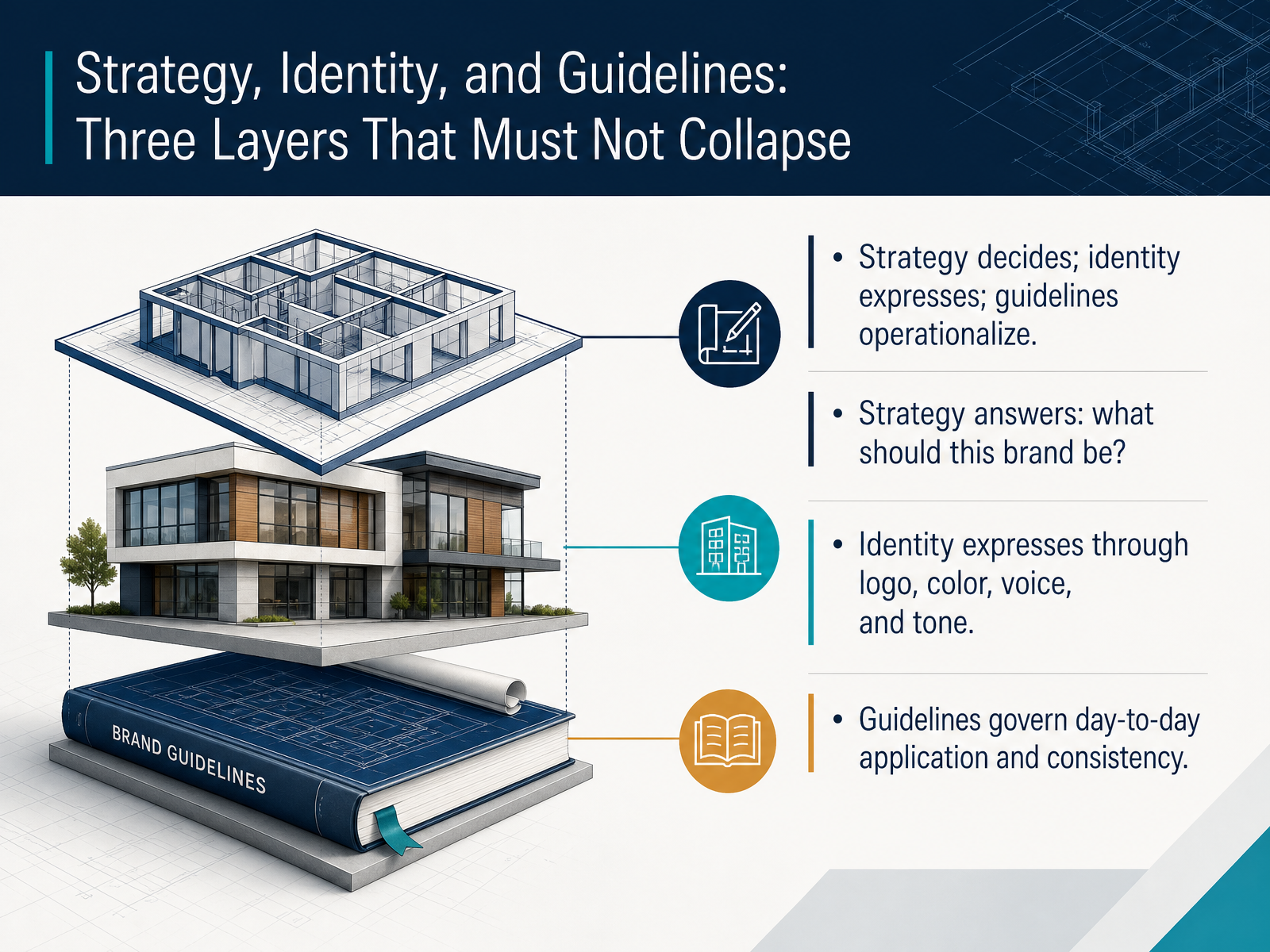
- 02Strategy, Identity, and Guidelines: Three Layers That Must Not CollapseLet's look at the three layers that hold a brand together. When these layers collapse into one another, the brand loses its direction. Strategy decides. It answers the fundamental question: what should this brand be? This is the internal plan that defines who the brand serves, what it stands for, and how it differentiates itself. Without strategy, every choice that follows is just a guess. Identity expresses. It translates the strategy into things people can see and hear: the logo, the color palette, the photography, and the verbal tone. Identity is how the strategy becomes tangible. Guidelines operationalize. They govern the day-to-day application so that every team, every partner, and every campaign stays consistent. Think of a software company that decides to position itself as the premium option. Strategy sets that direction. Identity then uses a refined visual language and confident tone to express it. Guidelines ensure the support team doesn't accidentally write in a casual, discount-store voice. The takeaway: keep these layers distinct. Strategy is the foundation, identity is the expression, and guidelines are the guardrails. Next, we'll define the core components that make up that strategic foundation: purpose, positioning, and personality.
 digitalpolo.comnielseniq.comequibrandconsulting.com+21 min
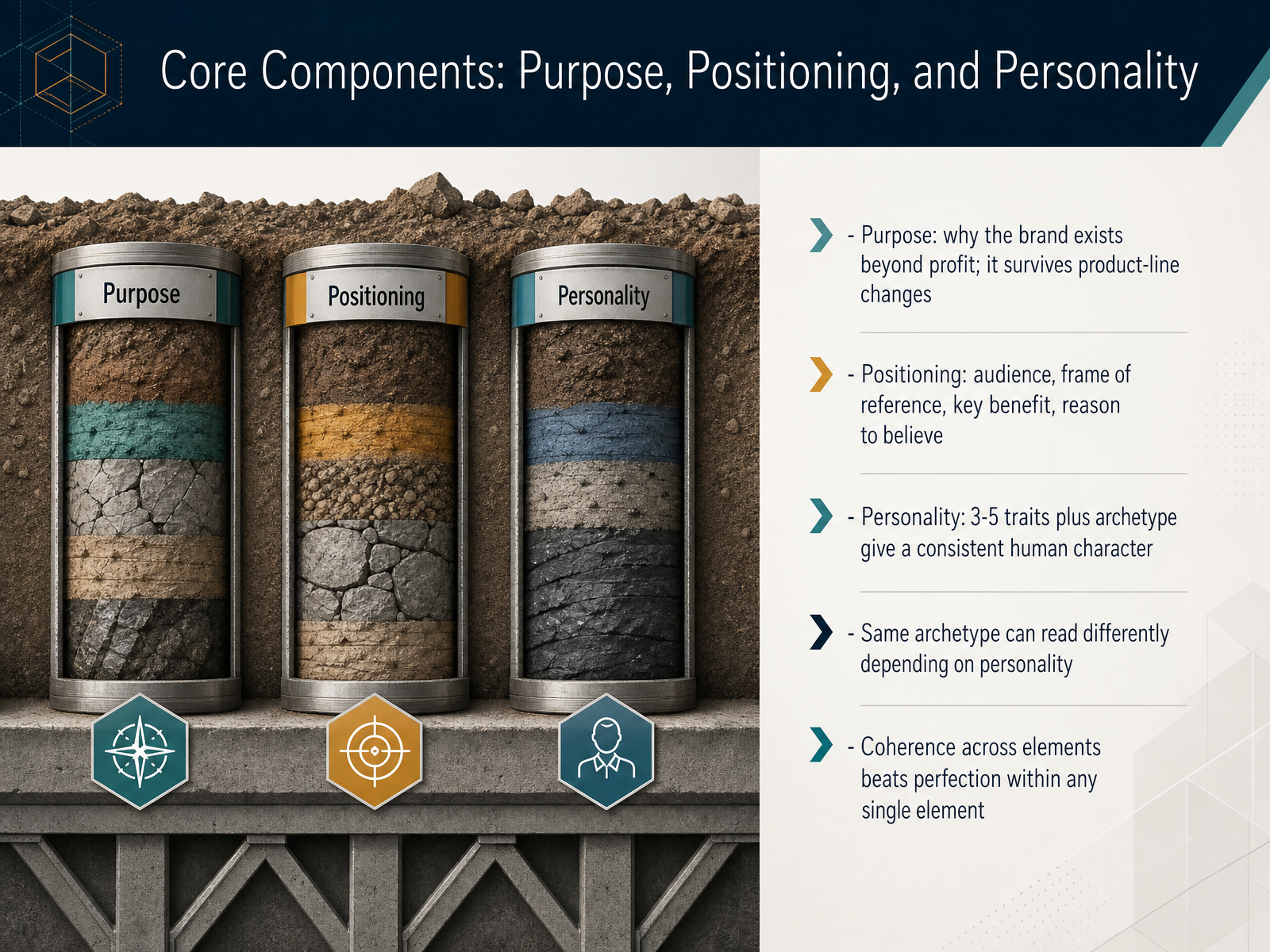
 - 03Core Components: Purpose, Positioning, and PersonalityLet’s look at the three pillars that hold most of the weight: purpose, positioning, and personality. Start with purpose. It answers why the brand exists beyond profit. That matters because a strong purpose survives product-line changes. A company that exists to make expert services accessible can change its entire offer and still keep its reason to exist. Next is positioning. Define four things here. The audience you serve. The frame of reference. The key benefit. And the reason to believe. If any one of those is missing, you have a claim without a position. Then comes personality. Choose three to five human traits plus an archetype. That gives you a consistent character. But remember, the same archetype can read very differently. A Hero with confident and warm traits sounds nothing like a Hero with intense and aggressive traits. So pick traits, not just an archetype. Finally, hold all three together. Coherence across the elements beats perfection within any single one. A slightly rough logo tied to a sharp purpose and clear positioning will outperform a polished identity that means nothing. Now let’s talk about the elements that support these three pillars.
 vivaldigroup.comdigitalpolo.commarclefton.com+22 min
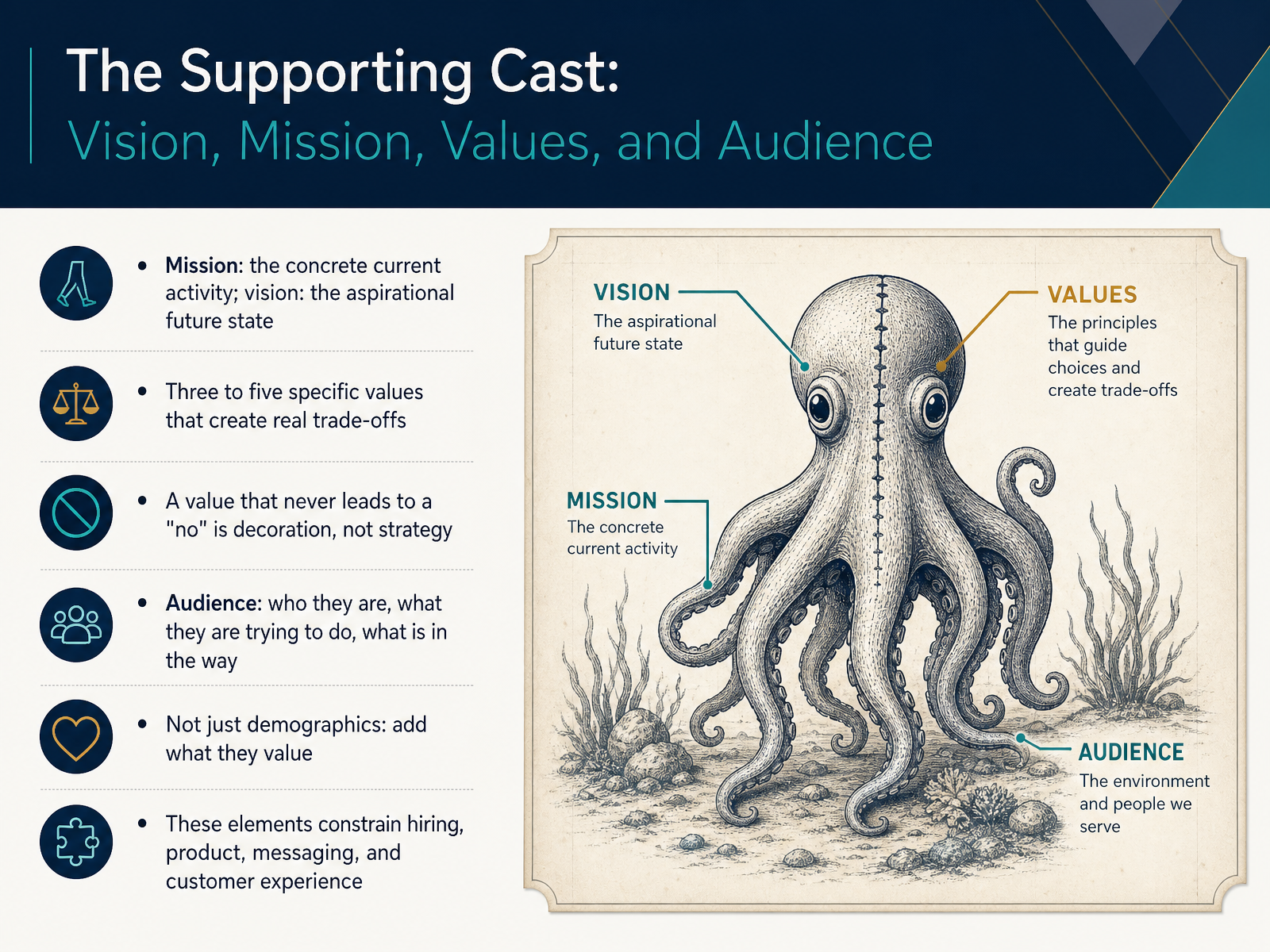
 - 04The Supporting Cast: Vision, Mission, Values, and AudienceNow, let's look at the supporting cast. Mission is the concrete work you do today. Vision is the aspirational future you are building toward. Keep those two distinct. Your values are the three to five specific beliefs that force real trade-offs. A value that never leads to a no is decoration, not strategy. If you say customer obsession is a value, but you never turn down a feature that hurts the customer experience, that value is just a poster. Apply the same discipline to your audience. Define who they are, what they are trying to do, and what stands in their way. Demographics are not enough. You need to know what they value, because that determines which messages land and which hires fit. These elements constrain everything downstream: hiring, product roadmaps, messaging, and the entire customer experience. Next, we apply that constraint to positioning and differentiation, and decide what you will not be.
 vivaldigroup.comdigitalpolo.commarclefton.com+21 min
 - 05Positioning and Differentiation: Choosing What You Will Not BeNow, let's talk about positioning and differentiation. This is where strategy gets hard, because it forces you to choose. Define positioning as the space you own in a customer's mind. Not the space you share, the space you own. Your value proposition is what you actually deliver and why it matters to them. Reason to believe is the evidence that makes the position credible. Without it, you have a claim. With it, you have a position. Here is the test. Run your positioning through one simple filter. Could a direct competitor make the same claim without lying? If yes, you have weak positioning, and you need to go back and choose what you will not be. A logistics brand cannot position on reliability alone. Every competitor says that. It must position on an operational trade-off, like same-day delivery in hard-to-serve regions. That claim excludes competitors. That is the point. Choosing your position also names what you are willing to give up. State the insight, show the consequence, and move on. Next, we turn to brand architecture, and how you organize a portfolio for growth.
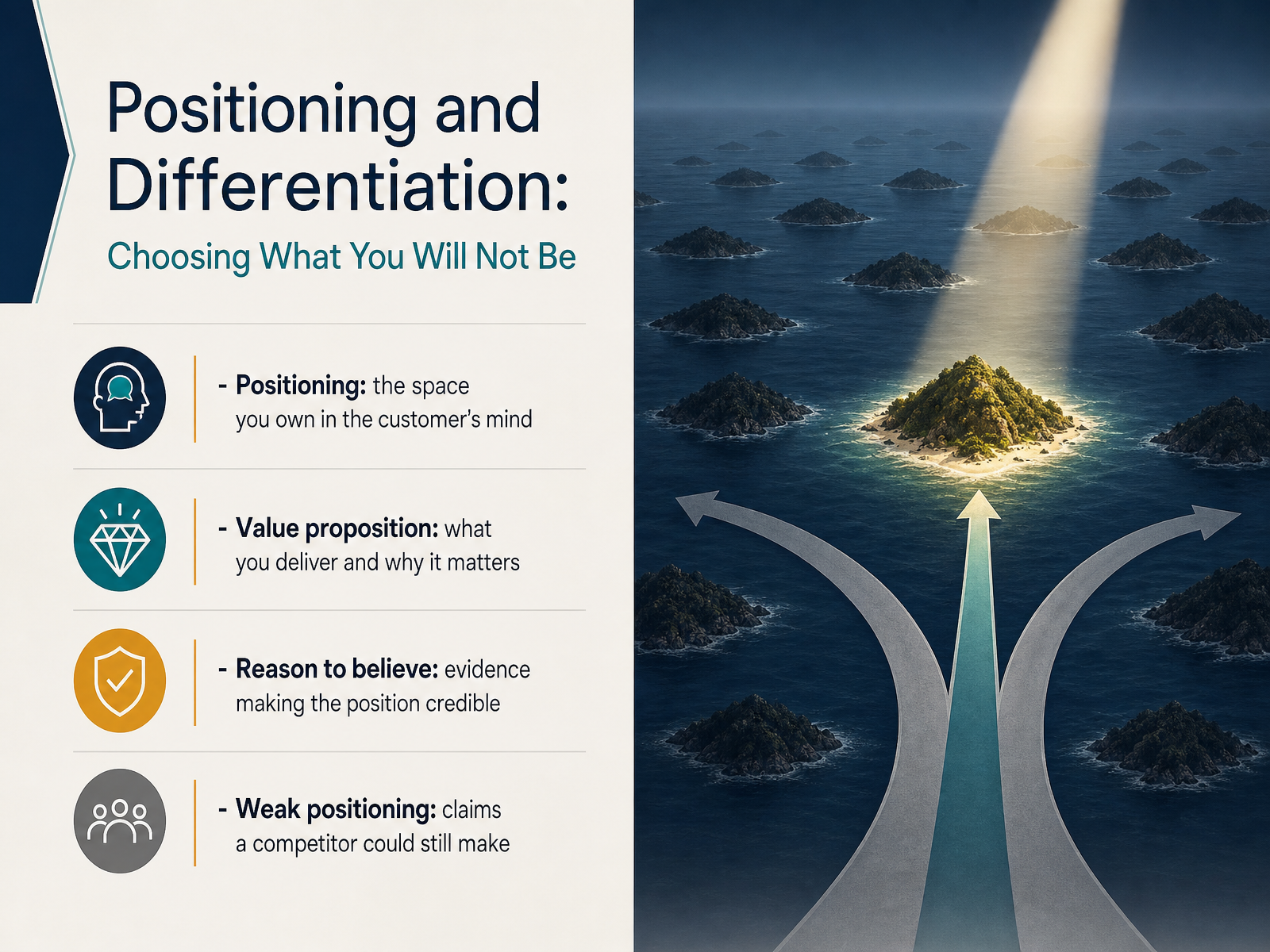 vivaldigroup.comdigitalpolo.commarclefton.com+21 min
 - 06Brand Architecture: Organizing Your Portfolio for GrowthNow let’s shift from what your brand stands for to how you organize what it owns. Brand architecture is the structural system that governs how your brands, sub-brands, and products relate to each other. It answers a simple question: when a customer sees a name or a logo, where does the recognition flow? Take Apple. One master brand carries everything from the iPhone to the Mac. That is a branded house, and it channels all equity back to a single name. Other models distribute recognition differently. Umbrella, sub-branding, endorsed, and house of brands each trade recognition against flexibility. A house of brands lets you compete in unrelated categories without diluting one identity. Procter and Gamble does this deliberately. The risk is equity dilution. Without explicit criteria for when to create, extend, or retire a brand, the portfolio drifts. Governance rules are the guardrail. They prevent uncontrolled proliferation and force a decision on every naming request. Test each brand decision against the portfolio strategy before it reaches a customer. Next we look at how that strategic intent becomes the voice, the visual identity, and the messaging your teams actually use.
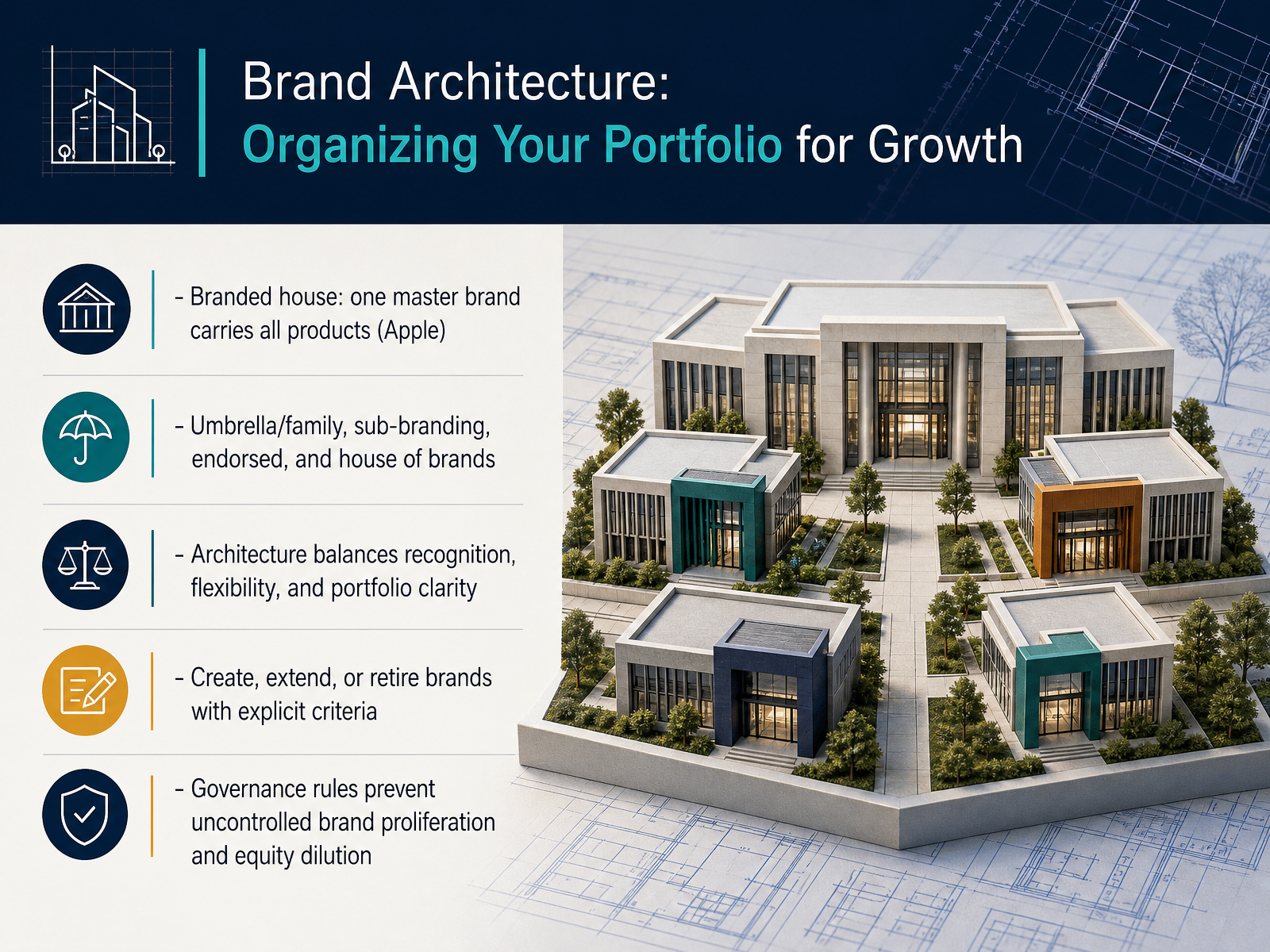 vivaldigroup.comdigitalpolo.commarclefton.com+22 min
 - 07Brand Expression: Voice, Visual Identity, and Messaging ArchitectureNow let's move to where the strategy becomes visible: brand expression. This is the layer your teams and customers actually touch, and it has to work hard. Start with voice and tone. The personality stays stable, but the expression shifts by context. A support email sounds different than a product launch, yet the underlying character remains the same. Define each personality trait with a contrast. Confident, but not arrogant. Direct, but not blunt. Without that contrast, traits become decoration instead of decision tools. Now turn to messaging architecture. Build it as one master message supported by three to four pillars, with proof points under each. If you have five or more pillars, that usually signals unfocused positioning. Consolidate. Finally, visual identity in twenty twenty-six extends beyond the logo. It now includes motion, sonic cues, interface patterns, and spatial design. Treat every surface as part of the same system. Test this slide by asking one question: can a new team member apply these rules without calling you for clarification. If yes, your expression layer is doing its job. Next, we'll look at the Brand House, the framework for making contradictions visible.
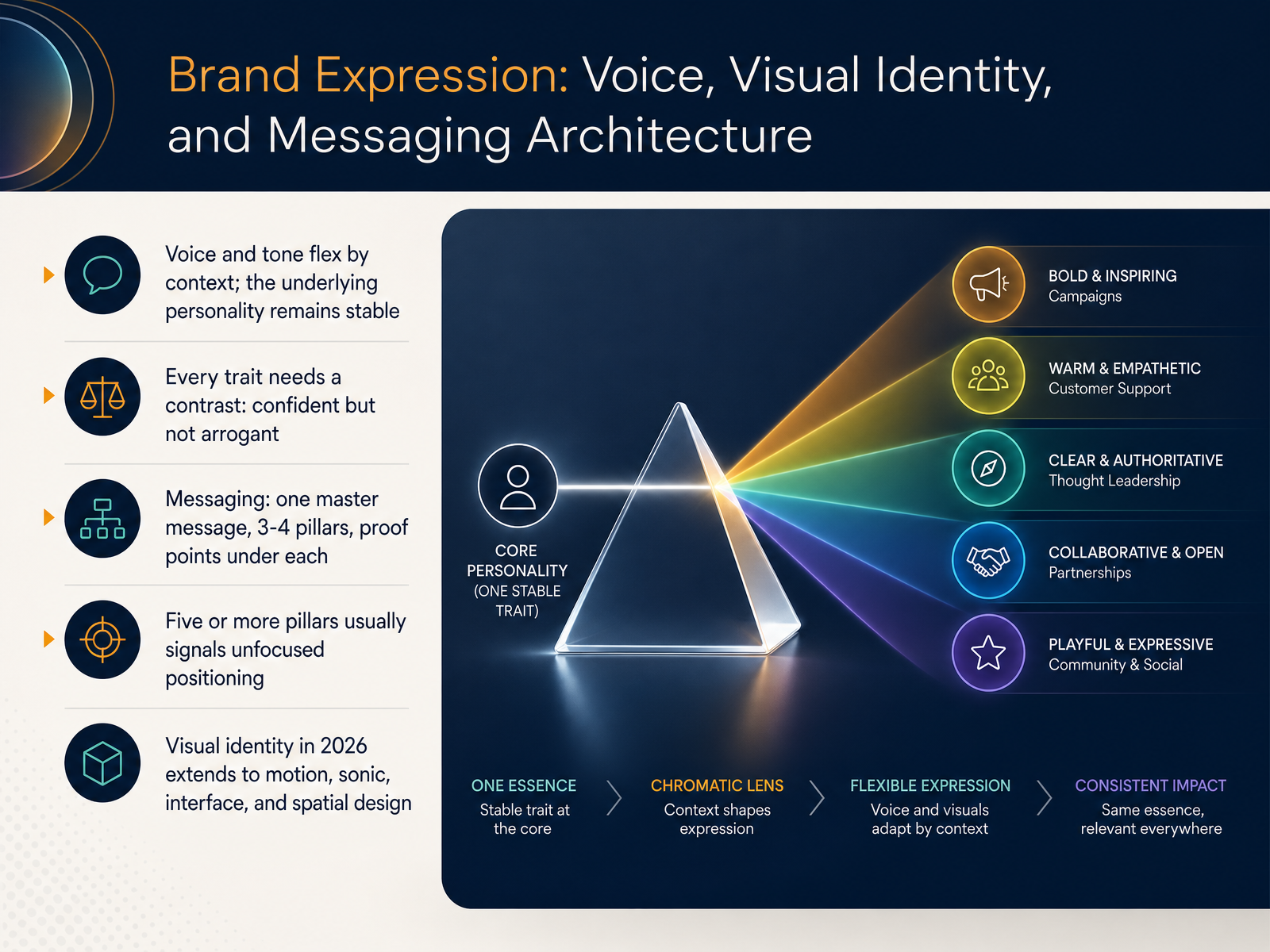 vivaldigroup.comdigitalpolo.commarclefton.com+22 min
 - 08The Brand House: Making Contradictions VisibleThe Brand House takes every element you have defined and puts it into a single visual structure: a foundation, three pillars, and a roof. The foundation holds your why and your core values. The pillars support the roof, and here they are: purpose, positioning, and personality. The roof carries your vision and mission. This is not just a tidy diagram. It is a diagnostic. When each of those pieces sits on its own page, contradictions hide easily. But when positioning has to sit on the foundation, you see the strain. Imagine a brand whose why is about making expert advice accessible, but its positioning and personality signal premium and exclusive. Those pillars are pulling against the foundation. The house makes that visible in minutes, not after two years of execution. Use this as a one-page briefing tool. Put it in front of a new hire or an agency, and ask: does this message sit on the foundation, or is it leaning on a pillar that cannot hold it? Next, we move into the audit and diagnosis, so you can find those gaps before they become expensive.
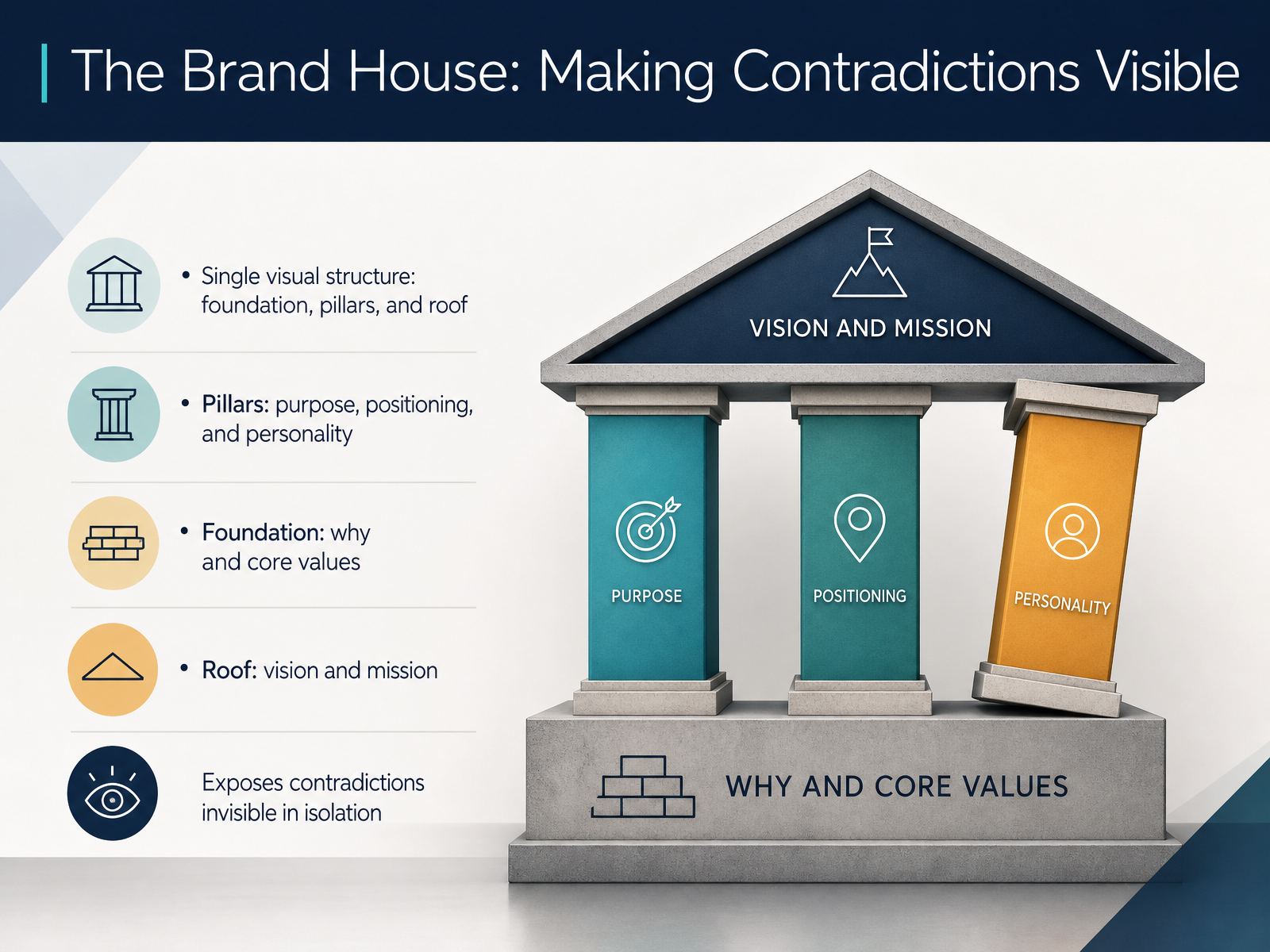 vivaldigroup.comdigitalpolo.commarclefton.com+21 min
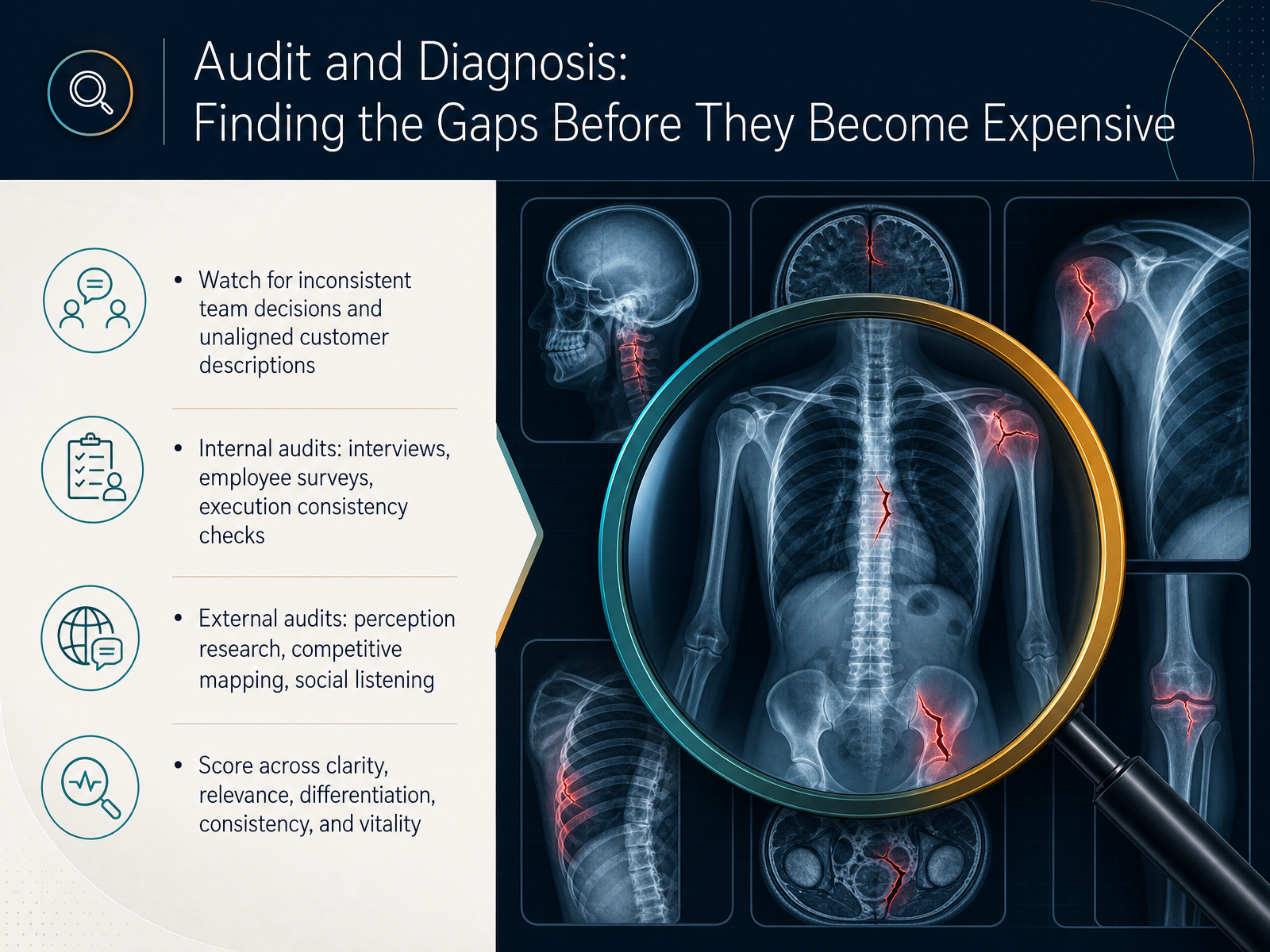
 - 09Audit and Diagnosis: Finding the Gaps Before They Become ExpensiveNow for the part that separates a nice-looking strategy from a healthy brand. This slide is about audit and diagnosis, or finding the gaps before they become expensive. Watch for two warning signs. First, team decisions that feel inconsistent, with everyone making choices that don't fit together. Second, customer descriptions that don't match how you want to be seen. Start with internal audits. Interview employees across functions, survey them, and check whether execution matches your guidelines. This reveals what your team actually believes. Then go external. Run perception research to hear how customers describe you, map your competitive landscape, and set up social listening to catch what people say when you're not asking. Score everything across five dimensions. Clarity, relevance, differentiation, consistency, and vitality. A brand can be clear but irrelevant. A brand can be differentiated but wildly inconsistent across touchpoints. These scores tell you where to focus, instead of guessing. The goal here is not a perfect score. It's a precise diagnosis. Once you know where the gaps are, the next step is moving from framework to action and applying strategy across teams.
 scalegrowth.digitalumbrex.combusiness-in-a-box.com+21 min
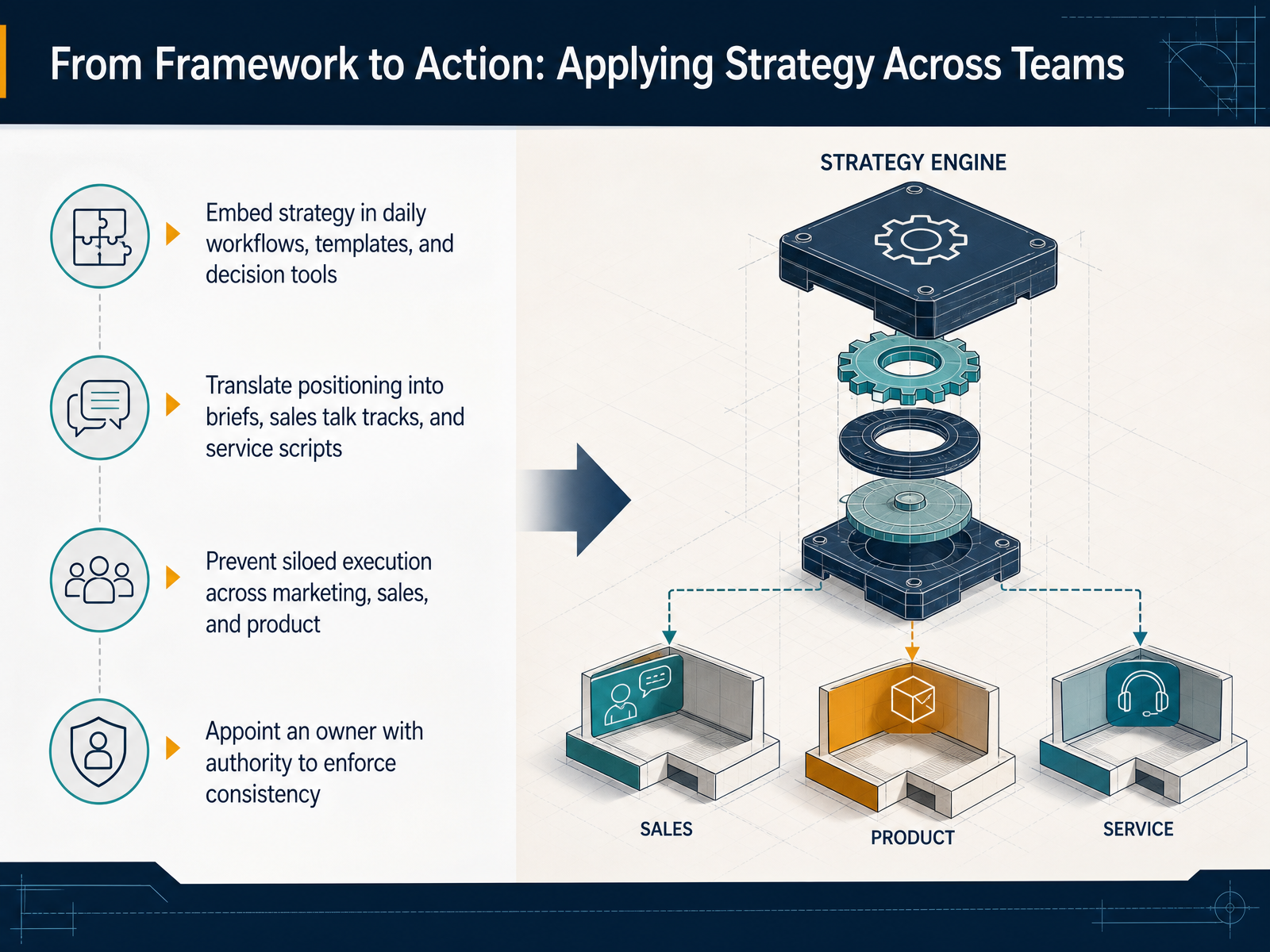
 - 10From Framework to Action: Applying Strategy Across TeamsA framework only creates value when it changes how teams work day to day. Start by embedding strategy into existing workflows. Put decision filters into briefs, scoring criteria into product backlogs, and approved language into sales playbooks and service scripts. For example, a positioning claim about effortless setup should appear as a guided onboarding flow in the product and as a first-call question in support, not just as a headline on the website. Translate the brand promise into the specific tools each function uses. That prevents marketing from promising speed while product rewards feature depth and sales improvises its own pitch. Execution goes sideways when each team defines the brand from its own targets, so appoint a single owner with real authority to review major touchpoints and reject work that drifts. This is not about policing creativity. It is about keeping the system coherent. When strategy lives inside the tools people already use, consistency becomes the default. Next, we will look at Brand Experience and Employee Alignment and how to close the say-do gap.
 link.springer.comrevengconsulting.combrightscout.com+22 min
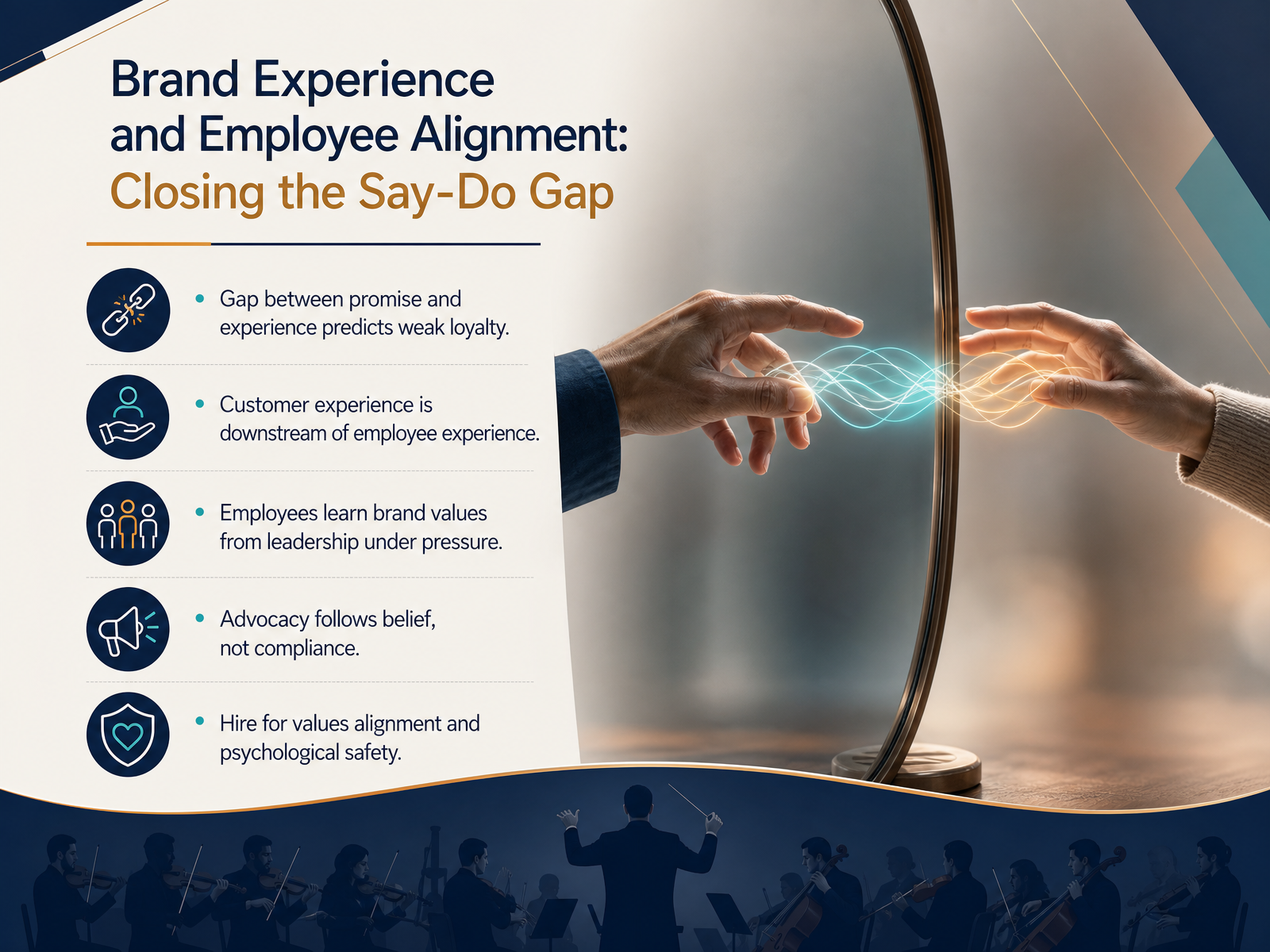
 - 11Brand Experience and Employee Alignment: Closing the Say-Do GapLet’s move from external alignment to the gap that often separates market leaders from everyone else: the distance between what a brand says and what employees actually deliver. Research shows the gap between promise and experience is one of the most reliable predictors of weak loyalty. Customers feel the seams. When marketing promises expertise but service scripts feel robotic, trust erodes quickly. Close that gap by recognizing a hard truth: customer experience is downstream of employee experience. Your people cannot deliver what they do not feel. Employees do not learn brand values from posters or onboarding decks. They learn them from watching leadership behave under pressure. Cut a corner to hit a quarterly number, and you have taught the entire organization what the brand actually means. That is why advocacy follows belief, not compliance. You cannot mandate authenticity. You can only create the conditions where it grows. Start by hiring for values alignment. Technical skills can be taught. A genuine connection to the problem your brand exists to solve cannot be installed later. Then build psychological safety. Employees who fear punishment will retreat to scripts. Employees who feel safe will respond to the human situation in front of them. That distinction is what customers remember. So here is your action step. Audit where your current employee experience contradicts your external promise. Fix those contradictions before you invest another dollar in messaging. Because the customer will always find the truth. Next, we will look at how to measure whether your brand strategy is actually working, using leading and lagging indicators.
 link.springer.comrevengconsulting.combrightscout.com+22 min
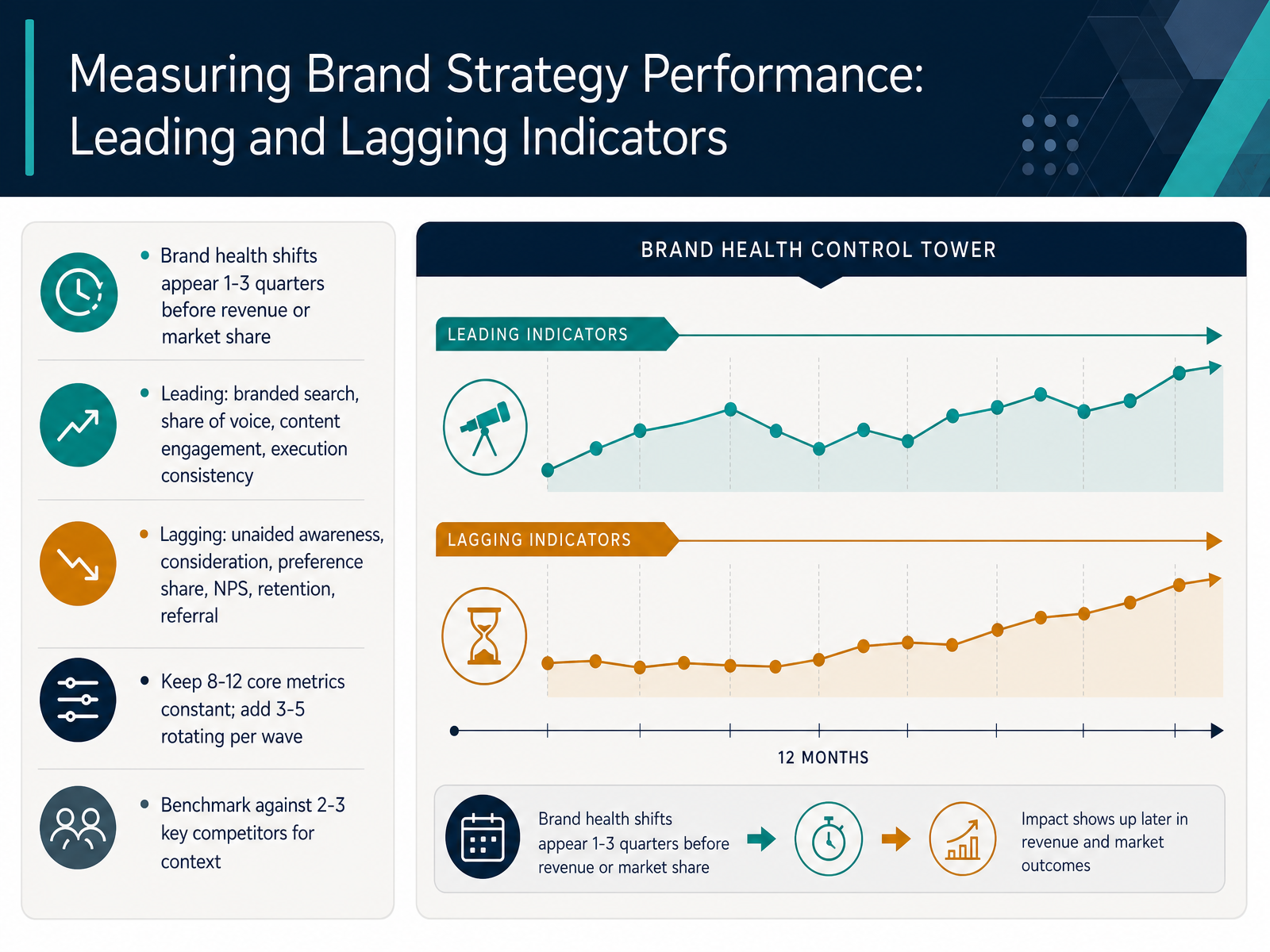
 - 12Measuring Brand Strategy Performance: Leading and Lagging IndicatorsLet's talk about how to measure whether your brand strategy is actually working. The key is separating leading indicators from lagging indicators. Leading indicators move early. They signal shifts in brand health one to three quarters before revenue or market share changes. Watch branded search volume, share of voice, content engagement, and execution consistency. Think of these as your early warning system. Lagging indicators confirm whether those shifts turned into durable outcomes. These include unaided awareness, consideration, preference share, NPS, retention, and referral. They are important, but by the time they move, the underlying change has already happened. Keep a core set of eight to twelve metrics constant across every wave or quarter. Then add three to five rotating metrics that answer the specific questions you are working on right now. Measure the same core metrics for two to three key competitors. A strong NPS can look good in isolation, but if a direct rival is pulling further ahead on preference, you need to know. That competitive context is what turns a score into a decision. Let's take this measurement approach and put it into a concrete working document.
 quali-fi.combenly.ai1 min
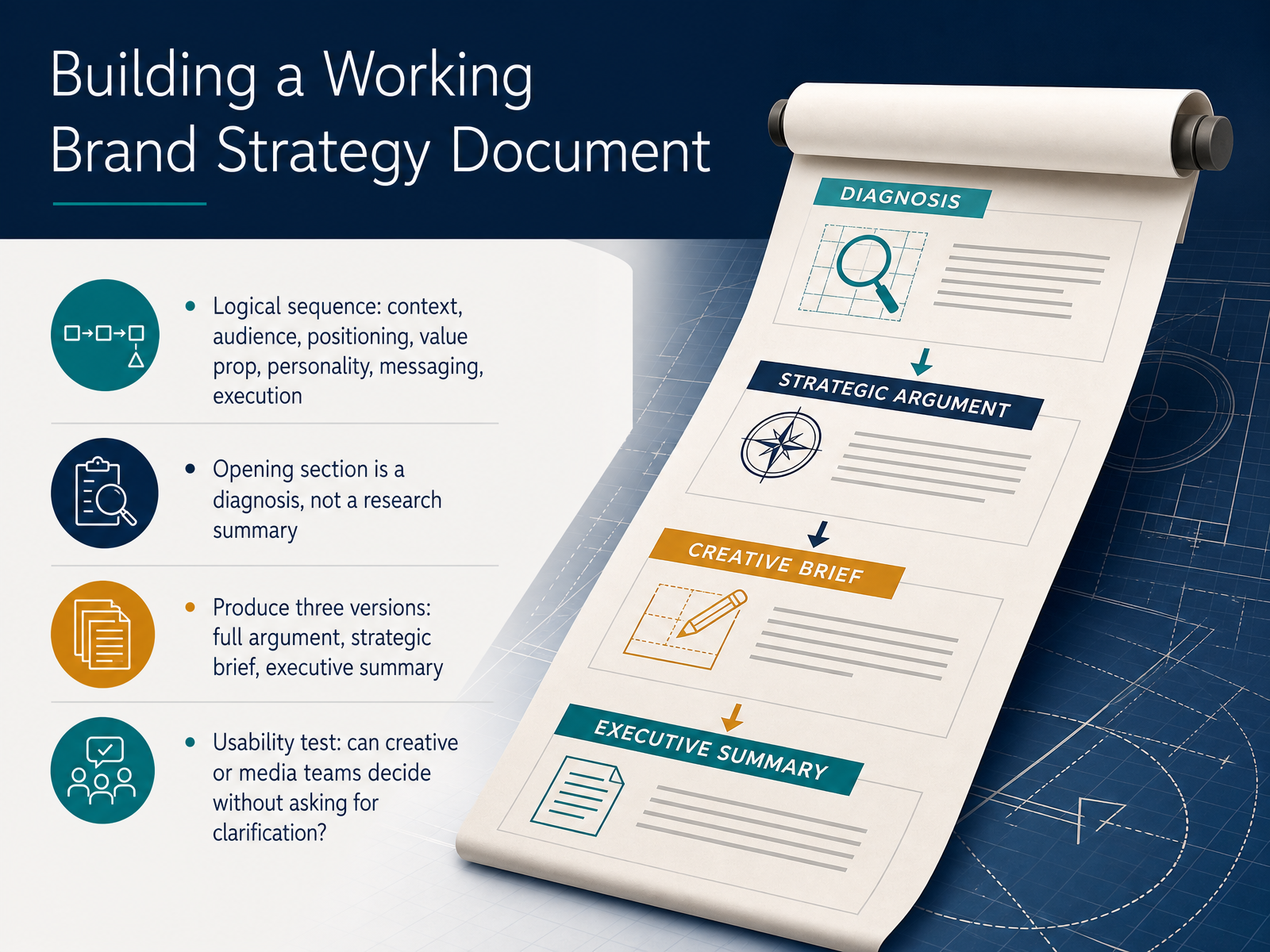
 - 13Building a Working Brand Strategy DocumentLet’s turn this framework into a working document. The structure should follow the logic of the strategy itself. Open with context and audience, then move to positioning and value proposition, then personality and messaging, and finish with execution principles. Each section builds on the one before it. An important point about the opening section. It should be a diagnosis, not a research summary. Do not list facts about the market. Explain the tension in the market and what that tension means for the brand. For example, instead of stating that category growth is slowing, diagnose that customers are consolidating spend and therefore the brand must shift from acquisition messaging to retention proof. Next, produce three versions of the document. Write a full argument with the complete strategic logic. Create a strategic brief that covers positioning, audience, value proposition, and messaging for creative and media teams. And provide an executive summary with the core positioning and the commercial case for leadership. Finally, test usability. Give the strategic brief to a creative team or a media planner. Ask them to make a decision. If they cannot decide without asking for clarification, the document is not finished. It should make decisions easier, not harder. Let’s apply this in a workshop with your own brand.
 digitalpolo.comnielseniq.comequibrandconsulting.com+22 min
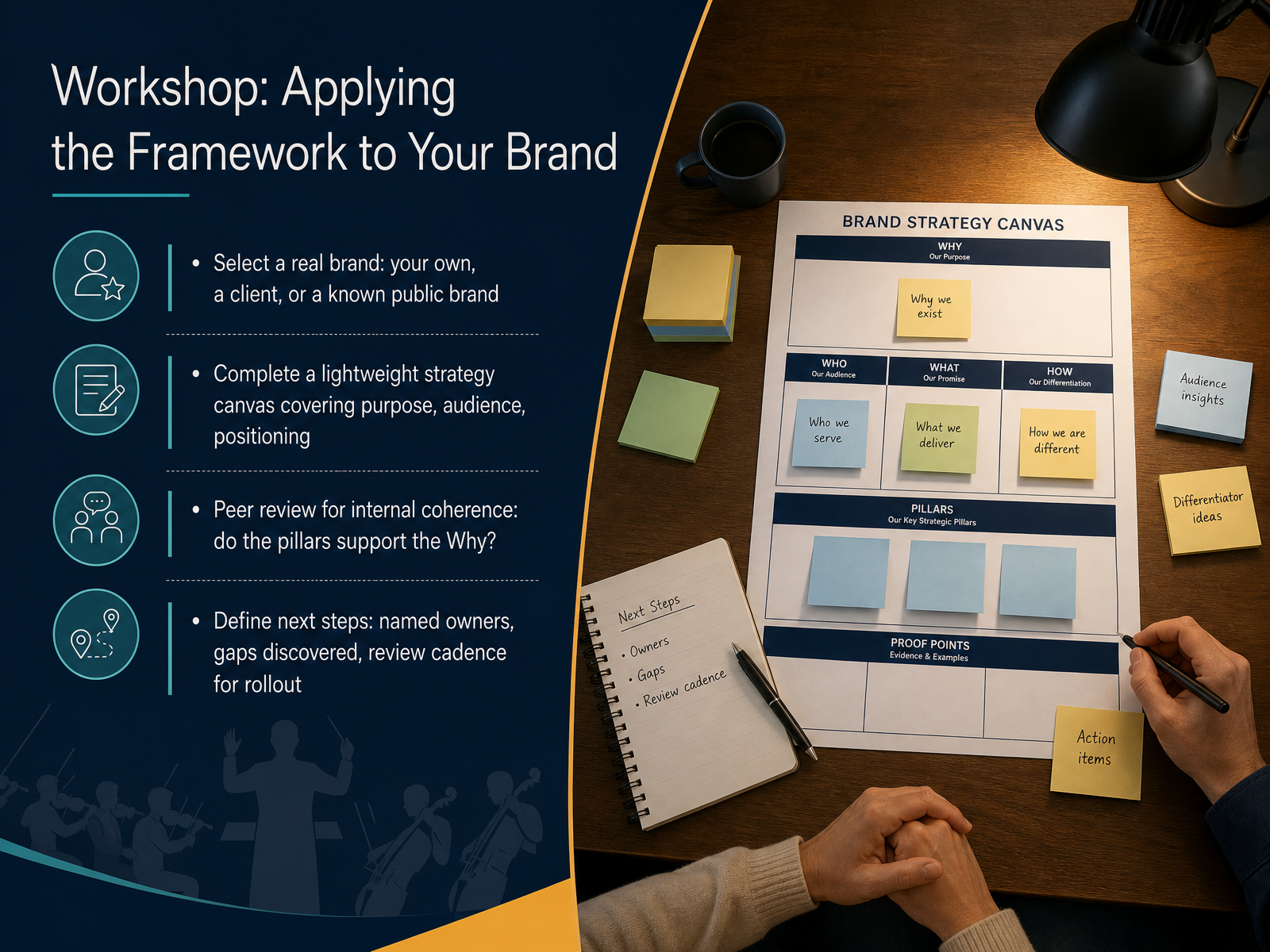
 - 14Workshop: Applying the Framework to Your BrandLet's close this course by putting the framework to work. Select one real brand. Use your own, a client's, or a well-known public brand. Fill out a lightweight strategy canvas covering purpose, audience, and positioning. Keep it to one page. Now bring in a peer for review. Ask one question. Do the positioning pillars truly support the brand's why? Look for tension between claims. Look for gaps where the promise overreaches the evidence. That friction is where the real work starts. Finally, define next steps. Name an owner for each open gap. Set a review cadence for how the strategy rolls out and how you will revisit it. A framework only earns its place when it drives decisions. Thank you for working through this course. Take the canvas, test it on a real brand, and make the framework your operating system.
 vivaldigroup.comdigitalpolo.commarclefton.com+22 min
Take the deck with you
Download this course as a file — free, no sign-up needed.
- PDF handoutEvery slide page, ready to print or share.15 pages · 4.2 MBDownload
- Narrated PowerPointThe deck that presents itself — every slide carries the digital human's narration video.15 pages · 16.6 MBDownload
- PowerPoint slidesThe full deck as a .pptx — open it in PowerPoint, Keynote, or Google Slides.15 pages · 4.1 MBDownload
Free to use in your own training — please keep the PersonWise credit page at the end.
Have your own deck? Turn it into a course
Sources consulted
Web sources consulted while building this course.
- What Is Brand Strategy? A Definitive Guide for Modern Leaders - Vivaldi Group — vivaldigroup.com
- Brand Strategy Explained: The Framework, Components and Examples (2026 Guide) — Digital Polo Blog — digitalpolo.com
- Brand Strategy Framework: What the Brand House Is and How to Build One — marclefton.com
- Brand Strategy Format: What a Working Document Looks Like — themarketingjuice.com
- What Is Brand Strategy? The 5 Foundations — everything.design
- Brand strategy — nielseniq.com
- Brand Strategy Guide | Brand Strategy Consulting | EquiBrand — equibrandconsulting.com
- Brand Strategy Frameworks: 5 Models Compared — vivaldigroup.com
- Brand Audit Template | Free Scoring Framework - Scale Growth Digital — scalegrowth.digital
- Branding Diagnostic Guide | Umbrex — umbrex.com
- Brand Strategy Questions Template (Free Word) — business-in-a-box.com
- Brand Audit - Orange Element — orange-element.com
- Free Brand Strategy Healthcheck — Peter Wilken — peterwilken.com
- Brand experience manual: bridging the gap between brand strategy and customer experience | Review of Managerial Science | Springer Nature Link — link.springer.com
- https://revengconsulting.com/brand-congruence-guide — revengconsulting.com
- How to Build a Brand Strategy That Supports Business Growth — brightscout.com
- Integrated brand strategy — themarketingjuice.com
- Create Lasting Impressions with Brand Experience Wheel — umbrex.com
- Brand Health Metrics: What to Measure and How | Quali-Fi — quali-fi.com
- Brand Health Tracking: KPIs & Dashboard Setup — benly.ai