Running Effective Retrospectives
Begin
12 pages · ~24 min
Running Effective Retrospectives
A training course that teaches teams how to plan and facilitate productive retrospectives to improve collaboration and continuous improvement.
What you’ll learn
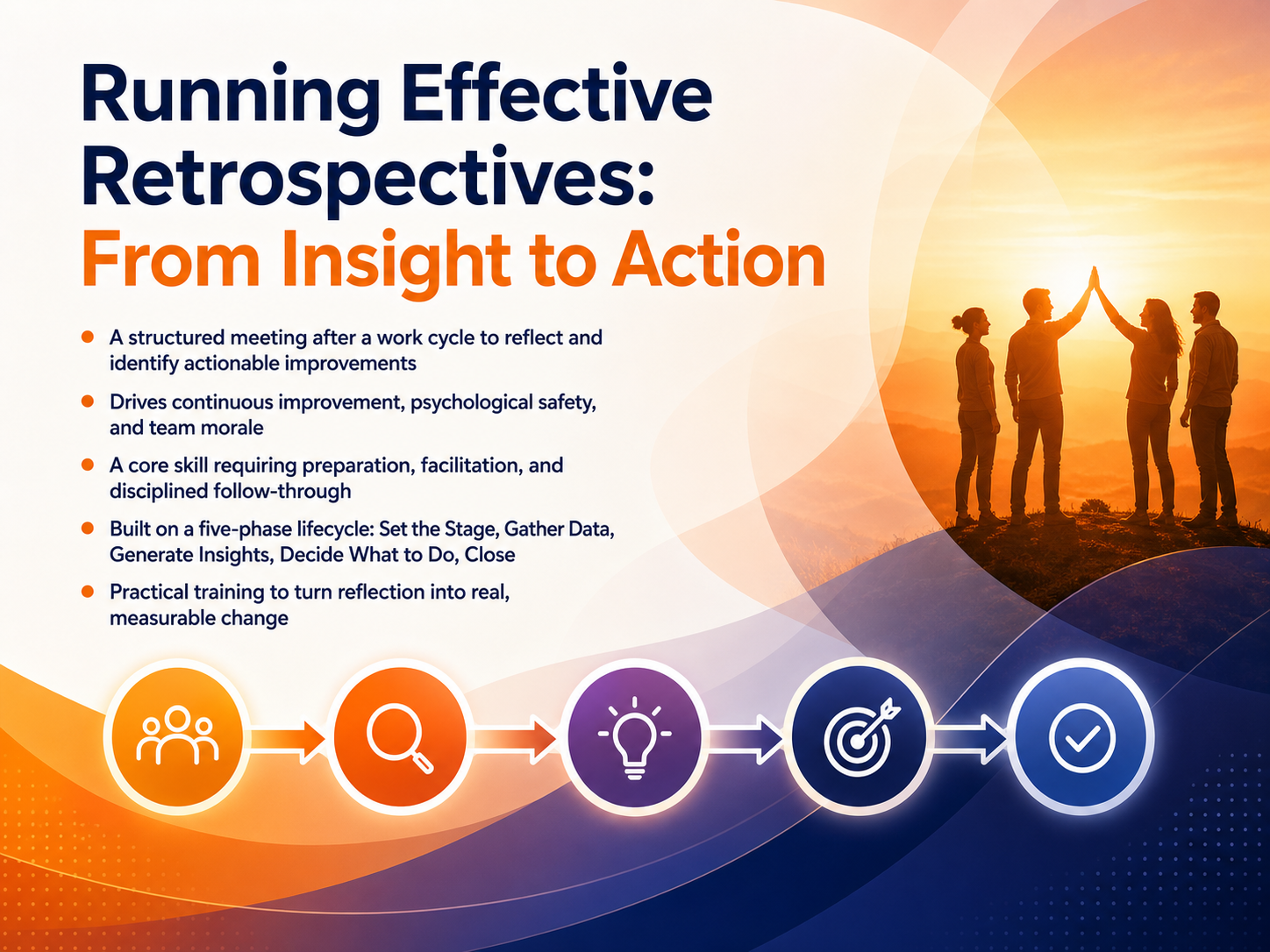
- 01Running Effective Retrospectives: From Insight to ActionWelcome. Today we're exploring how to run effective retrospectives, taking them from raw insight to real, measurable action. A retrospective is a structured meeting after a work cycle where the team reflects and identifies concrete improvements. It's a powerful engine for continuous improvement, psychological safety, and team morale. This isn't just a meeting; it's a core skill that requires careful preparation, thoughtful facilitation, and disciplined follow-through. We'll build our practice on a proven five-phase lifecycle: Set the Stage, Gather Data, Generate Insights, Decide What to Do, and Close. By the end of this training, you'll be equipped to turn reflection into change your team can actually see and feel. Let's get started by laying the right foundation for open, honest conversation. We'll move next into the critical topic of psychological safety and the Prime Directive.oreilly.commindtools.comred-gate.com+22 min
- 02The Foundation: Psychological Safety and the Prime DirectiveNow, let's build the foundation that makes any retrospective work: psychological safety and what we call the Prime Directive. Amy Edmondson of Harvard defines psychological safety as the shared belief that the team is safe for interpersonal risk-taking. It means you can speak up about a mistake, ask a question, or challenge an idea without fear of being punished or humiliated. Norm Kerth's Retrospective Prime Directive gives us a practical way to start. It asks us to assume that everyone did the best job they could, given what they knew at the time, their skills, and the situation. Without this safety, we get silence and superficial discussions. But here's a crucial point: safety does not mean comfort. Healthy conflict and productive disagreement are still welcome. Leaders build this trust by modeling vulnerability, admitting their own fallibility, and asking curious questions. When you as a leader say, 'I might miss something, I need you to tell me,' you set the tone. A quick safety check, like a simple one-to-five rating, can help you gauge where the team stands right now. Next, we'll look at the five-phase structure that gives every retrospective a clear agenda.
 web.mit.eduteamretro.comteleretro.com+22 min
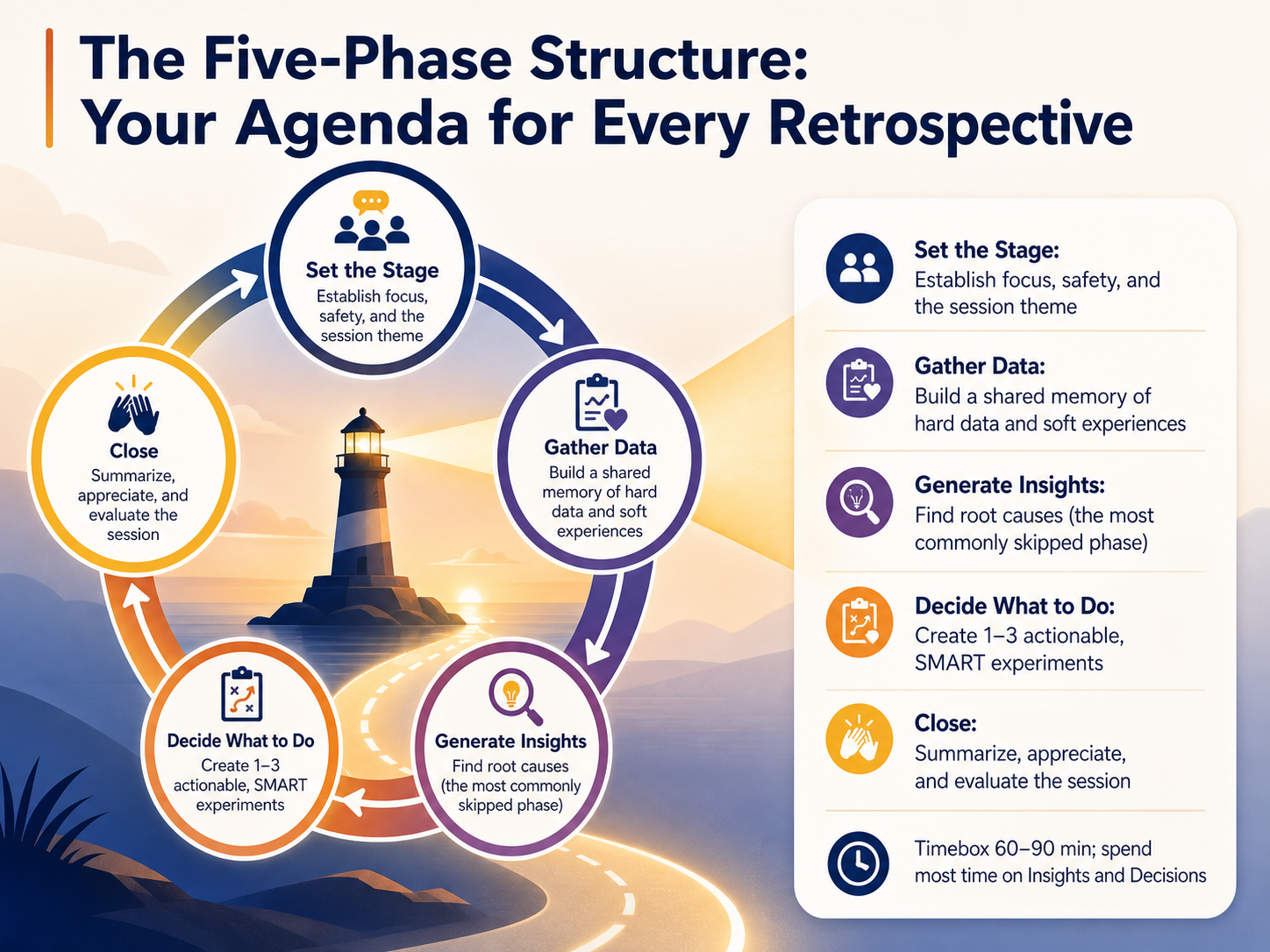
 - 03The Five-Phase Structure: Your Agenda for Every RetrospectiveNow, let's look at the five-phase structure that gives every retrospective a clear agenda. Think of it as your roadmap, keeping the conversation focused and moving toward real change. First, we set the stage to establish focus, safety, and a shared theme. Next, we gather data, building a shared memory of both hard metrics and soft experiences. Then comes the most commonly skipped phase: generating insights. This is where we dig into root causes and ask why something happened. After that, we decide what to do, creating one to three actionable SMART experiments. Finally, we close the retrospective by summarizing, appreciating contributions, and evaluating the session itself. A typical timebox is sixty to ninety minutes, and most of that time should be spent on insights and decisions. Let's explore the first active phase of that roadmap in detail, gathering data and the techniques that build a shared picture.
 oreilly.commindtools.comred-gate.com+22 min
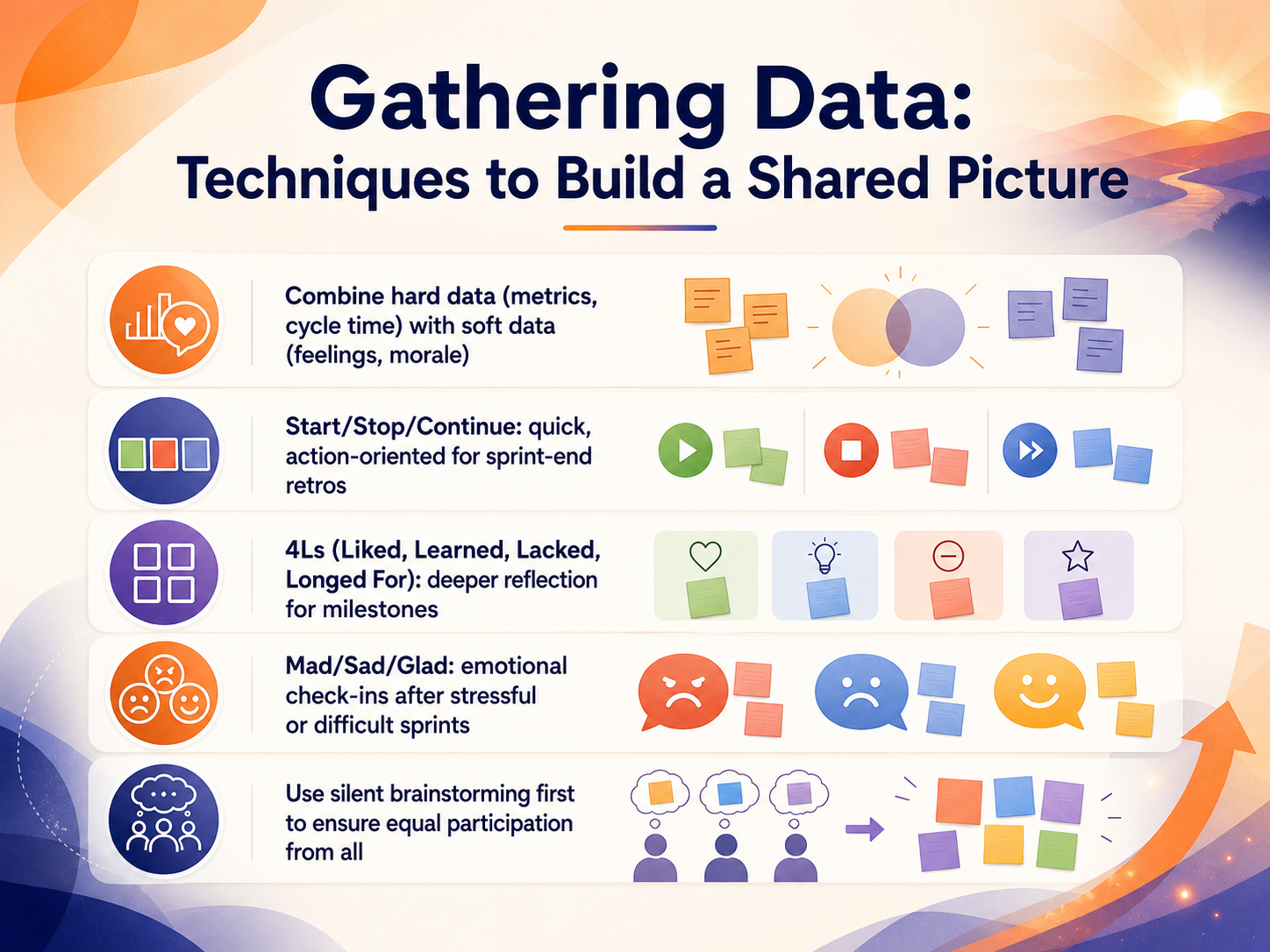
 - 04Gathering Data: Techniques to Build a Shared PictureNow, let's talk about gathering that data and building a shared picture of what really happened. The most effective retrospectives combine hard data, like cycle time or throughput, with soft data, like team morale and feelings. Numbers tell you what happened, but emotions tell you why it matters. To tap into both, you can choose from a few different formats. Start, Stop, Continue is quick and action-oriented, perfect for routine sprint-end retros. The 4Ls, Liked, Learned, Lacked, and Longed For, invite deeper reflection, which is ideal for milestones or project completions. After a stressful or difficult sprint, Mad, Sad, Glad gives everyone a safe space for an emotional check-in before you jump to solutions. No matter which format you choose, start with silent brainstorming. Giving everyone a few minutes to write down their thoughts before anyone speaks ensures equal participation and prevents the loudest voices from dominating the conversation. This creates a richer, more honest shared picture. Next, we'll move from gathering that raw data to generating insights by tracing symptoms back to their root causes.
 kollabe.comhalftime.coffeeretroflow.org+22 min
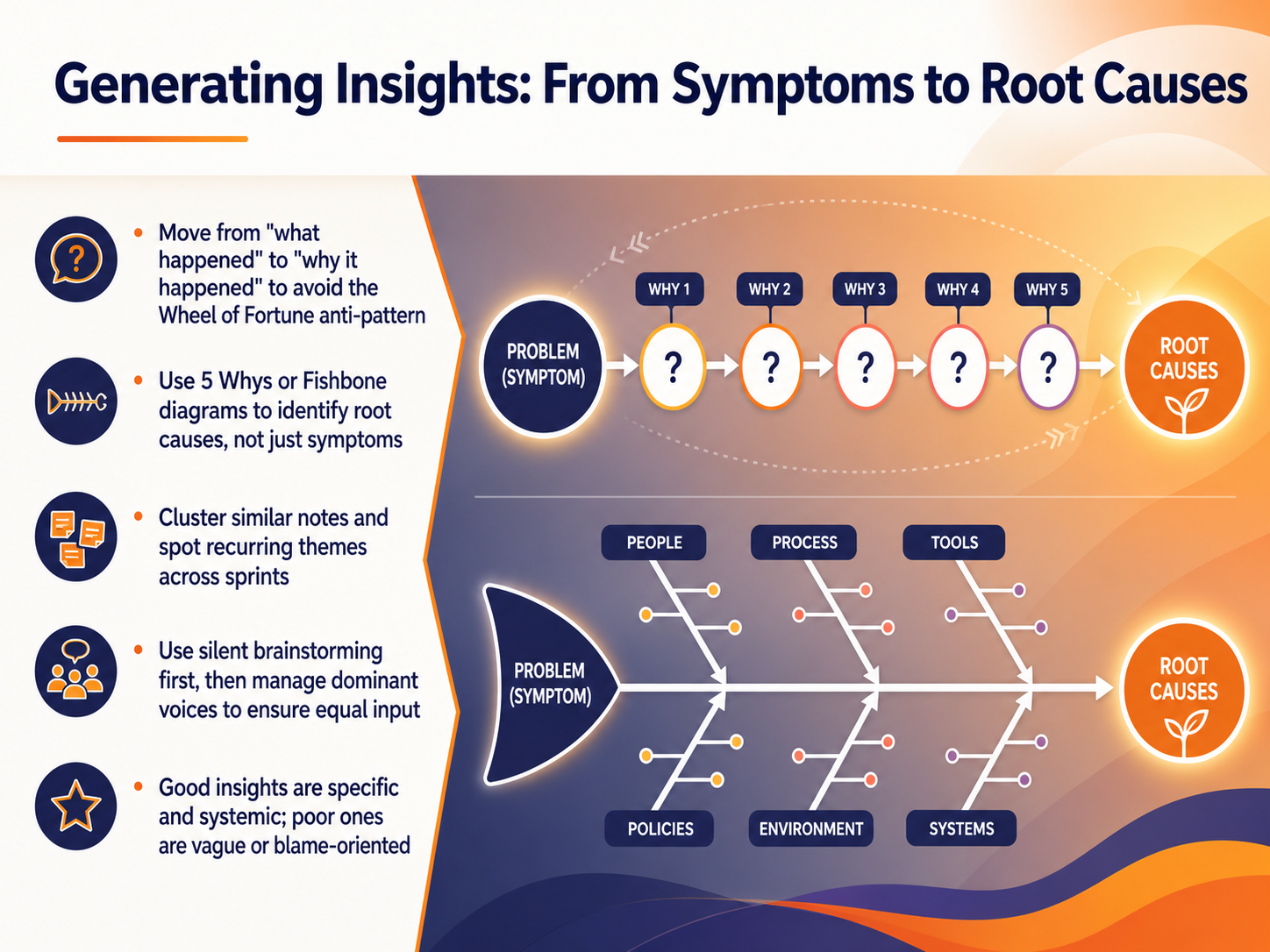
 - 05Generating Insights: From Symptoms to Root CausesNow let's move from collecting observations to truly understanding them. Think of this as the shift from "what happened" to "why it happened." If we skip this step, we risk a common trap called the Wheel of Fortune anti-pattern, where we react to surface symptoms but never touch the real problem. The same issues just keep spinning back. To avoid that, we can use simple tools like the Five Whys or a Fishbone diagram to dig into the details and identify root causes instead of just symptoms. As we work through the data, let's look for patterns. Cluster similar notes together and ask: are we seeing the same themes crop up across multiple sprints? Before we start talking, I'd like us to take a moment for silent brainstorming. Everyone writes down their thoughts first. Then, when we discuss, we'll actively manage the conversation so every voice is heard, not just the loudest ones. The goal here is to generate insights that are specific and systemic. We want to point to a process that can be improved, not at a person. Vague or blame-oriented statements won't help us move forward. So, with that focus on true root causes, let's prepare to shift our attention to the next stage: deciding what to do and crafting actionable experiments.
 martinfowler.comscrum.orgteamretro.com+22 min
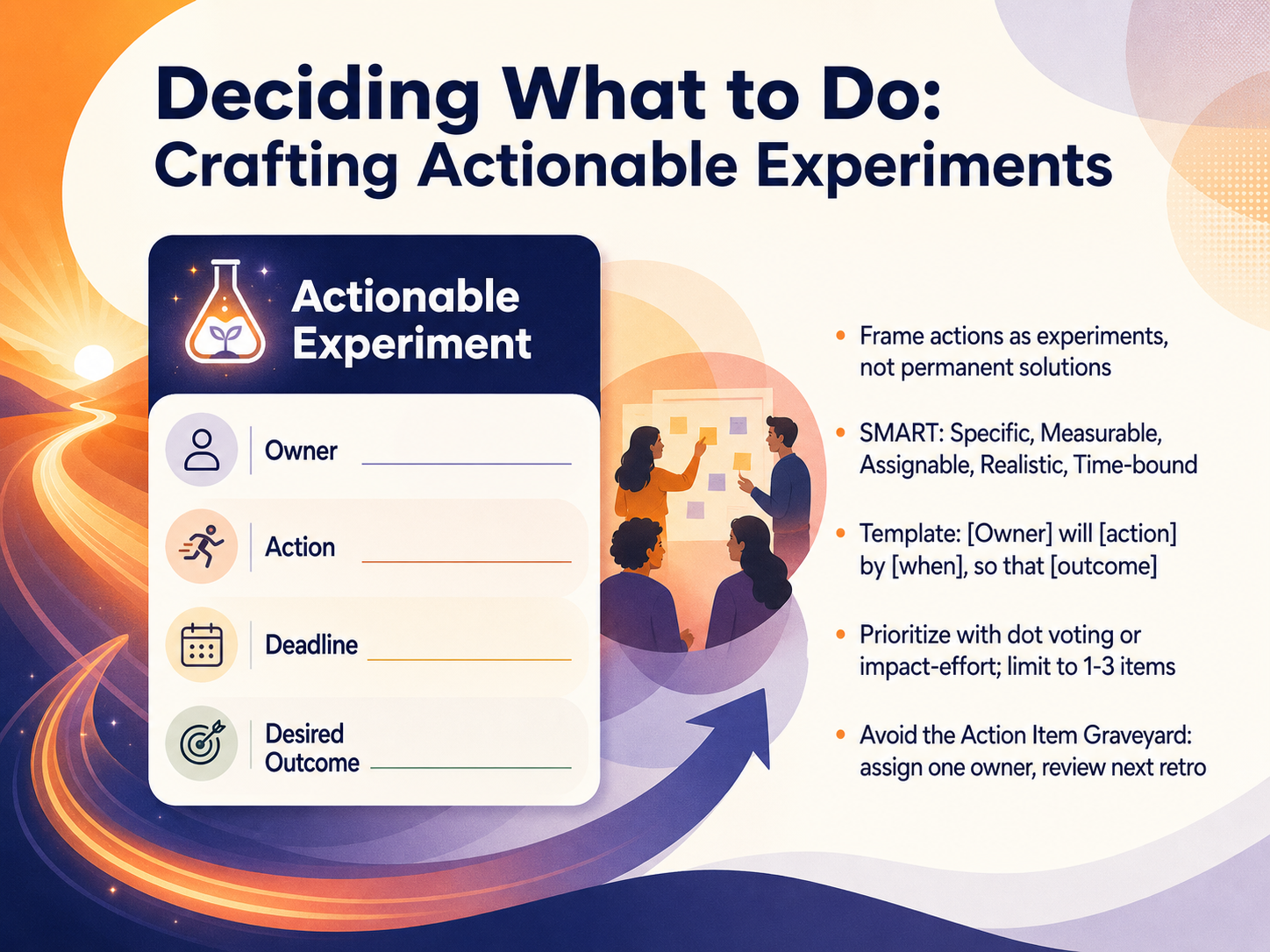
 - 06Deciding What to Do: Crafting Actionable ExperimentsNow let's get into the art of deciding what to do. This is where we turn our retro insights into real, tangible change. We do that by crafting actionable experiments, not permanent solutions. The key is to frame each action as a small, safe-to-try hypothesis. We use the SMART framework to make sure our experiments are clear and completable. That means each action needs to be Specific, Measurable, Assignable, Realistic, and Time-bound. A helpful template to follow is: The owner will complete a specific action by a set date, so that we achieve a clear outcome. For example, 'Sarah will add unit tests to the checkout module, targeting 80 percent coverage, by the end of Sprint 15.' This clarity is how we avoid the Action Item Graveyard. To keep our focus, we must prioritize. Use dot voting or an impact-effort matrix to select the most critical items, and limit our commitment to just one to three. Every single action needs one owner, someone who is accountable for driving it forward. We'll review the status of these items at the start of our next retro to ensure they don't get forgotten. Next, we'll explore how to guide these conversations effectively with facilitation skills that focus on the process, not the content.
 martinfowler.comscrum.orgteamretro.com+22 min
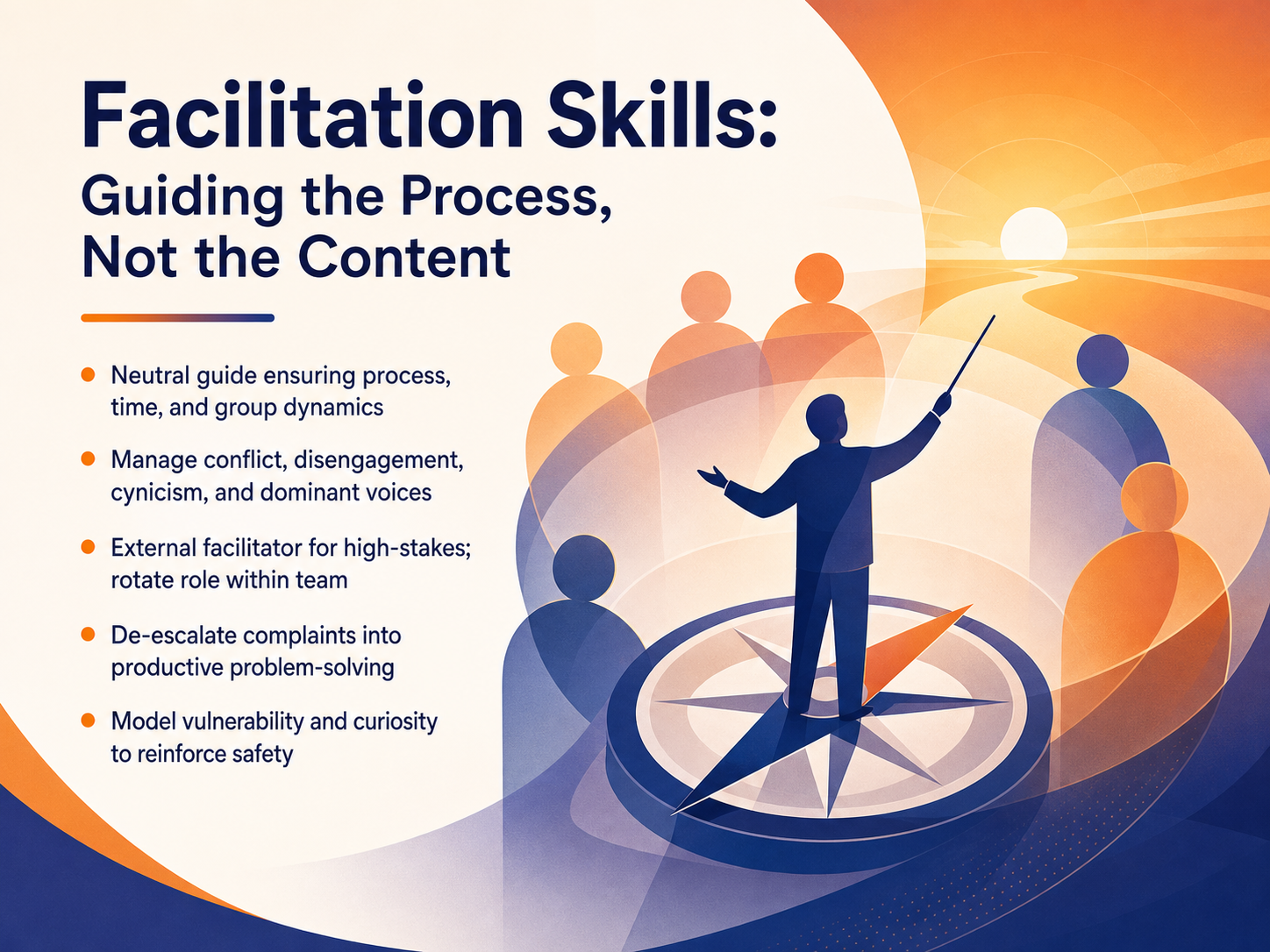
 - 07Facilitation Skills: Guiding the Process, Not the ContentNow, let's talk about the facilitator's role. Think of the facilitator as a neutral guide. Your job is to protect the process, manage the time, and watch the group dynamics. You're guiding the conversation, not controlling the content. That means you'll need to handle a few common challenges. This might include managing conflict when it arises, re-engaging a disengaged team member, or gently addressing cynicism. You might also need to make space for quieter voices when a dominant speaker takes over. For high-stakes or highly emotional retrospectives, consider bringing in an external facilitator. For routine retros, rotating the role within the team is a great way to build shared facilitation skills. When complaints come up, and they will, your role is to de-escalate and redirect. Don't just record the venting. Help the team reframe the complaint into a productive problem statement. Ask, 'What is one concrete change we can try to improve this?' Finally, one of the most effective tools you have is modeling the behavior you want to see. Show vulnerability. Acknowledge when you don't know something. Ask curious questions. This reinforces that the retro is a safe space for learning. Next, we'll apply these principles to 'Remote and Hybrid Retrospectives: Equity and Engagement from Anywhere.'
 web.mit.eduteamretro.comteleretro.com+22 min
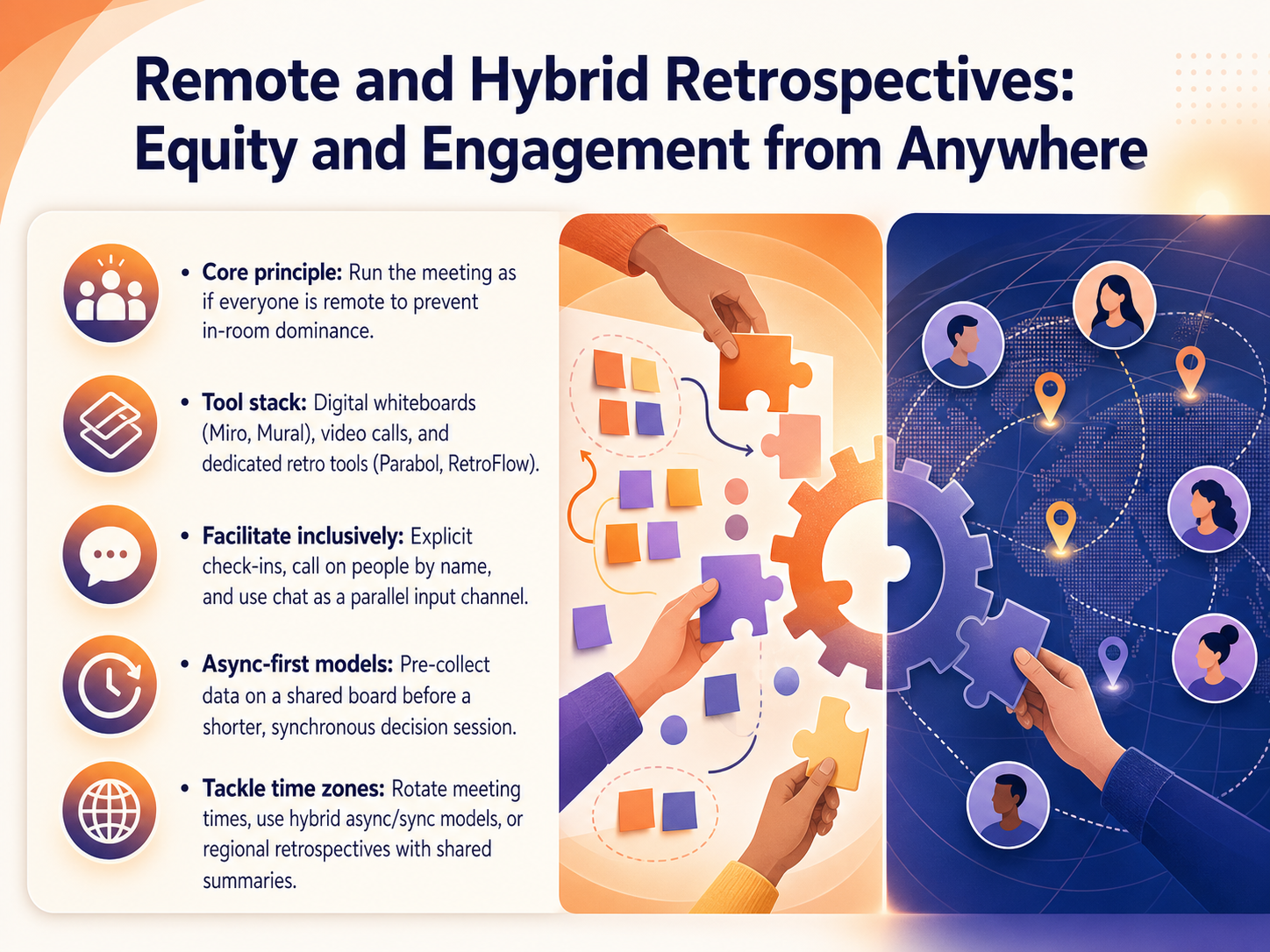
 - 08Remote and Hybrid Retrospectives: Equity and Engagement from AnywhereNow let's shift our focus to remote and hybrid retrospectives, and how to keep them equitable and engaging. The core principle is simple: run the meeting as if everyone is remote. That means in-room participants use their own laptops and type their observations, so no one voice dominates the conversation by default. For your tool stack, think about a digital whiteboard like Miro, plus a video call, and a dedicated retro tool like Parabol to manage the flow. To facilitate inclusively, use explicit check-ins, call on people by name, and treat the chat as a parallel channel where quieter voices can contribute. A powerful async-first model is to pre-collect data on a shared board, then use a shorter synchronous session only for discussion and decisions. For time zone challenges, rotate meeting times, or run regional retrospectives with a shared summary. Next, let's look at measuring effectiveness and whether your retrospective is actually working.
 2 min
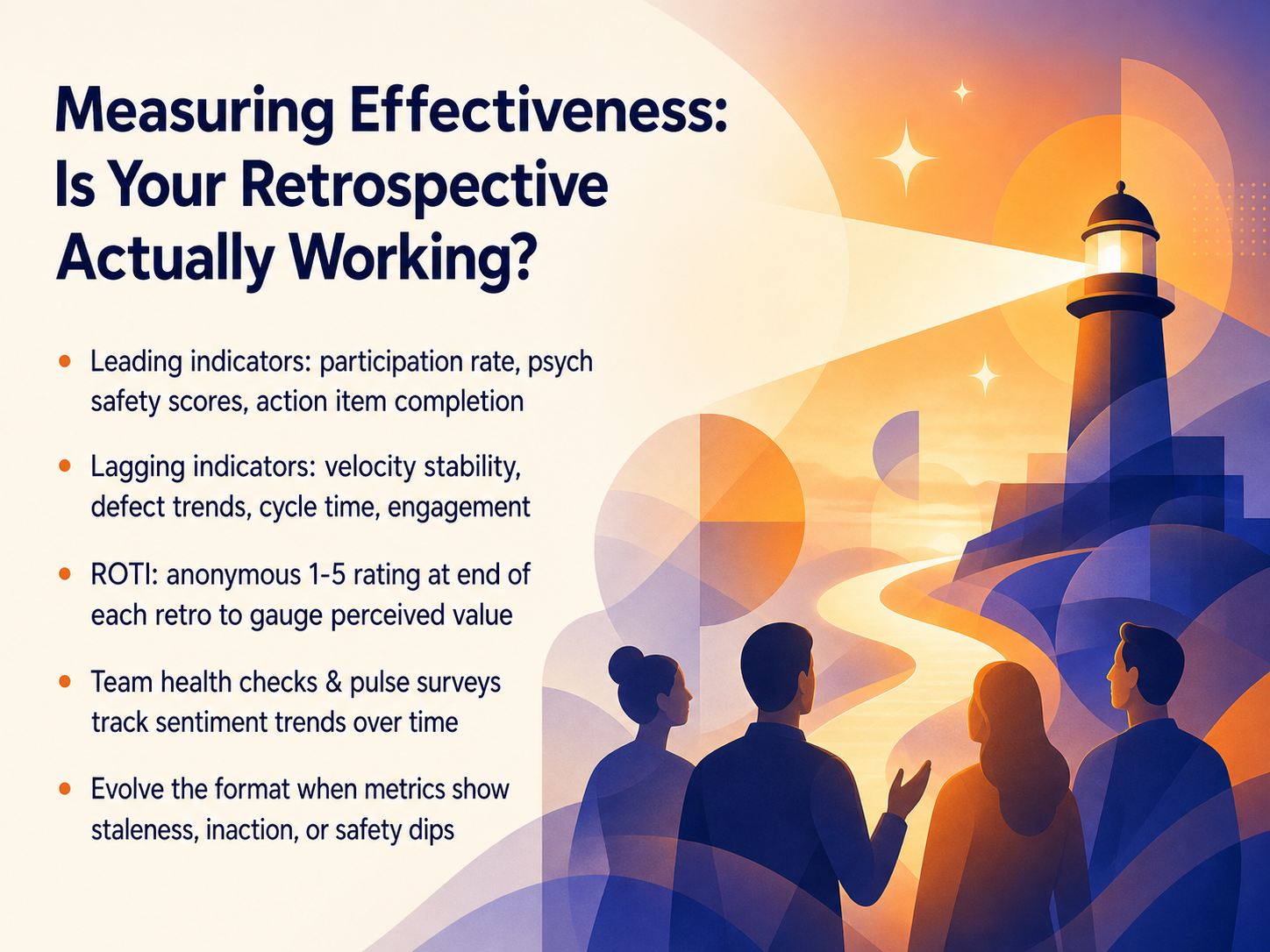
2 min - 09Measuring Effectiveness: Is Your Retrospective Actually Working?So how do you know if your retrospective is actually working? Let’s look at a few key signals. First, watch leading indicators like participation rate, psychological safety scores, and whether action items get completed. These tell you if the team is engaged and trusts the process. Then look at lagging indicators—things like velocity stability, defect trends, cycle time, and overall engagement. These show the downstream impact of your improvements. A simple, powerful tool is the ROTI, or Return on Time Invested. At the end of each retro, ask everyone to give an anonymous rating from one to five to gauge the perceived value. Use clear anchors—like one meaning ‘no benefit’ and five meaning ‘exceptionally valuable.’ If scores dip, reach out and adjust. You can also run team health checks and pulse surveys to track sentiment trends over time. When metrics show staleness, low action, or a dip in safety, it’s time to evolve your format. Let’s change the structure or try a new activity so the conversation stays fresh and honest. Next, we’ll explore common pitfalls and anti-patterns, starting with process and structure.
 web.mit.eduteamretro.comteleretro.com+22 min
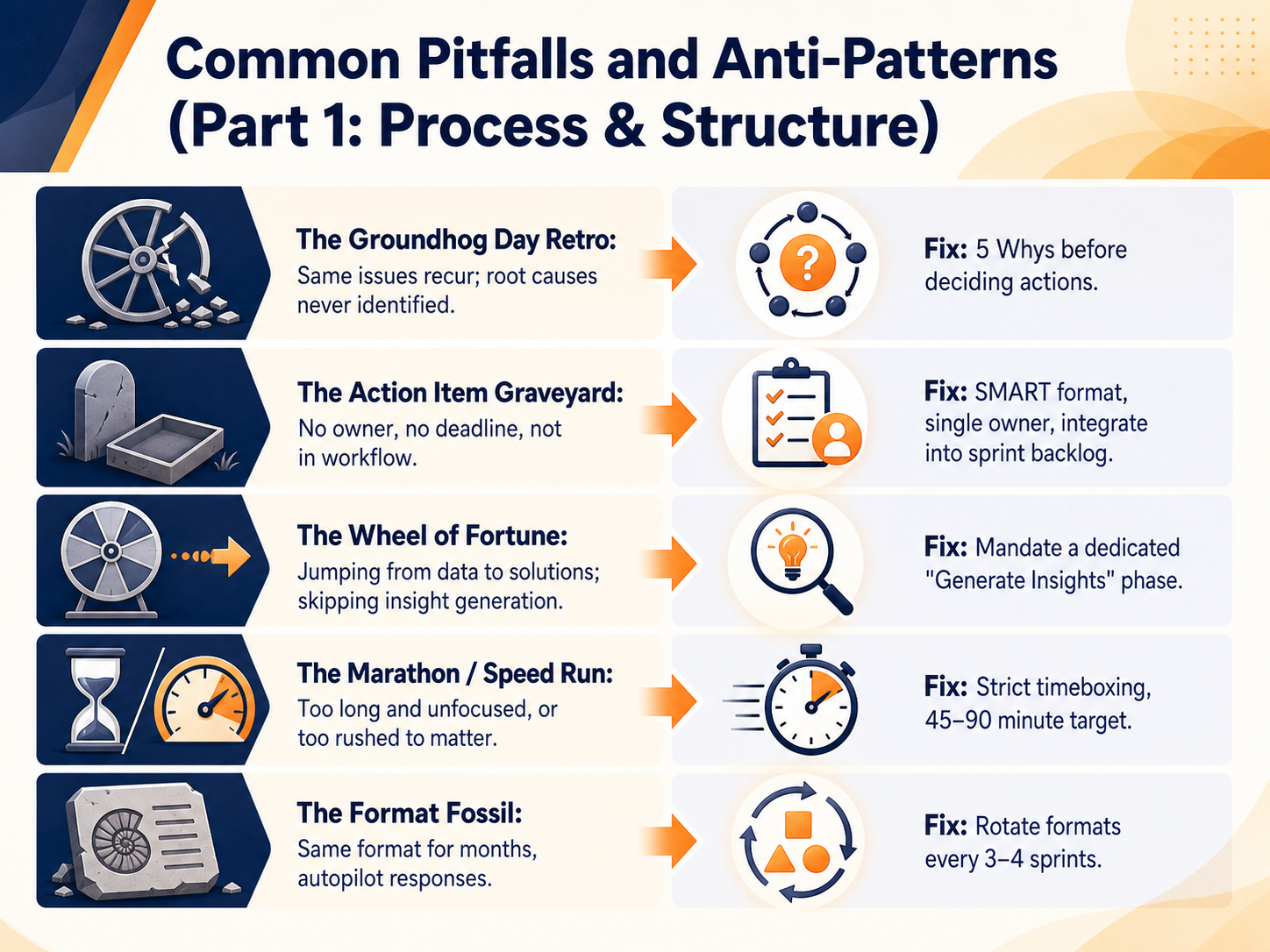
 - 10Common Pitfalls and Anti-Patterns (Part 1: Process & Structure)Now let's look at some common pitfalls that can creep into the process and structure of your retrospectives. The first one is the Groundhog Day retro. This happens when the same issues keep showing up sprint after sprint, but the root causes are never identified. A great fix for this is to use the 5 Whys technique before deciding on any actions. That way, you dig past the symptom and find the real problem. Next, watch out for the Action Item Graveyard. This is where tasks are captured but have no owner, no deadline, and never make it into the team's workflow. The fix is to make every action item SMART. That means Specific, Measurable, Assignable, Relevant, and Time-bound. Give it a single owner and integrate it directly into the sprint backlog. Another trap is the Wheel of Fortune, where the team jumps straight from gathering data to picking solutions, skipping the crucial step of generating insights. To fix this, mandate a dedicated 'Generate Insights' phase in your retro. Without it, you risk solving the wrong problem. The Marathon or Speed Run is all about pacing. Either the retro is too long and unfocused, or it's so rushed that nothing meaningful gets discussed. Aim for strict timeboxing, with a target of forty-five to ninety minutes. Finally, the Format Fossil is when you use the exact same retro format for months, and the team starts running on autopilot. Rotate your format every three to four sprints to keep the thinking fresh and engagement high. Overcoming these structural pitfalls sets the stage for handling the people side of retros. Next, we'll explore common pitfalls and anti-patterns related to people and team dynamics.
 martinfowler.comscrum.orgteamretro.com+22 min
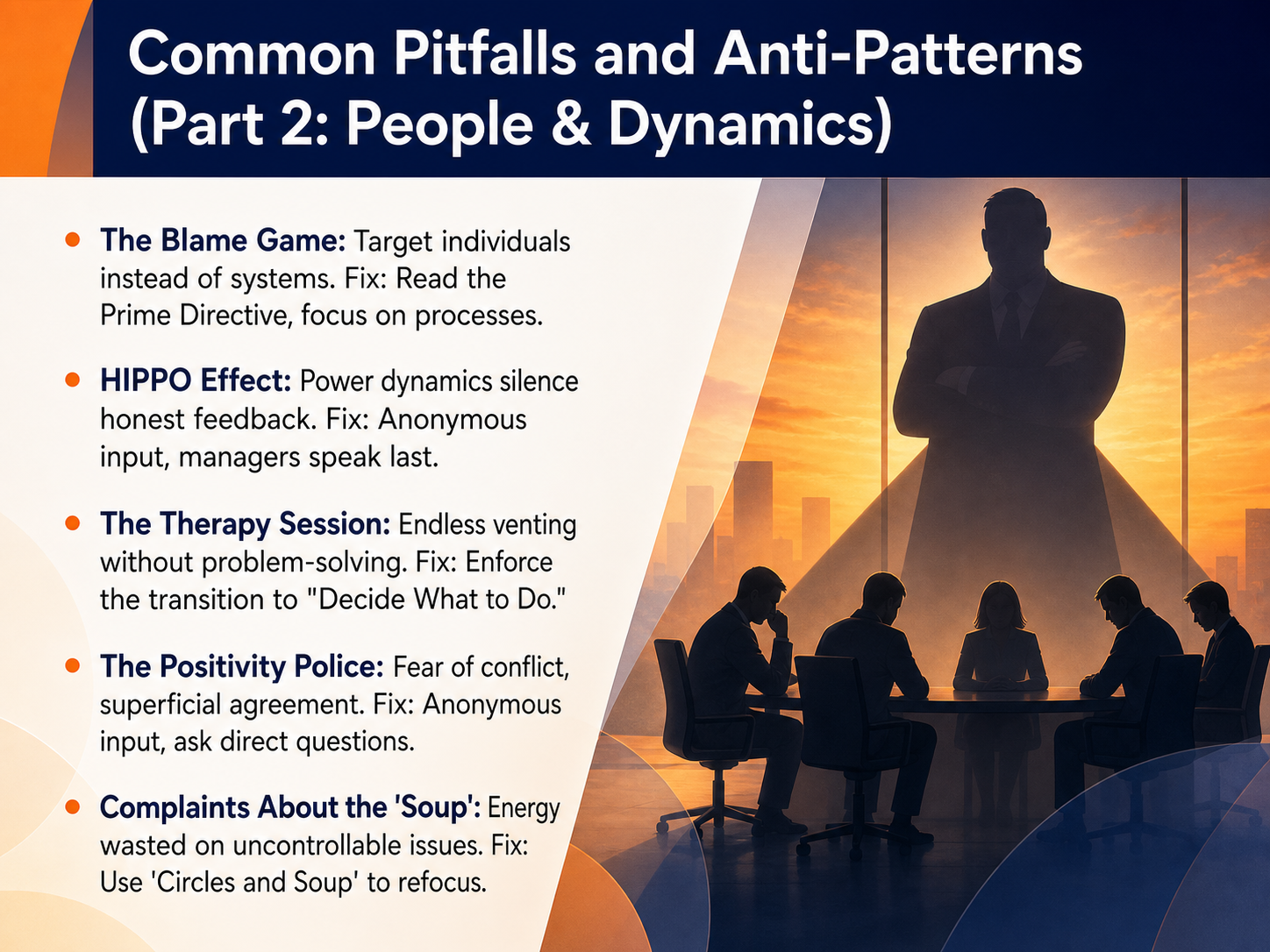
 - 11Common Pitfalls and Anti-Patterns (Part 2: People & Dynamics)Let's examine how people and team dynamics can undermine a retrospective. The first anti-pattern is the Blame Game. Instead of improving systems, individuals get targeted. When this surfaces, read the Prime Directive aloud and refocus the conversation on the process, not the person. Next is the HIPPO effect, where the highest-paid person's opinion silences honest feedback. To fix this, use anonymous input and have managers speak last. Another common challenge is the therapy session, where endless venting happens without problem-solving. As the facilitator, enforce a clear transition to the Decide What to Do phase. You also need to watch for the Positivity Police, where fear of conflict leads to superficial agreement. Counter this with anonymous input and direct, specific questions. Finally, there are complaints about the 'soup'—energy wasted on uncontrollable issues. Use the Circles and Soup exercise to separate what the team controls from what they simply must accept, then refocus on actionable changes. By spotting these dynamics early, you protect the team's energy and keep the session productive. Up next, we'll wrap up by exploring how to sustain a culture of continuous improvement.
 martinfowler.comscrum.orgteamretro.com+22 min
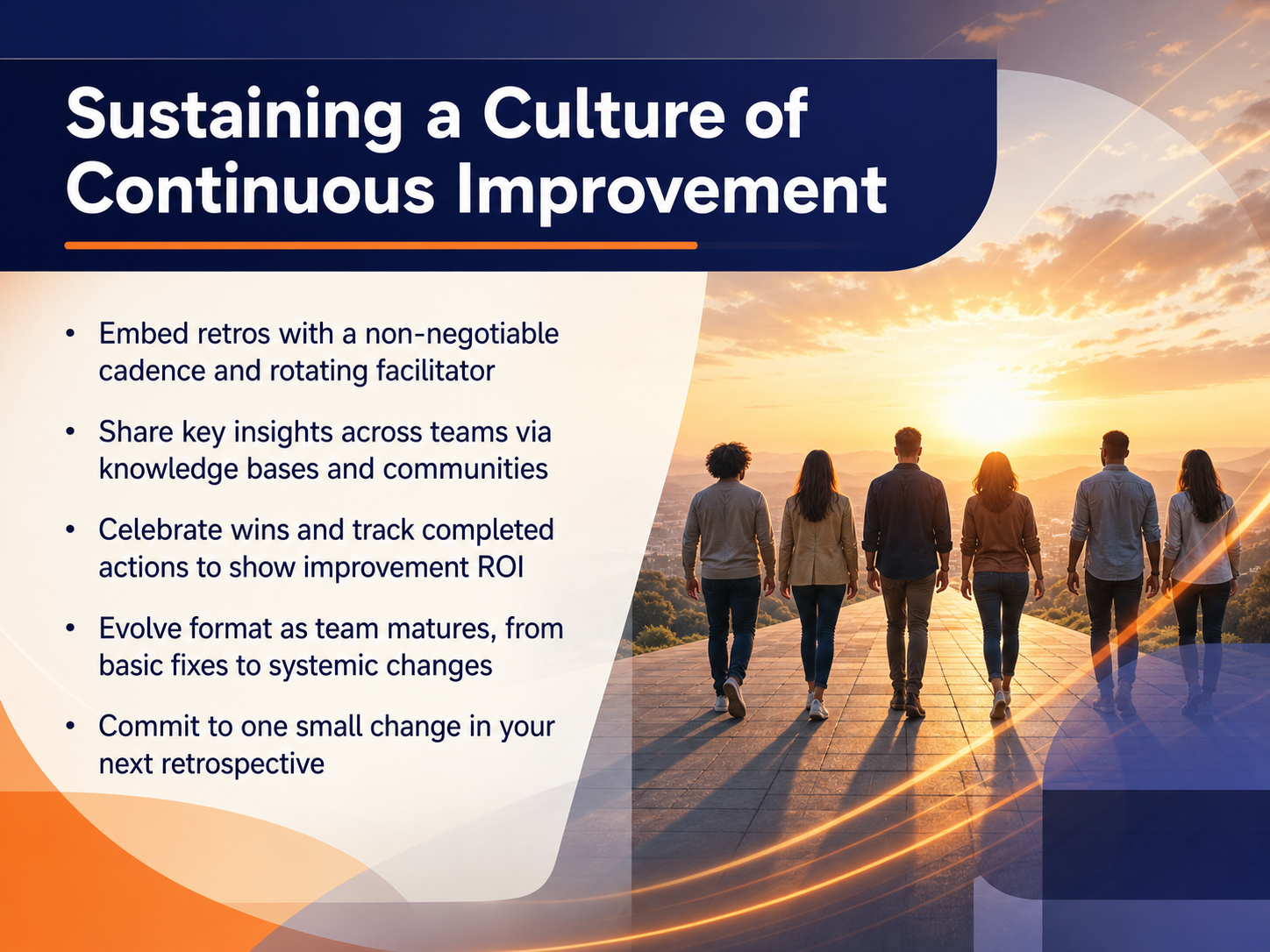
 - 12Sustaining a Culture of Continuous ImprovementWe have covered a lot of ground together, so let's bring it all home. Building a culture of continuous improvement starts with making your retrospective a non-negotiable habit, rotating the facilitator to keep the energy fresh, and sharing insights across teams so no one has to solve the same problem twice. Remember to celebrate wins, big and small, and track completed actions to show the real return on your investment. As your team matures, let the format evolve from fixing basic pains to driving systemic changes. Now, here is your one takeaway for today: commit to just one small change in your next retrospective. Use the SMART framework. Make it specific, give it one owner, and set a deadline. Thank you for joining me, and I look forward to seeing the progress you make, one small experiment at a time.
 2 min
2 min
Take the deck with you
Download this course as a file — free, no sign-up needed.
- PDF handoutEvery slide page, ready to print or share.13 pages · 3.3 MBDownload
- Narrated PowerPointThe deck that presents itself — every slide carries the digital human's narration video.13 pages · 11.9 MBDownload
- PowerPoint slidesThe full deck as a .pptx — open it in PowerPoint, Keynote, or Google Slides.13 pages · 3.3 MBDownload
Free to use in your own training — please keep the PersonWise credit page at the end.
Have your own deck? Turn it into a course
Sources consulted
Web sources consulted while building this course.
- 2.4 Structuring a Retrospective - Agile Retrospectives [Book] — oreilly.com
- Sprint Retrospectives in Agile Project Management — mindtools.com
- Five steps to an effective sprint retrospective — red-gate.com
- Sprint Retrospective Template: Guide, Formats, and Best Practices | Deckary — deckary.com
- The 5 Phases of the Retrospective — scrum.org
- Psychological Safety and Learning Behavior in Work Teams — web.mit.edu
- Psychological Safety Retrospective | TeamRetro — teamretro.com
- Building Psychological Safety in Retrospectives: The Complete Guide - TeleRetro — teleretro.com
- Psychological Safety Retrospective Template (Free) — teamretro.com
- Four Steps to Building the Psychological Safety That High ... — library.hbs.edu
- Retrospective Formats Compared: Start-Stop-Continue vs ... — kollabe.com
- 4Ls Retrospective Template: Liked, Learned, Lacked, Longed For | Halftime — halftime.coffee
- 4Ls Retrospective: Liked, Learned, Lacked, Longed For Guide — retroflow.org
- Sprint Retrospective Formats Best Practices | 2026 — docs.gitscrum.com
- The "4 Ls" Retrospective Technique — atlassian.com
- Retrospectives Antipatterns — martinfowler.com
- 21 Sprint Retrospective Anti-Patterns — Scrum Anti-Patterns Guide 2022 | Scrum.org — scrum.org
- 10 retrospective anti-patterns to avoid — teamretro.com
- 15 Retrospective Anti-Patterns That Kill Team Improvement — retroflow.org
- Retrospective Anti-Patterns: Why Most Retros Fail and How to Fix Them | The Complete Guide to Retrospectives | Workshop Weaver — workshopweaver.com