Customer Service Ethics & Responsibility
Begin
14 pages · ~28 min
Customer Service Ethics & Responsibility
Training on ethical customer service practices, covering integrity, transparency, and responsible decision-making to build trust and handle sensitive situations professionally.
What you’ll learn
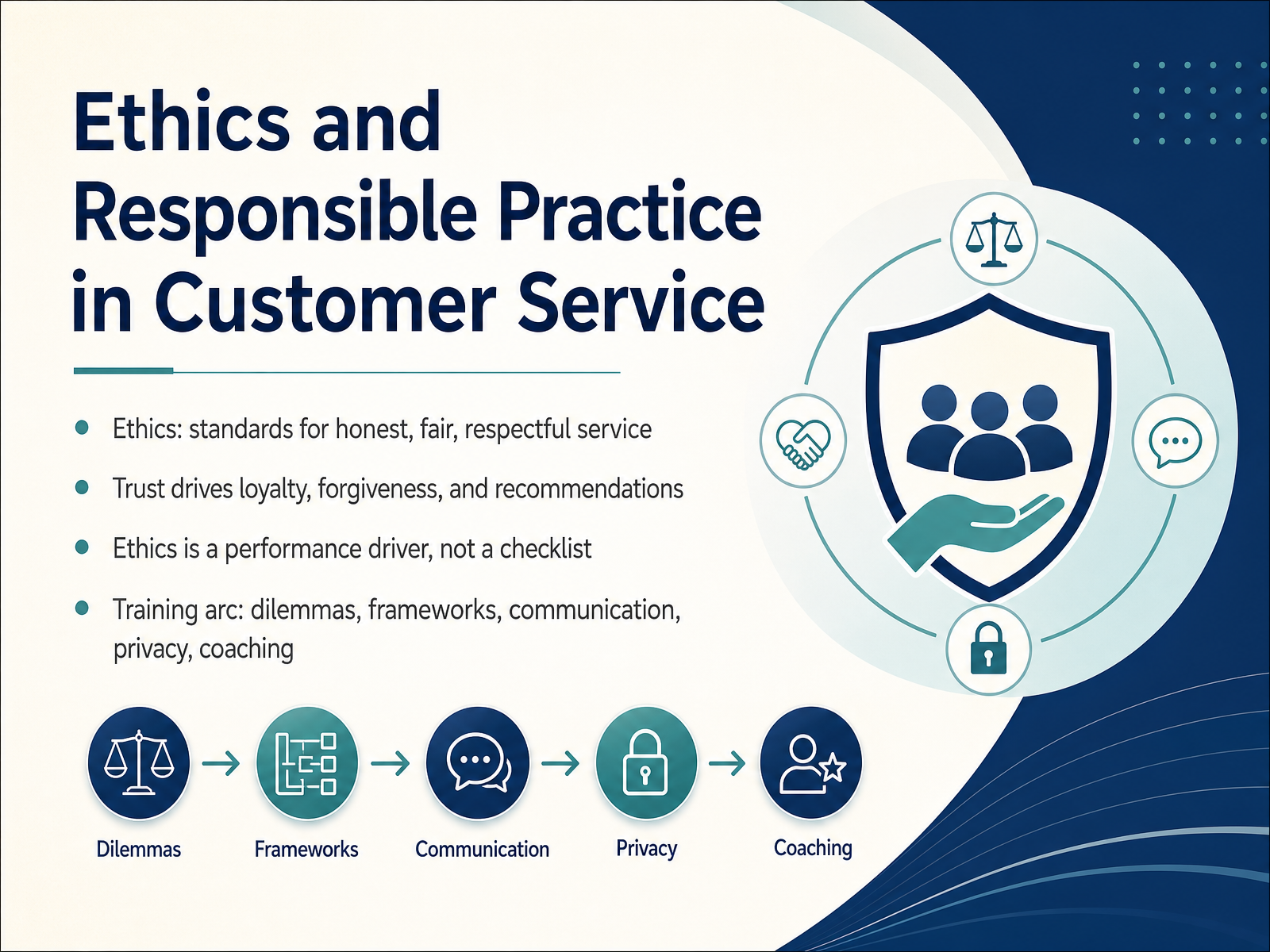
- 01Ethics and Responsible Practice in Customer ServiceWelcome. If you work in customer service, you already know ethics isn’t just a policy on a website. It’s the standard for honest, fair, and respectful service in every interaction. Think about the moments that really test a team. A complaint that turns heated. A policy that seems unfair to the customer in front of you. A request for data that feels borderline. These are the situations where standards matter. And here’s what makes this practical. Customers don’t just notice how you handle the easy stuff. They notice how you handle the hard stuff. Trust is the result. And trust drives loyalty, forgiveness when something goes wrong, and the recommendations that grow a business. Ethics, then, isn’t a checklist you complete once a year. It’s a performance driver. Over the next few minutes, we’ll work through real dilemmas, simple frameworks for decisions, clear communication, protecting customer privacy, and how coaching can make all of this stick. This is about building a team people count on. Let’s get into why this matters as a business result, not just a value.connect.lime-technologies.comttec.comconcentrix.com+22 min
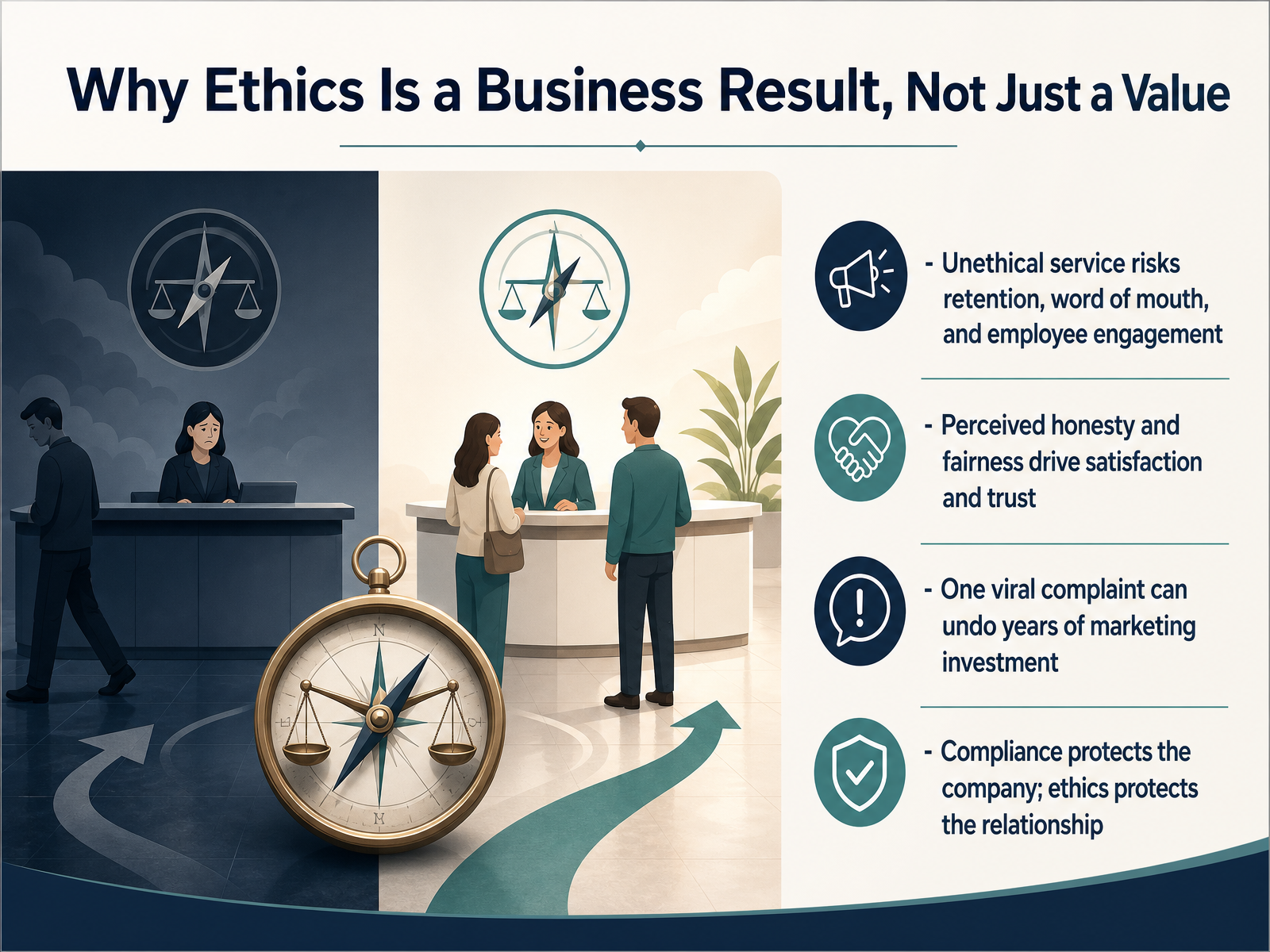
- 02Why Ethics Is a Business Result, Not Just a ValueSo, let's talk about why ethics belongs in the conversation about business results, not just in the values statement on the wall. Think about a customer who feels misled about a fee or a policy. That feeling doesn't stay with them. It shows up in their decision to renew, in what they tell their colleagues, and in whether they bother to complain or just quietly leave. Retention, word of mouth, even your team's engagement, all of that shifts when service feels unfair. Customers may not remember every policy detail, but they remember whether they were treated honestly. Perceived fairness is a direct driver of satisfaction and trust. And trust, as we know, is what keeps them coming back. One viral complaint can unravel years of marketing effort. That's not an exaggeration; a single poorly handled situation can reach thousands of people in a day. Now, compliance has its place; it protects the company from legal trouble. But ethics protects the relationship itself. Compliance is the floor. Ethics is what builds loyalty that competitors can't easily match. So when we talk about responsible practice, we're talking about protecting what sustains the business. That's a practical outcome, not a philosophical one. Next, let's look at the core ethical principles that guide customer-facing teams in everyday decisions.
 ideas.repec.orgbluetweak.comideas.repec.org+21 min
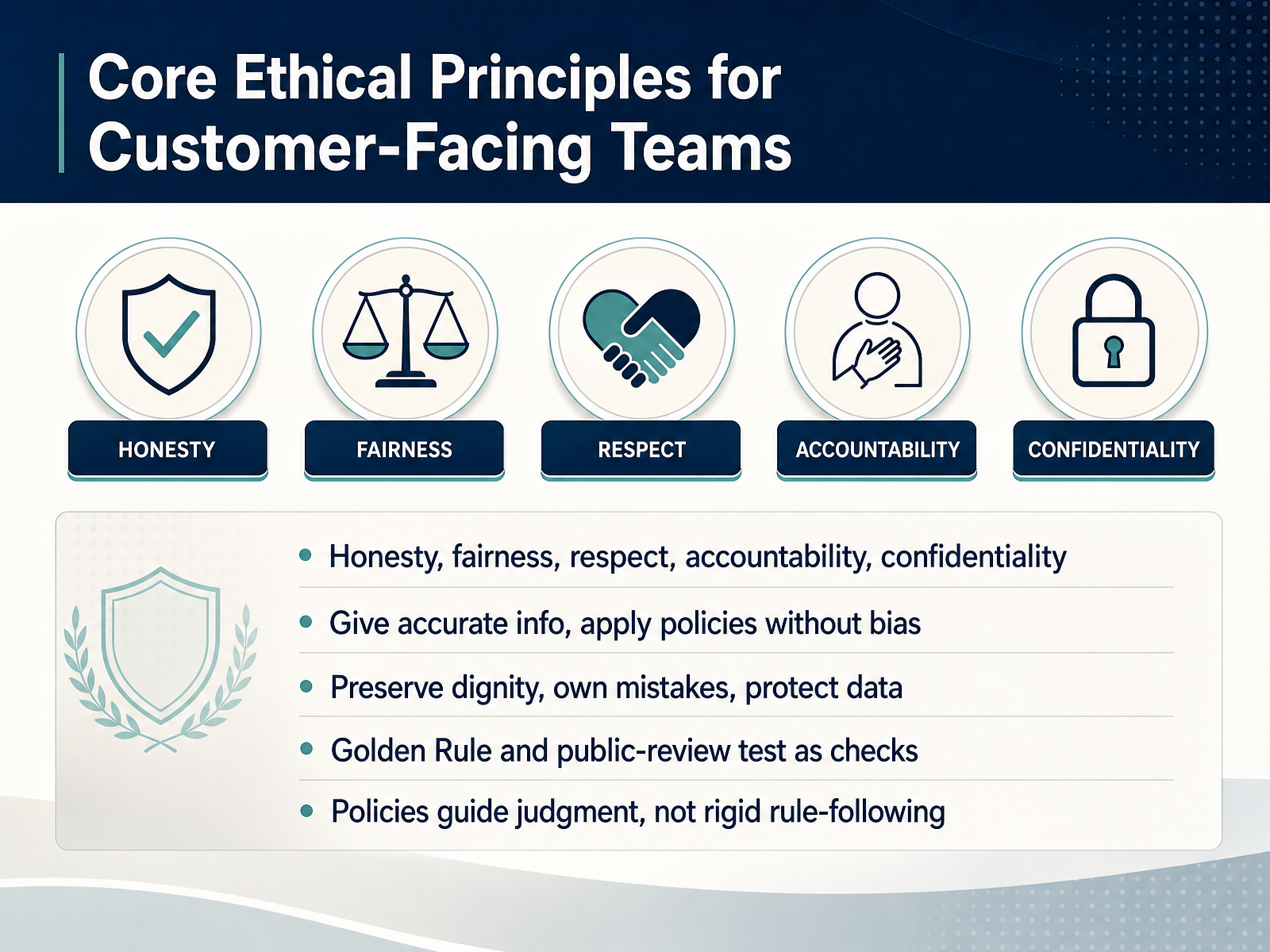
 - 03Core Ethical Principles for Customer-Facing TeamsLet’s build on that and look at the core ethical principles that should guide every customer interaction. At the heart of it are five values: honesty, fairness, respect, accountability, and confidentiality. In practice, honesty means giving accurate information, even when it’s not what the customer wants to hear. Fairness means applying policies the same way for everyone, without letting personal bias creep in. Respect is about preserving a customer’s dignity, especially when they’re frustrated or upset. Accountability comes in when something goes wrong—owning the mistake, not deflecting blame. And confidentiality is simply protecting the data customers trust us with, both in conversation and in the systems we use.
Two practical checks can help when you’re unsure. First, the Golden Rule: would you want to be treated this way if you were the customer? Second, the public-review test: would you feel comfortable if this interaction were shared openly? If either gives you pause, that’s a signal to rethink your approach.
Remember, policies are there to guide judgment, not to replace it. Ethical service isn’t about rigid rule-following; it’s about using principles to make sound decisions in each unique situation.
Next, let’s look at how to recognize ethical dilemmas before they escalate.
 connect.lime-technologies.comttec.comconcentrix.com+22 min
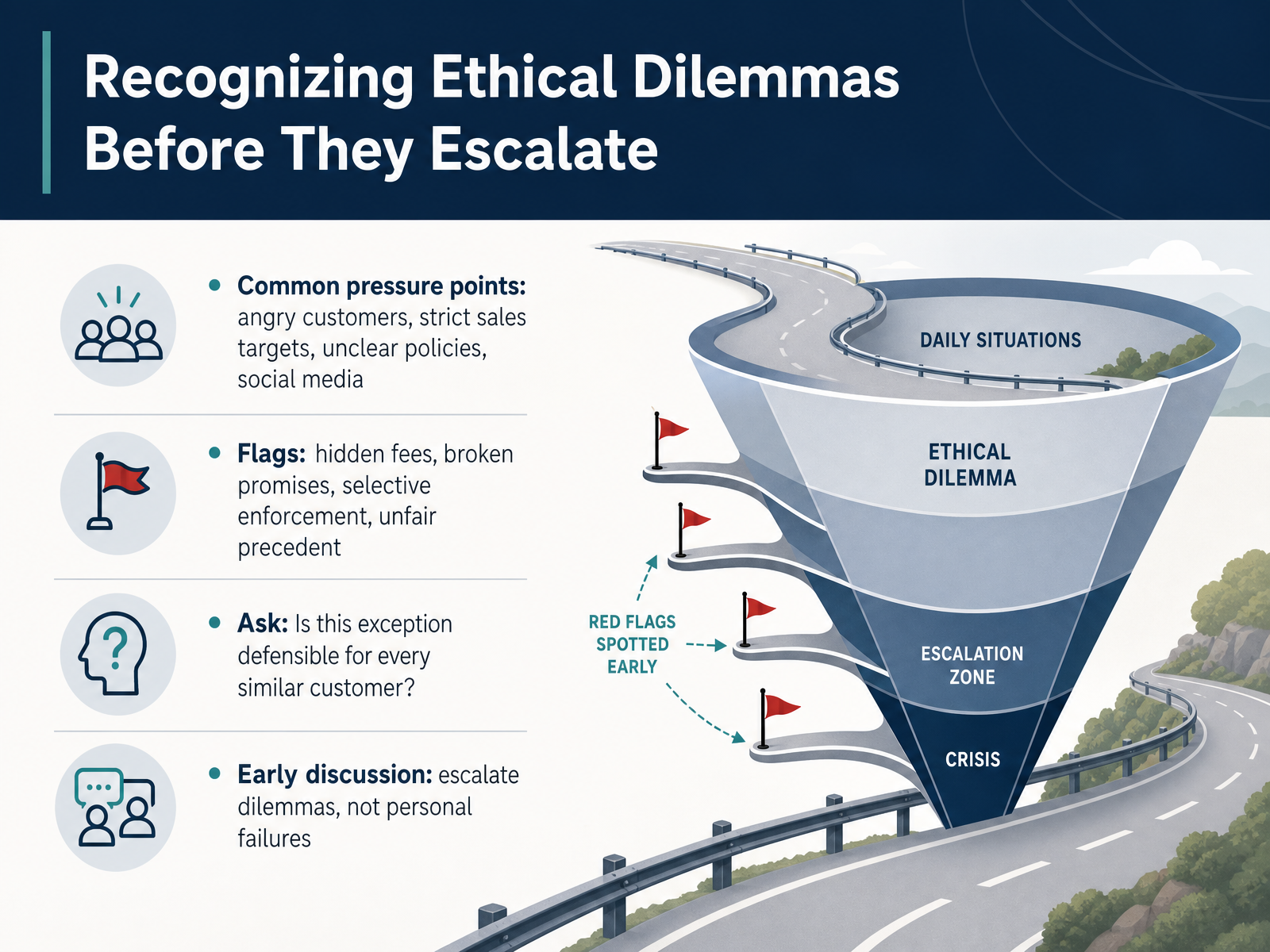
 - 04Recognizing Ethical Dilemmas Before They EscalateThink of the last time a situation felt off—maybe a customer was furious, a target was tight, or a policy didn’t quite cover what was happening. Those are the moments where ethical dilemmas start. Look for the flags: hidden fees, promises we know we can’t keep, applying rules to some customers but not others, or creating exceptions that set an unfair precedent for everyone else. A good test is simple: would this exception be defensible for every similar customer? If the answer is no, you’re likely facing an ethical issue, not just a one-off decision. And here’s the key—when you spot it, raise it early. Escalate the dilemma, not your personal failure. Bring it to a supervisor or team discussion before it turns into a bigger problem. That’s how you protect trust, consistency, and your team’s credibility. Now, next we’ll look at a practical decision framework to help you sort through these responsible choices.
 ignited.globalpmc.ncbi.nlm.nih.govbluetweak.com+21 min
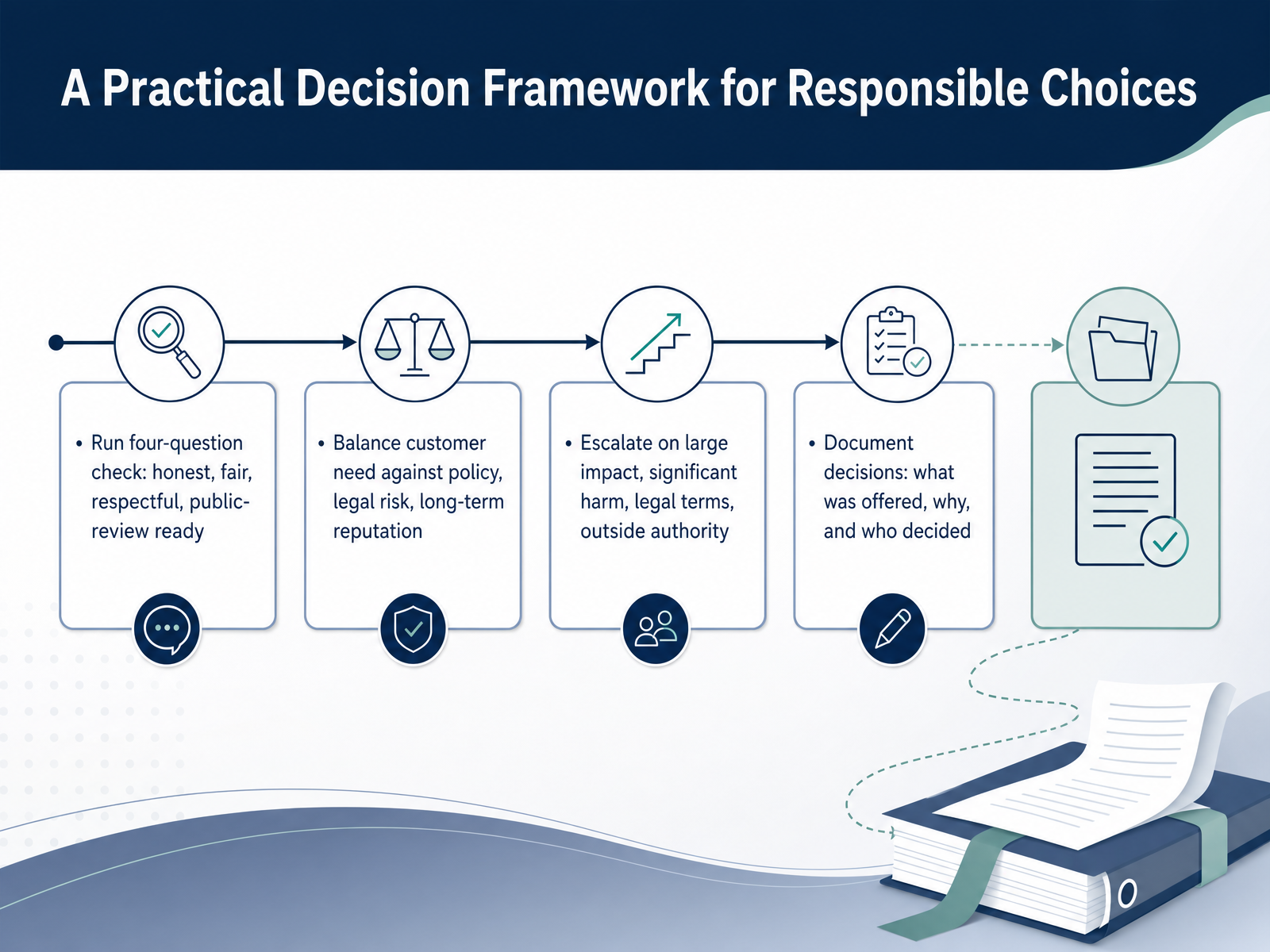
 - 05A Practical Decision Framework for Responsible ChoicesSo how do we turn principles into practice? A simple four-question check helps. Before you act, ask: is it honest? Is it fair? Is it respectful? And would you be comfortable if this decision was reviewed publicly? That last one is a great reality check. Next, weigh the customer's need against policy, legal risk, and your long-term reputation. Sometimes the policy is clear, but the spirit of it matters more than the letter. Know when to escalate. If the impact is large, the potential for harm is significant, or the request touches legal terms or goes beyond your authority, that is the time to bring in a supervisor or specialist. Escalation is not a failure, it is protecting the customer and the company. Finally, document your decisions. Write down what was offered, why it was offered, and who made the call. This creates a clear record that protects everyone and helps your team stay consistent. Good judgment is a habit. These steps make it a repeatable one. Next, we will look at how to communicate responsibly when the pressure is on.
 insight7.iosmith.aiacddirect.com+22 min
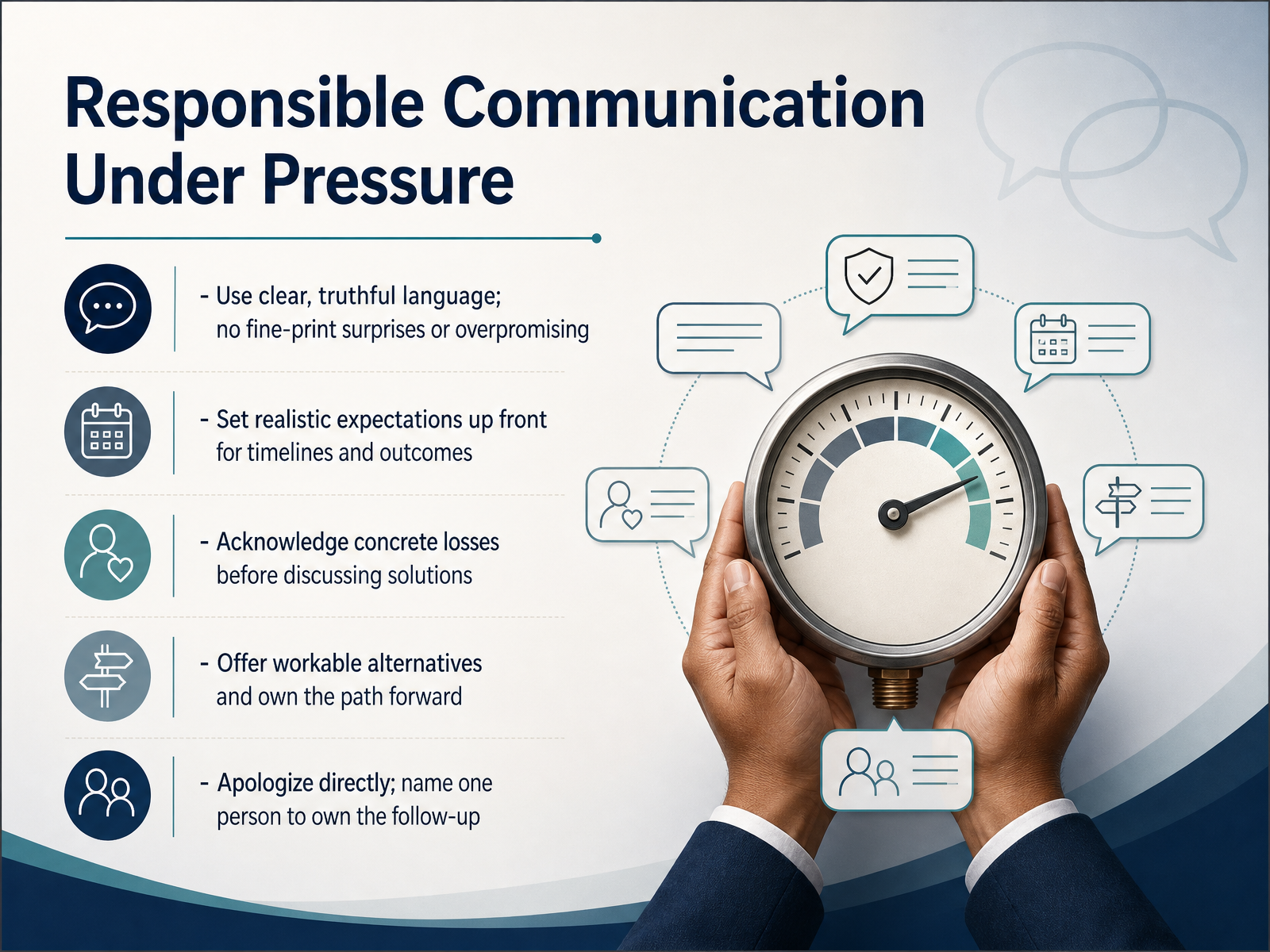
 - 06Responsible Communication Under PressureLet’s shift into how we communicate when the pressure is on. This is where responsible practice really shows up. Use language that is clear and truthful, even when the news is not good. No fine-print surprises, no overpromising. Set realistic expectations up front about timelines and outcomes, so the customer is never left guessing. When something has gone wrong, acknowledge the concrete loss before you talk solutions. Name what was lost, whether it was time, money, or a missed deadline. That proves you understand. Then offer workable alternatives and own the path forward. Be direct about what you can do, not just what you cannot. And apologize with sincerity. Avoid the caveats that drain meaning from the words. Name one person who will own the follow-up, and make sure that person follows through. Even in a difficult conversation, this approach keeps your credibility intact and gives the customer a way to trust the resolution. Coming up next, we will look at how to handle customer data responsibly. After all, trust is built in these moments and protected in the details.
 cx-excellence.com1 min
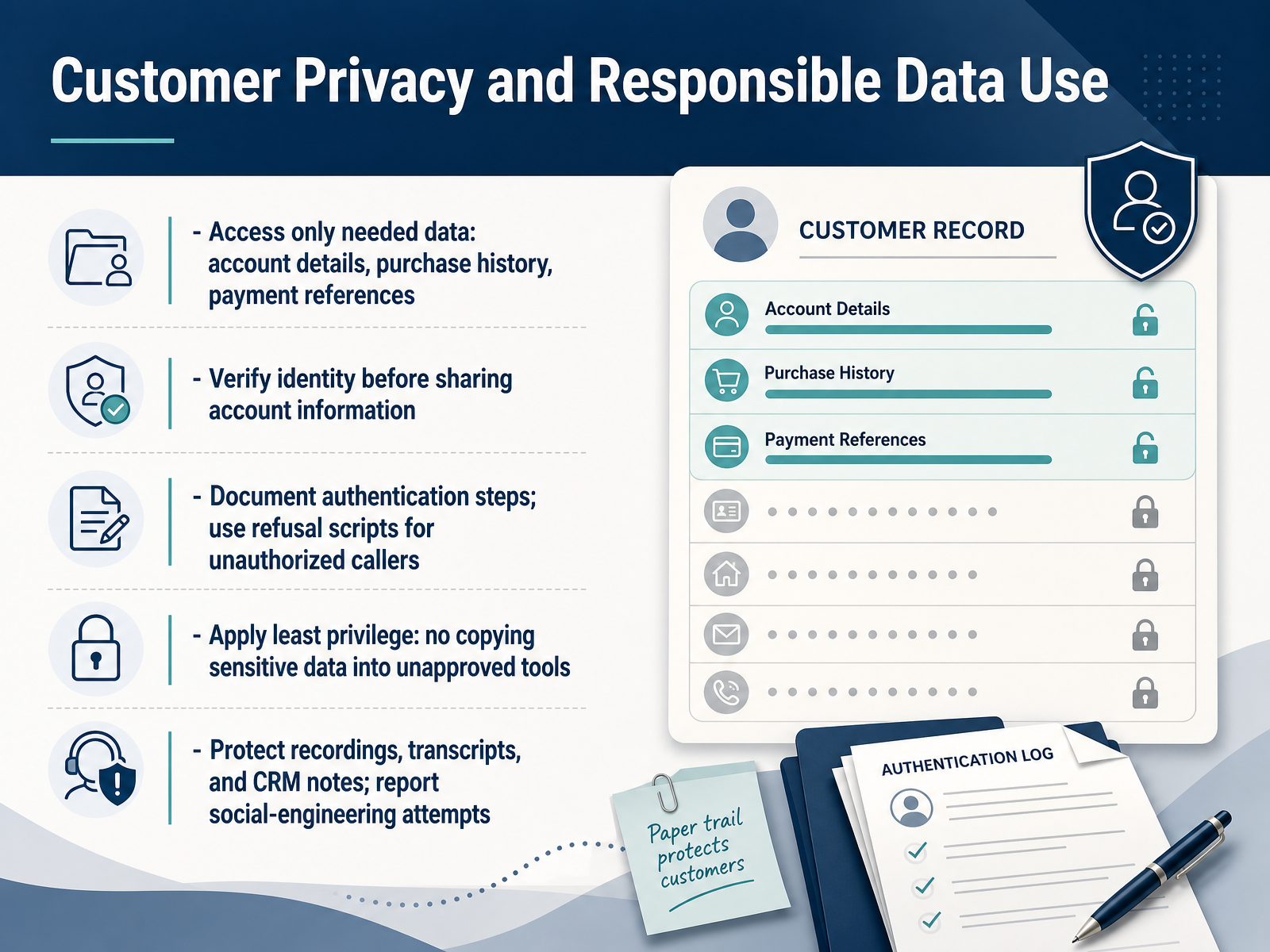
 - 07Customer Privacy and Responsible Data UseNow let’s talk about privacy on the front line. Access only the data you need for that call, whether it’s account details, purchase history, or payment references. If a customer asks for information, verify their identity first. Document your authentication steps and keep a refusal script ready for callers who can’t pass verification. Apply least privilege, meaning don’t copy sensitive data into unapproved tools. Protect recordings, transcripts, and CRM notes like you would cash, and report any social engineering attempts immediately. These habits keep customers safe and build lasting trust.
 1 min
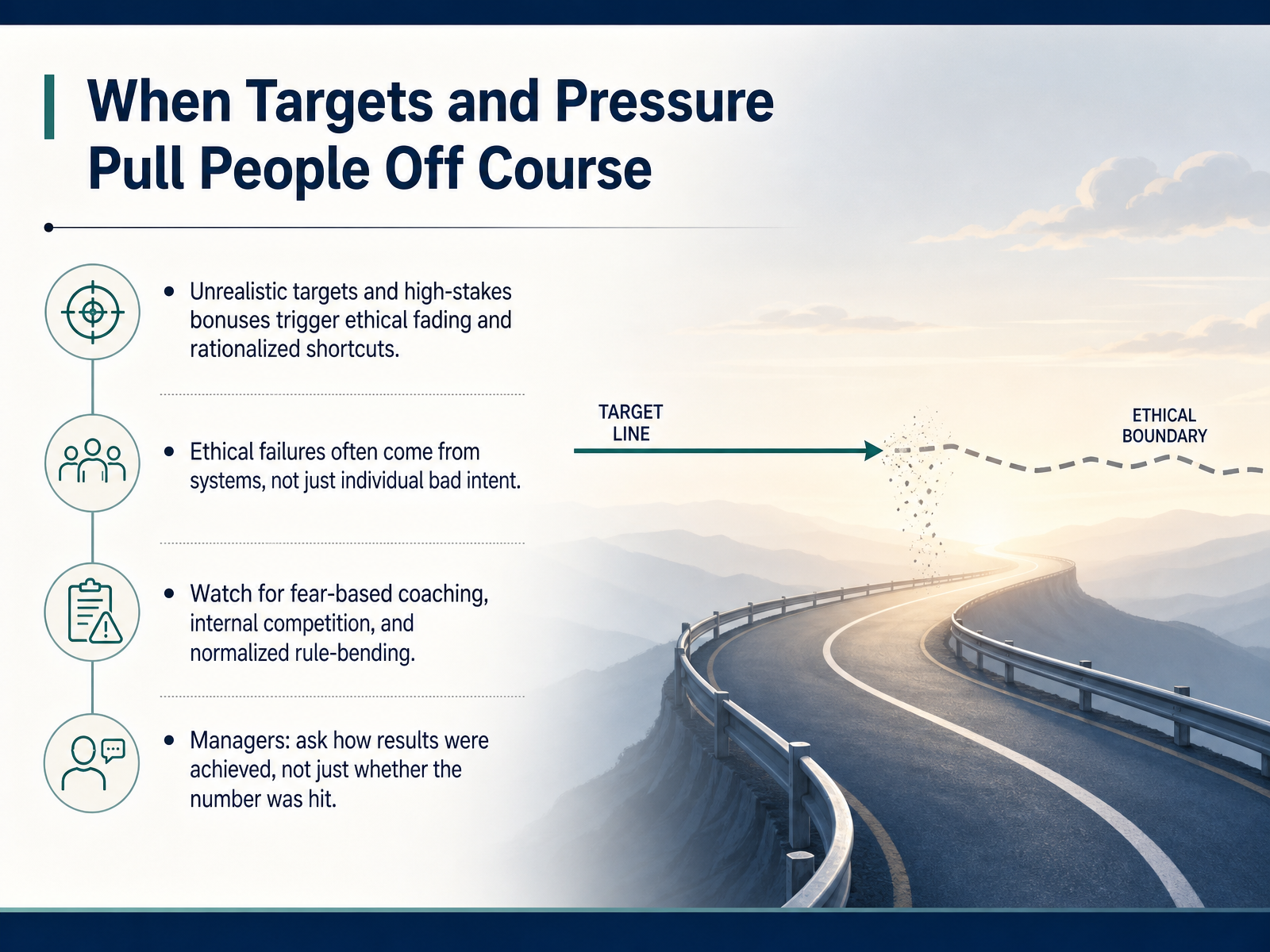
1 min - 08When Targets and Pressure Pull People Off CourseLet’s talk about what happens when targets and pressure start to pull people off course. Unrealistic goals and high-stakes bonuses can quietly trigger something called ethical fading—where the line between right and wrong starts to blur. It’s rarely about bad people. More often, it’s the system that nudges good people toward shortcuts. Think about a customer service rep who’s told to hit a certain number of sales or resolutions each day. When the target feels impossible, they might start bending policy, hiding fees, or rushing customers off the phone. And if a manager only celebrates the person who hit the number—without asking how—that sends a clear message. Watch for the warning signs: fear-based coaching, internal competition that pits teammates against each other, and a culture where bending the rules has become normal. For managers, the key question isn’t just whether the number was hit. It’s how the result was achieved. That’s what protects trust, consistency, and the team’s credibility in the long run. So when you review performance, make it a habit to ask about the process, not just the outcome. Now, let’s move into some frontline scenarios—support, returns, and those tricky requests that test our principles in real time.
 2 min
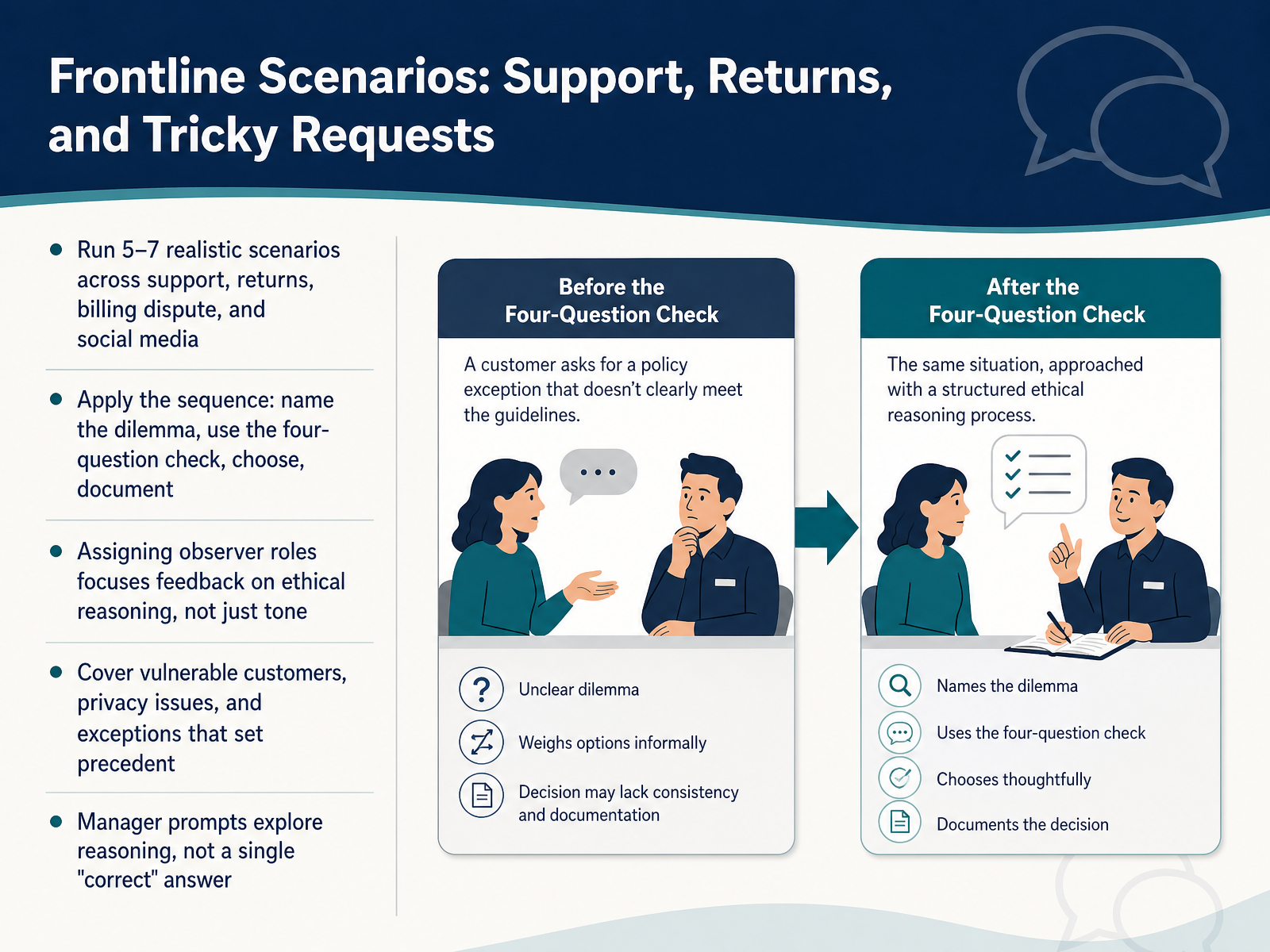
2 min - 09Frontline Scenarios: Support, Returns, and Tricky RequestsNow let's put real situations on the table. For this part of the session, work through five to seven realistic scenarios covering support, returns, billing disputes, and social media. The goal isn't a scripted response; it's to practice a sequence. First, name the dilemma. Then apply the four-question check, decide on your action, and document your reasoning. Assigning observer roles changes the focus. Instead of judging tone, observers can zero in on ethical reasoning. Include scenarios that involve vulnerable customers, privacy concerns, and exception requests that might set a precedent. For example, an exception for one customer can quickly become an unspoken policy for everyone. When you debrief, ask probing questions about why a choice was made rather than looking for a single correct answer. The real value comes from exploring the trade-offs behind the decision.
 ignited.globalpmc.ncbi.nlm.nih.govbluetweak.com+22 min
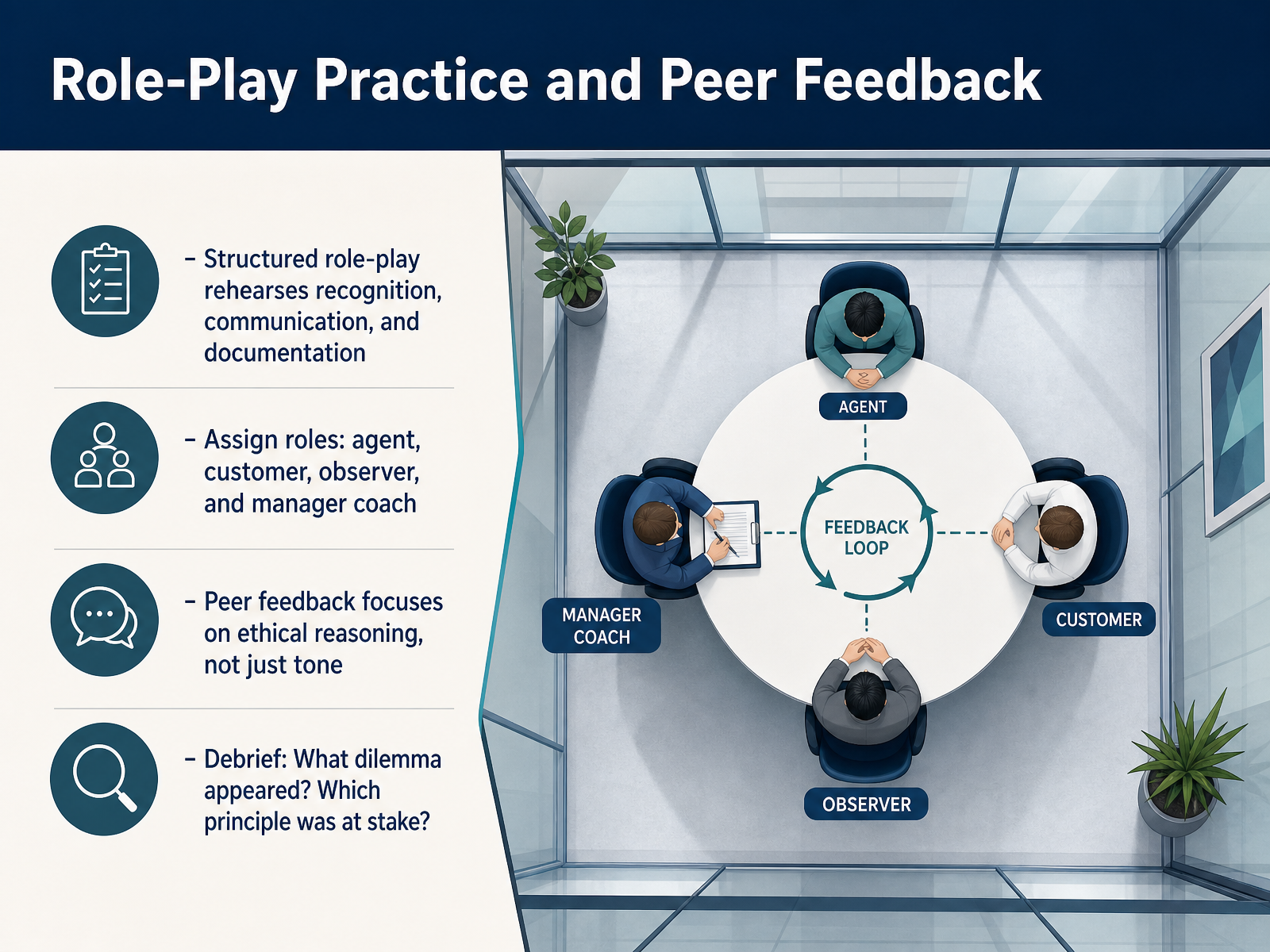
 - 10Role-Play Practice and Peer FeedbackLet’s turn the principles into practice. In this exercise, the scenario itself matters less than what the team notices in the moment. Assign four roles: the agent, the customer, an observer, and a manager coach. The observer’s job is not to critique tone, but to track where ethical reasoning kicks in or stalls. After the exchange, debrief with three questions. First, what dilemma actually surfaced? Often, it’s not the one written in the brief. Second, which principle was at stake—transparency, fairness, or respecting a boundary? Third, what made the response defensible or questionable? Keep the feedback specific and non-judgmental. For example, instead of saying 'you sounded pushy,' say 'the customer signaled hesitation twice before you offered the alternative.' That shifts the focus from performance to judgment. Remember, the goal here is not a perfect script. It’s building the habit of pausing, naming the tension, and choosing a response you could explain to a supervisor. Now, from practice, let’s look at how coaching conversations can reinforce those same decisions on the floor.
 1 min
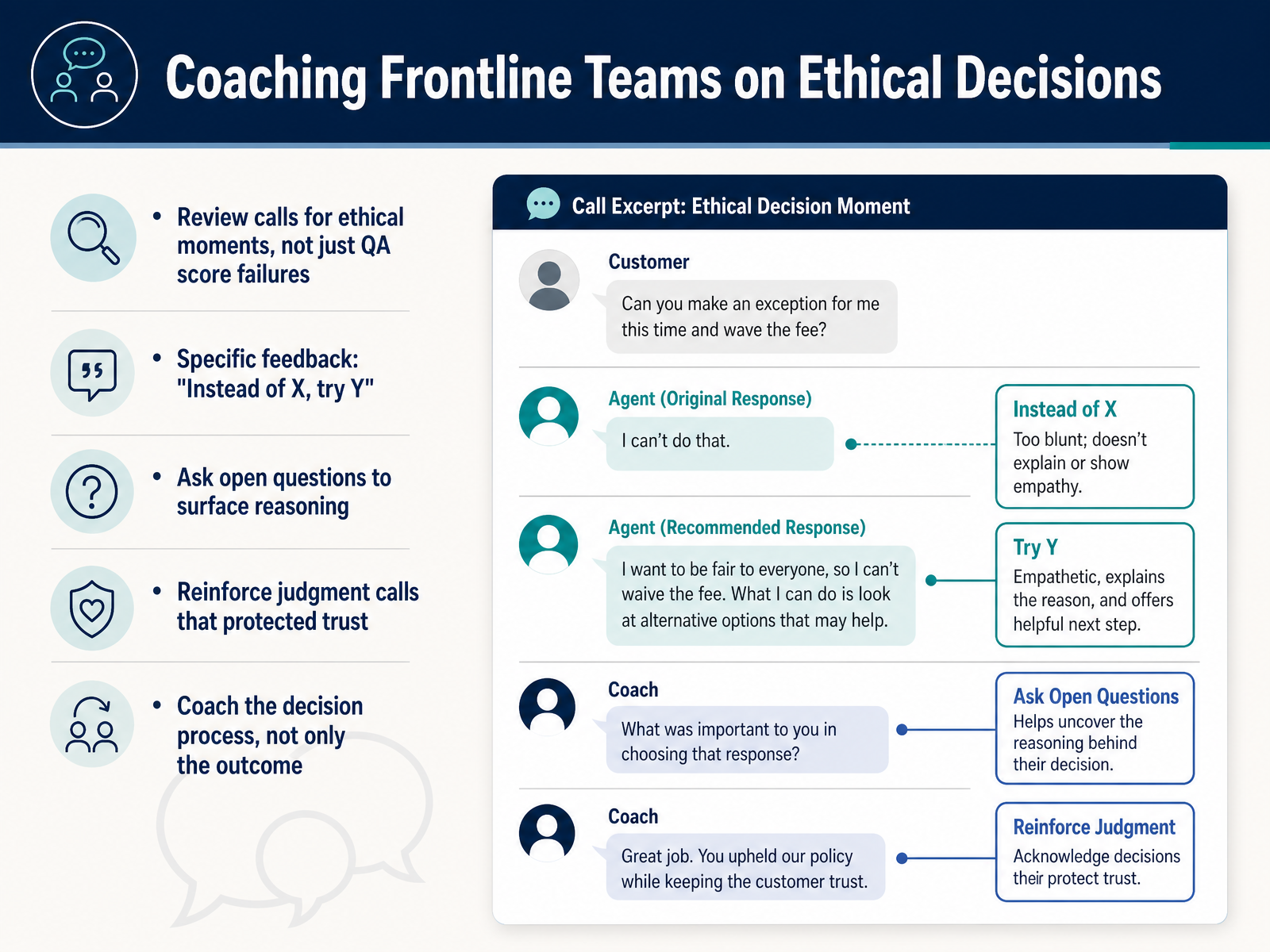
1 min - 11Coaching Frontline Teams on Ethical DecisionsLet's talk about coaching. Reviews are a great place to build ethical muscle, not just catch mistakes. When you spot an ethical moment, review calls for those moments, not just QA failures. Give specific feedback with the "instead of X, try Y" format. That makes the guidance actionable. Ask open questions to surface their reasoning, like, "What were you weighing there?" This helps them think through the next call themselves. Reinforce the judgment calls that protected trust, even if the outcome wasn't perfect. Coach the decision process, not just the result. This shifts the focus from what happened to why they chose that path. It builds confidence and consistency. Next, we'll look at building an ethical service culture.
 insight7.iosmith.aiacddirect.com+21 min
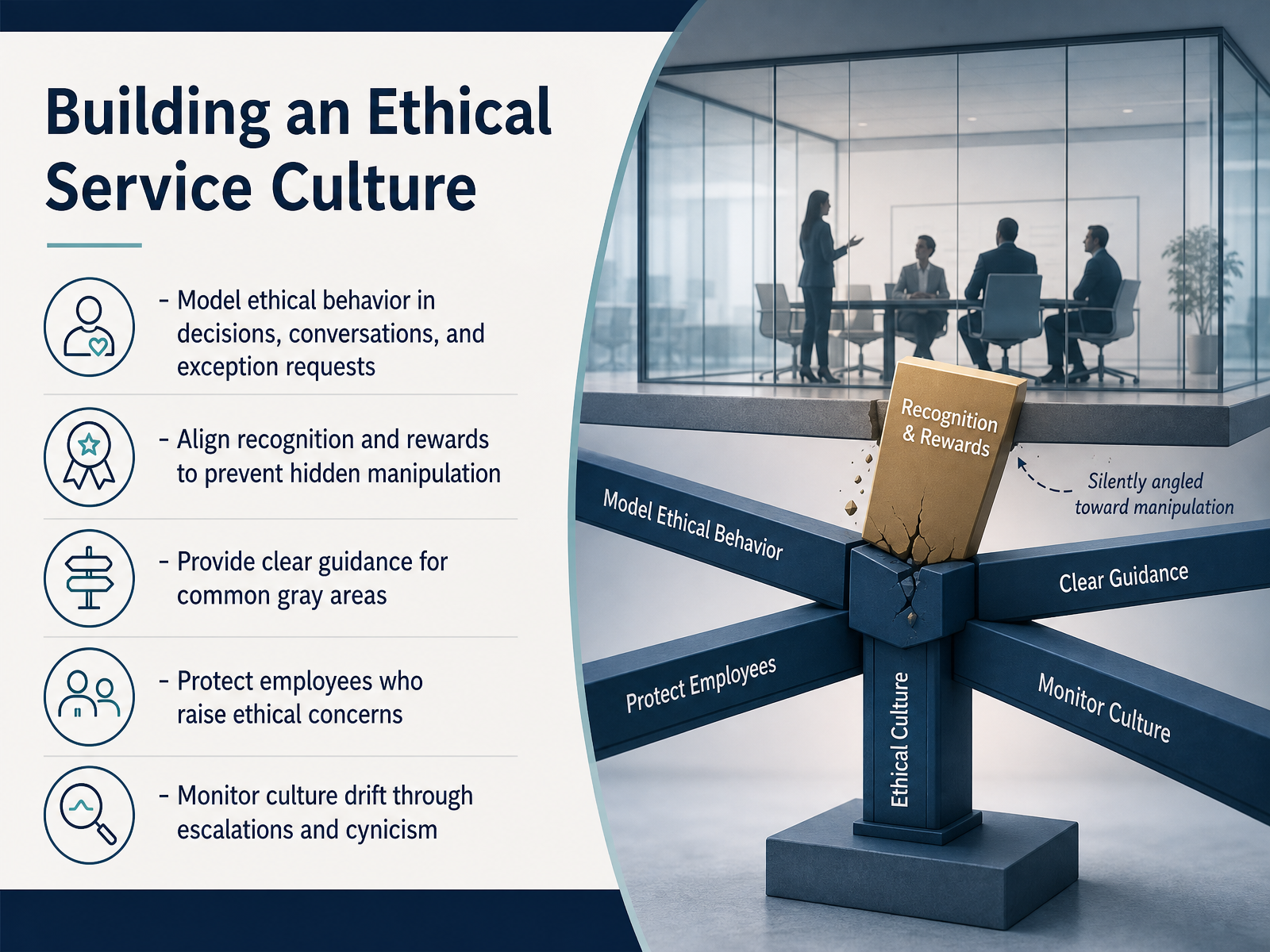
 - 12Building an Ethical Service CultureSo how does an ethical service culture actually take root? It starts with modeling. When managers make decisions, handle exceptions, or talk through tricky requests, the team watches. Those moments carry more weight than any poster about values. People mirror what they see, not what they hear.
Next, check the reward system. If recognition only tracks sales numbers or speedy resolutions, it quietly invites shortcuts. Tie rewards to how outcomes are reached, not just the outcome itself. That removes a hidden incentive to bend the rules.
Gray areas also need clear guidance. Teams deal with vague policy edges daily, so give them a reference point. A simple framework they can use under pressure beats a hundred-page manual. When they know the boundary, they can move with confidence.
Protect the person who raises a concern. One safe conversation shapes trust more than a dozen training sessions. And keep an eye on culture drift. Escalation patterns, cynicism in team meetings, or a sudden drop in coaching quality all signal that something has shifted. Catch it early, and hold steady. Culture gets built in moments like these, and it compounds every day.
Next, we will look at turning all of this into daily practice.
 1 min
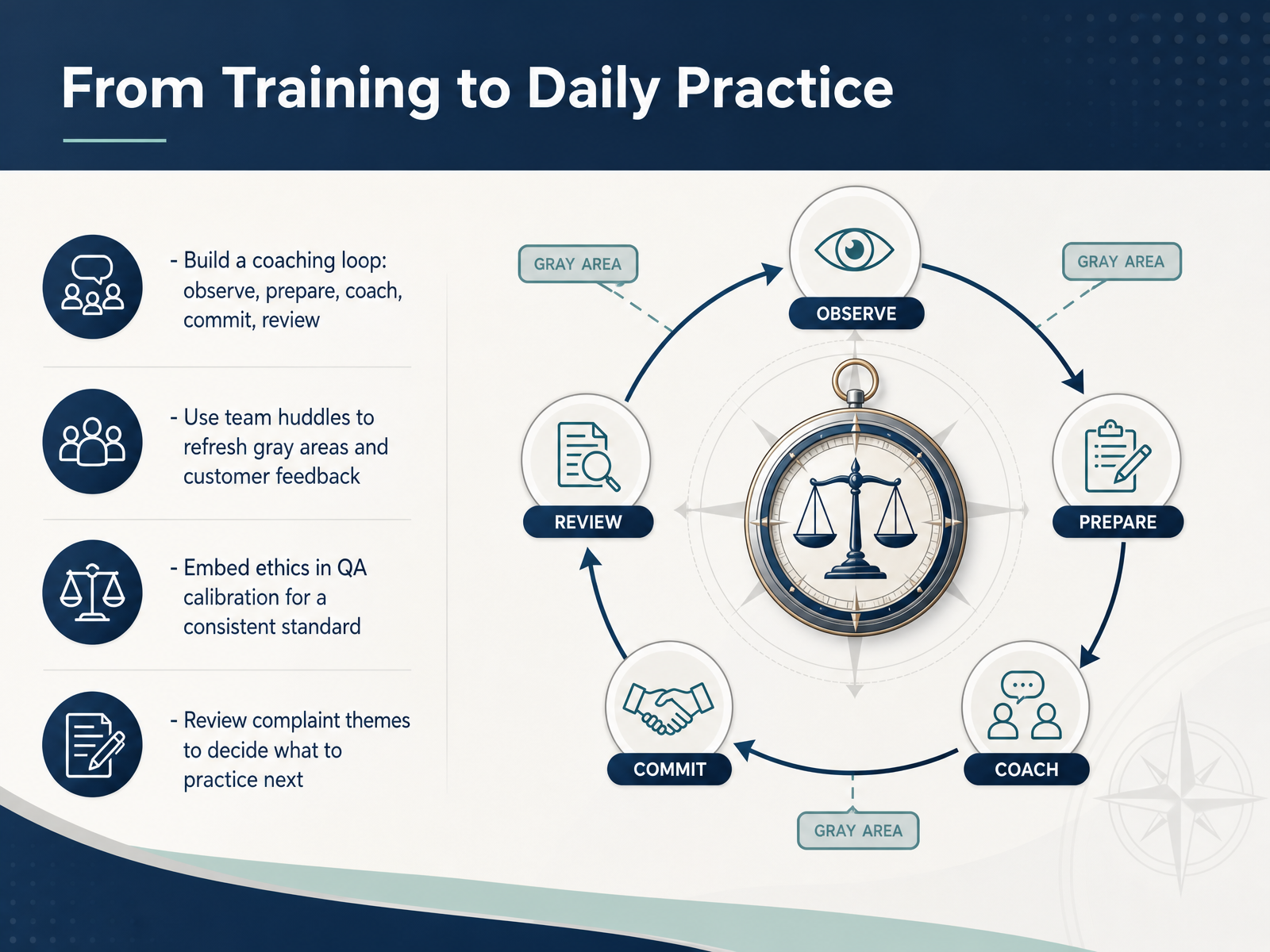
1 min - 13From Training to Daily PracticeSo how do we keep ethics alive after today's session? It comes down to building a simple coaching loop. Observe real interactions, prepare specific feedback, coach in a two-way conversation, commit to one focused action, and then review progress together. That rhythm turns training into daily habit. Use team huddles to refresh gray areas and bring in real customer feedback. A quick scenario about data privacy or policy disclosure can spark more useful discussion than a lecture. Embed ethics into your QA calibration, so every scorecard reflects the same standard. If one reviewer values transparency more than another, the team notices. And review complaint themes regularly. They often point to the next skill to practice, whether that's clearer language on fees or more honest timelines. Keep the loop moving, and ethics becomes part of how the team works, not just what they learned in a session. Next, let's turn this into a concrete action plan and next steps.
 1 min
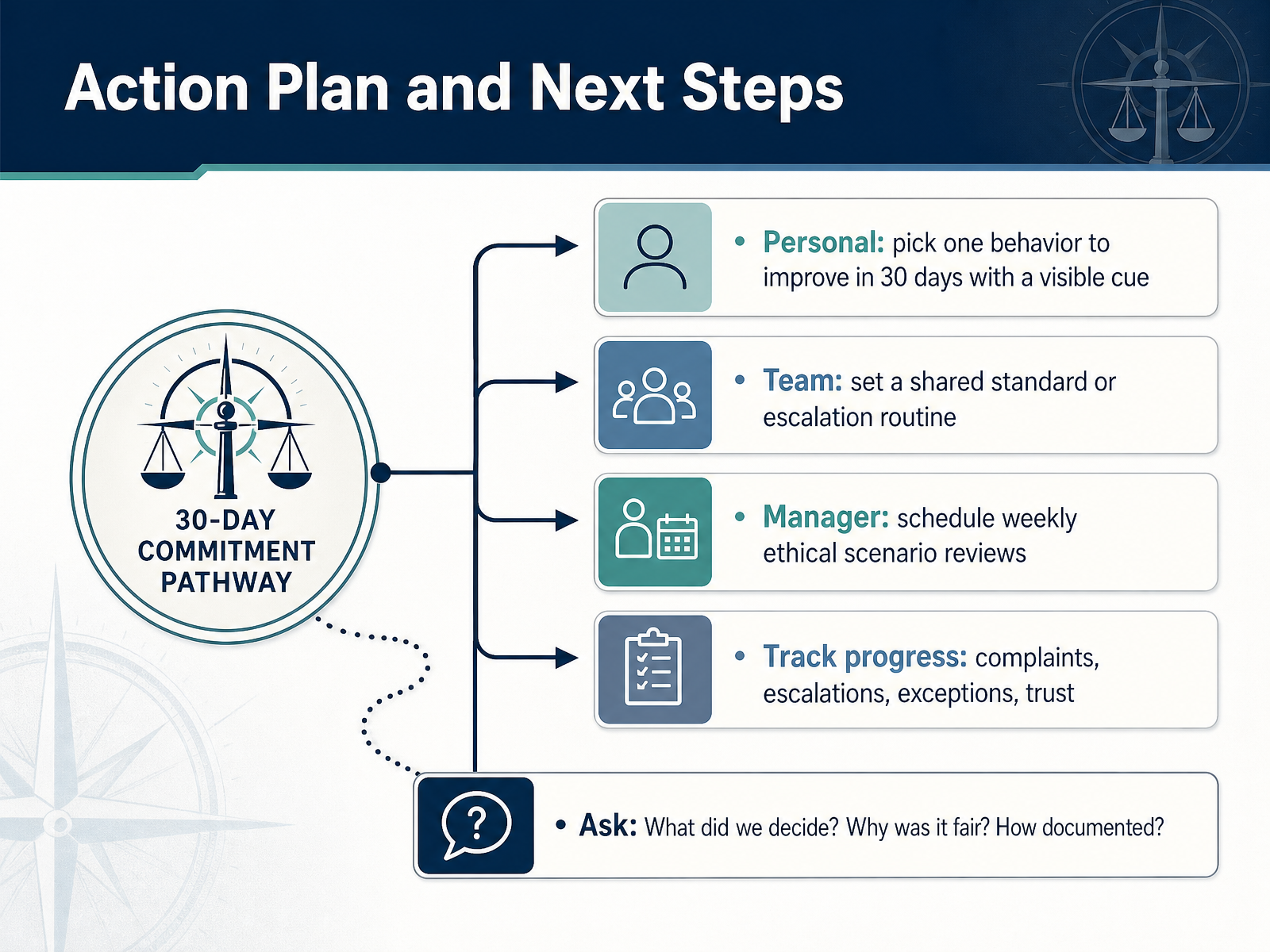
1 min - 14Action Plan and Next StepsSo, where do we go from here? Let's make this practical. Pick one behavior to improve over the next thirty days. Maybe it's pausing before you escalate, or being more transparent about a policy. Put a visible cue somewhere you'll see it daily. As a team, set a shared standard or agree on an escalation routine, so dealing with gray areas feels consistent. If you're a manager, schedule a short weekly review of real ethical scenarios. Use actual cases from the week. Track what matters—complaints, escalations, exceptions, and trust. And keep asking three simple questions when you review a decision. What did we decide? Why was it fair? And how did we document it? Those questions keep your reasoning honest and consistent. Ethics isn't a one-time conversation. It's built through small, daily choices. Thank you for taking this seriously. You already have the experience. Now you have a plan to keep it sharp.
 2 min
2 min
Take the deck with you
Download this course as a file — free, no sign-up needed.
- PDF handoutEvery slide page, ready to print or share.15 pages · 3.6 MBDownload
- Narrated PowerPointThe deck that presents itself — every slide carries the digital human's narration video.15 pages · 13.2 MBDownload
- PowerPoint slidesThe full deck as a .pptx — open it in PowerPoint, Keynote, or Google Slides.15 pages · 3.5 MBDownload
Free to use in your own training — please keep the PersonWise credit page at the end.
Have your own deck? Turn it into a course
Sources consulted
Web sources consulted while building this course.
- How to develop your Customer Service ethics - Lime Connect — connect.lime-technologies.com
- How TTEC Does Business — ttec.com
- COEBC — concentrix.com
- Code of Business Conduct — wiproenterprises.com
- MSPA Code of Professional Standards & Ethics Agreement for Members (MUST BE SIGNED BY AUTHORIZED MSPA MEMBER) — mspa-ea.org
- Right From the Start: The Association Between Ethical Leadership, Trust Primacy, and Customer Loyalty — ideas.repec.org
- Customer Service Ethics: A Manager's Guide to Doing Right — bluetweak.com
- How does the Perceived Ethicality of Corporate Services Brands Influence Loyalty and Positive Word-of-Mouth? Analyzing the Roles of Empathy, Affective Commitment, and Perceived Quality — ideas.repec.org
- Exploring Ethical and Emotional Dimensions of Customer Value in Financial Services through Employee-Customer Dynamics — doi.org
- Does CSR Help to Retain Customers in a Service Company? — mdpi.com
- Good Samaritan or Poor Performer? | IgnitEd — ignited.global
- Effective practices for improving service professionals' ethical ... — pmc.ncbi.nlm.nih.gov
- Case Study: When Policy Collides With Humanity: The Pharmacist and the EpiPen Dilemma - AbiEdu — abiedu.com
- Ethical Problems Front-Line Managers Are Facing — study.com
- Human–AI escalation playbooks for high-risk customer interactions — insight7.io
- Building an Effective Customer Service Escalation ... — smith.ai
- https://acddirect.com/ethical-ai-in-customer-service-a-practical-playbook/ — acddirect.com
- A Guide to AI Ethics in Customer Service — datamark.net
- Ethical AI Agents in Customer Journeys: A Practical Framework — womenxai.com
- De-escalation in Real Time: Turning Angry Customers into Loyal Ones — cx-excellence.com