SEO Keywords: Types, Patterns, Examples
Begin
14 pages · ~28 min
SEO Keywords: Types, Patterns, Examples
Learn how to identify, categorize, and leverage different keyword types and patterns in SEO to improve search rankings and attract the right audience.
What you’ll learn
- 01Keywords in SEO: Types, Patterns, and ExamplesWelcome. If you create content for a business, this course is for you. Today, we're going to talk about keywords in SEO. and I want to start by clearing something up. Keywords are not dead. What's changed is what a keyword actually is. It's no longer just a phrase you repeat on a page. In twenty twenty six, a keyword is really a bridge. It connects the words your customer uses with the problems your business solves. And search has changed around us. AI now rewards questions, clear ideas, and genuine intent. Not exact match strings. Think about a local bakery. People don't just type bread. They ask, which bakery near me makes a good sourdough for a beginner? That full question is a modern keyword signal. So in this course, we will learn a practical workflow. You will find keywords, classify them by intent, prioritize what matters for revenue, and place them naturally in your content. My goal is simple. By the end, you will have one repeatable process your small team can use every month. It's not a massive spreadsheet. It's a short, clear plan. Next, let's look at what the word keyword really means in modern SEO.rankai.ailogoswebdesigns.comtabula.agency+22 min
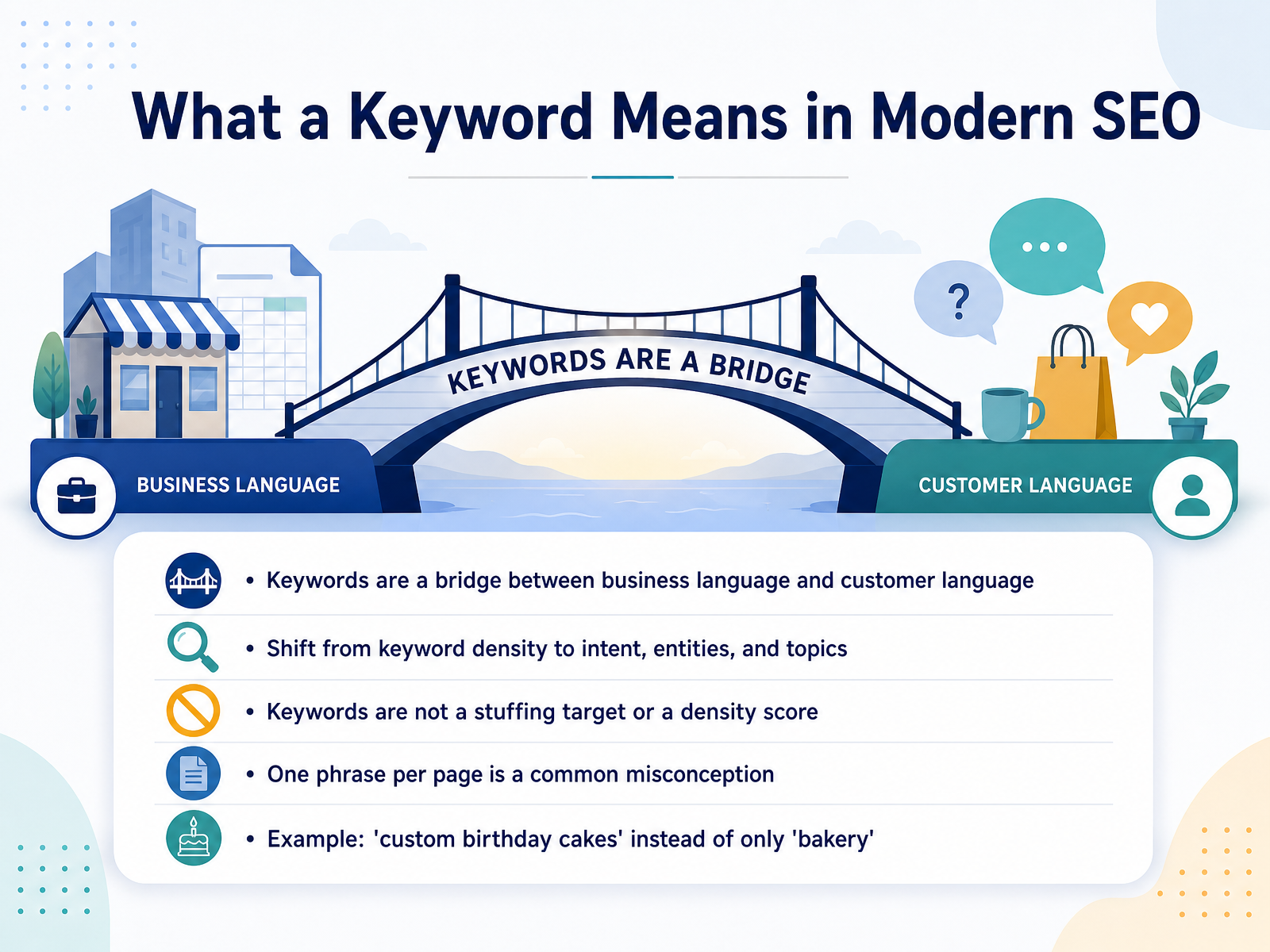
- 02What a Keyword Means in Modern SEONow, let's get clear on what a keyword actually means today. Think of a keyword as a bridge. On one side, you have the words you use to describe your business. On the other side, you have the words your customers actually type when they're looking for help. A keyword is just the phrase that connects those two worlds. For a long time, people treated keywords like a math equation. You counted how many times a phrase appeared on a page, aimed for a certain percentage, and assumed one page could only rank for one exact phrase. That is outdated. Modern search is not about density. It is about intent. Search engines are trying to understand the meaning behind the words, the context, and the topic. So, instead of stuffing a page with the word 'bakery,' you would focus on the phrase 'custom birthday cakes.' That phrase tells a much richer story. It tells us what the product is, when it is needed, and who it is for. That is the shift. Keywords are no longer a stuffing target. They are a signal to describe what your page is truly about. Up next, we will look at how search engines and AI have completely changed the way we use these signals.
 searchenginejournal.comwordstream.comwordstream.com+22 min
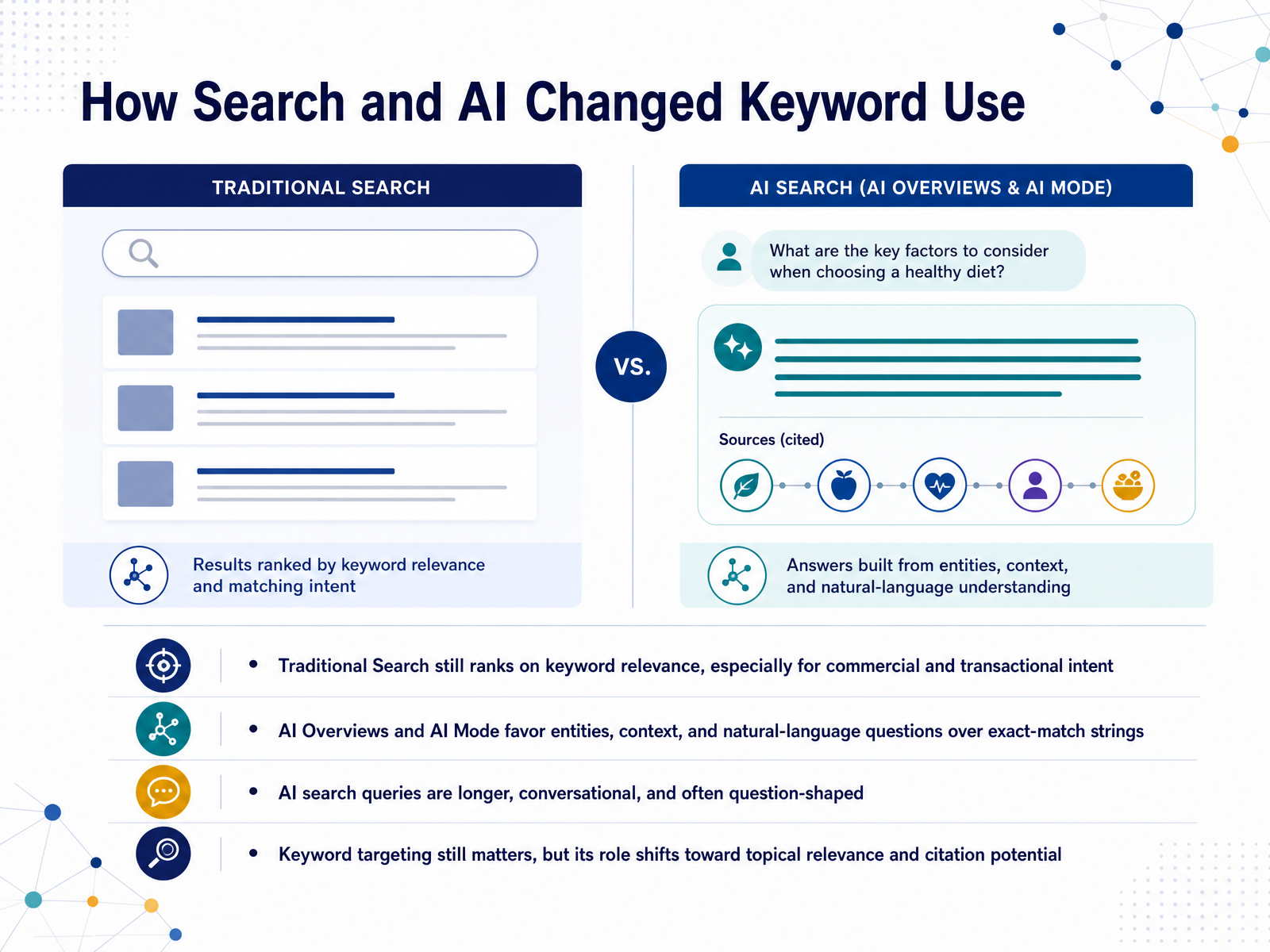
 - 03How Search and AI Changed Keyword UseSo, search has evolved, and the way keywords work has evolved with it. In traditional search, exact keyword relevance still matters a lot, especially for commercial and transactional searches. Think of someone typing "emergency plumber Austin" or "buy running shoes online." That direct match still helps Google understand when your page is relevant. But now we have AI Overviews and AI Mode. They care less about the exact words and more about the entities, the context, and the natural question behind the search. AI queries are getting longer and more conversational. Instead of "best running shoes," someone might ask, "I'm training for my first five K and have flat feet, which running shoes should I start with?" It is question-shaped. So keyword targeting is not dead. It is just shifting. Your keywords now serve as context signals, helping search engines understand what your content covers so they can decide if it is a good answer, and a good citation. The big takeaway here is to move from exact-match thinking toward topical relevance. Focus on answering the bigger question behind every keyword. Next, let's look at the classic keyword types by search intent.
 searchenginejournal.comwordstream.comwordstream.com+21 min
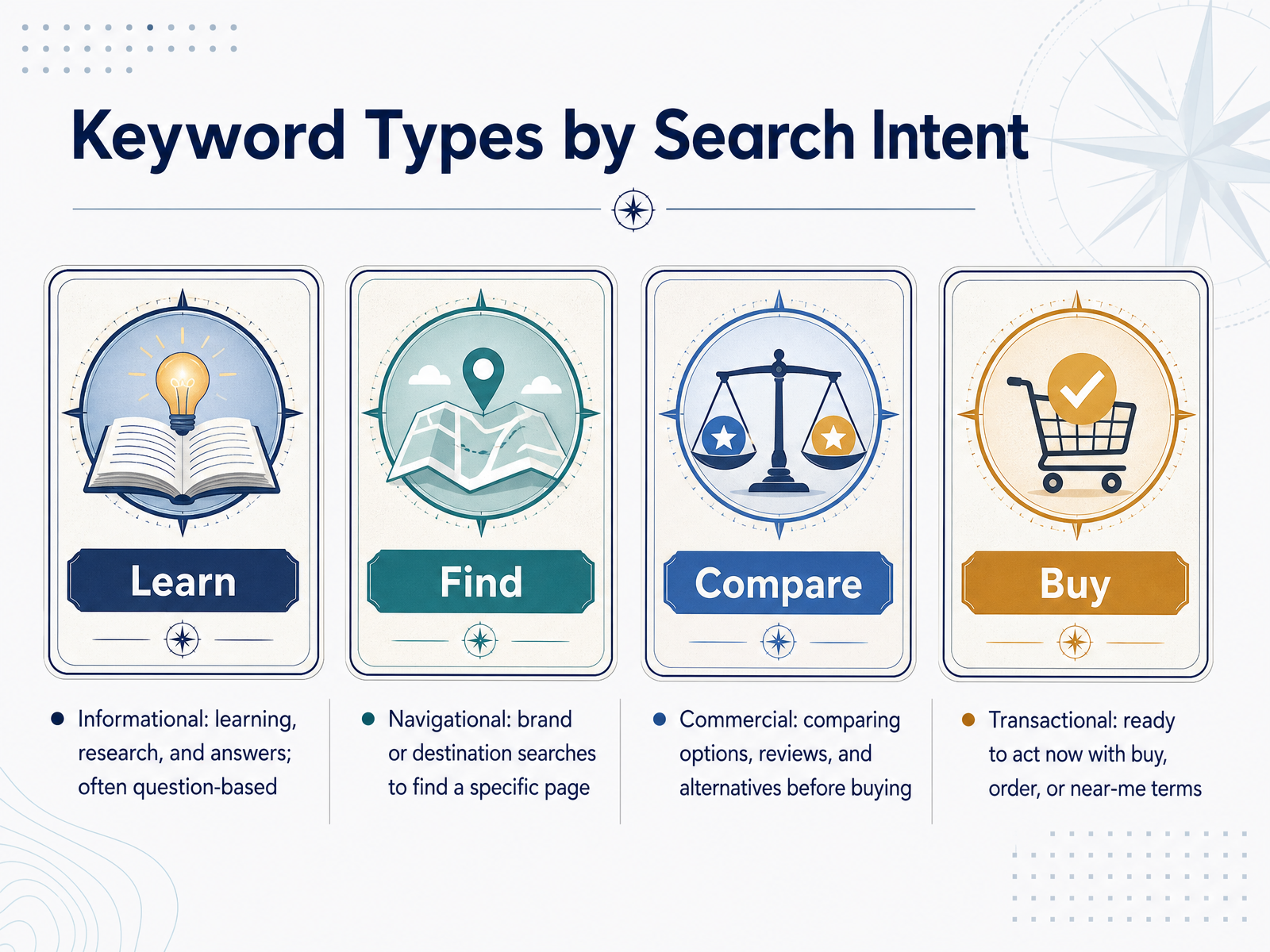
 - 04Keyword Types by Search IntentNow, let's look at the four types of keywords based on what the searcher actually wants. This is often called search intent. First, we have informational keywords. These are for learning, research, and getting answers. Think of searches like how to bake sourdough bread or what is SEO. Navigational keywords are next. These are simply brand or destination searches. Someone types in Facebook login or your bakery's name because they want to find a specific page. Then we have commercial keywords. This is the comparison stage. A searcher might look for best running shoes for flat feet or Trello versus Asana. They are close to buying, but they are still doing their homework. Finally, transactional keywords are the action takers. These include words like buy, order, or near me. For example, order birthday cake near me. These people are ready to act right now. So, what should you take away? Match your content to the intent. An informational blog post is perfect for the word why, but a product page is best for buy. Speaking of matching content, let's see how these intents map to your customer journey.
 moz.comsemrush.comahrefs.com+21 min
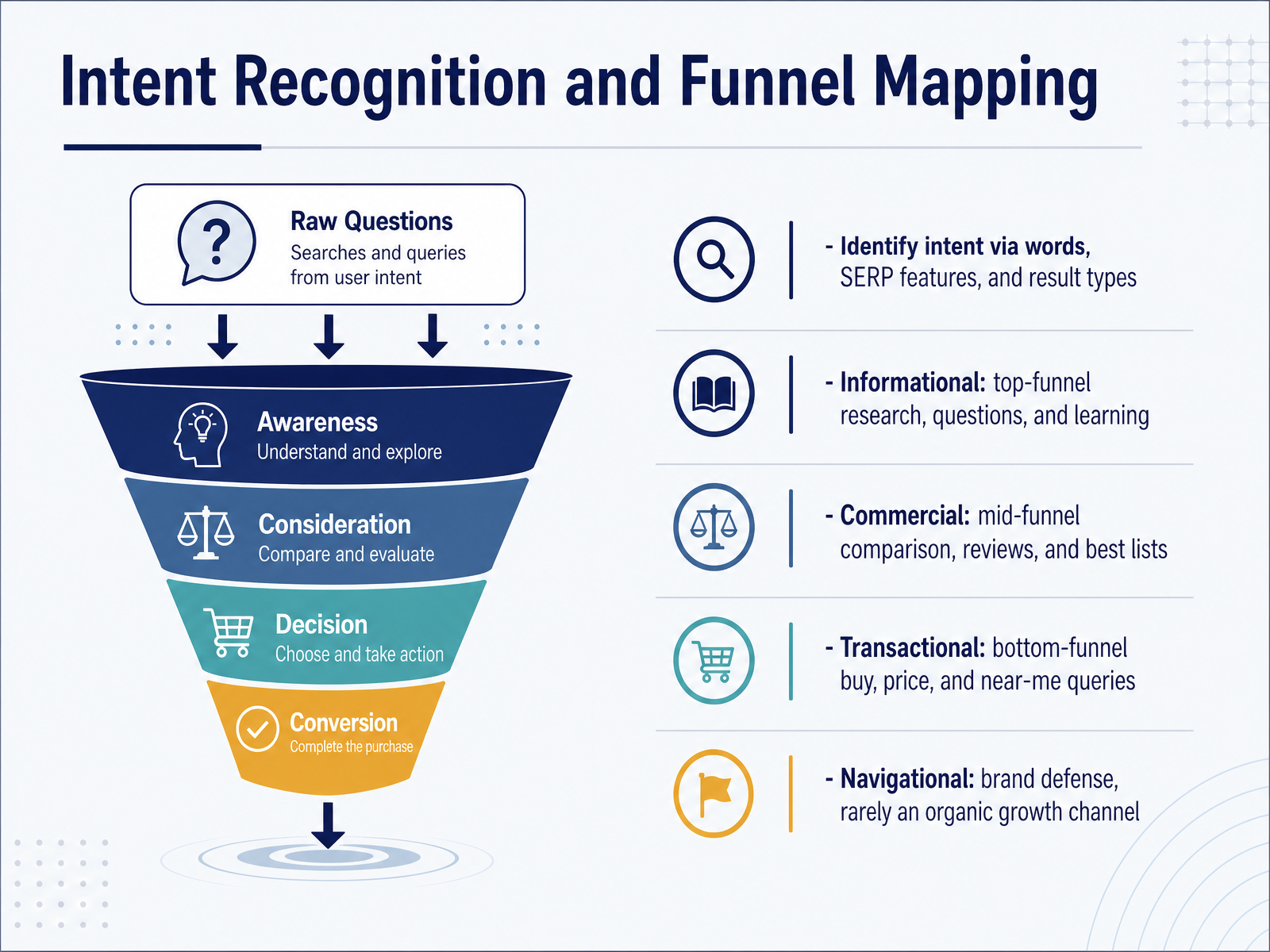
 - 05Intent Recognition and Funnel MappingNow let's talk about what someone actually wants when they type a query. That's search intent, and mapping it to your funnel is where keywords start working for you. First, informational intent. This is top of funnel research. Think of someone searching how to store fresh bread because they bought from a local bakery. They want to learn, not buy yet. Next, commercial intent. This is mid funnel. Searchers are comparing options and reading reviews, like a query for best stand mixer for sourdough. They're close to deciding. Then we have transactional intent, the bottom of the funnel. These searchers are ready to act, using words like buy, price, or near me. For example, order birthday cake downtown. That's a sale waiting to happen. Finally, navigational intent. That's a search for a specific brand or page, like your bakery's login portal. It's useful for protecting your own brand, but it's rarely a new growth channel for organic traffic. So as you look at your keyword list, ask yourself, is this person here to learn, to compare, or to buy? That simple question tells you exactly what content to create for them. Next, let's look at keyword patterns, specifically head, body, and long tail keywords.
 moz.comsemrush.comahrefs.com+22 min
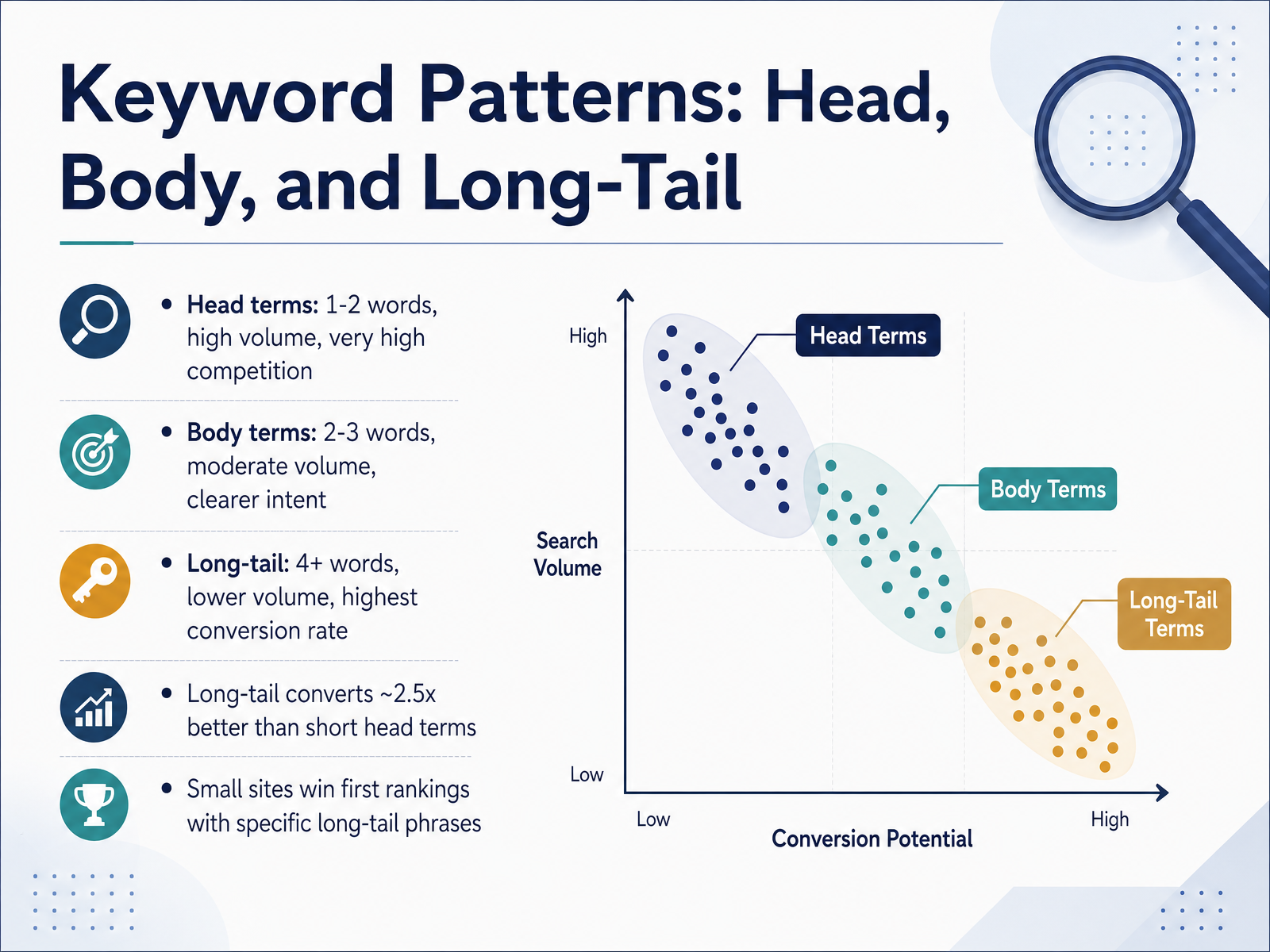
 - 06Keyword Patterns: Head, Body, and Long-TailNow let's talk about three keyword patterns you'll see everywhere: head terms, body terms, and long-tail keywords. Head terms are the big, broad ones, just one or two words, like cakes or running shoes. They get tons of searches, but everyone wants to rank for them, so the competition is fierce. Body terms are a bit more specific, usually two or three words, like gluten-free cakes or trail running shoes. They get decent volume, and the person searching is more likely to have a clear goal in mind. Then we have long-tail keywords. These are longer phrases, four or more words, like custom birthday cakes in Austin or best running shoes for flat feet. Each one gets fewer searches, but here's the key: these searchers know exactly what they want. In fact, long-tail searches convert about two and a half times better than short head terms. For small sites, that's where you win. Instead of fighting for 'bakery', you can rank for 'vegan gluten-free bakery in Chicago'. So when you plan content, think specific. Next, we'll look at how branded, non-branded, and local keyword patterns fit into this picture.
 rankai.ailogoswebdesigns.comtabula.agency+22 min
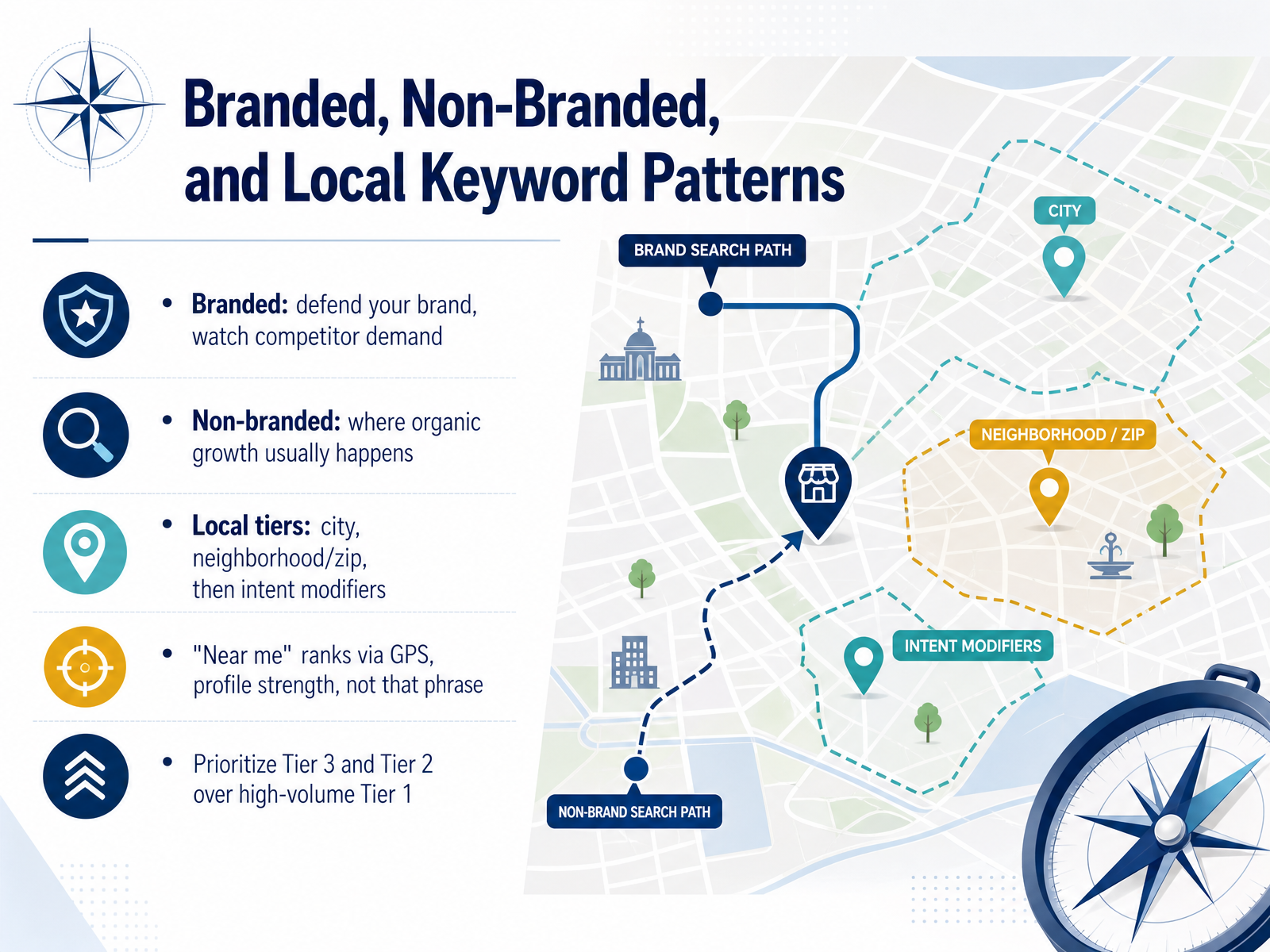
 - 07Branded, Non-Branded, and Local Keyword PatternsLet's break keyword patterns into three buckets that matter for most content teams. First, branded keywords use your own company name. These are about defending your turf in search results and watching whether demand is growing around competitor names too. Second, non-branded terms do not include any brand at all. This is usually where real organic growth happens, because you are reaching people who have not heard of you yet. Third, local keyword patterns work in tiers. Tier one is a service plus a city, like a bakery in Austin. Tier two drills down to a neighborhood or zip code, like a bakery in East Austin. Tier three adds an intent modifier, such as vegan birthday cake delivery today. Now, a quick note on the phrase near me. You do not rank for near me by stuffing that exact wording into your page. Google uses the searcher's location and your business profile strength to decide who shows up. So focus on having a complete, active profile and strong local signals. For most small teams, prioritize tier three and tier two terms over high-volume tier one keywords. The search volume is smaller, but these searchers are usually much closer to making a decision. Next, we will turn that into a practical discovery process for small teams.
 flento.ioseomytics.comseotopsecret.com+22 min
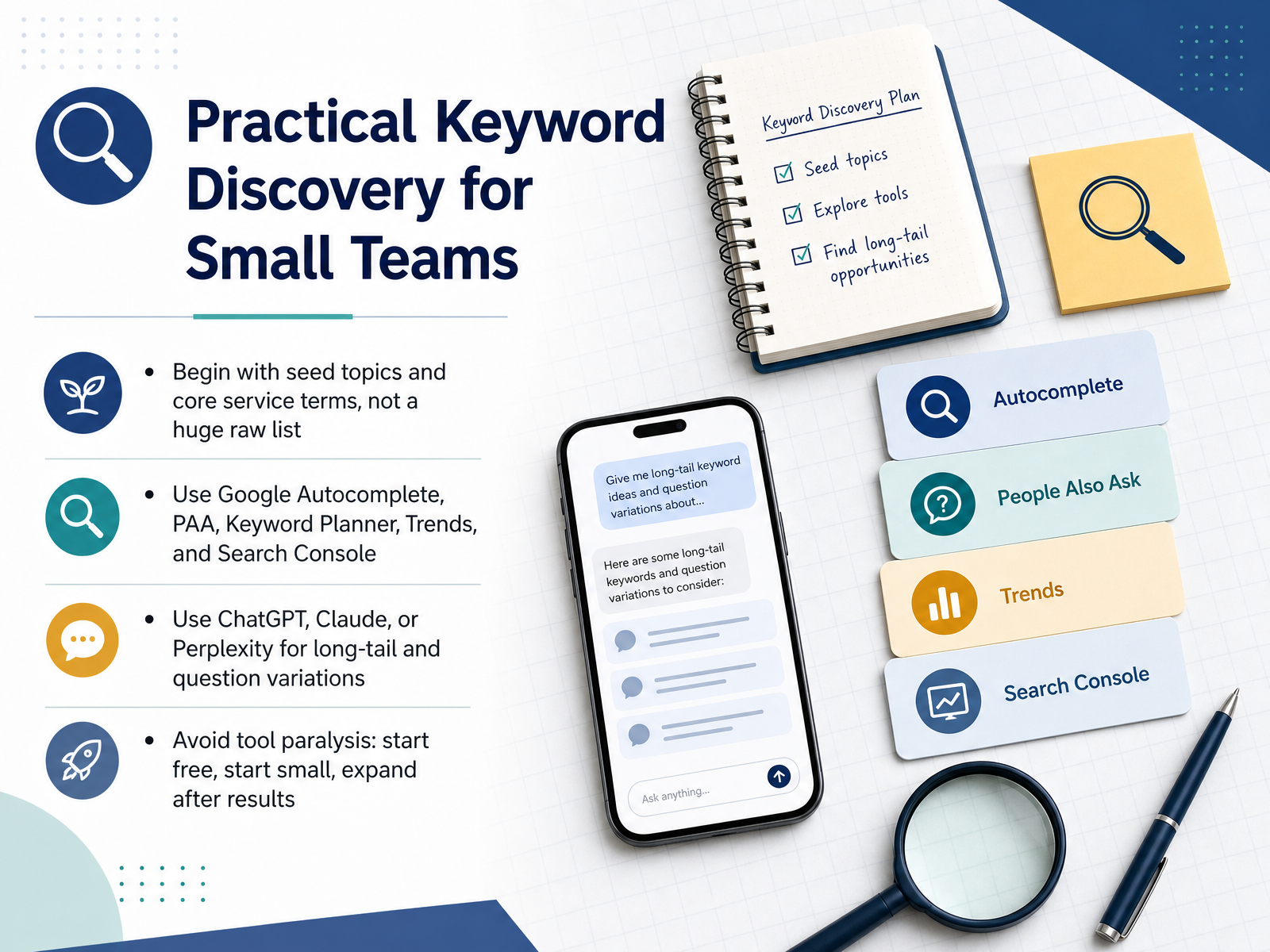
 - 08Practical Keyword Discovery for Small TeamsLet's talk about how a small team actually finds keywords without getting buried in data. Start with seed topics, not a giant raw list. Think about your core services and the problems you solve. For a local bakery, that might be custom cakes, gluten-free options, or wedding desserts. That list is your starting point. Next, use free tools first. Google Autocomplete and People Also Ask show you real questions people type. Google Keyword Planner gives you volume ranges. Google Trends shows seasonality. And if your site is already live, Search Console reveals queries you're almost ranking for. You can also use AI tools like ChatGPT, Claude, or Perplexity to generate long-tail variations and question formats from your seed list. They are great for brainstorming, but they won't confirm real search demand on their own. The biggest trap is tool paralysis. Start free, start small, maybe ten to twenty priority keywords, and expand only after you see results. Remember, the goal is a short, usable plan, not a spreadsheet with five hundred rows you never act on. Next, let's turn that plan into something structured with a lightweight keyword spreadsheet.
 rankai.ailogoswebdesigns.comtabula.agency+21 min
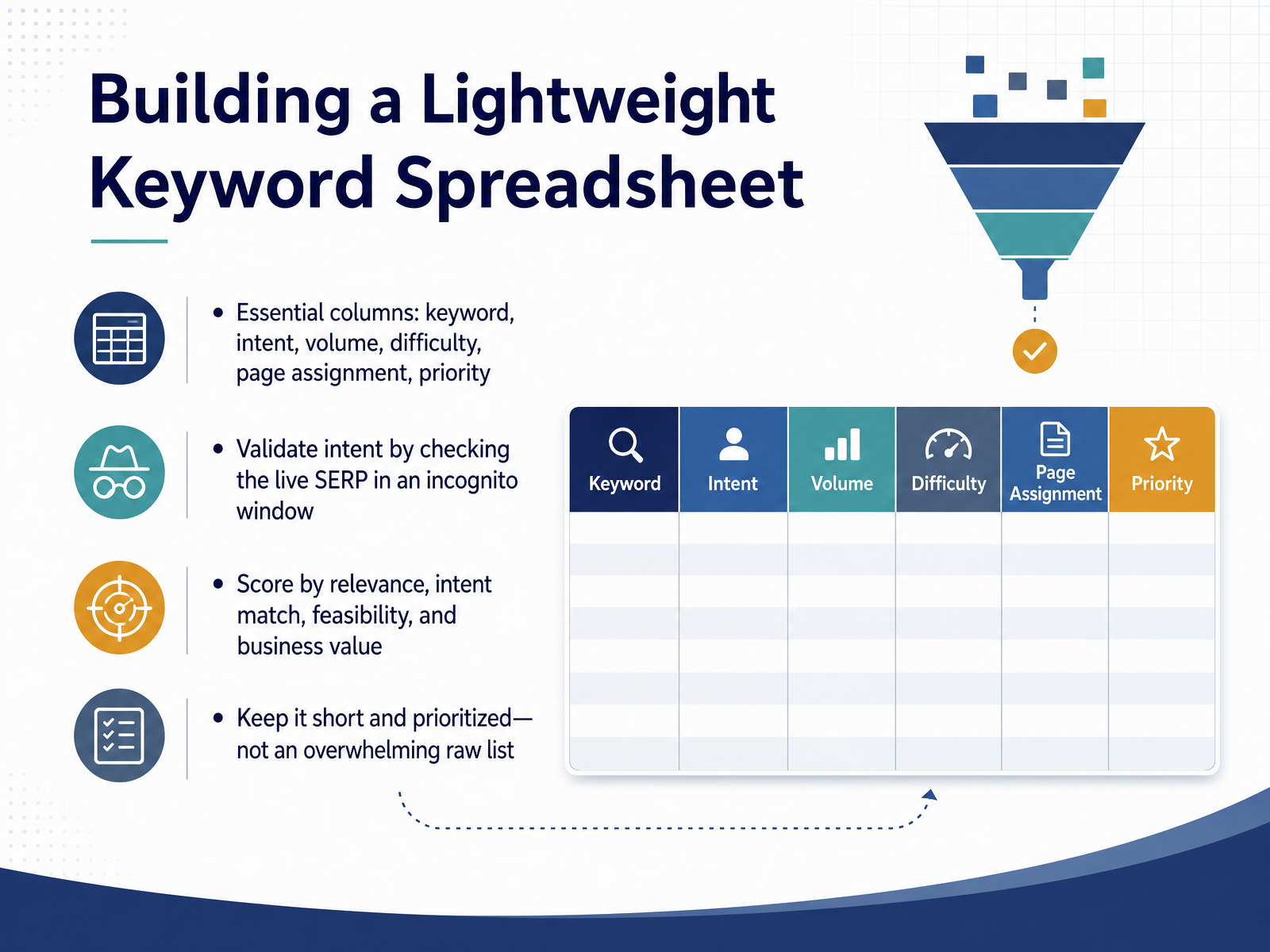
 - 09Building a Lightweight Keyword SpreadsheetNow that you have a list of keywords, let's put them into a simple, lightweight spreadsheet. Don't overthink this. You just need a few essential columns. Start with the keyword itself, its search intent, estimated volume, and difficulty. Then add page assignment and a priority score. To validate intent, don't rely on guesswork. Open a private or incognito window and search the keyword. Look at the top results. If you see blog posts, it is informational. If you see product pages, it is transactional. Score each keyword by relevance, how well it matches your business, and how realistic it is for you to rank. Also consider business value. Give it a simple one to five. Keep the list short and prioritized. A tight list of twenty action items beats a hundred rows that feel overwhelming. Now let's match those keywords to the right content formats.
 rankai.ailogoswebdesigns.comtabula.agency+21 min
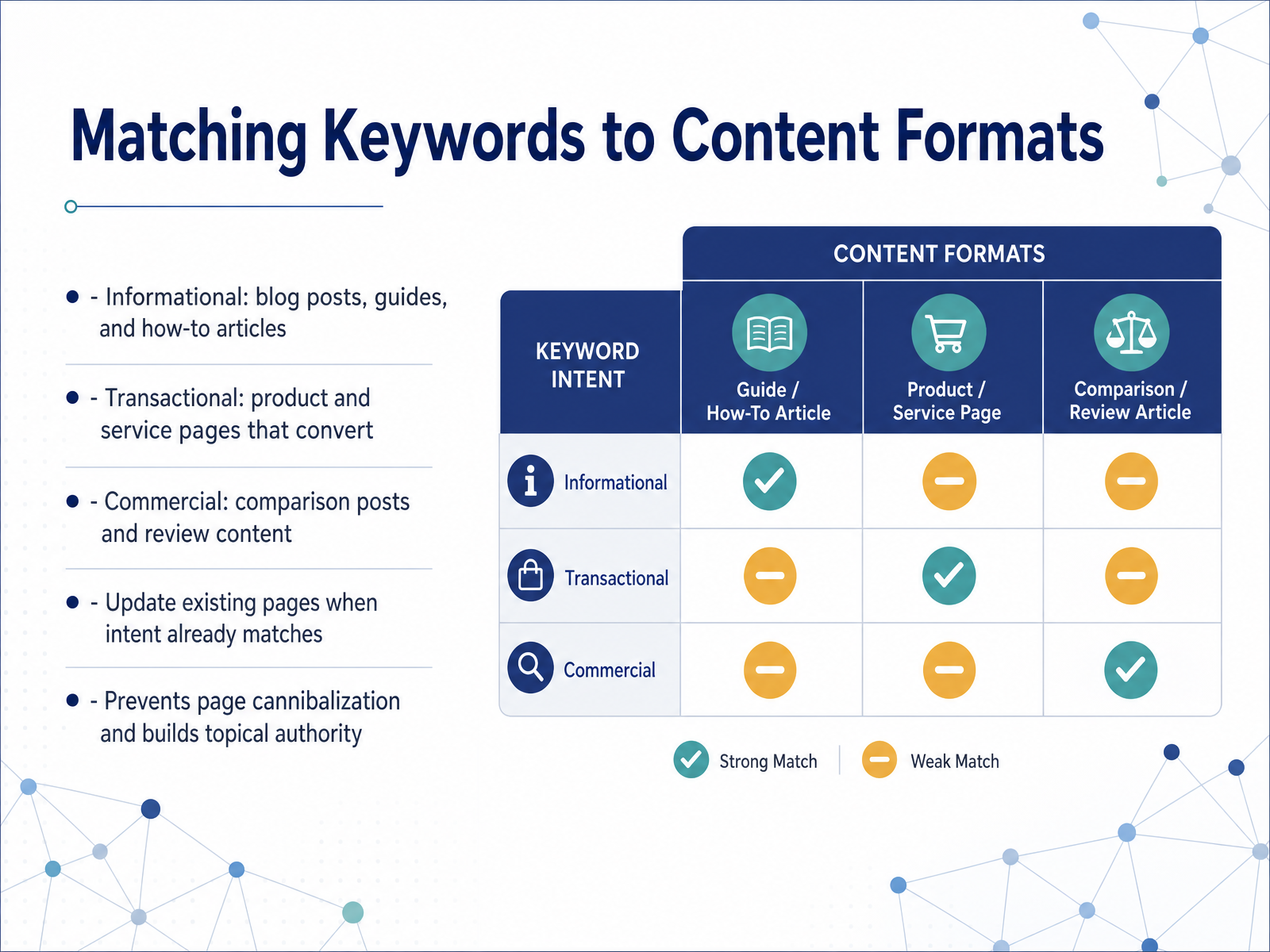
 - 10Matching Keywords to Content FormatsNow let's talk about placing keywords with the right content format. Think of each search as a question with a clear goal behind it. When someone searches "how to fix a leaky faucet," they want to learn. That's informational. So you answer with a blog post, a guide, or a how-to article. On the flip side, if they search "emergency plumber near me," they are ready to act. That's transactional. This keyword belongs on a service page that converts, not a blog post. There's also commercial intent. Someone searching "best CRM for small teams" is comparing options. They need a comparison post or review content to help them decide. So before you build a new page, check the search results. See what type of page is already ranking. If it's a product page, don't fight it with a blog article. Match the format that Google already rewards. And here's a useful tip. If you already have a page that targets a keyword, update that page instead of creating a new one. This prevents two pages from competing with each other, and it builds your site's authority on that topic. So match the intent, match the format, and consolidate when you can. Next, let's look at where keywords go on the page itself.
 rankai.ailogoswebdesigns.comtabula.agency+22 min
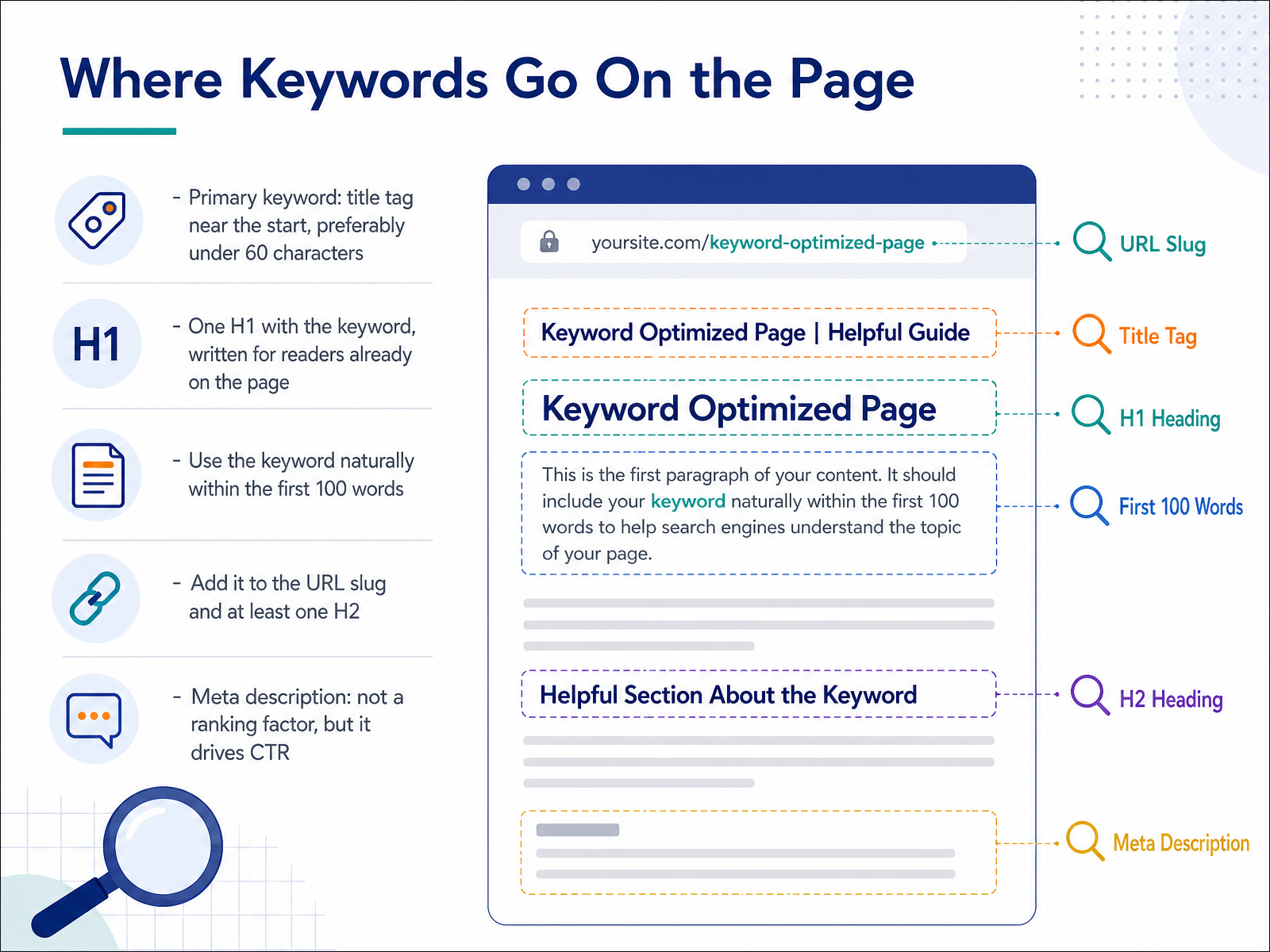
 - 11Where Keywords Go On the PageNow, once you have your keyword, the next question is where to put it. This isn't about sprinkling it everywhere. It's about putting it in the key places search engines and readers look first. Start with your title tag. That's the blue clickable headline in search results. Put your primary keyword near the beginning, and try to keep the whole title under about sixty characters so it doesn't get cut off. Then, on the page itself, you want one main heading. This is your H one. Yes, it should include your keyword, but write it for the person who has already clicked. It's okay if it's worded a little differently from your title. Next, use your keyword naturally within the first one hundred words of your content. Think of this as setting the topic early for both the reader and the search engine. Also, work it into your U R L slug, the part of the web address for that specific page. And if it fits naturally, use it in at least one subheading, an H two. Finally, the meta description. That's the short summary under your title in search results. It is not a direct ranking factor, but it matters a lot for getting the click. When someone sees your exact keyword bolded there, it confirms they are in the right place. So don't skip it. These placements are your on page foundation. Up next, we'll cover some keyword patterns worth avoiding.
 2 min
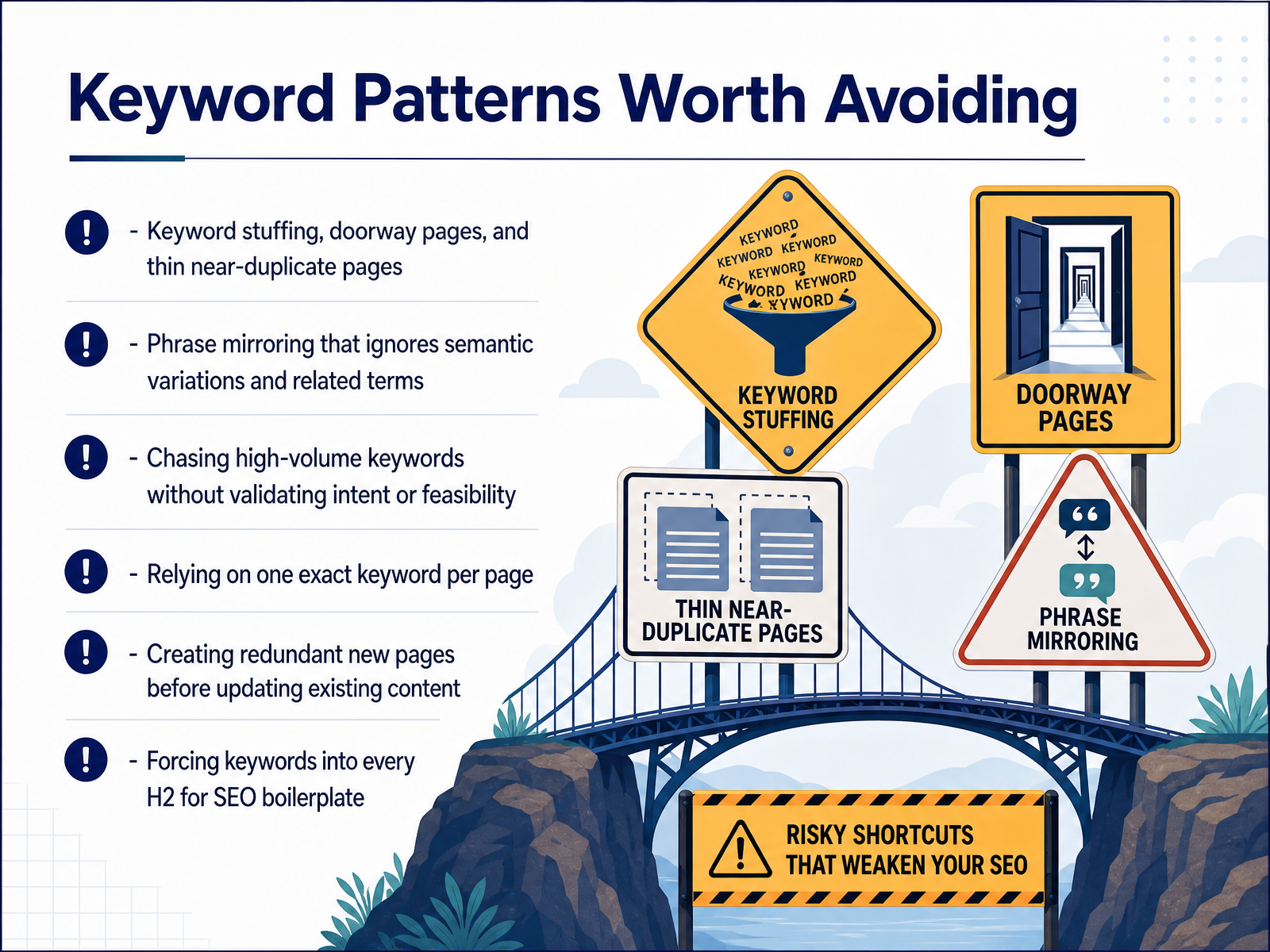
2 min - 12Keyword Patterns Worth AvoidingNow let's talk about the habits that can quietly work against you. First, avoid keyword stuffing and doorway pages. Those are old tactics that search engines now read as spam, and they create a poor experience for real people. Also steer clear of thin near duplicate pages that just swap a city name or product word. Instead of adding a new weak page, update the existing one that already has some authority. Avoid forcing your exact keyword into every single heading. That reads like boilerplate, and Google's quality systems have learned to discount it. Write headings that actually move the page forward. And resist the urge to chase high volume keywords just because the number looks impressive. Validate the intent and ask whether you can realistically compete. Sometimes a more specific phrase with clearer purpose is far more valuable. The pattern to remember is this: one clear keyword per page, supported by semantic variations, not repetition. Keep one page focused on one real topic, and let related terms appear naturally as you answer the searcher's actual question. Next, we'll turn this into a repeatable monthly routine.
 searchenginejournal.comwordstream.comwordstream.com+21 min
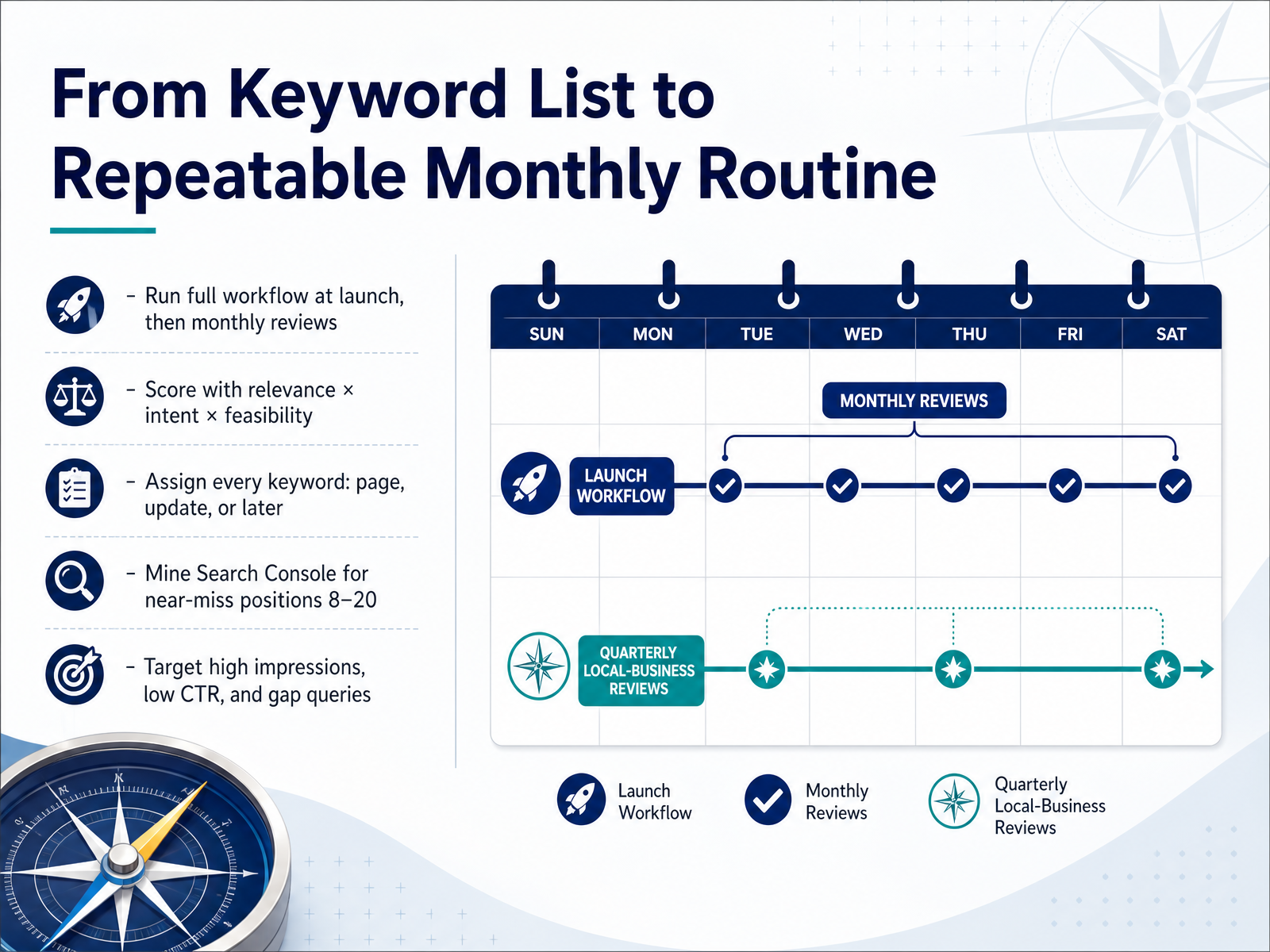
 - 13From Keyword List to Repeatable Monthly RoutineSo far, keyword research might feel like a one time project. But it works much better as a simple repeatable routine. Run the full workflow once when you launch a new page or a new site. After that, do a lighter monthly review. Each month, score a short list of keywords on three things: relevance, intent, and feasibility. Then assign every keyword to a specific page, mark it for an update, or set it aside for later. The real gold is often in Google Search Console. Look for queries where you already rank between positions eight and twenty. Give special attention to terms with high impressions but a low click through rate. Those are near wins. A better title or meta description can move them up. Also watch for gap queries where Google already shows your page for a topic you have not directly covered. That is a clear signal to build or expand a page. In other words, do not start from zero every month. Let your own data tell you what to work on next. Now let's wrap up with a quick review and your next steps.
 rankai.ailogoswebdesigns.comtabula.agency+22 min
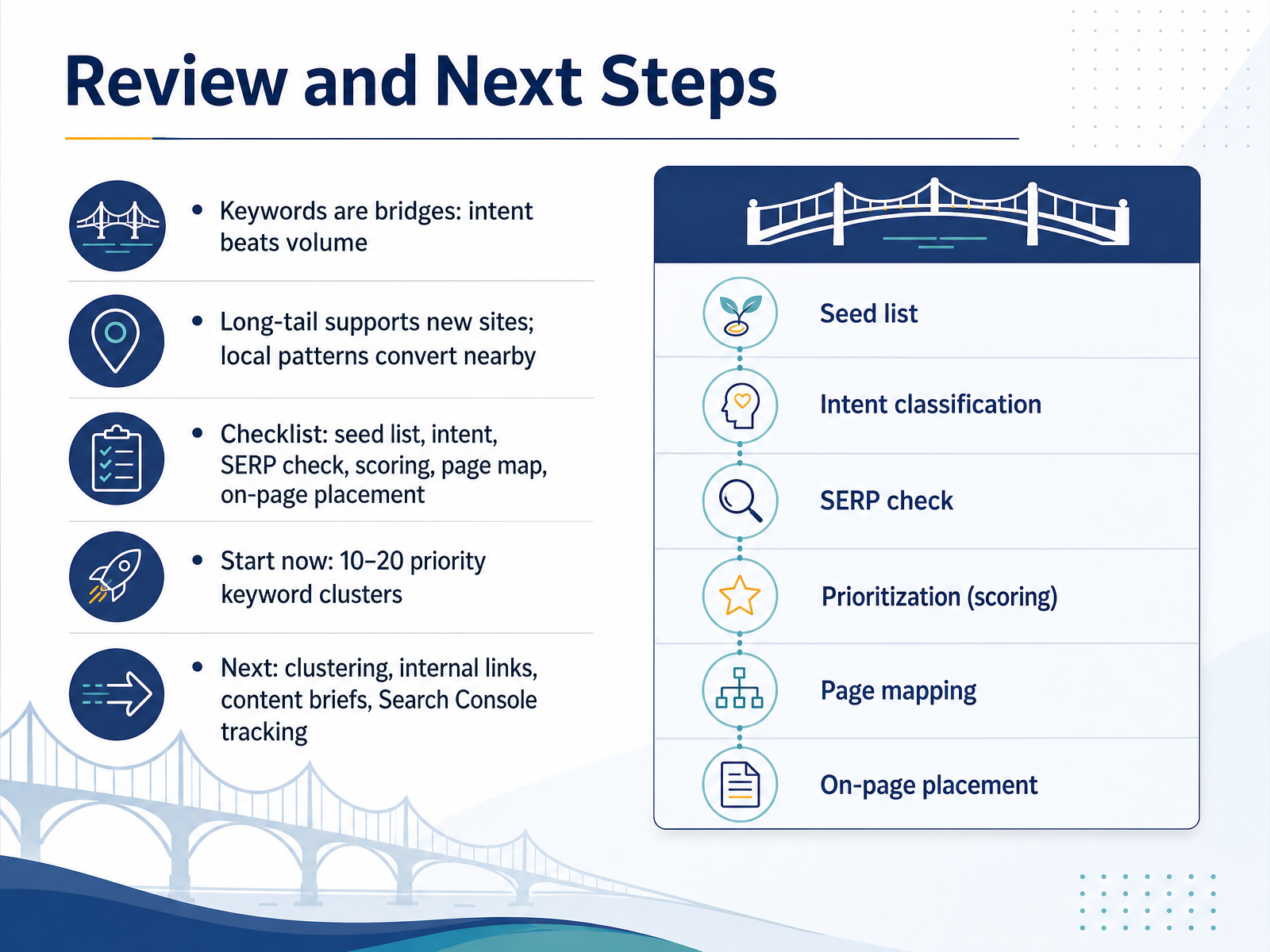
 - 14Review and Next StepsLet's bring it together. Keywords are bridges between what people type and what you actually offer. And intent beats volume. A precise search with real buying intent wins over a huge but vague term. Long-tail keywords give newer sites a fair shot. Local patterns, like a service plus a neighborhood, convert nearby customers. So how do you start? You don't need a hundred keywords. You need a short, clear process. Build a seed list from the services and problems your business actually solves. Check the search results to confirm what people expect. Score your keywords and map each cluster to one page. Then place your main term naturally in the title, the main heading, and the first paragraph. Start now with ten to twenty priority keyword clusters instead of getting stuck in research. Publish one page per cluster first. What comes next is the fun part. You'll group related terms, add internal links, turn your map into content briefs, and watch real queries appear in Search Console. That data tells you what to refine this month. You now have a repeatable system, not a one-time task. Thank you for sticking with it. Go find the words your customers already use. You've got this.
 rankai.ailogoswebdesigns.comtabula.agency+22 min
Take the deck with you
Download this course as a file — free, no sign-up needed.
- PDF handoutEvery slide page, ready to print or share.15 pages · 3.5 MBDownload
- Narrated PowerPointThe deck that presents itself — every slide carries the digital human's narration video.15 pages · 27.7 MBDownload
- PowerPoint slidesThe full deck as a .pptx — open it in PowerPoint, Keynote, or Google Slides.15 pages · 3.4 MBDownload
Free to use in your own training — please keep the PersonWise credit page at the end.
Have your own deck? Turn it into a course
Sources consulted
Web sources consulted while building this course.
- 8-Step Keyword Research Workflow for Small Businesses (2026) — rankai.ai
- Keyword Research for Small Business in 2026: The Process That Actually Finds Customers — logoswebdesigns.com
- Keyword Research for Small Business: A Step-by-Step Free Guide — tabula.agency
- AI Keyword Research: Complete Small Business Workflow — Syxo — syxoai.com
- Free Keyword Research: How to Find Profitable Keywords Without SEMrush or Ahrefs (2026) | Lenoretech — lenoretech.in
- Google Data Shows AI Search Users Moved Past Keywords, Your Content Hasn't — searchenginejournal.com
- How to Find Keywords That Still Drive Results in the AI Era | WordStream — wordstream.com
- Google's AI Search Guidelines: What You Really Need to Know | WordStream — wordstream.com
- Query Fan Out Is Breaking Keyword Research: How AI Overviews SEO Actually Works in 2026 — OnyxRank — onyxrank.com
- What is semantic search (& how does it affect your SEO and marketing)? — blog.hubspot.com
- What Is Keyword Intent and How Does It Impact Your Conversion Rate? - Moz — moz.com
- What Is Keyword Intent? An Overview & How to Identify It — semrush.com
- Keyword Intent: What It Is and How to Use It in Your SEO Strategy — ahrefs.com
- 4 Types of Keywords in SEO (+ Examples) — semrush.com
- Search Intent Types Explained: Commercial, Informational, & More — clearvoice.com
- Local Keyword Research: How to Find the Keywords That Drive Local Customers (2026) | Flento — flento.io
- Local Keyword Research: 5 Geographic SEO Wins for 2026 — seomytics.com
- Local keyword research | SEOTopSecret — seotopsecret.com
- Local SEO keyword research: A step-by-step guide — semrush.com
- Local Keyword Research: Find the Right Terms to Target — optuno.com