SEO Mistakes Avoidance Guide
Begin
14 pages · ~28 min
SEO Mistakes Avoidance Guide
Learn how to identify and fix common SEO mistakes to improve website rankings, avoid penalties, and drive more organic traffic. Ideal for marketers, webmasters, and business owners.
What you’ll learn
- 01Common SEO Mistakes and How to Avoid ThemWelcome. If you're here, you've likely seen rankings stall, organic traffic drift, or a technically solid page underperform for reasons that shouldn't exist. This course is about the mistakes that keep compounding when they go undiagnosed. Cross-functional gaps, post-update confusion, and slow accumulating defects are exactly where visibility gets lost. What you'll get is a structured approach. For each mistake, we'll diagnose the root cause, apply the fix, and put prevention in place. No theory for its own sake. Every section ties back to recovering lost visibility and building durable organic growth. It's designed for practitioners, growth teams, and content marketers who already know the fundamentals and want a sharper diagnostic lens. Let's start with the framework that makes the rest of this actionable: a diagnostic framework for visibility loss.semrush.comrankai.aihighervisibility.com+21 min
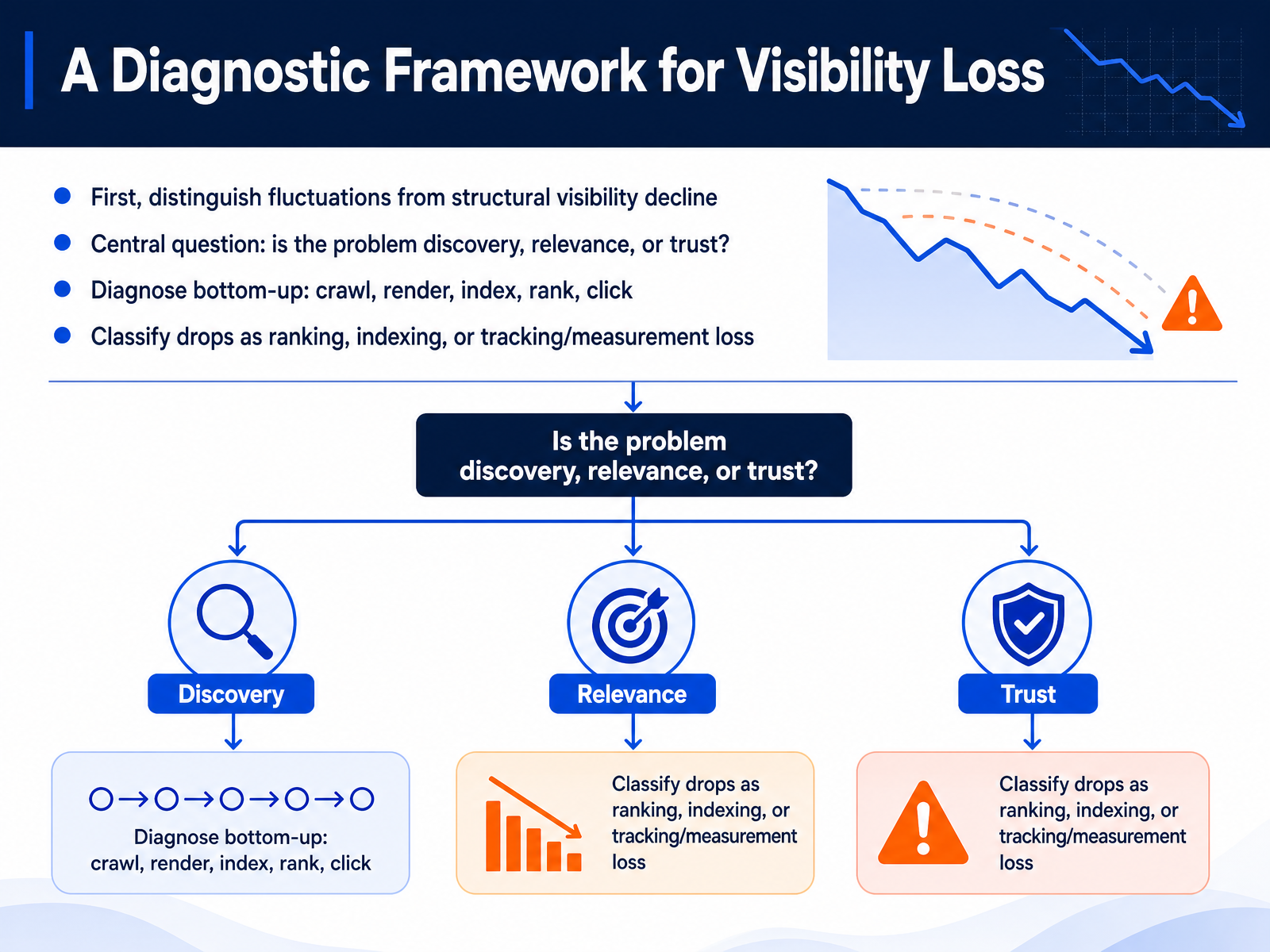
- 02A Diagnostic Framework for Visibility LossHere's the diagnostic approach we'll use. First, separate normal fluctuation from a structural visibility decline. Not every dip is a crisis. The central question to answer is whether the problem lies in discovery, relevance, or trust. Diagnose bottom-up, in this order: crawl, render, index, rank, click. Fixing lower layers first prevents wasted hours rewriting content that Google never crawled. Finally, classify the drop correctly. Ranking loss, indexing loss, or tracking loss all require different fixes. Misdiagnosing this step is where most teams lose weeks. With that framework in place, let's examine the five layers of organic decline.
 organicseo.orgincremys.comahrefs.com+21 min
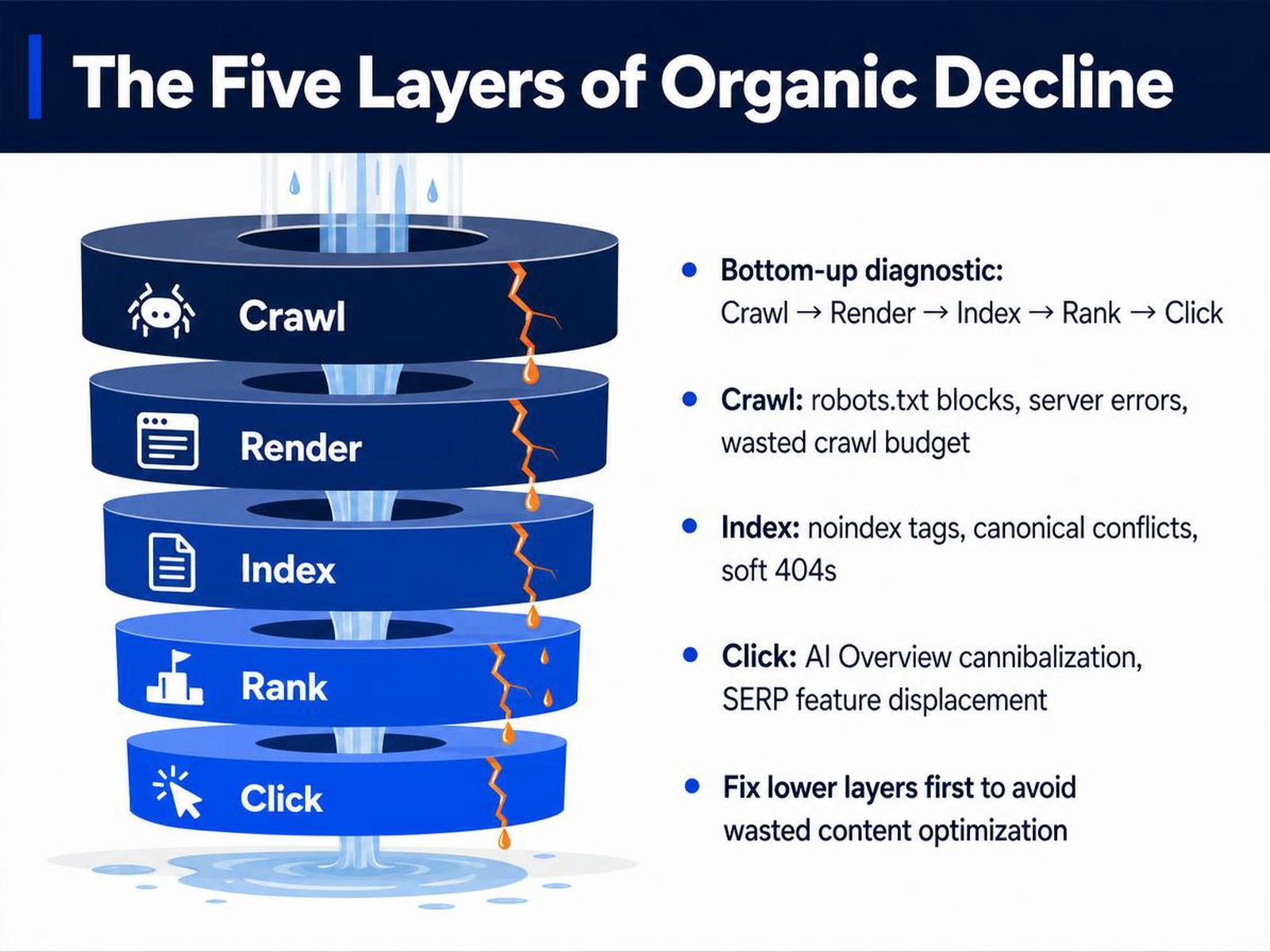
 - 03The Five Layers of Organic DeclineWhen organic visibility drops, the instinct is often to jump straight to rankings. But that's the wrong starting point. A more reliable approach is to work bottom-up through five layers: Crawl, Render, Index, Rank, and Click. Think of each layer as a dependency. If Googlebot can't crawl a page due to server errors or robots.txt blocks, nothing else matters. If a page returns a non-200 status code, the rendering pipeline skips it entirely. At the index layer, look for noindex tags, canonical conflicts, and soft 404s that quietly remove pages from the index. Only after those layers are clean should you investigate ranking factors. And at the click layer, watch for AI Overview cannibalization and SERP feature displacement that suppress CTR even when your position holds. The takeaway is simple: fix lower layers first. Otherwise, you'll waste cycles optimizing content that was never eligible to rank in the first place. That's why our next section tackles crawl and indexing mistakes directly.
 organicseo.orgincremys.comahrefs.com+22 min
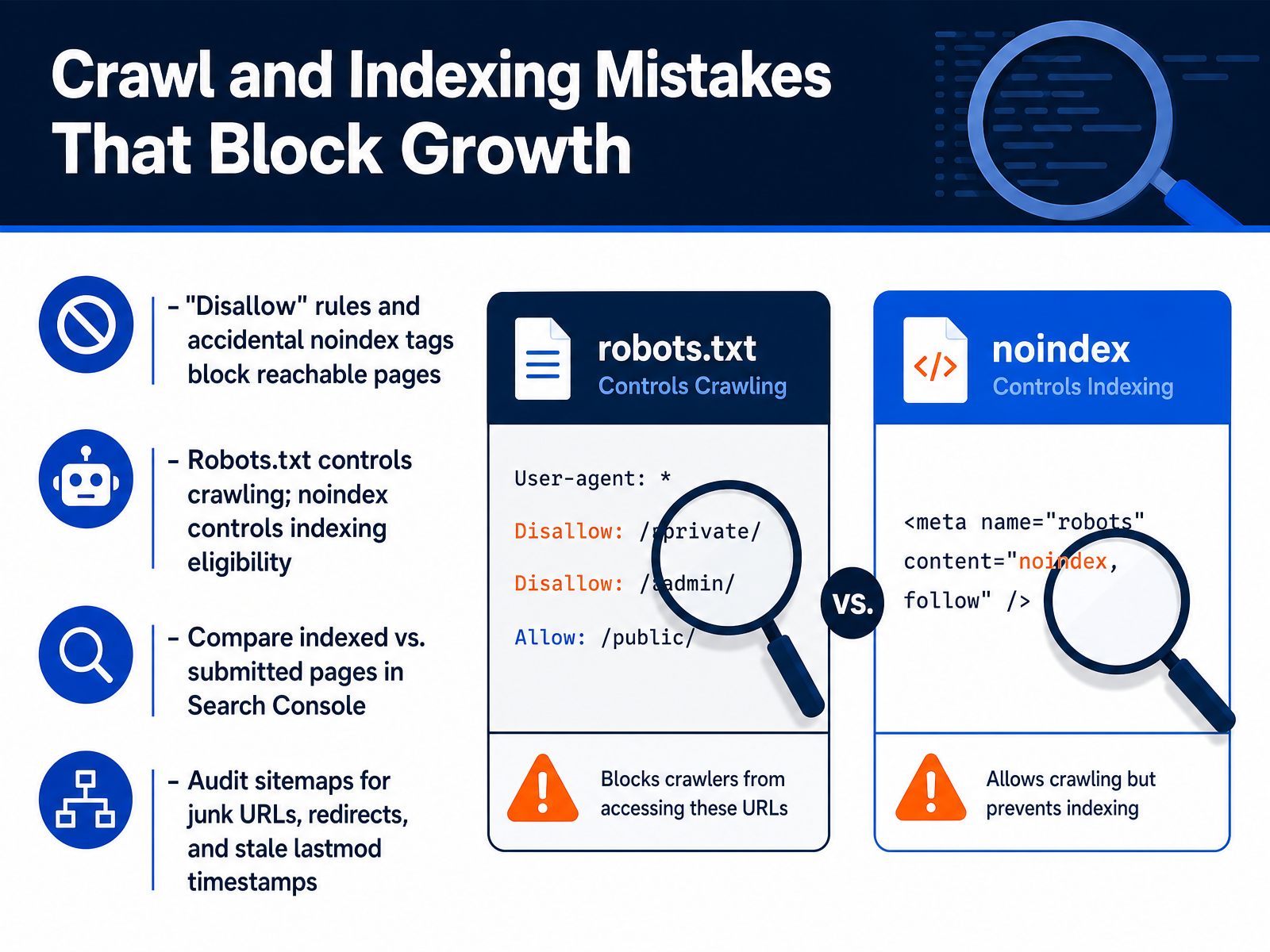
 - 04Crawl and Indexing Mistakes That Block GrowthNow, let's talk about crawl and indexing mistakes, because this is where growth quietly stalls. First, check your disallow rules and your noindex tags. A stray rule from a migration, or a template update that adds noindex sitewide, can pull entire sections out of the index before anyone notices. Remember, robots.txt controls whether Google crawls a page. Noindex controls whether Google can index it. These are separate levers. Blocking a page from crawling doesn't remove it from the index, and adding noindex doesn't stop Google from wasting crawl budget on it. Next, go into Search Console and compare your submitted pages against your indexed pages. A meaningful gap there tells you which templates are being ignored or blocked. Finally, audit your sitemaps for junk. Remove redirected URLs, stale lastmod timestamps, and any page that shouldn't be indexed. A clean sitemap is a signal of intent. Once your pages are actually discoverable, the next concern is whether Google can render them properly, so let's move on to rendering, JavaScript, and Core Web Vitals.
 crawlix.appblog.hubspot.comseodiag.com+22 min
 - 05Rendering, JavaScript, and Core Web VitalsLet's move to rendering, JavaScript, and Core Web Vitals. This is where sites look perfect in a browser but fail under a technical audit. If your primary content only appears after client-side JavaScript runs, you are gambling with your indexation. Google has to render that page, and you don't control the queue. Server render your critical content and links. Keep JavaScript for enhancement, not for the foundation. Now for the thresholds that actually matter. Largest Contentful Paint needs to stay under two point five seconds. Interaction to Next Paint under two hundred milliseconds. Cumulative Layout Shift under zero point one. And in twenty twenty six, the most common failure we see is INP. That's almost always a third party script blocking the main thread. A chat widget, an analytics snippet, or an ad loader that delays every click. Audit those scripts. Defer what you can, remove what you can't justify. Clean rendering and fast interactions are a ranking factor, not a nice to have. Next we'll look at structured data and technical hygiene.
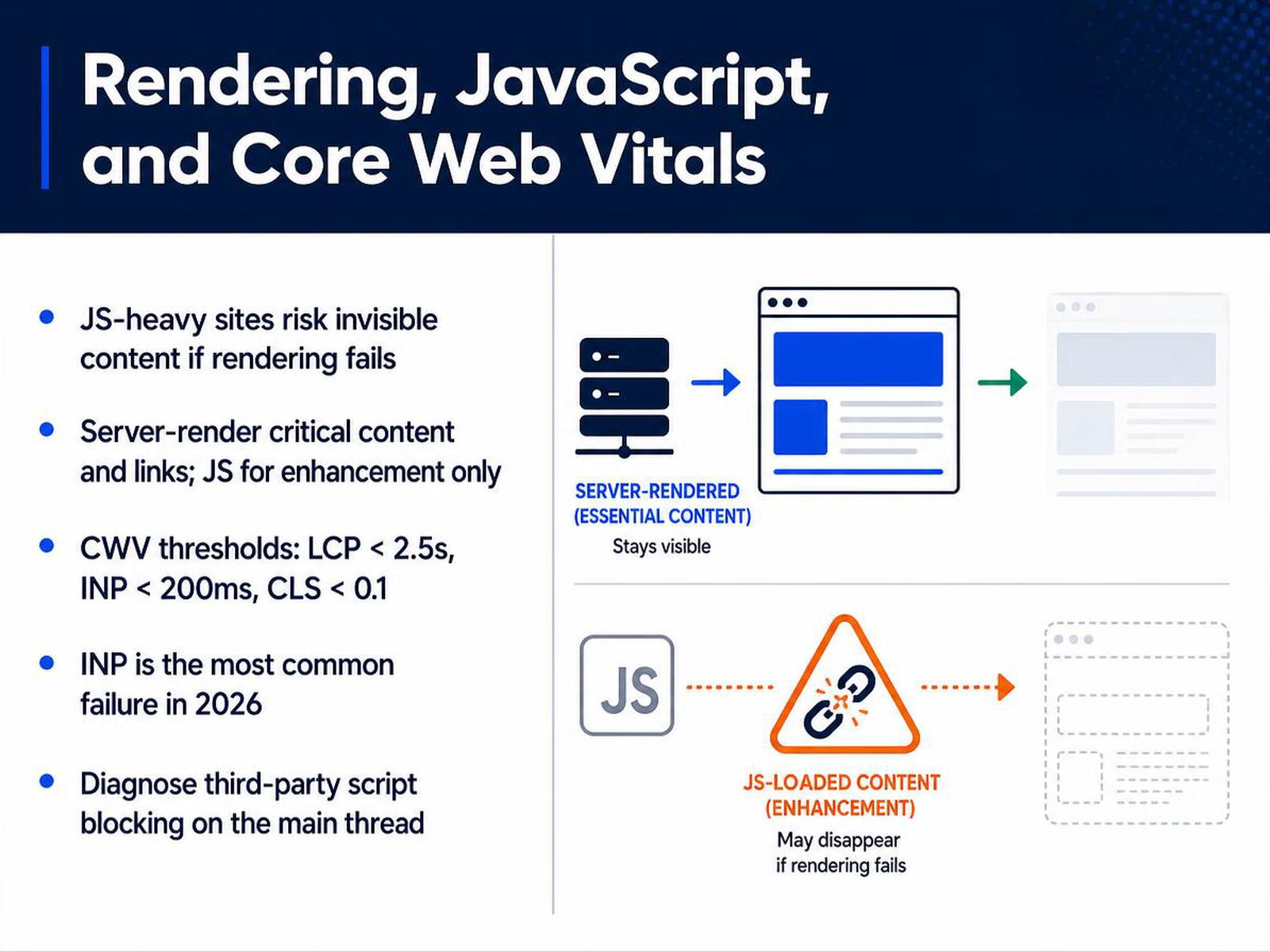 crawlix.appblog.hubspot.comseodiag.com+22 min
 - 06Structured Data and Technical HygieneNext, let's talk about structured data and technical hygiene, because a lot of ranking potential leaks here before a user ever sees your page. First, schema errors. Invalid JSON-LD or an aggregateRating with a hallucinated review count doesn't just fail validation, it silently removes your eligibility for rich results. Run the Rich Results Test and confirm your schema matches visible content on the page. Second, redirect chains and orphan pages. Every hop beyond one dilutes equity and wastes crawl budget. Flatten those chains, and audit for soft 404s that return a 200 status but signal no real content. Those pages eat crawl budget with zero return. Third, control your URL parameters. Faceted navigation is one of the most common crawl traps. If you let sort and filter combinations generate thousands of near-duplicate URLs, Googlebot will spend its time on those instead of your revenue pages. Use canonical tags and robots rules strategically to keep that in check. And before you automate this with AI, remember that syntactically valid schema is not the same as semantically correct schema. AI tools can generate fields that pass a parser but are factually wrong at a glance to a human. Always review before you deploy. Up next, we're moving from technical errors to strategic ones. Let's dig into cannibalization and intent mismatch.
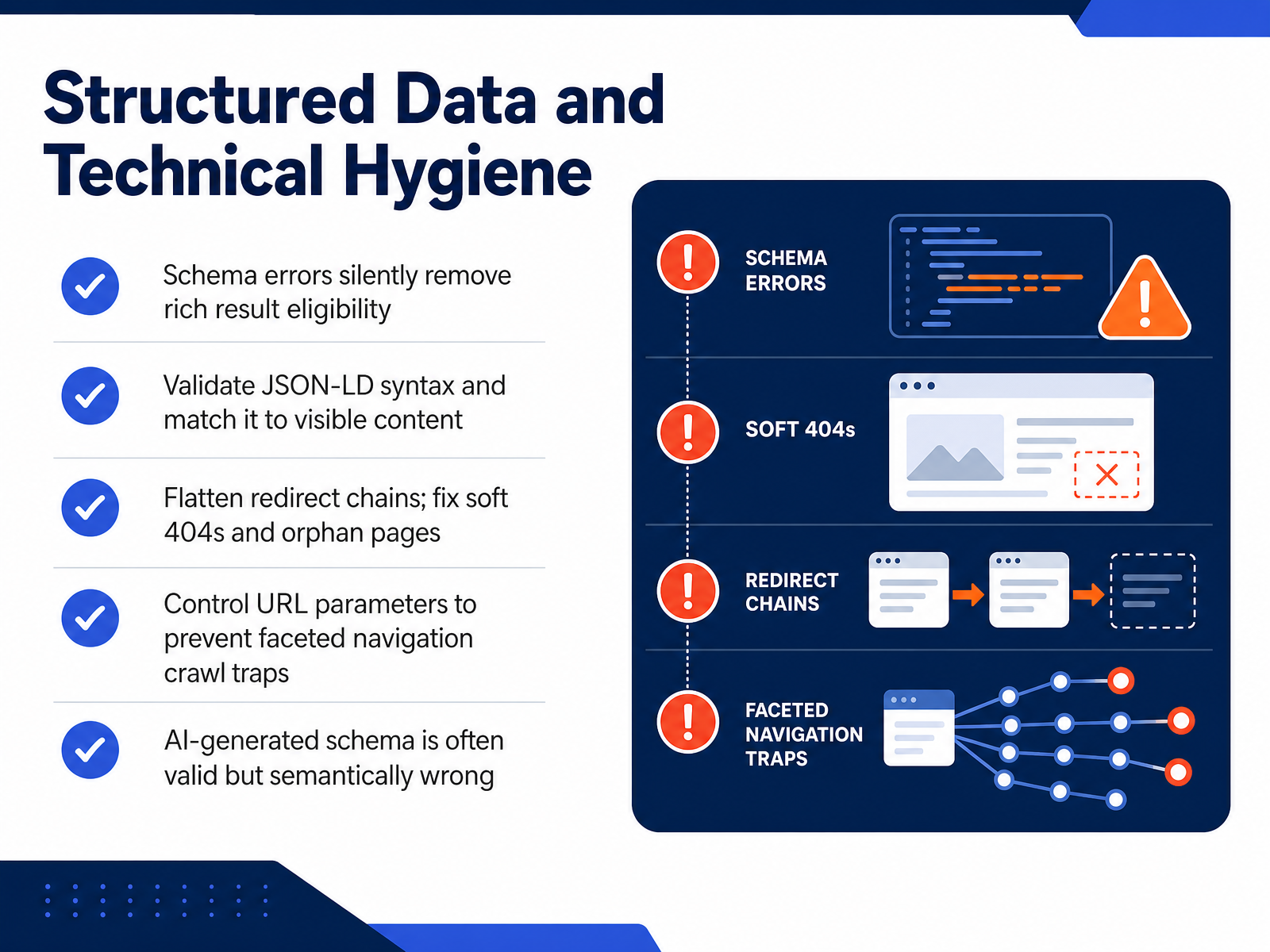 crawlix.appblog.hubspot.comseodiag.com+22 min
 - 07Content Mistakes: Cannibalization and Intent MismatchNow, a mistake that quietly drains performance: content cannibalization. This happens when multiple URLs on your site chase the same query and the same intent. You split your ranking signals across pages that compete with each other, and none of them wins cleanly. Check Search Console for a query showing impressions across several of your pages. If you see that, confirm the intent is truly identical. When it is, merge the content into one stronger page and put 301 redirects on the losing URLs to consolidate authority. But be careful. Only redirect when the intent is the same. If one page is a guide and another is a product page, it may be an intent mismatch, not cannibalization. In that case, differentiate them. Adjust titles, H1s, and internal anchor text so each page signals a distinct job. The goal is clear ownership: one page per query, one query per page. Fix that, and you concentrate relevance instead of leaking it. Next, we look at content quality, freshness, and the risks of AI-generated content.
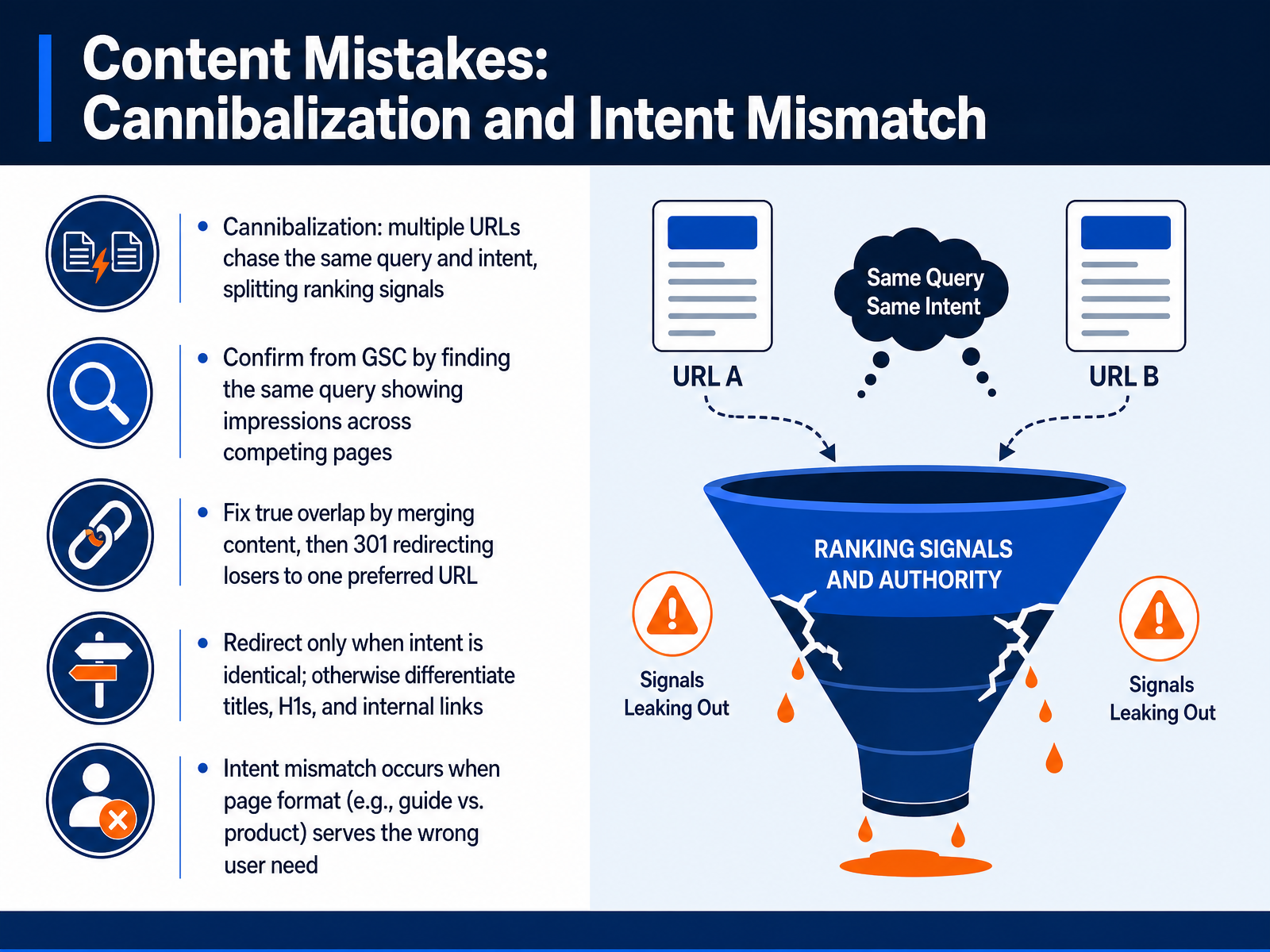 searchengineland.comsemrush.comahrefs.com+21 min
 - 08Content Quality, Freshness, and AI-Generated ContentThin content and outdated pages do not fail overnight. They compound, gradually eroding your domain quality until entire sections stop competing. So when you audit, check whether each page demonstrates real expertise. That means named examples, original data, and an accountable author. If a page could have been written by anyone, that is the problem. On freshness, changing a date is not an update. Google treats that as a false signal. Refresh the numbers, the screenshots, the sources, and the recommendations before you touch the modified date. Now, AI-generated content. Raw output without human oversight risks generic or factually wrong copy. AI drafts are a starting point, not a publish button. Add practitioner detail, specific methods, and named sources to build trust signals. Each of these fixes maps to a measurable outcome. Real expertise improves engagement and citaibility. Meaningful refreshes slow traffic decay. Editorial oversight protects against content that ranks for a week and then collapses. Next, we move from content quality to a related systemic issue. Internal linking and site architecture.
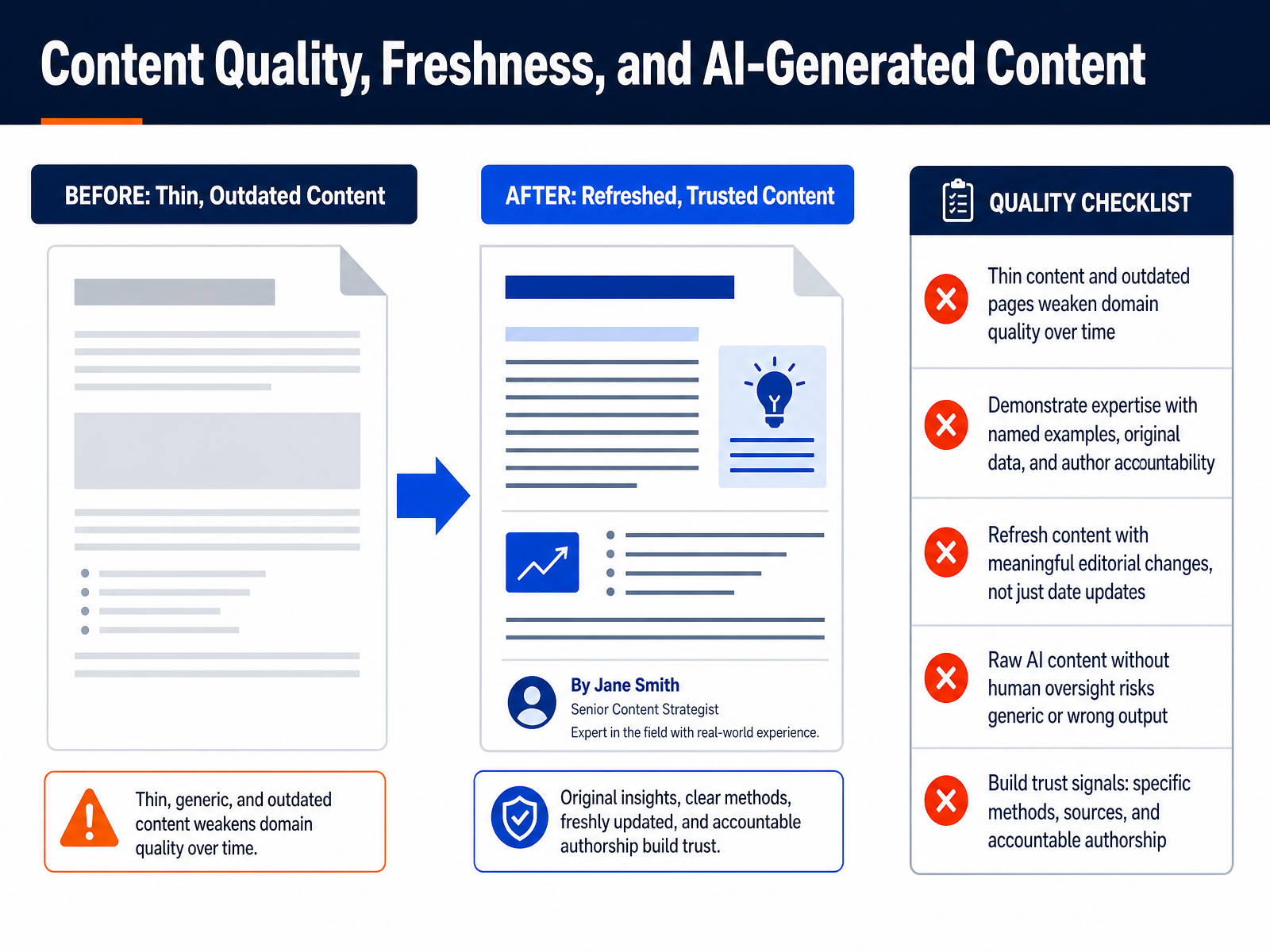 semrush.comrankai.aihighervisibility.com+21 min
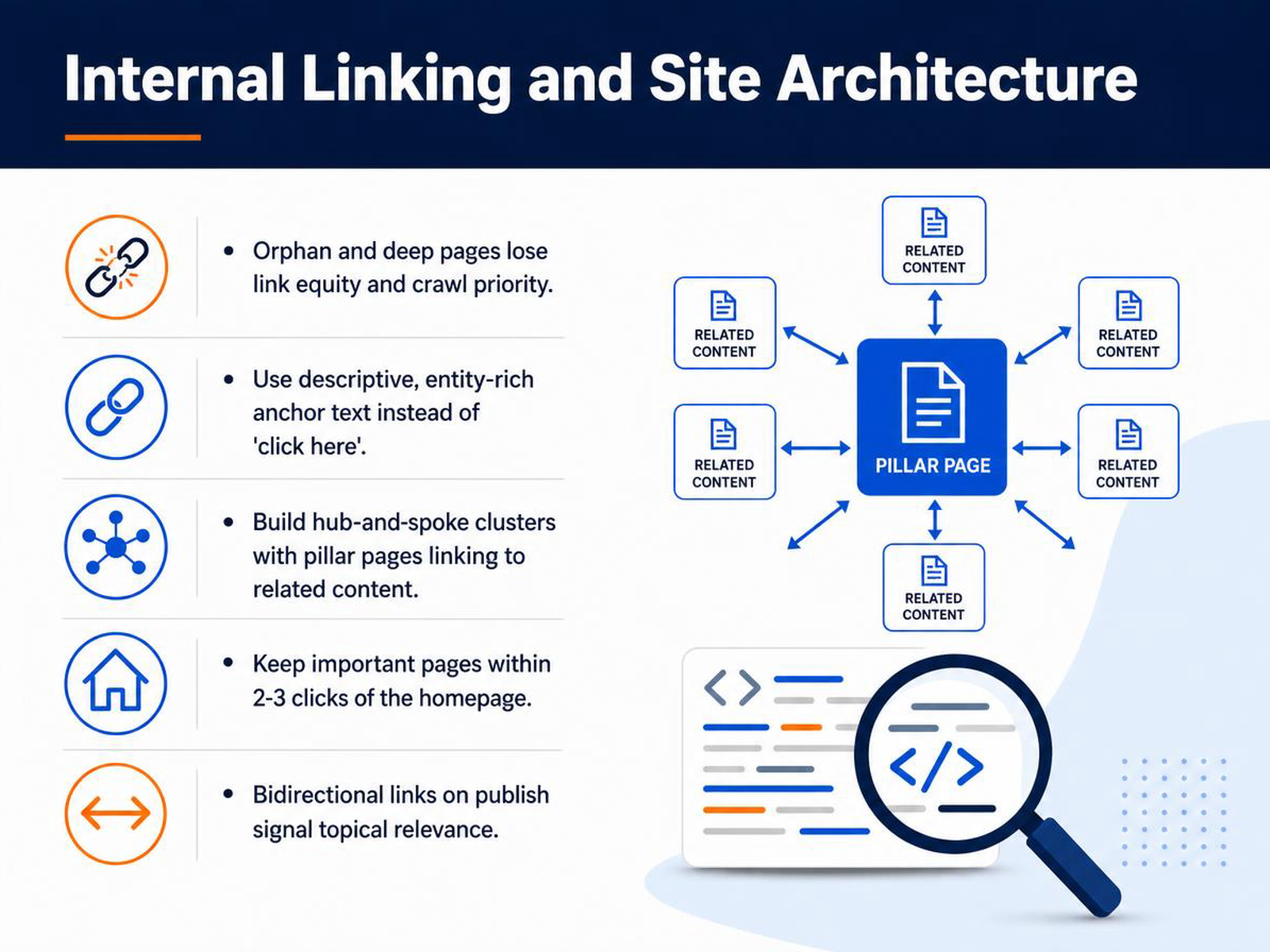
 - 09Internal Linking and Site ArchitectureLet's turn to internal linking and site architecture. These are the structural levers that determine how crawl equity flows through your site. Orphan and deep pages are a direct drain. They lose both link equity and crawl priority, so surface them or remove them. Next, tighten up your anchor text. Replace generic phrases like click here with descriptive, entity rich anchors that signal topical relevance to the destination page. Build hub-and-spoke clusters. Your pillar pages should link out to all related content, and each cluster page should link back. This bidirectional linking on publication reinforces the topical map. Finally, keep your important pages within two to three clicks of the homepage. Depth beyond that starves them of crawl budget and weakens their ranking potential. These fixes are not cosmetic. They change how search engines understand your site's priorities. Up next, we will shift focus to authority and off-page signals.
 1 min
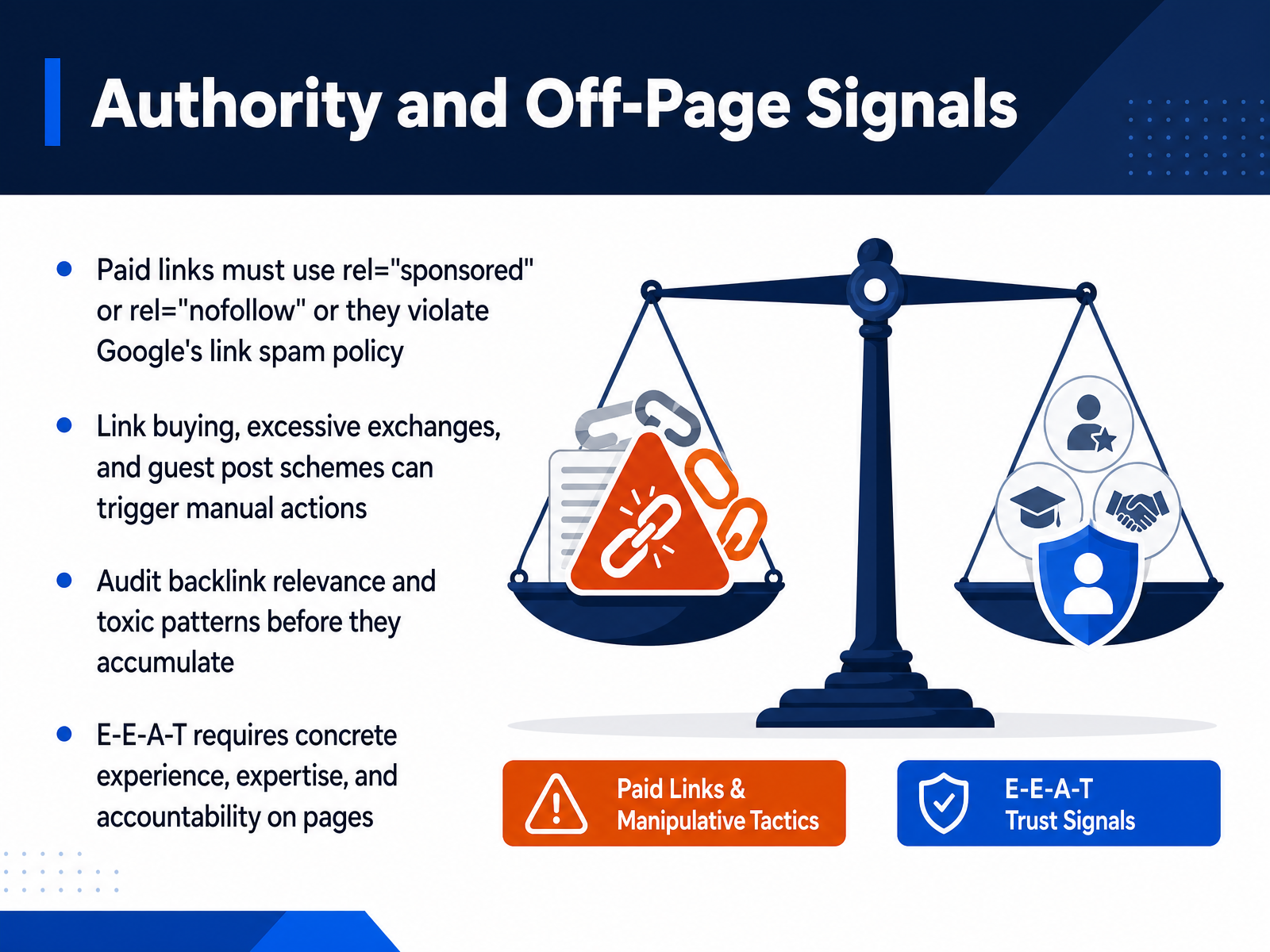
1 min - 10Authority and Off-Page SignalsNow let's talk about authority and off-page signals. This is where good rankings go to die if you lose discipline. First, any paid link must carry a rel equals sponsored or rel equals nofollow attribute. If it passes PageRank without one, that is a direct violation of Google's link spam policy. Link buying, excessive link exchanges, and guest post schemes built for links are not growth tactics. They are manual action triggers. A human reviewer can flag your entire site, not just the offending pages. So audit your backlink profile before it becomes a liability. Look at relevance. Look for toxic patterns. If links come from unrelated sites with exact match anchors, clean them up now. Make a genuine effort to remove them first. Only use the disavow tool for what you cannot get taken down. And remember that authority is not just about links. Google's E E A T framework requires pages to show real experience, real expertise, and clear accountability. If a page cannot prove who created the content and why they are qualified, all the links in the world will not save it. So fix the on-page trust signals, and qualify every paid placement. That leads directly into our next topic, measurement, attribution, and executive reporting.
 2 min
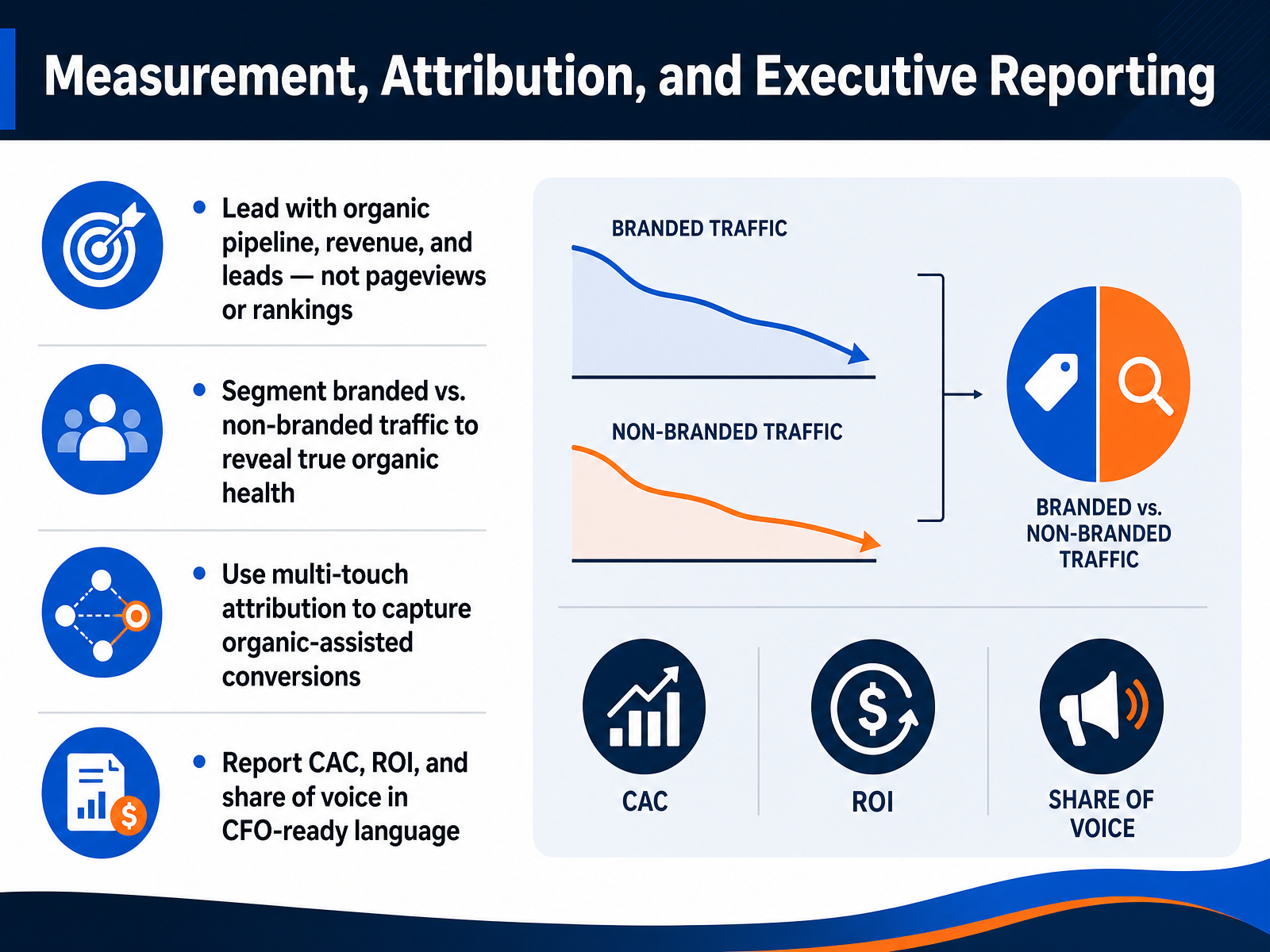
2 min - 11Measurement, Attribution, and Executive ReportingHere is where SEO reporting either earns its budget or loses it. Stop leading with pageviews and rankings. Those metrics explain mechanics, not business value. If your first slide shows organic traffic growth but cannot answer how many customers that produced, the conversation is already over. Lead with organic pipeline, revenue, and qualified leads pulled from your CRM. Segment branded versus non-branded traffic. Branded search inflates your numbers because other channels built that demand. Non-branded visibility is the true health of your SEO program. Use multi-touch attribution to capture organic-assisted conversions, because last-click models systematically undervalue top-of-funnel work. Then translate everything into CFO-ready language. Report customer acquisition cost, return on investment, and share of voice. Show organic cost per acquisition against paid. That is the number that turns skepticism into budget approval. Executives fund revenue lines, not ranking charts. One final point: keep operational details like crawl errors out of the executive summary. Save those for the team dashboard. Up next, we will look at how team structure, workflow, and migration risks can quietly undo all of this work.
 2 min
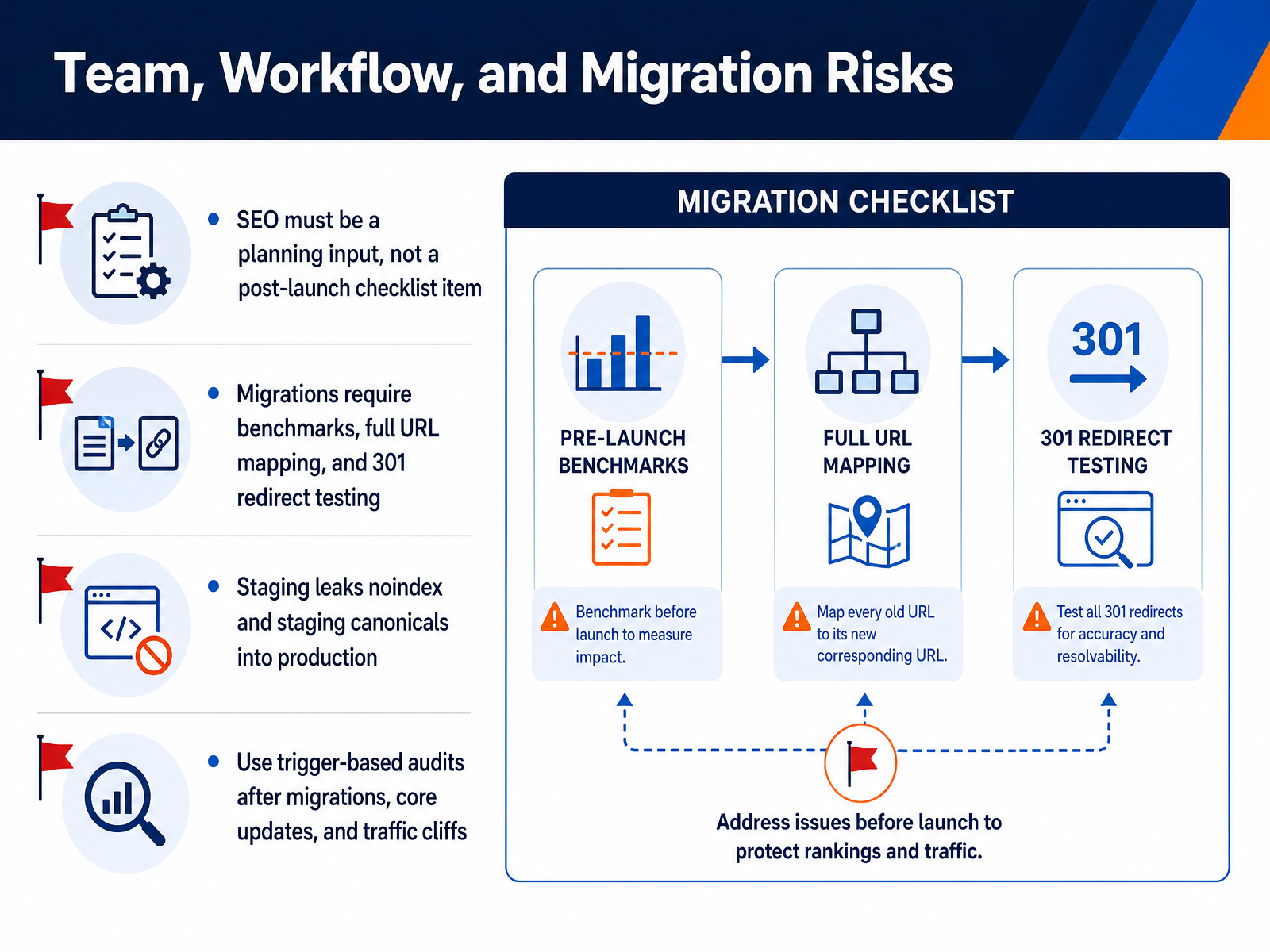
2 min - 12Team, Workflow, and Migration RisksNow let's talk about where migration and workflow risks actually bite. SEO cannot be a post-launch checklist item. It has to be a planning input from day one, because a migration puts your indexed URLs, backlink equity, and internal link architecture at risk all at once. Before you move anything, capture a full pre-launch benchmark of crawl data, analytics, rankings, and backlinks. You cannot diagnose what you never measured. Then map every old URL one-to-one to its closest new equivalent, and test those three zero one redirects on staging. Avoid mass redirects to the homepage, because search engines tend to treat those as soft four zero fours. One of the classic failures is staging protections leaking into production. A noindex tag or a disallow rule that was meant for staging can silently block your entire live site. And watch those canonicals. If production pages point to staging URLs, you are telling Google to consolidate ranking signals to pages that will eventually return four zero four. After launch, do not just watch the dashboards. Use trigger-based audits after migrations, core updates, and traffic cliffs. A short dip is normal. A sustained drop after two or three weeks is a real problem, usually a redirect, canonical, or robots dot txt issue. Next, we will move into prioritization and recovery workflows.
 1 min
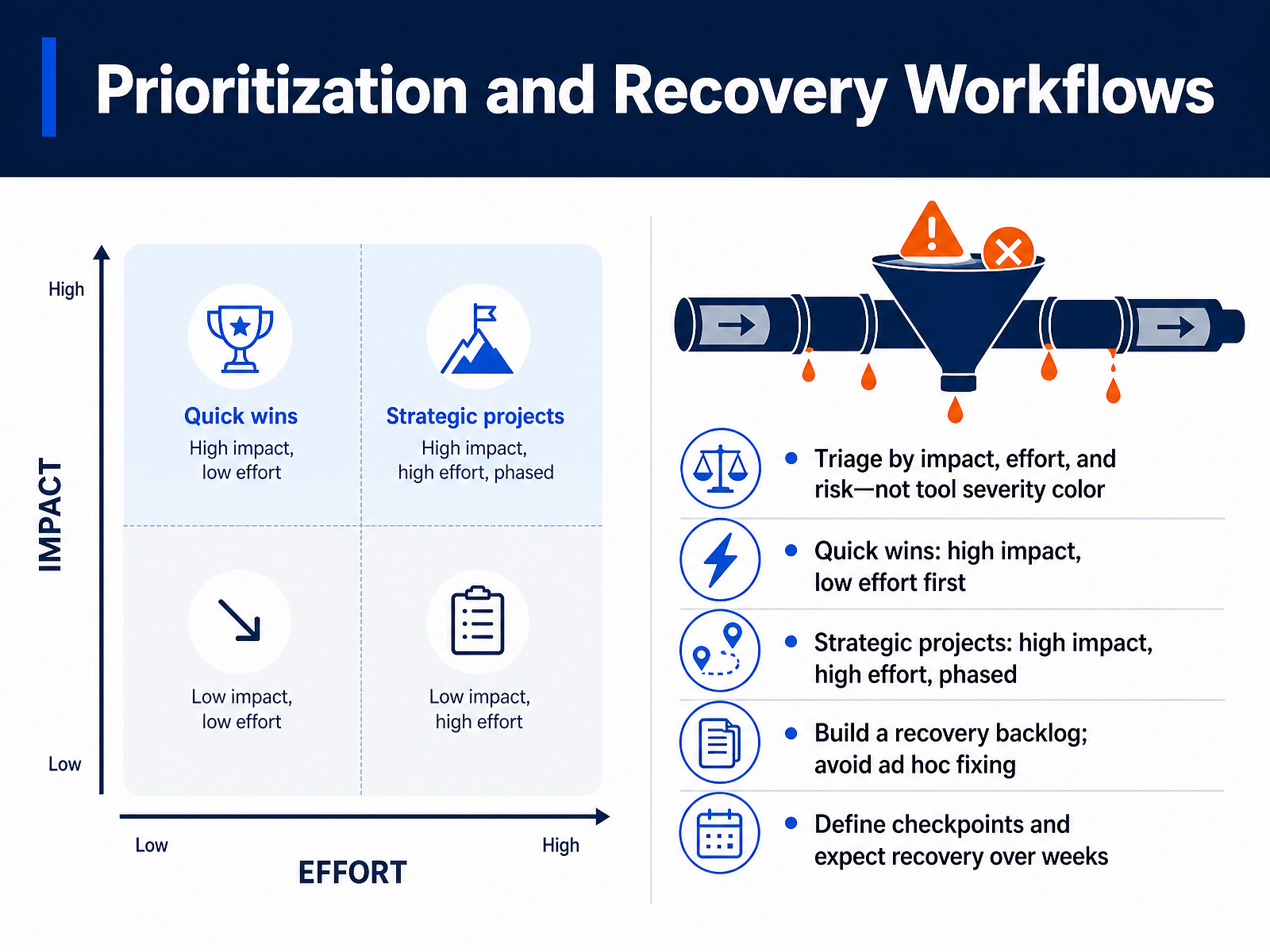
1 min - 13Prioritization and Recovery WorkflowsWhen you look at a long list of audit findings, the instinct is to start fixing things based on how loud the tool flags them. Resist that. Triage by impact, effort, and risk, not by the severity color in your crawler. Your first pass should always be the quick wins: high impact, low effort items. These are the fixes you can deploy in days and see measurable movement in rankings or crawl efficiency almost immediately. After that, move to strategic projects. These are high impact but high effort, so phase them deliberately. One per quarter is usually realistic. Put everything else into a recovery backlog, not an ad hoc to-do list. Define checkpoints at weeks two and six, and expect meaningful recovery to unfold over weeks, not overnight. The goal is a controlled sequence of fixes that compounds. Next, let's talk about turning these mistakes into a prevention system.
 1 min
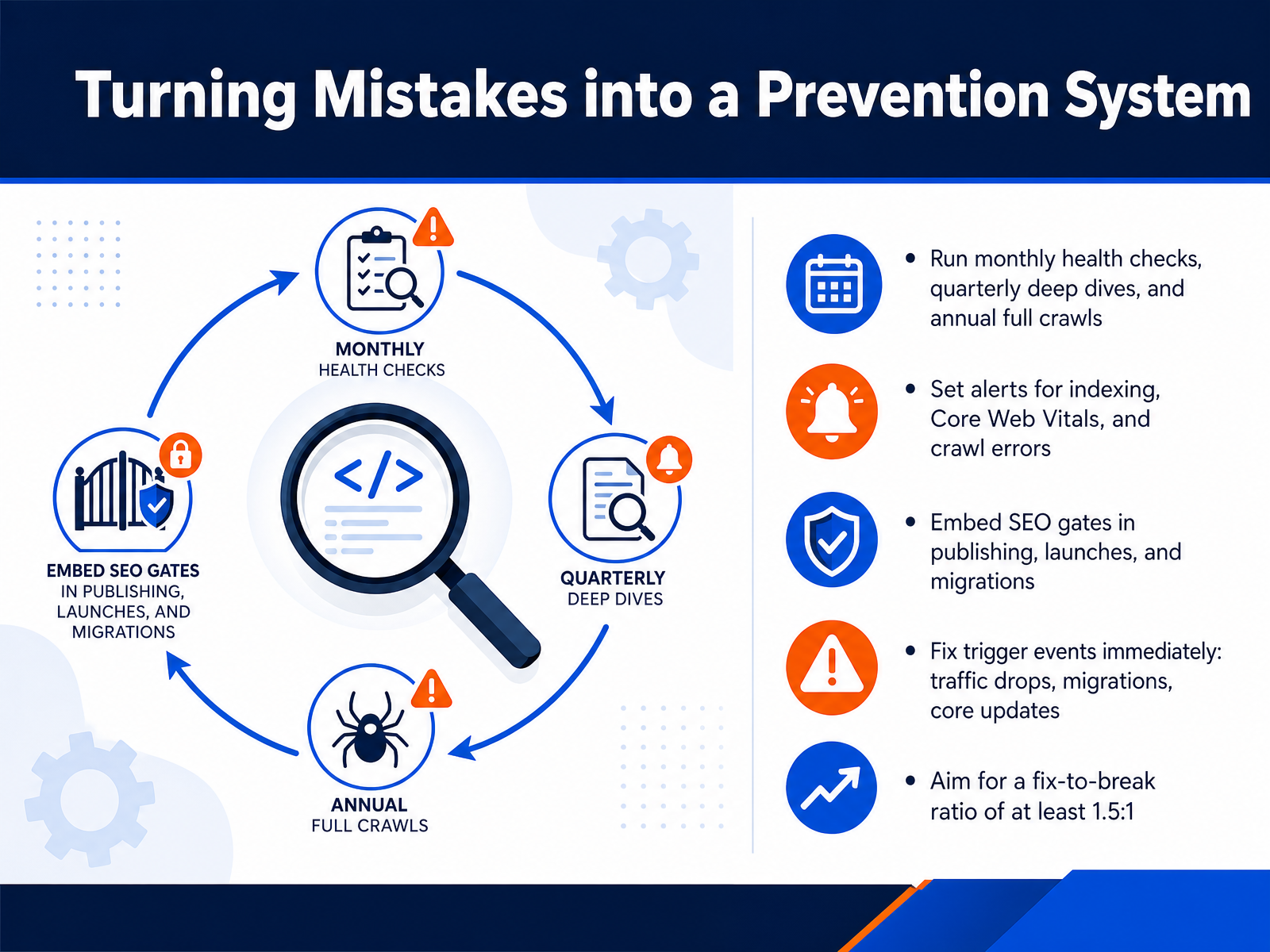
1 min - 14Turning Mistakes into a Prevention SystemLet's close this out by turning our list of mistakes into a system that prevents them. First, set a cadence. Run monthly health checks, quarterly deep dives, and a full annual crawl. This rhythm catches problems while they are still cheap to fix. Second, wire up alerts for indexing shifts, Core Web Vitals regressions, and crawl errors. You should not be discovering a robots.txt block three weeks after it ships. Third, embed SEO gates directly into publishing, launches, and migrations. A quality gate upstream is always cheaper than a fix downstream. And when a trigger event hits, a traffic drop, a migration, a core update, you audit immediately. Do not wait for the calendar. Finally, track your fix-to-break ratio. Aim to fix at least one and a half times more issues than you create each quarter. If that ratio drops below one, your site health is deteriorating despite active maintenance. That is the metric that tells you whether your process is actually working. Thanks for sticking with this. Build the system, monitor the signals, and keep the ratio healthy.
 2 min
2 min
Take the deck with you
Download this course as a file — free, no sign-up needed.
- PDF handoutEvery slide page, ready to print or share.15 pages · 3.4 MBDownload
- Narrated PowerPointThe deck that presents itself — every slide carries the digital human's narration video.15 pages · 14.7 MBDownload
- PowerPoint slidesThe full deck as a .pptx — open it in PowerPoint, Keynote, or Google Slides.15 pages · 3.2 MBDownload
Free to use in your own training — please keep the PersonWise credit page at the end.
Have your own deck? Turn it into a course
Sources consulted
Web sources consulted while building this course.
- SEO mistakes: Common SEO issues & how to fix them - Semrush — semrush.com
- 20 Common SEO Mistakes in 2026 (And How to Fix Them) — rankai.ai
- Common SEO Mistakes That Could Be Hurting Your Rankings - HigherVisibility — highervisibility.com
- SEO mistakes: 21 errors to detect and fix in 2026 — edikka.com
- 100 Common SEO Mistakes to Avoid in 2026 (Deep Checklist) — peaklora.com
- SEO Debugging Checklist: Diagnose Visibility Drops Systematically | OrganicSEO.org — organicseo.org
- Organic SEO Audit: 2026 Checklist - Incremys — incremys.com
- How to Analyze a Sudden Drop in Website Traffic [With Template] — ahrefs.com
- Why Is My Organic Traffic Declining in 2026? - SMA Marketing — smamarketing.net
- Why Is Organic Traffic Dropping in 2026? - Screpy — screpy.com
- Top 10 Technical SEO Issues We Found in 2026 (Aggregate Crawl Data) | Crawlix — crawlix.app
- Understanding technical SEO: Audit fundamentals + detailed checklists — blog.hubspot.com
- The 12 Most Common Technical SEO Errors in 2026 | SEOdiag — seodiag.com
- The Ultimate Technical SEO Audit Checklist (60+ Checks) — screamingcat.net
- How to Perform a Technical SEO Audit in 2026 (Step-by-Step Guide) | CrawlRaven — crawlraven.com
- Fix Keyword Cannibalization: Identify & Resolve SEO Issues — searchengineland.com
- What Is Keyword Cannibalization? + How to Fix & Avoid It — semrush.com
- Keyword Cannibalization: What It (Really) Is & How to Fix It — ahrefs.com
- How to diagnose and fix keyword cannibalisation | SearchScore — searchscore.io
- Keyword Cannibalization: Why Avoid It and How to Fix It — backlinko.com