Begin
14 pages · ~28 min
Gene Expression: Transcription & Translation
This training explains how genes are transcribed and translated into proteins, helping learners understand the flow of genetic information and the key molecular steps involved.
A digital instructor presents all 14 pages. Hold “Ask” at any point and ask out loud — the answer comes from this course. No sign-up needed.
What you’ll learn
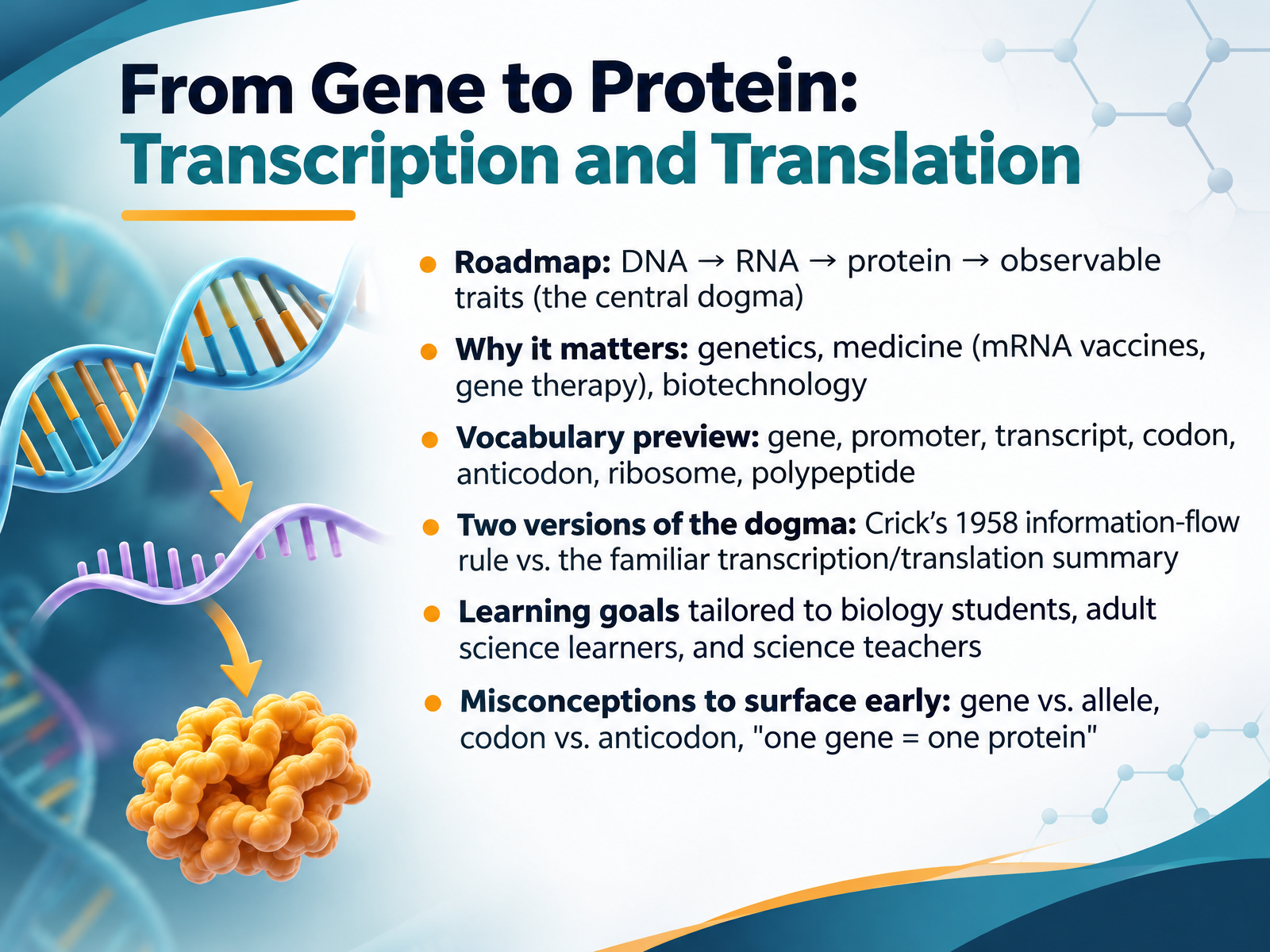
- 01From Gene to Protein: Transcription and TranslationWelcome. In this course, we will trace how information stored in a gene becomes an actual working protein, and then a trait you can observe in a cell. Here is the roadmap. Genetic information generally flows from DNA to RNA to protein, and that flow shapes observable traits. This matters well beyond the classroom. It underlies genetics and medicine, including mRNA vaccines and gene therapy, and it is central to biotechnology. Along the way, you will meet key terms such as gene, promoter, transcript, codon, anticodon, ribosome, and polypeptide. We will also compare two versions of the so-called central dogma. Crick's 1958 rule described which directions information can flow, while the familiar summary focuses on transcription and translation. We will surface misconceptions early, including gene versus allele, codon versus anticodon, and the claim that one gene always makes one protein. Next, we build the molecular foundations: DNA, RNA, and the genetic code.genome.govwires.onlinelibrary.wiley.comdoi.org+21 min
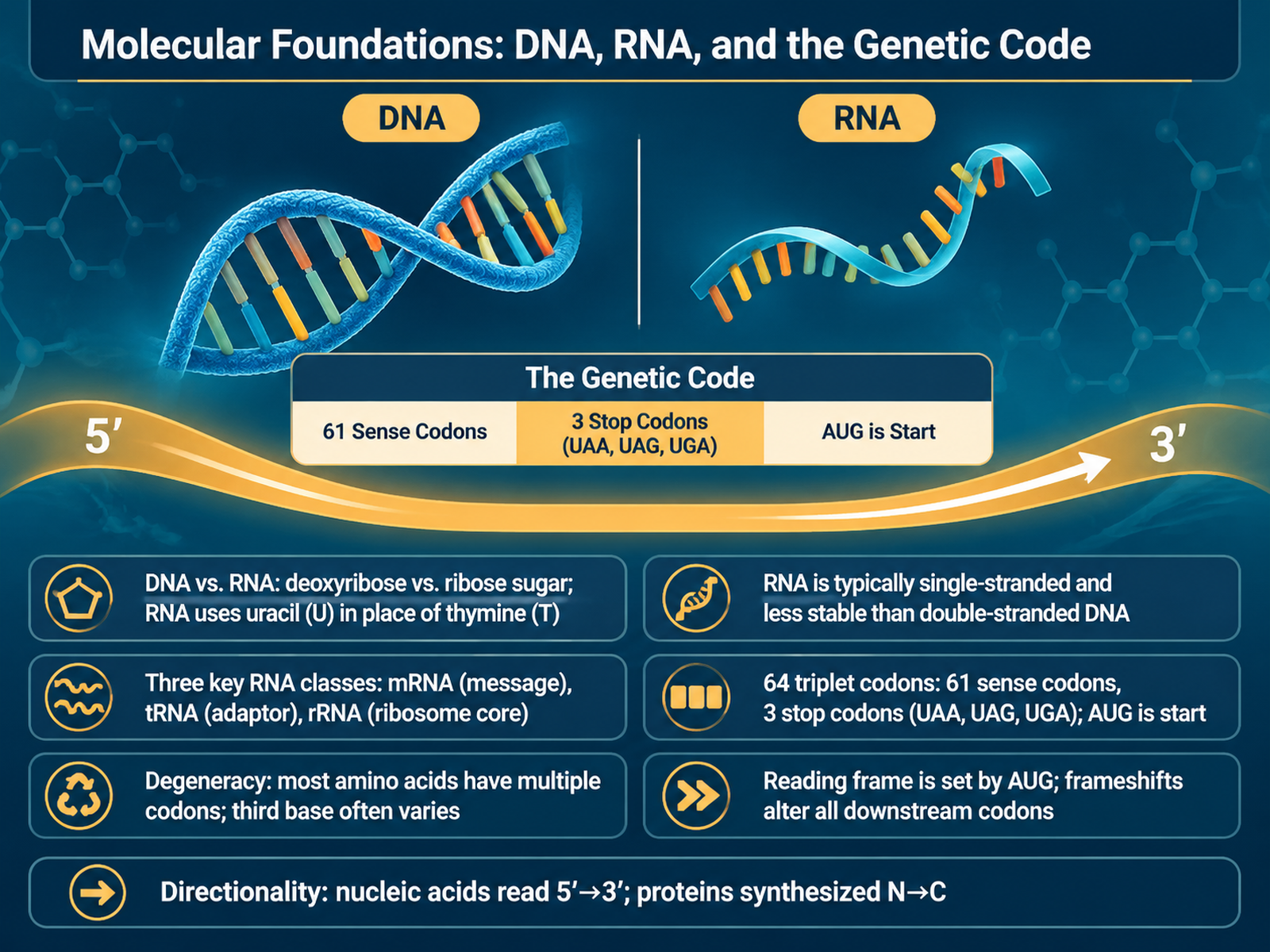
- 02Molecular Foundations: DNA, RNA, and the Genetic CodeLet's build the molecular foundation before we track the actual processes. Start with DNA versus RNA. DNA uses deoxyribose sugar, while RNA uses ribose. RNA also uses uracil, U, in place of thymine, T. In the cell, RNA is typically single-stranded and less stable than double-stranded DNA. Three RNA classes matter most here. Messenger RNA, or mRNA, carries the message. Transfer RNA, or tRNA, is the adaptor that matches codons to amino acids. Ribosomal RNA, or rRNA, forms the core of the ribosome. Now the code. There are sixty-four triplet codons. Sixty-one are sense codons, and three are stop codons: UAA, UAG, and UGA. AUG is the start codon. The code is degenerate, meaning most amino acids have more than one codon, and the third base often varies. Reading frame is set by AUG, so a frameshift changes every downstream codon. Finally, keep directionality straight. Nucleic acids are read five prime to three prime, while proteins are synthesized N terminus to C terminus. Next, we turn to wobble pairing and why the code is degenerate.
 ncbi.nlm.nih.govgenome.ucsc.eduteaching.ncl.ac.uk+22 min
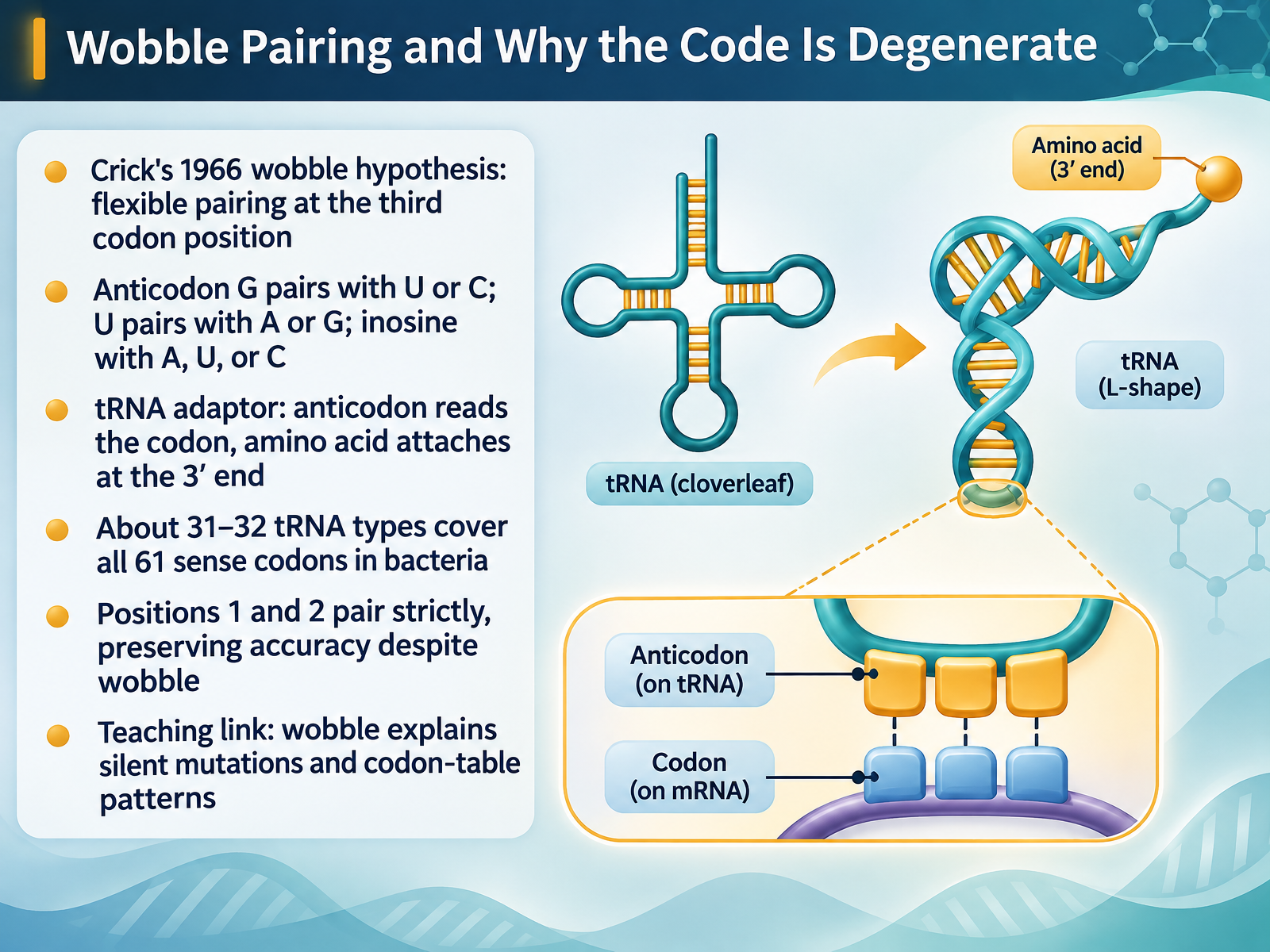
- 03Wobble Pairing and Why the Code Is DegenerateNow let's look at how the code stays readable even when pairing is flexible. In 1966, Francis Crick proposed the wobble hypothesis. The first two positions of a codon pair strictly with the anticodon. The third position, the wobble position, can form nonstandard base pairs. For example, an anticodon G can pair with U or C. An anticodon U can pair with A or G. And inosine, a modified base, can pair with A, U, or C. The tRNA is the adaptor here. Its anticodon reads the codon, while the matching amino acid attaches at the 3′ end. Because of wobble, bacteria need only about thirty-one to thirty-two tRNA types to cover all sixty-one sense codons. Strict pairing at positions one and two preserves accuracy. So wobble helps explain silent mutations and the patterns you see in the codon table. Next, we move on to transcription in prokaryotes: mechanism and machinery.
 ncbi.nlm.nih.govgenome.ucsc.eduteaching.ncl.ac.uk+21 min
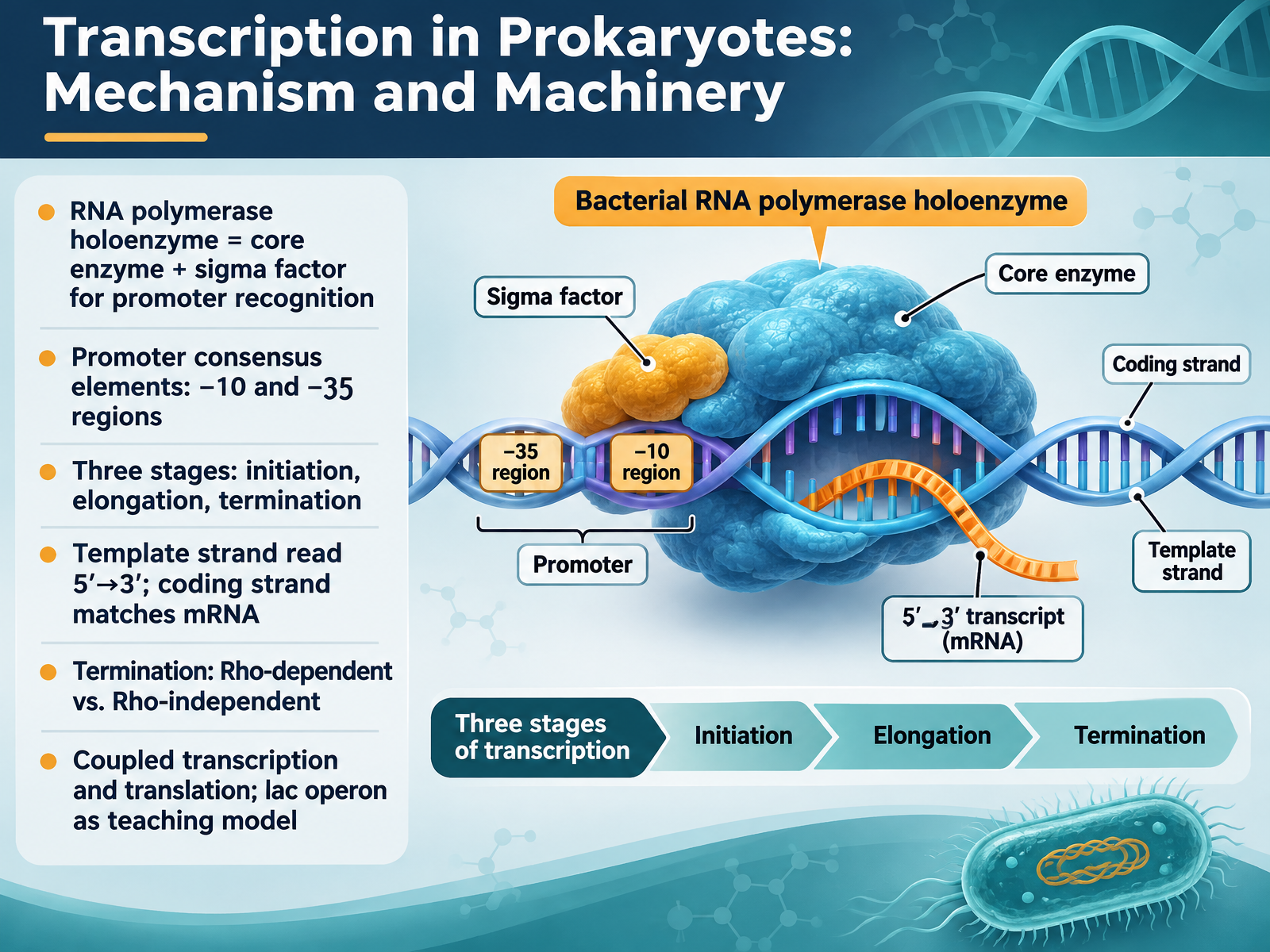
- 04Transcription in Prokaryotes: Mechanism and MachineryNow let's look at how transcription actually works in prokaryotes. The key machine is RNA polymerase, and in bacteria it comes as a holoenzyme. That means the core enzyme plus a sigma factor, which recognizes the promoter. Promoters carry consensus elements, about ten and thirty five bases upstream of the start site. Transcription then proceeds in three stages: initiation, elongation, and termination. During elongation, the template strand is read in the five prime to three prime direction, while the coding strand matches the mRNA sequence. Termination can be Rho-dependent or Rho-independent. And because there is no nucleus, transcription and translation are coupled. The lac operon is a classic teaching model for this. Next, we move to transcription in eukaryotes, where compartmentalization and RNA processing change the picture.
 openstax.orgpressbooks.lib.vt.edubiocev.lf1.cuni.cz+21 min
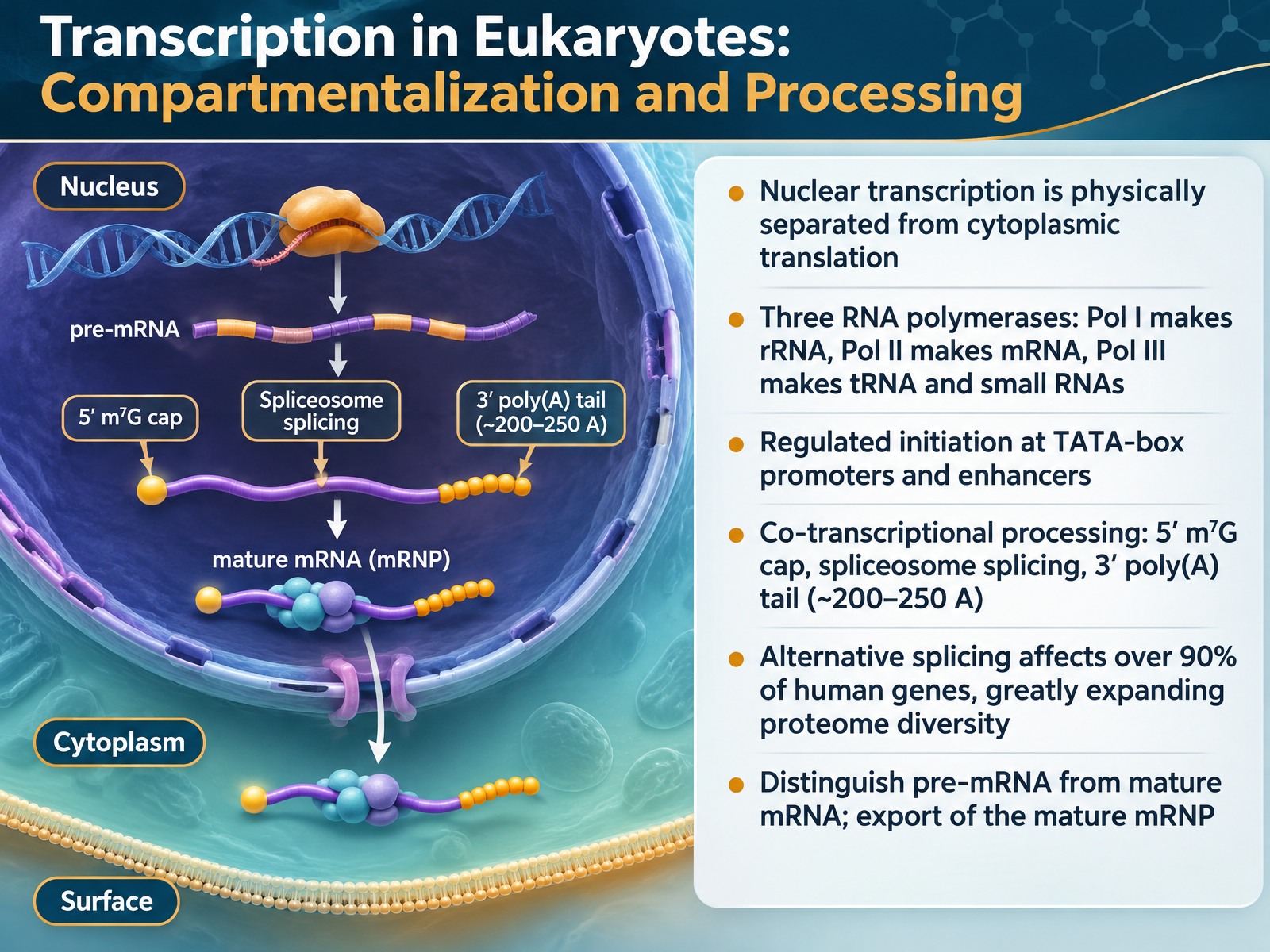
- 05Transcription in Eukaryotes: Compartmentalization and ProcessingSo far, the steps of gene expression have happened in one shared space. In eukaryotes, that space is divided. Transcription occurs in the nucleus, while translation occurs in the cytoplasm. This physical separation creates an extra step: the transcript must be finished before it leaves. Three RNA polymerases share the work. Pol One makes ribosomal RNA, Pol Two makes messenger RNA, and Pol Three makes transfer RNA and small RNAs. For protein-coding genes, initiation is regulated at promoters that often contain a TATA box, and enhancers adjust the rate. Processing begins while the transcript is still emerging. A seven-methylguanosine cap is added at the five-prime end. The spliceosome removes introns and joins exons with single-nucleotide accuracy. Then the three-prime end is cleaved and given a poly(A) tail of roughly two hundred to two hundred fifty adenine residues. These marks protect the RNA and help it pass through nuclear pores. Keep the distinction clear: pre-mRNA still contains introns, whereas mature mRNA does not. Alternative splicing is a major source of variety, because over ninety percent of human genes produce more than one mature mRNA. Next, we follow that mature mRNA into the cytoplasm, in Translation: The Ribosome at Work.
 openstax.orgopenstax.orgdigfir-published.macmillanusa.com+22 min
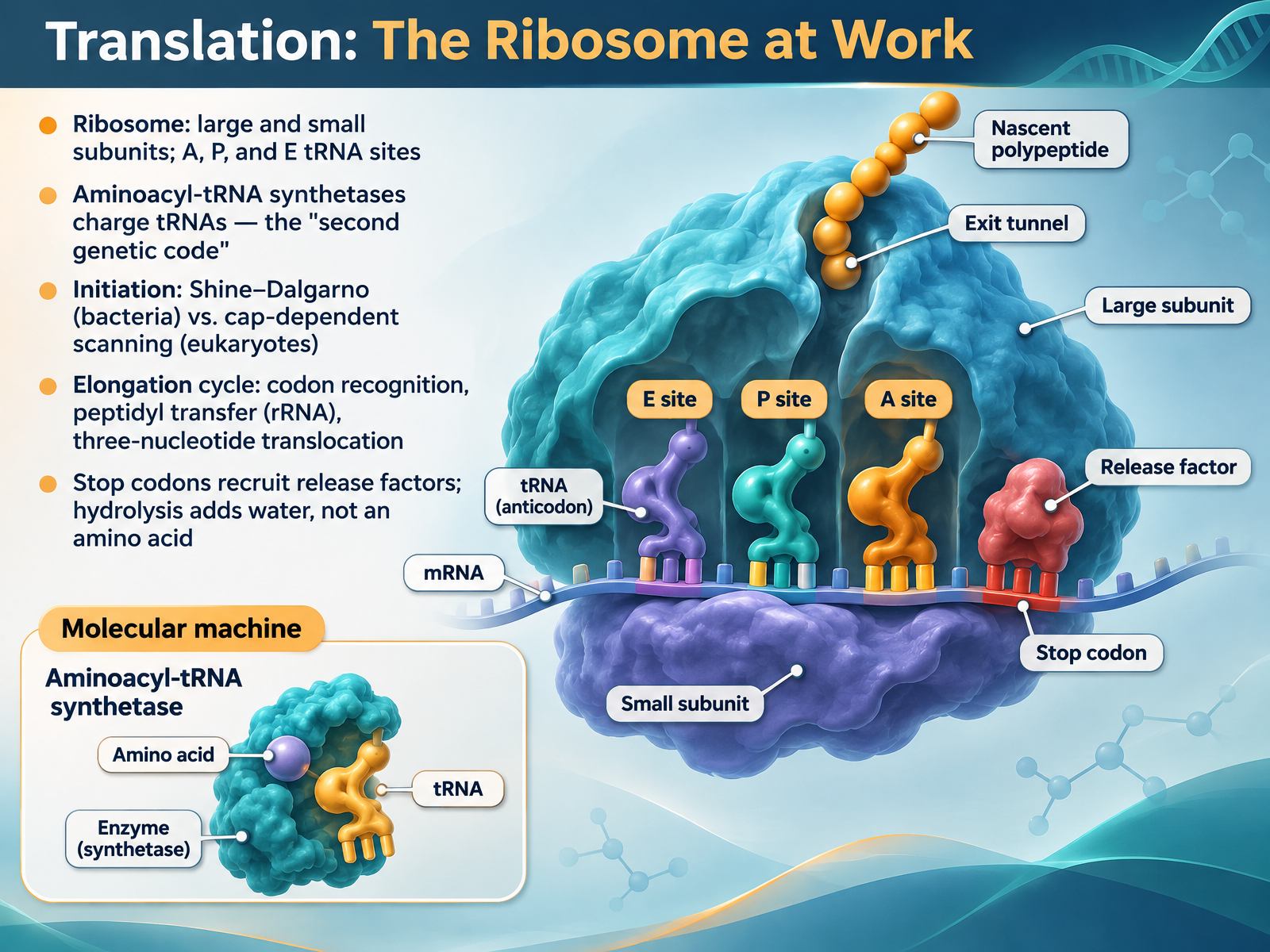
- 06Translation: The Ribosome at WorkNow let's look at translation, where the ribosome does its work. The ribosome has two subunits, large and small, and three tRNA binding sites: the A, P, and E sites. Before tRNAs arrive, aminoacyl-tRNA synthetases charge each tRNA with its correct amino acid. This coupling is so precise that it's often called the second genetic code. Initiation differs between cell types. Bacteria position the small subunit using the Shine-Dalgarno sequence, while eukaryotes recognize the 5 prime cap and scan to the first AUG. In elongation, a charged tRNA enters the A site, the rRNA catalyzes peptide bond formation, and the ribosome translocates exactly three nucleotides. At a stop codon, release factors trigger hydrolysis, adding water instead of an amino acid. Next, we'll compare these pathways side by side in Prokaryotic versus Eukaryotic Expression: A Side-by-Side Comparison.
 ncbi.nlm.nih.gov2 min
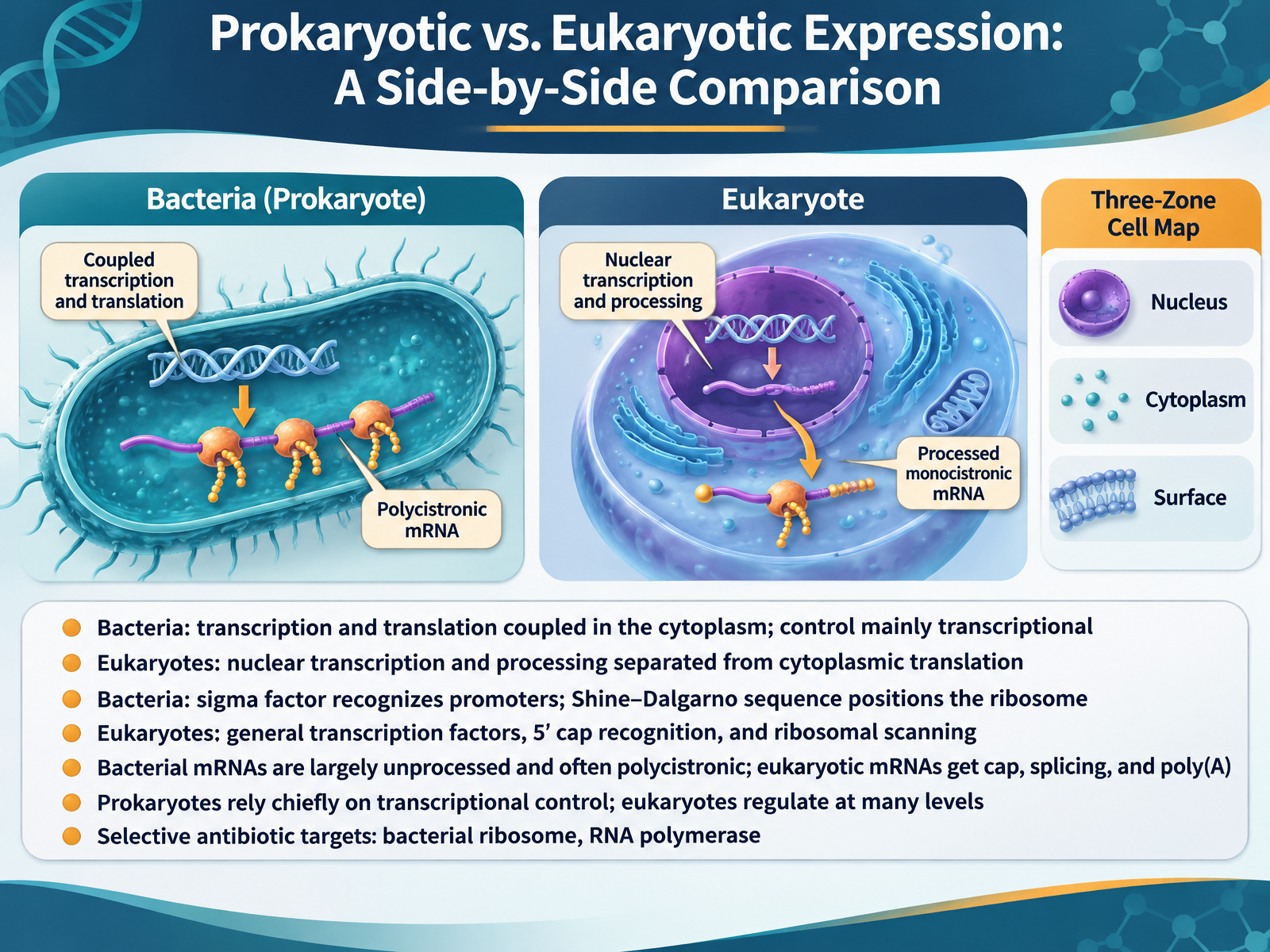
- 07Prokaryotic vs. Eukaryotic Expression: A Side-by-Side ComparisonNow let's compare how prokaryotes and eukaryotes carry out gene expression side by side. In bacteria, transcription and translation are coupled in the cytoplasm. A ribosome can begin translating an mRNA while RNA polymerase is still transcribing it. In eukaryotes, transcription happens in the nucleus, and translation happens later in the cytoplasm, separated by the nuclear membrane. Bacteria use sigma factor to recognize promoters, and a Shine-Dalgarno sequence positions the ribosome at the start codon. Eukaryotes use general transcription factors, recognize the 5 prime cap, and scan along the mRNA to find the start codon. Bacterial mRNAs are largely unprocessed and often polycistronic, meaning one transcript can carry several genes. Eukaryotic mRNAs receive a cap, splicing, and a poly(A) tail. Because of this coupling, prokaryotes rely chiefly on transcriptional control, while eukaryotes regulate at many levels. And those differences give us selective antibiotic targets, such as the bacterial ribosome and bacterial RNA polymerase. Next, we move from polypeptide to functional protein, folding, modification, and targeting.
 openstax.orgpressbooks.lib.vt.edubiocev.lf1.cuni.cz+22 min
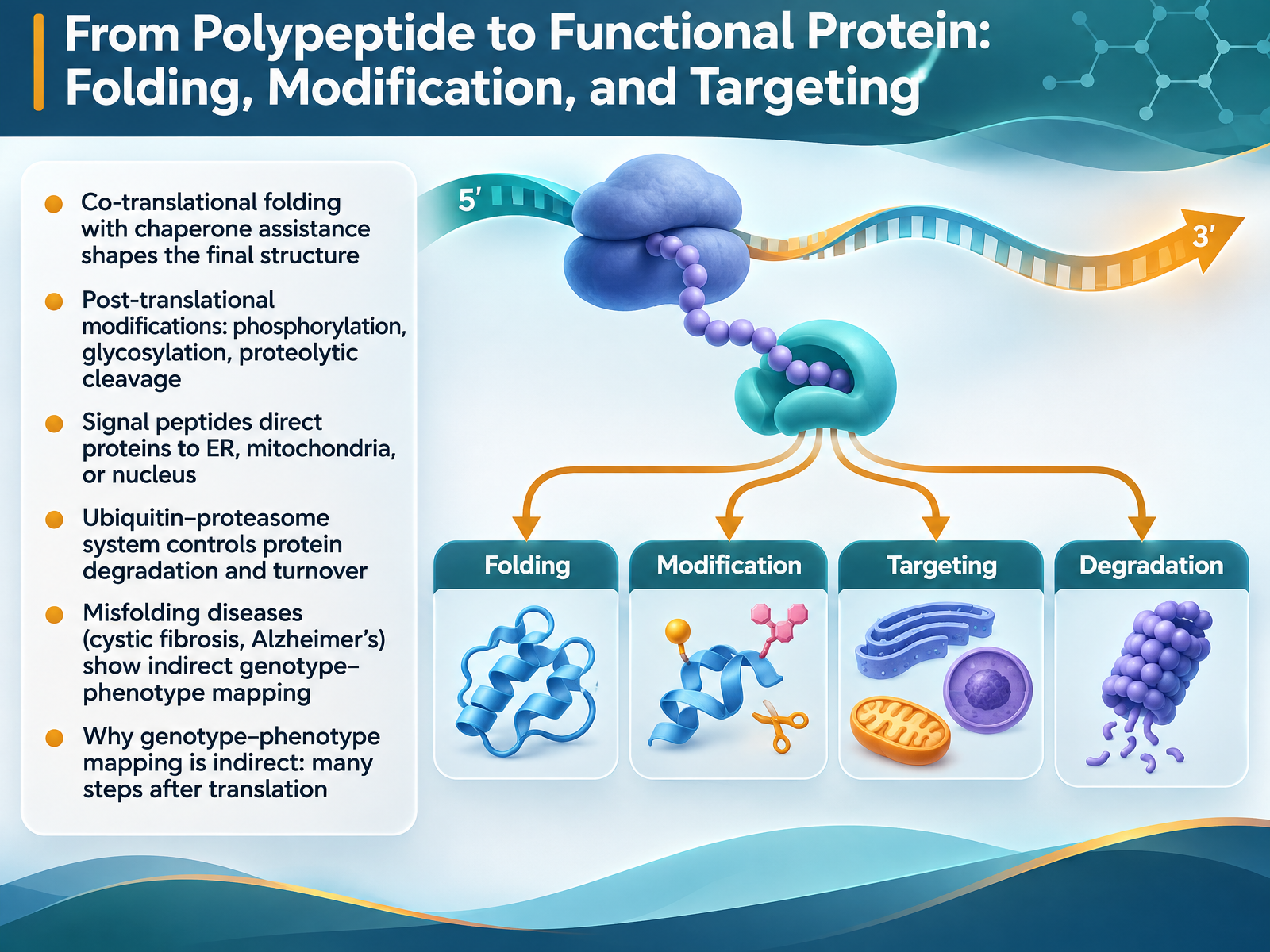
- 08From Polypeptide to Functional Protein: Folding, Modification, and TargetingNow that the polypeptide chain is complete, let's follow it toward becoming a functional protein. As translation proceeds, the chain begins to fold, often with help from chaperone proteins that guide it into its final shape. After translation, the protein may be chemically modified, for example by phosphorylation, glycosylation, or proteolytic cleavage, which can switch its activity on or off. Signal peptides act as targeting labels, directing proteins to the endoplasmic reticulum, the mitochondria, or the nucleus. And the ubiquitin proteasome system marks worn out or unneeded proteins for degradation, controlling their turnover. This helps explain why genotype to phenotype mapping is indirect. Misfolding diseases such as cystic fibrosis and Alzheimer's show that many steps after translation shape the outcome. Keep this chain of steps in mind, because it sets up our next topic, regulation of gene expression, adding control layers.
 openstax.orgpressbooks.lib.vt.edubiocev.lf1.cuni.cz+21 min
- 09Regulation of Gene Expression: Adding Control LayersNow let's add the layers of control. Remember that in eukaryotes, transcription and translation are separated, so regulation can happen at every stage. Transcriptional control sets whether and how much mRNA is made. Activators and repressors bind regulatory sequences, enhancers can act from thousands of nucleotides away, and chromatin remodeling changes DNA accessibility. Epigenetic control, such as DNA methylation and chromatin state, adjusts that accessibility more durably. After transcription, alternative splicing lets one gene produce multiple proteins, mRNA stability sets how long a message survives, and microRNAs, about twenty-one to twenty-four nucleotides long, guide the RNA-induced silencing complex to block translation or degrade mRNA. Translational control includes phosphorylation of eukaryotic initiation factor two, which prevents the initiation complex from forming, and mRNA localization, which places transcripts where their proteins are needed. Post-translational control adds modifications and marks proteins for proteasome degradation. These layers matter for cell differentiation, for energy economy, and in disease. Next, we consider mutations and their consequences for the protein product.
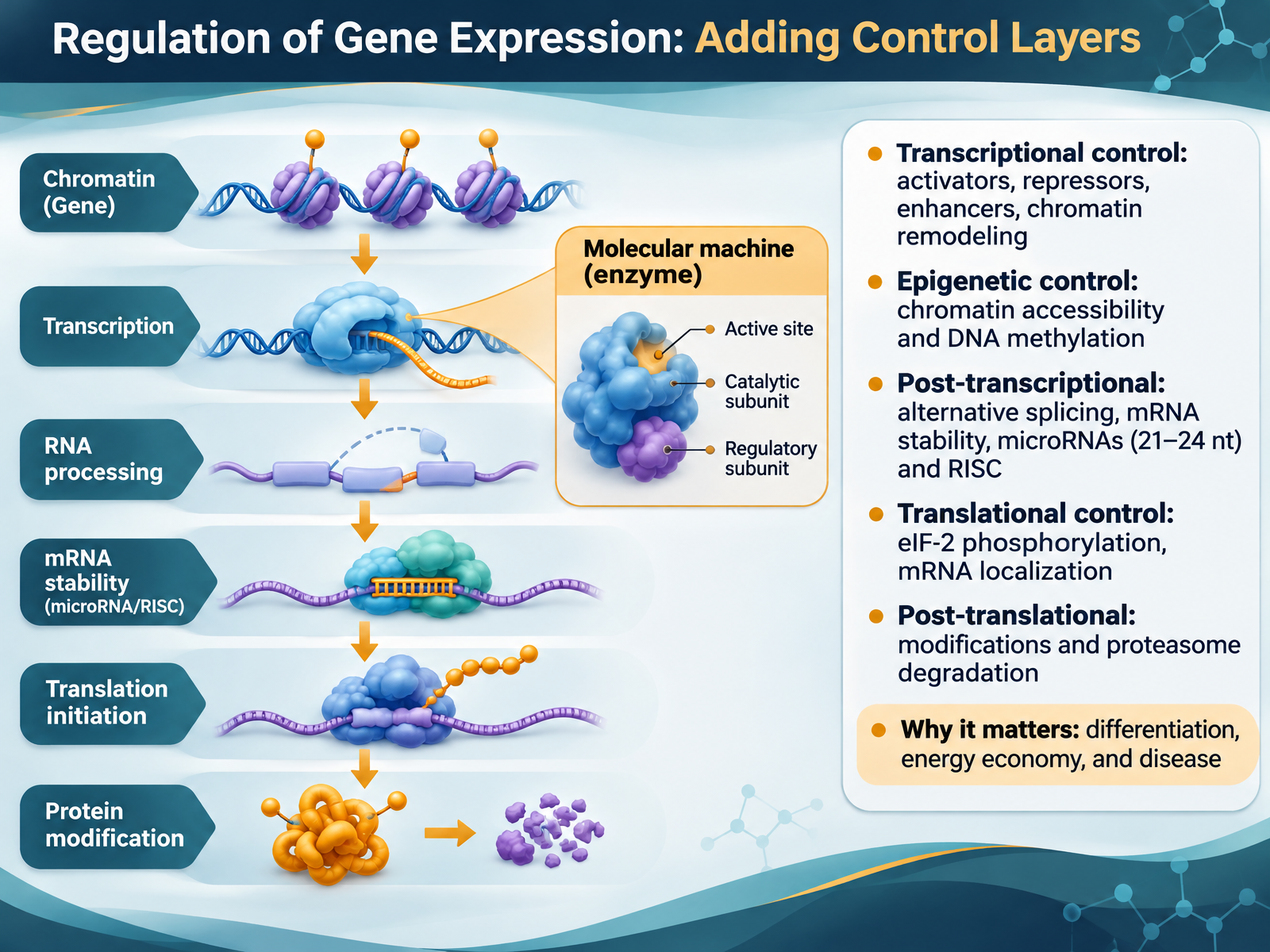 openstax.orgpressbooks.lib.vt.edubiocev.lf1.cuni.cz+22 min
- 10Mutations and Their Consequences for the Protein ProductNow let's connect everything we've built so far to mutations, and to what they actually do to the protein product. Start with point mutations. In a silent mutation, the nucleotide changes but the amino acid does not, because the genetic code is degenerate, and often the third base can wobble. In a missense mutation, one amino acid is swapped for another. In a nonsense mutation, a codon becomes a stop signal, so translation ends early and you get a truncated protein. Insertions and deletions behave differently. Because the ribosome reads in groups of three, adding or removing a base shifts the reading frame, and every downstream codon changes. Splice-site mutations affect mRNA processing instead, changing which exons end up in the mature transcript. At the level of the organism, we describe outcomes as loss of function or gain of function. Sickle cell disease comes from a single substitution in hemoglobin beta, while cystic fibrosis reflects a defect in the CFTR protein. Across all of these, trace the path: mutation class, then protein structure and function, then observable phenotype. Next, we'll look at mRNA vaccines as translation in action.
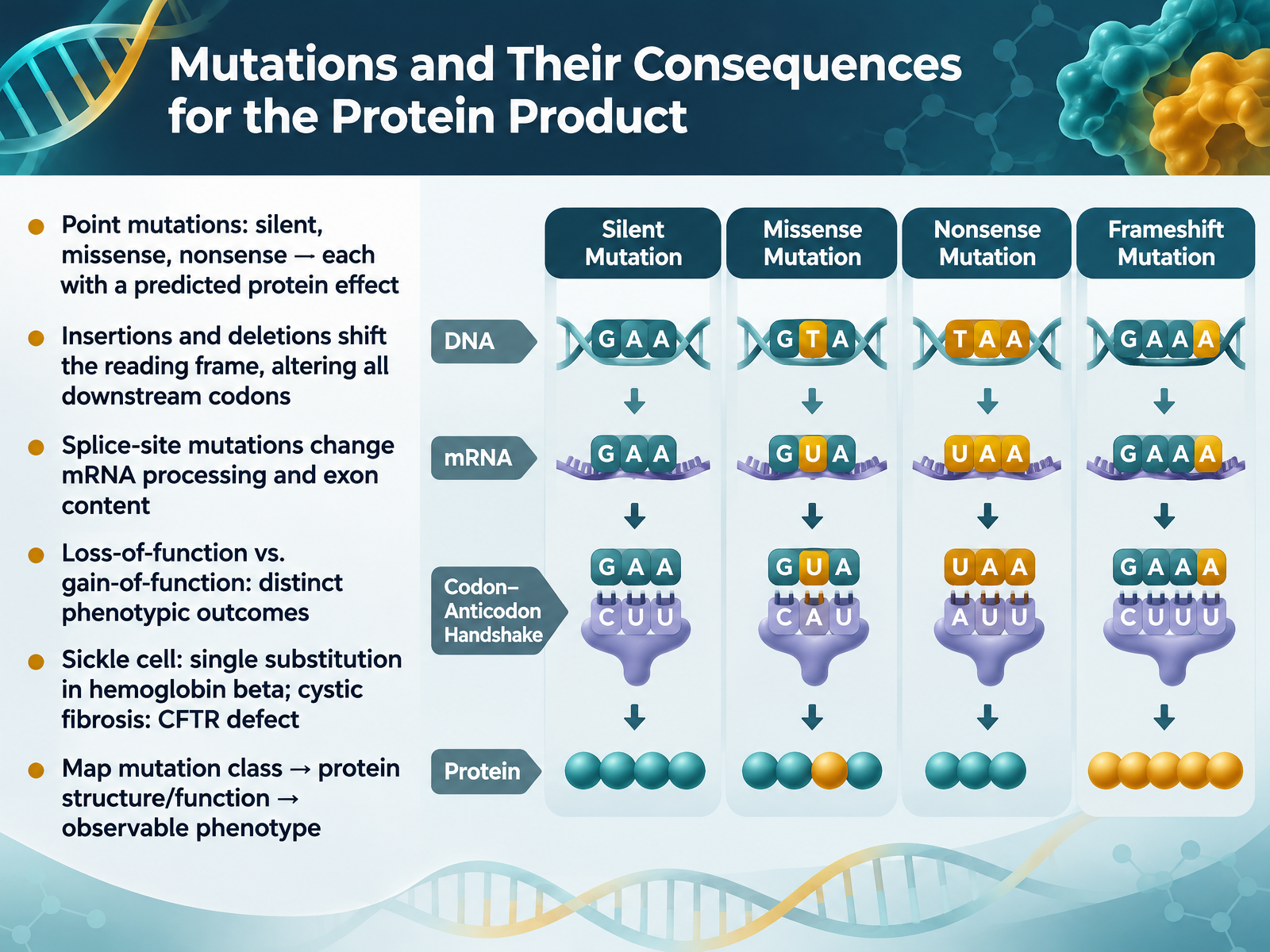 ncbi.nlm.nih.govgenome.ucsc.eduteaching.ncl.ac.uk+22 min
- 11Case Study: mRNA Vaccines as Translation in ActionLet's see translation in action through a familiar case study: mRNA vaccines. A vaccine mRNA is built like a cellular message. It has a five prime cap, a five prime untranslated region, an open reading frame, a three prime untranslated region, and a poly A tail. Codon optimization and pseudouridine modification help the ribosome translate efficiently while reducing innate immune sensing. Lipid nanoparticles deliver the mRNA into host cells, where the cell's own ribosomes translate it into antigen. That spike protein is then processed and presented on MHC molecules to activate adaptive immunity. The key point is that the vaccine must be translated in situ. The translation machinery itself does the work. Next, we turn to gene therapy and CRISPR at the level of expression steps.
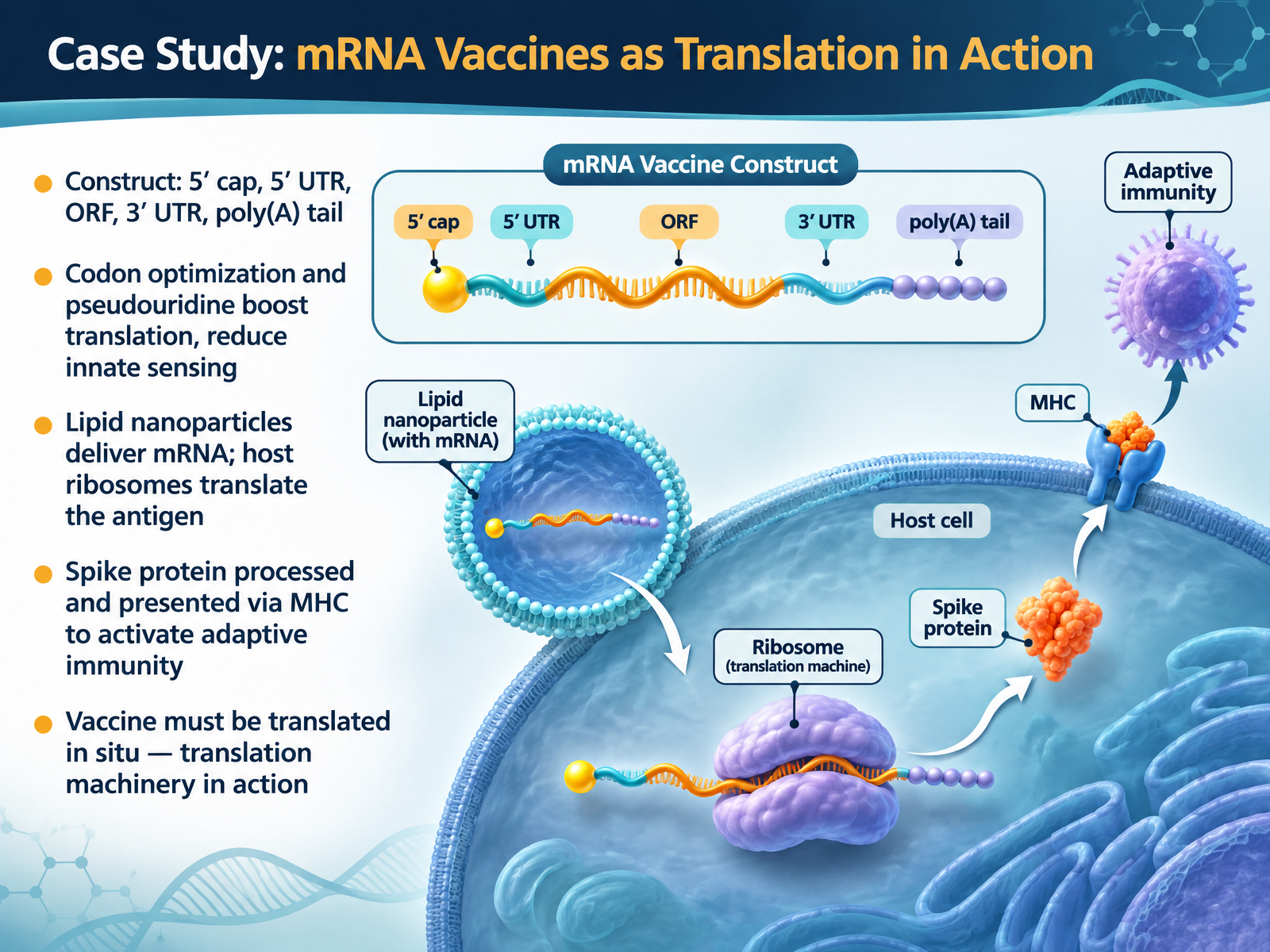 1 min
- 12Case Study: Gene Therapy and CRISPR at the Level of Expression StepsLet's apply what you've learned to a real case. Genetic medicine can target any step of expression: the DNA itself, RNA processing, RNA interference, or protein function. With CRISPR-Cas9, a guide RNA finds the target sequence, Cas9 cuts the DNA, and the cell's own repair machinery edits the sequence. In sickle cell disease, the hemoglobin beta mutation is the defect you would correct. For treatment design, first ask which step best fixes the molecular defect. And keep the ethics in view: germline versus somatic editing, access, and the designer babies debates. Now let's look at how to teach these ideas with models, activities, and assessment design.
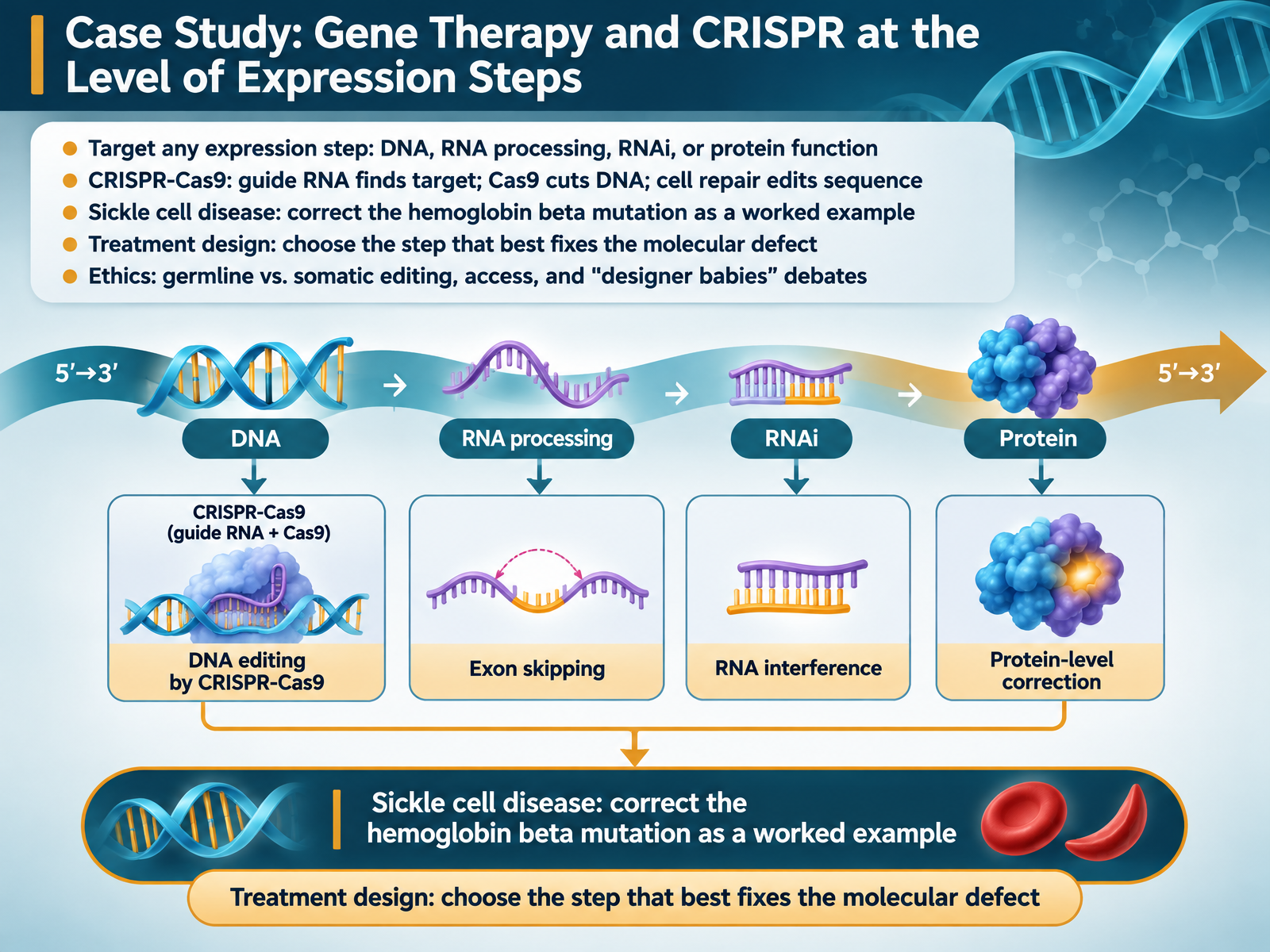 1 min
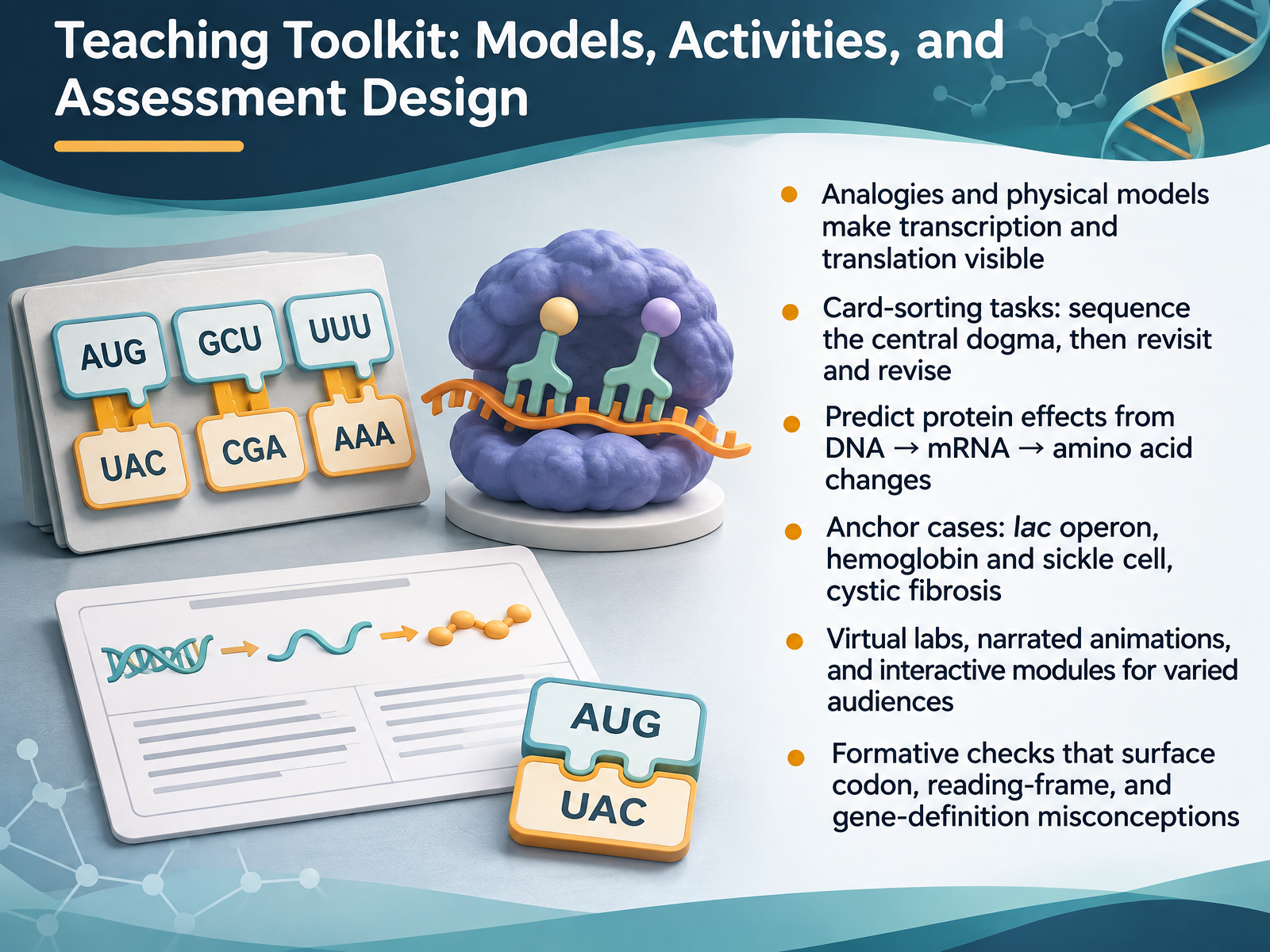
- 13Teaching Toolkit: Models, Activities, and Assessment DesignLet's turn to how you actually teach this. Begin with analogies and physical models so transcription and translation become visible rather than abstract. Card sorting works well: have groups sequence the central dogma, then revisit and revise their order after instruction. For prediction, give students a DNA change and ask them to trace it through mRNA to the amino acid change, and then propose the protein effect. Anchor these ideas with cases such as the lac operon, hemoglobin and sickle cell, and cystic fibrosis. Virtual labs, narrated animations, and interactive modules let you reach different audiences. Finally, use formative checks that surface common misconceptions about codons, reading frames, and what a gene is. That gives you evidence to adjust before the wrap-up, where we revisit the central dogma and modern refinements.
 ncbi.nlm.nih.govgenome.ucsc.eduteaching.ncl.ac.uk+21 min
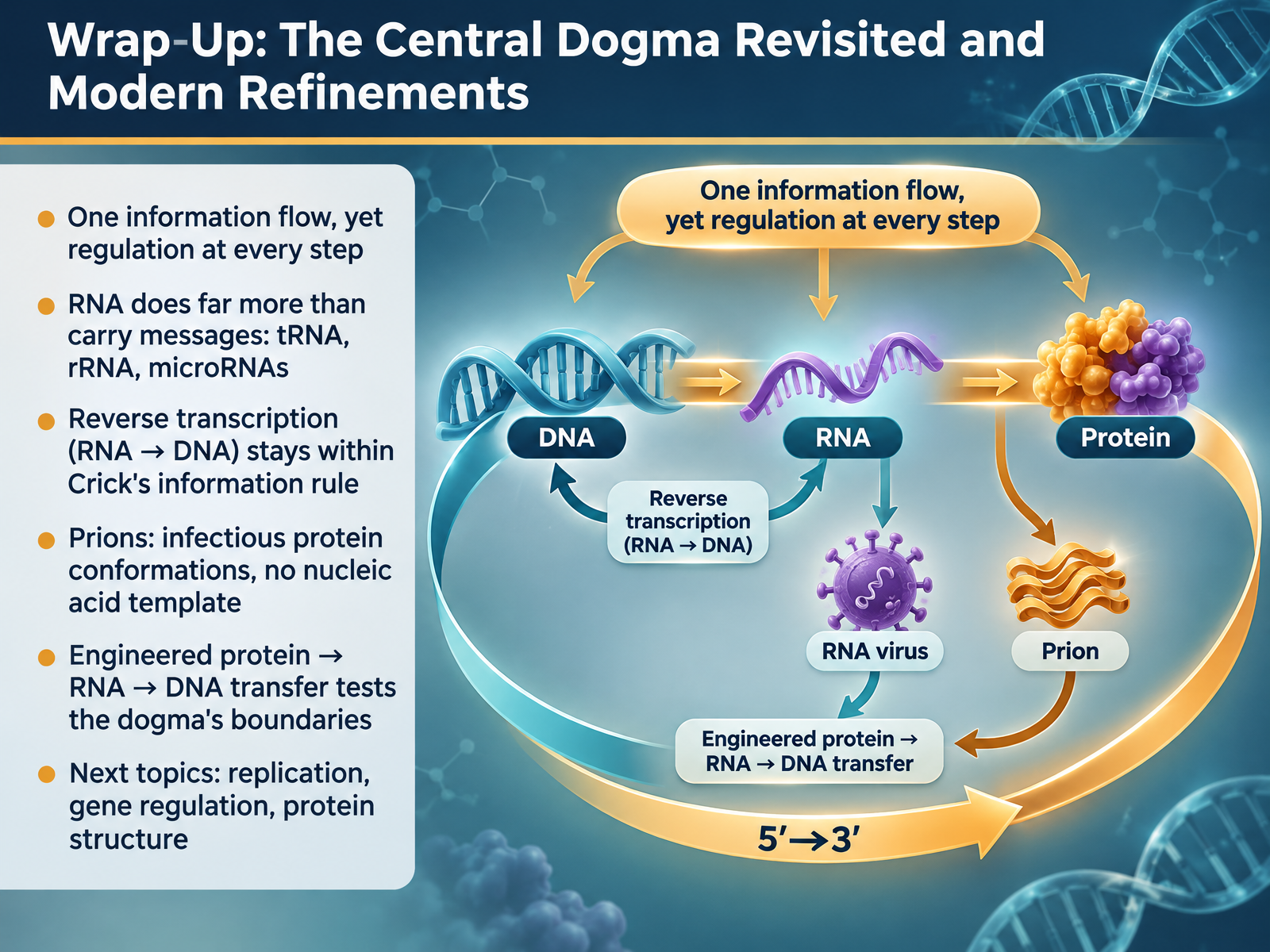
- 14Wrap-Up: The Central Dogma Revisited and Modern RefinementsLet's bring this together. There is still one main flow of sequence information: DNA to RNA to protein. Yet regulation happens at every step, from transcription to translation. And RNA does far more than carry messages. Transfer RNA and ribosomal RNA build proteins, while microRNAs help control which genes are expressed. Reverse transcription, the copying of RNA back into DNA, stays within Crick's information rule. Prions are infectious protein conformations that propagate without a nucleic acid template, although they still depend on the host's prion protein gene. Engineered protein to RNA to DNA transfer now tests the dogma's boundaries. This is why the central dogma is best read as a framework, not a rigid sentence. From here, we move on to replication, gene regulation, and protein structure. Thank you for working through transcription and translation with me, and keep connecting each molecular detail to what you can observe in the cell.
 genome.govwires.onlinelibrary.wiley.comdoi.org+22 min
Take the deck with you
Download this course as a file — free, no sign-up needed.
- PDF handoutEvery slide page, ready to print or share.15 pages · 4.6 MBDownload
- Narrated PowerPointThe deck that presents itself — every slide carries the digital human's narration video.15 pages · 15.4 MBDownload
- PowerPoint slidesThe full deck as a .pptx — open it in PowerPoint, Keynote, or Google Slides.15 pages · 4.5 MBDownload
Free to use in your own training — please keep the PersonWise credit page at the end.
Have your own deck? Turn it into a course
Sources consulted
Web sources consulted while building this course.
- Central Dogma — genome.gov
- The Central Dogma revisited: Insights from protein synthesis, CRISPR, and beyond - Ille - 2022 - WIREs RNA - Wiley Online Library — wires.onlinelibrary.wiley.com
- Discovering, Integrating, and Reinterpreting the Molecular Logic of Life: From Classical Theories of Heredity to an Extended Functional Perspective on the Central Dogma — doi.org
- The rise and fall of central dogmas — pmc.ncbi.nlm.nih.gov
- Central Dogma in 7 Experiments — asimov.com
- From RNA to Protein - Molecular Biology of the Cell - NCBI Bookshelf — ncbi.nlm.nih.gov
- Educating with the Genome Browser — genome.ucsc.edu
- Wobble Hypothesis - The School of Biomedical Sciences Wiki — teaching.ncl.ac.uk
- 7.6: The Wobble Hypothesis — bio.libretexts.org
- Trna wobble.html — educationalgames.nobelprize.org
- 16.1 Regulation of Gene Expression - Biology 2e | OpenStax — openstax.org
- Gene Regulation and the Cell Cycle – Cell Biology, Genetics, and Biochemistry for Pre-Clinical Students — pressbooks.lib.vt.edu
- mRNAs, proteins and the emerging principles of gene expression control — biocev.lf1.cuni.cz
- Control of Gene Expression - Molecular Biology of the Cell - NCBI Bookshelf — ncbi.nlm.nih.gov
- Outline for Lecture 12 — columbia.edu
- 15.4 RNA Processing in Eukaryotes - Biology for AP® Courses | OpenStax — openstax.org
- Ch. 15 Chapter Summary - Biology 2e | OpenStax — openstax.org
- Chapter 10: Post-transcriptional Gene Control — digfir-published.macmillanusa.com
- Post-transcriptional regulation of gene expression and the intricate life of eukaryotic mRNAs — pmc.ncbi.nlm.nih.gov
- mRNA nuclear export at a glance — pmc.ncbi.nlm.nih.gov