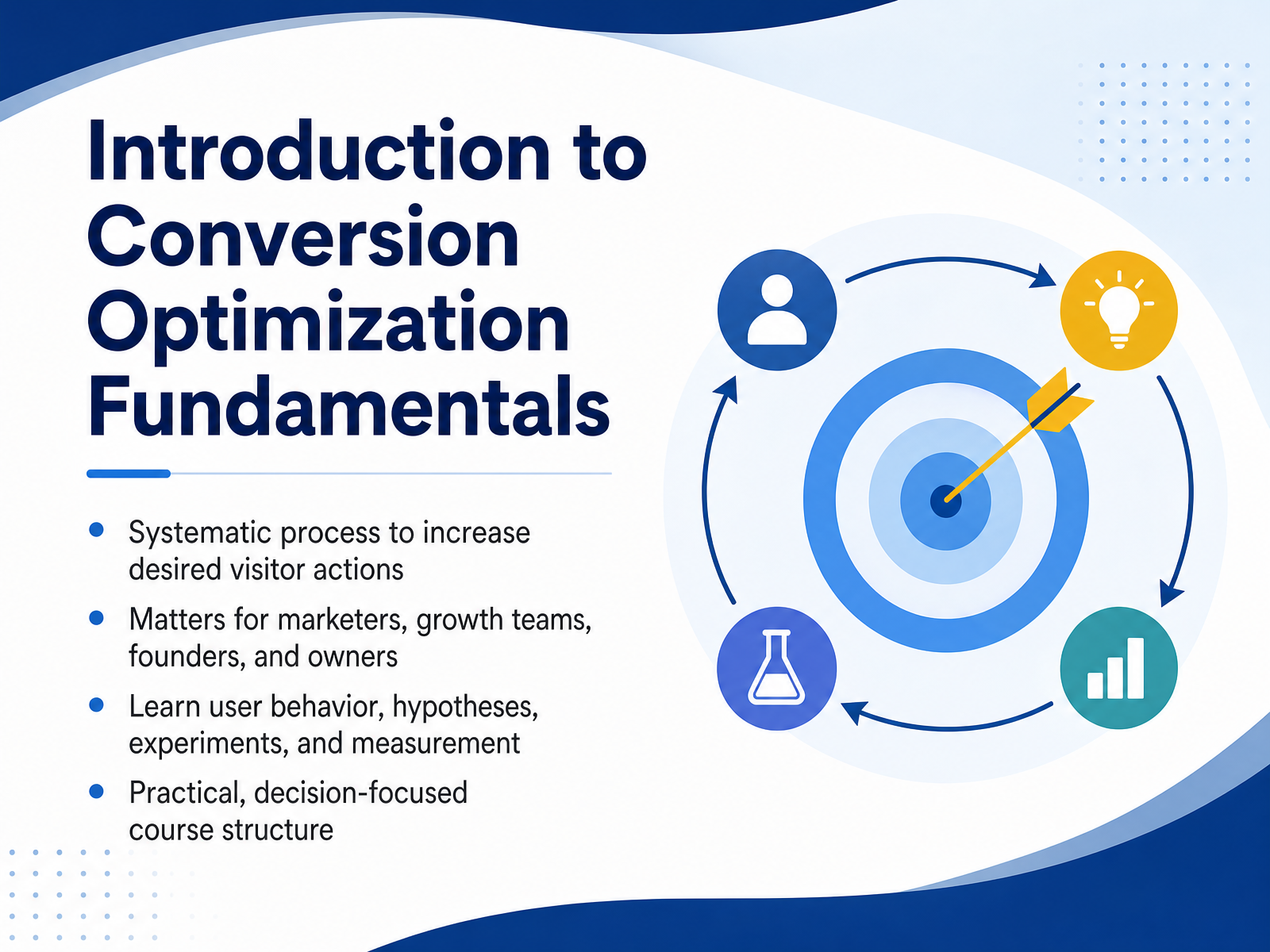
Conversion Optimization Fundamentals
Begin
14 pages · ~28 min
Conversion Optimization Fundamentals
Learn the core principles of conversion optimization to increase website conversions and drive business growth. Ideal for marketers and analysts seeking practical, data-driven strategies.
What you’ll learn
- 01Introduction to Conversion Optimization FundamentalsWelcome to Conversion Optimization Fundamentals. Let's get straight to what this course is really about. It's a systematic process for increasing the percentage of visitors who take a desired action on your site. And for marketers, growth teams, founders, and site owners, that action is the difference between a visitor and a customer. We will focus on understanding real user behavior, forming testable hypotheses, running effective experiments, and measuring what actually matters. This is not about guesswork. It is about making informed decisions that move your conversion rate. We have designed the entire course to be practical, so you can apply what you learn directly to your own projects. Next, we'll explore why conversion optimization is a core driver of business growth.1 min
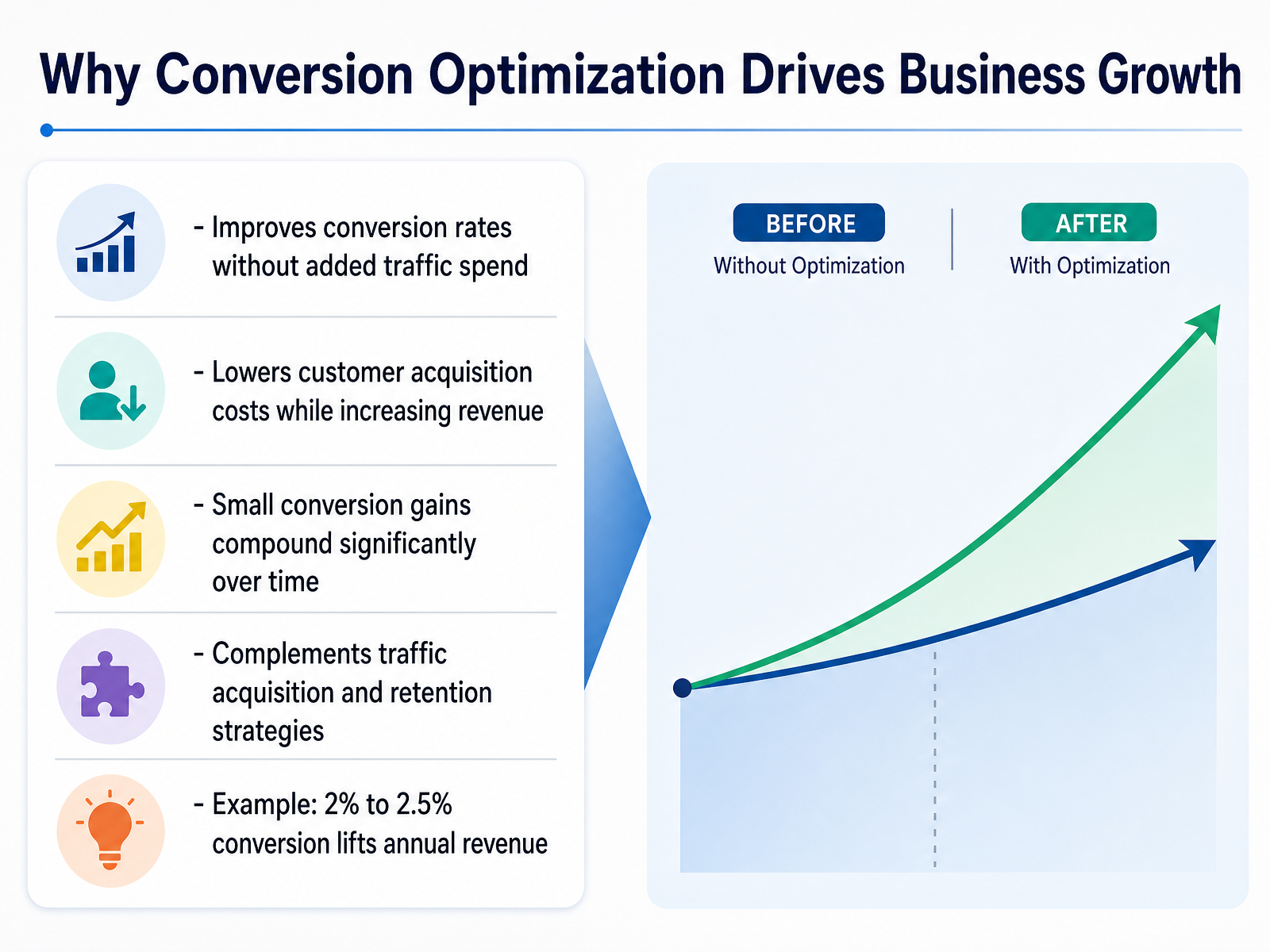
- 02Why Conversion Optimization Drives Business GrowthNow, why does conversion optimization matter for business growth? It starts with a simple point: you improve conversion rates without spending more on traffic. The people already visiting your site simply do more of what you want. That means lower customer acquisition costs even as revenue goes up. And small gains add up fast. A move from two percent to two point five percent may look minor, but applied to consistent traffic it can lift annual revenue by double digits in many cases. Conversion work also strengthens the rest of your funnel. It makes paid campaigns more efficient, improves email performance, and supports retention by creating smoother experiences. Think of it as a multiplier, not a separate channel. Next, let’s move into the core mental models and common misconceptions that shape how you diagnose and test.
 1 min
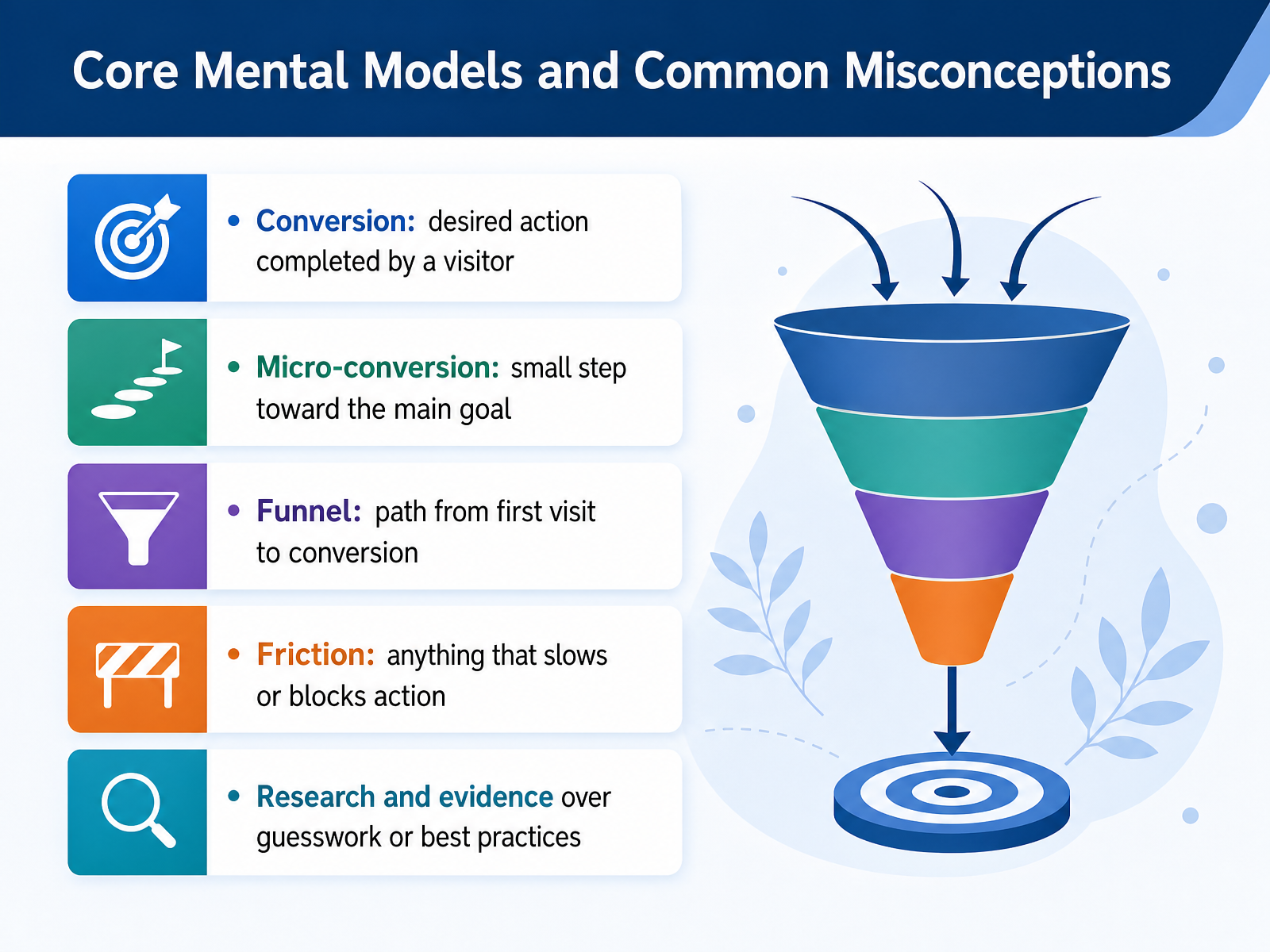
1 min - 03Core Mental Models and Common MisconceptionsLet's get the fundamentals straight, because these mental models shape every test you'll run. First, a conversion is simply a visitor completing a desired action. That could be a purchase, a signup, or a demo request. But don't ignore the smaller steps. A micro-conversion, like adding a product to a cart or watching a key video, is a signal of intent along the way. Think of the funnel as the entire path from first visit to that final action. Your job is to see where people leave. Friction is what makes them leave. It's anything that slows people down. Confusing copy, a long form, a slow page load. All of it adds up. Here's the big one. You should base decisions on research and evidence, not guesswork or so-called best practices from another industry. Your audience is unique. To truly optimize, you need to understand how they think and what they do. Next, we'll look at understanding your users and their decision journey.
 1 min
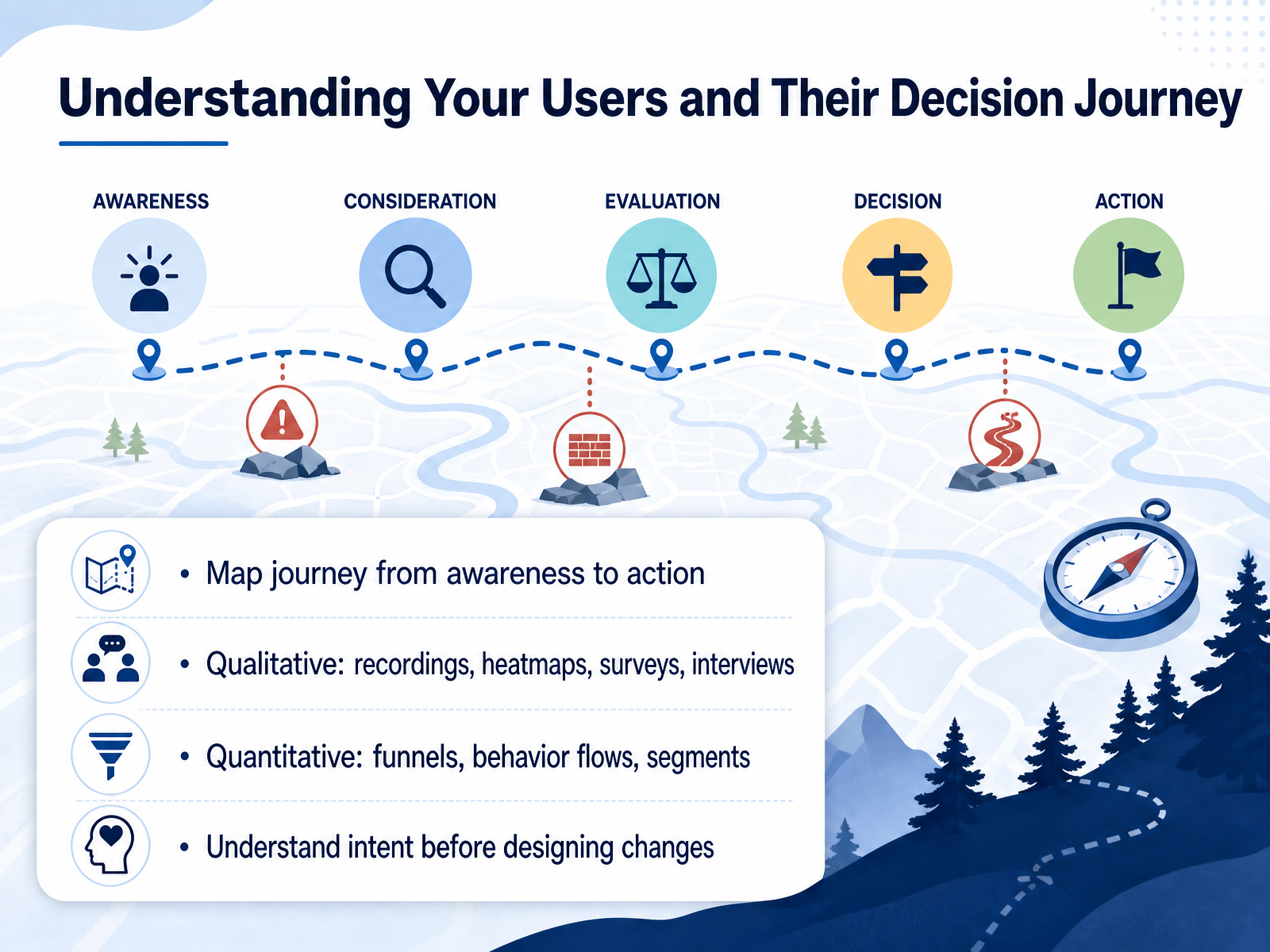
1 min - 04Understanding Your Users and Their Decision JourneyNow let's get practical about how research actually works. Before you change a single page element, you need to understand your users and the journey they take from first impression to final action. Start by mapping that path, from awareness all the way through to conversion. Then use two types of research together. Qualitative data shows you the why. Session recordings, heatmaps, surveys, and user interviews reveal where people hesitate, what confuses them, and what they were hoping to find. Quantitative data shows you the what. Funnels, behavior flows, and segment comparisons highlight exactly where visitors drop off and which groups behave differently. Here's the key point. You need to understand user intent before designing changes. A pricing page visitor and a returning customer are not the same audience, and they need different experiences. When you combine what people do with why they do it, your optimization ideas stop being guesses and start being informed decisions. Next, we'll look at how to find conversion problems and build a research backlog you can act on.
 2 min
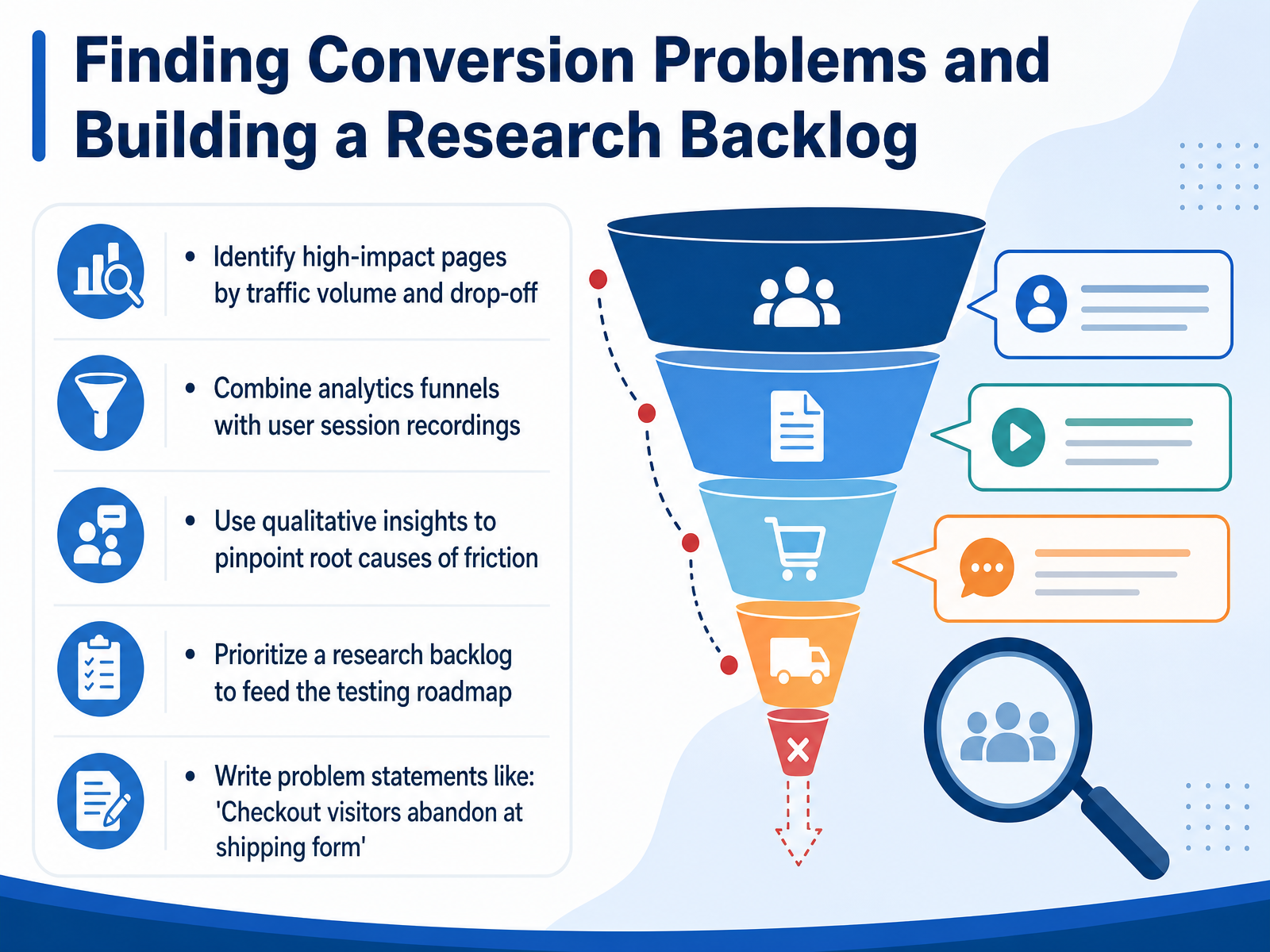
2 min - 05Finding Conversion Problems and Building a Research BacklogNow, let's get practical about finding where conversions actually break down. Start by identifying your high impact pages. Look for pages with strong traffic but noticeable drop off, those are your biggest opportunities. Next, combine data sources. Analytics funnels show you where users leave, but session recordings show you why. When you watch real people hesitate, backtrack, or rage click, the root cause of friction becomes much clearer. That qualitative insight is what turns a vague problem into something you can actually fix. Once you have a list of issues, prioritize them into a research backlog. This becomes the fuel for your testing roadmap, so you're never guessing what to test next. A simple problem statement keeps the focus sharp. For example, checkout visitors abandon at the shipping form, not just checkouts are broken. That clarity saves time and budget. Coming up next, we'll turn these insights into testable hypotheses.
 1 min
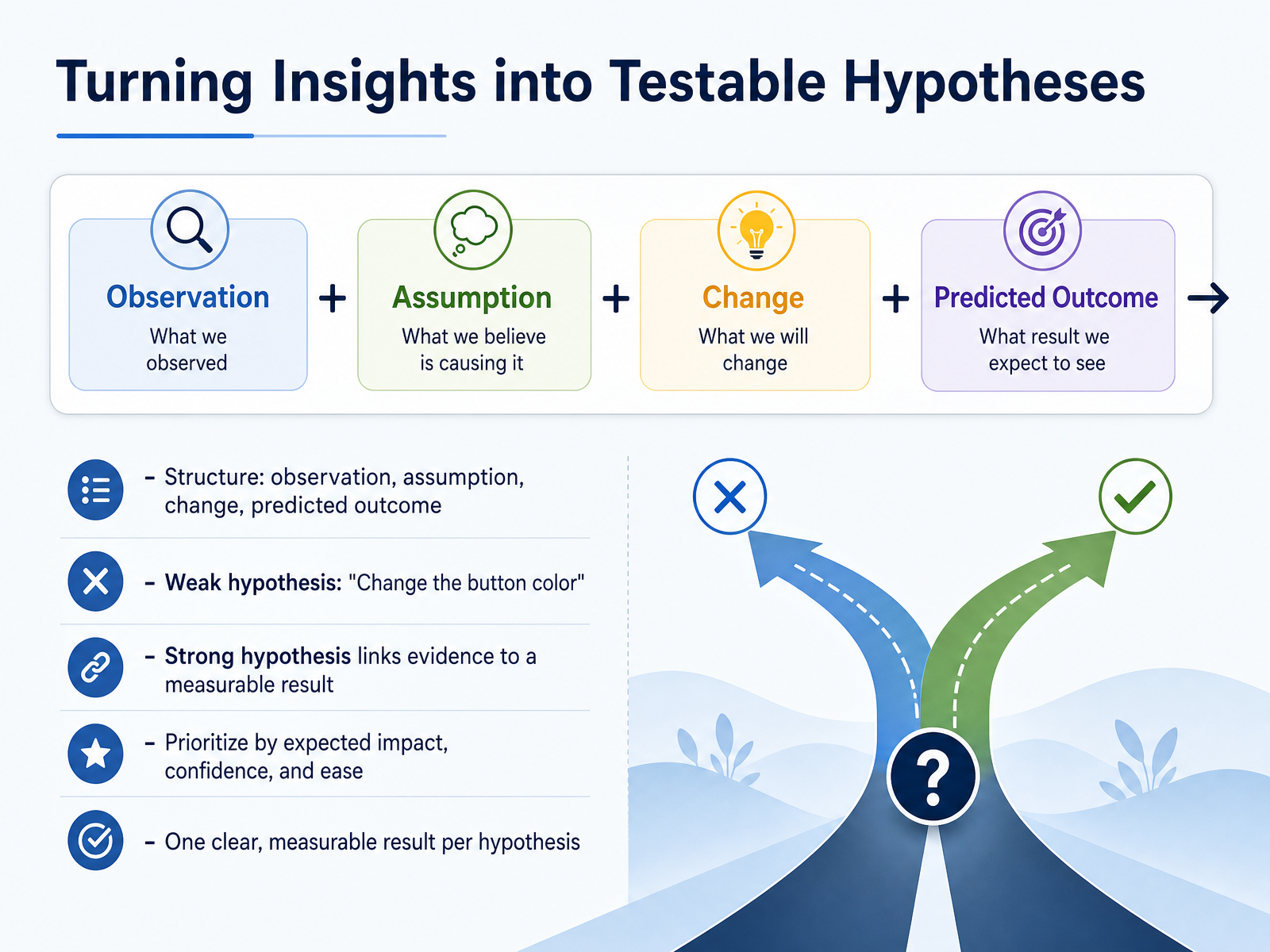
1 min - 06Turning Insights into Testable HypothesesNow, let's turn those insights into something you can actually test. A solid hypothesis has four parts. Start with the observation you made in the data. State the assumption behind it. Define the exact change you'll make. And predict the measurable outcome. For example, a weak hypothesis says, change the button color. A strong one says, visitors are not clicking because the button looks disabled, so we'll increase contrast and expect a 10 percent lift in clicks. Always connect evidence to a result you can measure. When you rank your ideas, weigh expected impact, your confidence in the data, and how easy the test is to run. Keep each hypothesis focused on one clear metric, not five. That keeps the learning clean. Up next, we'll look at designing valid experiments and measuring impact.
 1 min
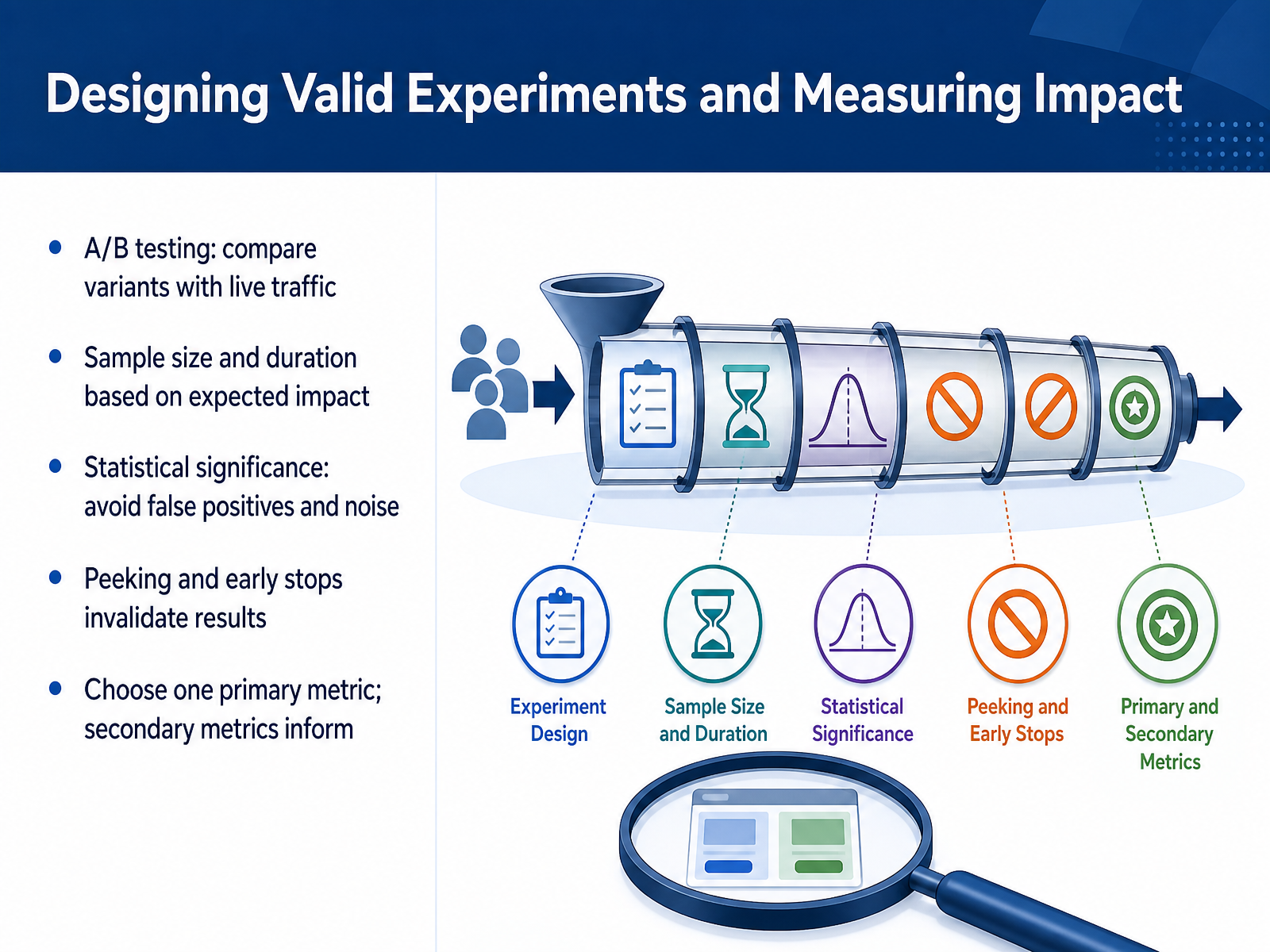
1 min - 07Designing Valid Experiments and Measuring ImpactNow let's talk about running experiments that actually tell you something useful. A B test compares two versions against real live traffic, so you're not guessing. The size and length of your test depend on the impact you expect. A tiny lift needs more visitors and more time to detect than a big obvious change. Statistical significance is your guardrail here. It helps you avoid chasing results that are really just noise. One common mistake is peeking at results early and stopping the test when one version looks ahead. That can invalidate the whole experiment. Decide the duration up front and let it run. Also, pick one primary metric that defines success, like conversion rate. Secondary metrics can help explain what happened, but don't let them decide the winner. Keep the decision clean. Up next, we'll look at key optimization levers: messaging, layout, and friction.
 1 min
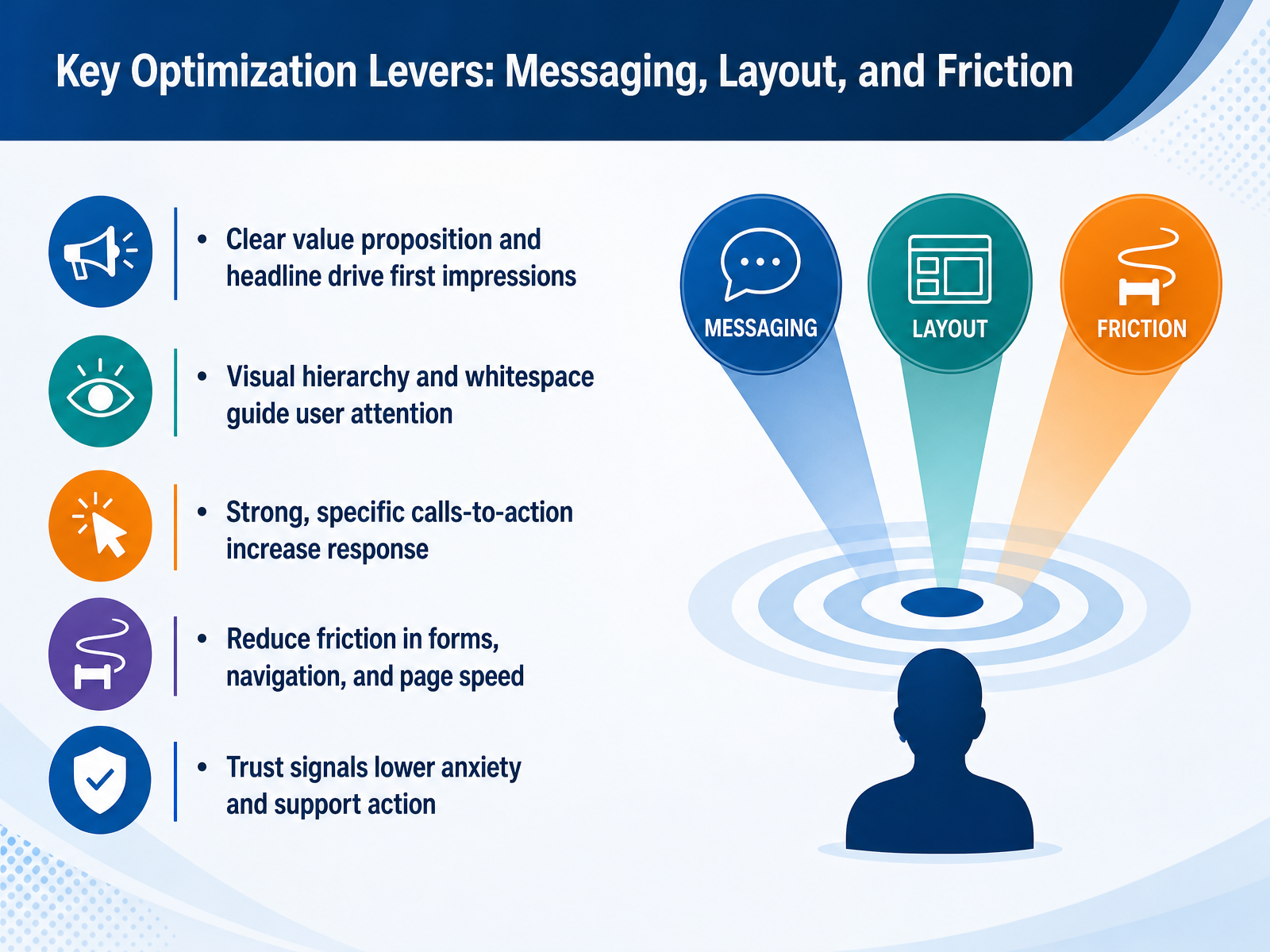
1 min - 08Key Optimization Levers: Messaging, Layout, and FrictionLet's get practical with the levers you can actually pull to move conversion rates. First, messaging. Your value proposition needs to earn attention in about five seconds. If visitors cannot immediately answer why they should stay, the headline is not doing its job. Second, layout. Visual hierarchy and whitespace are not decorations. They direct attention to the action that matters, so make the intended path visually obvious. Third, calls-to-action. Weak phrases like submit or learn more leave response on the table. A strong CTA states the outcome, such as start your free trial or get the pricing guide. Fourth, reduce friction. Audit your forms, navigation, and page speed. Every extra field, unclear label, or slow load adds resistance that quietly kills conversions. Finally, add trust. Social proof, guarantees, security badges, and clear policies lower anxiety just enough for users to act. Small changes here often show measurable lift without increasing traffic. Next, we'll look at how mobile and cross-device experiences affect every one of these levers.
 1 min
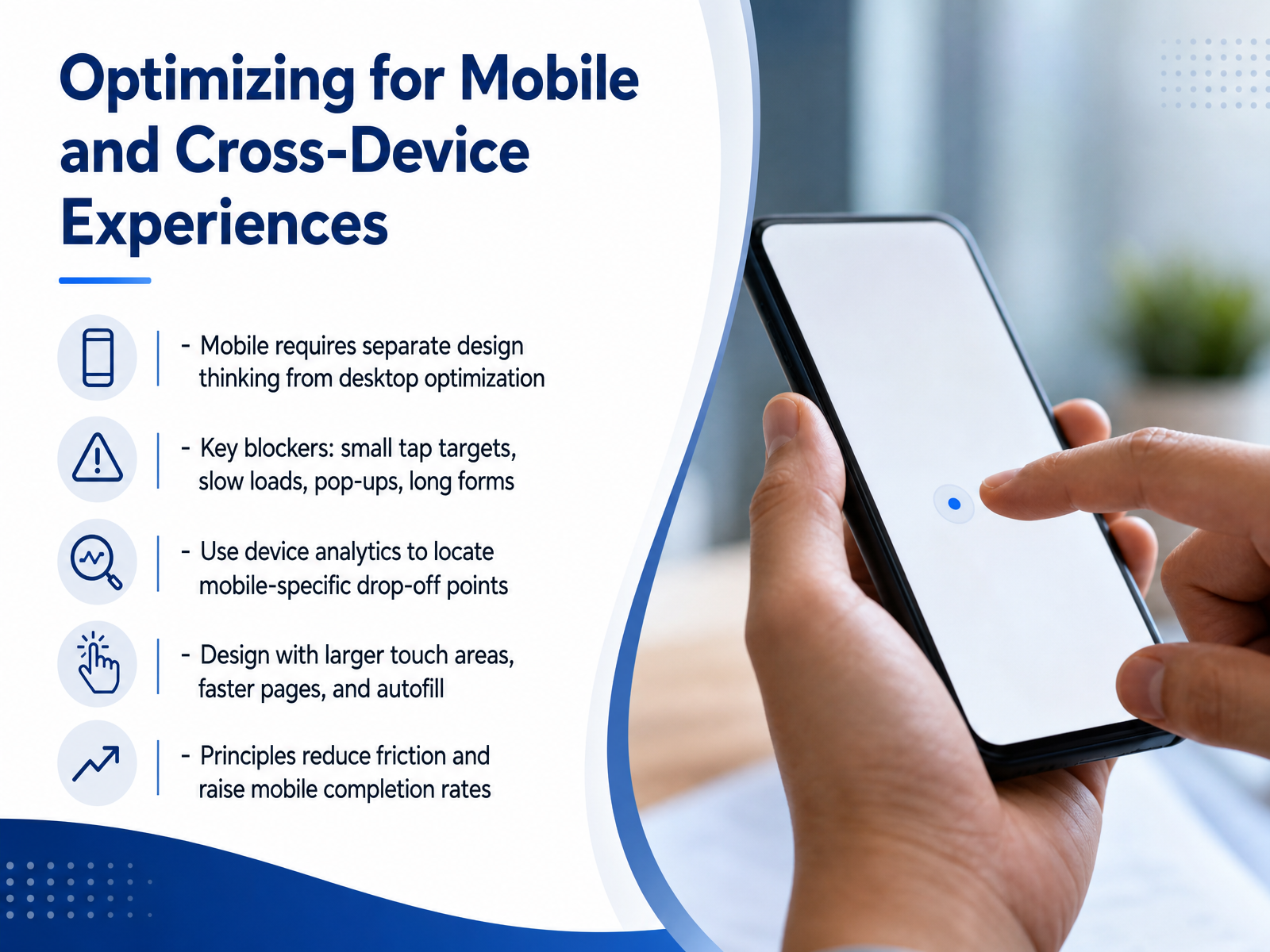
1 min - 09Optimizing for Mobile and Cross-Device ExperiencesNow let's talk about mobile, because it is not a smaller version of desktop. It needs its own design thinking. On mobile, small tap targets, slow page loads, pop-ups, and long forms are the usual conversion killers. Your device analytics will show you exactly where mobile visitors drop off, so use that data instead of guessing. Then make the fixes practical. Increase touch areas, speed up page delivery, enable autofill, and remove anything that interrupts the flow. These changes lower friction and directly improve mobile completion rates. Next, we'll move into practical scenarios and apply the framework step by step.
 1 min
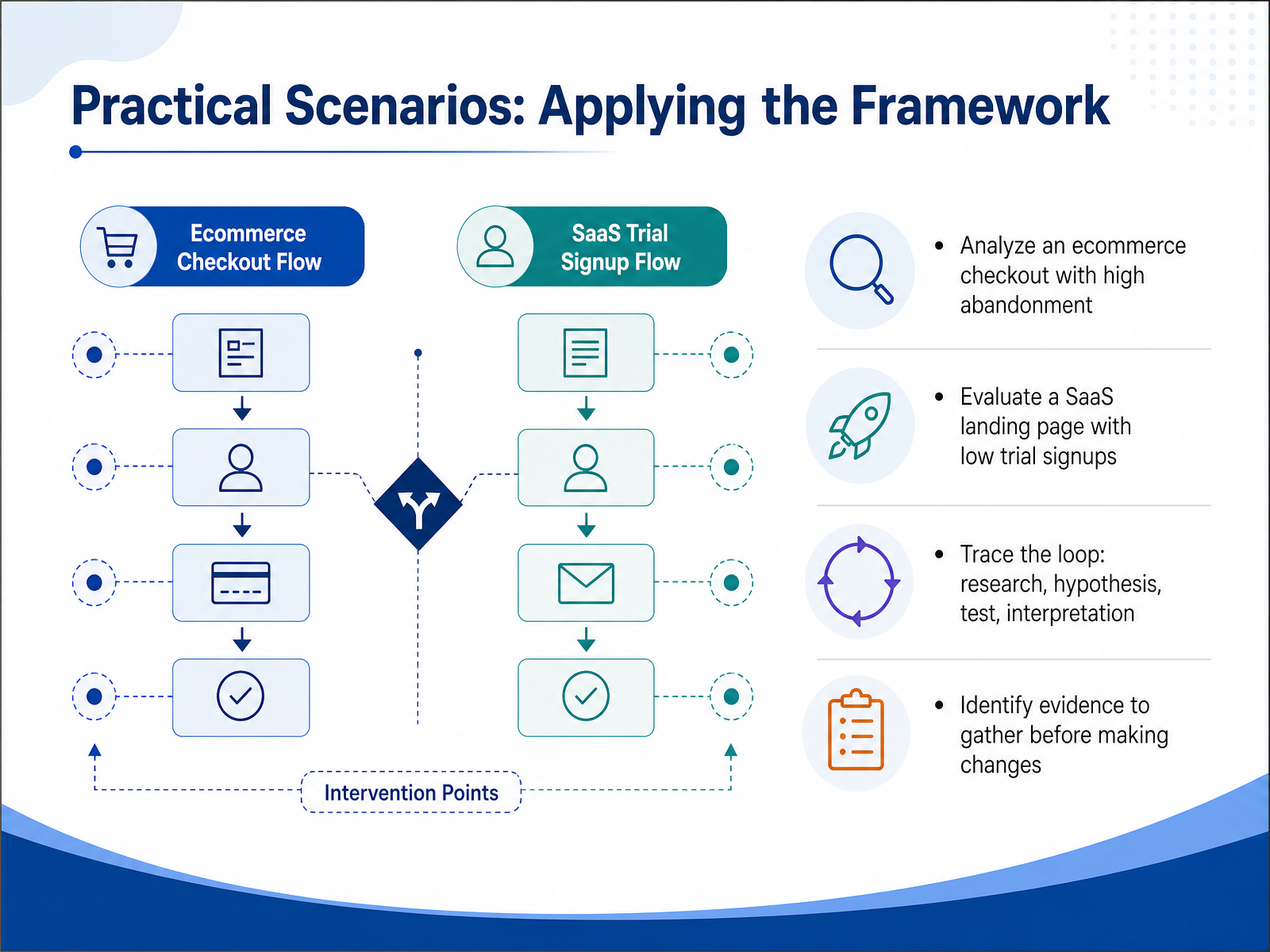
1 min - 10Practical Scenarios: Applying the FrameworkLet’s make this framework real with a few scenarios you’ve probably seen before. First, picture an ecommerce checkout with high abandonment. Instead of guessing at the cause, start with research. Watch session replays, review funnel analytics, and run user tests. Then form a hypothesis, like unclear shipping costs are triggering drop-off. Test a change, measure the result, and interpret whether the data supports your idea. Second, look at a SaaS landing page with low trial signups. Follow the same loop. Research user behavior, hypothesize that the value proposition is too vague, test a clearer headline, and check the impact on signup rate. In both cases, gather evidence before making changes. That means behavioral data, user feedback, and baseline metrics. A strong framework keeps you disciplined. It helps you avoid redesigns based on opinion and focus on changes that actually move conversion. Next, we’ll cover common issues and how to handle failed tests.
 1 min
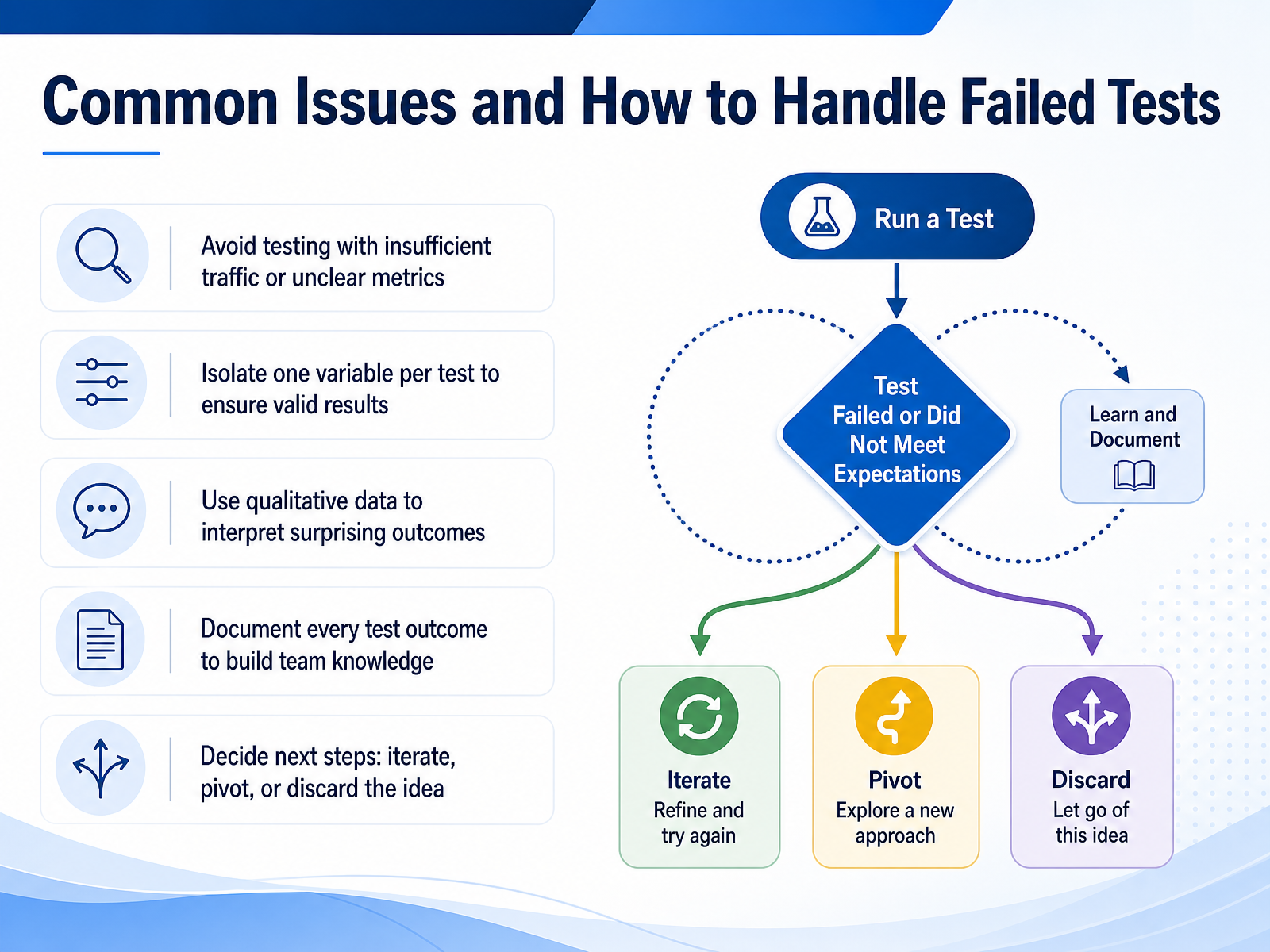
1 min - 11Common Issues and How to Handle Failed TestsNow let's talk about what happens when a test doesn't go your way, because failed tests are part of the process, not a reason to stop. First, avoid running tests when traffic is too low or your success metric is fuzzy. If you don't have enough visitors, you can't reach statistical significance, and the result won't tell you anything useful. Second, isolate one variable per test. Changing a headline, a button color, and a page layout all at once makes it impossible to know which change actually moved the number. Third, use qualitative data to explain surprising outcomes. Session recordings, surveys, and heat maps often reveal why users behaved in a way the numbers alone can't explain. Fourth, document every test outcome, win or lose. A shared record prevents your team from repeating dead ends and turns each test into lasting knowledge. And finally, decide your next step with intention. You can iterate on the idea with a refined version, pivot to a new angle, or discard it entirely. A failed test still gave you a decision. To build this into a repeatable advantage, let's move into how you create a lasting optimization process.
 2 min
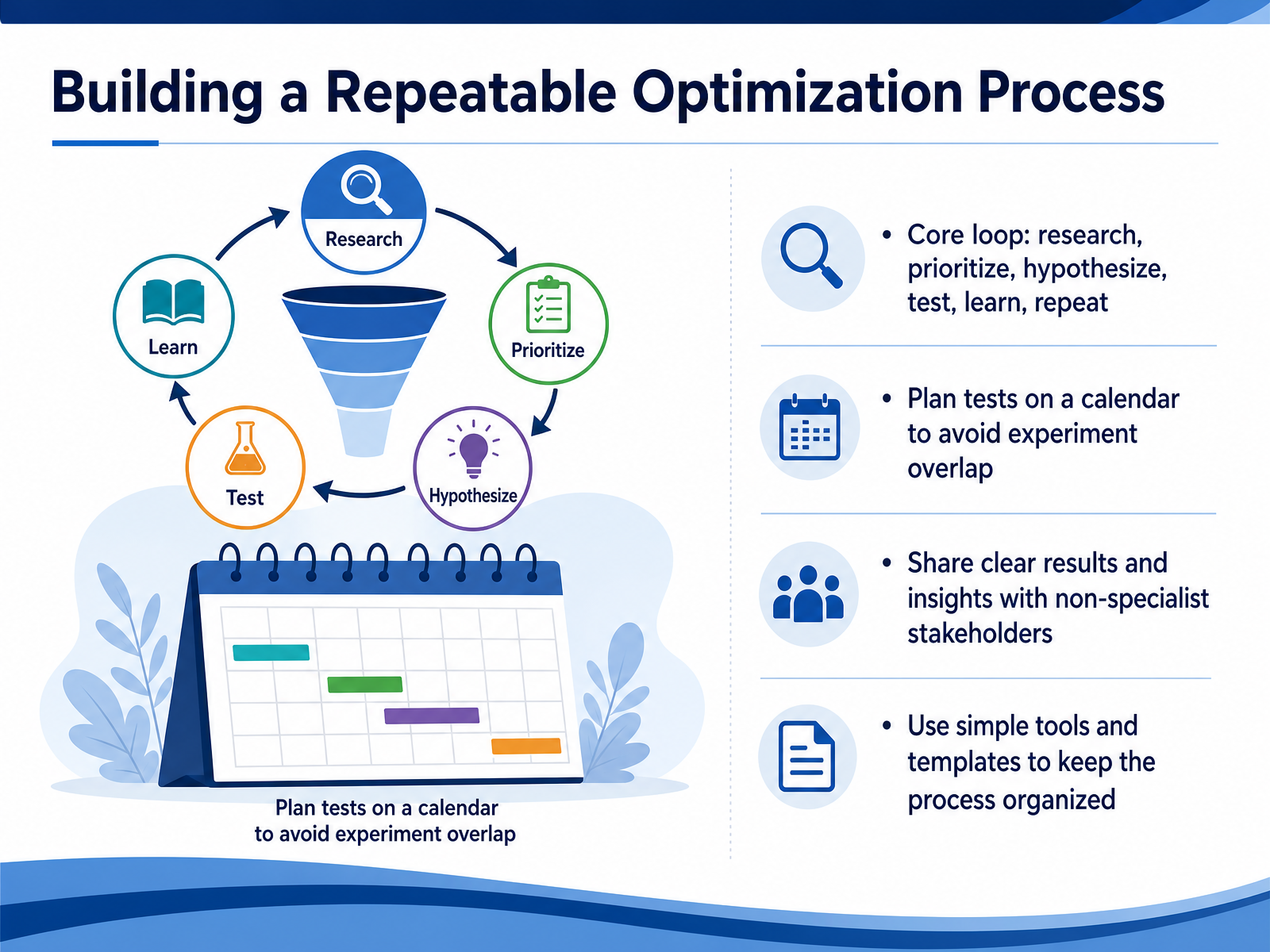
2 min - 12Building a Repeatable Optimization ProcessSo how do you turn isolated wins into a system you can rely on? It comes down to building a repeatable loop: research, prioritize, hypothesize, test, learn, and then do it again. That loop keeps you focused on learning, not just launching. Next, map your tests on a shared calendar. Without one, experiments overlap and you can't trust your data. I see this all the time with limited traffic. A calendar protects your results. Then, share findings in plain language. Stakeholders don't need p-values. They need to know what you learned and what you recommend next. Finally, keep it simple. Use basic templates and tools to track ideas and results. You don't need complex software to start. You need consistency. That consistency is what compounds your conversion rate over time. Up next, we'll cover the ground rules for doing all of this the right way with ethics, privacy, and responsible experimentation.
 1 min
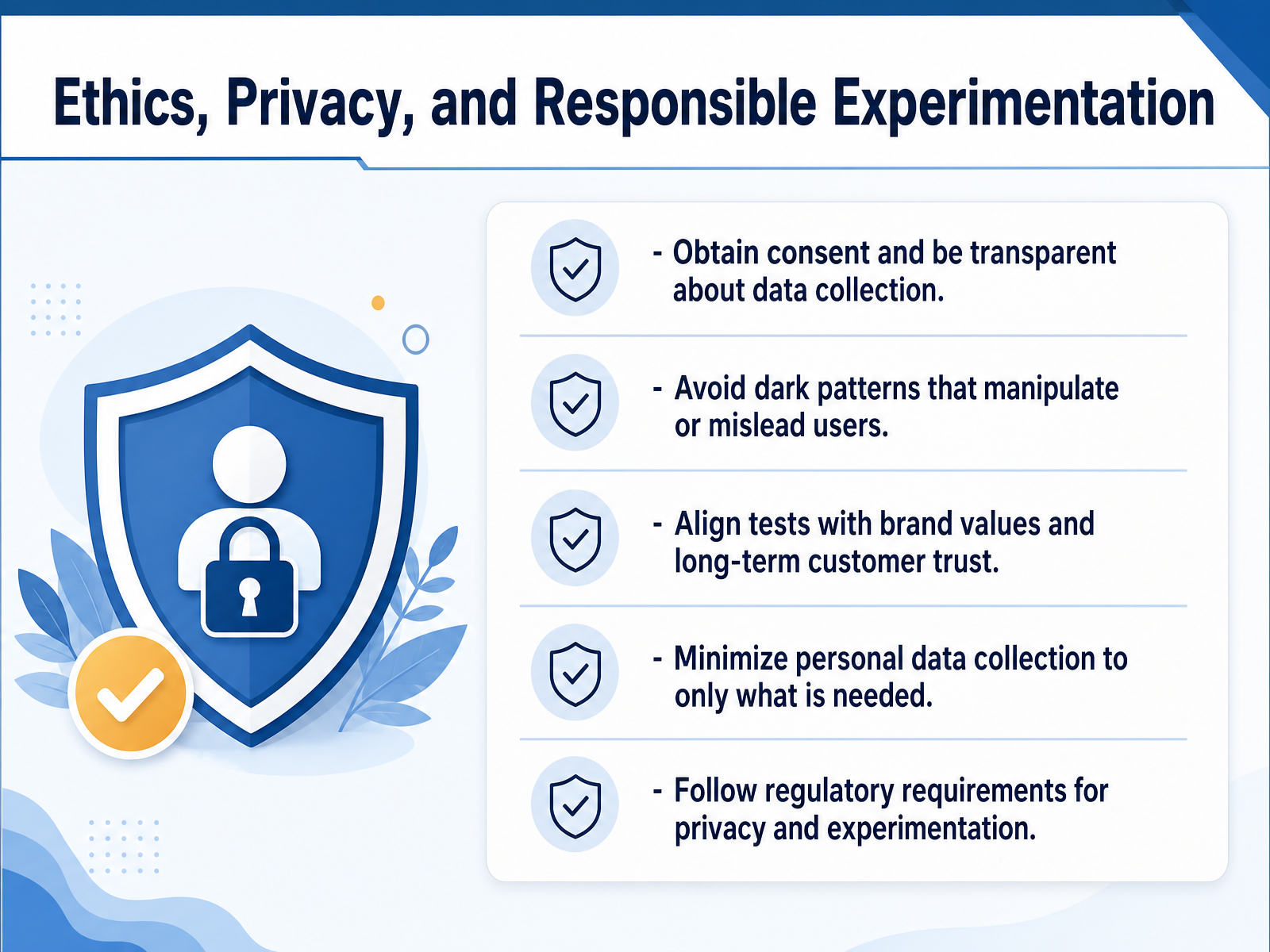
1 min - 13Ethics, Privacy, and Responsible ExperimentationNow let’s talk about something that can make or break your testing program over the long run: ethics, privacy, and responsible experimentation. First, get clear consent and be upfront about what data you collect. That builds immediate trust with your users. Second, avoid dark patterns. If a test misleads people or pressures them into an action they didn’t intend, it might lift conversions today, but it will damage retention and brand perception after that. Third, align every test with your brand values. Ask yourself whether this experience still serves the customer six months from now. Fourth, collect only the personal data you actually need. Less data often means fewer compliance risks and cleaner insights. Finally, follow the privacy regulations that apply to your market, like GDPR or CCPA, and document your testing practices. Responsible experimentation doesn’t slow down growth. It protects the trust that sustainable conversion rates depend on. Next, we’ll wrap up with a summary and your next steps.
 2 min
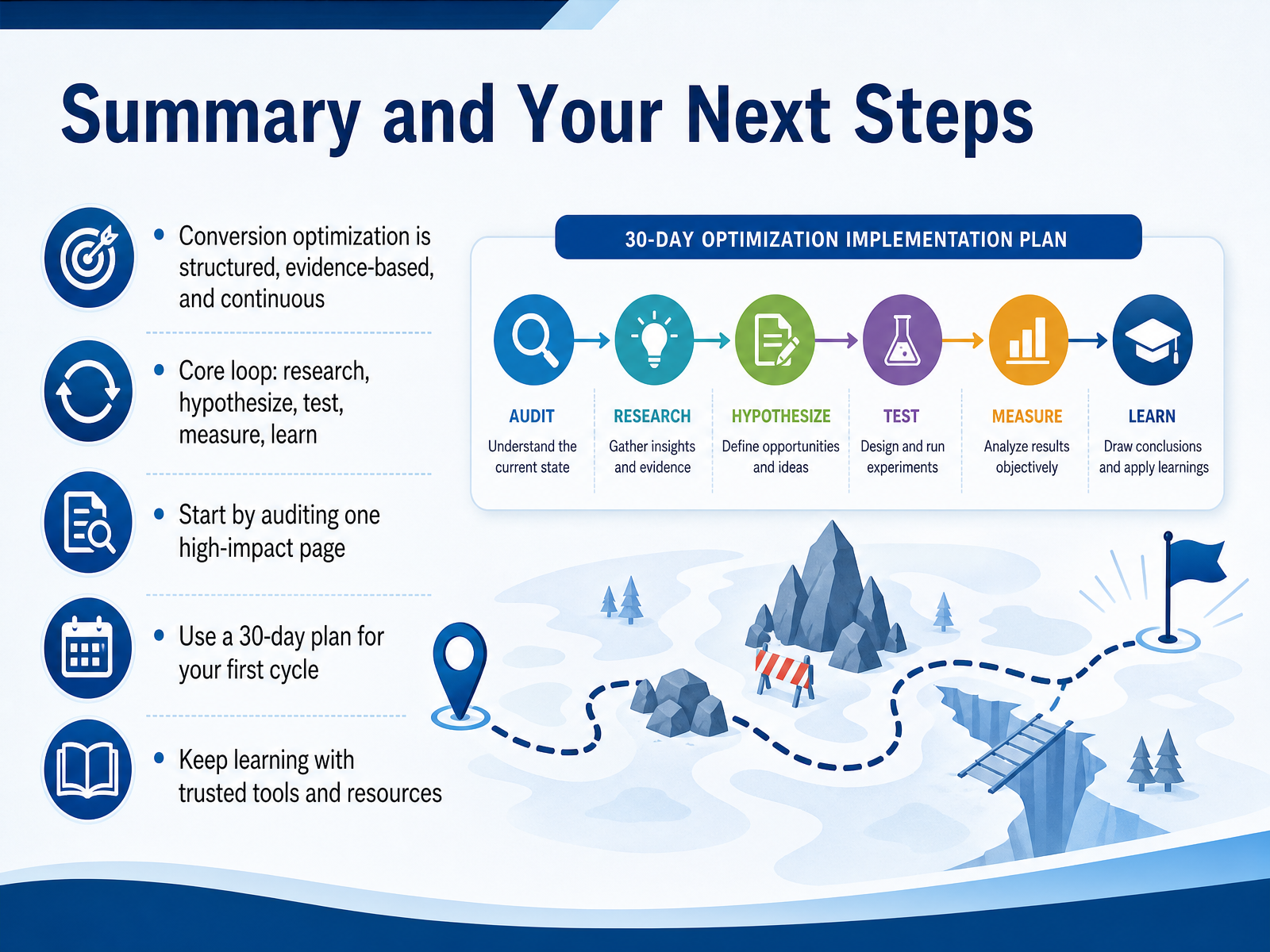
2 min - 14Summary and Your Next StepsSo let's wrap this up with a clear summary and a practical first step. Conversion optimization is not guesswork or a one-time fix. It is a structured, evidence-based, and continuous process. The core loop to remember is simple. Research, hypothesize, test, measure, and then learn from the results. That loop is your engine for consistent improvement. For your next step, resist the urge to change everything at once. Start by auditing a single high-impact page. Maybe it is your pricing page or your top landing page. Focus your energy there. Then give yourself a thirty-day window for your first full testing cycle. This creates momentum without burning your budget. Keep learning as you go, because tools and best practices evolve quickly. Lean on trusted resources and let your own test data guide every decision. Thank you for investing this time. You now have a clear framework. Go run that first cycle and let the evidence show you what works.
 2 min
2 min
Take the deck with you
Download this course as a file — free, no sign-up needed.
- PDF handoutEvery slide page, ready to print or share.15 pages · 3.2 MBDownload
- Narrated PowerPointThe deck that presents itself — every slide carries the digital human's narration video.15 pages · 23.0 MBDownload
- PowerPoint slidesThe full deck as a .pptx — open it in PowerPoint, Keynote, or Google Slides.15 pages · 3.2 MBDownload
Free to use in your own training — please keep the PersonWise credit page at the end.
Have your own deck? Turn it into a course