Natural Selection Dynamics
Begin
13 pages · ~26 min
Natural Selection Dynamics
This training explains how natural selection drives evolution through variation, survival advantages, and genetic change over generations.
What you’ll learn
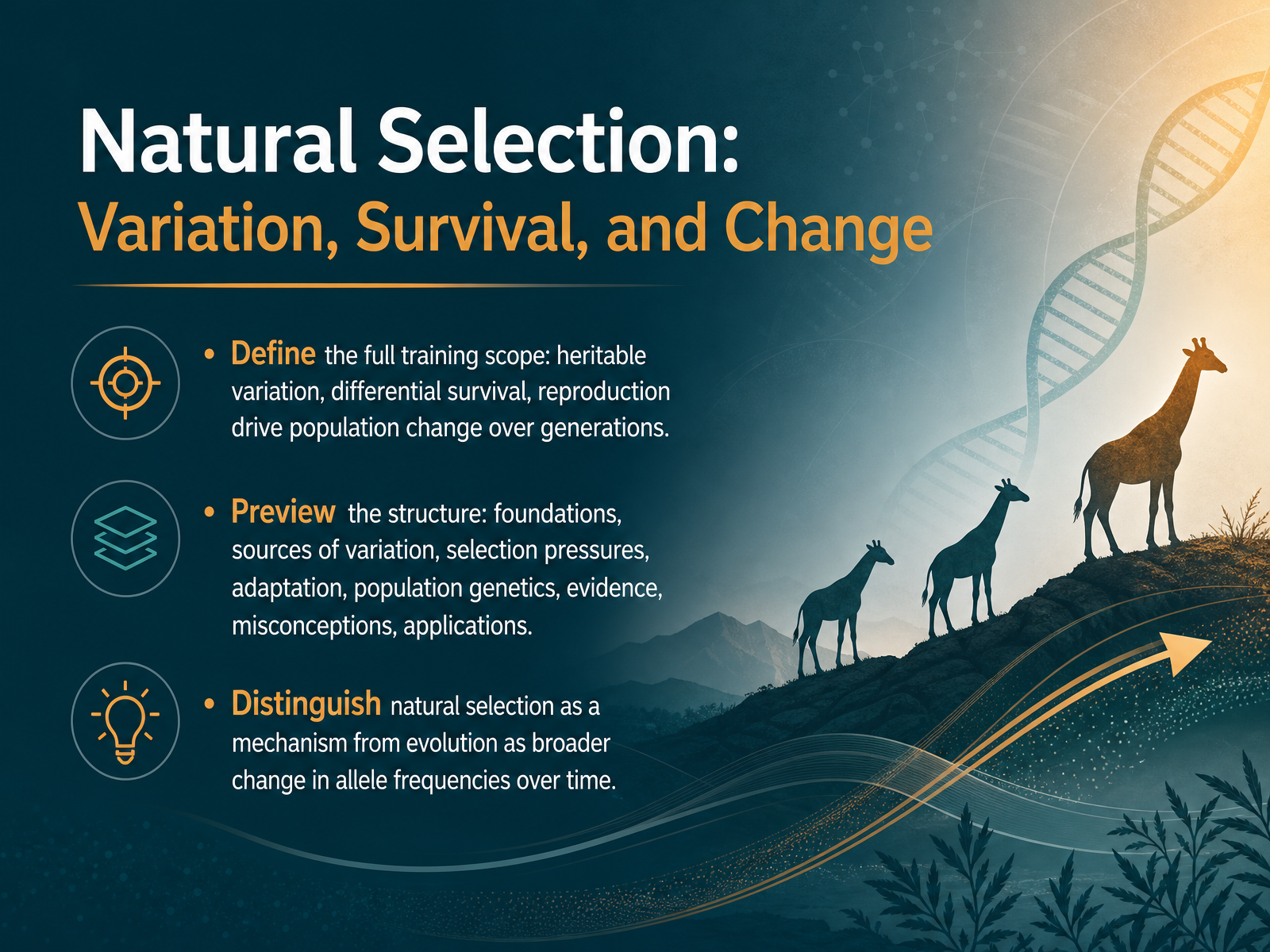
- 01Natural Selection: Variation, Survival, and ChangeWelcome. Over the next few sessions, we’re going to explore one of the most important ideas in biology: natural selection. Our goal is to understand how heritable variation, differences in survival, and reproduction drive populations to change across generations. We’ll start with the foundations, then move into sources of variation, selection pressures, adaptation, and even tackle common misconceptions. By the end, you’ll see natural selection not as a mysterious force, but as a clear, observable mechanism. Crucially, we’ll distinguish natural selection itself from evolution. Natural selection is the mechanism—a process of differential survival and reproduction. Evolution is the broader change in a population’s genetic makeup over time. Think of natural selection as the engine, and evolution as the journey. Now, let’s begin that journey where it started: with Darwin, Wallace, and the core logic of how populations change.evolution.berkeley.edudarwin-online.org.ukdarwin-online.org.uk+22 min
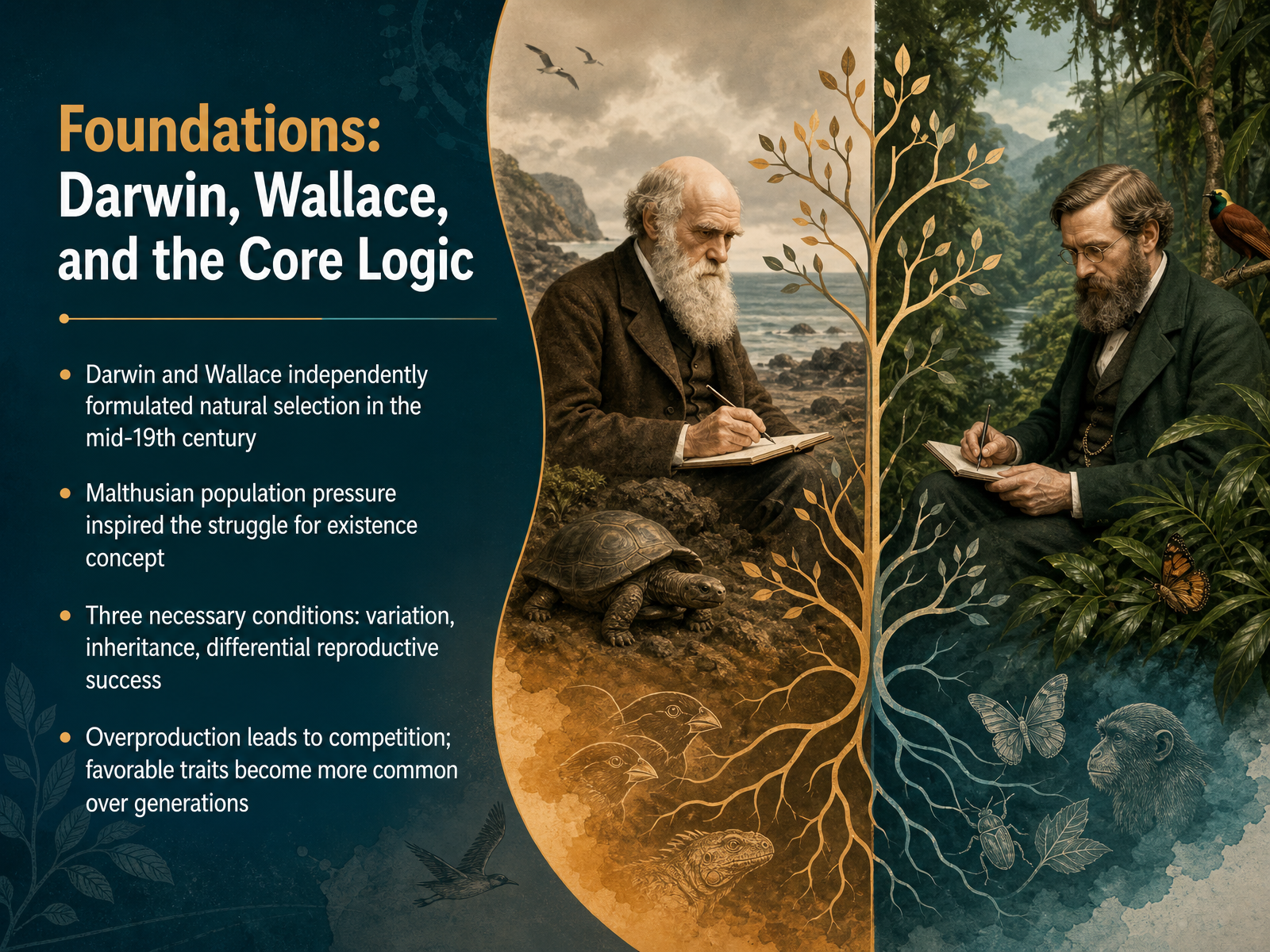
- 02Foundations: Darwin, Wallace, and the Core LogicBuilding on that idea, let's look at the foundations of natural selection. In the mid-19th century, Charles Darwin and Alfred Russel Wallace independently arrived at the same revolutionary concept. Both were deeply influenced by economist Thomas Malthus, who described a relentless struggle for existence driven by population pressure. More individuals are born than can possibly survive, which leads to competition. But here is the core logic. Darwin and Wallace realized three conditions are necessary. First, variation. Individuals within a population are not identical. Second, inheritance. Many of these differences are passed from parents to offspring. Third, differential reproductive success. Those with traits that give them a slight edge in this competition are more likely to survive and reproduce. Over many generations, as these favorable traits are inherited, they become more common in the population. This is the engine of change. To see how this works, we need to understand where that initial variation comes from. Next, we'll explore the source of variation: mutation and recombination.
 evolution.berkeley.edudarwin-online.org.ukdarwin-online.org.uk+22 min
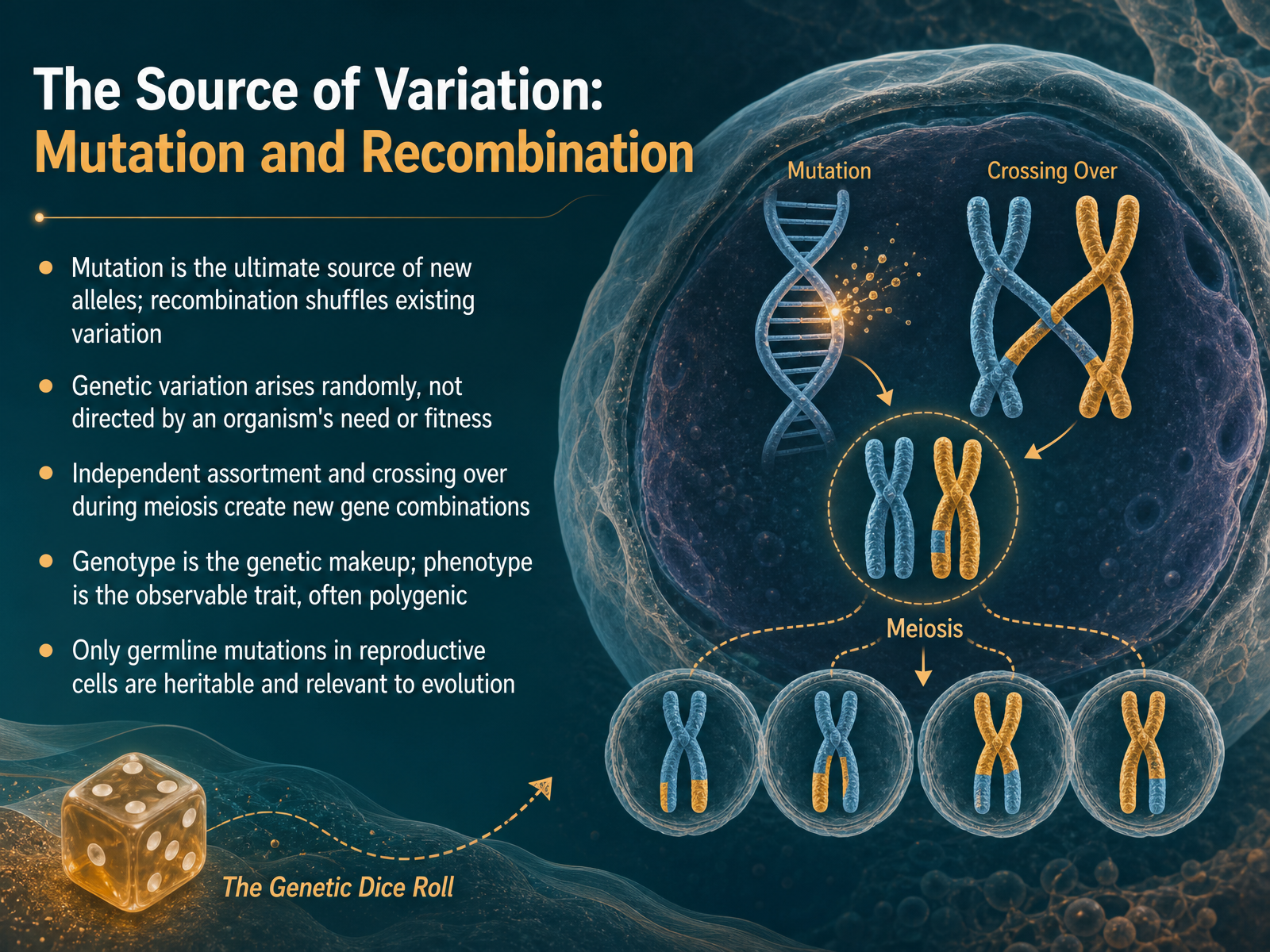
 - 03The Source of Variation: Mutation and RecombinationNow let's look at where the variation itself actually comes from. The ultimate source of all new genetic variation is mutation. Mutation is a change in the DNA sequence, and it introduces brand new alleles into a population. But there's a second critical source of variation, and that's recombination. Recombination doesn't create new alleles; instead, it shuffles existing ones into new combinations, much like shuffling a deck of cards produces a new hand. A key point to remember is that this genetic variation arises randomly. It is not directed by an organism's need or fitness. A bacterium doesn't mutate to resist an antibiotic because it needs to; the mutation happens by chance, and if it happens to be helpful, it persists. During meiosis, processes like independent assortment and crossing over are responsible for this shuffling. They ensure that the combinations of genes you pass on are unique. We also need to distinguish between genotype and phenotype. The genotype is your specific genetic makeup, the set of alleles you carry. The phenotype is the observable trait, like height or eye color, which is often influenced by many genes. Crucially, for evolution, only germline mutations count. These are changes that happen in reproductive cells, like sperm or eggs. Somatic mutations, like a change in a skin cell, affect the individual but are not passed to the next generation. Let's keep that variation in mind as we move on to see how the environment filters it, in the next slide on Selection Pressures.
 evolution.berkeley.edumedlineplus.govoyc.yale.edu+22 min
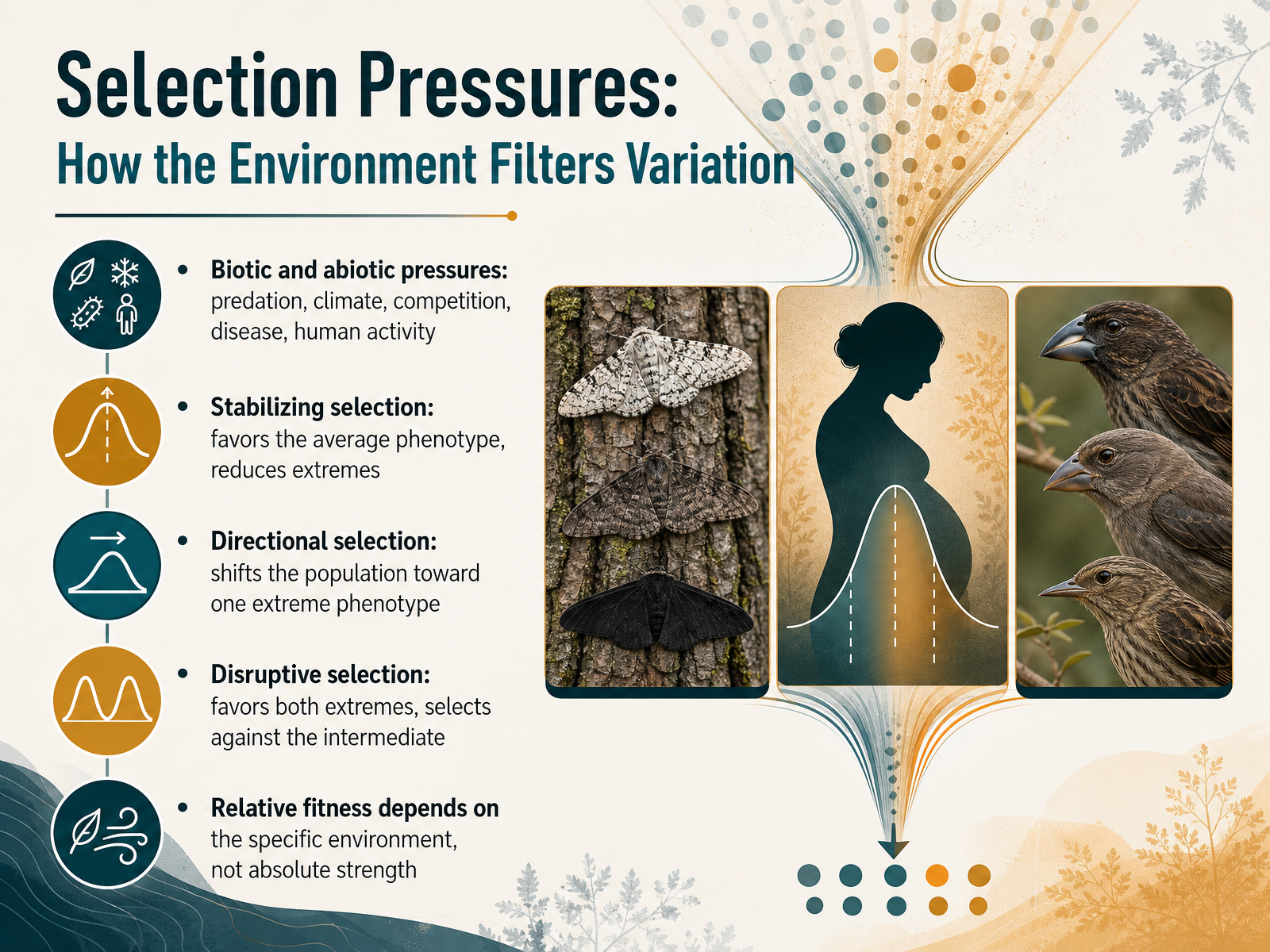
 - 04Selection Pressures: How the Environment Filters VariationBuilding on what we’ve seen, let’s ask: how does the environment actually filter all that variation? We call these selection pressures. They can be biotic, like predation, disease, or competition for mates. Or they can be abiotic, like climate shifts or human activity. Together, these pressures shape survival in three main patterns. First, stabilizing selection. Here, the average phenotype is favored, and extremes are reduced. Think of human birth weight. Babies who are too small struggle to stay warm, while very large babies can be difficult to deliver. The middle range has the highest survival. Second, directional selection. This shifts a population toward one extreme, often when the environment changes. The classic example is the peppered moth during the Industrial Revolution. As soot darkened the trees, darker moths became less visible to birds, and the moth population shifted from light to dark. Third, disruptive selection, where both extremes are favored over the intermediate. Imagine a beach with patches of light sand and dark grass. Very light mice blend into the sand, and very dark mice hide in the grass. A medium-colored mouse, though, stands out everywhere and gets picked off. The key takeaway is that relative fitness depends entirely on the specific environment, not on absolute strength. A trait that’s brilliant in one context can be a death sentence in another. Next, we’ll explore how these filtered traits become adaptations.
 bio.libretexts.orgbiologyonline.comen.wikipedia.org+22 min
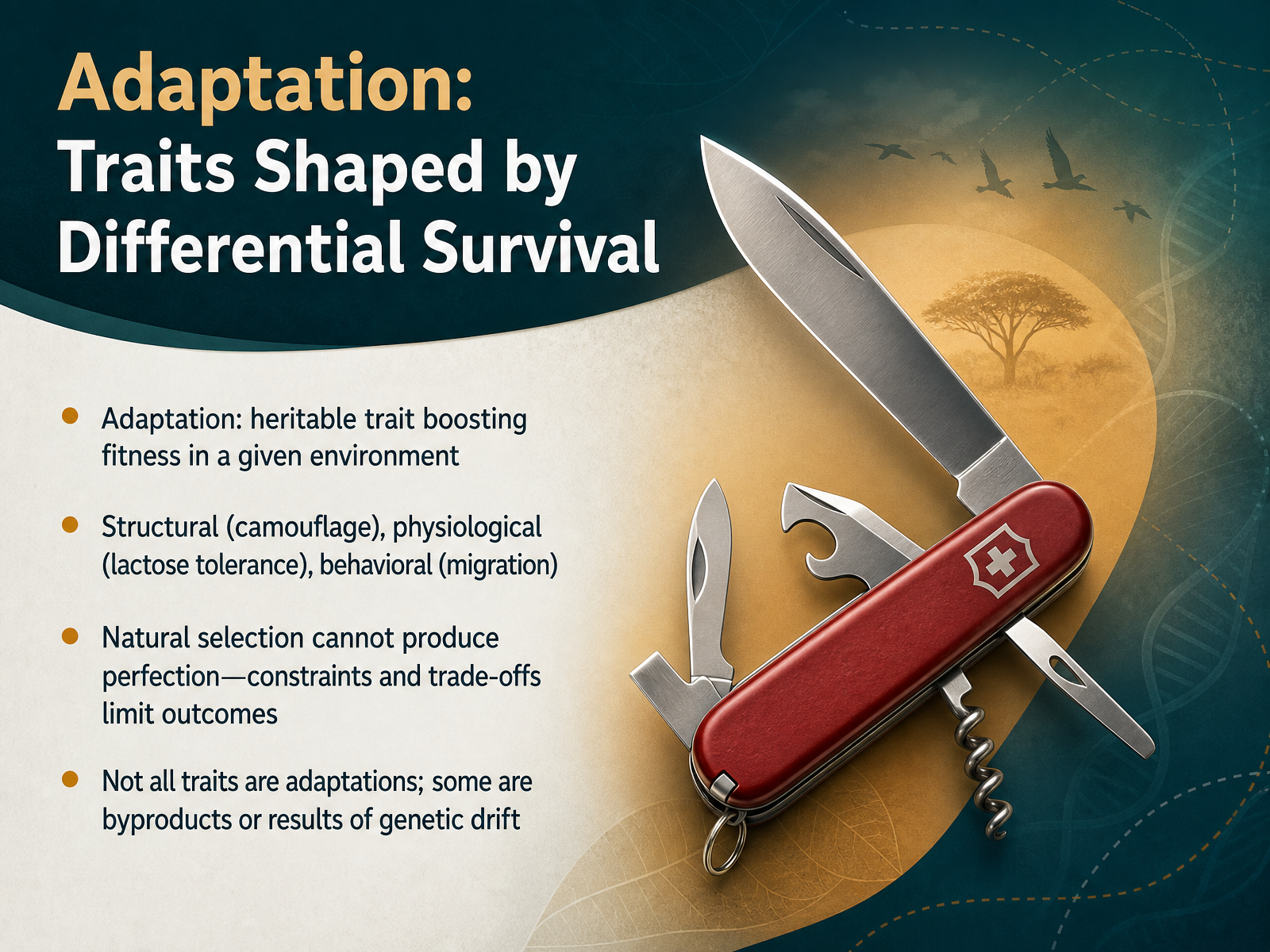
 - 05Adaptation: Traits Shaped by Differential SurvivalNow let's look at adaptation—traits that are actually shaped by differential survival. An adaptation is a heritable trait that boosts an organism’s fitness in a specific environment. Think of it in three main categories. Structural adaptations, like camouflage coloration that helps a mouse blend into the forest floor. Physiological adaptations, such as the ability to digest lactose into adulthood, which evolved in some human populations. And behavioral adaptations, like migration patterns that help animals track seasonal resources. Here’s a critical point: natural selection cannot produce perfection. Constraints and trade-offs limit outcomes. For example, a plant that grows taller to capture more sunlight may also become more vulnerable to wind damage. Finally, remember that not every trait is an adaptation. Some features are simply byproducts of other changes, or results of random genetic drift, not direct selection. Up next, we'll shift from individual traits to The Population View: Allele Frequencies and Microevolution.
 bio.libretexts.orgbiologyonline.comen.wikipedia.org+22 min
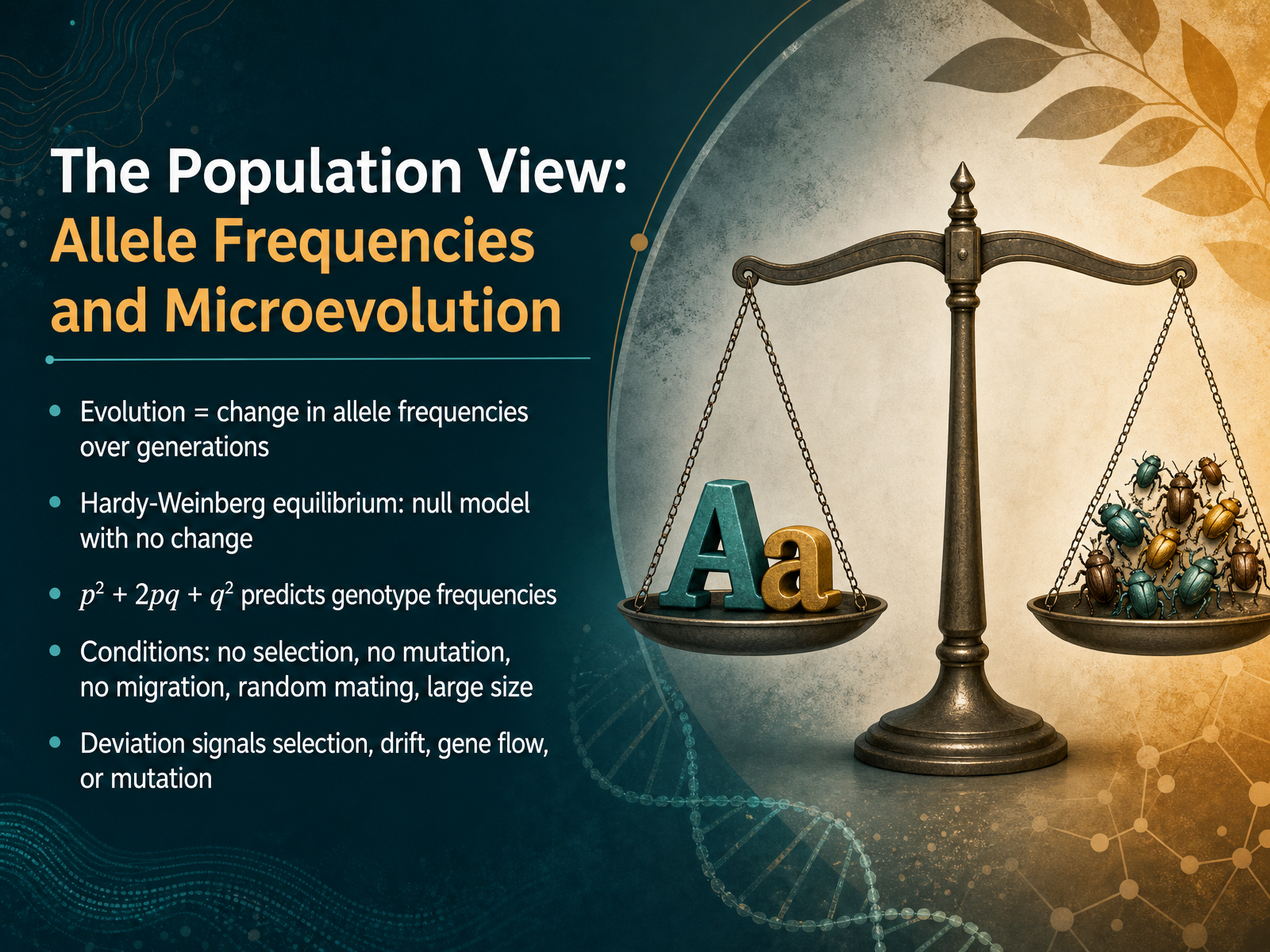
 - 06The Population View: Allele Frequencies and MicroevolutionNow let's zoom out from individual organisms to the whole population. When we think about evolution, we're really tracking how allele frequencies—the different versions of a gene—change over generations. This shift is what we call microevolution. To detect that change, we need a baseline, and that's where the Hardy-Weinberg equilibrium comes in. It's our fundamental null model, describing a population that is not evolving. The model predicts genotype frequencies using a simple equation: p-squared plus two p q plus q-squared. Here, p and q represent the frequencies of our two alleles. The key insight is that these frequencies will stay the same generation after generation, but only under a strict set of conditions. Specifically, there must be no natural selection, no new mutations, no migration, absolutely random mating, and an infinitely large population size. If we observe that a population's genotype frequencies deviate from these Hardy-Weinberg predictions, it signals that something interesting is happening. That deviation is our evidence that one or more evolutionary forces—like selection, genetic drift, gene flow, or mutation—are at work. Let's continue this line of thinking and explore two of those non-adaptive forces in our next slide, 'Drift and Flow: Non-Adaptive Evolutionary Mechanisms.'
 nature.comen.wikipedia.orgen.wikipedia.org+21 min
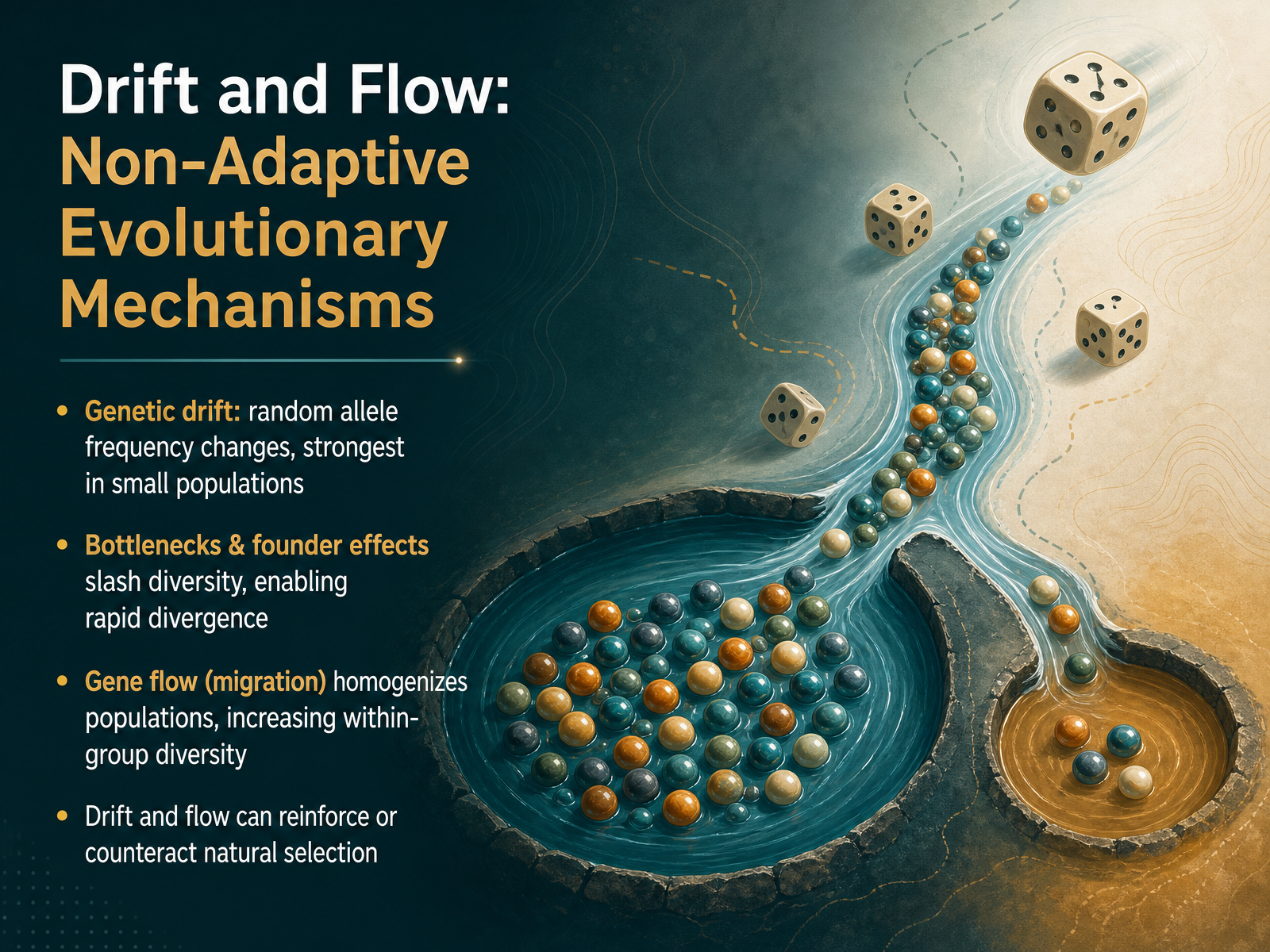
 - 07Drift and Flow: Non-Adaptive Evolutionary MechanismsNow let's move from the organizing force of natural selection to mechanisms that change populations without necessarily favoring one trait over another. We call these non-adaptive evolutionary mechanisms: drift and flow. First, genetic drift. This is the random change in the frequency of alleles—different versions of a gene—from one generation to the next. These changes are not driven by the fitness of the trait; they simply happen by chance. The effect is strongest in small populations, where a random fluctuation can have a huge impact. We see this dramatically in two special cases: bottlenecks and founder effects. Imagine a population wiped out by a disaster, leaving only a handful of survivors. That's a bottleneck, and it slashes the genetic diversity instantly. A founder effect is similar, but it happens when a small group splinters off to colonize a new area. Both events can lead to rapid divergence from the original population. In contrast, gene flow—or migration—works in the opposite direction. When individuals move between populations, they carry their alleles with them, mixing the gene pools together. This gene flow tends to make populations more similar to each other, increasing diversity within the group but reducing differences between groups. Finally, it's crucial to remember that drift and flow don't operate in isolation. They can reinforce natural selection, or they can counteract it, sometimes driving a population in a completely unexpected direction. Up next, we'll ground these ideas with real-world examples in 'Observable Evidence: Natural Selection in Action.'
 nature.comen.wikipedia.orgen.wikipedia.org+22 min
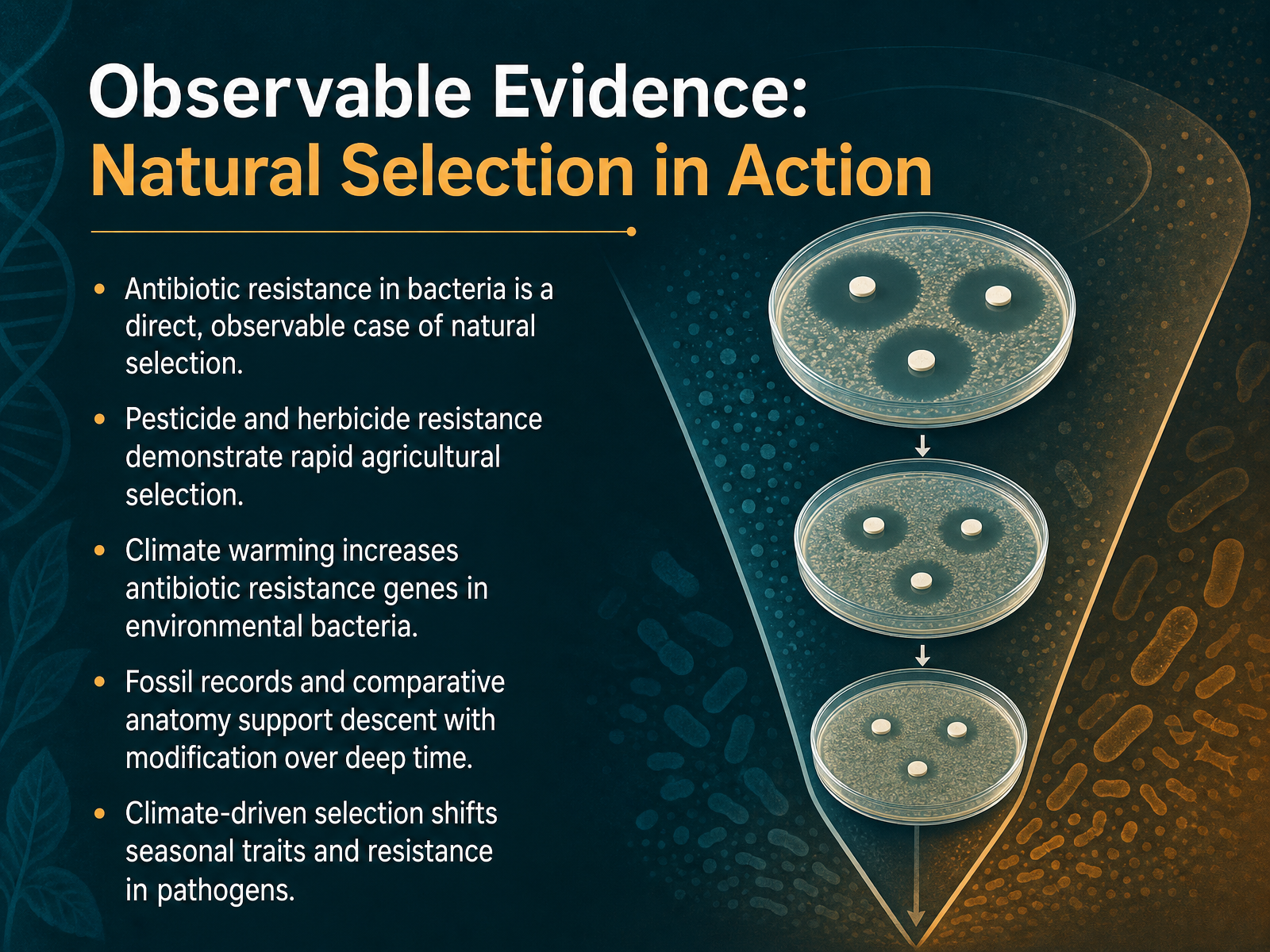
 - 08Observable Evidence: Natural Selection in ActionNow let's look at observable evidence. Natural selection isn't just a theory about the past; we can see it happening right now. A classic example is antibiotic resistance in bacteria. When we use antibiotics, we create a powerful selective pressure. Bacteria that happen to carry a resistance gene survive and reproduce, rapidly spreading that trait. This is direct, real-time evolution. We see the same pattern in agriculture, where pests evolve resistance to pesticides and weeds evolve resistance to herbicides. What's especially striking is how climate change itself is becoming a new selective force. Research shows that rising temperatures can increase the prevalence of antibiotic resistance genes in environmental bacteria, from soils to rivers. As the climate warms, these genes can spread more easily, even making their way into hospitals. And of course, we have the deep-time evidence. Fossil records and comparative anatomy show a clear pattern of descent with modification over millions of years. From seasonal shifts in pathogens to the ancient story in the rocks, natural selection is an observable, ongoing process. Next, let's clear up some common misconceptions about how this all works.
 2 min
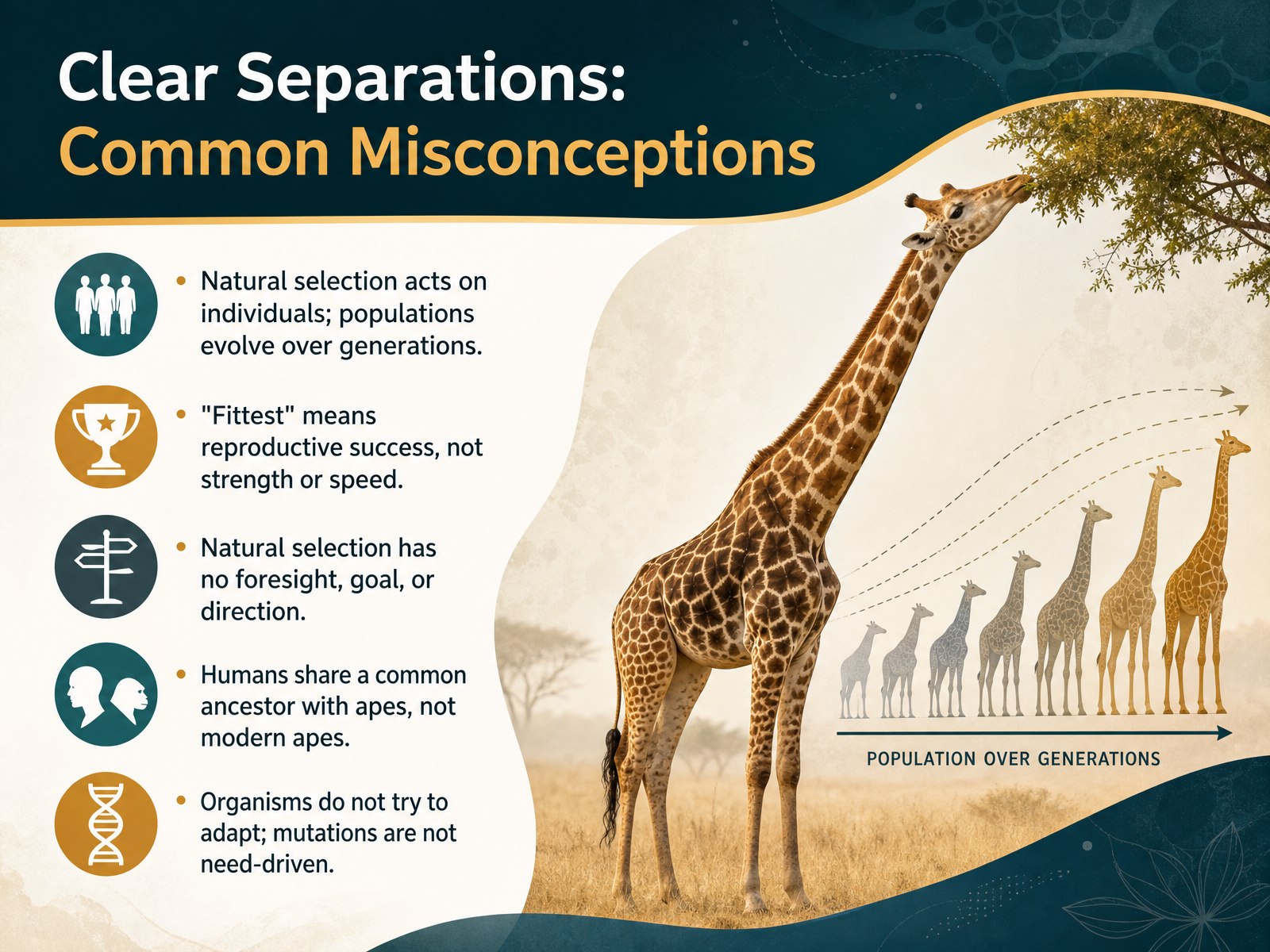
2 min - 09Clear Separations: Common MisconceptionsLet's clear up some of the most common misconceptions about natural selection. First, and this is critical: natural selection acts on individuals, but populations evolve over generations. An individual organism does not change its genes during its lifetime. Instead, the proportion of traits in the whole group shifts over time. Second, the term "fittest" doesn't mean the strongest or the fastest. In biology, fitness is purely about reproductive success—leaving more offspring that can themselves survive and reproduce. Third, natural selection has no foresight, no goal, and no direction. It is a mindless, mechanistic process, not a guiding hand. It cannot plan for future conditions. Another big one: humans did not evolve from modern apes. Instead, we share a common ancestor with them, like distant cousins on a family tree. Finally, organisms do not try to adapt, and mutations are not need-driven. A bacterium does not will itself to resist an antibiotic. Mutations are random, and selection simply favors the ones that happen to be helpful. Now, let's continue with more misconceptions about randomness, progress, and perfection.
 2 min
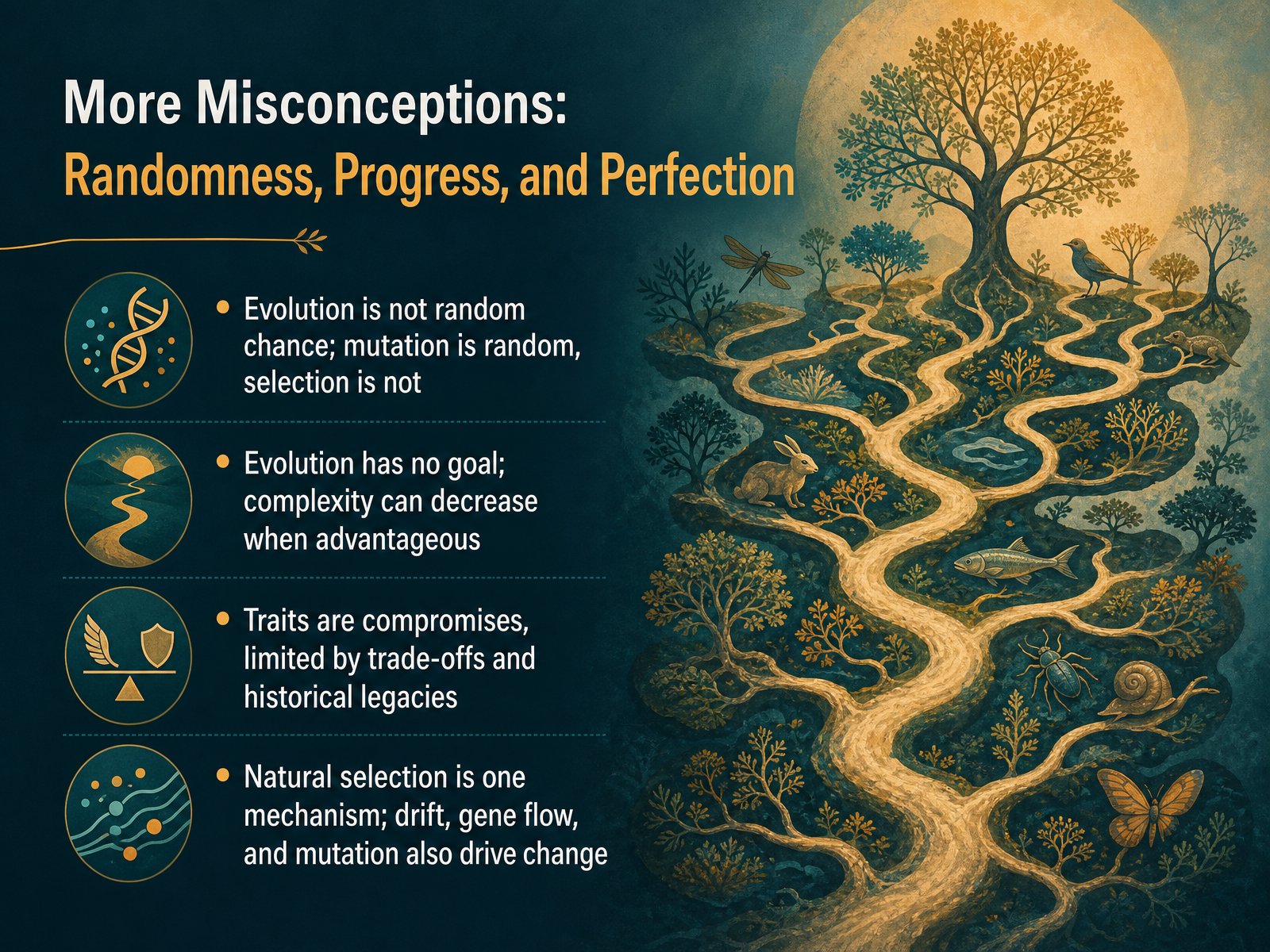
2 min - 10More Misconceptions: Randomness, Progress, and PerfectionNow, let's tackle a few more misconceptions that even seasoned learners can stumble over. First, you might hear that evolution is 'random chance.' That's not quite right. The mutation that creates genetic variation is random, but natural selection itself is not. It's a non-random filter that consistently favors traits that improve survival and reproduction in a specific environment. Next, evolution has no long-term goal or direction. It doesn't strive for progress or perfection. In fact, complexity can decrease when it's advantageous, like cavefish losing their eyesight over generations. We also need to remember that traits are often compromises. They're limited by trade-offs and historical legacies. A peacock's brilliant tail is great for attracting mates, but it's also a heavy, conspicuous target for predators. Finally, natural selection is a powerful mechanism, but it's not the only one driving change. Genetic drift, gene flow, and mutation all play important roles in shaping populations. With these misconceptions cleared up, let's look at how these concepts apply to our daily lives, in medicine, agriculture, and conservation.
 2 min
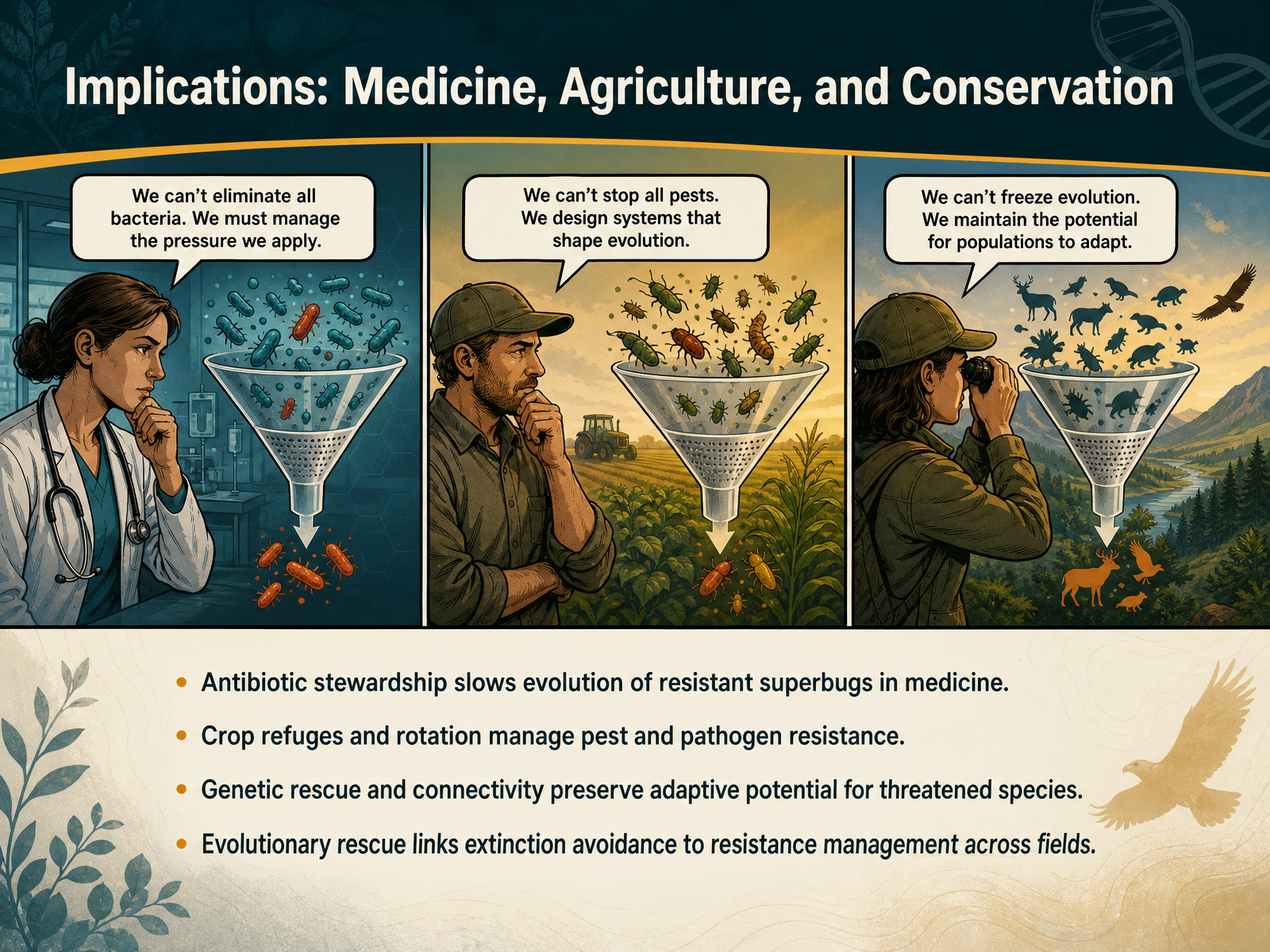
2 min - 11Implications: Medicine, Agriculture, and ConservationWe've seen how natural selection works. Now let's look at how we apply these ideas across medicine, agriculture, and conservation. In medicine, one of our biggest challenges is antibiotic resistance. When we use antibiotics, we create a strong selection pressure that favors resistant bacteria. Antibiotic stewardship—using these drugs only when truly necessary—slows the evolution of superbugs. In agriculture, farmers use a similar strategy with crop refuges and rotation. By planting non-treated crops alongside treated ones, they maintain a population of pests that haven't been exposed to the pesticide, which slows the spread of resistance. For conservation, we turn to genetic rescue. When a small, isolated population loses genetic variation, we sometimes introduce individuals from other populations to restore adaptive potential. All of these strategies share a common thread: managing evolutionary rescue. Whether we're trying to prevent a species from going extinct or stop a pathogen from surviving treatment, we're managing the same evolutionary process. Next, we'll explore how these ideas connect microevolution to biodiversity.
 2 min
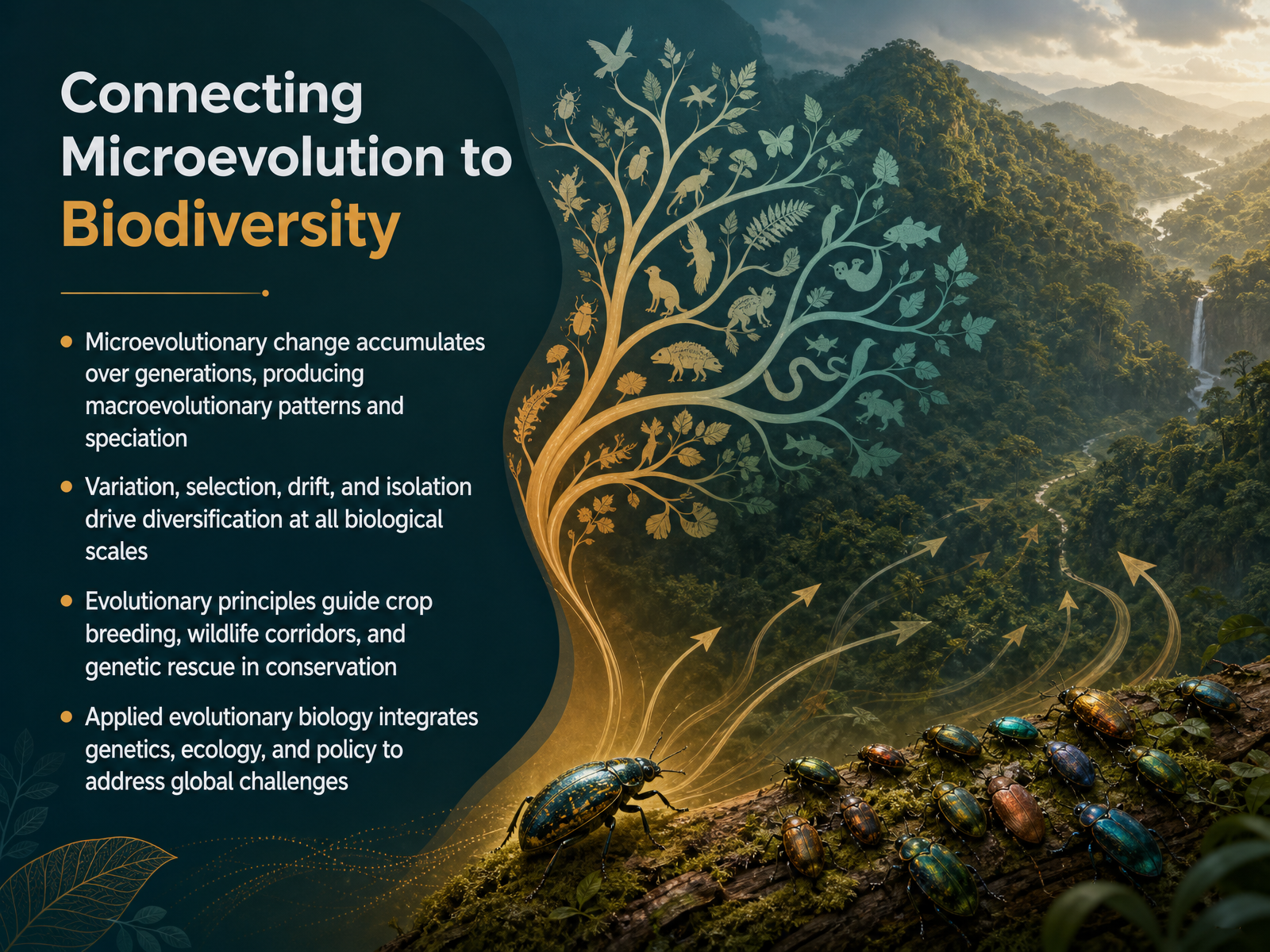
2 min - 12Connecting Microevolution to BiodiversitySo far, we have focused on changes within a single population. But when we zoom out and look across millions of years, that same process of microevolution accumulates. Small changes add up, generation after generation, producing the grand patterns we call macroevolution, and ultimately, the formation of new species. The key drivers remain the same: variation, selection, drift, and isolation. Together, they fuel diversification at every biological scale, from genes to entire ecosystems. This understanding is not just theoretical. We apply these evolutionary principles directly to solve real-world problems. For example, we use them to guide crop breeding for drought resistance, design wildlife corridors that connect fragmented habitats, and even perform genetic rescue to restore diversity in endangered populations. Today, applied evolutionary biology integrates genetics, ecology, and policy to tackle global challenges, from slowing the evolution of antibiotic resistance in hospitals to helping species adapt to a changing climate. It is a powerful toolkit for shaping a more sustainable future. Next, we will bring everything together in our final synthesis: 'Connecting Variation, Survival, and Change.'
 2 min
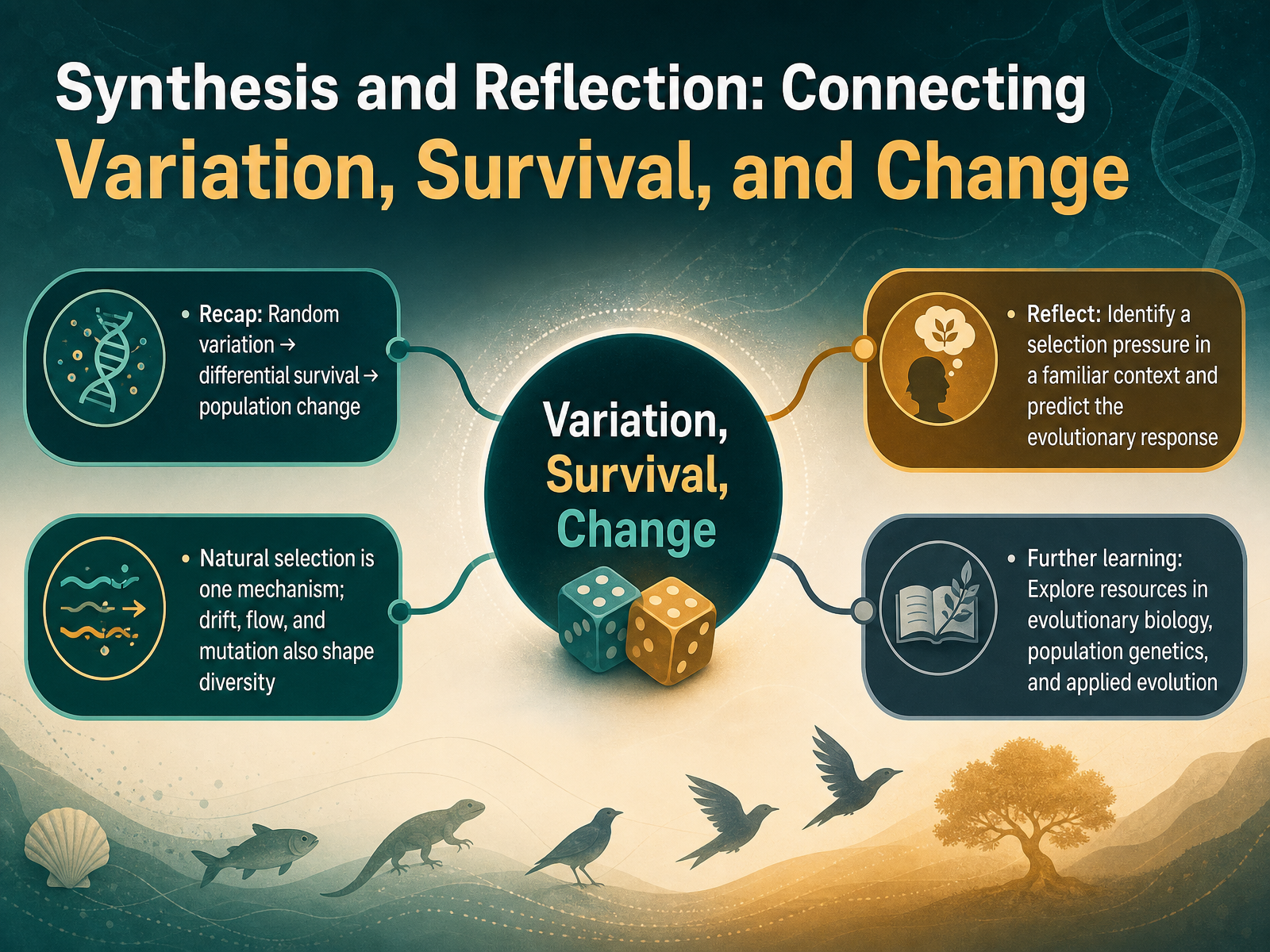
2 min - 13Synthesis and Reflection: Connecting Variation, Survival, and ChangeWe've reached the final step, so let's bring everything together. The core engine of natural selection follows a clear, observable logic: random variation arises in a population, some variations help individuals survive and reproduce at a higher rate, and over generations, those traits become more common. That's it—variation, differential survival, change. But we also need to remember that natural selection is not the only mechanism at work. Evolution is shaped by genetic drift, gene flow, and mutation as well, all contributing to the rich diversity of life. So here's a final reflection for you. Think of a familiar context, maybe a pet, a garden, or even antibiotic use, and identify a selection pressure. What variation already exists, and what evolutionary response would you predict over time? That act of connecting the pieces is where real understanding begins. If you want to go deeper, explore the resources on evolutionary biology, population genetics, and applied evolution mentioned in your materials. Thank you for joining me on this journey through natural selection. Keep asking questions, keep observing, and you'll see the process at work all around you.
 evolution.berkeley.edudarwin-online.org.ukdarwin-online.org.uk+22 min
Take the deck with you
Download this course as a file — free, no sign-up needed.
- PDF handoutEvery slide page, ready to print or share.14 pages · 5.0 MBDownload
- Narrated PowerPointThe deck that presents itself — every slide carries the digital human's narration video.14 pages · 19.4 MBDownload
- PowerPoint slidesThe full deck as a .pptx — open it in PowerPoint, Keynote, or Google Slides.14 pages · 5.0 MBDownload
Free to use in your own training — please keep the PersonWise credit page at the end.
Have your own deck? Turn it into a course
Sources consulted
Web sources consulted while building this course.
- Natural Selection: Charles Darwin & Alfred Russel Wallace — evolution.berkeley.edu
- Author's personal copy — darwin-online.org.uk
- Darwin, C. R. and A. R. Wallace. 1858. On the tendency of species to form varieties; and on the perpetuation of varieties and species by natural means of selection. [Read 1 July] Journal of the Proceedings of the Linnean Society of London. Zoology 3 (20 August): 45-50. — darwin-online.org.uk
- On the Tendency of Varieties to Depart Indefinitely From the Original Type (1858) — digitalcommons.wku.edu
- The Darwinian Revelation: Tracing the Origin and Evolution of an Idea — doi.org
- Genetic variation — evolution.berkeley.edu
- How are gene variants involved in evolution?: MedlinePlus Genetics — medlineplus.gov
- E&EB 122 - Lecture 6 - The Origin and Maintenance of Genetic Variation | Open Yale Courses — oyc.yale.edu
- Mutation, Repair and Recombination - Genomes - NCBI Bookshelf — ncbi.nlm.nih.gov
- Variation in Populations – Understanding Organisms: An Evolutionary, Ecological and Comparative Approach — rotel.pressbooks.pub
- 19.3B: Stabilizing, Directional, and Diversifying Selection — bio.libretexts.org
- Disruptive Selection - Definition and Examples - Biology Online Dictionary — biologyonline.com
- Stabilizing selection — en.wikipedia.org
- Directional Selection in Evolutionary Biology — thoughtco.com
- Mechanisms of Natural Selection – BSC109 – Biology I — open.baypath.edu
- The Hardy-Weinberg Principle | Learn Science at Scitable — nature.com
- Hardy–Weinberg principle — en.wikipedia.org
- Hardy–Weinberg principle — en.wikipedia.org
- 11.2: Is a population in Hardy-Weinberg equilibrium? - Biology LibreTexts — bio.libretexts.org
- The Hardy-Weinberg Principle in Population Genetics — cscu.cornell.edu