Begin
14 pages · ~28 min
Team Communication Planning and Execution
Learn practical team communication strategies to plan effectively and execute projects with clarity, fostering collaboration and minimizing misunderstandings.
A digital instructor presents all 14 pages. Hold “Ask” at any point and ask out loud — the answer comes from this course. No sign-up needed.
What you’ll learn
- 01Effective Team Communication Strategies: Planning and ExecutionWelcome, everyone. I'm glad you're here. This course is about turning communication from a daily struggle into a true project advantage. We often assume that projects fail due to a lack of talent or ambition, but in my experience, they usually stall because the right information doesn't reach the right people at the right time. That gap leads to wasted hours, duplicated effort, and eroded trust. The good news is that a deliberate, structured approach can prevent most of those issues. Over the next few sessions, we'll cover practical strategies for planning your communication, executing it with discipline, and continuously improving how your team stays aligned. You'll leave with concrete tools you can apply immediately. Let's begin, because effective communication isn't just nice to have. It's a core management discipline that directly protects your delivery. So, let's get into the real cost of getting this wrong. That's our next topic.monday.comlink.springer.comthesesjournal.com+21 min
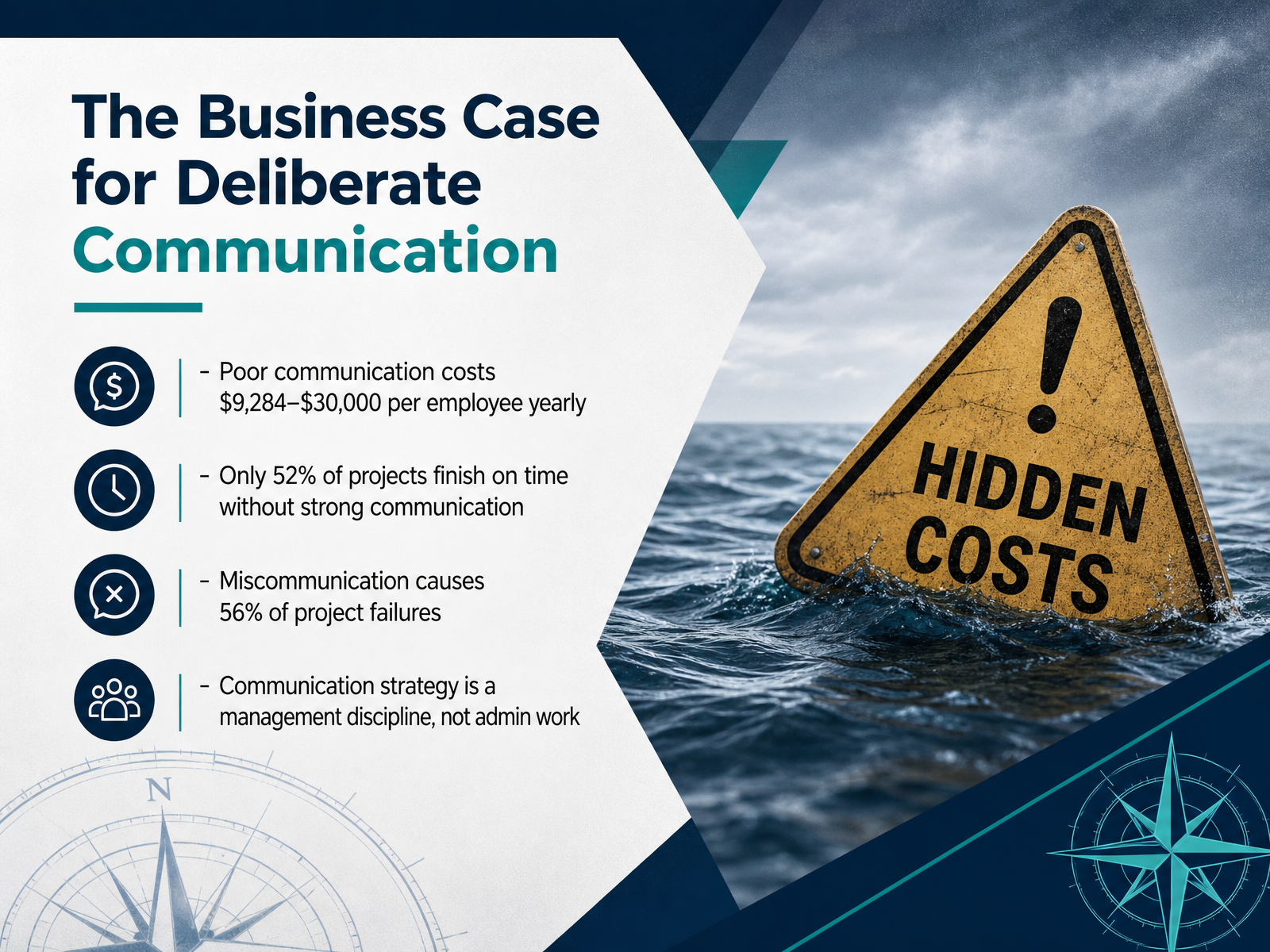
- 02The Business Case for Deliberate CommunicationLet's start with the numbers, because they make the case for us. Poor communication costs organizations between nine thousand and thirty thousand dollars per employee, every single year. Think about what that means for a team of twenty. That's potentially hundreds of thousands of dollars lost to missed updates, duplicated work, and avoidable rework. Now, the project impact. Only about half of projects finish on time when communication isn't deliberate. And research shows that miscommunication is a primary factor in more than half of all project failures. The pattern is clear. Communication strategy isn't administrative overhead. It's a management discipline that directly protects your budget, your timeline, and your team's focus. When we treat it that way, we move from reacting to breakdowns to preventing them. Next, let's look at what typically goes wrong and where those breakdowns actually start.
 monday.comlink.springer.comthesesjournal.com+21 min
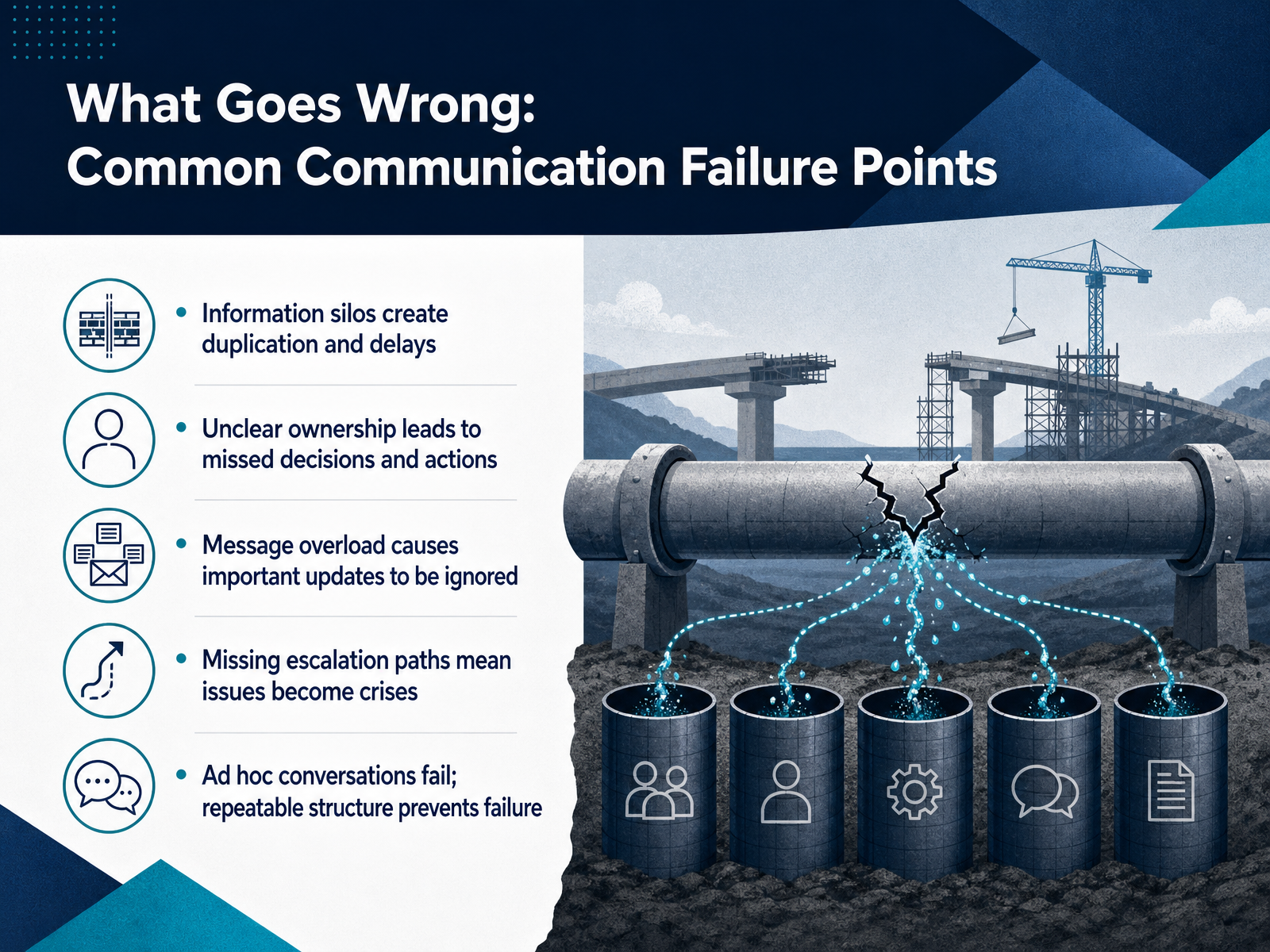
 - 03What Goes Wrong: Common Communication Failure PointsLet’s be honest about what usually goes wrong. It’s rarely a lack of talent. It’s how information moves. First, information silos. When teams hold onto their own updates, work gets duplicated and deadlines slip. Second, unclear ownership. If nobody knows who owns a decision, that decision waits, and the project stalls. Third, message overload. When every message feels urgent, nothing stands out, and the important updates get buried or ignored. Fourth, missing escalation paths. Without a clear route for issues, a small problem quietly becomes a crisis. And fifth, ad hoc conversations. Relying on quick chats and scattered emails is fragile. A repeatable structure prevents these failures. It replaces guesswork with a system everyone can rely on. Now, let’s look at the core principles that build that structure.
 monday.comlink.springer.comthesesjournal.com+21 min
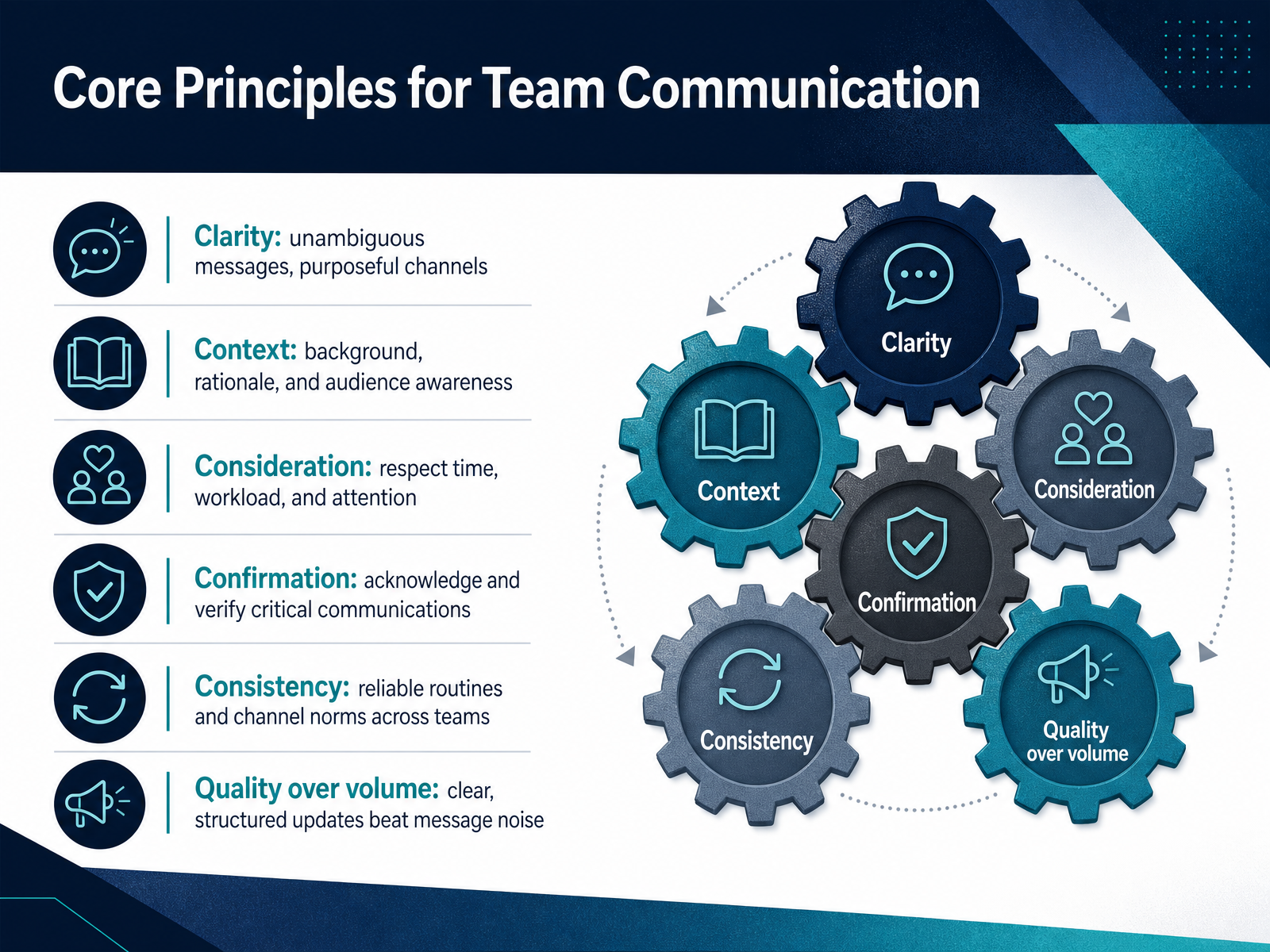
 - 04Core Principles for Team CommunicationNow let's break down the core principles that guide every good communication decision. Clarity means your message is unambiguous, and you choose the right channel for its purpose. Context is about giving the background and rationale, so people understand the why, not just the what. Consideration means you respect their time, workload, and attention—don't send a long email when a quick chat works, and don't book a meeting when a doc would do. Confirmation ensures critical messages are acknowledged and understood, so nothing slips through. Consistency builds reliable routines, so everyone knows where to find what they need. And quality over volume—clear, structured updates always beat noisy message floods. Keep these six in mind as you plan how your team communicates, because they'll guide every channel choice you make. Next, we'll move into the planning phase, where we align stakeholders, pick channels, and set a cadence that works for everyone.
 twentyeightconsultancy.comresources.rework.comteamworkstate.github.io+21 min
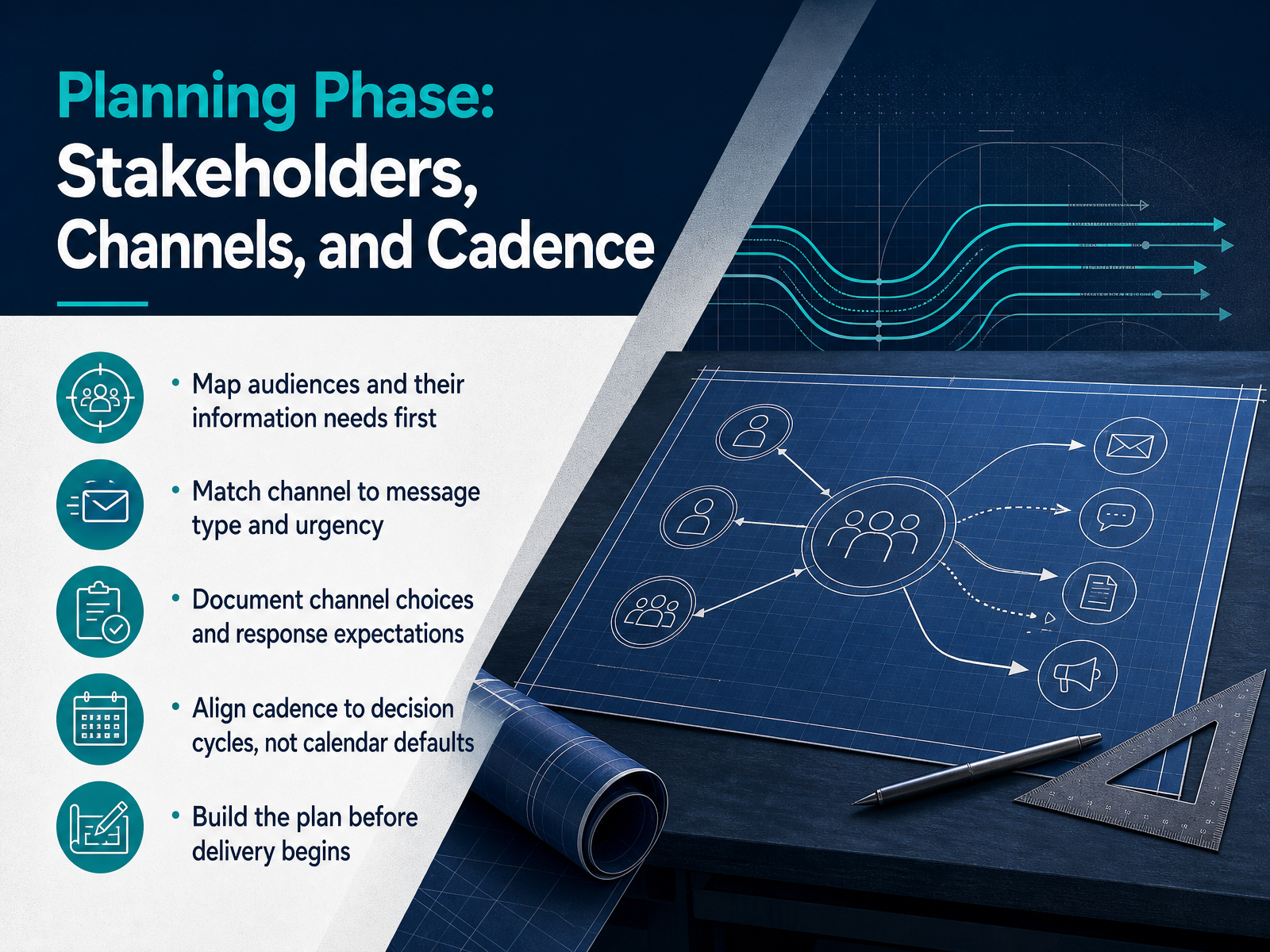
 - 05Planning Phase: Stakeholders, Channels, and CadenceNow let’s move into the planning phase. This is where we decide who needs what, through which channel, and how often. Start by mapping your audiences and their actual information needs. A sponsor wants exception-based updates, while your team needs task-level detail. Don’t guess. Ask them. Next, match the channel to the message. Urgent, complex issues need a quick call or meeting. Routine updates fit a written report. Think about response expectations too. If chat is for quick questions, state the expected reply time. Email might allow twenty-four hours. Write these choices down so everyone knows the rules. And here’s the key: align your cadence to decision cycles, not calendar defaults. If the steering committee meets monthly, a weekly report is noise. If your team runs two-week sprints, daily summaries might be useful. Build the plan before delivery begins, and treat it as a living reference, not a signed-off document. When communication is deliberate, projects move faster and fewer surprises surface. Next, we’ll look at how to put channel selection into practice.
 monday.comlink.springer.comthesesjournal.com+22 min
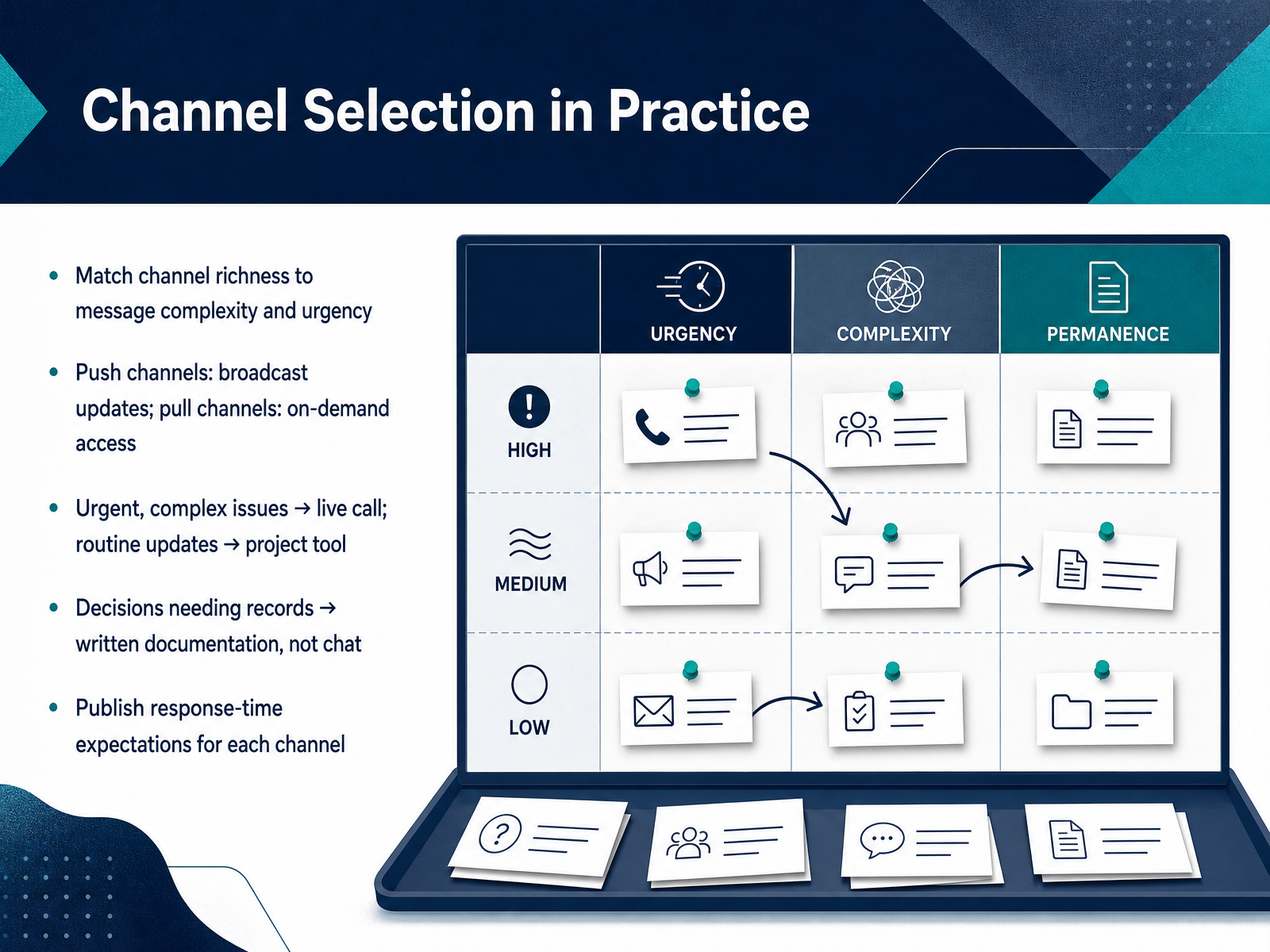
 - 06Channel Selection in PracticeNow let’s move from planning into the practical side: picking the right channel for the right message. Not every message deserves the same treatment. Start by matching the channel's richness to the message’s complexity and urgency. A live call or video chat carries tone and allows instant feedback, which is perfect for urgent, complex, or sensitive issues. Routine updates, on the other hand, belong in your project tool, such as your task tracker, where they create a clear record. If a decision needs to be referenced later, write it down in a document rather than relying on chat, which can easily scroll away. And make sure you publish your response time expectations for each channel. When everyone knows when to expect a reply, you remove a huge source of daily friction and build trust. So, align the channel with the need: live for complex, written for records, and tools for tracking. This small habit makes your execution phase far smoother. Next, we’ll look at the execution phase in detail—specifically, how clarity, ownership, and feedback keep your plan on track.
 twentyeightconsultancy.comresources.rework.comteamworkstate.github.io+22 min
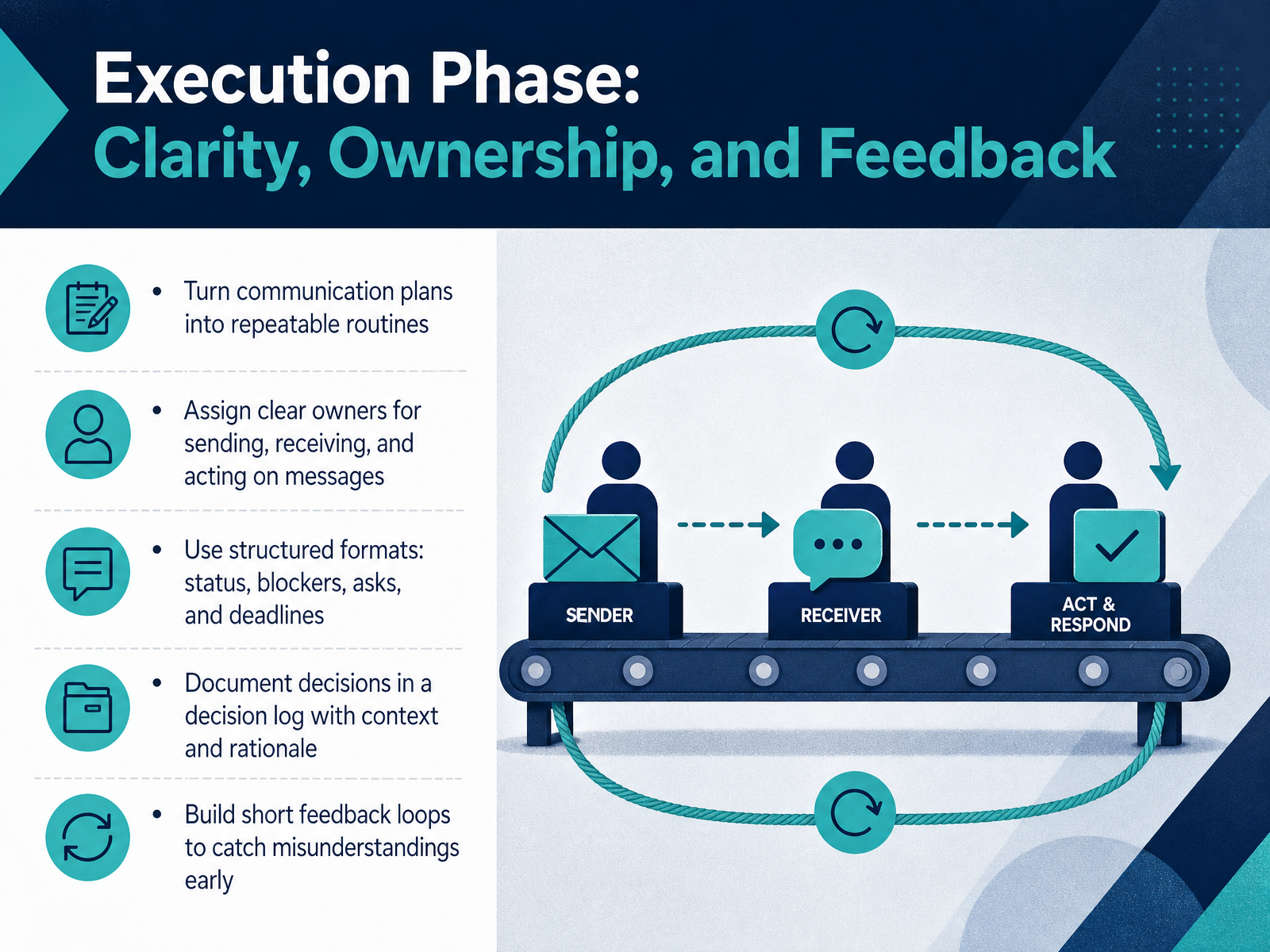
 - 07Execution Phase: Clarity, Ownership, and FeedbackNow let’s move into execution, where plans become actions. The key is to turn your communication plan into a repeatable routine, so no one has to guess what happens next. Assign clear owners for every message—someone to send it, someone to receive it, and someone to act on it. For example, when a blocker comes up, name the person responsible for resolving it. Use a structured format for updates: status, blockers, asks, and deadlines. This keeps information scannable and action-oriented. Also, document decisions in a decision log, including the context and reasoning. This way, you avoid rehashing the same conversations weeks later. And build short feedback loops to catch misunderstandings early. A quick check-in after a deliverable can save you from major rework downstream. These routines create clarity and ownership, reducing friction across the team. In our next section, we’ll look at how roles and responsibilities shape team communication.
 julienflorkin.comcadence.withremote.aisoltysik.tech+21 min
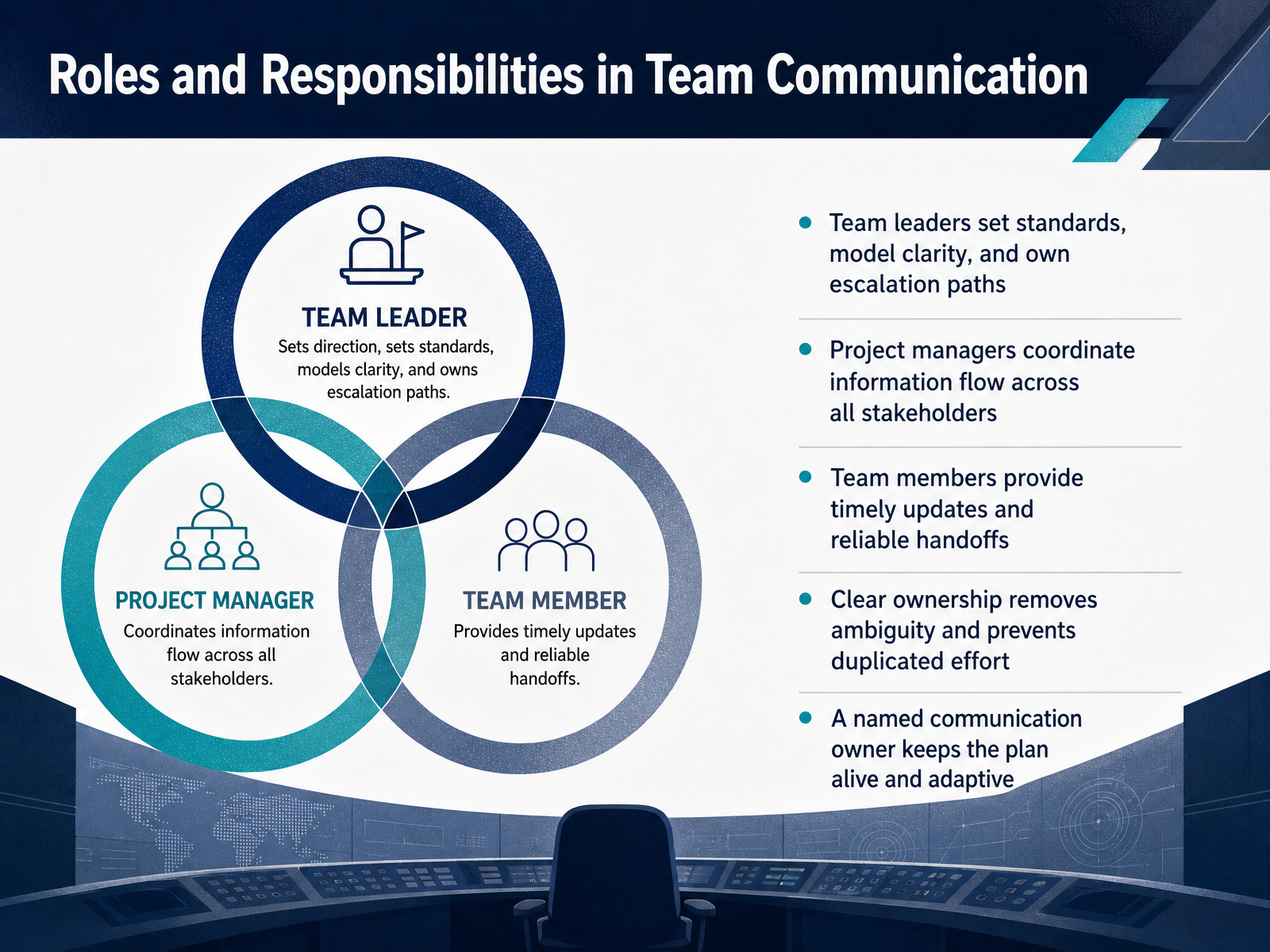
 - 08Roles and Responsibilities in Team CommunicationNow let's talk about who does what when it comes to communication. Clear ownership removes ambiguity and prevents duplicated effort. Team leaders set the standards, model clarity, and own the escalation paths. Project managers coordinate the flow of information across all stakeholders, making sure nothing gets lost in transit. Team members provide timely updates and reliable handoffs. That's the core of every successful project. But here's the key: every plan needs a named communication owner. Usually the project manager or a designated team lead. This person makes sure updates go out on schedule, stakeholders get the right level of detail, and the plan itself adapts as the project evolves. Without that owner, even the best communication plan drifts into disuse within weeks. So ask yourself: who owns communication on your team right now? If the answer is unclear, that's your first thing to fix. Next, we'll look at how to facilitate inclusive and purposeful discussions.
 monday.comlink.springer.comthesesjournal.com+22 min
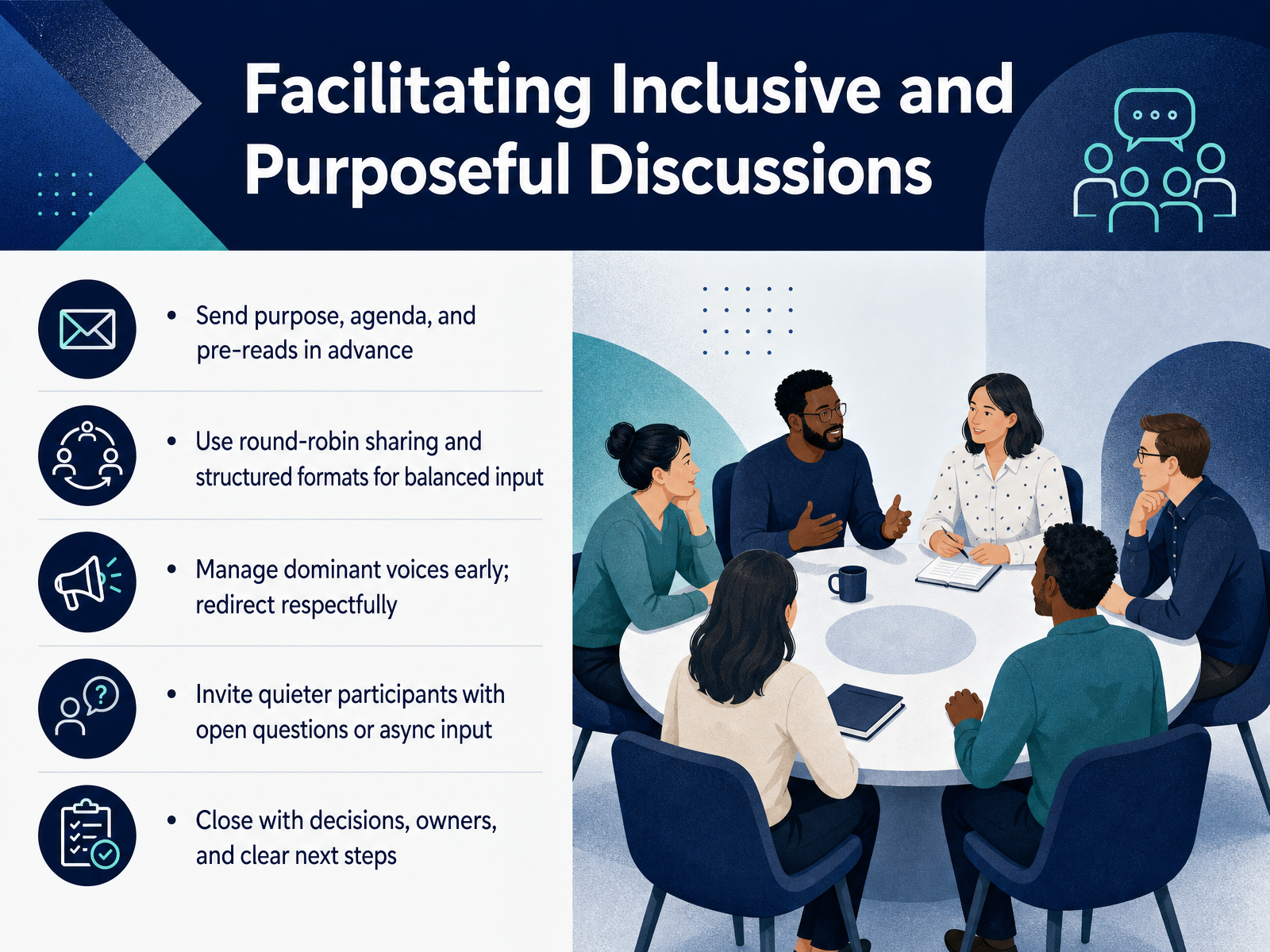
 - 09Facilitating Inclusive and Purposeful DiscussionsLet’s talk about making every discussion count. Start by sending the purpose, agenda, and any pre-reads in advance. This gives people time to prepare and ensures everyone starts on the same page. When the meeting begins, use round-robin sharing or other structured formats to balance input across the room. If a dominant voice takes over, manage that early—thank them, summarize their point, and redirect. For quieter participants, invite them with open questions like, “What are you seeing from your side?” and offer asynchronous options like chat or notes for those who prefer to contribute later. Finally, close with clarity: confirm decisions, assign owners, and state next steps. This turns a good discussion into actionable progress, and it keeps the team aligned. Up next, we’ll look at digital tools and remote communication.
 mypd.co.ukseramount.comthemovingmountains.com+21 min
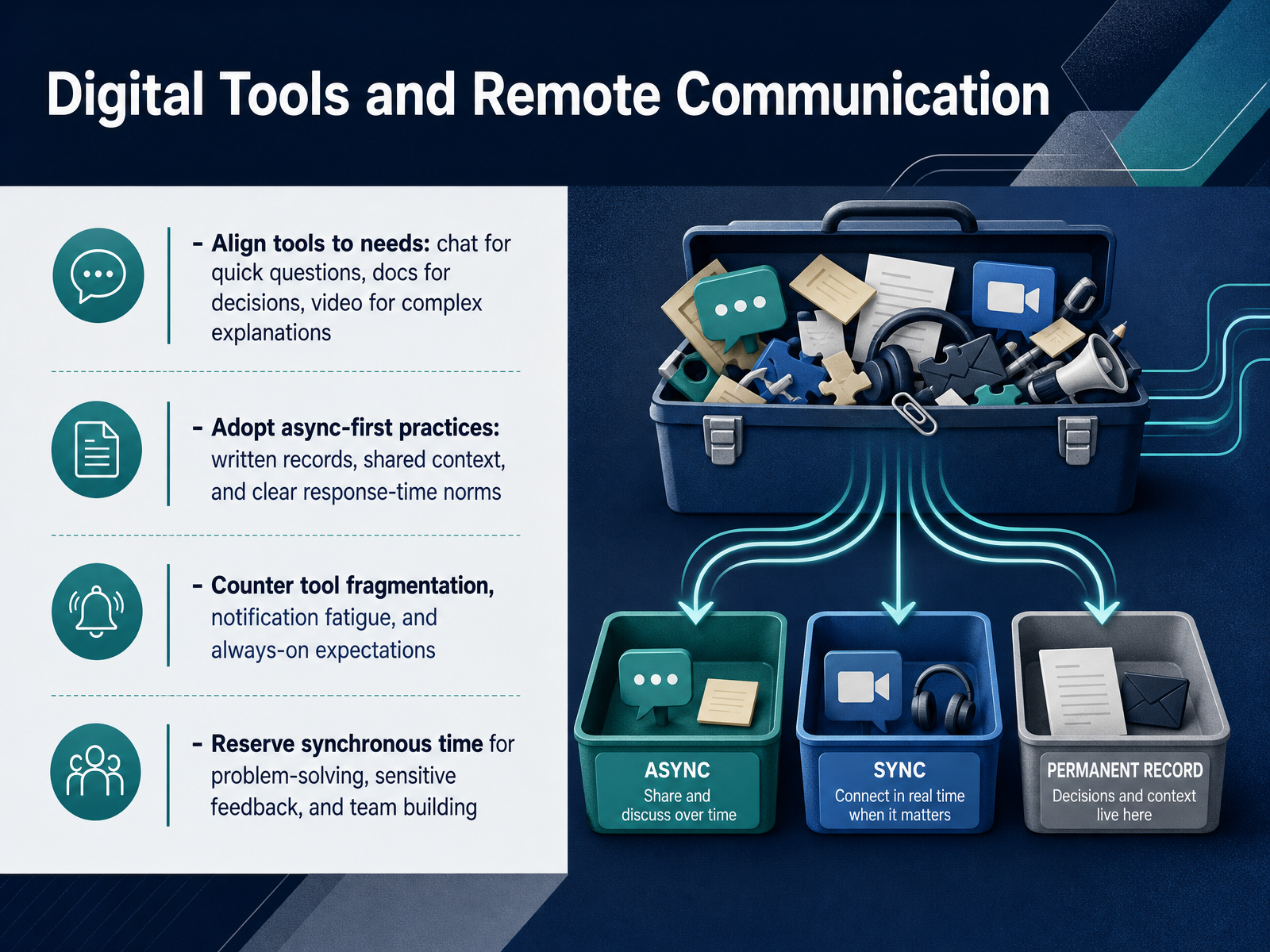
 - 10Digital Tools and Remote CommunicationWhen we bring digital tools into the picture, the first rule is simple: align the tool to the need. Use chat for quick questions that have short answers. Use documents for decisions that need a written record. And use video only when the explanation is complex, or tone really matters. That kind of discipline prevents a lot of confusion before it starts. Now, think about timing. Adopt an async-first mindset. Post a written update instead of calling a meeting. Share context in a shared document. And most importantly, agree on response-time norms. For example, four business hours for chat, and next business day for email. When everyone knows the expectation, nobody feels the pressure to reply instantly, and notification fatigue drops. That leads to fewer distractions and more focus. Finally, be intentional about what stays synchronous. Save real-time time for problem-solving, sensitive feedback, or team building. Reserve the live conversation for when it genuinely adds value. Here is the takeaway: match the channel to the task, document more, interrupt less, and protect deep work for the moments that matter. In the next slide, we will look at making asynchronous communication the default for your whole team.
 cadence.withremote.aitwentyeightconsultancy.comresources.rework.com+22 min
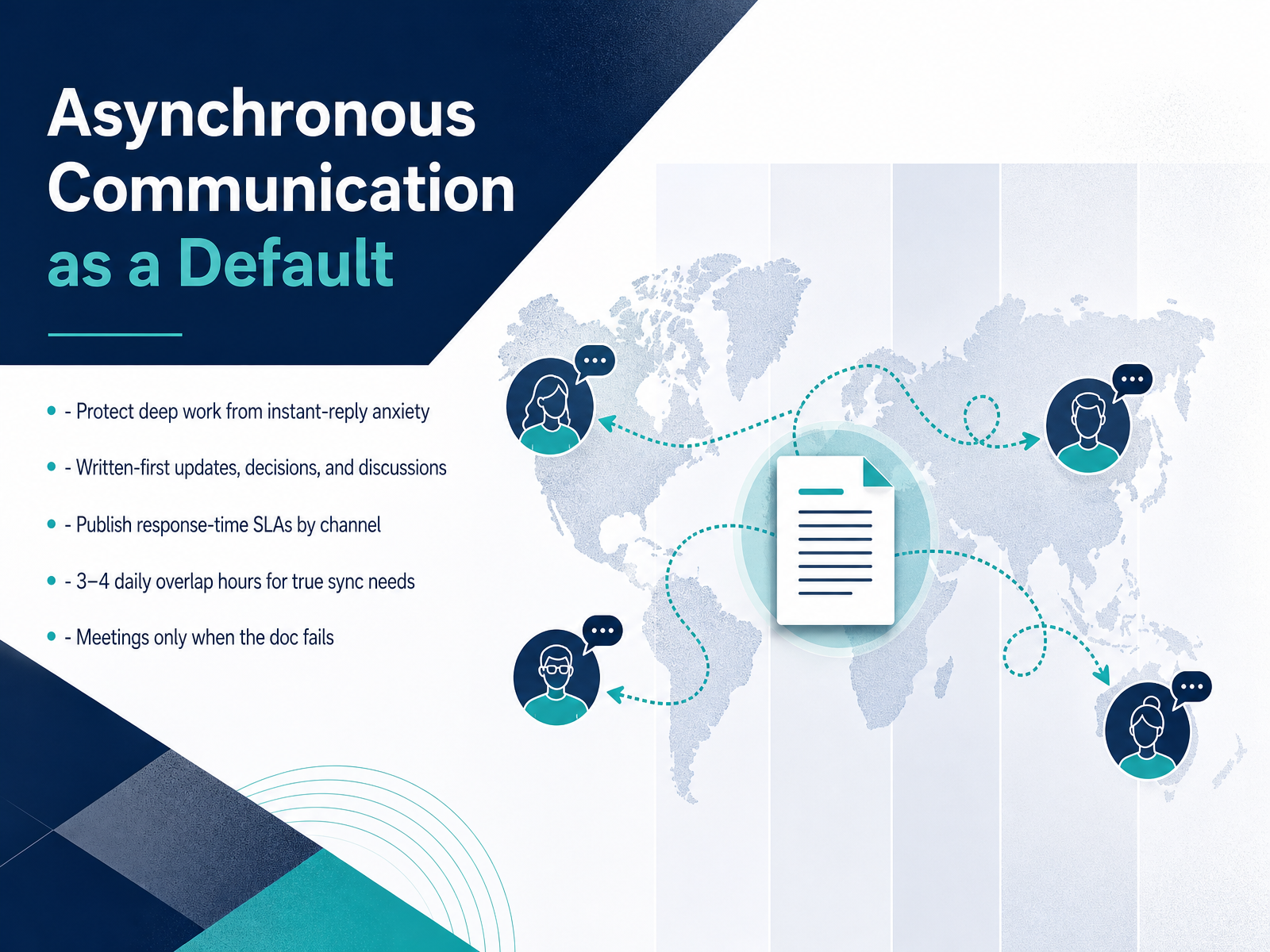
 - 11Asynchronous Communication as a DefaultLet’s talk about making asynchronous communication your team’s default mode. The goal is simple: protect deep work from the anxiety of instant replies. Instead of reacting to every ping, we write updates, decisions, and discussions down first. This creates a searchable record and lets people contribute when they have focus. To make this work, publish clear response-time agreements for each channel. For example, chat messages get a reply within four business hours, and document comments within two business days. This removes the guesswork and the pressure. For true collaboration, aim for three to four overlapping hours each day. Use that window only for real-time work like brainstorming or resolving conflicts. Everything else can wait. And here’s the key rule: only schedule a meeting when the document fails. If a written proposal answers questions, you’ve saved everyone’s time. Move an update to a channel post and see how much clarity you gain. Up next, we’ll look at how to measure communication success and keep improving.
 cadence.withremote.aijulienflorkin.comsoltysik.tech+22 min
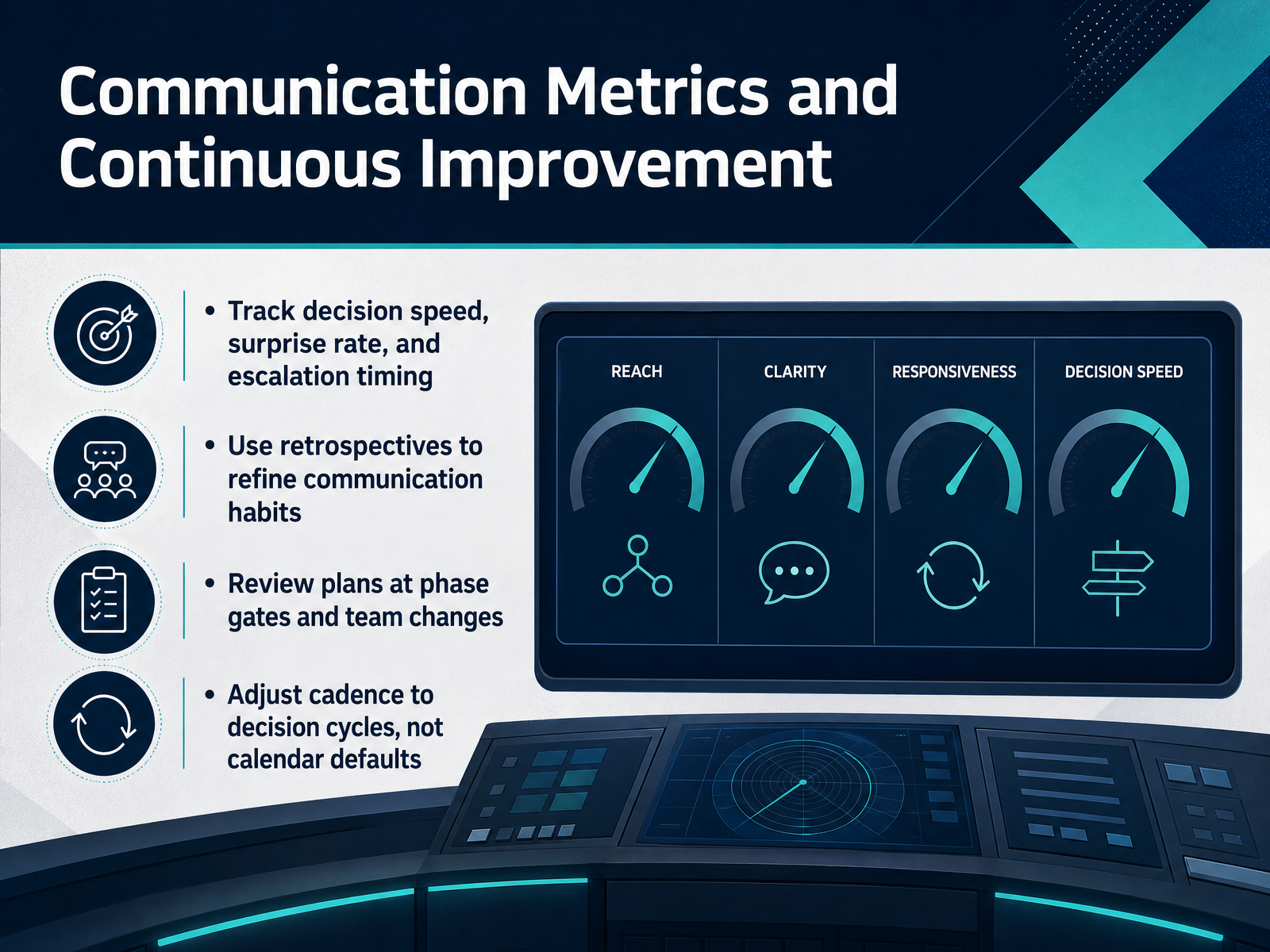
 - 12Communication Metrics and Continuous ImprovementSo how do we know if our communication is actually working? We track a few key signals. First, decision speed. Are decisions being made within the expected timeframes, or are they delayed because the right people don't have the information they need? Second, the surprise rate. How often do stakeholders hear about something for the first time and say, "I didn't know that"? A high surprise rate tells us information isn't reaching the right people at the right time. Third, escalation timing. Are issues being raised early enough to handle them easily, or are they arriving in crisis mode? Use your retrospectives to refine communication habits. Ask the team what worked, what didn't, and what should change. Review your communication plan at every phase gate and whenever the team composition shifts. New people need to know how information flows. Finally, adjust your communication cadence to match decision cycles, not calendar defaults. If your steering committee meets monthly, a weekly report is noise. Align the rhythm to how often decisions actually need to be made. These small adjustments keep communication healthy. Now, let's look at how to build a team communication action plan that puts all of this into practice.
 monday.comlink.springer.comthesesjournal.com+22 min
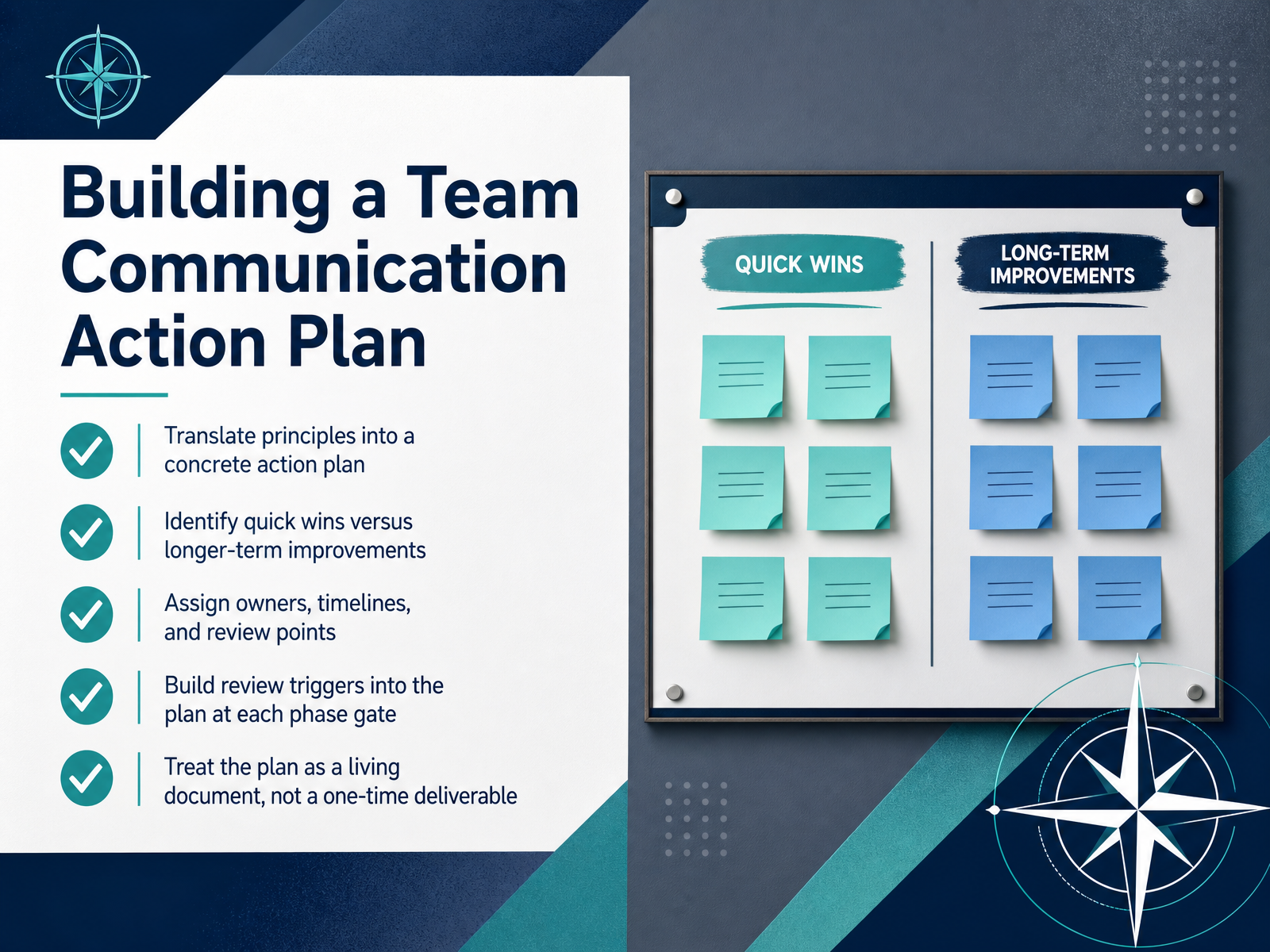
 - 13Building a Team Communication Action PlanNow let’s turn all these principles into a concrete action plan. Start by listing the communication improvements you want to make. Separate quick wins from longer-term changes. A quick win might be setting a standard template for weekly status updates. A longer-term improvement could be building a shared decision log. Then, assign an owner for each action, set a timeline, and schedule review points. At every phase gate, build in a trigger to revisit the plan. Ask: is this still working? Does the frequency fit the current stage? Treat the plan as a living document. Update it when the team changes, the scope shifts, or something stops working. Remember, a plan that sits in a folder is just a document. A plan that gets used becomes your team’s communication backbone. Coming up next, we’ll summarize the key takeaways and outline your next steps.
 monday.comlink.springer.comthesesjournal.com+21 min
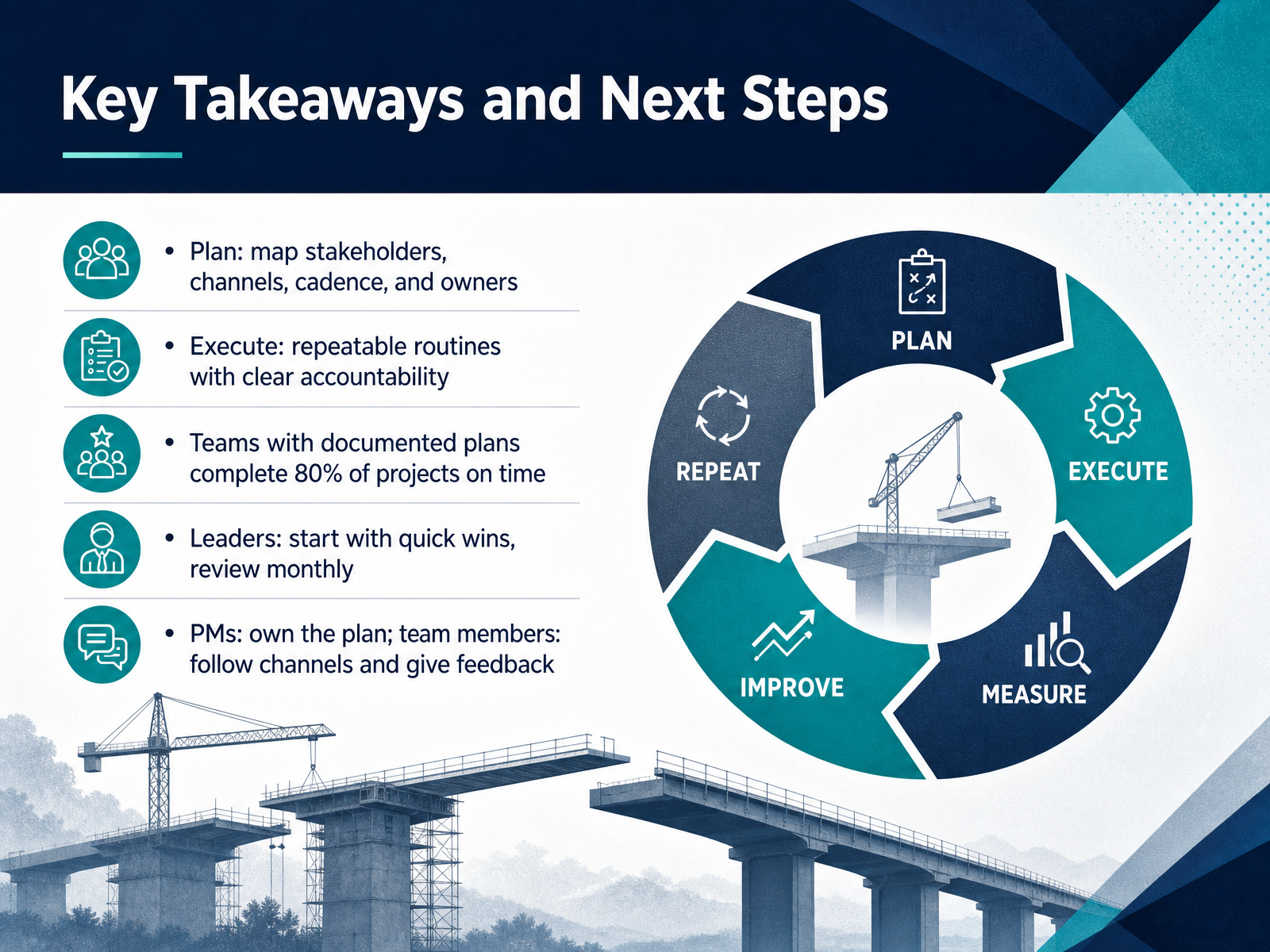
 - 14Key Takeaways and Next StepsLet's pull the whole course together into a clear action plan. Start with your communication plan: map out the stakeholders, choose the channels, set the cadence, and assign an owner for each update. Then, execute with repeatable routines. When the plan is documented, teams complete eighty percent of projects on time. That's a proven difference. Leaders, begin with quick wins. Pick one communication gap, fix it this month, and review progress monthly. Project managers, take ownership of the plan. Update it when the project changes, and keep it as a living document. Team members, follow the agreed channels and give feedback when something isn't working. The plan only works if everyone uses it. Thank you for your commitment to stronger communication. Start with one small step today. Your team will feel the difference. Let's make it happen.
 monday.comlink.springer.comthesesjournal.com+22 min
Take the deck with you
Download this course as a file — free, no sign-up needed.
- PDF handoutEvery slide page, ready to print or share.15 pages · 4.4 MBDownload
- Narrated PowerPointThe deck that presents itself — every slide carries the digital human's narration video.15 pages · 13.8 MBDownload
- PowerPoint slidesThe full deck as a .pptx — open it in PowerPoint, Keynote, or Google Slides.15 pages · 4.4 MBDownload
Free to use in your own training — please keep the PersonWise credit page at the end.
Have your own deck? Turn it into a course
Sources consulted
Web sources consulted while building this course.
- How To Create A Project Communication Plan in 2026 ... — monday.com
- Mediating Role of Work Engagement - Springer Nature — link.springer.com
- QUALIFYING HOW MUCH OF PROJECT SUCCESS IS DIRECTLY IMPUTABLE TO THE COMMUNICATION QUALITY IN VIRTUAL SOFTWARE TEAMS | Spectrum of Engineering Sciences — thesesjournal.com
- Project Communication Plan - Project Management FormulaProject Management Formula — projectmanagementformula.com
- Team Communication as a Moderator of Team Effecitveness: A Narrative Review through the Input-Mediator-Output Framework — doi.org
- How to Choose the Right Communication Channel Every Single Time — twentyeightconsultancy.com
- "Async Communication: When to Slack, When to Doc, When to Meet" — resources.rework.com
- Communication Channels Guide | teamwork-frameworks — teamworkstate.github.io
- How to pick the most effective communication channels at ... — slack.com
- A simple guide to communication channels at work — atlassian.com
- Communication Systems for AI-Era Teams — julienflorkin.com
- Async communication guide for engineering teams in 2026 | Cadence blog — cadence.withremote.ai
- How [Type: RFC] Messages Transformed Our Team's Decision-Making · Mateusz Soltysik Tech — soltysik.tech
- The Artifact-First Operating System for Distributed Engineering — techkraftinc.com
- The Team Management Operating System for EMs | QuestWorks — questworks.io
- Inclusive Meetings Checklist: 8 Ways to Encourage Every Voice in the Room : MyPD — mypd.co.uk
- Leading Inclusive Meetings That Drive Results: How Managers Can Foster Participation, Equity, and Impact | Seramount — seramount.com
- Meeting Equity Leadership: The Ultimate Guide - Moving Mountains — themovingmountains.com
- Gracious Invitation: A Coast Salish–Inspired Path to Radical Inclusion in Meetings - Civic Reinventions — civicreinventions.com
- How to Plan an Inclusive Meeting for Diverse Teams — formmycompany.uk