Content Marketing Strategy Planning
Begin
14 pages · ~28 min
Content Marketing Strategy Planning
Learn to build and execute effective content marketing strategies, covering planning, audience targeting, and performance measurement for marketing professionals.
What you’ll learn
- 01Content Marketing Strategies: Planning and ExecutionWelcome. If you're tired of posting into the void and hoping something sticks, you're in the right place. This session is about turning scattered content into a repeatable engine—one that starts with your audience, not your calendar. We’ll walk through foundations, audience mapping, planning, execution, distribution, and measurement. You’ll leave with a workflow you can actually run next week. And here’s the key shift: stop reacting, start planning. That’s exactly what we’ll tackle first, with why structured planning beats reactive publishing.1 min
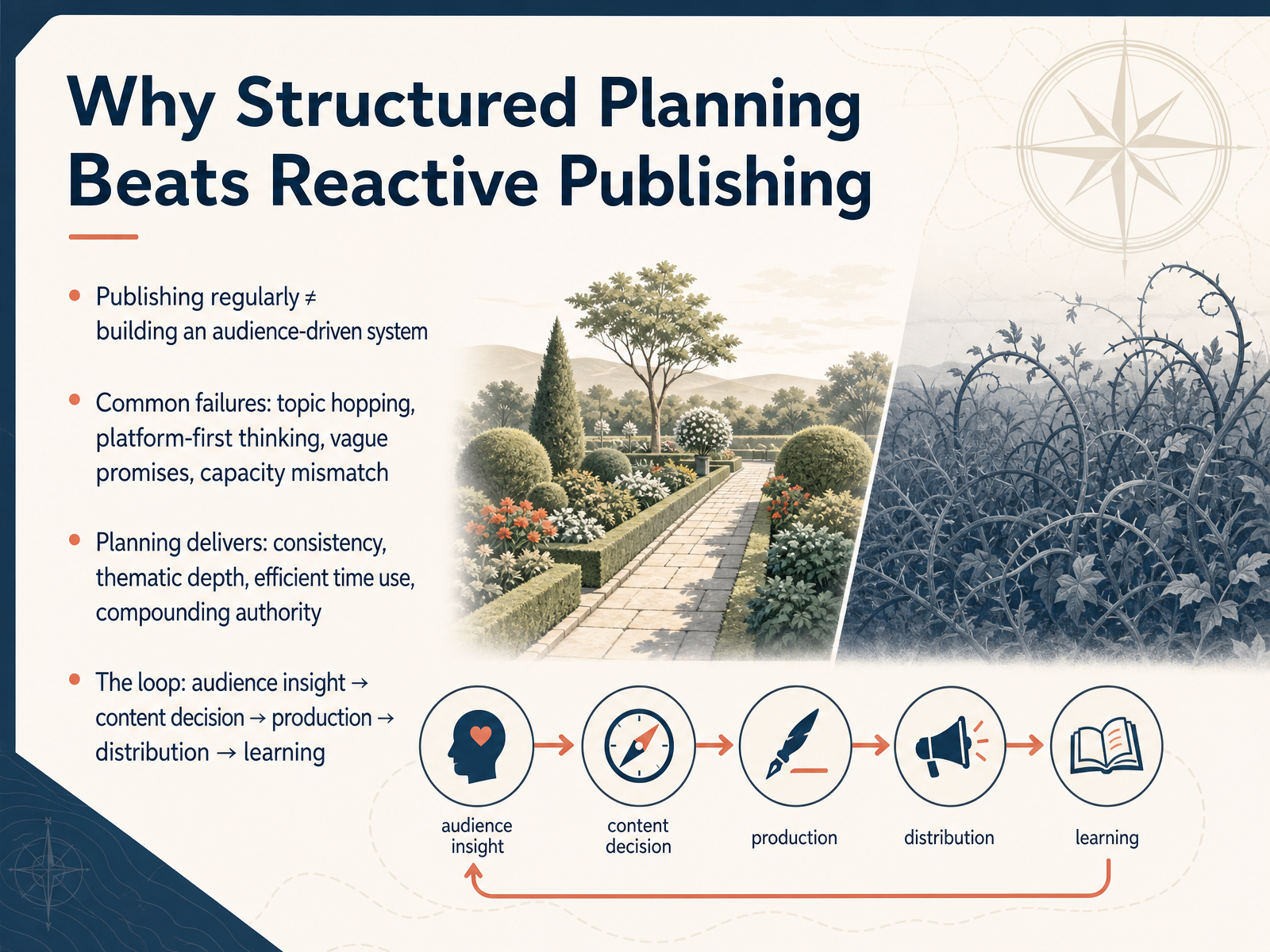
- 02Why Structured Planning Beats Reactive PublishingLet's get one thing straight upfront. Publishing on a regular schedule is not the same as building a system that actually grows your audience. Too many creators and teams fall into the same traps. They hop topics based on whatever feels urgent. They lead with the platform instead of the person. They promise value without a clear angle. And they overload their capacity until quality tanks. Structured planning flips that. It gives you consistency, yes. But more importantly, it builds thematic depth, makes your time count, and compounds your authority with every piece you put out. Here's the loop you'll want to internalize. Audience insight drives every content decision. That decision becomes production. Production feeds into distribution. And distribution hands you learning that feeds right back into your next insight. It's a closed loop, not a scattergun. So the takeaway is simple. Before you write another post, map it to the loop. Ask, where does this fit? Then move. Now, let's get into the first step of that loop, defining who you're actually building for and what you promise them.
 1 min
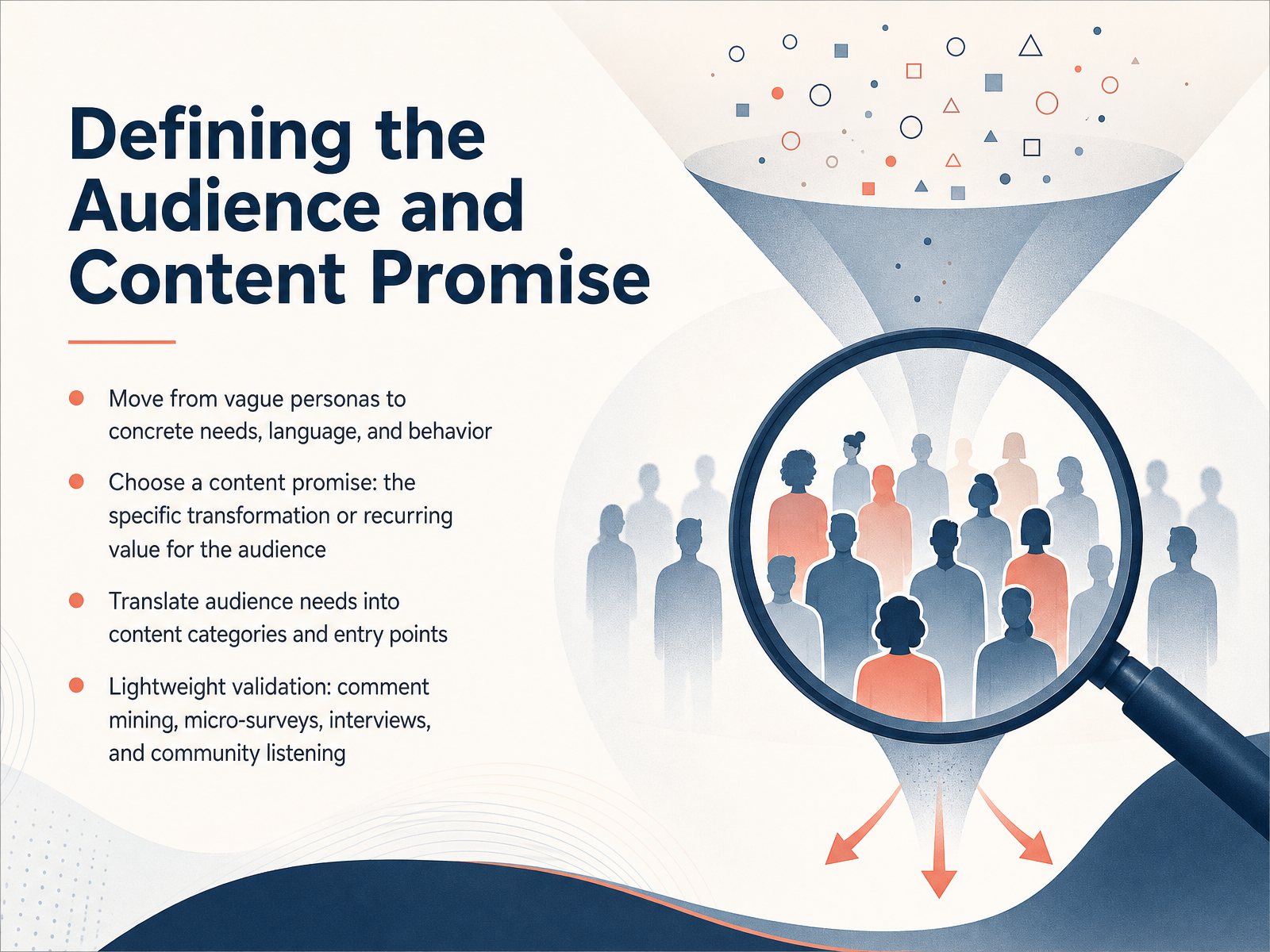
1 min - 03Defining the Audience and Content PromiseNow let's get specific about your audience. Vague personas won't cut it—you need to know their actual words, their pain points, and the moments they reach for content. Mine comments, run quick surveys, or just listen where they hang out online. That gives you the raw material to define a content promise. What transformation or recurring value are you delivering? Make it sharp, like "helping indie creators turn followers into paying customers." From there, translate those needs into content categories and entry points. Maybe they search for "pricing strategies" or scroll for "client negotiation tips." Map each category to a specific need. Validate fast—don't overthink. A few targeted interviews or community threads will confirm whether your promise resonates. Keep it lean and adjust as you learn. So, your move: lock your audience's language, make one clear promise, and outline your core categories. Once that's set, you're ready to build the plan that delivers on it.
 1 min
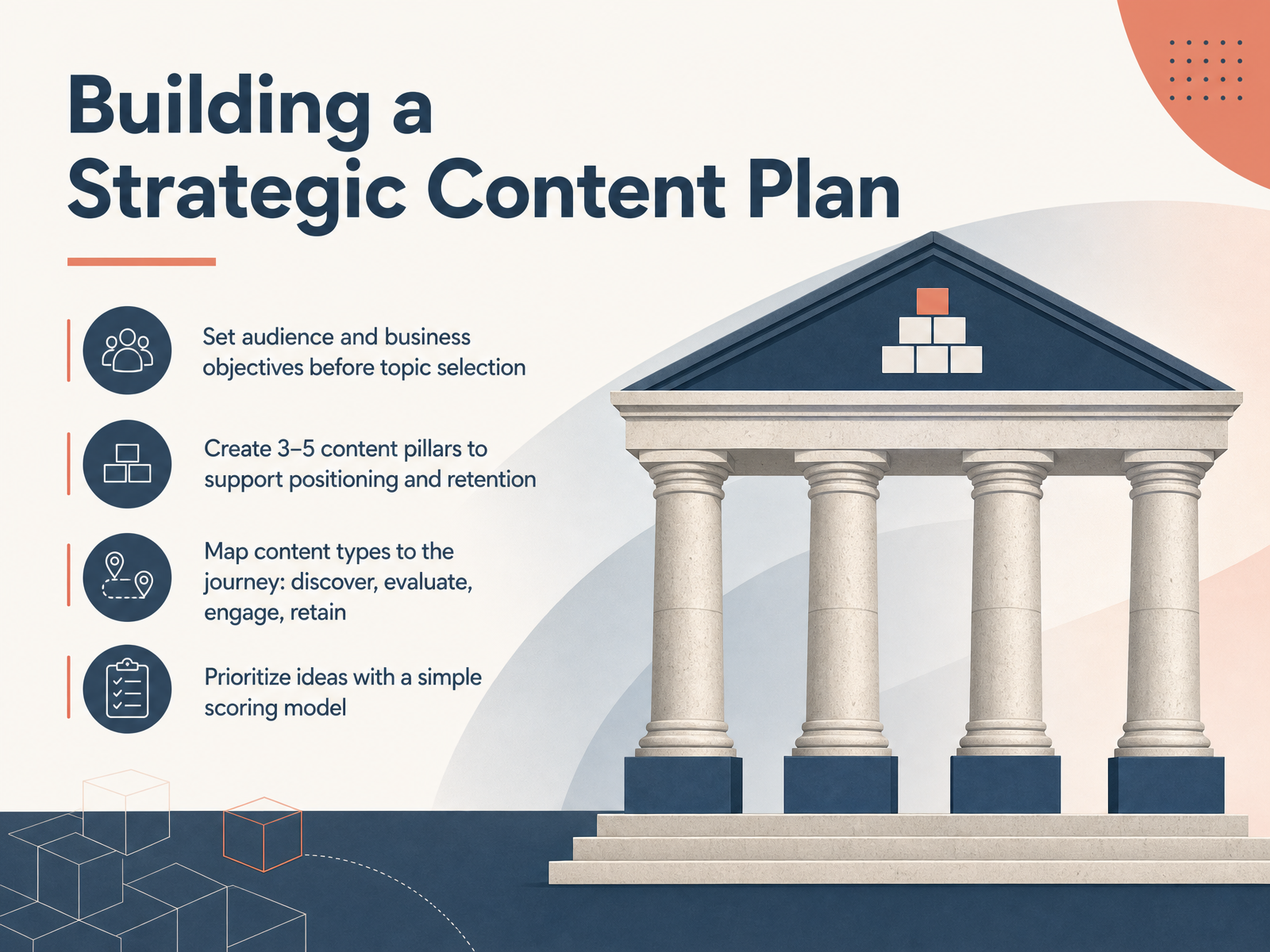
1 min - 04Building a Strategic Content PlanNow let’s talk about turning strategy into structure. Before you brainstorm a single topic, lock in two things: who you’re serving and what business outcome you need. Audience and objectives come first, always. From there, build three to five content pillars. These are your thematic anchors, the topics that reinforce your positioning and keep people coming back. If a piece doesn’t fit a pillar, it doesn’t get made. Next, map your content types to the journey. What helps someone discover you? What supports evaluation? What keeps an existing customer engaged or retained? A comparison guide belongs in the evaluation phase, not the discover phase. Finally, score your ideas. Simple model: relevance to pillar, likelihood to convert, and production effort. Rate each one on a scale of one to five, multiply, and only move forward with the top third. You’ll kill the mediocre faster and protect your team’s bandwidth. In practice, that means your plan becomes a filter, not a wish list. Set your anchors, map the journey, and score ruthlessly. That’s the blueprint. Now let’s talk about the system you need to actually run it at scale, designing one that fits your team size.
 2 min
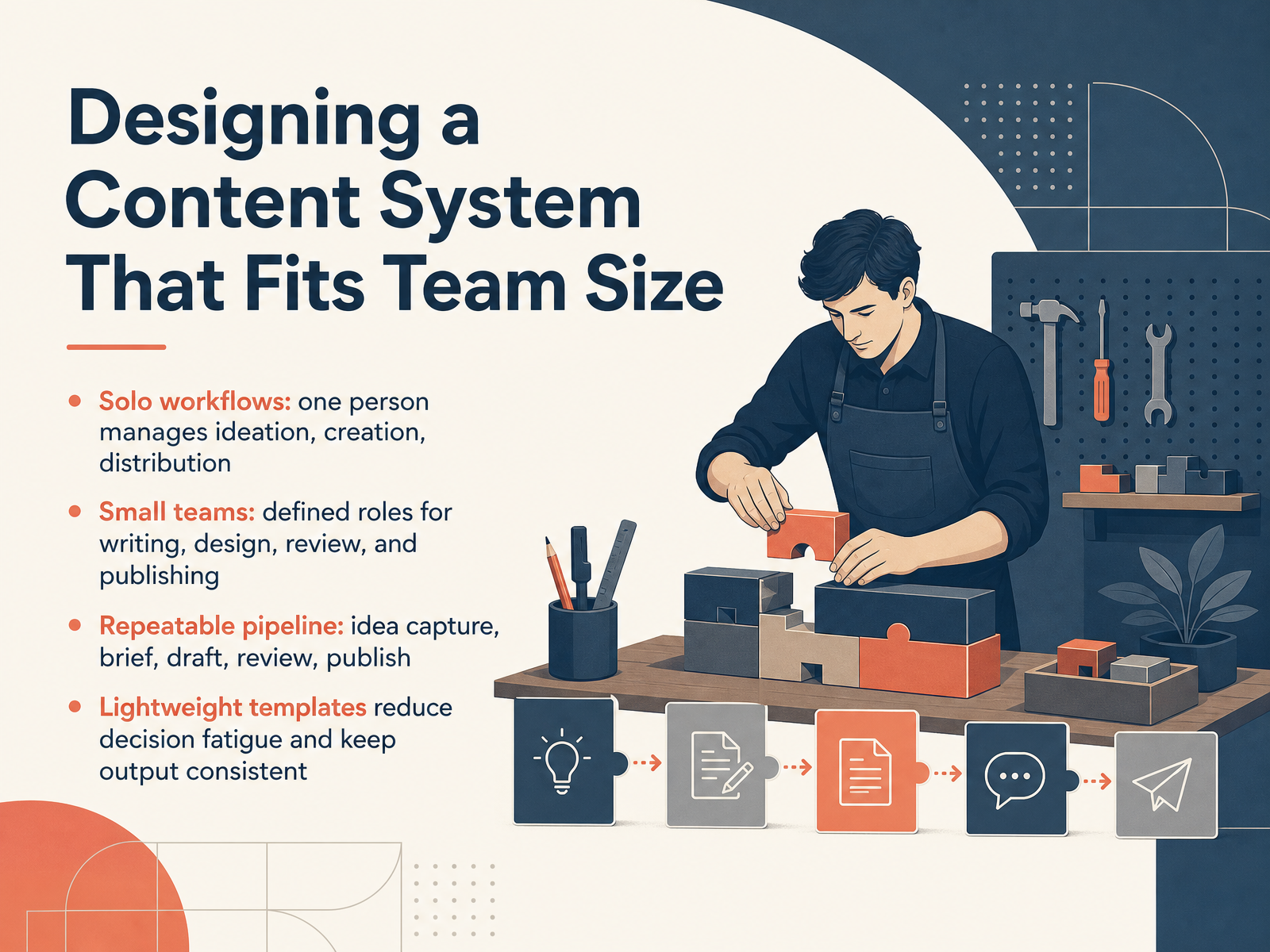
2 min - 05Designing a Content System That Fits Team SizeNow let’s talk about building a content system that actually fits your team size. If you’re a solo creator, you’re handling ideation, creation, and distribution yourself—which means your system needs to be lightweight. Automate what you can, batch your work, and don’t over-engineer the process. For small teams, though, you want defined roles: someone owns writing, someone owns design, someone owns review, and someone owns publishing. That clarity prevents bottlenecks. The core pipeline stays the same regardless of size: capture the idea, write a brief, draft, review, publish. That’s it. The magic is in repeatable steps, not complex workflows. And here’s the key: lightweight templates. They cut decision fatigue hard. If every piece of content starts from a blank page, you’re wasting energy that should go into the message. So build a few simple templates for your common formats—blog post, video script, social update—and you’ll keep output consistent without stifling creativity. Your action item today: map your current workflow and identify one step you can simplify or template. Do that first, and you’ll free up time for the strategy. Next up, we’re moving from plan to calendar—managing the pipeline effectively.
 1 min
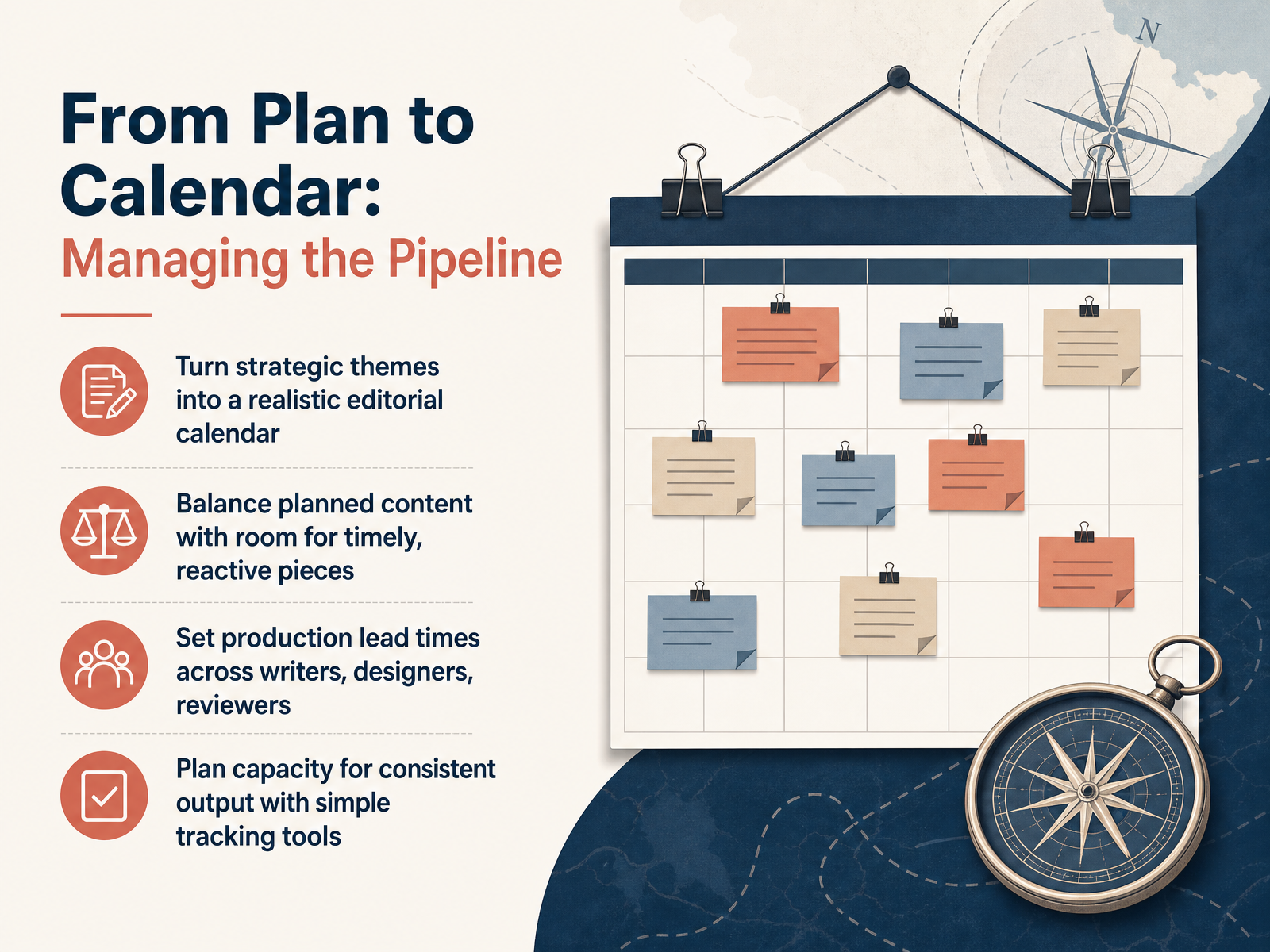
1 min - 06From Plan to Calendar: Managing the PipelineNow let’s turn your strategy into something you can actually execute on: the calendar. You’ve got your themes mapped out, so the next move is building a realistic editorial calendar that reflects them. Don’t just fill slots—assign each piece to a strategic theme so every post has a job to do. That keeps you from drifting into random content. Next, you need a mix of planned and reactive. Lock in your cornerstone pieces, but leave twenty to thirty percent of your slots open for timely, reactive content. That’s how you stay relevant without derailing the plan. Then, work backward from your publishing dates to set lead times. Map out how many days your writers need, how long designers take, and when reviewers get their pass. If you don’t plan for their workflow, you’ll become the bottleneck. Finally, track capacity with something simple. A spreadsheet with columns for status and owner is enough. Just make sure it’s visible to everyone so no one’s guessing what’s next. In short: structure your themes, leave breathing room, map your lead times, and keep tracking light. Now let’s look at creating content that actually matches that plan.
 2 min
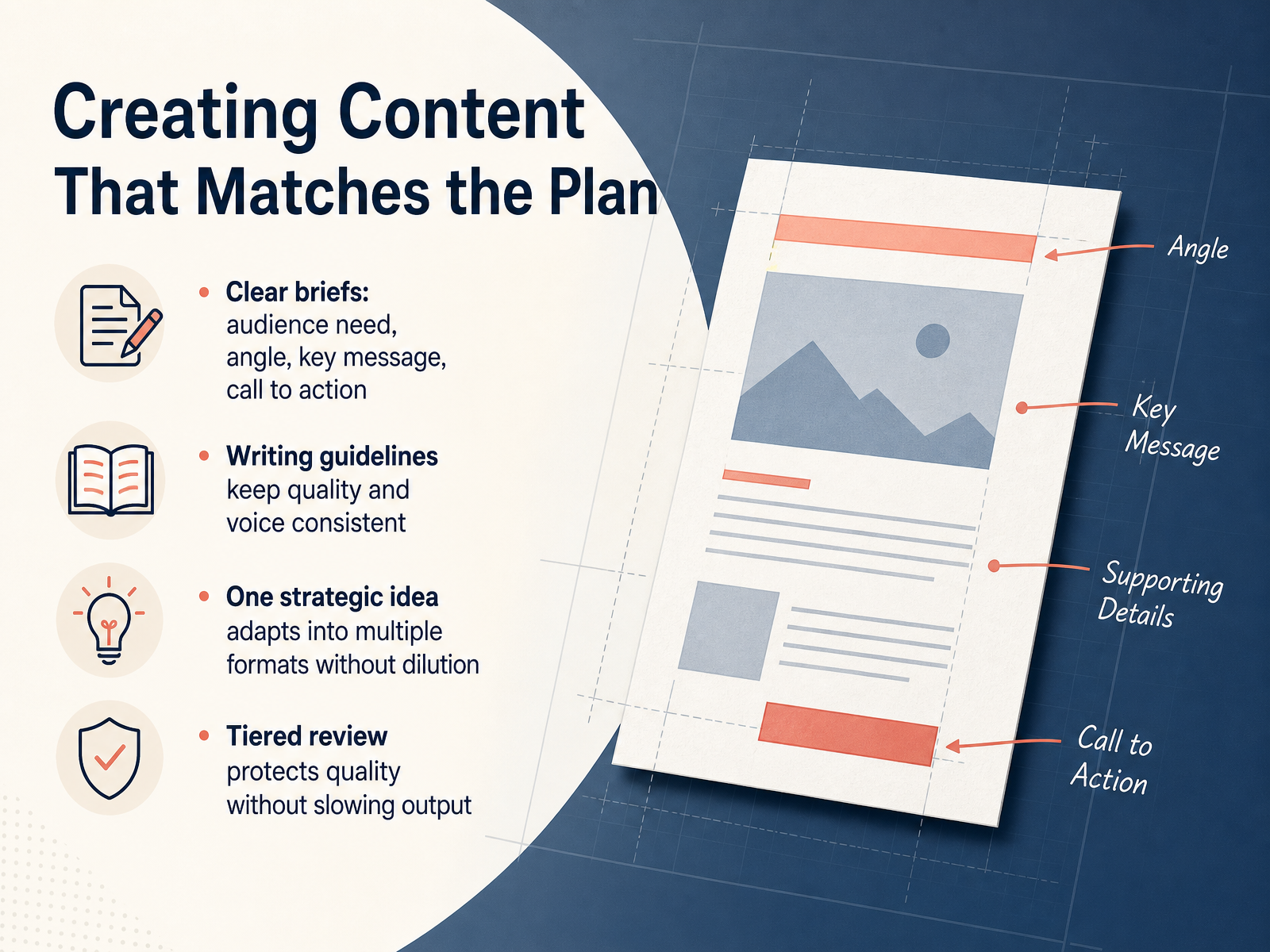
2 min - 07Creating Content That Matches the PlanSo once the plan is locked, the real work begins: turning strategy into content that actually delivers. Start with a clear brief for every piece. Define the audience need, the angle, the key message, and the call to action before a single word is written. That brief is your compass—it keeps the piece focused and prevents scope creep. Next, lean on writing guidelines. They are not bureaucratic overhead; they keep your voice consistent and your quality bar high, so your audience knows it’s you in every post, video, or newsletter. Here’s where you can scale: take one strategic idea and adapt it into multiple formats—a blog post becomes a LinkedIn carousel, a podcast snippet, and a short video. The core message stays intact; the delivery shifts. That’s how you stretch output without watering down your point. Finally, build a tiered review process. Not everything needs the same level of scrutiny. A quick internal check for a social post, a deeper edit for an eBook. You protect quality without throttling your pace. Hold on to this: brief first, guidelines as guardrails, one idea many forms, and reviews that match the stakes. That’s the engine for consistent, on-plan content. Up next, we’ll tackle quality control when you’re flying solo or running a lean team.
 1 min
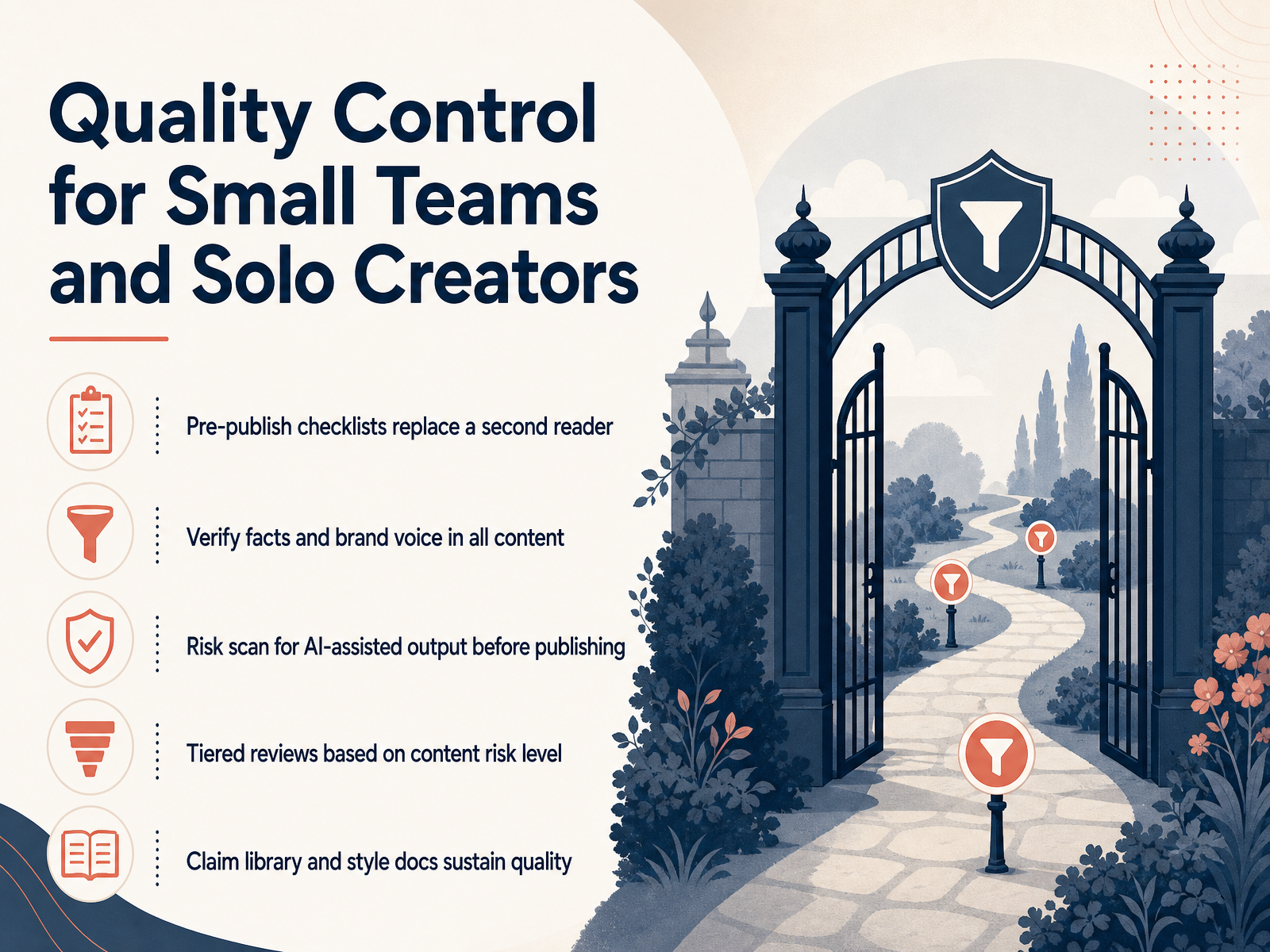
1 min - 08Quality Control for Small Teams and Solo CreatorsNow let’s talk about quality control when you don’t have a second pair of eyes. You’ll replace that editor with systems. First, build a pre-publish checklist. Every piece, no matter how small, runs through it before going live. Verify facts, check your brand voice, and confirm your claims are consistent with what you’ve published before. If you’re using AI-assisted tools, do a risk scan for hallucinations or off-brand phrasing before you hit publish. Not every asset needs the same scrutiny. Tier your reviews based on content risk level. A social post gets a quick check; a high-traffic whitepaper gets a deeper pass. Back all this up with a claim library and a style doc. That way, you’re not reinventing standards each time. The takeaway: automate your checks, tier your effort, and let your docs do the policing. That’s your quality bar without a team. Next, we’ll look at how to plan distribution and engage your audience where it counts.
 1 min
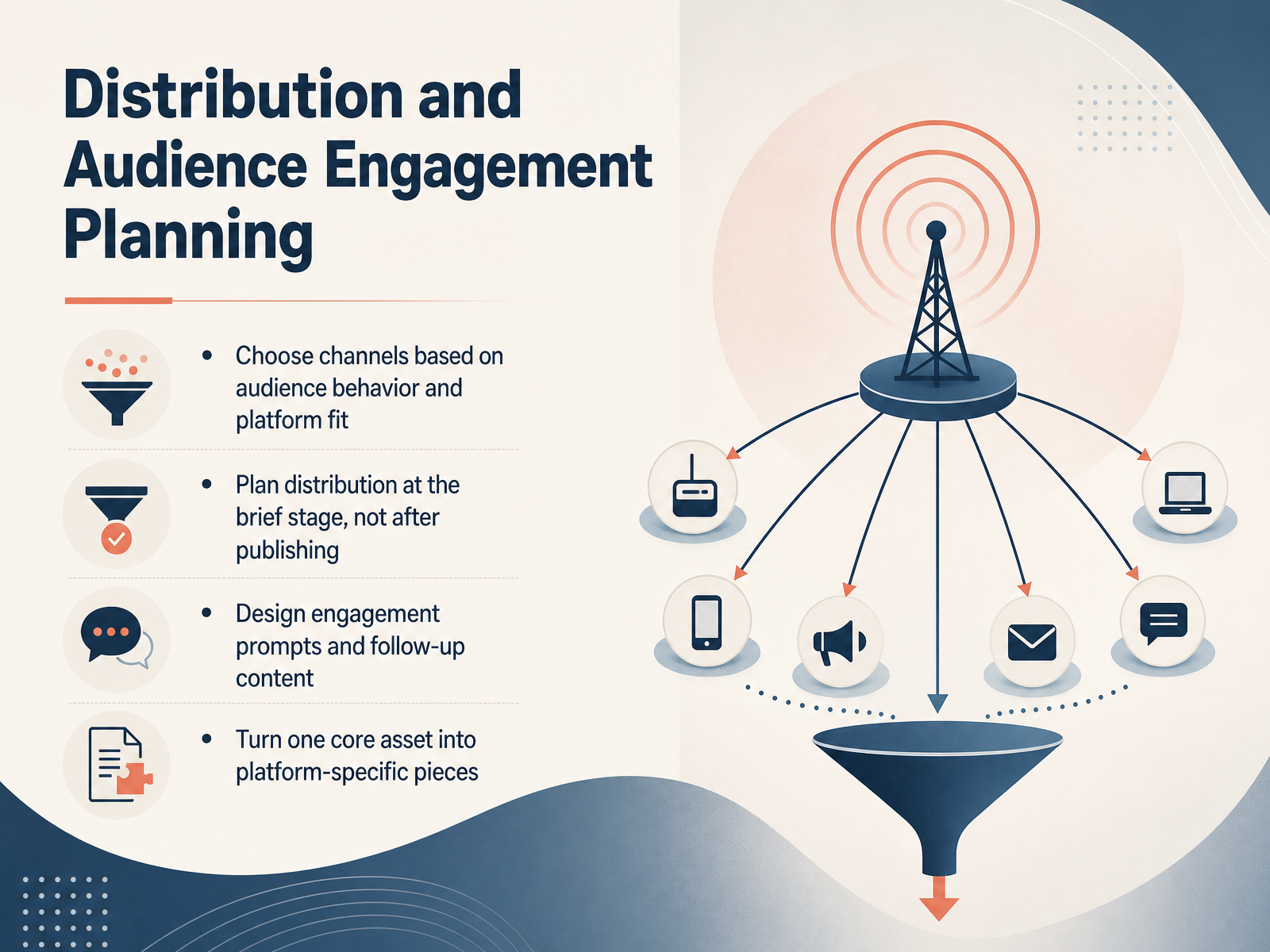
1 min - 09Distribution and Audience Engagement PlanningNow let’s talk about getting that content in front of the right eyes. You’ll want to pick your channels based on where your audience actually lives, not where you’re most comfortable. If your buyers hang out on LinkedIn but you keep posting to Instagram, you’re just whispering in an empty room. Map the platform fit first. Here’s the move: plan your distribution at the brief stage, not after you hit publish. That means you decide upfront whether this piece lives on YouTube, becomes a newsletter segment, or gets teased on X. Nail that down before you write a single word. Next, design your engagement prompts early. Ask a question at the end of the video, add a poll in the newsletter, or pin a follow-up comment. Give people a reason to respond. Finally, turn one core asset into platform-specific pieces. That long case study can become a short demo clip, a three-point carousel, and a quotable thread. Same substance, tailored cut. Remember: distribution is a decision you make at the start, not an afterthought. Lock in your channel plan, build in the prompts, and fragment that asset. Up next, we’ll cover repurposing without diluting your core message.
 1 min
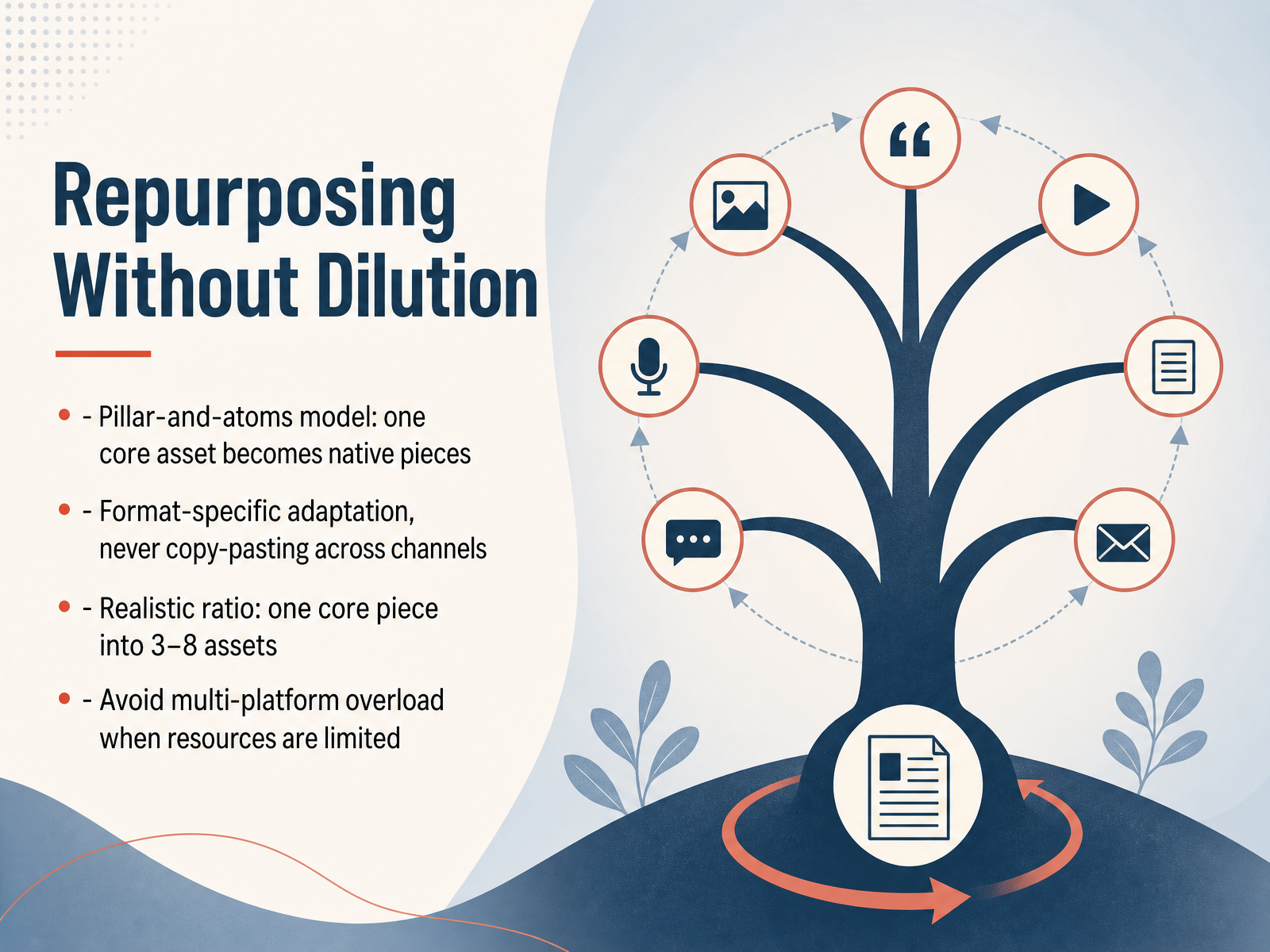
1 min - 10Repurposing Without DilutionLet’s talk about repurposing without dilution. The goal is to stretch your best ideas, not water them down. Use a pillar-and-atoms model. One core asset becomes the pillar, and from it you spin out native pieces for each channel. The key word is native. You adapt the format, you never copy-paste. A detailed guide becomes a carousel for Instagram, a thread for X, a short video for TikTok, a newsletter segment, and a slide deck for LinkedIn. Same insights, different clothes. Now, the realistic ratio is one core piece into three to eight assets. That’s it. Beyond that, you hit diminishing returns and burn your team out. If resources are tight, resist the urge to be everywhere. Pick two or three channels that actually matter to your audience and go deep there. A strong presence on fewer platforms beats a weak one on all of them. So the takeaway, audit your next big piece and commit to transforming it into three native assets max. Now, let’s move into how you measure what matters.
 1 min
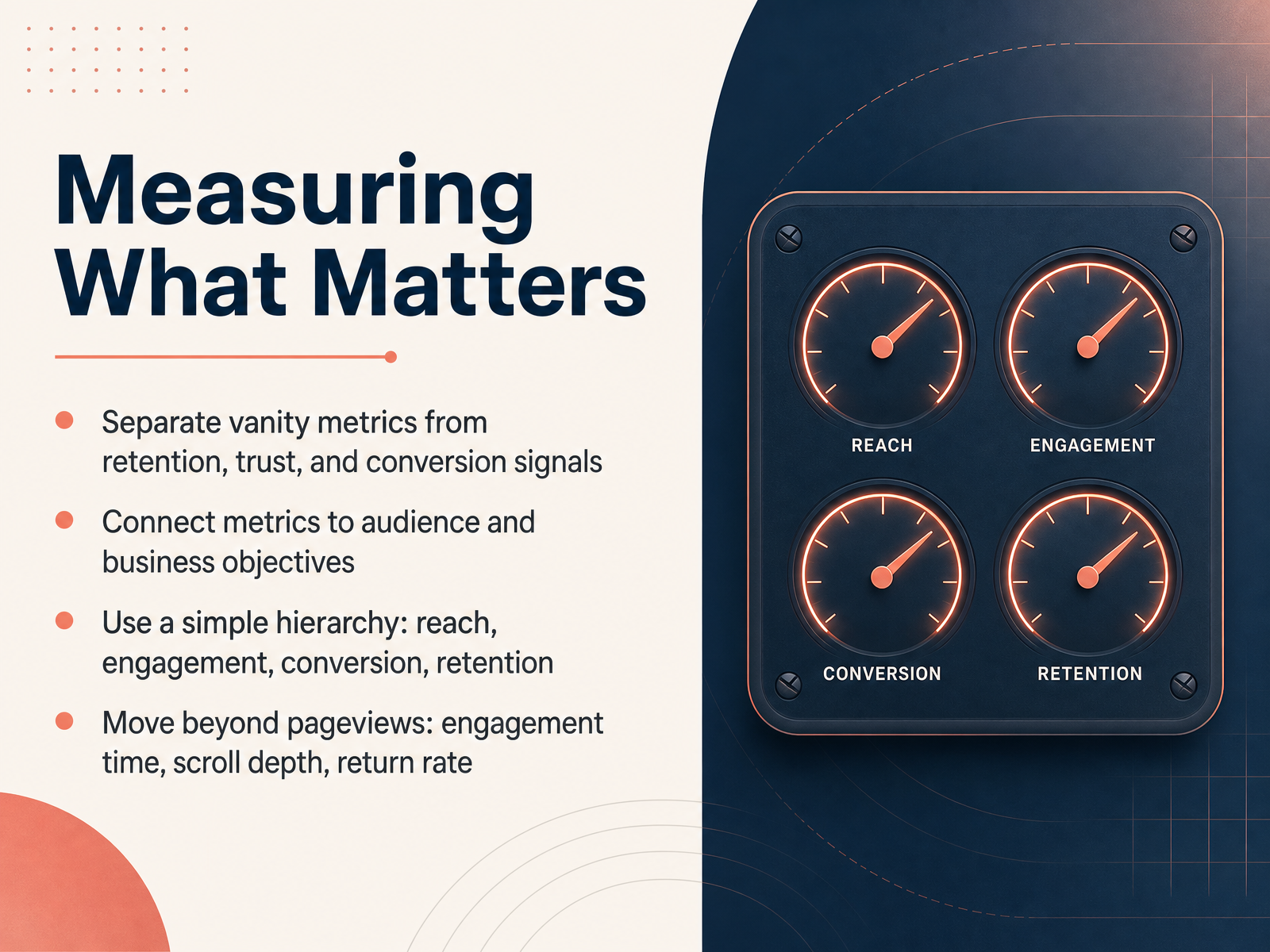
1 min - 11Measuring What MattersNow let’s get honest about the numbers. Vanity metrics look great in a dashboard but they don’t pay the bills. You need to separate likes and pageviews from the signals that actually matter: retention, trust, and conversion. Here’s the move. Map every metric back to a specific audience need or business goal. If a metric doesn’t answer a question you’d ask your boss, drop it. Use a simple hierarchy to keep everyone aligned: reach first, then engagement, then conversion, and finally retention. That order mirrors your funnel, and it tells you where the leak is. And stop obsessing over pageviews. Engage time, scroll depth, and return rate tell you if your content is actually useful. A visitor who stays for three minutes and comes back next week beats ten thousand accidental hits every time. So pick three to five metrics that tie directly to this quarter’s objectives, and track them weekly. That’s your measurement backbone. Next, we’ll talk about how to review those numbers and when to pivot.
 1 min
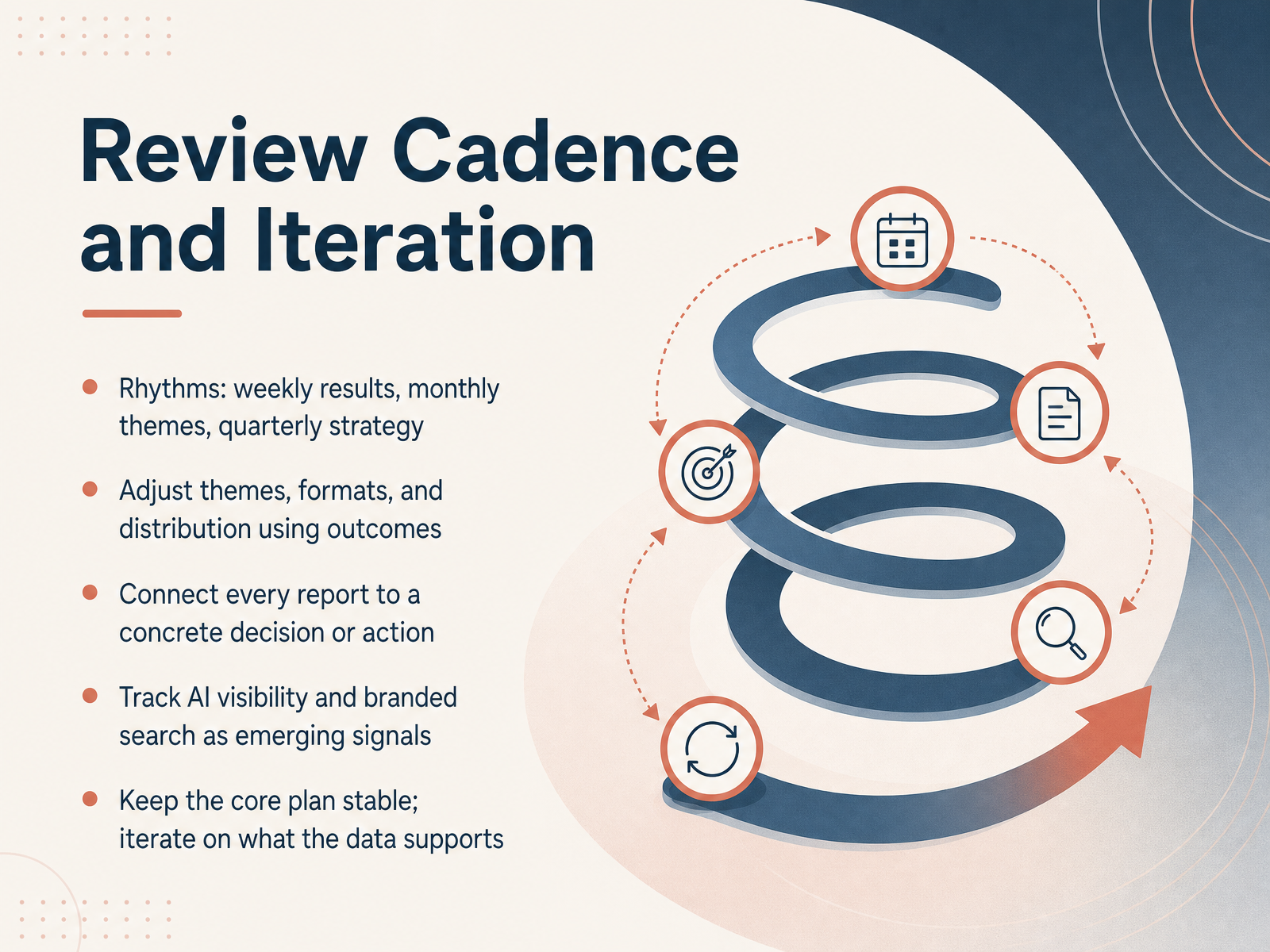
1 min - 12Review Cadence and IterationNow let's talk about the rhythm that keeps your content engine sharp. You want a weekly check on results, a monthly look at themes, and a quarterly deep dive on strategy. That cadence gives you speed without whiplash. Each report should end with a decision or an action. If a theme's underperforming, pivot it. If a format's killing it, double down. And don't ignore the emerging signals: AI visibility and branded search. Those tell you how you're showing up in the new search landscape. Keep your core plan stable; iterate only where the data gives you a clear reason. That's how you stay agile without losing focus. Now, let's turn that into a realistic 30-day action plan.
 2 min
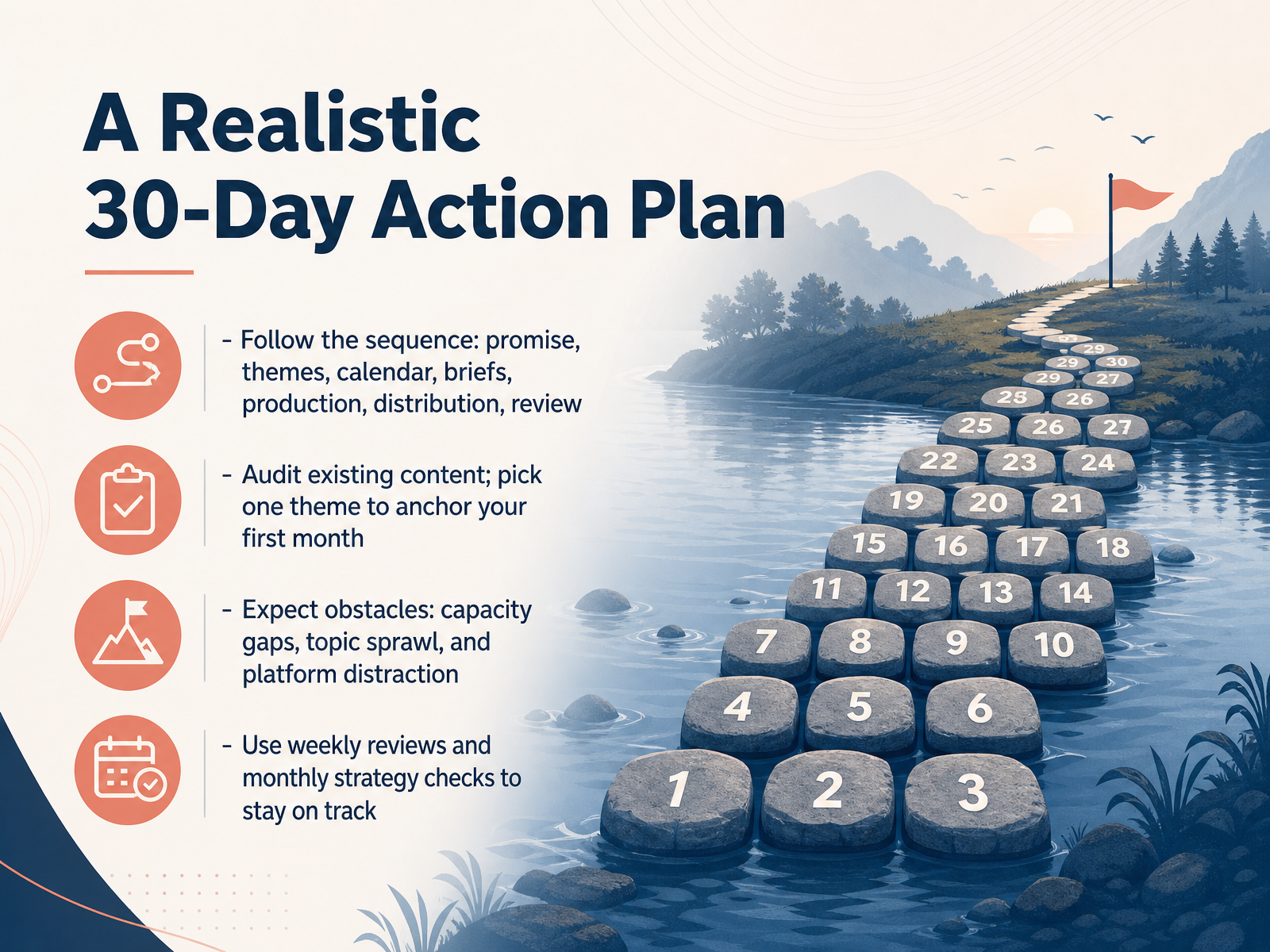
2 min - 13A Realistic 30-Day Action PlanNow let’s turn this into a realistic 30-day plan. Follow the sequence: promise, themes, calendar, briefs, production, distribution, review. That’s your backbone. Day one, audit what you’ve already got—pick one theme that can anchor your first month. Don’t boil the ocean. You’ll hit obstacles, guaranteed. Capacity gaps, topic sprawl, platform distraction. Name them now, so they don’t ambush you later. Set a weekly review to catch drift early, and a monthly strategy check to decide what stays and what gets cut. This isn’t about perfect upfront planning—it’s about momentum and course correction. Start with one promise, one theme, and one calendar. Then produce, distribute, and review. You’ll be surprised how far thirty days gets you. Next up, we’ll lock in key takeaways and next steps.
 1 min
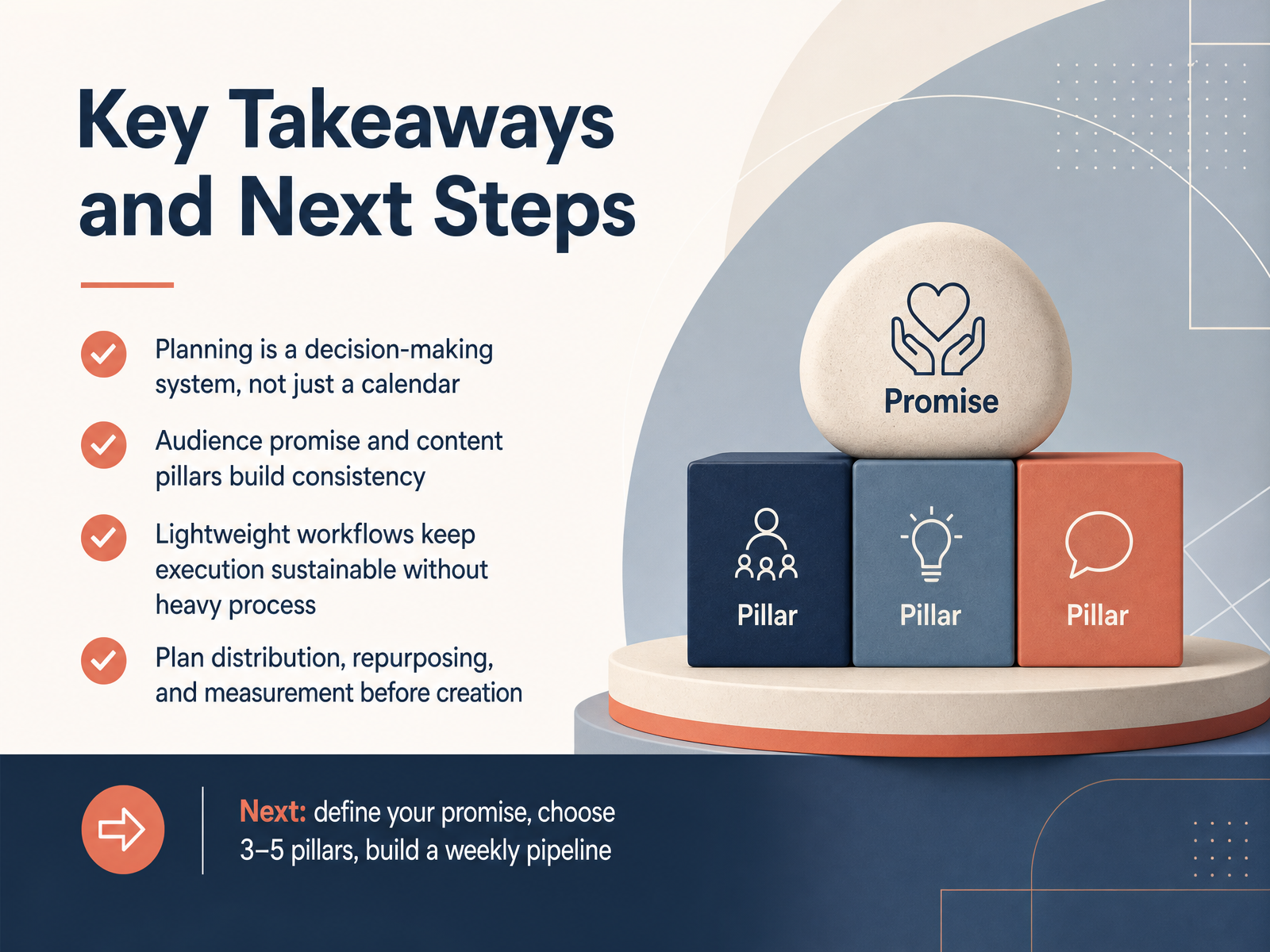
1 min - 14Key Takeaways and Next StepsLet's lock in what matters. Planning is a decision-making system, not just a calendar. It forces you to choose what to create and why. Your audience promise and content pillars? They're your consistency engine. They keep every piece aligned with what your audience expects, even when ideas get messy. Keep workflows lightweight. If the process feels heavy, you'll skip it. A simple weekly pipeline beats a perfect monthly plan. And here's the discipline move: plan distribution, repurposing, and measurement before you create a single asset. That way, nothing is wasted. So, your next steps are clear. Define your promise. Pick three to five pillars. Build that weekly pipeline. You've got the framework, now go make it real. Thanks for your focus today, and I know you'll turn this into momentum.
 1 min
1 min
Take the deck with you
Download this course as a file — free, no sign-up needed.
- PDF handoutEvery slide page, ready to print or share.15 pages · 3.7 MBDownload
- Narrated PowerPointThe deck that presents itself — every slide carries the digital human's narration video.15 pages · 15.6 MBDownload
- PowerPoint slidesThe full deck as a .pptx — open it in PowerPoint, Keynote, or Google Slides.15 pages · 3.7 MBDownload
Free to use in your own training — please keep the PersonWise credit page at the end.
Have your own deck? Turn it into a course