Begin
14 pages · ~28 min
Change Management Framework Essentials
This training equips professionals with a practical framework for managing organizational change, covering key components and strategies for effective application in real-world scenarios.
A digital instructor presents all 14 pages. Hold “Ask” at any point and ask out loud — the answer comes from this course. No sign-up needed.
What you’ll learn
- 01Change Management Framework: Components and ApplicationWelcome. If you are leading a change initiative, you already know the hard part is rarely the new system or process itself. The hard part is helping people actually adopt it. That is what this course is about. Over the next few sessions, we will break down the core components of a change management framework and show you how to apply them step by step. We will focus on your role as a manager, because your daily actions matter more than any executive memo. We will also cover practical tools for planning, communicating, and sustaining change, so you leave with something you can use on Monday morning. The goal here is clarity. You will understand what to do, why it works, and how to keep momentum when things get difficult. Let us start by looking at what change management really means.prosci.comkotterinc.comcompelframework.org+21 min
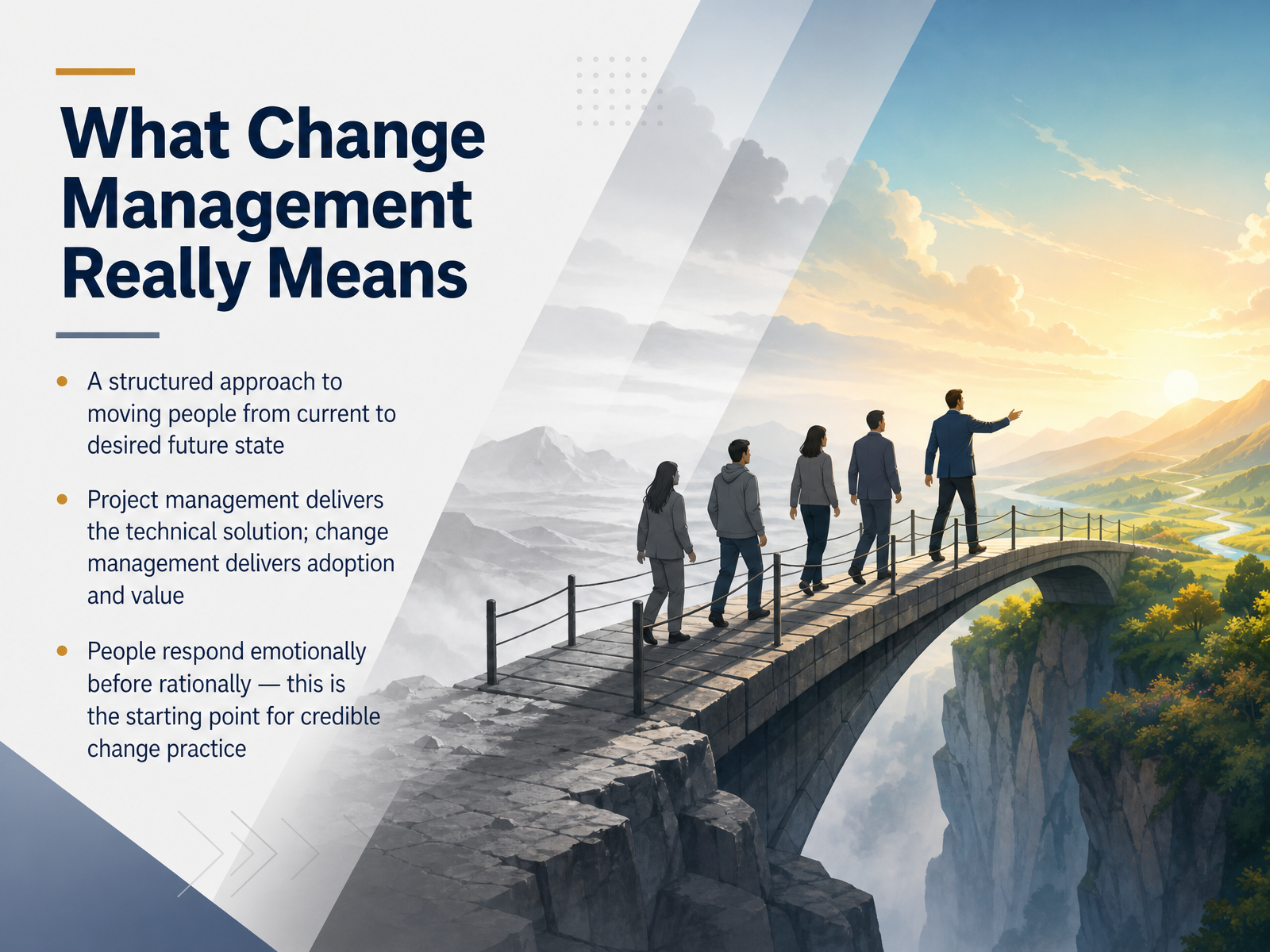
- 02What Change Management Really MeansLet’s clarify what change management actually means, because the term gets used loosely. It’s not about announcements, timelines, or roll-out plans. Change management is a structured approach to moving people from how they work today to how they need to work tomorrow. The technical solution — the new system, the new process — that’s the domain of project management. Change management handles the human side: whether people actually adopt the change and whether the value gets delivered. And this is the point that matters most: people respond emotionally before they respond rationally. The most logical process improvement can still trigger fear, uncertainty, or simple resistance. Accepting that reality isn’t pessimism — it’s the starting point for credible change practice. Once you accept it, you can stop being surprised by reactions and start planning for them. Next, we’ll look at the core components that turn this understanding into a practical framework you can apply with your team.
 prosci.comkotterinc.comcompelframework.org+22 min
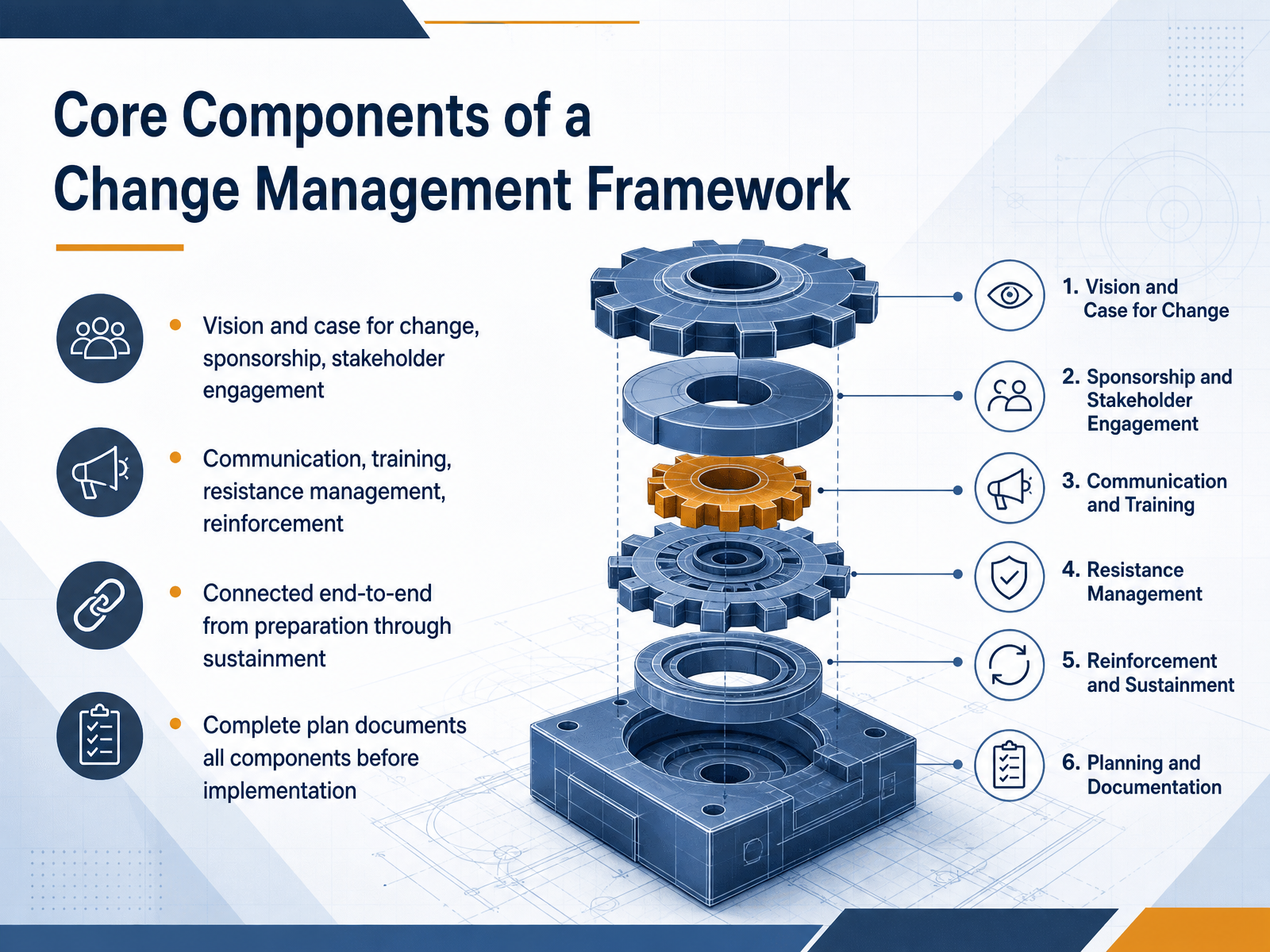
 - 03Core Components of a Change Management FrameworkLet’s look at the core components that make up a change management framework. Think of these as the building blocks you’ll assemble before rollout begins. First, you need a clear vision and a compelling case for change—if people don’t understand why the change matters, they won’t support it. That vision needs active sponsorship from leadership, plus early engagement with stakeholders across the business. Then come the operational pieces: structured communication, targeted training, and a plan for managing resistance before it becomes entrenched. And don’t forget reinforcement—recognizing and embedding new behaviors so the change actually sticks. These components aren’t optional extras; they connect end-to-end, from preparation through sustainment. That’s the key point: a complete plan documents all of these components before implementation begins. You’re not figuring it out as you go. You’re identifying risks, mapping the people side, and preparing your interventions early. When the plan is complete before you start, you can course-correct before resistance hardens. Next, let’s look at the established frameworks you can use to structure this work—ADKAR, Prosci, and Kotter.
 prosci.comkotterinc.comcompelframework.org+21 min
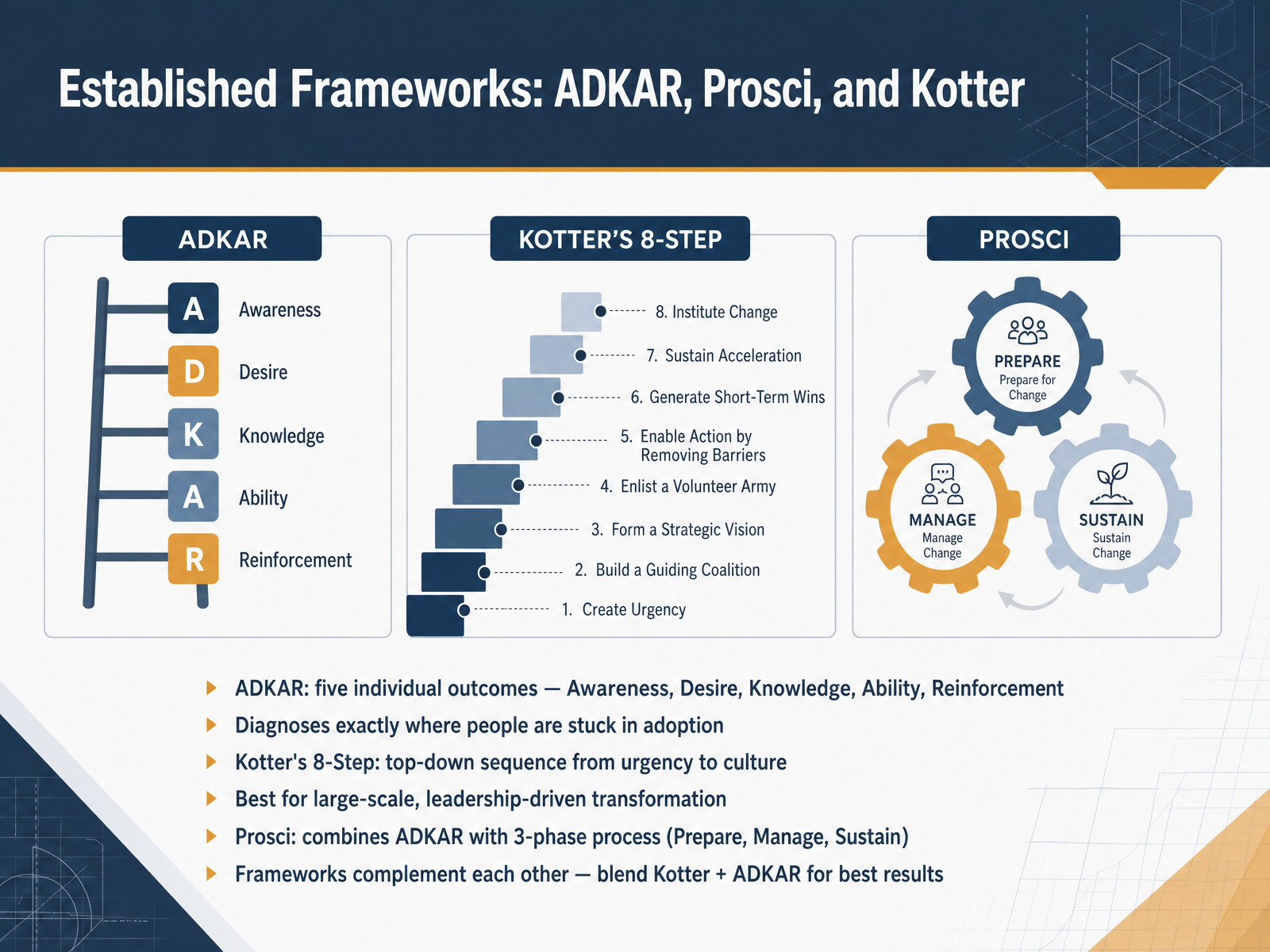
 - 04Established Frameworks: ADKAR, Prosci, and KotterLet’s clarify the three established frameworks you’ll likely encounter. ADKAR, from Prosci, covers five individual outcomes: Awareness, Desire, Knowledge, Ability, and Reinforcement. It’s your diagnostic tool—it pinpoints exactly where someone is stuck in the adoption process. Kotter’s 8-Step model, on the other hand, is a top-down sequence from urgency to culture. Use it for large-scale, leadership-driven transformation. Prosci combines ADKAR with a three-phase process: Prepare, Manage, Sustain. Here’s the key takeaway: these frameworks complement each other. You don’t have to pick just one. For most complex changes, you’ll get the best results by blending Kotter’s strategic structure with ADKAR’s individual focus. Keep that combination in mind as we move into applying the framework step by step.
 prosci.comkotterinc.comcompelframework.org+21 min
 - 05Applying the Framework Step by StepLet's walk through the four stages of applying this framework. Start with Prepare. Define the vision in concrete terms, not abstract goals. Set measurable outcomes, confirm active sponsorship from senior leaders, and honestly assess how ready the organization is for this shift. If you skip readiness, you'll be reacting later instead of leading. Next is Plan. Map your stakeholders by influence and impact, then build a communication plan tailored to each group. Design the training plan around real skill gaps and document the most likely risks, along with specific mitigation steps. This is where you prevent problems before they harden into resistance. Then comes Execute. Engage teams early, not after decisions are locked. Address resistance directly by diagnosing its source, and track adoption using leading indicators like training completion and early usage data. Don't wait for end results to find out you're off track. Finally, Reinforce. Measure the actual outcomes against your success metrics, recognize progress visibly, and formally transition ownership to operational leaders so the change becomes the new standard, not a project that quietly fades. Keep these four stages in your cadence and the framework stays practical. Next, let's look at how to approach stakeholder analysis and engagement in detail.
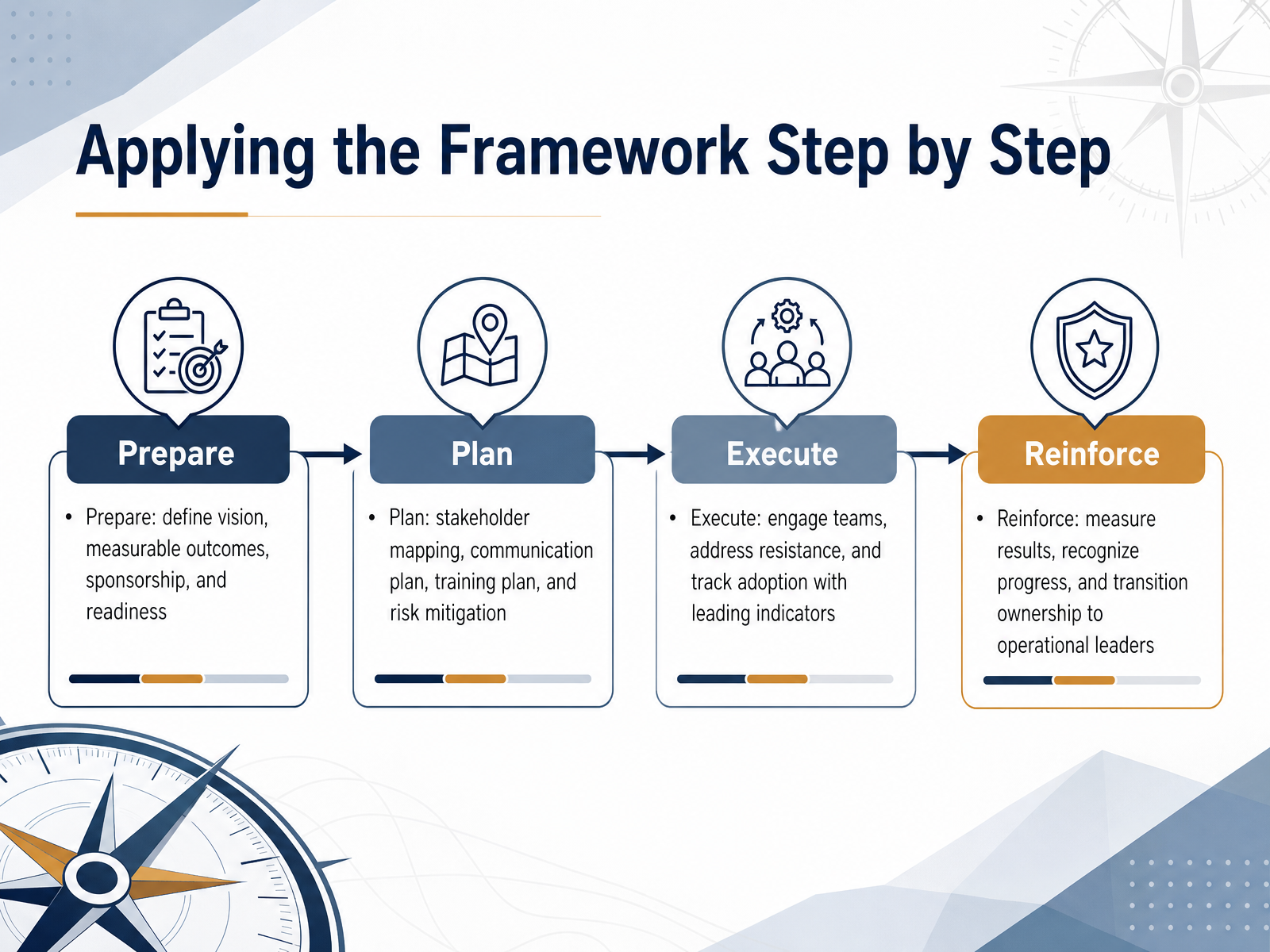 online.tamucc.edumonday.comcareerminds.com+22 min
 - 06Stakeholder Analysis and EngagementNow let’s turn to stakeholder analysis and engagement. This is where change management becomes practical. Start by identifying everyone who is affected by the change, and also those who influence it. Do not rely only on the org chart. Look for informal leaders and potential champions, because they can accelerate adoption or quietly block it. Next, map each stakeholder by their impact on the change and their influence over others. This helps you prioritize where to invest your time. You do not need to engage everyone equally. Finally, tailor your approach for each group. Sponsors need strategic context, the business case, and the broader timeline. Frontline employees need clarity on how their day-to-day work will change, what is expected of them, and what support they will get. Middle managers need both, plus coaching on how to lead their teams through it. The goal is simple. Engage the right people, with the right message, at the right level. That is how you turn stakeholders into allies. Next, we will look at communication that drives change.
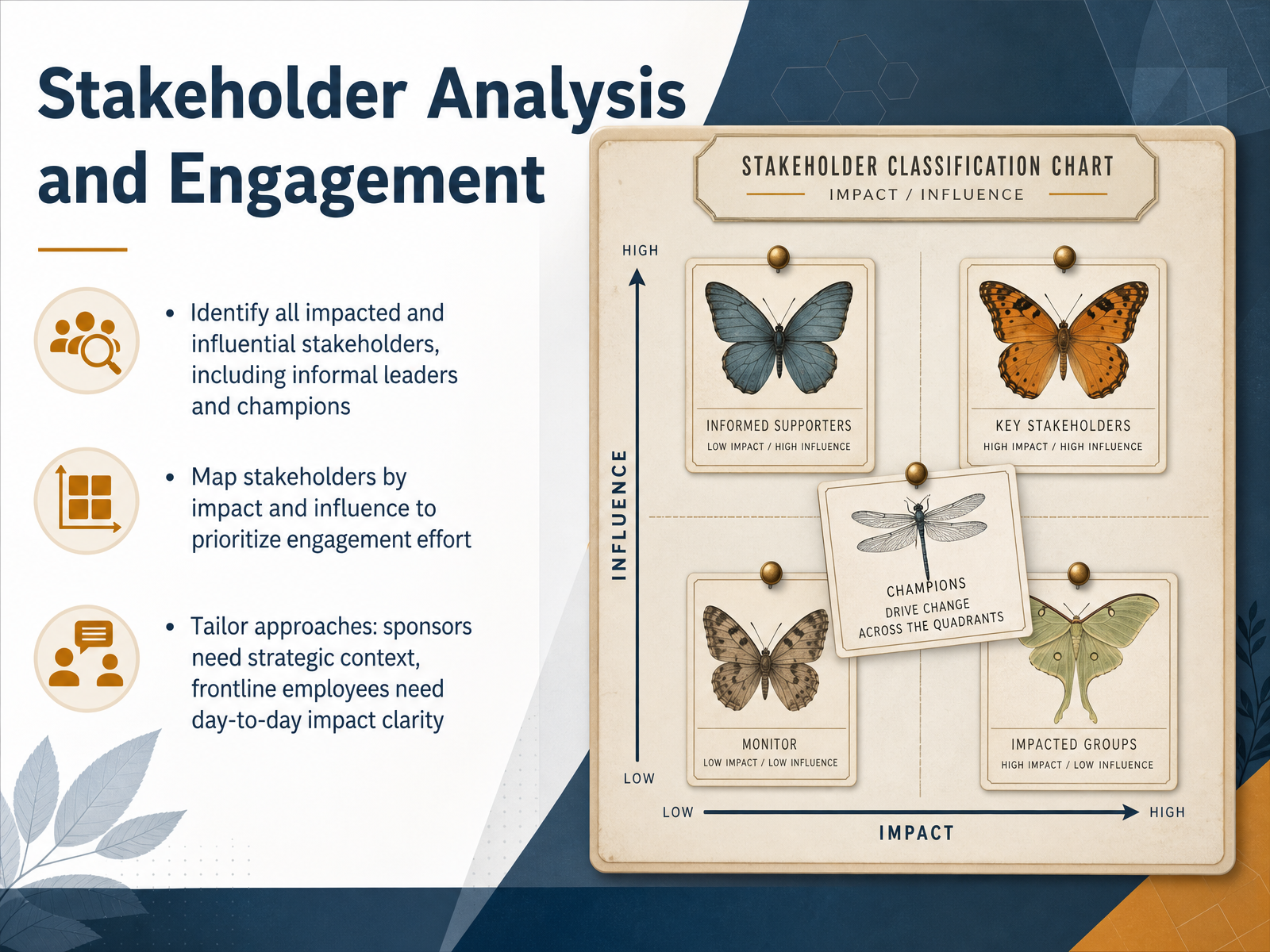 prosci.comkotterinc.comcompelframework.org+22 min
 - 07Communication That Drives ChangeNow let's talk about communication that actually drives change. A one-time broadcast won't cut it. People need planned, repeated, two-way communication so the message lands and sticks. Focus your core messages on three things: why the change is happening, what it means for each person, and what they should expect going forward. Tailor your channels and timing to each audience. Executives need strategic context, while frontline teams need to understand how their daily work will shift. Equip your managers with clear talking points and simple toolkits so they can lead conversations confidently. And most importantly, avoid tick-box communication. If people feel they're just receiving updates without being heard, resistance builds. Foster ongoing dialogue instead. Create space for questions, listen to concerns, and adjust your messaging based on what you hear. Communication isn't a task to complete; it's the engine that builds commitment. Next, we'll look at how training and capability building turn awareness into real, sustained skill.
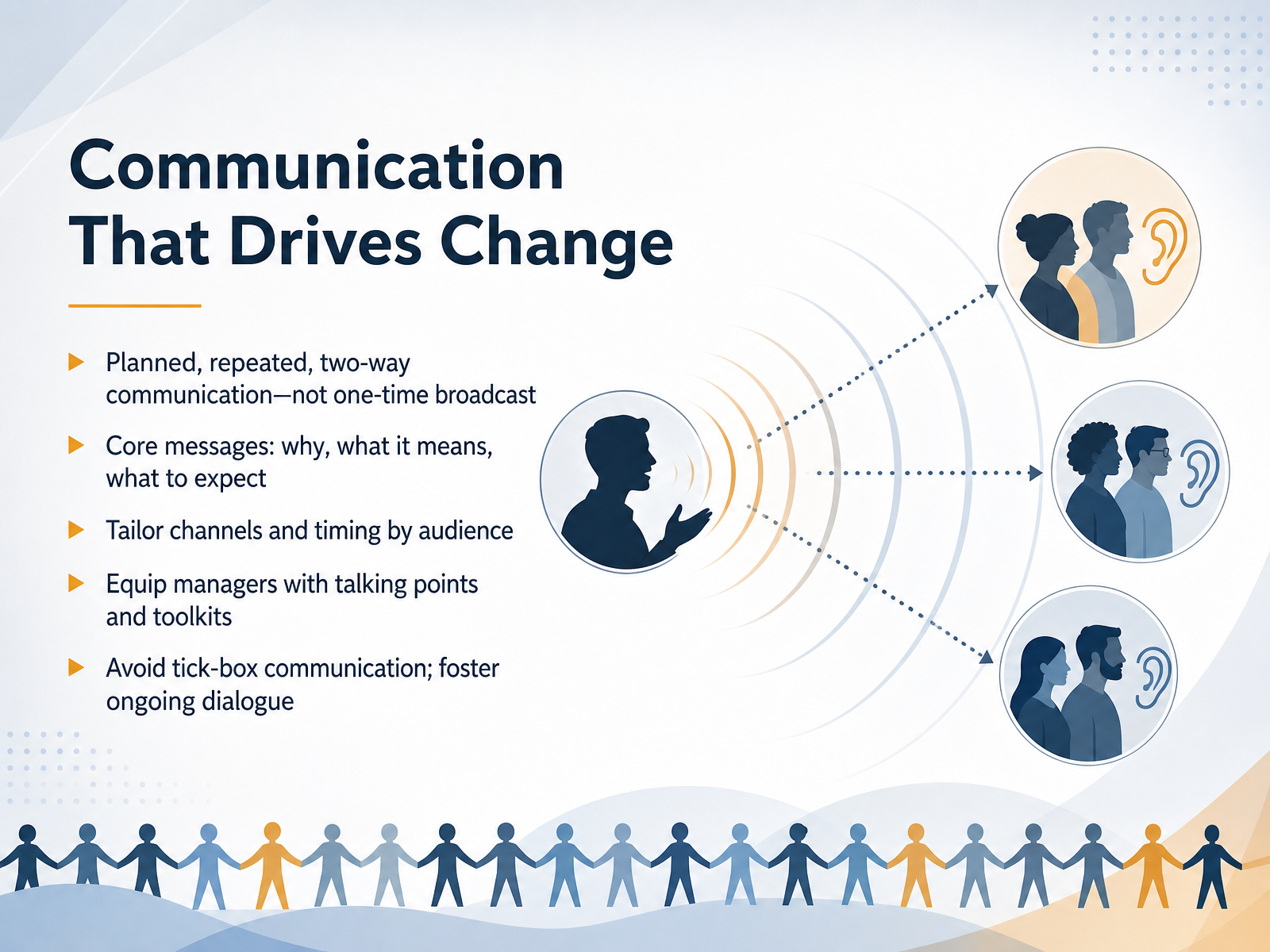 prosci.comkotterinc.comcompelframework.org+22 min
 - 08Training and Capability BuildingNow let’s talk about training and capability building. This is where good intentions often stall. A change is only real when people can do the new work. Start by identifying the exact skill gaps your team has today. Then build role-based, practical learning, not generic courses. Deliver training close to when people will actually use it. A blend of digital lessons and hands-on practice works best. Keep one distinction in mind. Knowledge is what people know. Ability is what they can reliably do under pressure. A person can finish a course and still freeze during a live process. So give them safe ways to practice, then test themselves in realistic conditions. After go-live, don’t assume the learning is done. Schedule refreshers, create practice opportunities, and make sure managers reinforce the new behaviors in day-to-day work. That reinforcement is what turns training into capability. When you plan for this from the start, you reduce the chance that people revert to old habits. Next, we’ll look at how to handle resistance, feedback, and coaching on the front line.
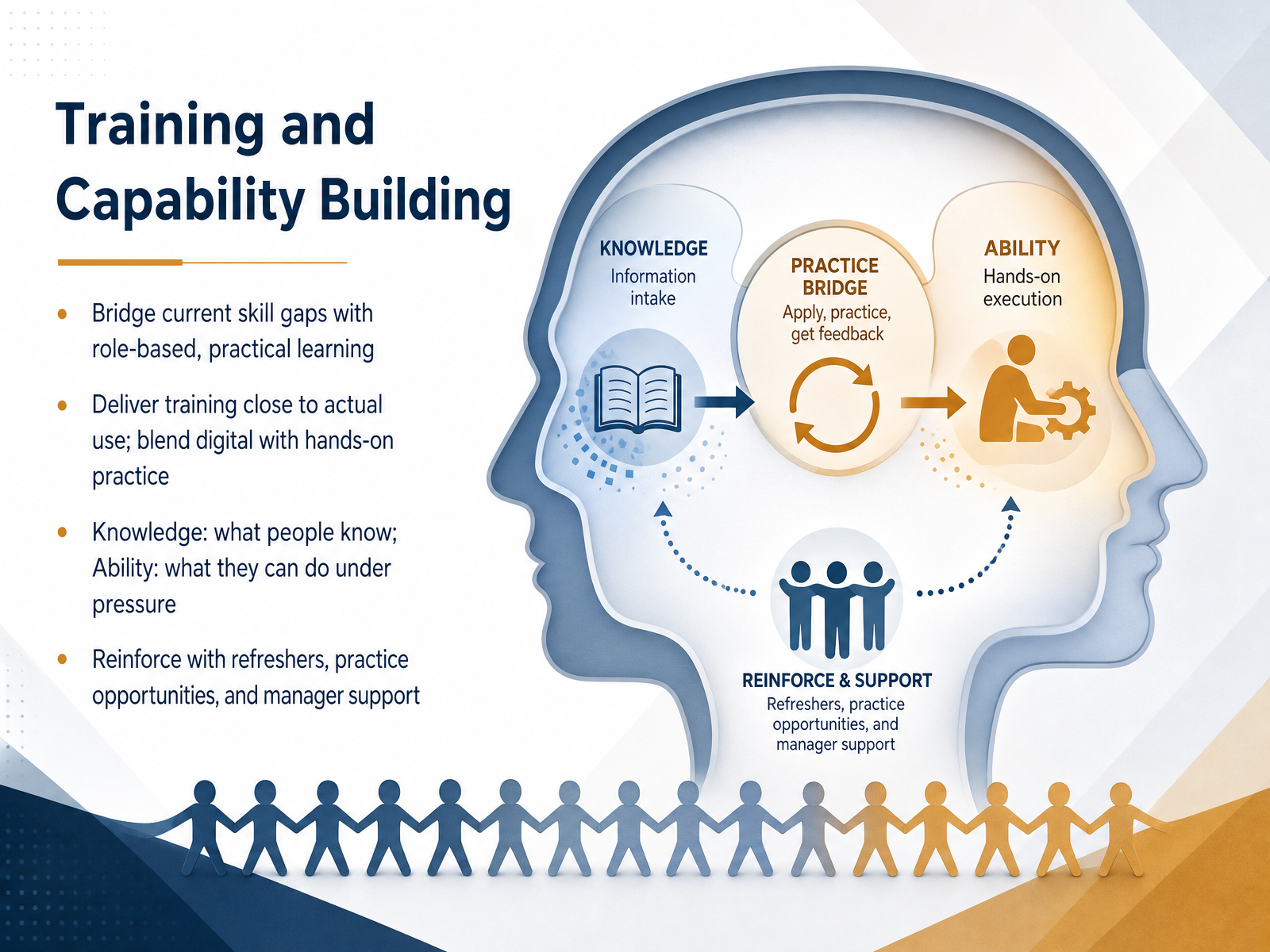 prosci.comkotterinc.comcompelframework.org+21 min
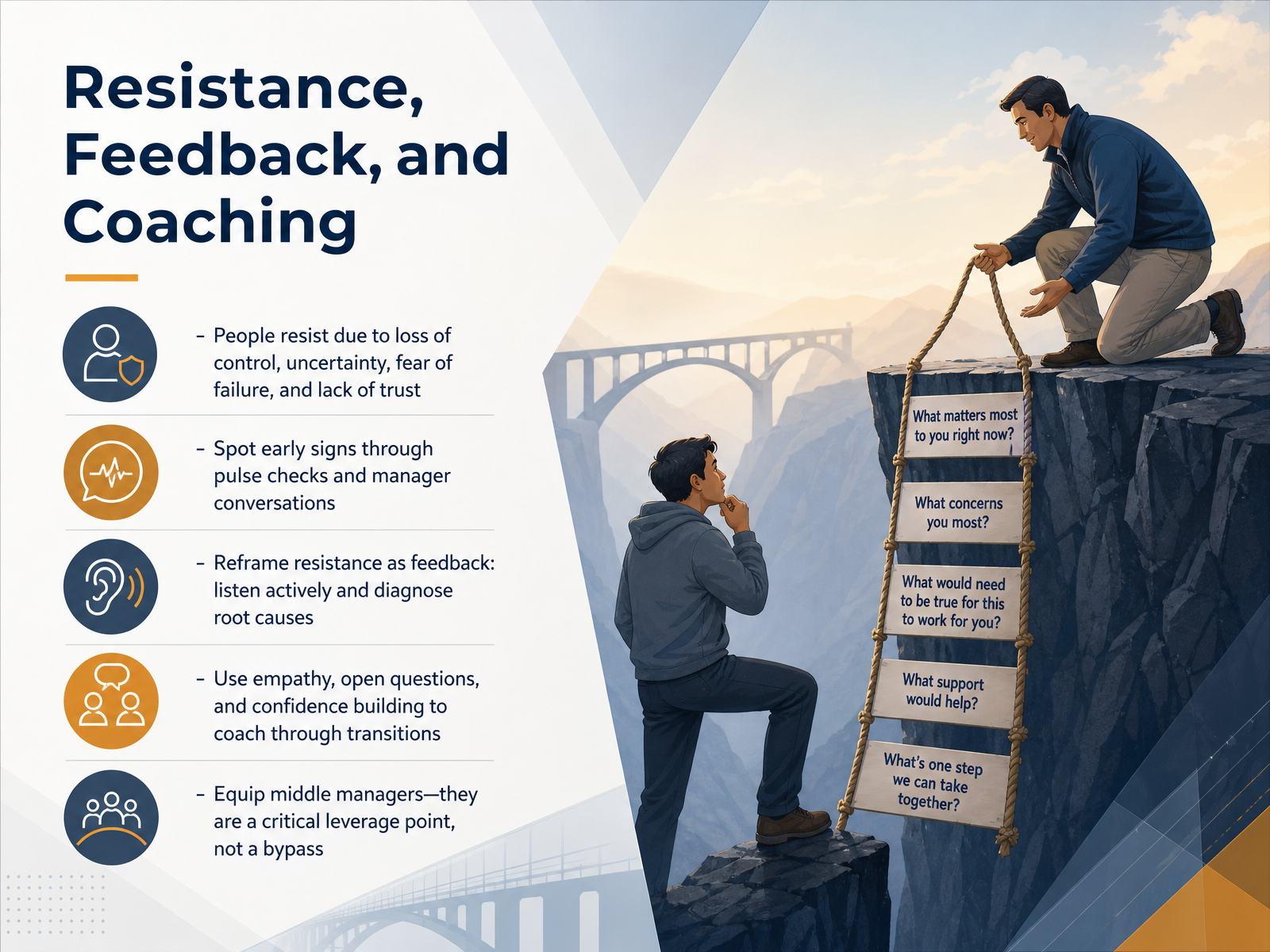
 - 09Resistance, Feedback, and CoachingNow let’s talk about resistance, feedback, and coaching. When people push back on change, it usually comes from loss of control, uncertainty, fear of failure, or a simple lack of trust. None of that is irrational. It’s a signal. Your job is to catch those signals early. Use pulse checks and regular manager conversations to spot warning signs before they harden into opposition. When resistance shows up, reframe it as feedback. Listen actively and work to diagnose the root cause. Is it unclear expectations? A real skill gap? Or just a bad experience with a previous change? Coach people through the transition with empathy, open questions, and deliberate confidence building. Don’t try to argue them into compliance. Help them see their own path forward. And remember the leverage point: middle managers. They are the ones who carry the message daily. Equip them, support them, and never treat them as a bypass. Your front line will follow their lead far more than yours. Next, we turn to reinforcement and sustaining the change. That’s where gains become permanent.
 prosci.comkotterinc.comcompelframework.org+21 min
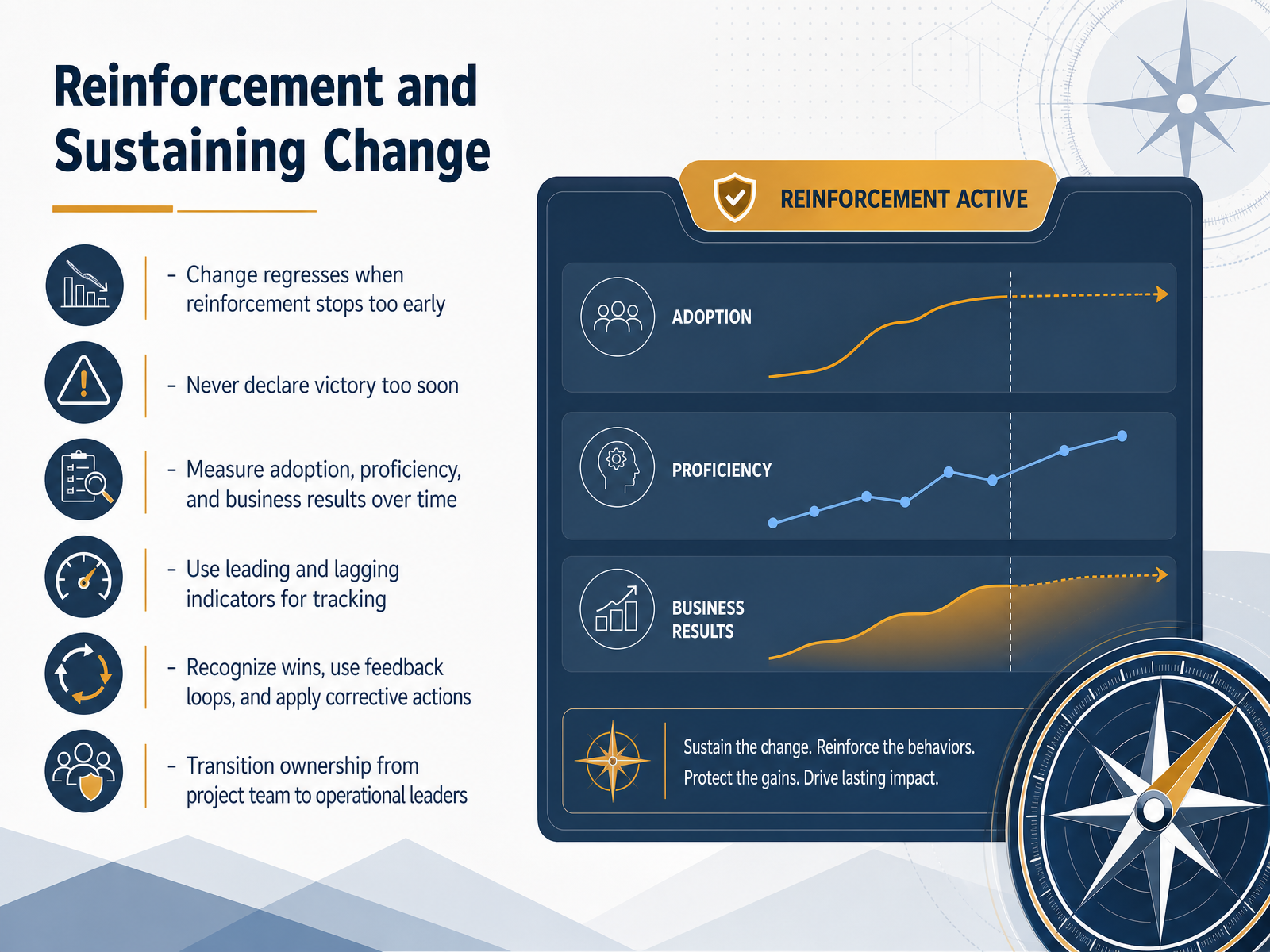
 - 10Reinforcement and Sustaining ChangeLet’s talk about the phase that often gets the least attention but causes the most setbacks: reinforcement. Change regresses when we stop pushing too early. So never declare victory too soon. Instead, measure adoption, proficiency, and actual business results over time. Use leading indicators, like training completion, to predict success, and lagging indicators, like productivity and error rates, to confirm it. Recognize wins publicly and build feedback loops so you can catch slippage and apply corrective action quickly. And finally, transition ownership from the project team to operational leaders. If the change isn’t owned by the people running the daily work, it won’t survive. Reinforcement is not a final checkbox; it’s the bridge between a successful rollout and a lasting one. Next, let’s look at the common pitfalls that derail change and how to avoid them.
 prosci.comkotterinc.comcompelframework.org+21 min
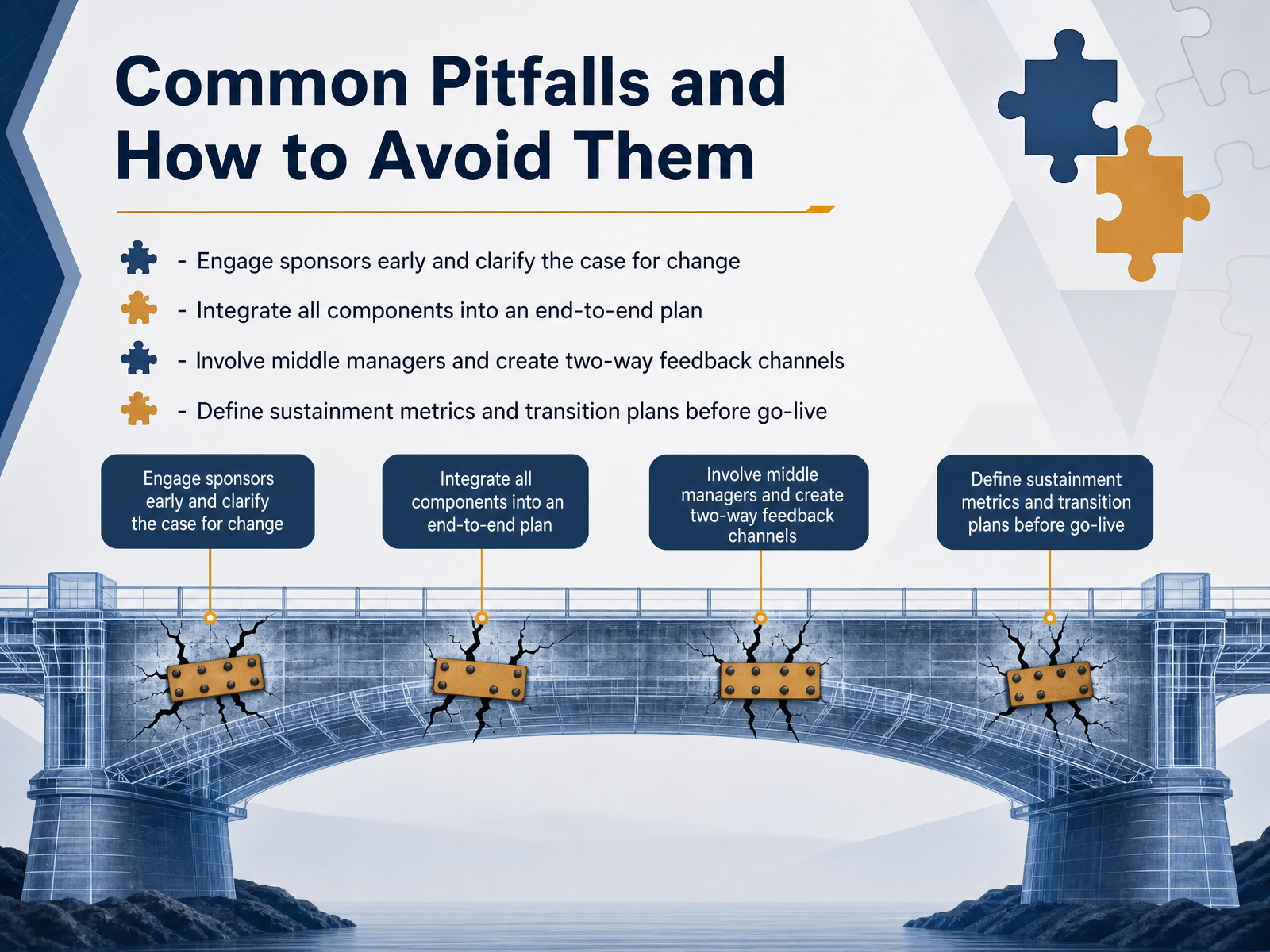
 - 11Common Pitfalls and How to Avoid ThemLet’s look at the most common pitfalls and how to avoid them, because many change efforts fail not on strategy but on execution. First, engage sponsors early and clarify the case for change. If leadership isn’t visibly committed from the start, momentum stalls before it begins. Second, integrate all components into one end-to-end plan. Don’t treat communication, training, and resistance management as separate workstreams—they need to reinforce each other. Third, involve middle managers and create two-way feedback channels. They are the bridge between leadership and daily operations; without their input, resistance grows silently. Finally, define sustainment metrics and transition plans before go-live. Decide how you’ll measure adoption and who owns the change after launch, not later. These four steps separate initiatives that fade from those that stick. Now let’s discuss how to choose and combine frameworks for your specific context.
 prosci.comkotterinc.comcompelframework.org+21 min
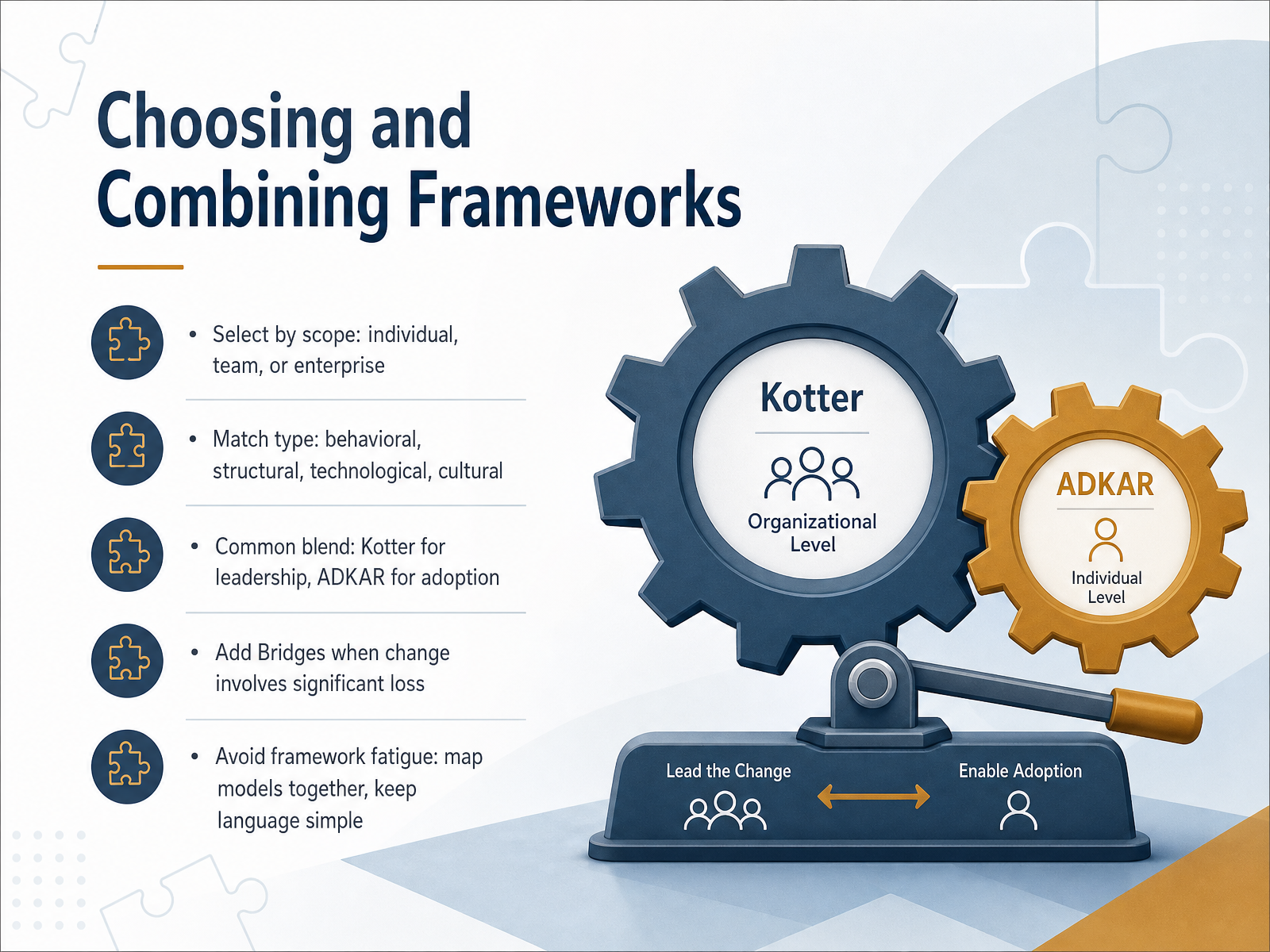
 - 12Choosing and Combining FrameworksNow let's talk about choosing and combining frameworks. There's no single model that fits every situation, so your selection should start with scope. Ask yourself: are you driving change at the individual, team, or enterprise level? That answer narrows your options quickly. Next, match the framework to the type of change you're facing. Behavioral change calls for ADKAR. Structural or technological change might need Kotter's leadership sequence. Cultural shifts often require a diagnostic approach like the McKinsey 7-S. In practice, the most common blend is Kotter for leadership alignment and organizational momentum, paired with ADKAR for tracking individual adoption. Add Bridges' Transition Model when the change involves significant loss, like role redesign or redundancy. One caution: framework fatigue is real. If you stack too many models, your team will tune out. So map your models together, align their stages, and keep the language simple. Use one vocabulary across the initiative. The goal is clarity, not methodology purity.
 prosci.comkotterinc.comcompelframework.org+21 min
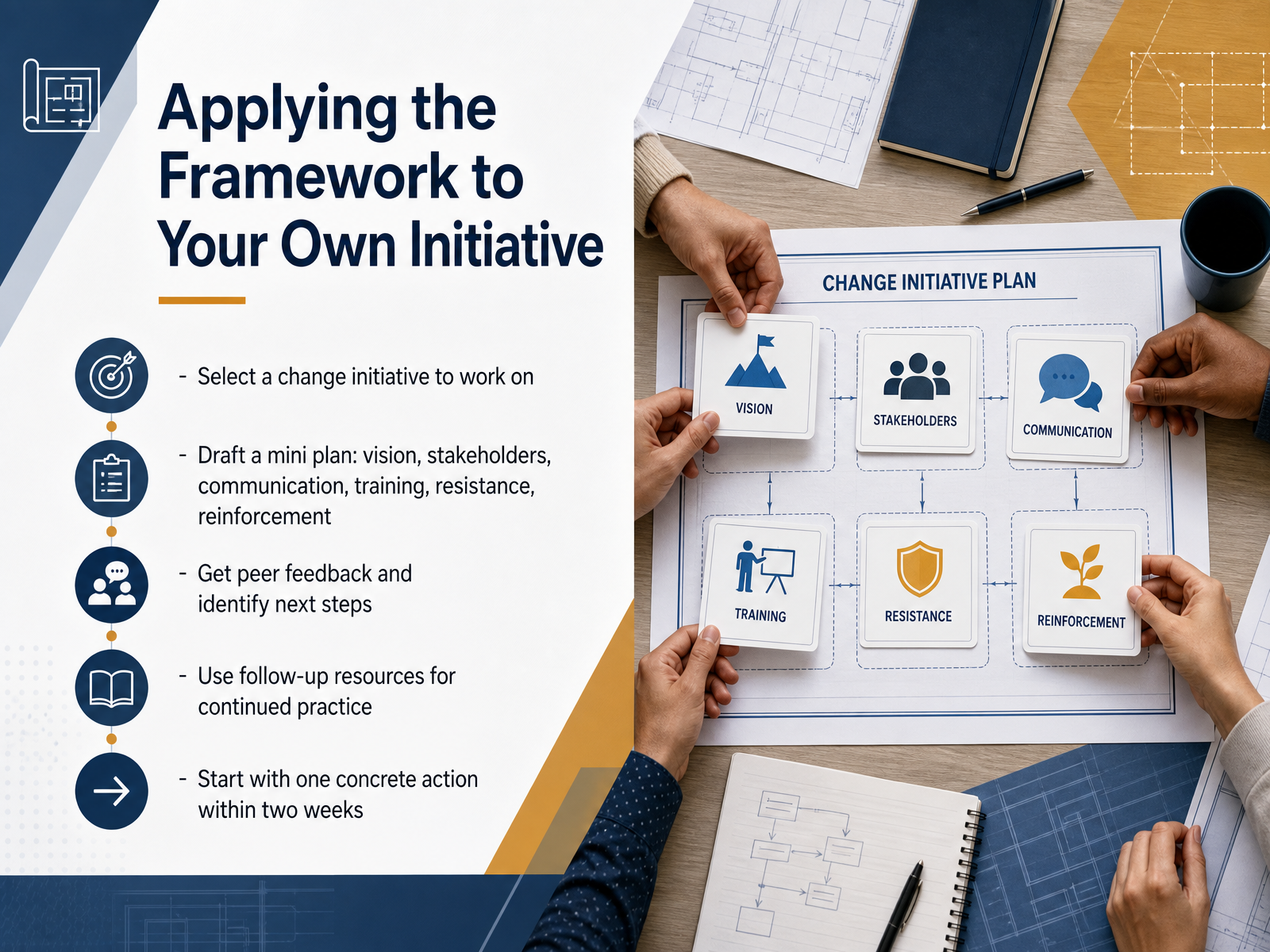
 - 13Applying the Framework to Your Own InitiativeLet's turn this framework into something you can use right away. Pick a change initiative you're currently leading or about to start. Draft a mini plan covering six areas: vision, stakeholders, communication, training, resistance, and reinforcement. Keep it practical, not perfect. Then share it with a peer for feedback. They'll spot gaps you might have missed and help you identify your next steps. Use the follow-up resources we've provided to keep practicing, and commit to one concrete action you can take within the next two weeks. That could be mapping your key stakeholders or setting up a first communication touchpoint. The goal here isn't a flawless document, it's momentum. Starting small and getting real feedback will build your confidence and your capability. Now let's wrap up with the key takeaways and your action plan.
 online.tamucc.edumonday.comcareerminds.com+21 min
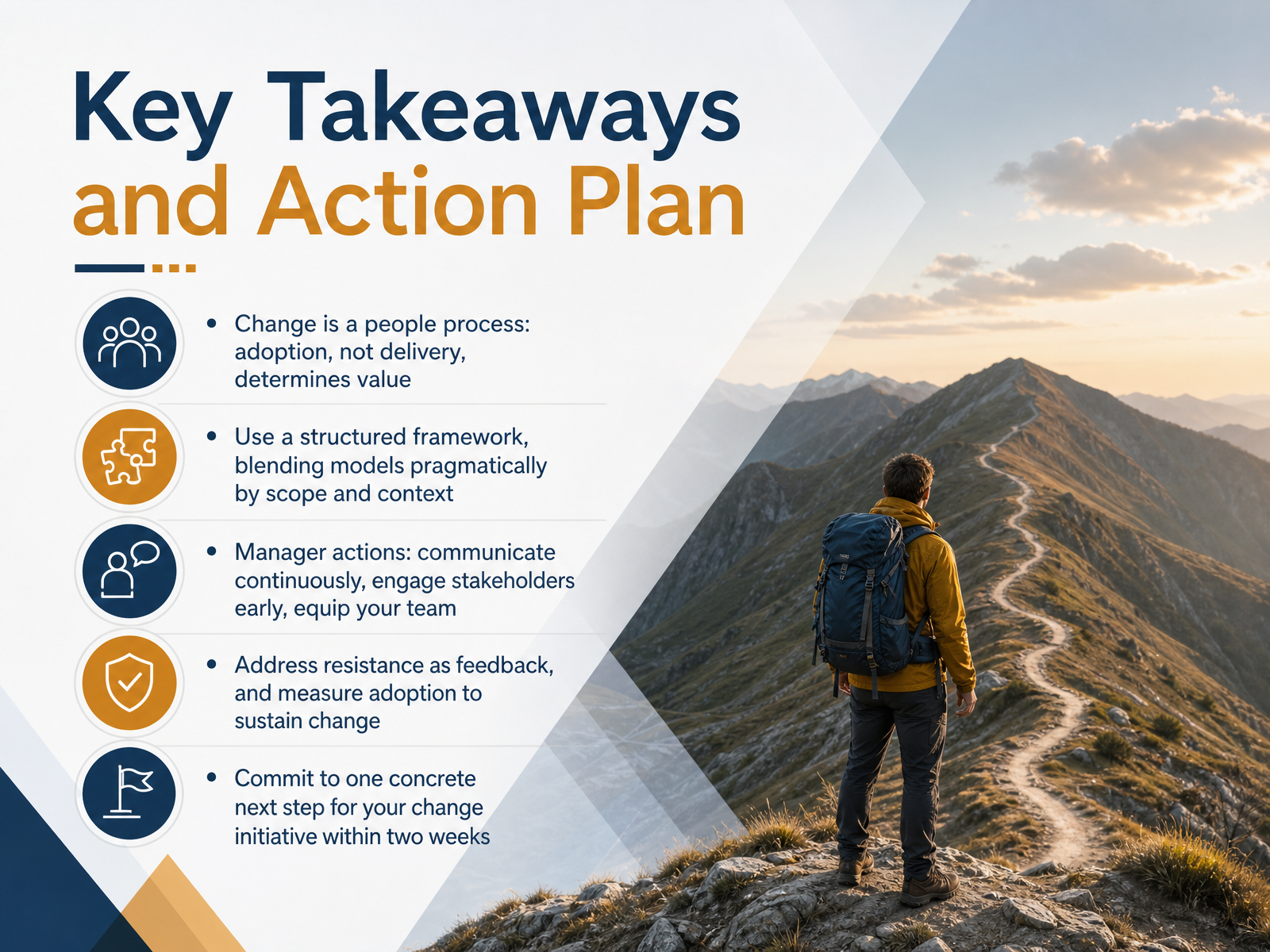
 - 14Key Takeaways and Action PlanWe have covered a lot of ground, so let’s bring it together. The core is simple: change is a people process. Value comes from adoption, not from delivering a plan on time. Use a structured framework, but blend models pragmatically based on your scope and context. Your day-to-day actions matter most. Communicate continuously, engage stakeholders early, and equip your team with the skills they need. When you meet resistance, treat it as feedback—it tells you where the plan needs adjustment. And keep measuring adoption. Without measurement, you cannot sustain the change. So, commit to one concrete next step for your initiative within the next two weeks. Just one. That is how momentum starts. Thank you for your time, and good luck with your change effort.
 prosci.comkotterinc.comcompelframework.org+22 min
Take the deck with you
Download this course as a file — free, no sign-up needed.
- PDF handoutEvery slide page, ready to print or share.15 pages · 3.8 MBDownload
- Narrated PowerPointThe deck that presents itself — every slide carries the digital human's narration video.15 pages · 13.3 MBDownload
- PowerPoint slidesThe full deck as a .pptx — open it in PowerPoint, Keynote, or Google Slides.15 pages · 3.8 MBDownload
Free to use in your own training — please keep the PersonWise credit page at the end.
Have your own deck? Turn it into a course
Sources consulted
Web sources consulted while building this course.
- ADKAR vs Kotter: Which Change Model Should You Choose? - Prosci — prosci.com
- Comparing Kotter with Prosci: Managing Transformation — kotterinc.com
- Choosing Among ADKAR, Kotter, and Bridges | COMPEL Framework — compelframework.org
- Change Management: Kotter's 8 Steps vs ADKAR | knowledgelib.io — knowledgelib.io
- Change Management Models: 6 Frameworks Compared — clickup.com
- Change Management Frameworks: Kotter, ADKAR, Lewin Compared — online.tamucc.edu
- Change Management Plan Template: Build & Scale Change Now — monday.com
- How to build a change management framework | Careerminds — careerminds.com
- Change Management Models Explained: How to Choose and Apply Them in 2026 — afiniti.co.uk
- What Is Change Management? A Complete Guide (2026) — instituteprojectmanagement.com