Social Media Marketing Fundamentals
Begin
14 pages · ~28 min
Social Media Marketing Fundamentals
Learn the core strategies of social media marketing, including platform selection, content planning, and audience engagement, to build effective campaigns for your business.
What you’ll learn
- 01Social Media Marketing FundamentalsWelcome. If you are a marketer, a creator, a small-business owner, or just getting started with social media, this course is for you. Social media has become far more than a place to post updates. It now works as a search engine, a storefront, a customer service desk, and a community space, all at once. That sounds like a lot, and honestly, it is. But you do not need to master everything overnight. In this course, we will cover the core concepts through a repeatable thirty-day action plan. The idea is simple: give you a clear, practical path you can follow again and again, whether you are building a brand, growing a creator audience, or supporting a small team. We will also talk about how social fits into your broader marketing strategy for 2026, so you are not just posting more, you are posting with purpose. Let's start with why social media still matters for business.blog.hubspot.comsproutsocial.comdesignrush.com+21 min
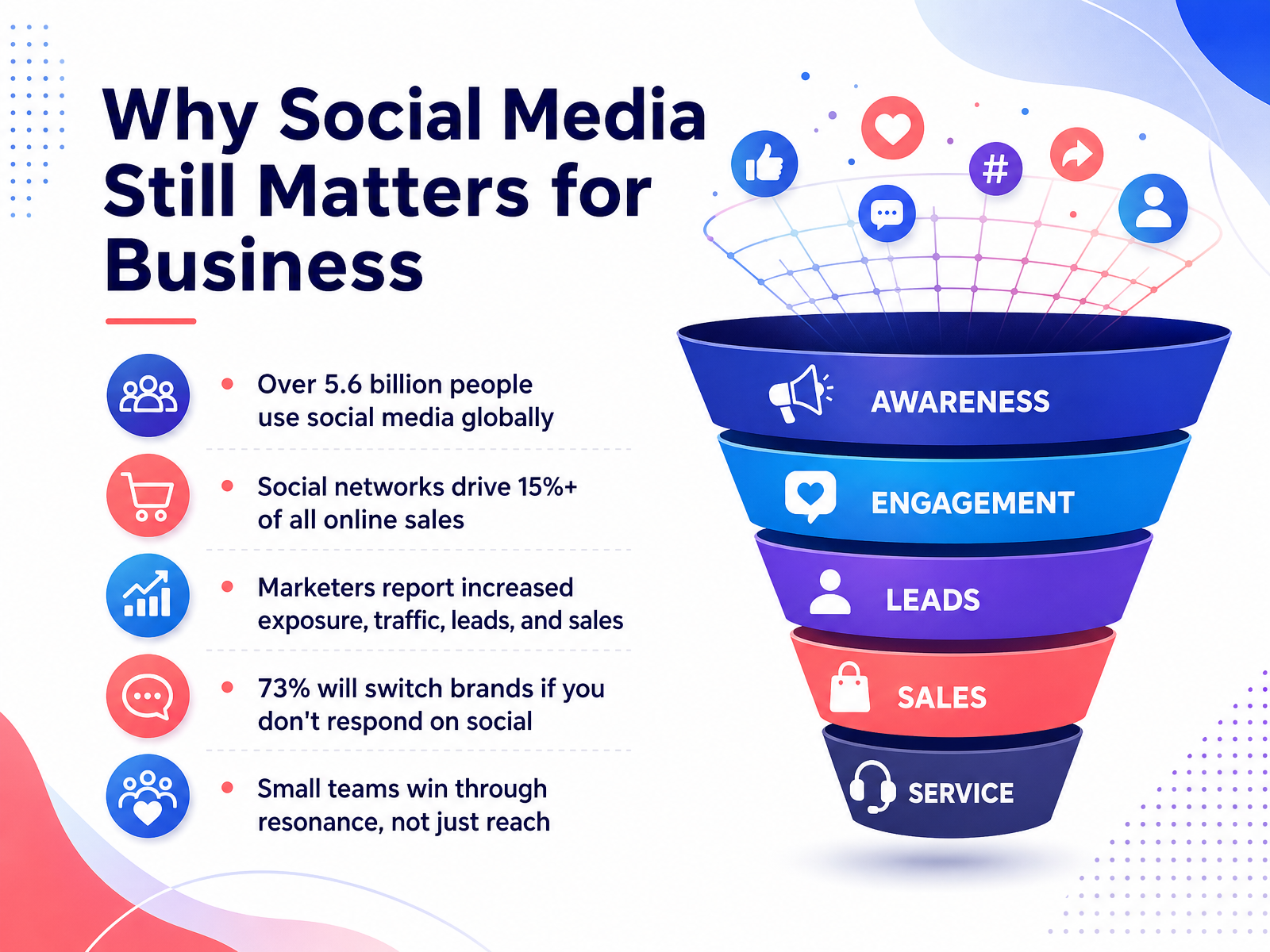
- 02Why Social Media Still Matters for BusinessNow, let's talk about why social media still matters for your business. The numbers tell a compelling story. We're looking at over five point six billion people using social media globally. That's most of your potential customers, spending time on these platforms every single day. And it's not just browsing. Social networks now drive more than fifteen percent of all online sales. Marketers consistently report that social media gives them something nothing else can match: increased exposure, more website traffic, stronger leads, and ultimately, better sales. But here's the part many businesses miss. Social media is now a customer service channel. Research shows that seventy three percent of consumers will switch to a competitor if you don't respond to them on social. That's a huge risk if you're not paying attention. The good news is, you don't need a massive following to win. Small teams succeed by focusing on resonance, building real connections with the right people, not just chasing reach. Next, let's explore the 2026 landscape to understand the key trends and shifts shaping this space.
 blog.hubspot.comsproutsocial.comdesignrush.com+21 min
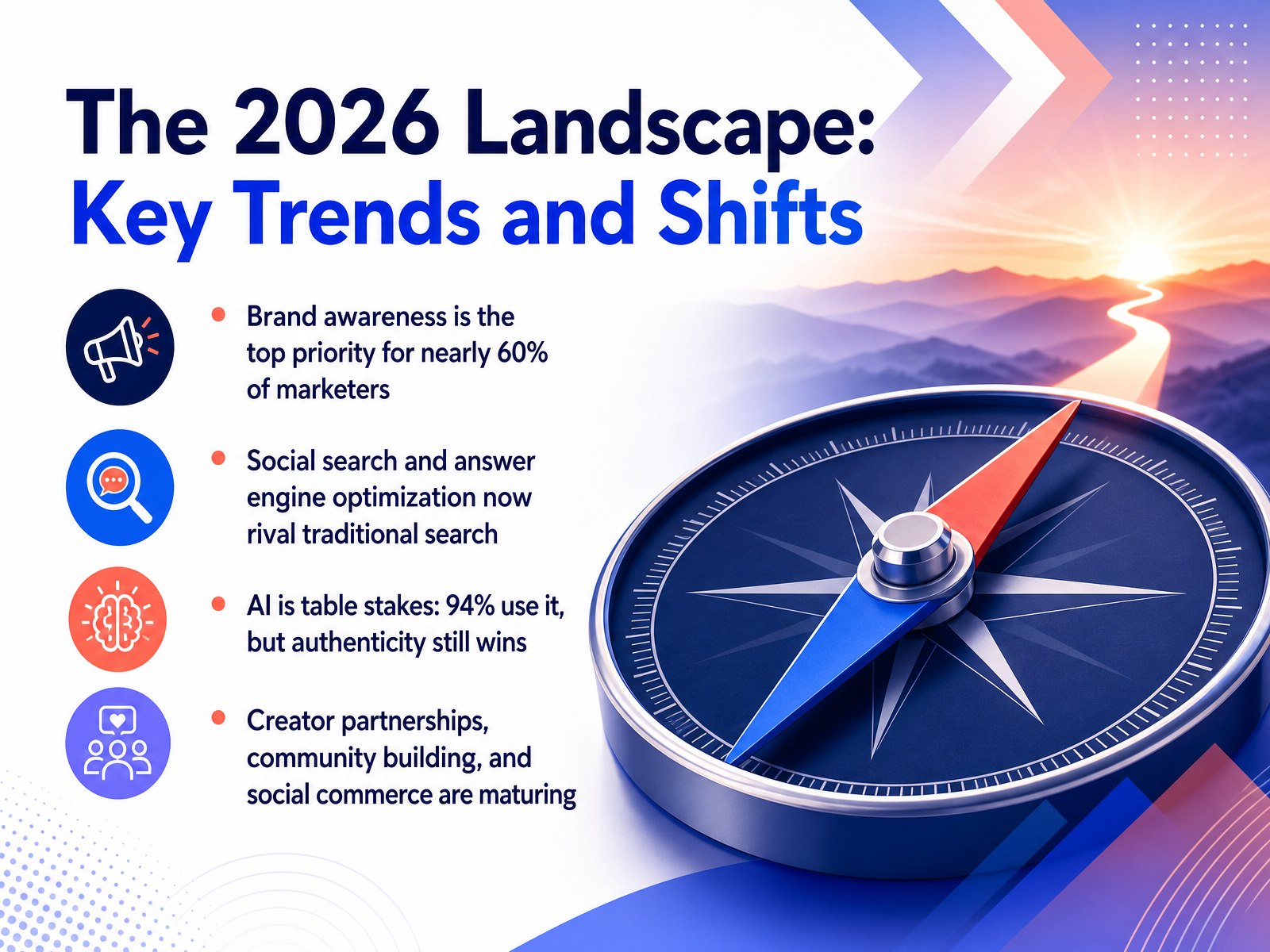
 - 03The 2026 Landscape: Key Trends and ShiftsNow let's look at the bigger picture shaping the way we work in 2026. Brand awareness has become the top priority for nearly 60 percent of marketers. That is a sharp jump from just a year ago, and it tells us something important: people now search for brands by name, not just by keywords. So building recognition early is no longer optional. At the same time, social search is catching up to traditional search engines. More people are asking questions directly inside TikTok, Instagram, and YouTube, which means your captions, keywords, and even your spoken audio need to be discoverable there. AI is also everywhere now. Around 94 percent of social marketers use it, mostly for brainstorming and drafting. But here is the key: authenticity still wins. Audiences reward content that feels real and human, even if it is not perfectly polished. And finally, creator partnerships, community building, and social commerce are maturing. These are not experiments anymore. They are becoming core ways to build trust and drive sales. Next, we will define the core concepts and terminology you will use to put all of this into practice.
 blog.hubspot.comsproutsocial.comdesignrush.com+22 min
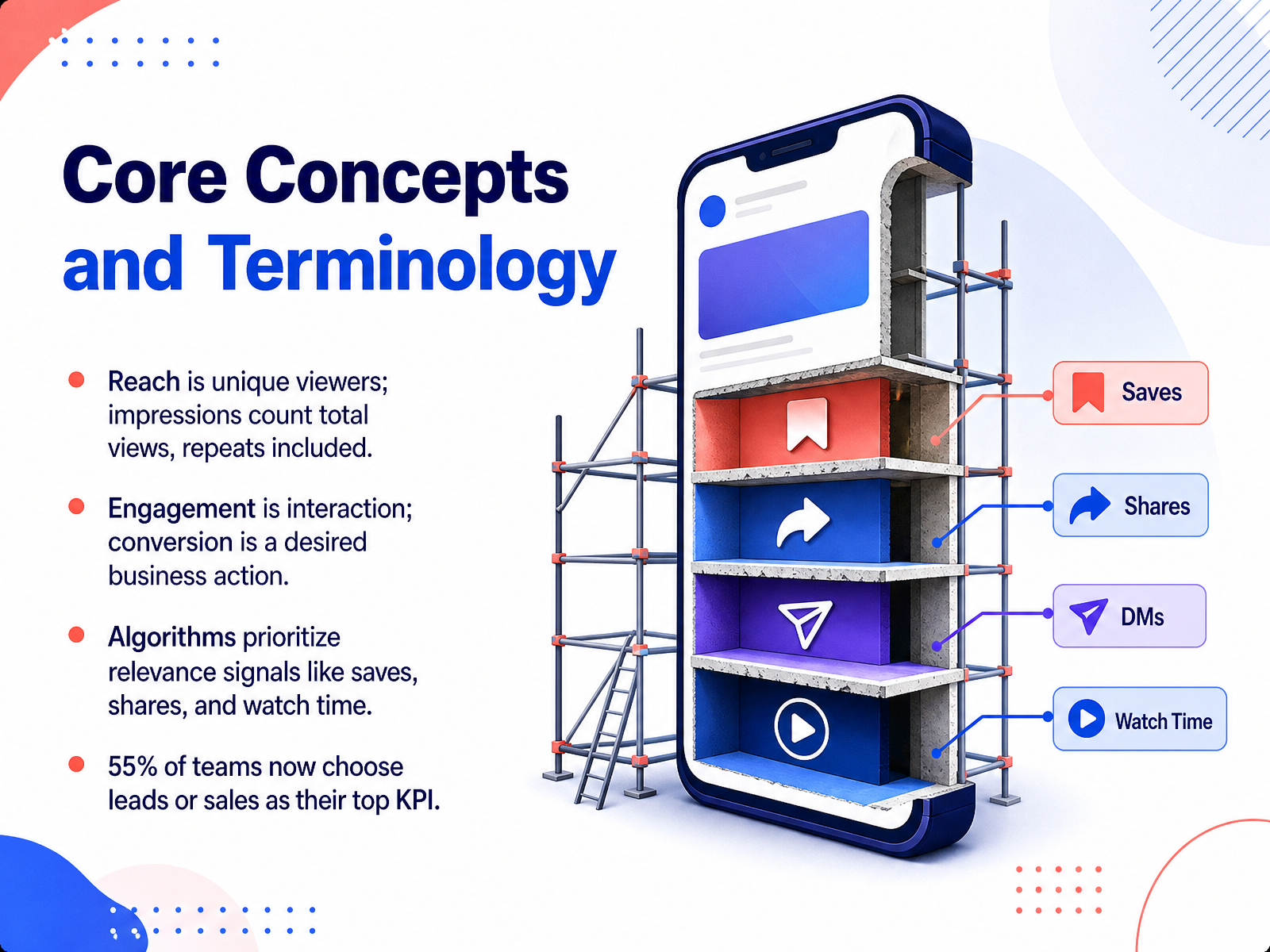
 - 04Core Concepts and TerminologyLet's get clear on a few terms you'll hear constantly. Reach is the number of unique people who see your content. Impressions count total views, including repeat views from the same person. So one person seeing your post three times adds one to reach and three to impressions. Engagement means interaction, like comments, saves, and shares. Conversion is the desired business action, such as a signup, a lead, or a purchase. Algorithms determine what gets shown, and they prioritize relevance signals. Those signals include saves, shares, and watch time. This matters because a shift is happening. Fifty five percent of teams now choose leads or sales as their top KPI, moving beyond surface metrics like likes. The takeaway here is simple. Focus on actions that signal real interest, not just visibility. Next, let's look at the major platforms and their strengths.
 blog.hubspot.comsproutsocial.comdesignrush.com+22 min
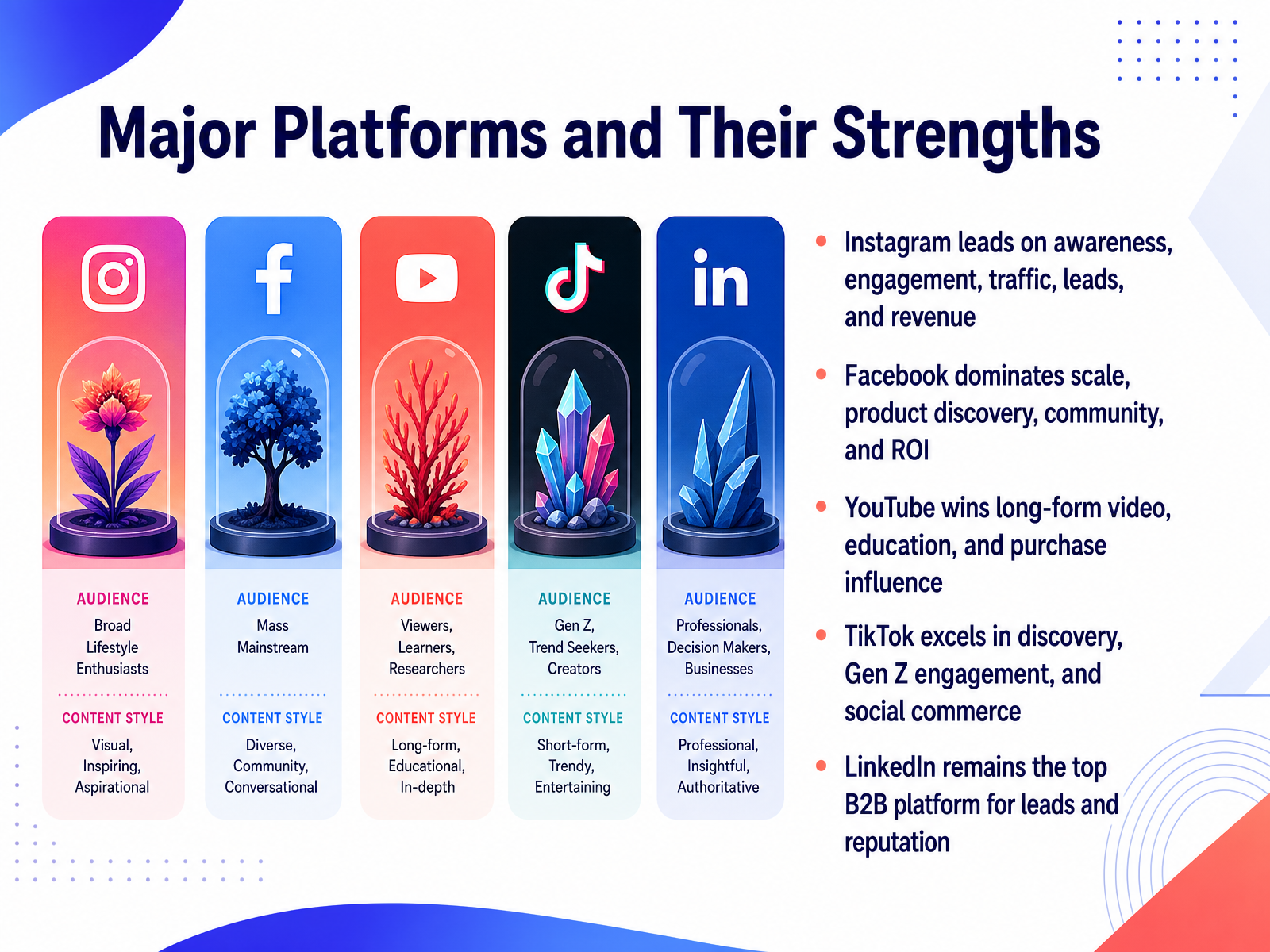
 - 05Major Platforms and Their StrengthsNow, let's look at the major platforms and what each one does best. Think of this as a quick tour of your options, so you can put your energy where it matters. First, Instagram. It's not just for photos anymore. In fact, it currently leads across awareness, engagement, traffic, and even revenue, making it a strong all-around performer for most visual brands. Facebook, on the other hand, is your scale player. It dominates product discovery and community building, and marketers consistently report a strong return on investment there. If you need long-form video, education, or deep purchase influence, YouTube wins. It's where people go to research before they buy. TikTok is your discovery engine, especially for Gen Z, and it's becoming a real force in social commerce. And for B2B, LinkedIn remains the top platform for leads and professional reputation. The key takeaway here is simple: choose platforms based on the job you need them to do. With that in mind, let's move on to setting goals and defining your audience.
 blog.hubspot.comsproutsocial.comdesignrush.com+21 min
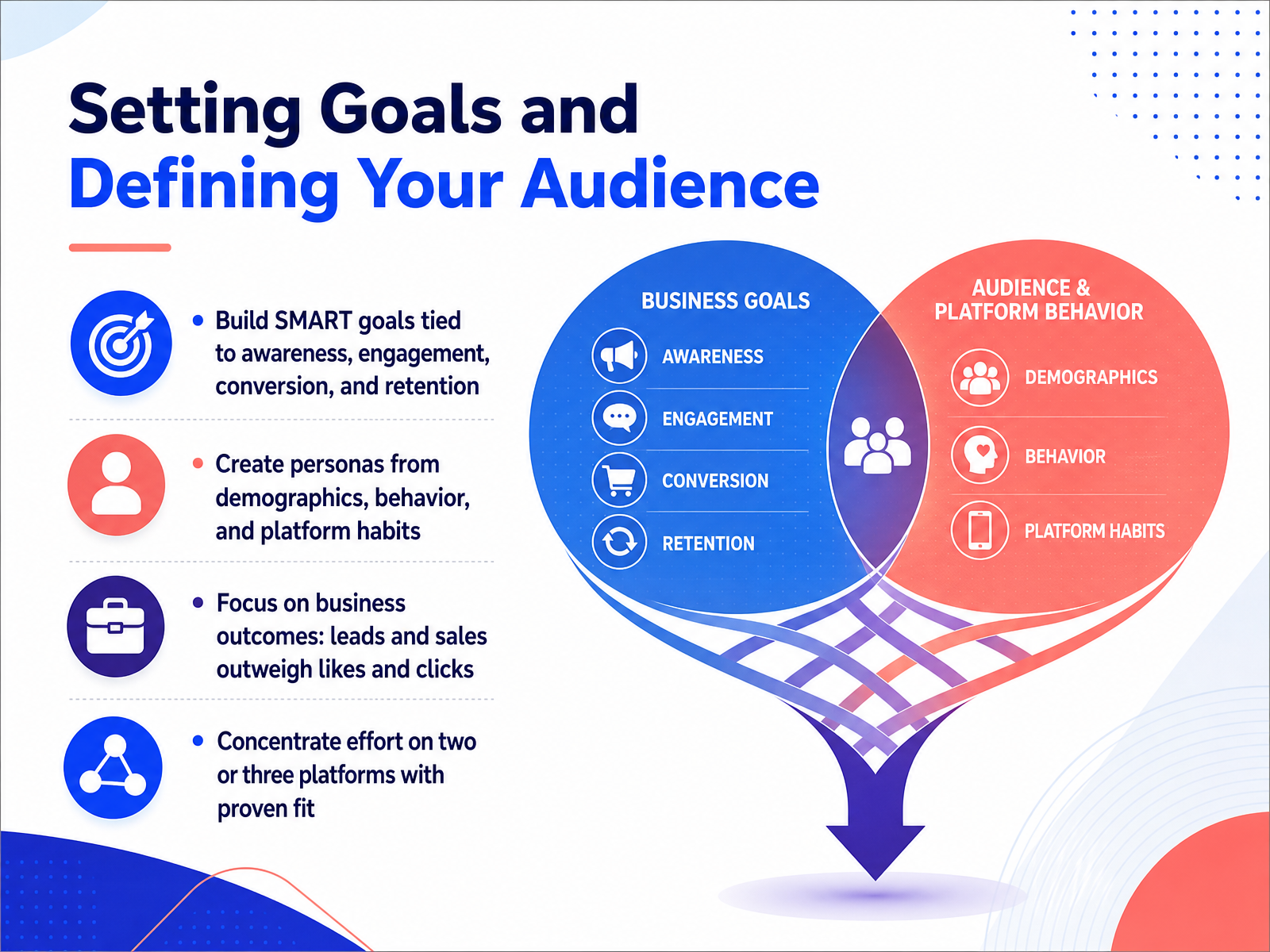
 - 06Setting Goals and Defining Your AudienceLet's build on the foundation we have by getting specific about goals and audience. This is where a social media presence becomes a social media strategy. Start with SMART goals, which means specific, measurable, achievable, relevant, and time-bound. For example, instead of saying we want more visibility, aim for a twenty percent increase in brand awareness among our core demographic this quarter. From there, build out personas. Personas are detailed profiles of your ideal customers. Go beyond basic demographics. Consider their behavior, their pain points, and especially their platform habits. Knowing your audience's needs is more important than knowing their age. And we need to focus on business outcomes. Research shows that while ninety percent of marketers believe social media drives revenue, only about thirty-five percent can clearly prove it. So we need to prioritize leads and sales. Likes and clicks are useful signals, but they are not the destination. With that in mind, concentrate your effort on two or three platforms where you have proven fit. It is far better to be excellent on one channel than mediocre on five. This focus will set us up perfectly to talk about content strategy and planning next.
 blog.hubspot.comsproutsocial.comdesignrush.com+22 min
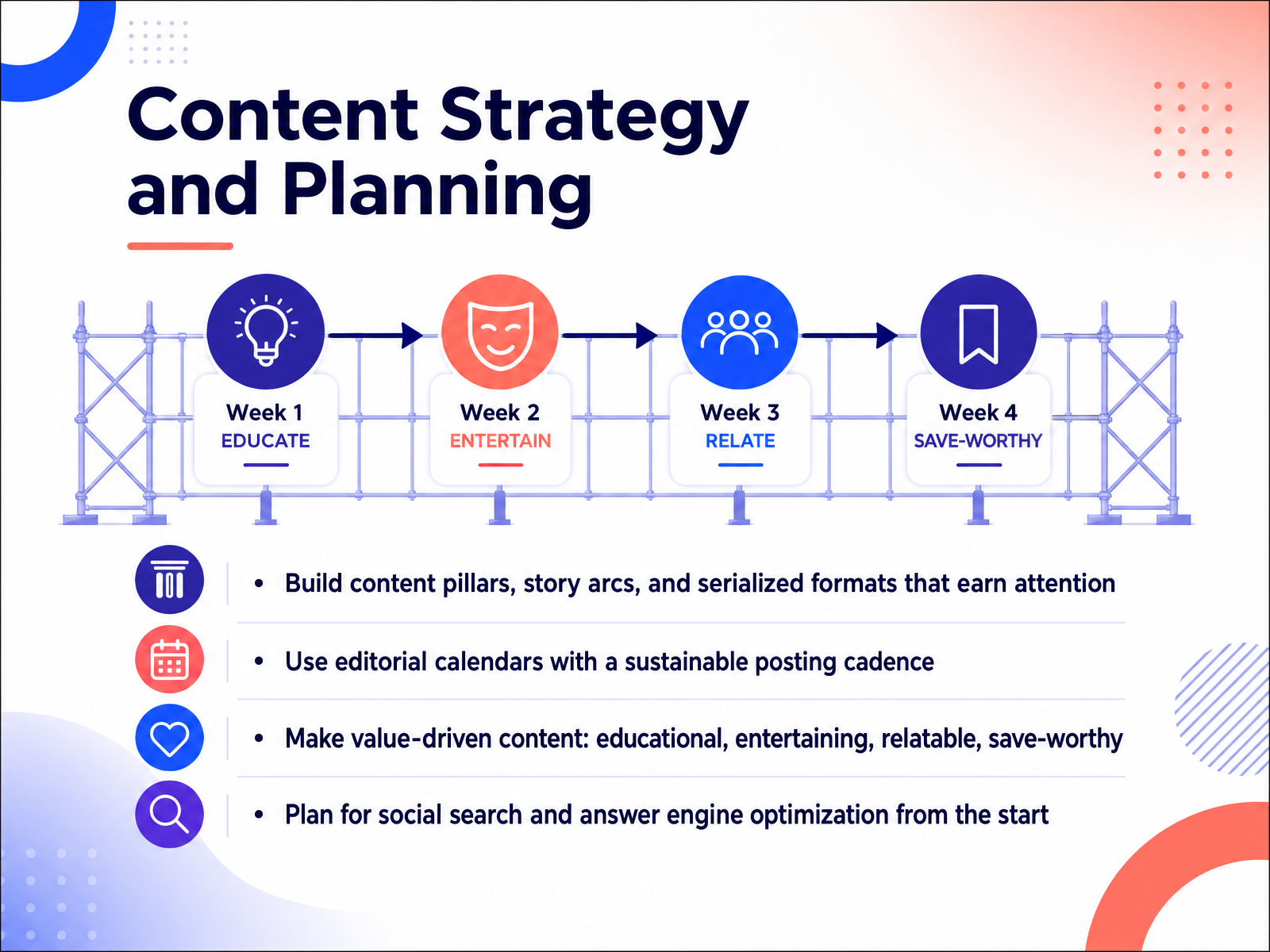
 - 07Content Strategy and PlanningOkay, so we have covered why social matters and where your audience is. Now let us talk about content strategy and planning. Think of this as the operating system behind everything you post. Start with content pillars. These are three to five core themes you return to again and again. For example, a small bakery might focus on behind-the-scenes baking, quick recipe tips, and community spotlights. From there, you can build story arcs and serialized formats, like a weekly series, so people have a reason to come back. Next, use an editorial calendar. This is simply a schedule of what you will publish and when. It helps you maintain a sustainable posting cadence without burning out. Above all, make value-driven content. Content that is educational, entertaining, relatable, or genuinely save-worthy. People save a great how-to graphic or a clever twist on a common problem. Finally, plan for social search from the start. Captions, on-screen text, and even spoken keywords help people discover your content when they search inside apps. With that strategy in place, let us turn to how you make it look great with engaging visual content.
 blog.hubspot.comsproutsocial.comdesignrush.com+22 min
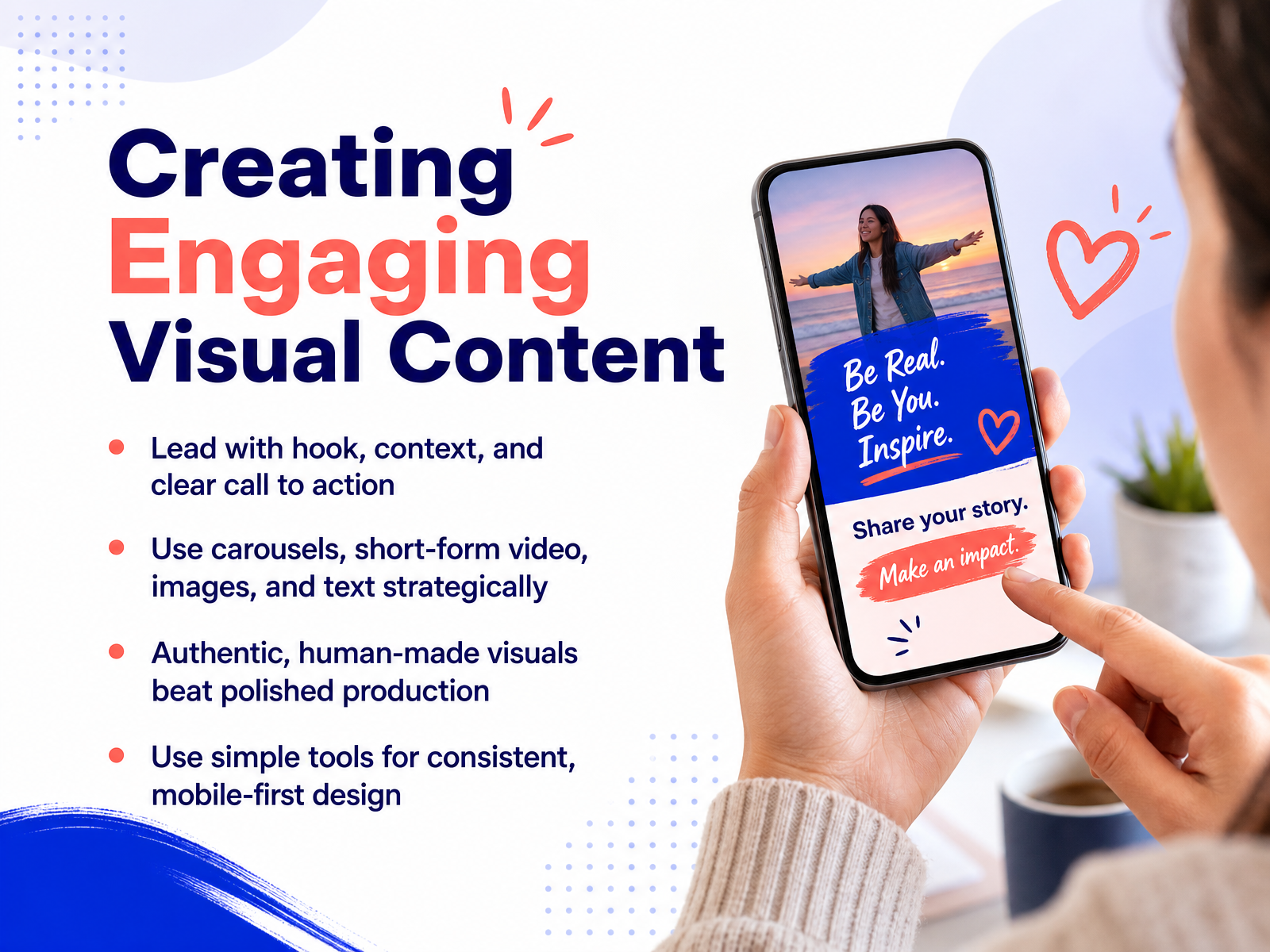
 - 08Creating Engaging Visual ContentNow let's talk about the visuals that sit at the center of all this work. Creating engaging visual content isn't about having a big design budget. It's about being intentional with what you already have. Start with a clear hook, context, and a call to action. Think of it like this. The hook grabs attention in the first second. The context tells people why they should care. And the call to action tells them exactly what to do next. When it comes to format, don't just post a single image out of habit. Carousels are strong for engagement on Instagram and LinkedIn, especially with three to five slides. Short-form video is your best tool for reaching new people. Images still work well for simple, single-message announcements. Use each format strategically. The data also favors one big shift. Authentic, human-made visuals often beat heavily polished production. People scroll past content that feels like an ad. They stop for real faces, real processes, and genuine behind-the-scenes moments. And you don't need complex software to stay consistent. Simple tools and a basic template system will get you there. Design one vertical master asset, keep your text clear and legible, and crop down for each platform. That keeps your brand looking polished without burning out your team. Up next, we'll look at the human side of that consistency with community engagement and customer interaction.
 lucky.graphicssprakdesign.comblog.hootsuite.com+22 min
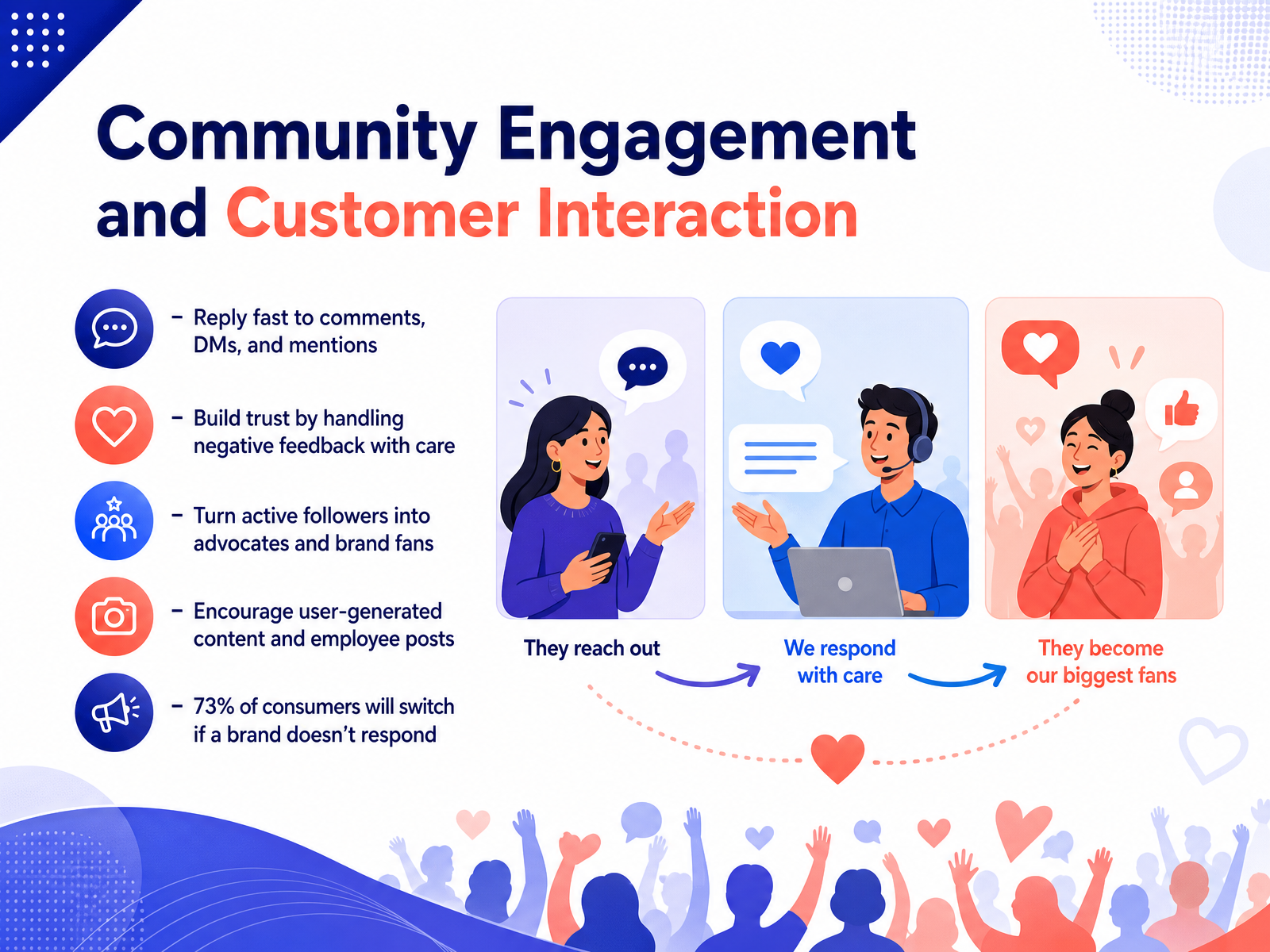
 - 09Community Engagement and Customer InteractionNow let's talk about community engagement and customer interaction. This is where social media shifts from broadcasting to actually building relationships. The first rule is speed. Reply fast to comments, direct messages, and mentions. It doesn't need to be a perfect response, it just needs to be timely. When negative feedback shows up, handle it with care. A thoughtful reply can turn an unhappy customer into a loyal one. And think bigger than one-off replies. You want to turn active followers into advocates, people who recommend your brand without being asked. Encourage user-generated content, like photos or reviews from real customers. Employee posts work well too, because they feel more human than a corporate account. The stakes are real here. Seventy-three percent of consumers will switch to a competitor if a brand doesn't respond on social media. So engagement is not a nice-to-have. It's retention work. Next, we'll look at measuring what matters.
 blog.hubspot.comsproutsocial.comdesignrush.com+22 min
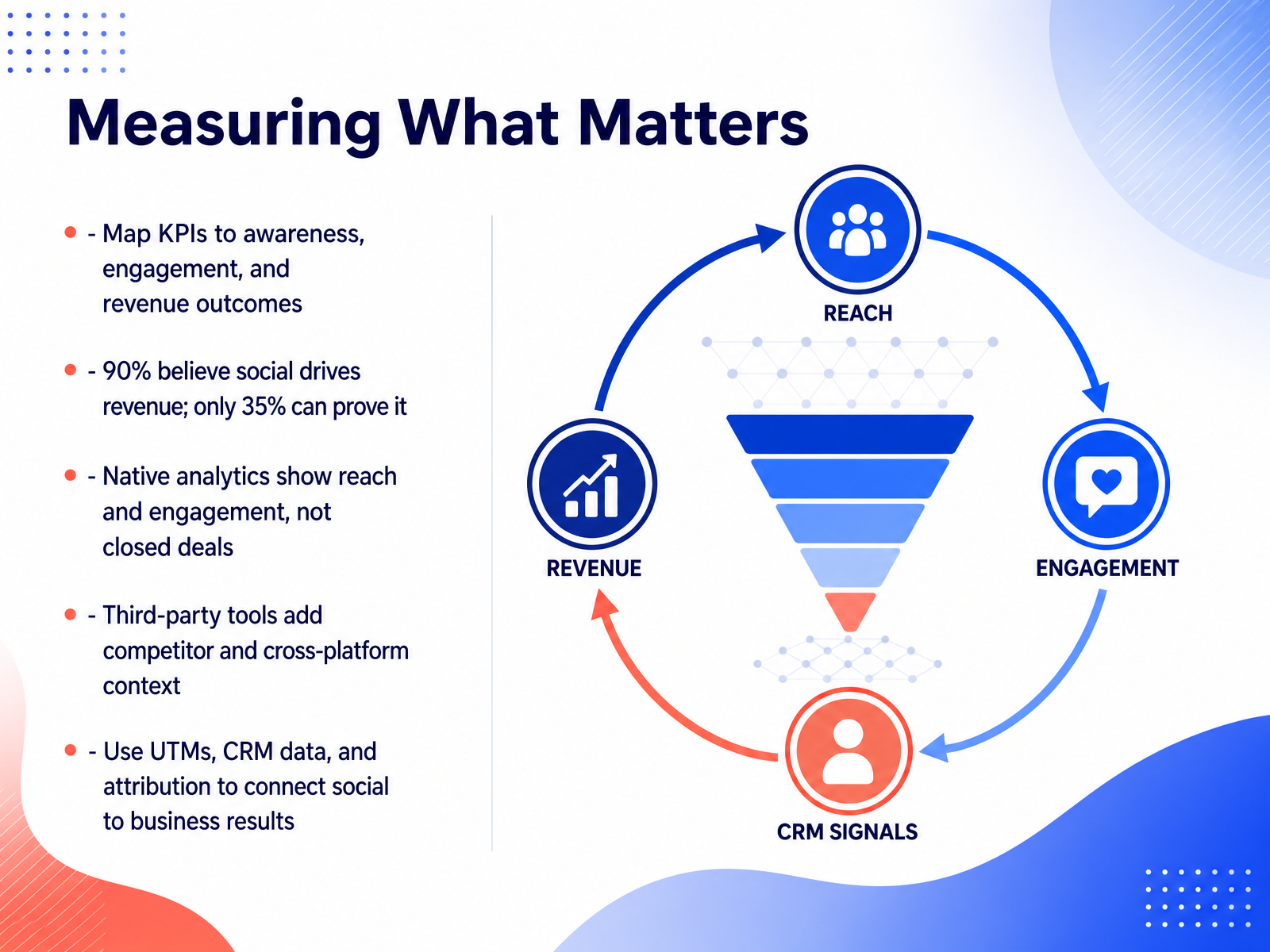
 - 10Measuring What MattersHere's where we move from activity to outcomes. First, map your KPIs to three levels: awareness, engagement, and revenue. If you're running a brand campaign, impressions and reach matter. If the goal is sales, those metrics alone won't tell the story. That's the core issue we keep seeing. Around ninety percent of teams believe social drives revenue, but only thirty-five percent can clearly prove it. Why the gap? Native analytics show you reach and engagement, but they stop at the platform's edge. They don't follow someone into your CRM or track a closed deal. Third-party tools help by adding competitor benchmarks and cross-platform context. But the real shift comes from connecting social activity to business results. Use UTM parameters on every link, feed that data into your CRM, and apply an attribution model that fits your sales cycle. Even a simple version works: tag the post, track the source, record the outcome. That turns a vague sense of impact into a number you can defend. Now let's look at reporting that actually informs decisions.
 blog.hubspot.comsproutsocial.comdesignrush.com+22 min
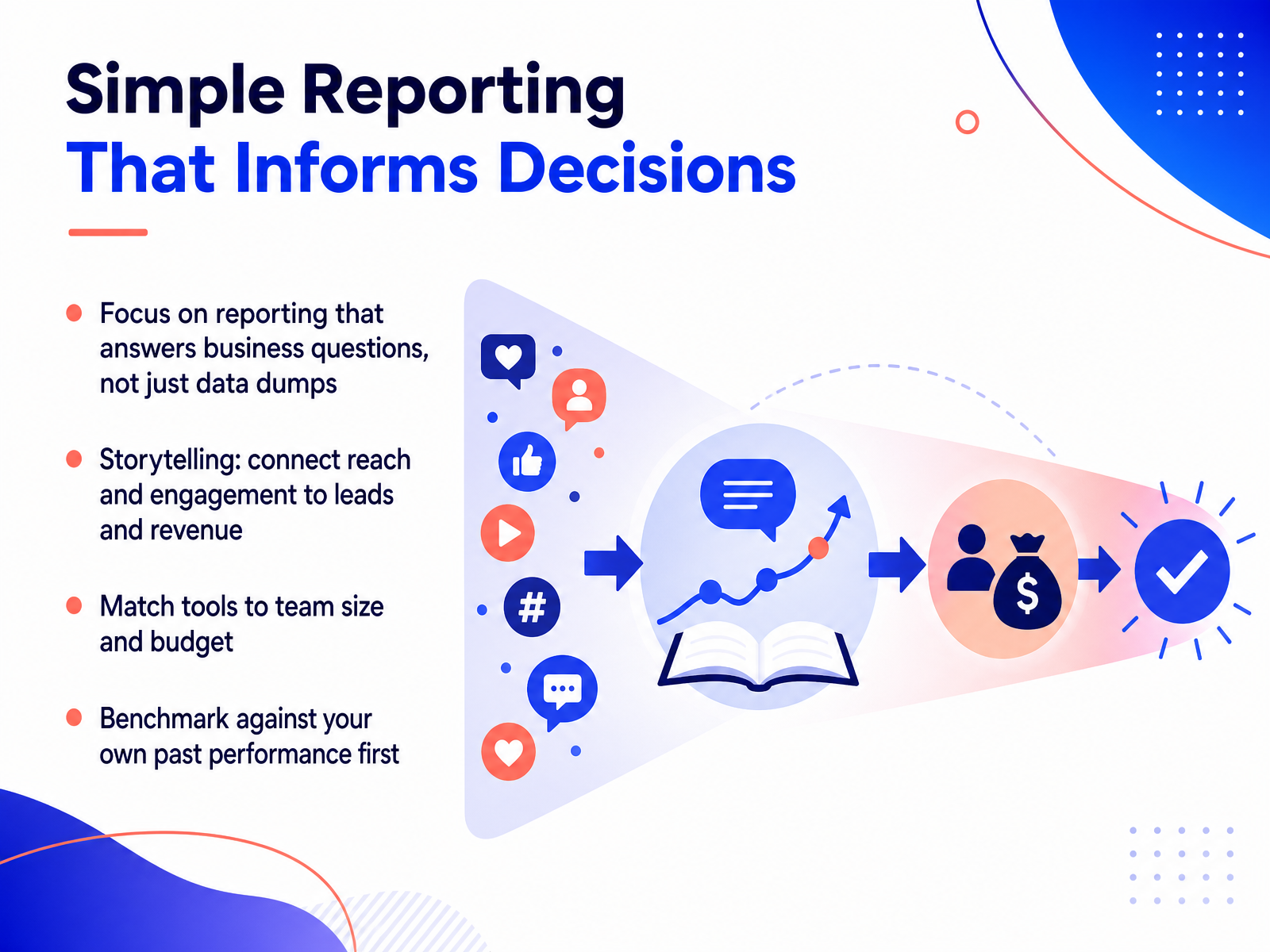
 - 11Simple Reporting That Informs DecisionsLet's shift from gathering data to making it useful. Good reporting starts with a business question, not a data dump. Instead of asking how many impressions you got, ask whether your content brought in leads or influenced revenue. That's the story worth telling. Connect the dots between reach on one side and pipeline or sales on the other. It does not have to be perfect, but it should be honest and useful. Choose tools that match your team size and budget. A small team might rely on native platform dashboards plus a simple spreadsheet. A larger team may need a dedicated analytics tool with cross-channel reporting. What matters is that you can see the data you need without spending hours assembling it. And before comparing yourself to competitors, benchmark against your own past performance. Your last quarter is your most relevant point of reference. If you are improving month over month, you are moving in the right direction. Up next, we will look at practical tools and workflows to put this into practice.
 blog.hubspot.comsproutsocial.comdesignrush.com+21 min
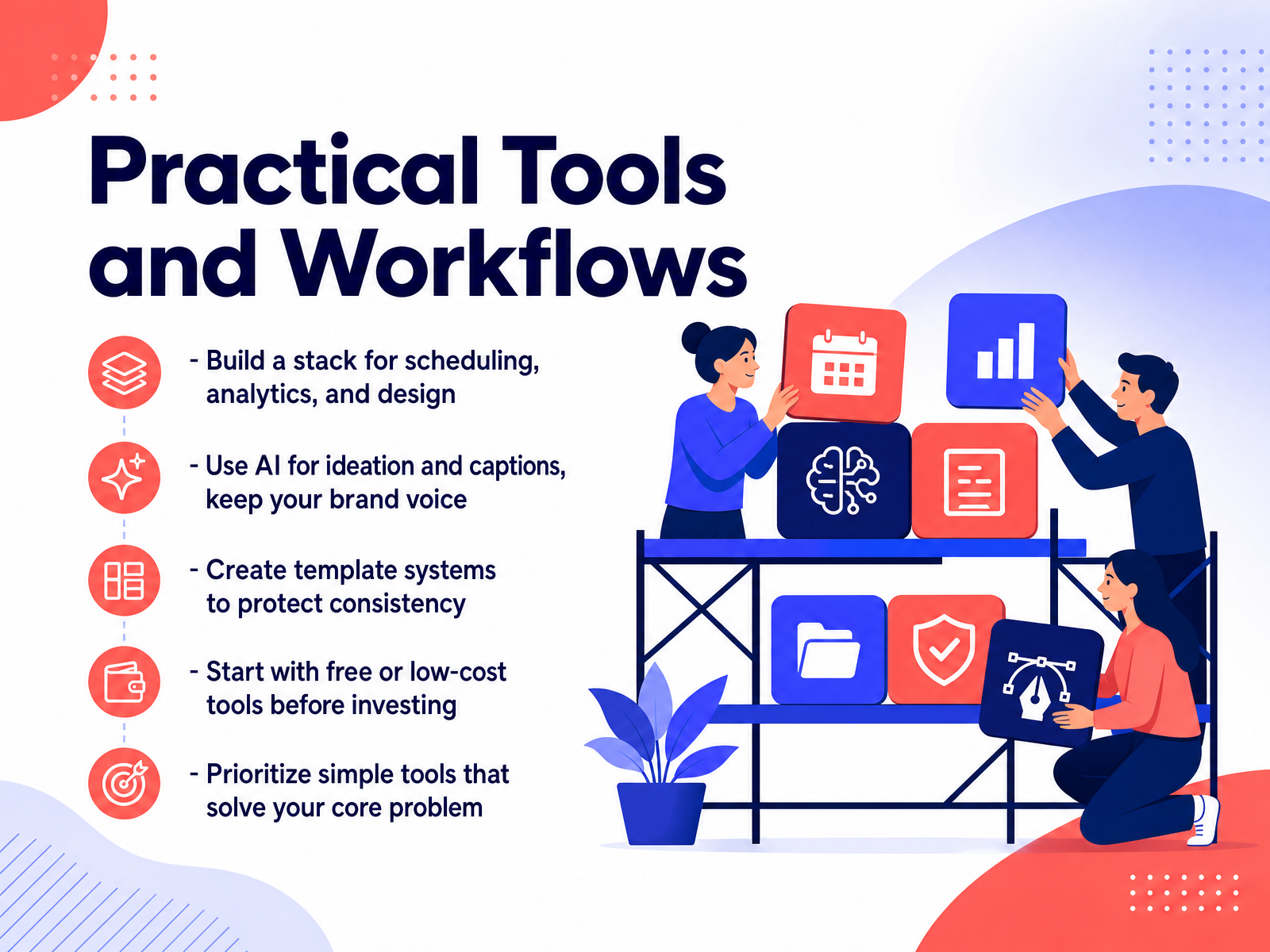
 - 12Practical Tools and WorkflowsLet's talk about the practical side: the tools and workflows that keep everything moving. The goal here is to build a stack that covers three main jobs: scheduling, analytics, and design. You don't need a complex setup right away. Start with free or low-cost options and pick the simplest tool that solves your one core problem first. For AI, it's a great partner for brainstorming and drafting captions. Most social media marketers use it in some capacity, but remember to always edit the output so it sounds like you. Your brand voice is the differentiator. Next, create template systems. Having a few reusable formats for posts like quote cards or product highlights protects consistency and saves hours every week. This is especially important because nearly half of teams expect their stack to grow, so a little structure now saves a lot of chaos later. And that's a perfect segue to what can go wrong, so let's look at common pitfalls and how to avoid them.
 blog.hubspot.comsproutsocial.comdesignrush.com+21 min
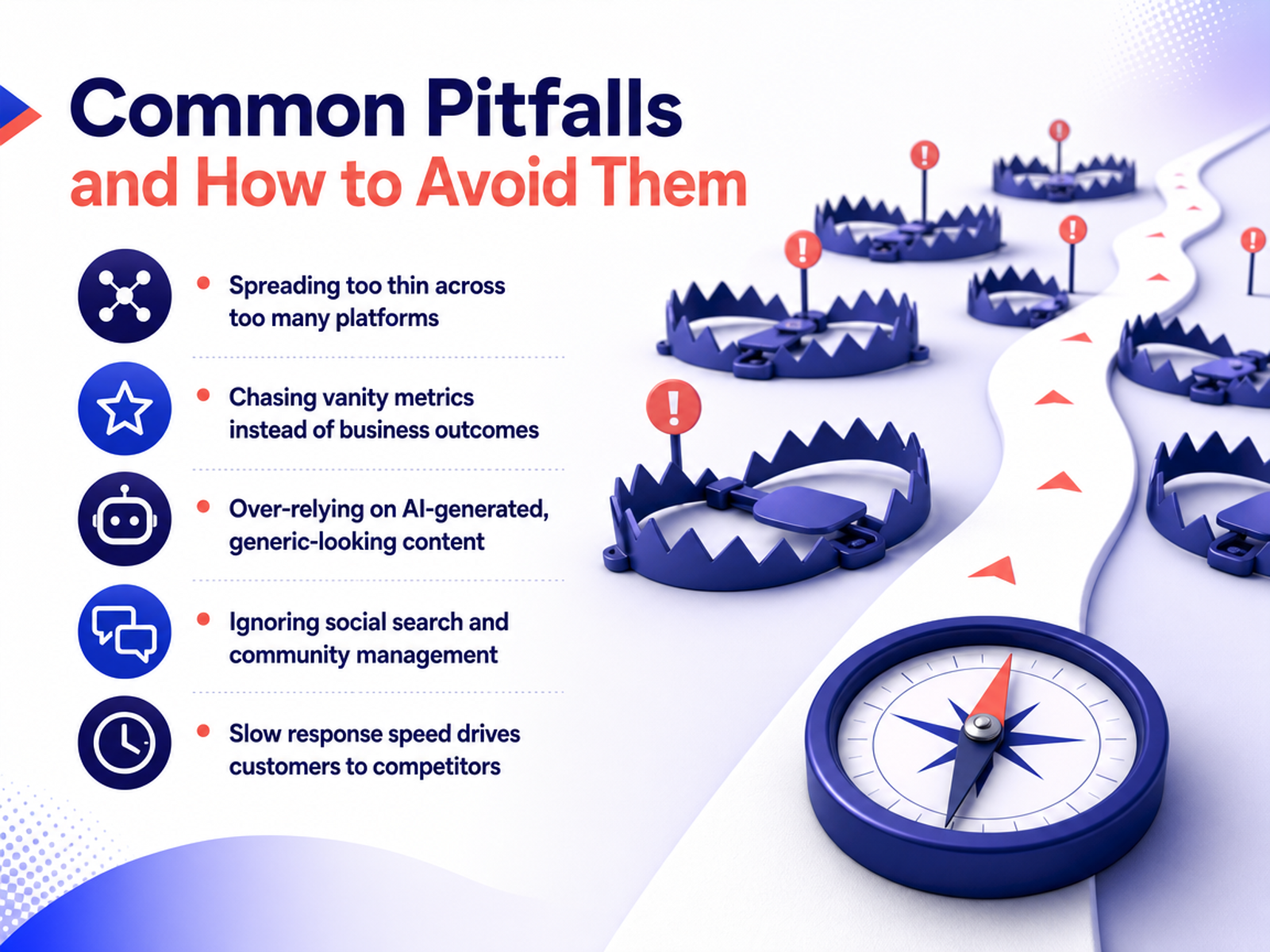
 - 13Common Pitfalls and How to Avoid ThemNow let's look at some common pitfalls, because they're easier to avoid when you can see them coming. First, spreading yourself too thin. You don't need to be everywhere. Pick the two or three platforms where your audience actually spends time, and do those well. Second, chasing vanity metrics like likes and follower counts. Those can feel good, but they don't pay the bills. Focus on business outcomes instead, like leads, saves, or actual sales. Third, over-relying on AI-generated content. AI is a great assistant, but generic-looking posts make brands blend into the noise. Add your own voice and real examples. Fourth, ignoring social search and community management. People now use platforms like TikTok and Instagram to find answers. If you're not showing up in those searches or replying to comments, you're invisible. And fifth, slow response speed. Many consumers say they'll switch to a competitor if a brand doesn't respond on social. Speed is a competitive advantage. The pattern here is simple: be focused, be human, and be responsive. Next, let's walk through your action plan and next steps.
 blog.hubspot.comsproutsocial.comdesignrush.com+22 min
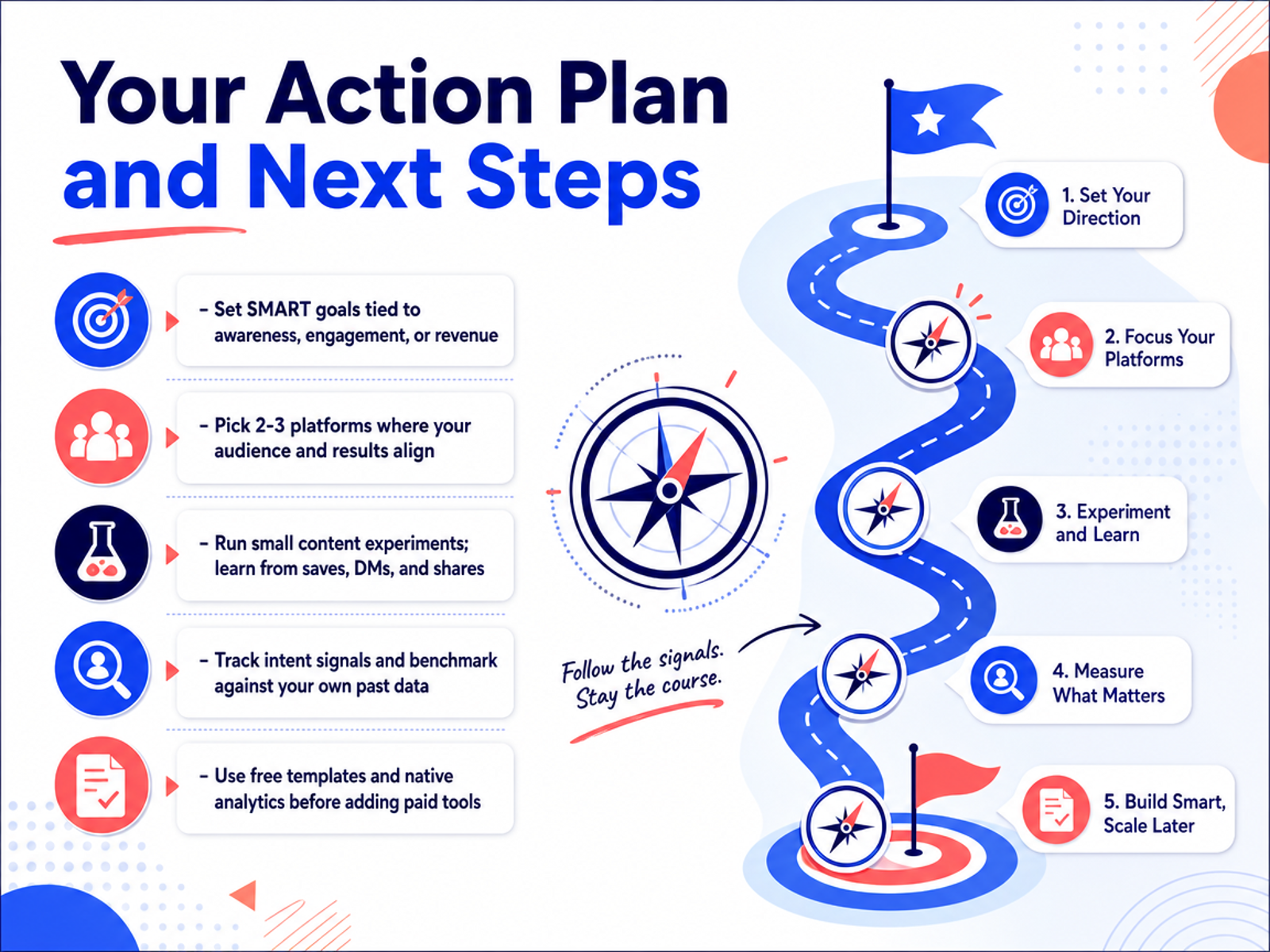
 - 14Your Action Plan and Next StepsLet’s bring everything together into a simple action plan you can start today. First, set SMART goals tied to awareness, engagement, or revenue. For example, aim to lift engagement by fifteen percent over the next quarter, not just to post more often. Second, pick two or three platforms where your audience and your results actually align. Most teams spread themselves too thin, so focus is your advantage. Third, run small content experiments. Watch what people save, share, or send in direct messages. Those signals tell you what actually resonates. Fourth, track intent signals like saves, meaningful comments, and link clicks, and compare them against your own past performance, not someone else’s benchmark. Finally, use the free templates and native analytics already available before adding paid tools. You can prove real progress with what you have. So start small, measure what matters, and let your own data guide the next move. Thank you for joining, and good luck building a social presence that truly works for your business.
 blog.hubspot.comsproutsocial.comdesignrush.com+22 min
Take the deck with you
Download this course as a file — free, no sign-up needed.
- PDF handoutEvery slide page, ready to print or share.15 pages · 3.6 MBDownload
- Narrated PowerPointThe deck that presents itself — every slide carries the digital human's narration video.15 pages · 13.8 MBDownload
- PowerPoint slidesThe full deck as a .pptx — open it in PowerPoint, Keynote, or Google Slides.15 pages · 3.5 MBDownload
Free to use in your own training — please keep the PersonWise credit page at the end.
Have your own deck? Turn it into a course
Sources consulted
Web sources consulted while building this course.
- HubSpot's 2026 Social Media Marketing Report: Data from 1100+ Global Marketers — blog.hubspot.com
- Social Media ROI Statistics Marketers Need to Know in 2026 | Sprout Social — sproutsocial.com
- Social Media ROI in 2026: How Top Marketing Experts Connect Posts to Revenue — designrush.com
- 100+ Social Media Marketing Statistics: First-Party Research — designrush.com
- Social media marketing's top global benefits 2026 - Statista — statista.com
- Social Media Design 2026: Visual Strategy, Formats, and What Actually Gets Engagement | Lucky Graphics | Lucky Graphics — lucky.graphics
- How to Design Social Media Posts: Data-Backed Guide — sprakdesign.com
- Social media image sizes for all networks [June 2026] — blog.hootsuite.com
- The most effective types of content on social media in 2026 [new data] — blog.hubspot.com
- Best Content Format on Social Platforms in 2026: 45M+ Posts Analyzed — buffer.com