Historical Methods
18 courses·EN
Investigate how historians work with sources, chronology, memory, and maps.
Use these lessons to examine an account’s evidence and context. World History applies such methods to broader patterns and events.
A route through the topic
Choose from these lessons according to the question or task you want to explore.
Courses in this topic

Analyzing Historical Maps
This training teaches participants to analyze historical maps by examining place, purpose, and perspective to deepen their understanding of historical context.
15 slides·30 min
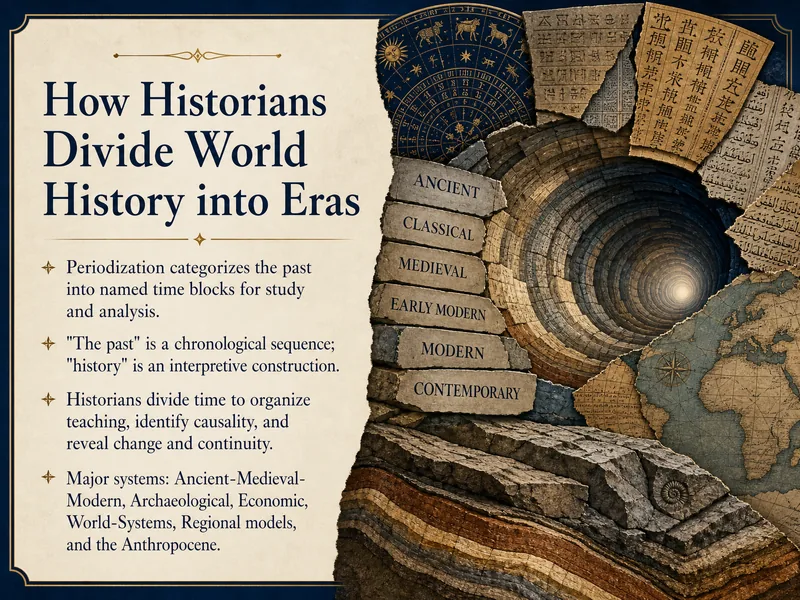
Era Division in World History
Learn how historians categorize world history into distinct eras and understand the criteria behind these chronological divisions. Ideal for students and history enthusiasts seeking a clearer framework for global historical periods.
14 slides·28 min
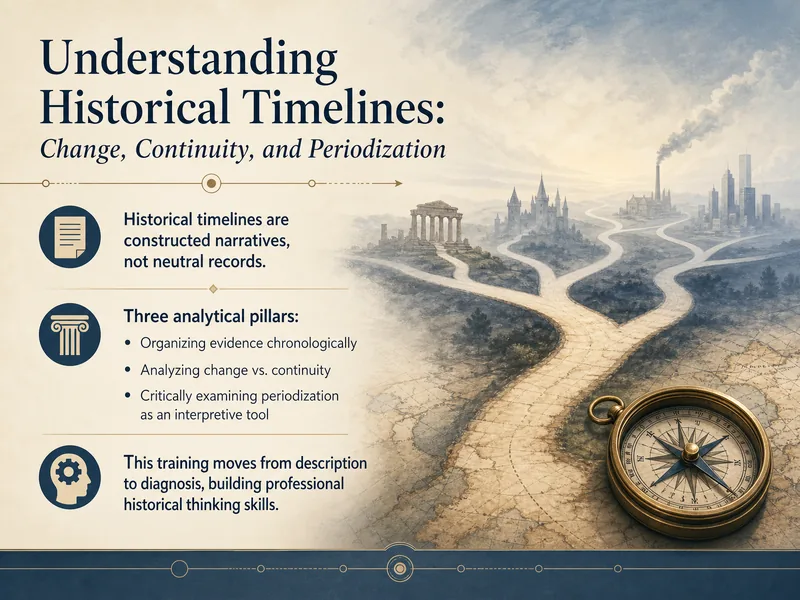
Historical Timelines & Periodization
Learn to analyze historical timelines by identifying change, continuity, and periodization patterns.
14 slides·28 min
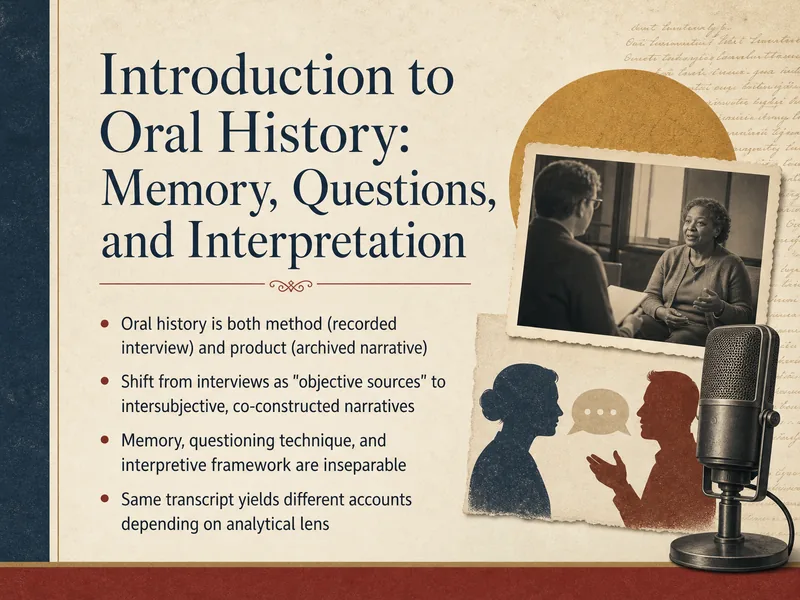
Oral History: Memory & Interpretation
An introductory training for learners on the fundamentals of oral history, focusing on memory, crafting effective questions, and interpreting personal narratives.
9 slides·18 min
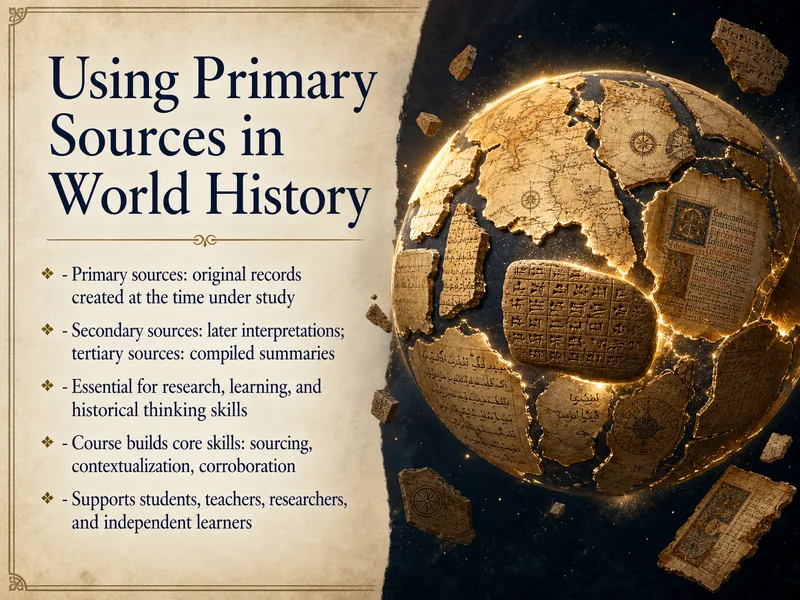
Primary Sources for World History
Learn how to analyze and interpret primary sources to build historical thinking skills, designed for educators and students of world history.
14 slides·28 min
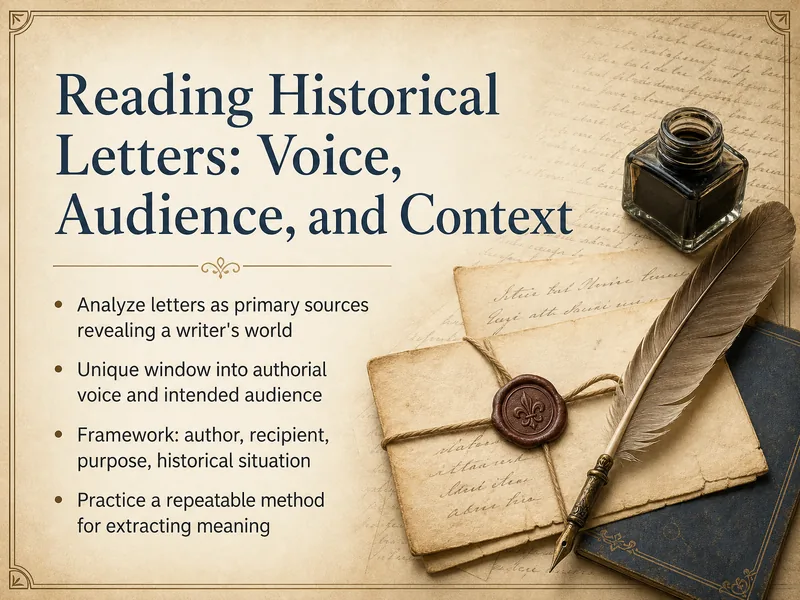
Reading Historical Letters
Teaches students how to analyze historical letters by examining voice, audience, and context.
14 slides·28 min
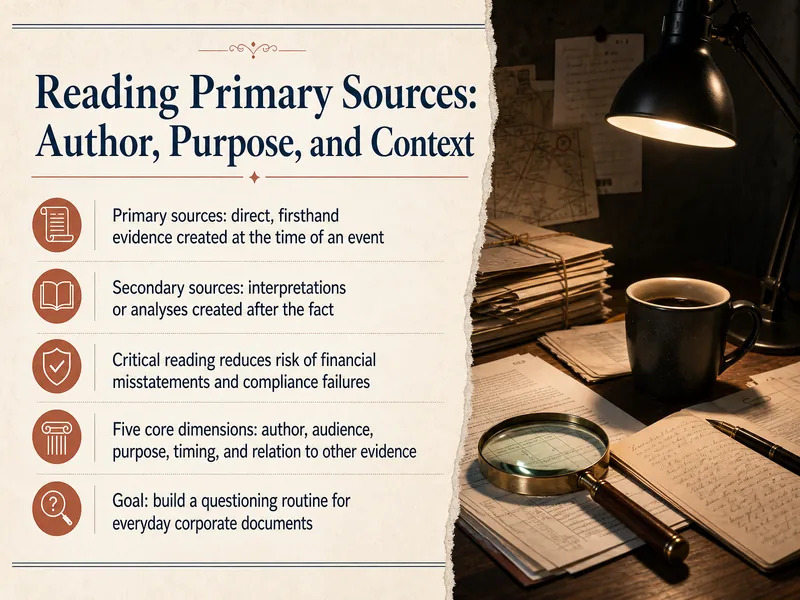
Reading Primary Sources
Learn to analyze primary sources by identifying author, purpose, and historical context.
14 slides·28 min
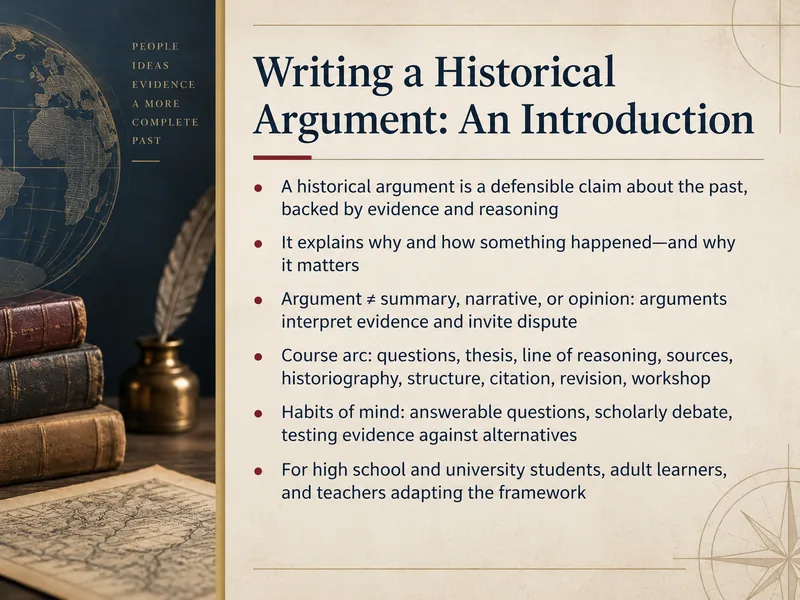
Crafting Historical Arguments
This training teaches learners how to construct clear, evidence-based historical arguments, ideal for students and anyone developing analytical writing skills.
14 slides·28 min
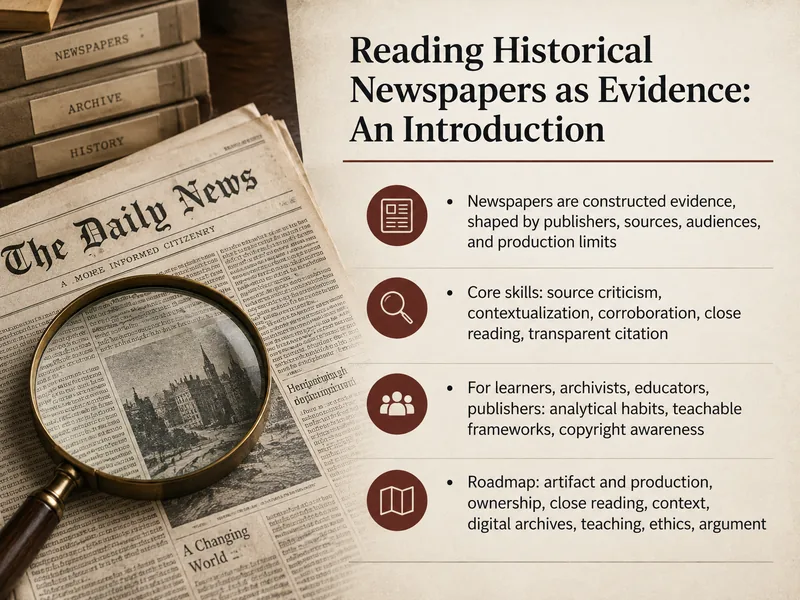
Reading Historical Newspapers as Evidence
This training teaches researchers how to analyze historical newspapers as primary evidence, building skills to evaluate bias, context, and reliability in period sources.
14 slides·28 min
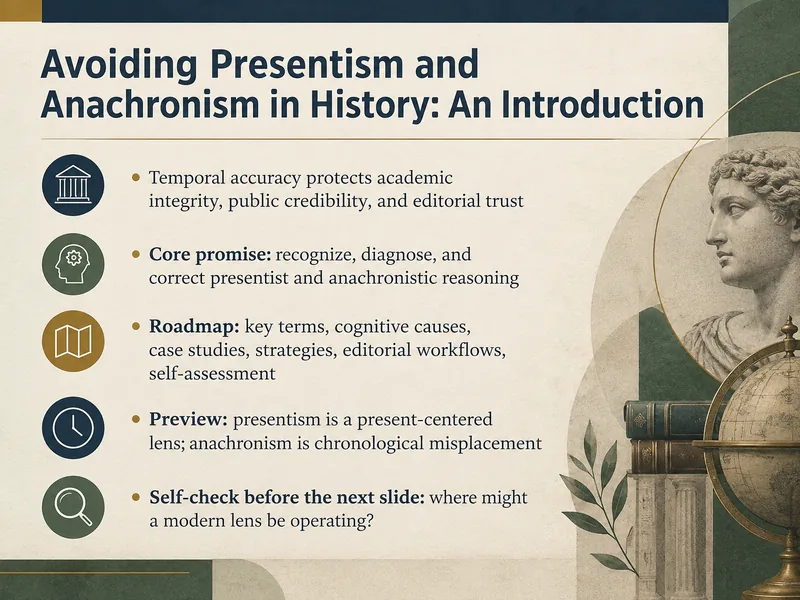
Historical Context: Avoiding Presentism and Anachronism
This training helps history educators and students recognize and avoid presentism and anachronism when interpreting the past.
14 slides·28 min
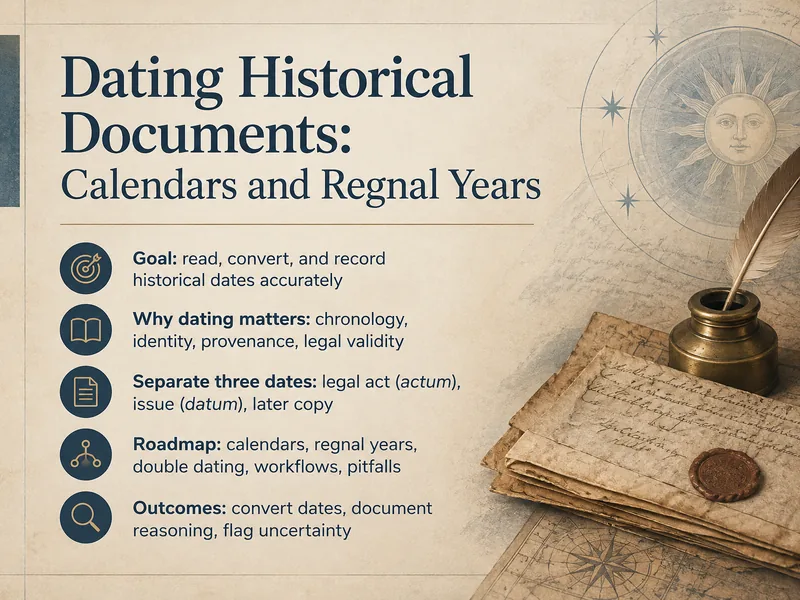
Dating Historical Documents: Calendars & Regnal Years
This training teaches researchers how to date historical documents using calendars and regnal years, building practical skills for accurate chronological analysis of archival sources.
14 slides·28 min
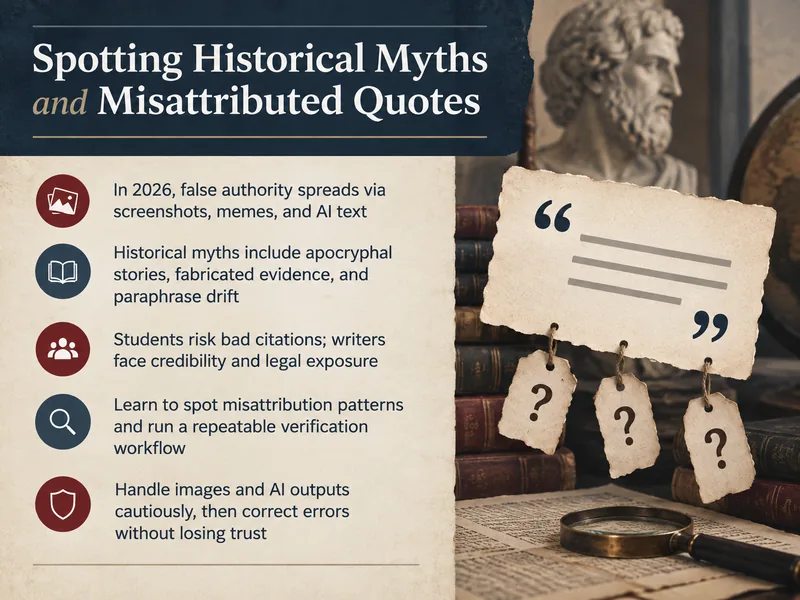
Identifying Historical Myths and Misattributed Quotes
This training helps learners identify historical myths and misattributed quotes, building the critical thinking skills needed to verify sources and evaluate historical claims.
14 slides·28 min
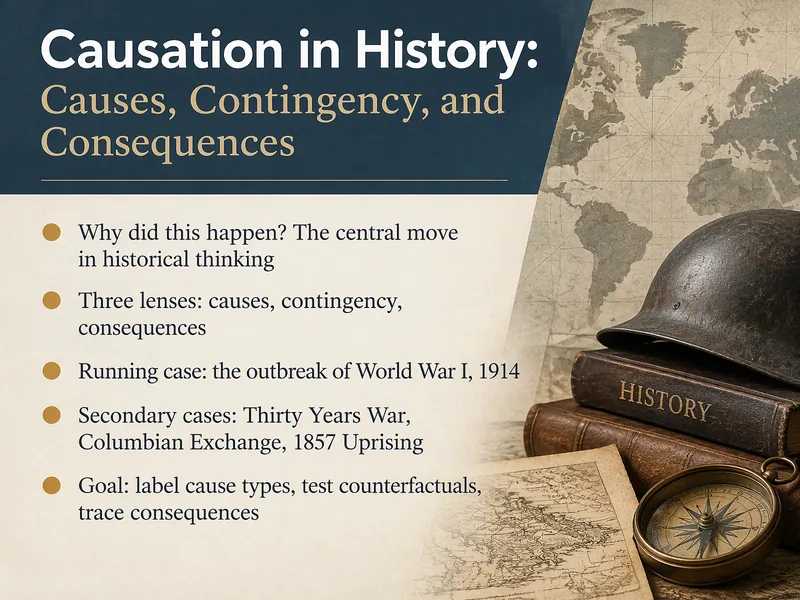
Historical Causation Analysis
This training helps history learners analyze causation, contingency, and consequences, building skills to explain why events happened and evaluate their outcomes.
14 slides·28 min
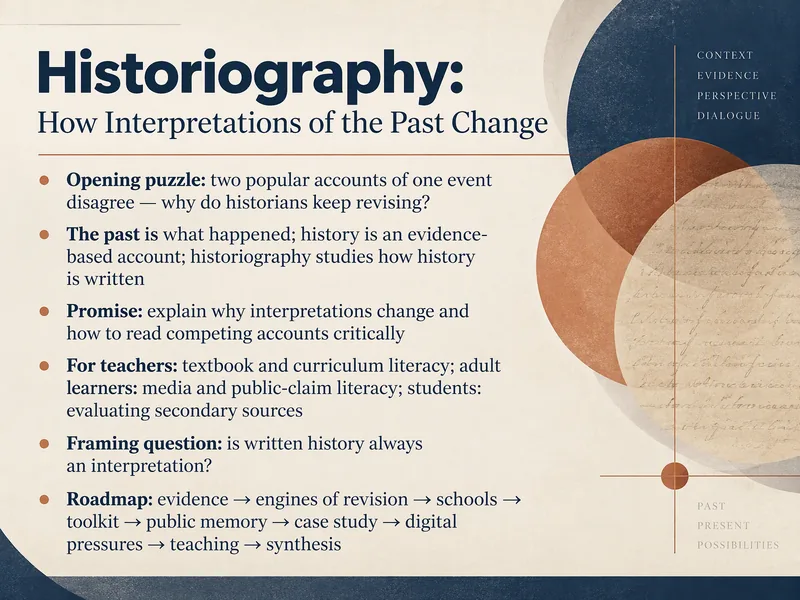
Changing Historical Interpretations
This training explores how historical interpretations evolve over time, helping learners understand the forces that shape historiography and why accounts of the past change.
14 slides·28 min
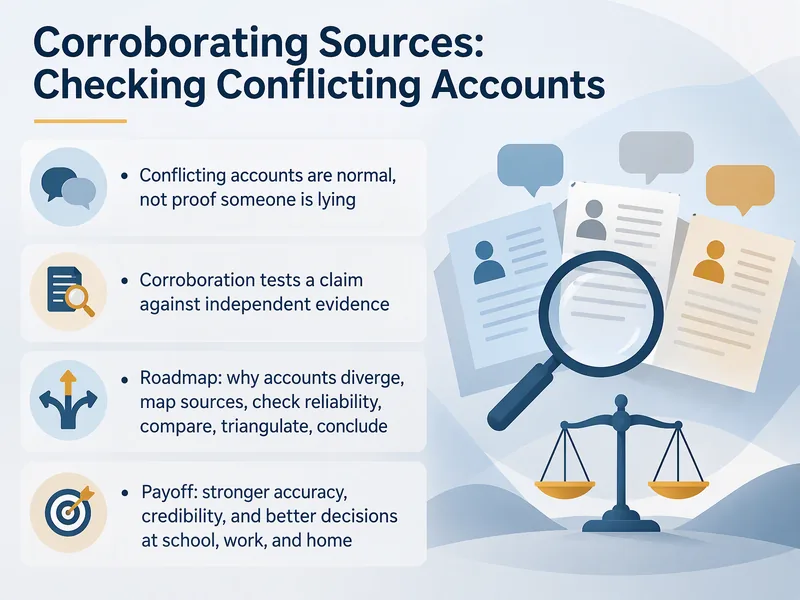
Corroborating Sources and Resolving Conflicting Accounts
This training teaches professionals how to corroborate sources and resolve conflicting accounts, building the verification skills needed to assess information reliability.
14 slides·28 min
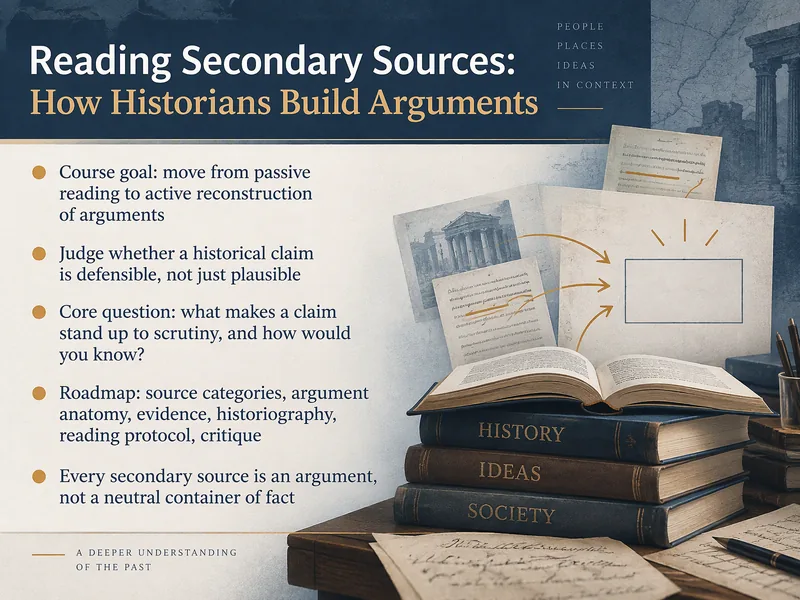
Reading Secondary Sources in History
This training teaches learners how to read secondary sources critically and understand how historians construct arguments from evidence. Ideal for students and researchers developing historical analysis skills.
14 slides·28 min
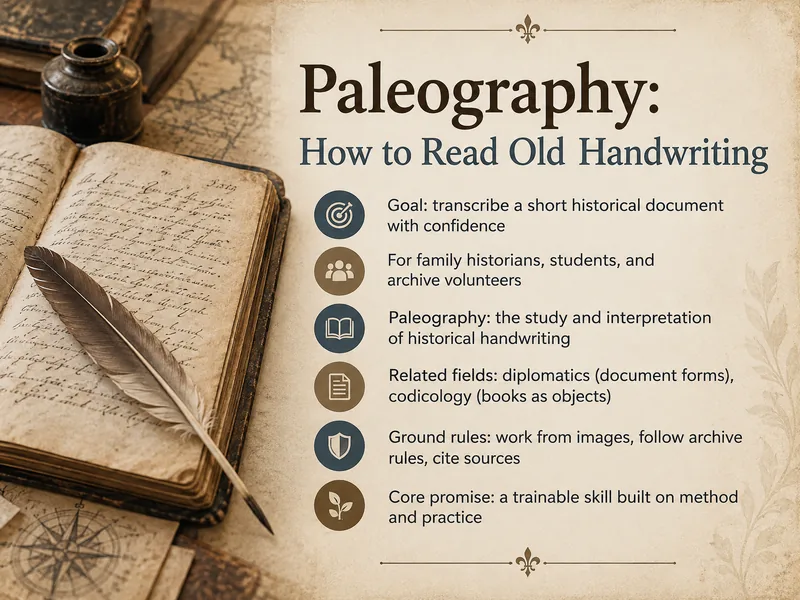
Reading Old Handwriting: Paleography
Learn to decipher historical handwriting in this paleography training, designed for historians, archivists, and genealogists working with old manuscripts.
14 slides·28 min
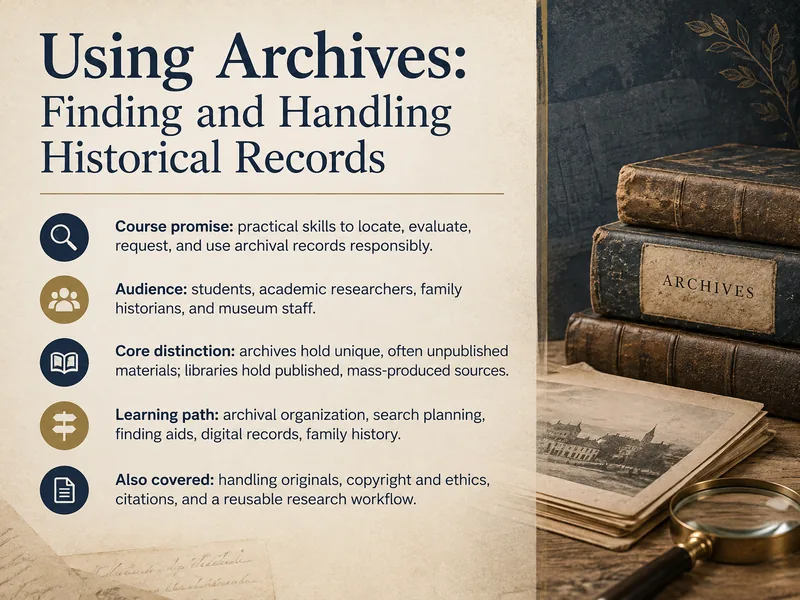
Archives: Finding and Handling Historical Records
This training teaches researchers and historians how to locate, evaluate, and properly handle archival historical records.
13 slides·26 min